
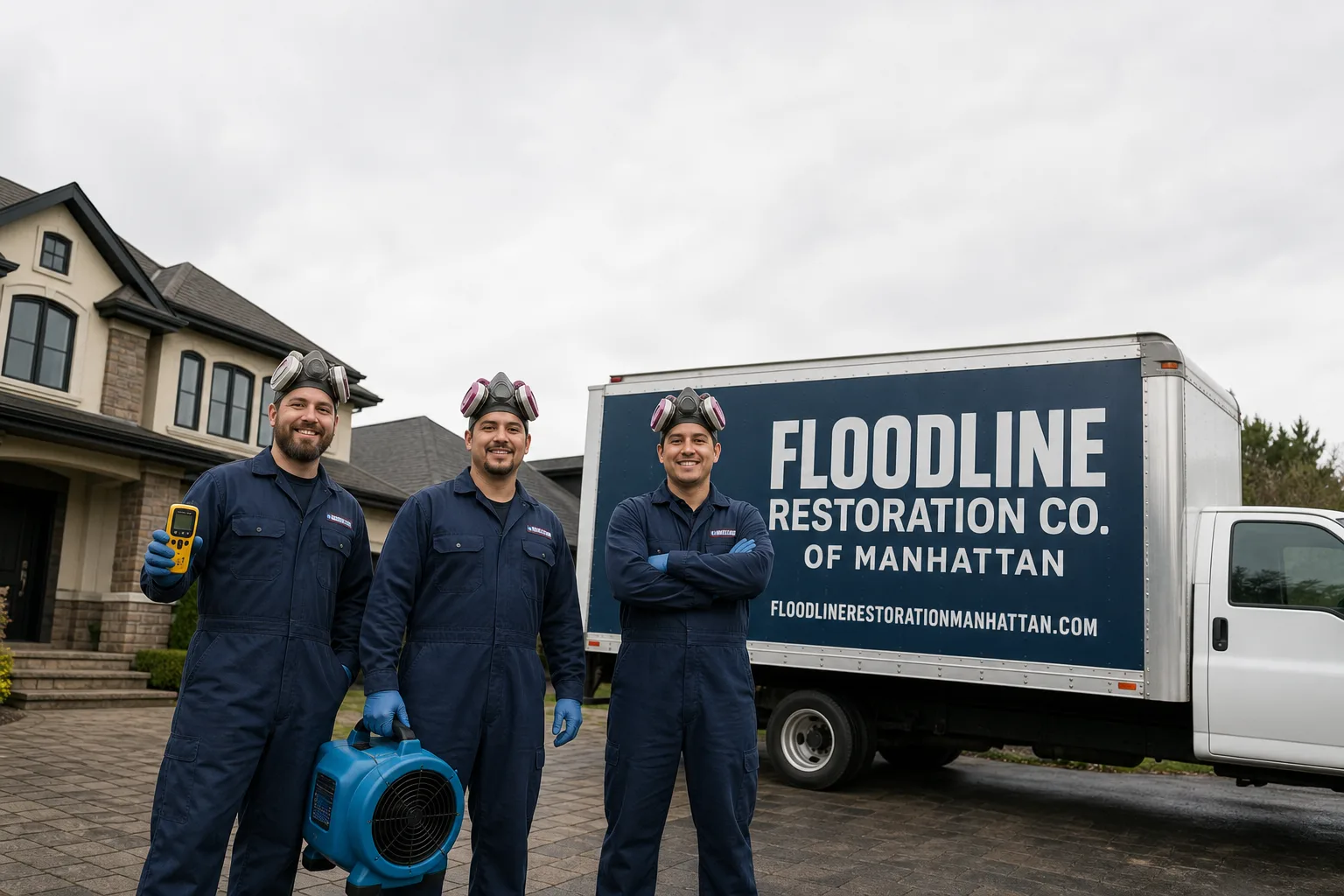
Free visual inspection and a written scope of work before any mitigation begins - photos, moisture readings, and drying logs go in your claim file
The scope we write is the scope we bill. Anything new gets shown to you, in writing, before we touch it.






 Before
 After
After Before
 After
After Before
 After
After24/7 Emergency Mold Remediation in Chinatown
Mold remediation in Chinatown typically runs $1,800 to $6,500 for a contained residential scope, and we answer the phone live at (917) 924-4221 around the clock, every day. When you call, a dispatcher picks up at 2 a.m. the same way they do at noon. We schedule a free visual inspection and get a certified crew to your address inside the Chinatown area fast, because the first hour after you spot mold is when containment matters most. Every hour that mold sits uncontained on a party wall or below a window sill, spores keep moving through shared air shafts and hallway stairwells that connect Chinatown’s tenement floors. We arrive, we assess, we contain, and we give you a written scope before any remediation begins.
Understanding Mold Remediation Severity in Chinatown Properties
Chinatown’s housing stock is almost entirely late-19th to early-20th century tenement walk-ups: five to seven stories of unreinforced brick and lime mortar, subdivided over the decades, with original cast-iron or galvanized supply lines that have spent a century in New York’s hard water. These buildings have virtually no original vapor barriers. That means when water enters a wall assembly from any source, it wicks into the brick and lime mortar deeply and quickly. Mold does not sit on the surface. It threads through the masonry pores and feeds on the old plaster, the paper backing on drywall patches, the sawdust-filled wall cavities from a 1970s renovation.
Severity breaks into three practical tiers. A surface-level issue is mold on painted plaster or baseboard trim from condensation, with no hidden moisture source. A containment-level issue is mold behind cabinetry, inside a closet against a party wall, or around a window frame, where air scrubbing and HEPA-filtered negative air pressure are required before any material is removed. A structural moisture issue is what we see most often in Chinatown: elevated readings inside shared brick masonry, a source active two or three floors away, and mold reappearing weeks after a previous contractor “cleaned” the visible patch and left the source running. We use thermal imaging and moisture meters on every inspection because the visible mold is rarely the whole story. Containment, air scrubbing, and clearance testing are not upgrades in this neighborhood. They are the baseline.
Why Chinatown Property Owners Choose Floodline Restoration Co. of Manhattan
- 45-minute response commitment: For active water-loss-mold situations in Chinatown, our crews are dispatched immediately and we commit to a 45-minute arrival window inside the neighborhood, not a four-hour block.
- 24/7 live answer, never an automated system: A real dispatcher answers at (917) 924-4221 at 3 a.m. You will never press 1 for English and 2 for a callback.
- IICRC-certified crews: Our technicians hold IICRC AMRT (Applied Microbial Remediation Technician) and WRT (Water Restoration Technician) credentials, and they train to IFA standards for what that means in a working tenement.
- Free visual inspection: We walk the unit, take moisture readings, and tell you honestly whether you need full remediation or a targeted cleaning. The inspection does not obligate you to a contract.
- Direct insurance billing: We bill your carrier directly, we submit our own documentation, and we talk to the adjuster so you do not have to translate scope language yourself.
- One team from first extraction to finished rebuild: The same certified crew that sets the containment, runs the drying log, and removes the mold is the crew that patches, primes, and repaints. No handoff, no inherited team.
Our Mold Remediation Process
1. Inspection & Assessment
We start with a walkthrough, thermal imaging, and moisture meter readings on every wall, floor, and ceiling that shares a surface with a neighbor or a commercial space. In Chinatown, this almost always includes checking the party wall and the floor assembly for a moisture path that starts somewhere else in the building. We identify the source before we write a scope.
2. Extraction & Stabilization
If the mold is tied to an active leak or standing water, we stop the water first. That can mean shutting a supply line, coordinating with a neighboring tenant, or setting a temporary pump. No mold remediation works while the moisture source is still feeding it.
3. Drying & Dehumidification
We place Dri-Eaz dehumidifiers and Phoenix air movers, mapped to the specific room geometry and wall assembly, not a one-size-fits-all count. Daily moisture readings are logged on a date-stamped sheet, and we adjust equipment until the dry standard is met. In Chinatown’s lime-mortar tenements, this phase runs longer than in drywall-framed newer construction.
4. Cleaning & Sanitization
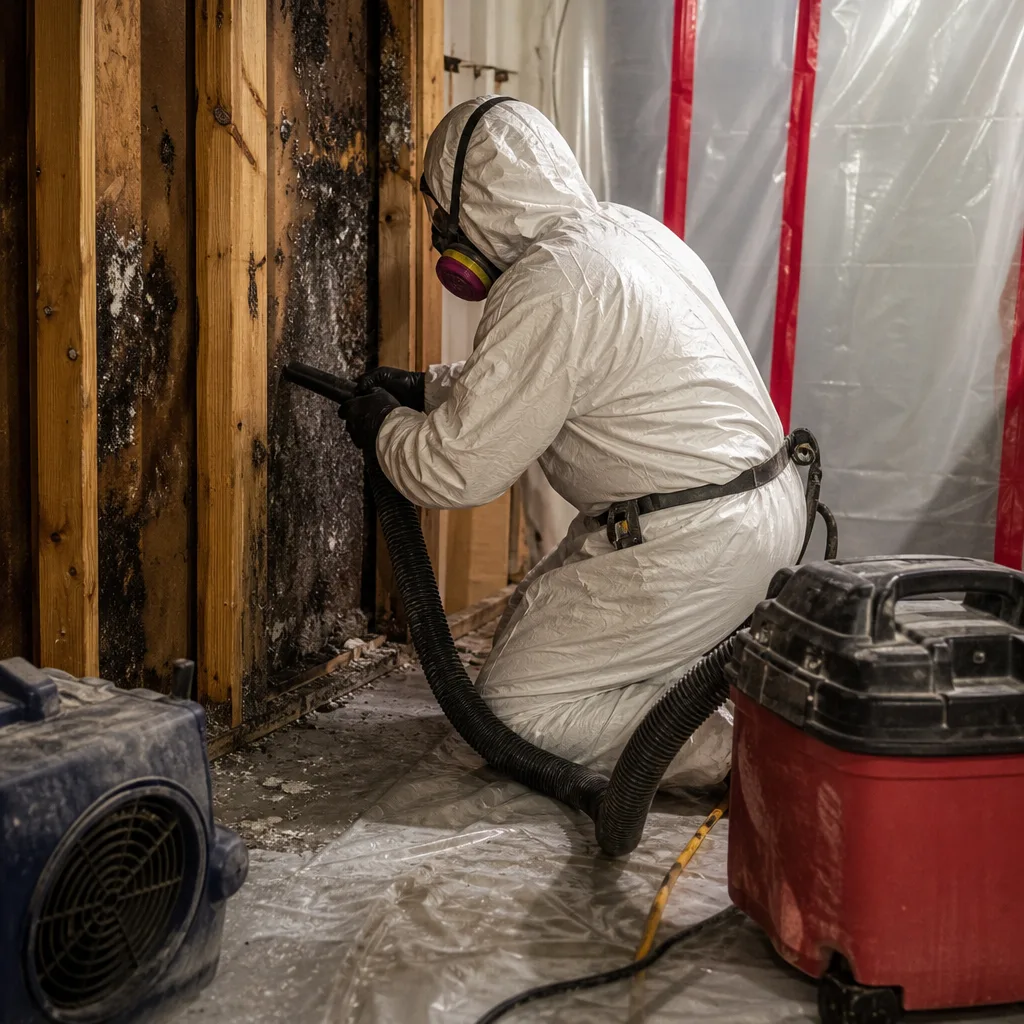
With containment in place and negative air pressure running through HEPA-filtered scrubbers, we remove mold-damaged material, HEPA-vacuum surfaces, and apply an EPA-registered antimicrobial. The goal is not to “kill mold and leave it.” The goal is removal, which is what the IICRC S520 standard describes.
5. Specialty Treatment
In mold remediation, this is the post-removal verification step: clearance testing, surface sampling with a third-party lab where you or your carrier request it, and written confirmation that the containment can come down. We provide the documentation your insurer and your family need to know the space is dry and clean.
6. Repairs & Restoration
We rebuild what we removed. Plaster, drywall, trim, paint, sometimes a section of flooring. The same crew that ran the drying log handles the finish work, and the 90-Day Done Right Promise covers the whole scope in writing.
Need Emergency Mold Remediation in Chinatown Now?
Crews minutes away, answering live 24 hours a day. The sooner we start, the less it costs.
Working With Your Insurance Company
Mold claims are not simple, and the carrier’s first question is always whether the moisture source was sudden and accidental or long-term and ignored. We build the file from the first hour: photos of the source, moisture readings from day one, containment logs, daily drying records, and a line-item scope that matches the carrier’s estimating software. When you file, we submit directly to your adjuster. When the adjuster calls with questions, they speak to us, not to you. We have handled mold claims in buildings where the unit owner and the commercial tenant below shared a wall, and the carrier needed proof that the source was on the other side of the line. That proof is a moisture map and a dated log, not a one-paragraph contractor note. We provide it.
What We Provide Your Insurer
- Thorough documentation of the loss
- Photos of all damage, room by room
- Moisture readings and drying logs
- A detailed, line-item scope of work
- Direct coordination with your carrier
Built for Chinatown’s Loss Calendar
Chinatown has its own rhythm of moisture. January deep freezes burst old supply lines in uninsulated exterior walls, and the water travels down through four floors of lime mortar before anyone sees it on the ceiling. Spring thaw and heavy rain push groundwater up through basement slabs and foundation walls on streets built over old filled land near Canal Street. Summer thunderstorm flash flooding runs down from Mott and Mulberry, and the catch basins back up, pushing Category 3 water into below-grade commercial kitchens and storage rooms. Nor’easters drive wind-driven rain into brick facades that were repointed twenty years ago and have gone porous again. And all year long, the seafood markets and restaurant kitchens on the ground floor run water, hose down tile, and wash out tanks, saturating the shared masonry with a baseline moisture load that makes every other event worse. The mold we remediate in Chinatown is rarely caused by one rainy week. It is caused by the building’s entire history meeting one moment of failure.
Mold Remediation Across Chinatown’s Neighborhoods
Around Mott Street, the tenements sit tight against commercial kitchens and seafood stalls, and the calls we take there are almost always upper-floor, party-wall mold with a ground-floor source. The response route is narrow and crowded, so we stage equipment from the street and carry it in. On Doyers Street and Pell Street, the buildings are shorter and older, some with basement levels that have not seen a full dry-out in decades. Access is tighter, and the moisture path often runs through the front stairwell. Along East Broadway, the larger buildings near the housing developments have concrete floor slabs and long corridors, and mold issues there often trace to failed pipe chases or roof drainage that channels water down through the interior stair core. Around Bayard and Elizabeth, residential units above bakeries and dim sum kitchens deal with constant humidity from steam tables and dishwashing lines. And near Chatham Square and the blocks approaching Worth Street, we see more basement and below-grade mold where runoff collects against old foundation walls. Each block has a building type and a moisture pattern. We know the pattern before we open the wall.
Specialized Mold Remediation Services We Offer in Chinatown
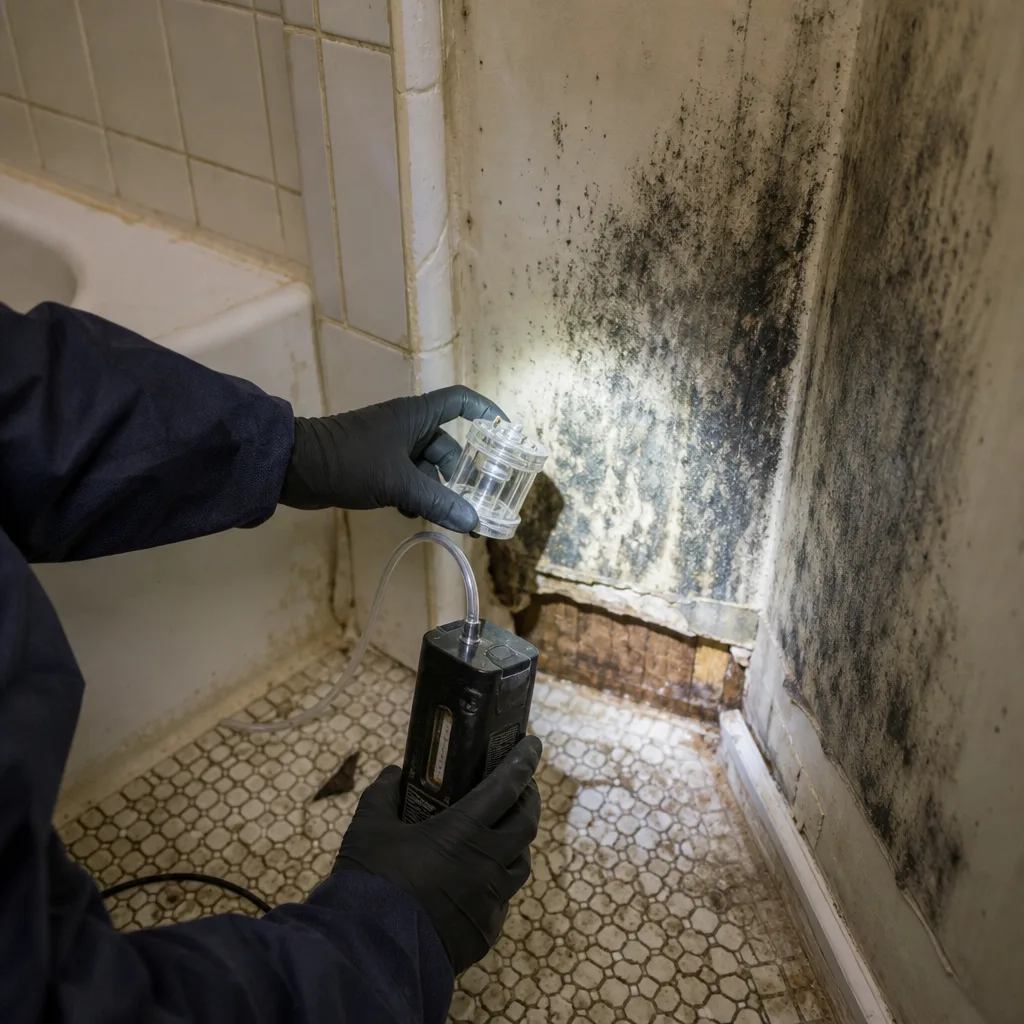
Mold Inspection & Testing
We inspect with thermal imaging and moisture meters, not just a flashlight. In Chinatown, that inspection almost always includes tracing a moisture path through a party wall or floor assembly to a source in another unit. We can collect surface and air samples and send them to a third-party lab when you need independent documentation, for a closing, a tenant dispute, or a carrier that demands lab verification.

Mold Removal
Removal means physical removal of mold-damaged material, not spraying over it. In a Chinatown tenement, that means cutting out soaked plaster, old wallpaper, and drywall patches, then HEPA-vacuuming and treating the masonry behind it. We set containment before we open any wall, because opening a wall with active mold sends spores into the room and the shared hallway beyond.

Black Mold Remediation
“Black mold” is a homeowner term. What matters is the moisture source, the spore count, and the full extent of the material damage. We treat every mold-remediation job with the same IICRC S520 standard, whether the lab identifies Stachybotrys or a less dramatic species, because the structural damage in an old brick building is severe either way. Containment, air scrubbing, removal, and clearance testing apply.

Air Quality Restoration
After remediation, we run HEPA-filtered air scrubbers to pull airborne spores and particulates down to background levels. In Chinatown buildings with shared stairwells and air shafts, we also address the air path: a third-floor unit is connected to the second floor through floor joist cavities and pipe chases. You remediate the room and the air, or the problem walks back in.
Crawl Space Treatment
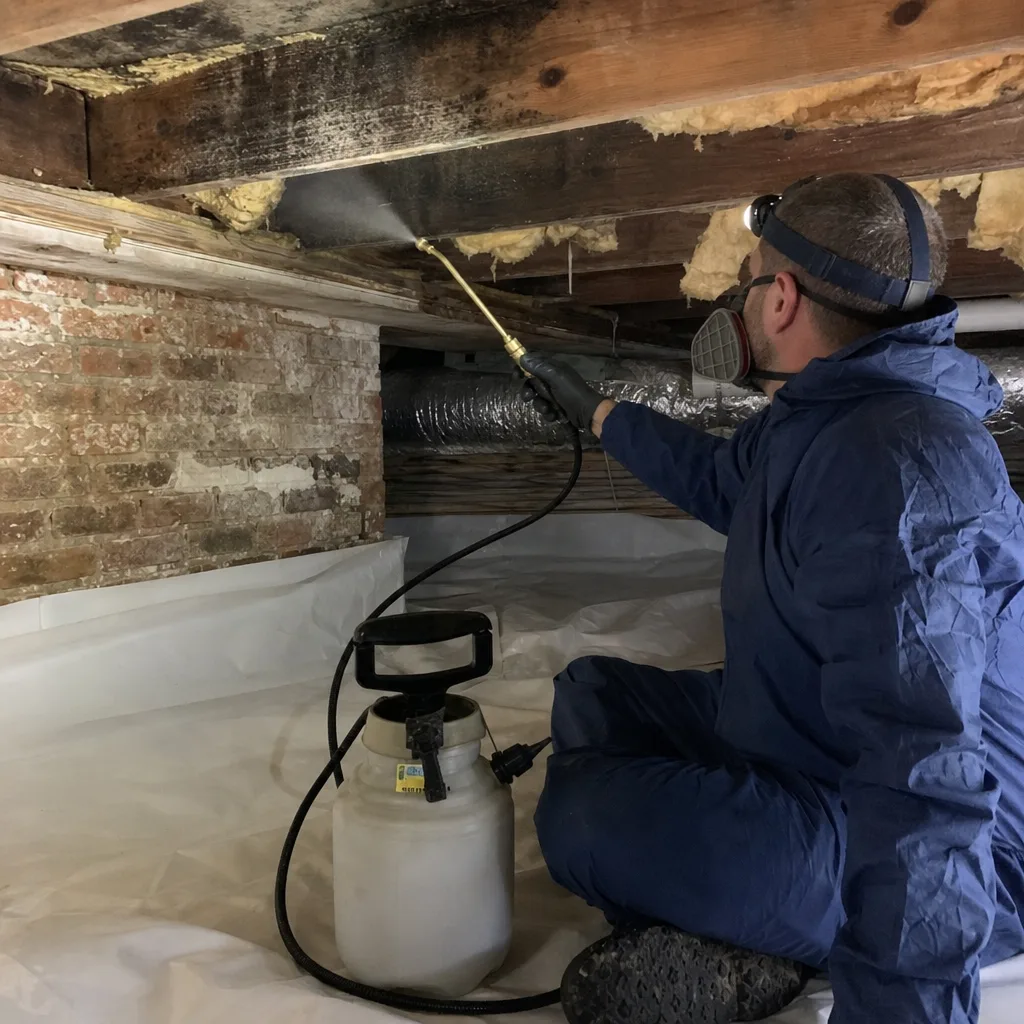
A few Chinatown buildings have shallow crawl spaces or storage cellars below the front stoop. Those spaces hold humidity from the ground and from the building’s old drainage lines, and they quietly feed mold into the joists of the first residential floor. We treat the crawl space as part of the unit’s air system, not a separate afterthought.
Moisture & Humidity Control
For buildings where humidity and condensation are the recurring source, we set up temporary dehumidification, log daily readings, and recommend permanent fixes where they apply: bath fans vented properly to the exterior, not into a wall cavity, and kitchen ventilation for the apartments above restaurant steam. Mold remediation without a moisture-control plan is a repeat visit waiting to happen.
What happens when you call
- 1
A real person answersNo phone trees - you reach a local pro.
- 2
You get an upfront price rangeHonest numbers before anyone is dispatched.
- 3
A background-checked tech heads outLicensed & insured, dispatched right away.
- 4
You approve before work beginsNothing starts until you say go.
Mold Remediation Costs in Chinatown, NY
A contained, single-room mold remediation in Chinatown runs $1,800 to $3,800. A full apartment scope with party-wall access and commercial-source coordination runs $4,500 to $8,500 and occasionally more when the masonry drying phase extends over a week. What moves the price in this neighborhood is not the square footage alone. It is the building age, the masonry condition, the access to the source unit, and whether we set negative-pressure containment and HEPA scrubbing for one room or an entire floor. Mold inspection and testing alone runs $350 to $650 when you need lab results. Insurance-covered scopes are typically paid through the loss that caused the mold: a burst pipe, a backup, a storm intrusion. Out-of-pocket scopes happen when the carrier determines the moisture was long-term. Our free visual inspection gives you a firm, line-item scope before any money changes hands, so you know the number before you decide. Call (917) 924-4221 and we will walk you through it.
We Also Serve Cities Near Chinatown
Our crews work throughout the surrounding boroughs and lower Manhattan neighborhoods, and we regularly respond to mold calls in Fairview, Harrison, East Bronx, and Hunts Point. Same live dispatch, same written scope, same 90-Day Done Right Promise.
Chinatown Mold Remediation Questions, Answered
How does a ground-floor fish market in Chinatown affect mold in my third-floor apartment?
Water from a fish market’s live tanks, hose-downs, or a slow tank overflow saturates the shared brick masonry at the ground level, and that moisture wicks upward through the party wall into the residential floors above. By the time you see mold on your third-floor wall, the source has usually been active for weeks two floors down, and the fix requires access to both units, not just a cleaning of yours.
What does ‘Category 3 water’ mean for mold remediation after a Chinatown sewer backup?
Category 3 water is grossly contaminated water from a sewer backup, a toilet overflow, or street flooding, and it carries the bacteria and pathogens that make mold remediation and sanitizing a job for trained professionals, not a DIY cleanup. In Chinatown basements and below-grade kitchens, a Category 3 event means removal of saturated porous materials, antimicrobial treatment, and structural drying, not just mopping and painting over stains.
Why does drying take longer in Chinatown’s old brick tenements than in newer buildings?
Because unreinforced brick and lime mortar absorb water deeply, and the wall holds it. Modern drywall and stud framing dry in days. A century-old masonry wall with multiple layers of plaster and patching can take a week or more of continuous dehumidification to reach the dry standard, and if you cut corners on that phase, the mold returns, and we are back in there a month later.
Can mold from a restaurant grease trap spread into my apartment through the walls?
Yes, and we see that path often in Chinatown. A failing grease trap or a slow drain under a kitchen floor sends moisture into the structural masonry, the moisture travels up through the wall, and mold grows in the wall cavity between the commercial space and the residential unit above. The source is not in your apartment at all, which is why we trace the moisture, not just the stain.
Do I need to move out during mold remediation in a Chinatown tenement?
For contained small-area remediation, usually no. We set up negative-pressure containment and HEPA air scrubbing that isolates the work area from the rest of the unit. For full-floor scopes or cases where the mold is extensive in a bedroom or kitchen, we will tell you honestly whether temporary relocation is the safer choice and help you work that into the insurance claim.
How fast can you actually get to a Chinatown address?
We commit to a 45-minute arrival window inside Chinatown for active water-loss-mold emergencies. A real person answers the phone at (917) 924-4221, we dispatch a crew from our NYC office, and we are on the street with equipment, not scheduling you for a window two days out.
Will my insurance cover mold remediation in my Chinatown apartment?
If the mold resulted from a suddenly occurring covered loss, like a burst pipe or a storm intrusion, the mold remediation and the drying are typically covered as part of that loss. If the mold is from long-term humidity or a slow leak that was never addressed, the carrier may deny it. We document everything from the first hour and submit directly to your adjuster, which is the single biggest factor in getting the scope approved.
What should I do in the first 30 minutes after I find mold in my apartment?
Do not scrub it, do not paint over it, and do not run a fan on it. Close the room if you can, keep people and pets out, and call us at (917) 924-4221. We will walk you through what to check on the phone, schedule a free inspection, and tell you whether this is a containment-level situation or something smaller. Scrubbing mold sends spores into the air and pushes the problem deeper into the surface. Leave it alone until we look at it.
Serving Chinatown, NY - Our Local Coverage Area
We’re based in the Chinatown area and know this community well. Use the map below to see our service coverage - if you’re nearby, we can almost certainly help.
One Call, One Crew, Done Right in Chinatown
Mold in an old Chinatown tenement is not a one-unit problem, and it is not a bottle-and-a-sponge fix. The source runs through shared masonry, a commercial tenant’s fish tank, or a century of water finding new paths through old walls. Floodline Restoration Co. of Manhattan handles the whole scope: we trace the moisture, contain the affected area, dry the structure, remove the mold, rebuild what we removed, and put the 90-Day Done Right Promise in your hands in writing. Calls answered live, 24 hours a day. A written scope before work starts. Direct billing to your carrier. One phone number: (917) 924-4221.
For more on how our full-cycle restoration work keeps these buildings dry and safe, see our Mold Remediation service overview. If you need a broader look at how we serve this neighborhood specifically, start with Mold Remediation in Chinatown.
Written by Curt Bowman, Owner at Floodline Restoration Co., serving Chinatown, NY.