
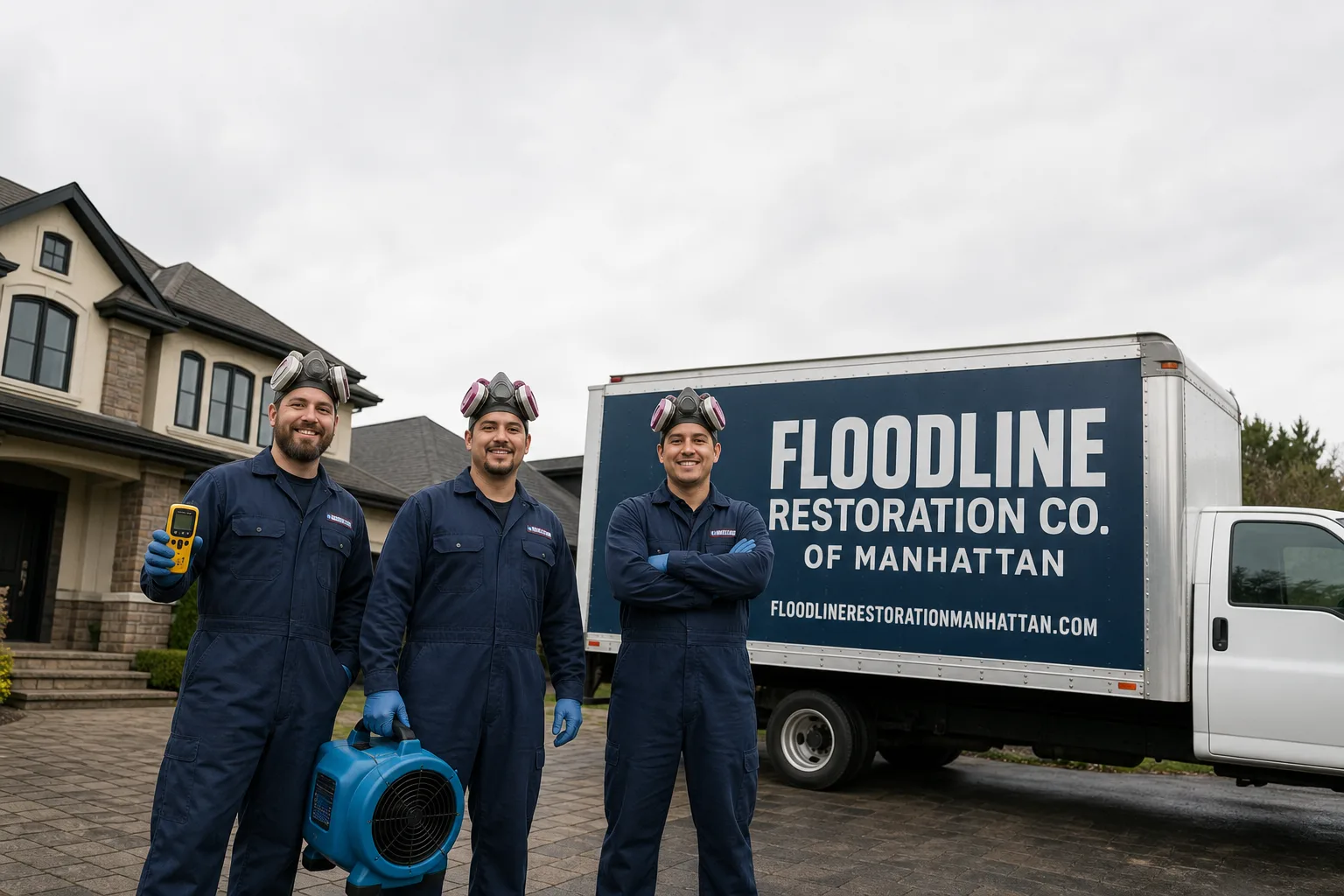
Free visual inspection and a written scope of work before any mitigation begins - photos, moisture readings, and drying logs go in your claim file
The scope we write is the scope we bill. Anything new gets shown to you, in writing, before we touch it.






 Before
 After
After Before
 After
After Before
 After
After24/7 Emergency Mold Remediation in Forest Hills
Mold remediation in Forest Hills typically runs $1,800-$6,500 depending on how far moisture has traveled and whether walls or ceilings must be opened. In a Garden apartment with original plaster, the scope is almost always bigger than it looks from the outside. If you’re seeing dark staining on a wall, a musty smell that won’t leave, or peeling paint near a window, call (917) 924-4221. A live person answers, any hour. We dispatch a certified crew to Forest Hills the same day, do a free visual inspection, and tell you straight whether you need remediation or just a dehumidifier. The first few days matter. Mold doesn’t pause. It keeps spreading through wall cavities and behind baseboards until someone maps the moisture and stops it.
Understanding Mold Remediation Severity in Forest Hills Properties
Mold severity depends on three things: how much water got in, how long it sat, and what the wall is made of. A 1930s brick apartment building along Queens Boulevard has lath-and-plaster walls over wood framing. Those walls soak up water and hold it. A newer drywall partition dries faster. We classify mold jobs by square footage of visible growth, moisture readings inside wall cavities, and whether the water source was clean, grey, or category 3 contaminated. In Forest Hills, the combined sewer system backs up into basements during heavy rain, and that water is category 3. It carries pathogens. Any mold growing after a sewage backup is treated as contaminated material, not a surface stain. We run HEPA air scrubbers and full containment when we open those walls, because the airborne spore load in a pre-war basement can be high. The goal is not to kill mold. The goal is to find every drop of moisture, remove the food source, physically remove the mold, and leave a dry structure that passes clearance testing. That is the only outcome that lasts in homes built before 1945.
Why Forest Hills Property Owners Choose Floodline Restoration Co. of Manhattan
- 45-minute response commitment: When you call about mold in a Forest Hills home, we commit to having a certified technician on site within 45 minutes of dispatch. We don’t put you on a callback list.
- 24/7 live answer, always a person: The dispatcher who picks up at 2 a.m. is a real human in our New York City office. No recordings, no “press 2,” no missed calls.
- IICRC-certified crews: Our technicians hold IICRC certifications including AMRT (Applied Microbial Remediation Technician) and WRT (Water Restoration Technician). They are background-checked and uniformed.
- Free visual inspection: We walk the property, take moisture readings with thermal imaging and hygrometers, and show you exactly what we found. No charge for the inspection. No obligation to hire us.
- Direct insurance billing: We bill your carrier directly, provide line-item scopes, coordinate with your adjuster, and give you the documentation trail insurers require. You never play messenger.
- One team from start to finish: We don’t hand your job to a subcontractor after the demolition. We handle mold remediation, drying, and reconstruction with the same certified crew. Same crew. Same phone number.
Our Mold Remediation Process
Inspection & Assessment
We start with a visual inspection, moisture readings behind walls and under floors, and thermal imaging. We find the source of the moisture before we touch anything. If we can’t see the moisture source with non-invasive tools, we take wall cavity samples from multiple locations. In Forest Hills’s older housing stock, hidden leaks inside original galvanized supply lines are common.
Containment & Stabilization
Before we move any contaminated material, we set up containment barriers around the affected area, put it under negative air pressure, and run HEPA air scrubbers. That keeps airborne spores from spreading into your living areas. Containment is not optional. It is the difference between a clean job and a re-infestation three weeks later.
Drying & Dehumidification
Mold cannot survive in a dry structure. We run professional-grade dehumidifiers, air movers, and Injectidry systems where needed. We take daily moisture readings and log them. The log shows your insurer and us that the dry standard has been met. No guessing. The numbers are on paper.
Cleaning & Sanitization
Affected surfaces are cleaned with professional antimicrobial treatment. Porous materials that can’t be fully cleaned, like saturated drywall, insulation, and some plaster, are removed and bagged under containment. Semi-porous materials like wood studs are HEPA-sanded and treated. We are careful with what stays and honest about what has to go.
Moisture & Humidity Control
Once the area is clean, we address why the mold grew. In Forest Hills, that often means crawl space encapsulation, dehumidifier installation, drain cleaning, or repairs to original supply lines. We treat the humidity as part of the job. A clean wall and a damp basement just means a warranty call later.
Repairs & Restoration
We rebuild what was removed. Drywall, plaster, trim, paint, flooring. If your home is in Forest Hills Gardens, we coordinate with the Landmarks Preservation Commission before any visible surface restoration. No job is done until the replacement work matches the original construction and the dry standard is confirmed in the log.
Need Emergency Mold Remediation in Forest Hills Now?
Crews minutes away, answering live 24 hours a day. The sooner we start, the less it costs.
Working With Your Insurance Company
Mold claims are scrutinized harder than most. Insurers want proof: proof the water damage was sudden and accidental, proof the mold is the result of that event, and proof the remediation was necessary and complete. We build that proof from the first hour we arrive. Our techs take room-by-room photos, log moisture readings daily, document every piece of material removed, and produce a line-item scope with photos attached. When your adjuster calls, we talk directly to them. You shouldn’t have to explain why containment was necessary or why a plaster wall had to come out. That’s our job. And because we handle Mold Remediation, water extraction, and reconstruction as one crew, the adjuster gets one coherent file instead of three estimates from three contractors that don’t match.
What We Provide Your Insurer
- Thorough documentation of the loss
- Photos of all damage, room by room
- Moisture readings and drying logs
- A detailed, line-item scope of work
- Direct coordination with your carrier
Built for Forest Hills’s Loss Calendar
Mold in Forest Hills has a calendar. January and February freeze supply lines in unheated basements and exterior walls of pre-war buildings. Water travels through the structure, soaks the plaster, and mold starts within 48 hours. Spring thaw pushes groundwater into foundation cracks and through old brick. Summer thunderstorms overload the combined sewer system, and category 3 water backs up into basements along 112th Street and 70th Avenue. Nor’easters don’t discriminate. They push water through flat roofs on the apartment buildings along Queens Boulevard, and by the time a tenant sees brown staining on the ceiling, mold has been growing in the cavity for weeks. The older the building, the longer moisture hides. That’s why we map moisture, not just visible mold. In Forest Hills, what you see is rarely all there is.
Mold Remediation Across Forest Hills’s Neighborhoods
Forest Hills Gardens is its own world. These 1909 Tudor Revival homes on Greenway Terrace, Ascan Avenue, and Nome Avenue feature original lath-and-plaster, custom millwork, and a Landmarks Preservation Commission designation that governs any visible exterior or interior alteration. Any mold remediation that opens a wall or ceiling inside the Gardens triggers LPC review. That means period-specific plaster, paint, and trim, and often a horsehair-plaster artisan to match the original. We handle that paperwork and that process. It’s the only way to work in that zip code.
The pre-war co-ops and rental buildings along Queens Boulevard and 108th Street are a different job. Cast-iron steam heat, original plumbing, and thick plaster walls that hide moisture for months. Basement storage rooms with years of humidity. We regularly find mold behind baseboards in these buildings that had no visible damage. Middle Village and the attached brick rowhouses off Metropolitan Avenue face crawl space moisture and sewer backup issues. Each area has its own signature, and we route crews accordingly.
Specialized Mold Remediation Services We Offer in Forest Hills
Mold Inspection & Testing
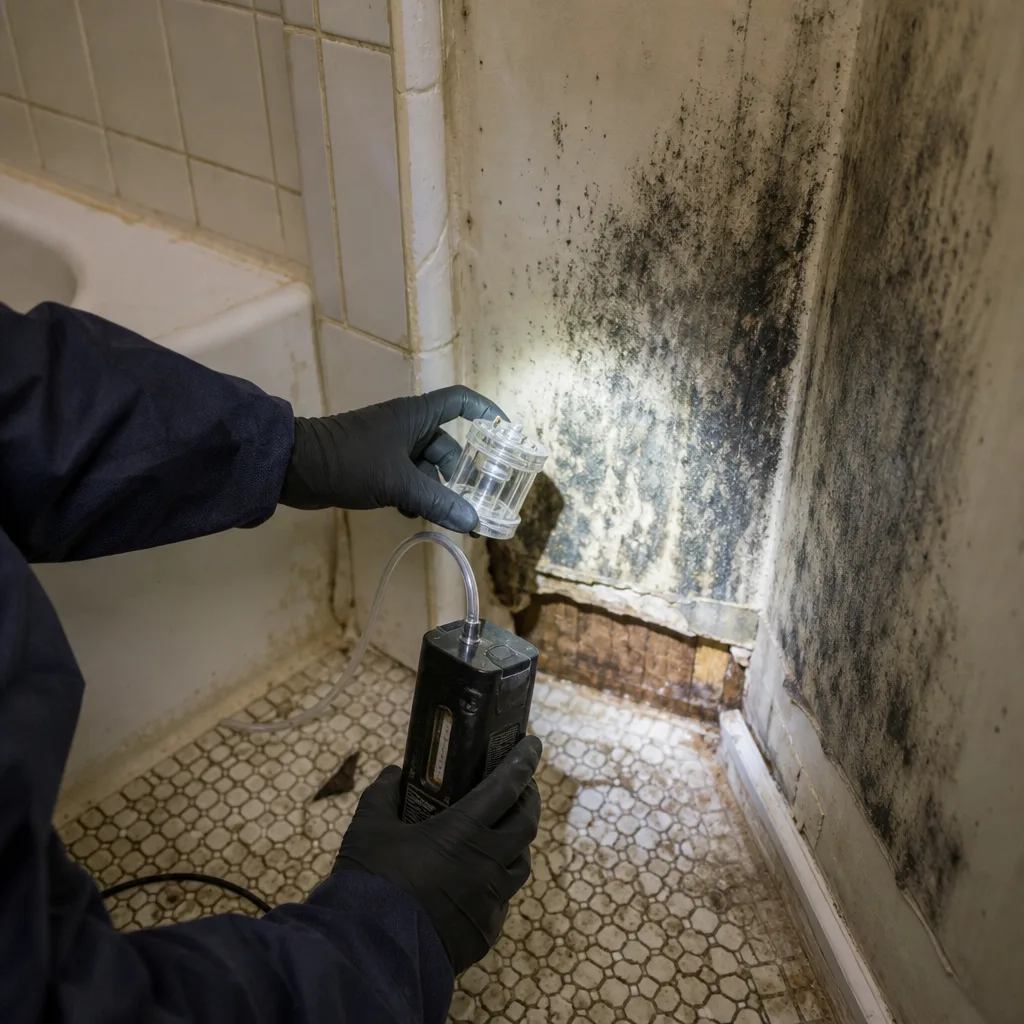
Before we remediate, we identify. In a Forest Hills rowhouse or apartment, that means air sampling, surface sampling, and moisture mapping. Testing tells us the spore type and concentration. It also protects you from paying for remediation that wasn’t needed, or missing mold that was. We test, then we scope. In Forest Hills Gardens, testing is especially important because the LPC paperwork needs a documented baseline before walls are opened.
Mold Removal
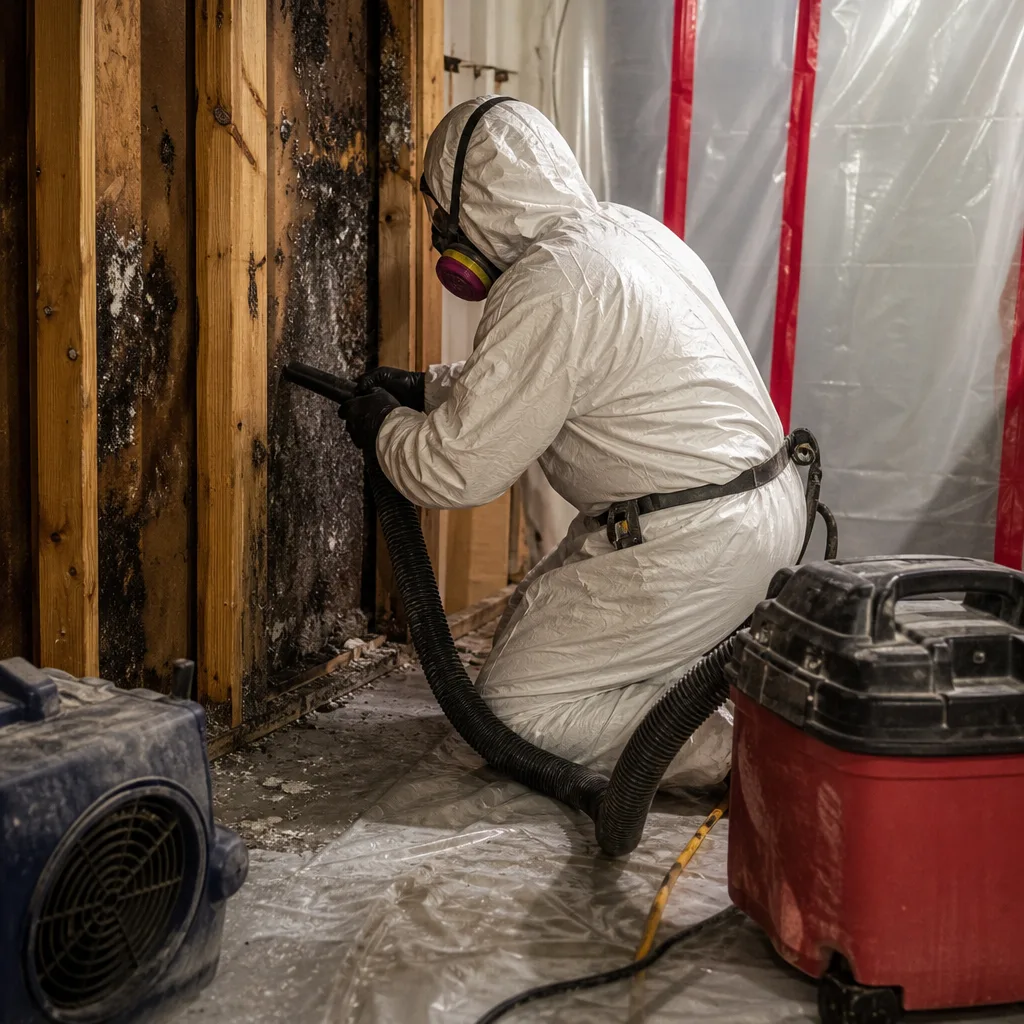
Mold removal is the physical work: removal of contaminated drywall, plaster, insulation, carpet, and surface growth under containment. We bag and dispose of the material under local and state guidelines. In close-built rowhouse blocks near Austin Street, proper containment is not just about your home. It protects the neighbors’ air. We run negative air pressure and HEPA air scrubbers until the spore counts drop to safe levels.
Black Mold Remediation
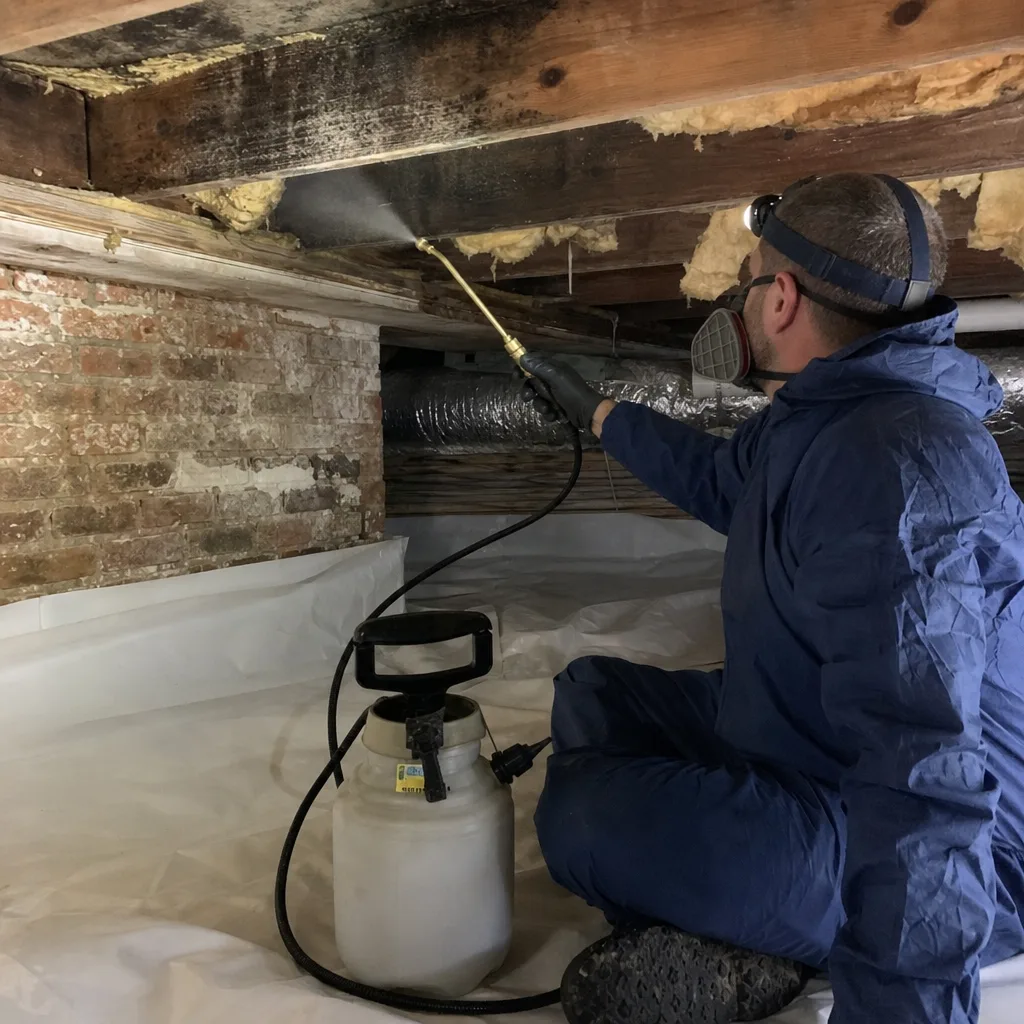
Black mold, or Stachybotrys, grows in chronically damp, cellulose-rich material. That’s exactly what lath-and-plaster and wood framing behind an old wall provide. In Forest Hills, we find black mold in basements, behind kitchen cabinets, under windows that have leaked for years. It requires full containment, aggressive HEPA filtering, and rigorous clearance testing before anyone returns to the space. We do not cut corners on this. A written guarantee means nothing if the spores are still there.
Air Quality Restoration
Once mold is removed, the air still holds spores. We run HEPA air scrubbers during and after remediation. We check the indoor air against the outdoor baseline. The standard isn’t “looks clean.” It’s “measures clean.” In pre-war apartments along Queens Boulevard where windows barely open, cross-ventilation isn’t enough. We use equipment to move air and filtration to clean it.
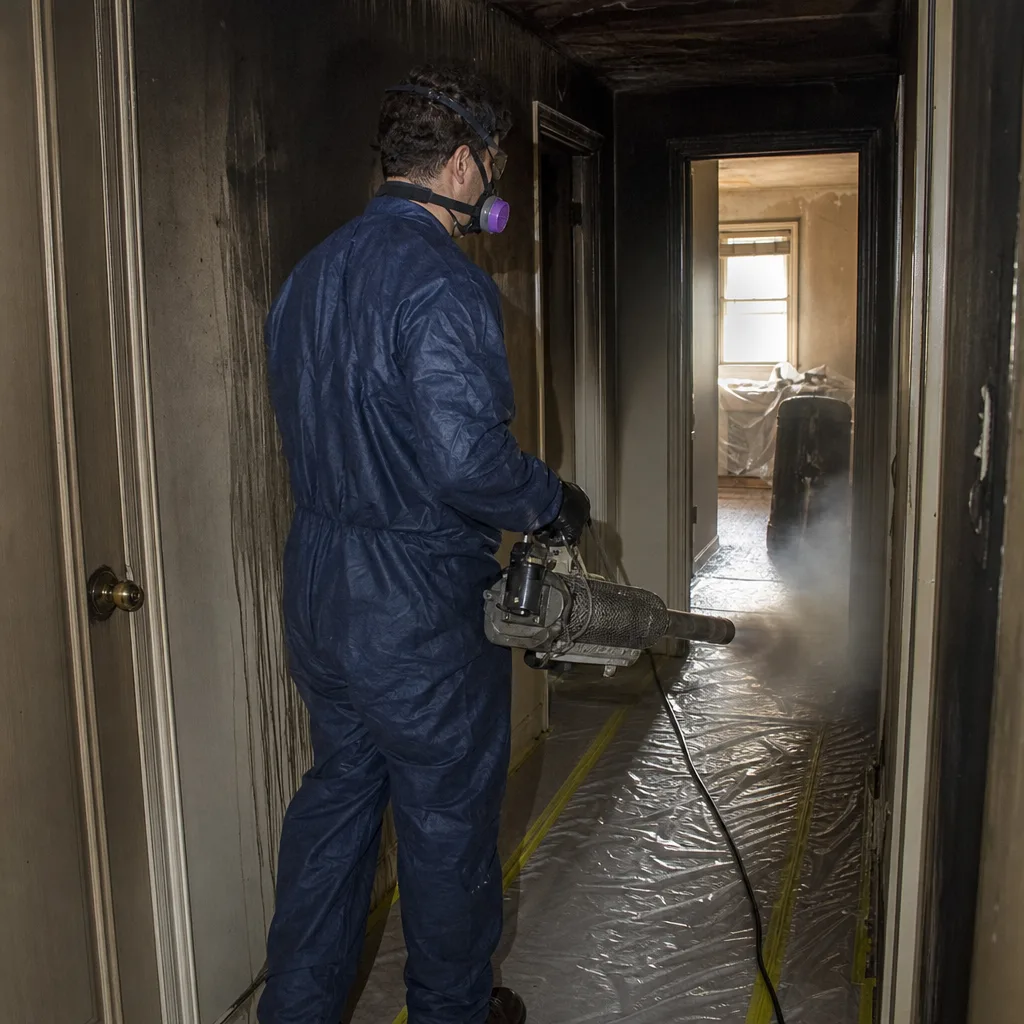
Crawl Space Treatment
Crawl spaces under Forest Hills rowhouses are damp for half the year. The soil holds moisture from rain and snowmelt. That moisture rises into floor joists and eventually into the living space. We encapsulate crawl spaces, install vapor barriers, run dehumidifiers, and treat framing. The crawl space is where most hidden mold in Forest Hills starts. If you smell a musty odor and can’t find the source, look down.
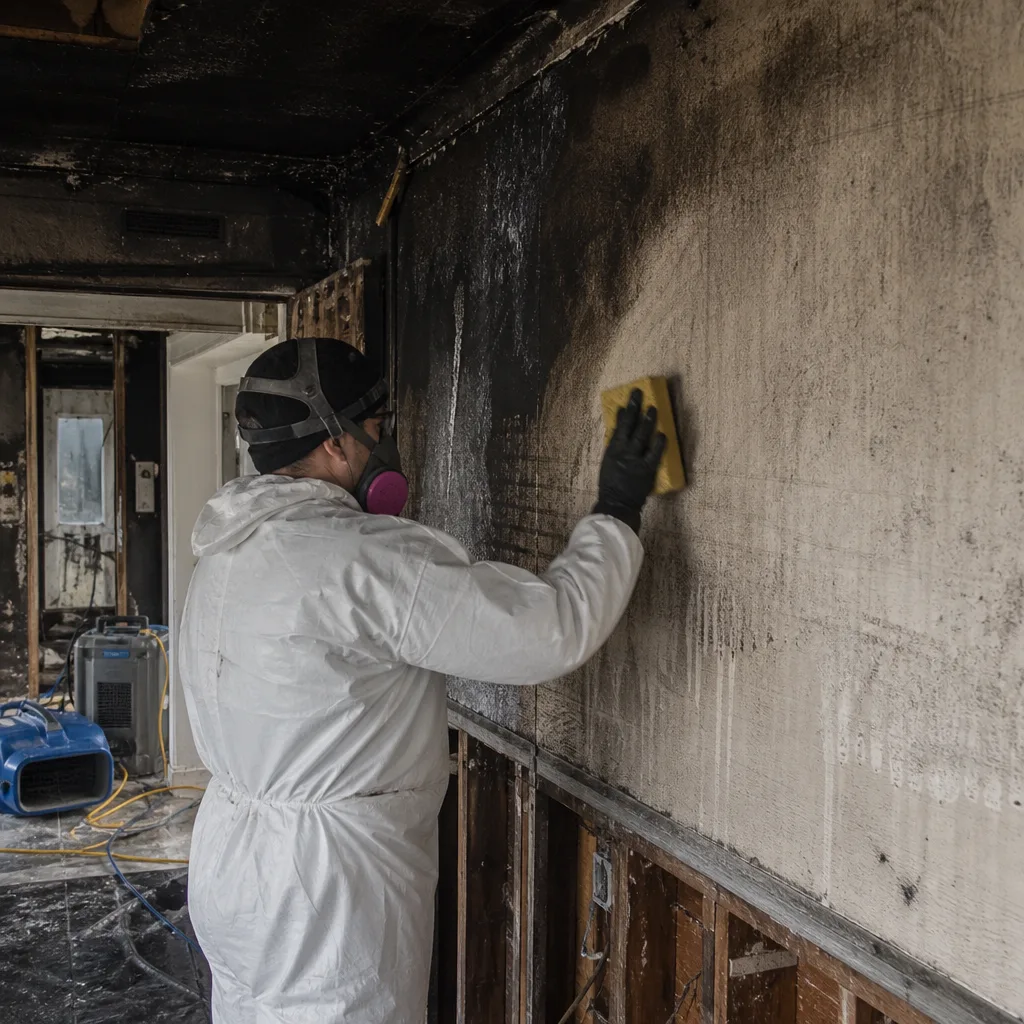
Moisture & Humidity Control
Mold remediation is wasted if the humidity stays above 60 percent. We install dehumidification systems in basements and crawl spaces, repair drainage, fix supply line leaks, and seal cracks in foundation walls. Forest Hills basements, in particular, need active humidity control. Original stone or brick foundations wick moisture all year. You can clean mold off a wall in an afternoon. If the wall is wet next month, what did you fix?
What happens when you call
- 1
A real person answersNo phone trees - you reach a local pro.
- 2
You get an upfront price rangeHonest numbers before anyone is dispatched.
- 3
A background-checked tech heads outLicensed & insured, dispatched right away.
- 4
You approve before work beginsNothing starts until you say go.
Mold Remediation Costs in Forest Hills, NY
Here are real numbers for Forest Hills, not national averages. A contained bathroom mold removal in a typical Forest Hills apartment runs $1,400-$2,600. A basement sewage-backup mold job with category 3 water removal, containment, material removal, and drying runs $3,500-$7,000. A full lath-and-plaster wall remediation inside Forest Hills Gardens that requires LPC review, period plaster matching, and custom trim replication runs $8,000-$15,000 plus LPC filing fees. What moves the price: square footage of visible mold, whether walls must be opened, whether sewage or groundwater is involved, whether your building is in the Gardens, and how long the moisture was present. Insurance often covers the water damage and the direct mold remediation that follows a sudden, accidental water event. Chronic humidity and neglected leaks usually fall outside coverage. The fastest path to a firm number is a free visual inspection. Call (917) 924-4221, and we’ll tell you exactly what the job will cost before any work begins.
We Also Serve Cities Near Forest Hills
Our crews work throughout central Queens. We handle mold inspection, remediation, and moisture control in Rego Park and Kew Gardens, with their own mix of pre-war apartments and attached houses. We serve Corona, where older flats and rowhouses face chronic basement humidity, and Middle Village, where crawl space moisture is the most common entry point for mold. The same live-answer phone number covers all of it: (917) 924-4221.
Forest Hills Mold Remediation Questions, Answered
Does mold remediation in Forest Hills Gardens require Landmarks Preservation Commission approval?
Yes, if remediation opens walls, ceilings, or any surface visible from the street. The Landmarks Preservation Commission reviews proposed restoration work in the Forest Hills Gardens historic district and requires materials to match original period construction, including lath-and-plaster, millwork profiles, and masonry. We handle LPC documentation and coordinate with approved specialists. Starting work without LPC approval creates a stop-work order and forces costly rework. Call (917) 924-4221 before you or any contractor opens a wall in the Gardens.
How do combined sewer backups during heavy rain affect mold risk in Forest Hills basements?
Heavy rain overwhelms the combined sewer system and sends category 3 water into basements via floor drains and toilets. That water carries sewage, bacteria, and organic material into porous materials like wood, plaster, and carpet. Mold growth begins within 24 to 48 hours. Category 3 water and the mold that follows require full containment, antimicrobial treatment, and disposal of contaminated material. A basement that floods with sewage and is only dried, not properly remediated, will grow mold behind the walls for months. Call (917) 924-4221 the same day it happens.
What makes mold remediation in pre-war Forest Hills Garden apartments different from newer buildings?
Pre-war Garden apartments have lath-and-plaster walls, original wood framing, and plumbing that has been in service for 80 to 100 years. Plaster holds moisture longer than drywall, hides leaks longer, and complicates containment because it’s heavier and dustier when removed. The original plumbing, often galvanized or early copper, is more likely to fail slowly inside wall cavities, meaning mold can establish itself long before a leak is visible. We map moisture inside wall cavities with thermal imaging and hygrometers before we touch the surface. Newer construction gives you drywall and accessible shutoffs. A 1926 house on Greenway Terrace gives you a different set of rules.
Why should I have mold inspection and testing done before starting remediation in a Forest Hills rowhouse?
Because testing identifies the mold type, the spore concentration, and the moisture source before any material is removed. Without testing, you risk two expensive mistakes: paying for remediation of a surface stain that wasn’t mold, or missing mold behind walls because you only treated what was visible. In a rowhouse, mold travels through shared wall cavities and floor joists. Testing gives us a documented baseline, tells us how far containment has to extend, and gives your insurer a defensible reason for the scope we recommend. It also tells you whether the air in the home is safe to breathe while work is underway.
Do you need to dry out a Forest Hills Gardens basement before removing mold from lath-and-plaster walls?
Yes. You dry the structure before you remove the mold, because the mold will return if the moisture isn’t gone. In a lath-and-plaster wall, that means taking moisture readings from multiple depths, running dehumidifiers and air movers, and logging readings daily until the wood lath and framing hit the dry standard. We dry first, contain, remove the mold-damaged material, then restore the plaster to LPC spec. Drying in a pre-war basement without drainage improvements is a temporary fix. We address the water source and the humidity as part of the same job.
How quickly can a mold remediation team reach a home in Forest Hills?
Our dispatch commits to 45 minutes from the moment you call. We keep crews staged in and around Forest Hills for exactly this reason. Mold doesn’t wait, and neither does hidden moisture. A live person answers (917) 924-4221 around the clock, takes your address and the details of what you’re seeing, and dispatches the nearest certified crew. Most Forest Hills jobs have a technician on site within the hour, not the next day.
Will insurance cover mold remediation in Forest Hills?
Insurance typically covers mold remediation if it directly results from a sudden and accidental water event, like a burst supply line or a storm-driven roof leak. It generally does not cover mold from long-standing humidity, slow leaks that went unreported, or chronic condensation. We document everything and bill your carrier directly. We’ll tell you honestly what likely falls within your policy before you commit to a scope.
Can I stay in my Forest Hills home during mold remediation?
In many cases, yes, if proper containment is in place and the affected area is isolated from living spaces. In severe cases, especially black mold with high airborne spore counts or sewage-backup contamination, we may recommend vacating the immediate area during containment and initial removal. We test the air before and after. If the numbers say the living area is safe, you can stay. If not, we’ll say so plainly.
What We’ve Learned Inside Forest Hills Gardens
We were called to a 1926 home on Greenway Terrace with a sewage backup that had wicked moisture into original lath-and-plaster walls. The homeowner had been told by another contractor to just “bleach it and paint.” That advice would have cost them tens of thousands in LPC rework later. We ran containment, air movers, and dehumidifiers per drying logs, removed category 3 water-damaged material, then coordinated an LPC-approved horsehair-plaster patch before antimicrobial treatment. The wall is now dry, the plaster matches the original, and the paperwork is filed. That’s the difference between a clean-up crew and a restoration company that knows Forest Hills. We stand behind our work with the 90-Day Done Right Promise, in writing. If it’s not done right, we make it right. No arguing.
Serving Forest Hills, NY - Our Local Coverage Area
We’re based in the Forest Hills area and know this community well. Use the map below to see our service coverage - if you’re nearby, we can almost certainly help.
Schedule Your Free Mold Inspection in Forest Hills
A visual inspection costs you nothing. We’ll walk your home, take moisture readings, and give you a written scope if remediation is needed. If it’s not, we’ll tell you that too. Call (917) 924-4221 any hour. A live person answers, a certified crew arrives, and you get a straight answer from a company that has been doing this work for over 42 years. The smartest move with mold in Forest Hills is to find out what you’re actually dealing with before it spreads further.
Written by Curt Bowman, Owner at Floodline Restoration Co. of Manhattan, serving Forest Hills.