
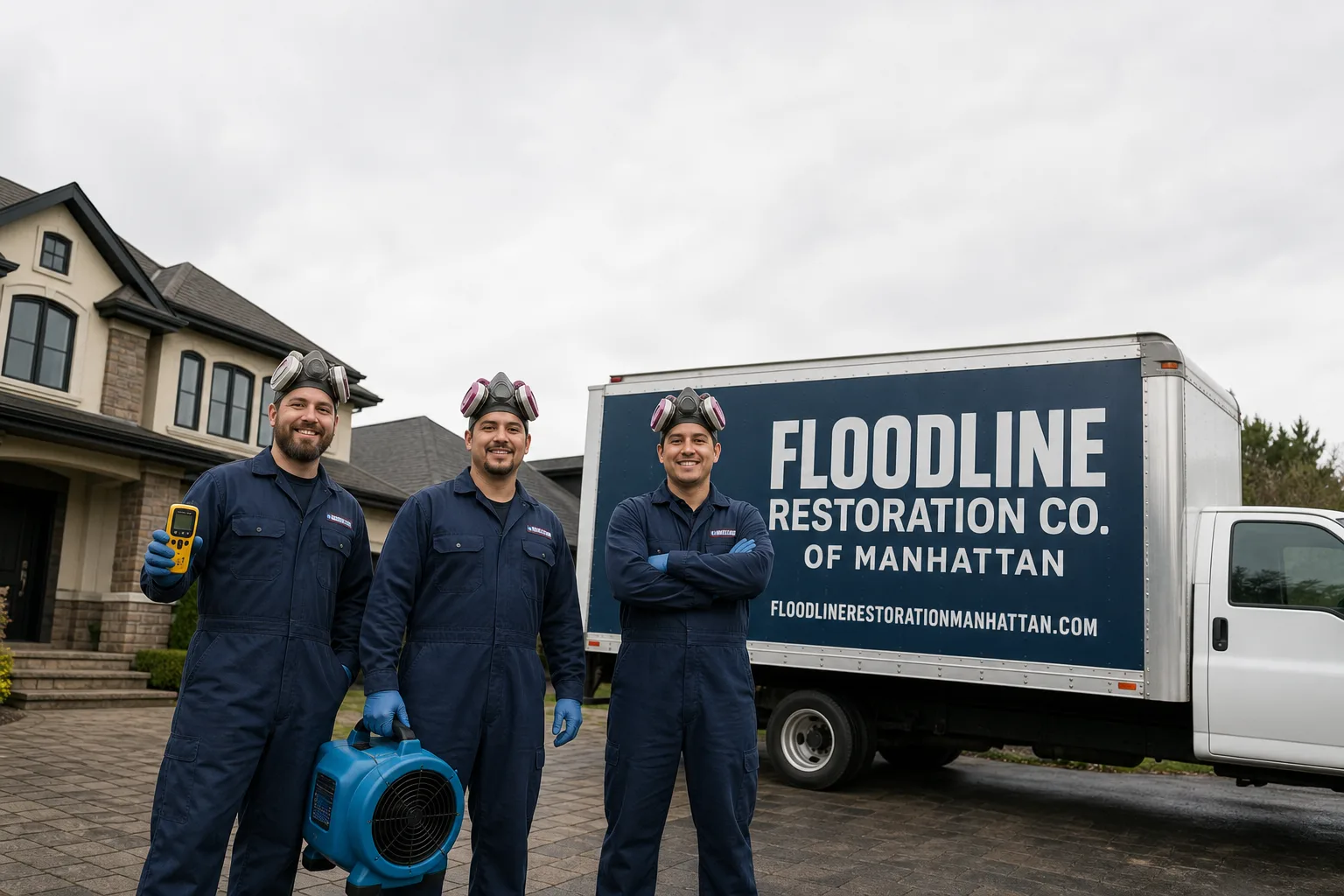
Free visual inspection and a written scope of work before any mitigation begins - photos, moisture readings, and drying logs go in your claim file
The scope we write is the scope we bill. Anything new gets shown to you, in writing, before we touch it.






 Before
 After
After Before
 After
After Before
 After
After24/7 Emergency Mold Remediation in Kensington
Mold remediation in Kensington typically runs $1,800 to $6,400 depending on how far the colony has spread behind plaster walls, and we answer the phone at (917) 924-4221 around the clock. When you call, a live dispatcher picks up, not a recording. We’ll have a crew headed toward your street within 45 minutes, and the first visual inspection is free. Mold doubles its footprint roughly every 48 hours once moisture is present, so the first call matters more than any step that follows. If you’ve spotted black staining along baseboards, caught a musty smell that won’t air out, or had water come through a ceiling during the last nor’easter, call now. The faster we set containment and begin drying, the smaller the job stays.
Understanding Mold Remediation Severity in Kensington Properties
Not every mold call is the same, and Kensington’s housing stock makes severity assessment a different job than it is in newer subdivisions. We classify mold growth by square footage of visible colonization, presence behind walls, and whether the moisture source is active or historical. A small bathroom colony under 10 square feet is a cleaning-and-source-correction job. But in Kensington’s pre-WWII colonials and Tudors, what starts as a small patch frequently traces back to corroded galvanized supply lines inside original plaster walls, failed slate flashing at dormers, or decades of condensation trapped against old-growth framing. Those jobs require full containment, HEPA air scrubbing, and clearance testing before anyone occupies the space again. We also distinguish between mold staining on plaster versus penetration into lath and insulation, a difference that changes the scope from surface cleaning to wall-cavity removal. And because the Village of Kensington has its own building department requirements for behind-the-wall remediation, we scope every job to village code from the first visit, not after the walls are open.
Why Kensington Property Owners Choose Floodline Restoration Co. of Manhattan
- 45-minute response commitment. We dispatch from our New York City office and crews reach Kensington fast, day or night. You won’t sit overnight with active mold growth.
- 24/7 live answer. A real person picks up at 3 a.m., not an automated tree. You’ll speak to someone who knows restoration, not a call-center script.
- IICRC-certified crews. Our technicians hold IICRC certification relevant to mold, including AMRT for applied microbial remediation. They show up uniformed, background-checked, and ready to work.
- Free visual inspection. We walk the property, locate moisture sources, and tell you honestly whether you need full remediation or a targeted cleaning. No fee, no obligation.
- Direct insurance billing. We deal with your carrier, not you. You get photo documentation, moisture logs, and a line-item scope your adjuster can actually use.
- One team from containment to rebuild. We don’t hand your house off to a subcontractor after demolition. The same crew that sets containment handles drying, treatment, and reconstruction.
Our Mold Remediation Process
Inspection & Assessment
We map moisture with thermal imaging and hygrometers, test suspect surfaces, and identify the water source. For Kensington homes, that means checking original plumbing, roof flashing, and the wall cavities behind plaster, not just the visible stain.
Containment & Source Control
We stop the water first, whether that means shutting down a corroded pipe or patching flashing. Then we seal the affected area with 6-mil poly containment and run negative air to keep spores from moving through the house.
Drying & Dehumidification
Dri-Eaz and Phoenix dehumidifiers and air movers run continuously, with daily moisture readings logged until we hit the dry standard. In Kensington’s plaster-walled homes, drying takes longer than drywall, and we plan for that from day one.
Cleaning & Sanitization
Non-salvageable material, including mold-saturated plaster or insulation, comes out under containment. Salvageable hardwood and millwork get HEPA vacuuming, wire brushing, and antimicrobial treatment applied to IICRC standards.
Air Quality Restoration
HEPA air scrubbers run during work and after to address airborne spores. For Kensington homes with original plaster crown molding or irreplaceable woodwork, we prioritize dry media and surface treatment over unnecessary demolition.
Repairs & Restoration
Our own team rebuilds what was removed, matching period plaster dimensions and wood profiles instead of slapping in generic drywall. The village permit we pulled before cutting stays open until final inspection passes.
Need Emergency Mold Remediation in Kensington Now?
Crews minutes away, answering live 24 hours a day. The sooner we start, the less it costs.
Working With Your Insurance Company
Mold claims get scrutinized harder than almost any other restoration category. Insurance companies want to know the moisture source, the timeline, and whether the homeowner did due diligence. That’s why we build the claim file from the first hour: dated photos of every affected room, thermal imagery of hidden moisture, daily drying logs, and a line-item scope of work that uses the same estimating platform your carrier uses. We communicate directly with your adjuster, so you don’t get caught playing messenger between us and the insurance desk. If your policy covers mold remediation, often a sublimit tied to a covered water event, we document everything to maximize what you’re owed. Done right and backed in writing.
What We Provide Your Insurer
- Thorough documentation of the loss
- Photos of all damage, room by room
- Moisture readings and drying logs
- A detailed, line-item scope of work
- Direct coordination with your carrier
Built for Kensington’s Loss Calendar
Kensington sits on Long Island’s North Shore, and the seasonal pattern that feeds mold growth here is predictable if you know what to watch. Nor’easters run from late fall through early spring, driving wind-driven rain into aging slate roofs, dormers, and masonry on 1920s-to-1950s homes. That’s when we see water tracking down inside walls and pooling on lath behind intact plaster, the kind of damage that stays hidden until mold or a bulging ceiling announces it. Spring thaw follows, and Kensington’s mature tree canopy keeps the ground dense and shaded, which holds humidity against foundation walls and crawl spaces. Summer thunderstorms hit fast, overwhelming old gutter and leader systems on large homes. January deep freezes burst aging galvanized supply lines, a recurring theme in Kensington’s original plumbing. Every season gives mold a new opening, and the homes that stay cleanest are the ones where water events get dried within 24 hours, not painted over or patched and forgotten.
Mold Remediation Across Kensington’s Neighborhoods
Kensington is a small, incorporated village, and its streets are defined more by block character than named subdivisions. The homes along Beverly Road and the streets running north toward the Long Island Expressway are predominantly large colonials and Tudors from the 1920s and 1930s, many with original slate or clay tile roofs and plaster-and-lath throughout. Off Kensington Road and toward the southern edge of the village, we see more postwar ranches and split-levels where the wall assemblies are simpler, but the crawl spaces hold decades of accumulated humidity. On the narrower side streets near the village border with Great Neck, side doors often run 28 to 30 inches wide, and single-stall garages are the norm. That access reality changes how we stage equipment. A standard commercial air mover won’t clear some of those side entries with a turn, so we break equipment staging into phases, hand-carrying units through narrow walkways and setting up in tight basements where older mechanical rooms have barely enough clearance for a dehumidifier. We know these blocks. That knowledge shows up in the scoping.
Specialized Mold Remediation Services We Offer in Kensington
Mold Inspection & Testing
We test surfaces and air inside Kensington homes, with a focus on the wall cavities behind original plaster. Using thermal imaging and moisture meters, we can locate hidden moisture without tearing into plaster unnecessarily, then pull samples where they’ll actually tell you something about what’s growing behind the walls.
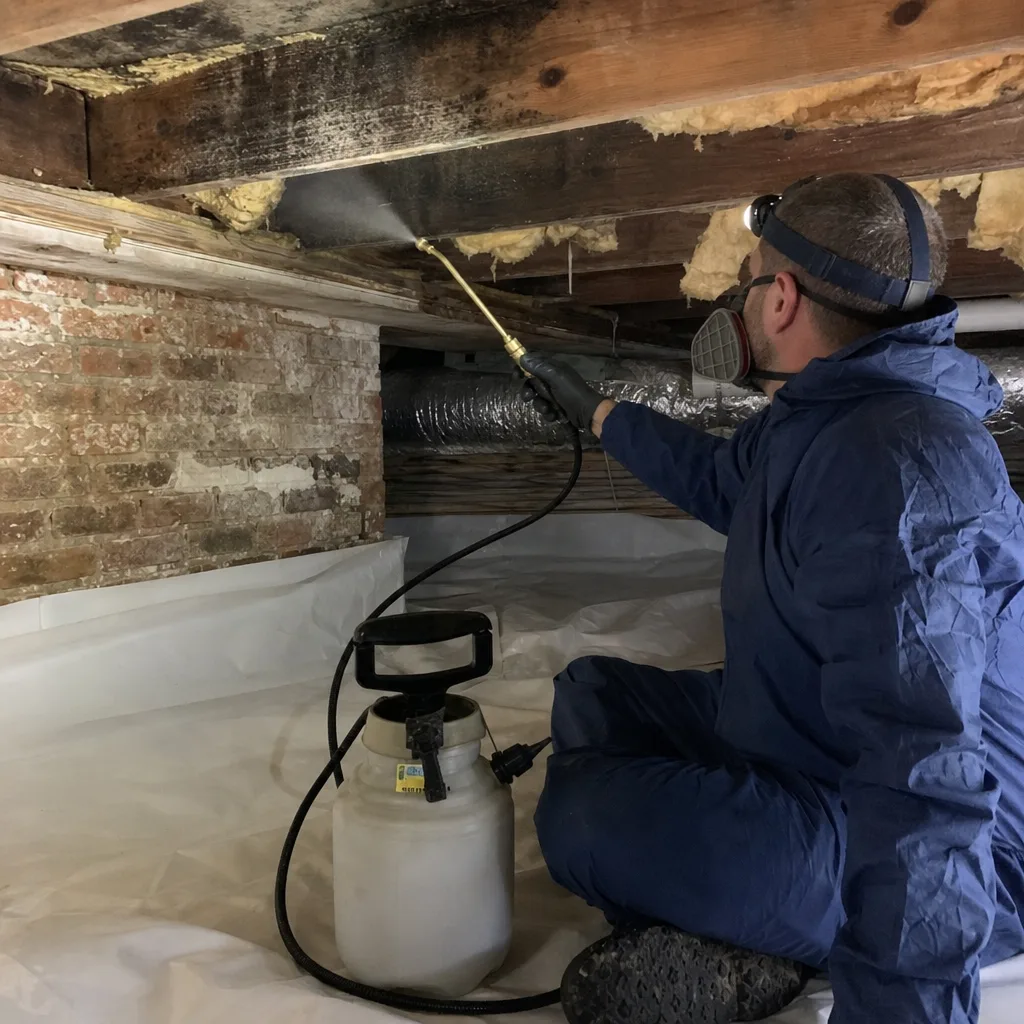
Mold Removal
For Kensington’s older homes, mold removal means precision work around irreplaceable millwork, plaster crowns, and hardwood floors. We remove what can’t be salvaged, treat what can, and keep demolition to the minimum required for clearance testing rather than gutting rooms by default.
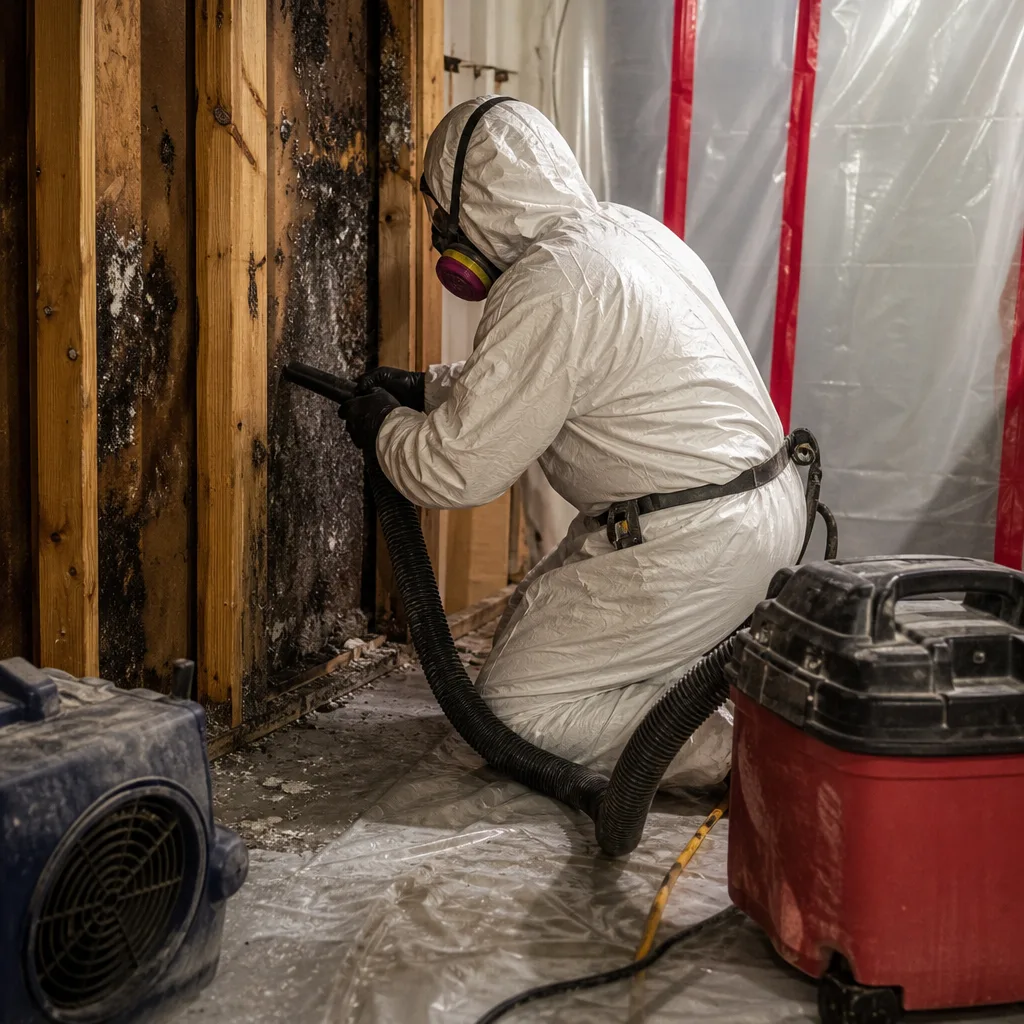
Black Mold Remediation
Stachybotrys, the mold commonly called black mold, grows where water has sat for days or weeks. In Kensington, we most often find it behind exterior walls after roof leaks, under windows with failed flashing, and around corroded plumbing lines inside plaster cavities. Full containment and HEPA air scrubbing are standard on these jobs.
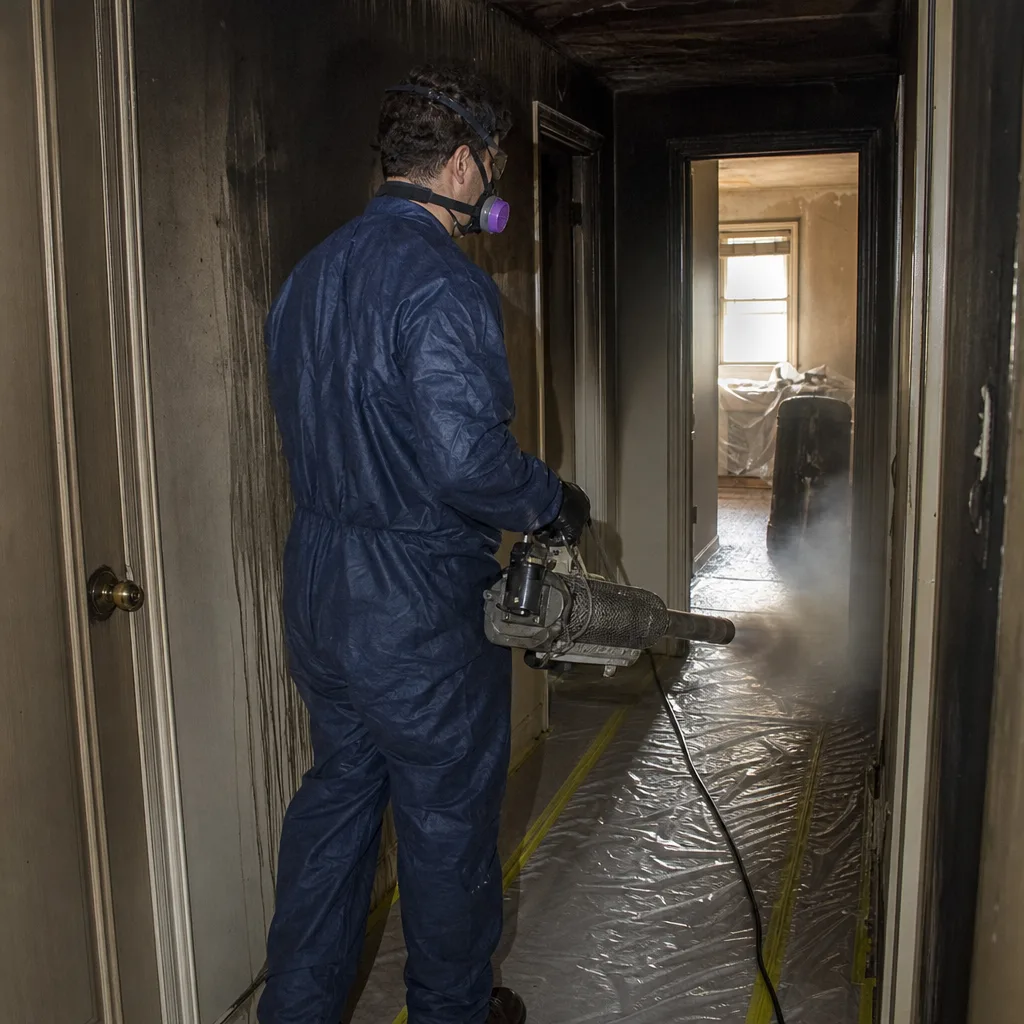
Air Quality Restoration
After remediation, airborne spore counts don’t always fall on their own. We run HEPA air scrubbers during active work and post-clearance air sampling before we pull containment. For Kensington homeowners with respiratory sensitivities or plans to sell within a year, that clearance documentation is worth keeping.
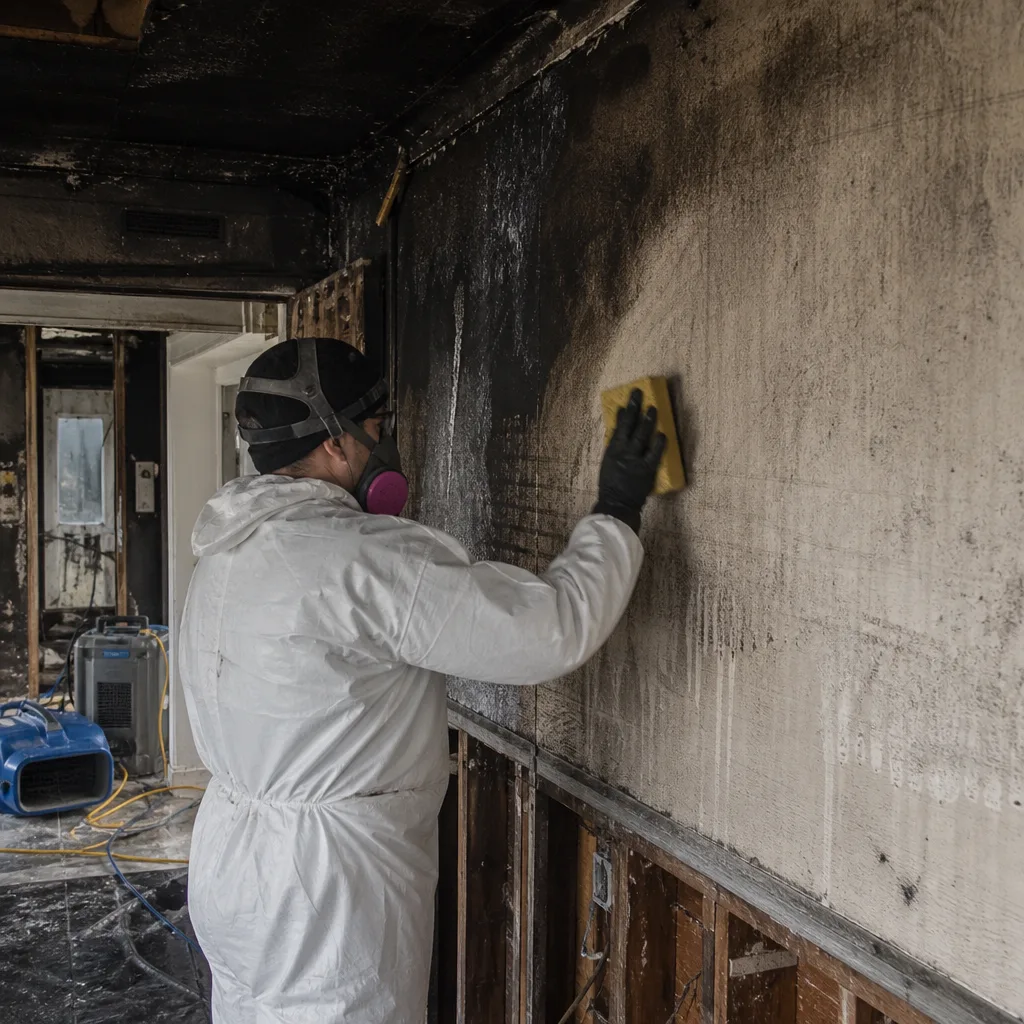
Crawl Space Treatment
Kensington’s shaded lots hold moisture against foundation walls, and crawl spaces become mold incubators. We dry them, treat the framing, install vapor barriers where appropriate, and log the moisture levels so the fix shows up in writing, not just in how the house smells afterward.
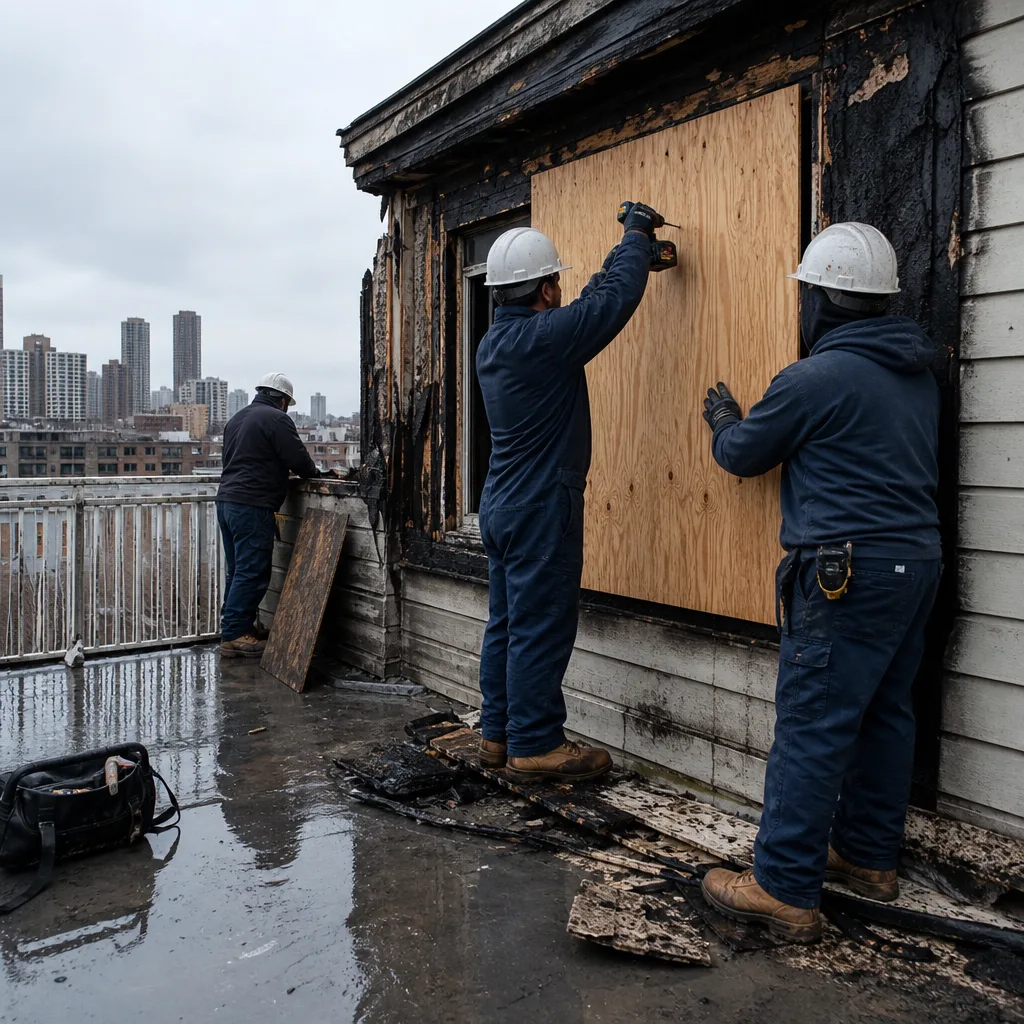
What happens when you call
- 1
A real person answersNo phone trees - you reach a local pro.
- 2
You get an upfront price rangeHonest numbers before anyone is dispatched.
- 3
A background-checked tech heads outLicensed & insured, dispatched right away.
- 4
You approve before work beginsNothing starts until you say go.
Mold Remediation Costs in Kensington, NY
In Kensington, a contained bathroom or closet mold job typically runs $1,800 to $3,200. A full basement or crawl space remediation lands between $4,000 and $8,500, depending on square footage, whether plaster must be opened, and how long drying equipment runs. Behind-the-wall mold in a 1930s plaster-and-lath home, including village permits, containment, treatment, and period-appropriate repair, often falls in the $5,500 to $9,000 range. What moves the price? The moisture source, first. A failed slate flashing repair is cheaper than repiping corroded galvanized lines. Access matters too. Hand-carrying equipment through a 28-inch side door and down a tight Kensington basement stair adds labor hours. Insurance-covered jobs, where a covered water event caused the mold, may reduce your out-of-pocket to your deductible. Every job starts with a free visual inspection, followed by a written scope with firm numbers before any work begins. Call (917) 924-4221 and we’ll walk you through what your specific home actually needs.
We Also Serve Cities Near Kensington
Our crews regularly work in the communities surrounding Kensington, including Fairview, Harrison, East Bronx, and Hunts Point. If you’re just across the village line, the same team, same equipment, and same 90-Day Done Right Promise apply. Mold Remediation in Kensington is our focus page, but the service area extends throughout the surrounding metro.
Serving Kensington, NY - Our Local Coverage Area
We’re based in the Kensington area and know this community well. Use the map below to see our service coverage - if you’re nearby, we can almost certainly help.
Kensington Mold Remediation Questions, Answered
Does the Village of Kensington require its own permit for mold remediation behind plaster walls, or is Nassau County’s permit enough?
The Village of Kensington has its own building department and requires a village permit for any remediation that opens wall or ceiling cavities, even when Nassau County’s rules don’t. We pull the village permit before we cut into any pre-WWII plaster, and we keep it open through final inspection. Skipping that step is a common mistake we correct for homeowners, and it can surface as an open violation during resale.
Why does mold keep returning in my 1930s Kensington home after a standard drywall patch?
Patching original plaster-and-lath with modern drywall creates a material mismatch that traps moisture between dissimilar layers and produces cold joints on old-growth framing. That hidden moisture feeds mold regrowth, sometimes within 48 hours. The fix is removing the affected lath, drying the framing to standard, treating it, and rebuilding with materials matched to the home’s original assembly. Call (917) 924-4221 for an assessment.
Will your air movers and dehumidifiers fit through the narrow side door of my Kensington colonial?
Yes. We know Kensington’s tight clearances, the 28-inch side doors, the single-stall garages, and the narrow basement stairs. We stage larger equipment off-site and hand-carry units in phases rather than forcing a standard dehumidifier through a door it won’t clear with a turn. Access planning is part of our scope, not an afterthought.
Can you test for mold inside my Kensington walls without tearing out the original plaster?
Yes. We use thermal imaging and penetrating moisture meters to locate hidden moisture behind plaster, then take air or surface samples through small access points when needed. In many cases we can confirm whether mold is present and where it’s concentrated without opening full wall sections. Call us for a free visual inspection and we’ll tell you what testing your home actually needs.
What happens when old galvanized pipes in my Kensington home corrode behind the wall, is that mold remediation or a full repipe?
It’s often both. Corroded galvanized supply lines in Kensington’s original plumbing leak slowly inside wall cavities, creating the moisture that feeds mold. Remediation opens the cavity, removes affected plaster and lath, treats the framing, and dries everything to standard. Then the plumbing repair or repipe happens before we rebuild. We coordinate both scopes so the wall isn’t opened twice, and we document it all for your insurer.
How fast can someone actually get to my Kensington house for a mold emergency?
We commit to a 45-minute dispatch response to Kensington, with a live person on the phone 24 hours a day. For active water feeding mold growth, the first visit includes source control and containment setup so the problem stops spreading while we scope the full remediation.
Will insurance cover mold remediation in Kensington?
Insurance covers mold remediation when it’s tied to a covered water event, like a burst pipe or storm-driven roof leak. Most policies carry a mold sublimit, typically $10,000 or less on standard homeowner’s forms, and some policies exclude mold entirely. We document the water event, the moisture timeline, and the remediation scope directly to your adjuster so the claim stands up. Get the free inspection first, then we’ll help you understand what your policy actually covers.
What should I do in the first 30 minutes after I find mold in my Kensington home?
Stop the water source if you can safely reach it, shut off affected HVAC to keep spores from circulating, and call us at (917) 924-4221. Don’t paint over it, don’t bleach it, and don’t tear into the wall yourself. Disturbing mold releases spores into the air and makes the remediation larger than it had to be. The first 30 minutes are for stopping spread, not for DIY.
Written by Curt Bowman, Owner at Floodline Restoration Co. of Manhattan, serving Kensington and the surrounding New York metro.