
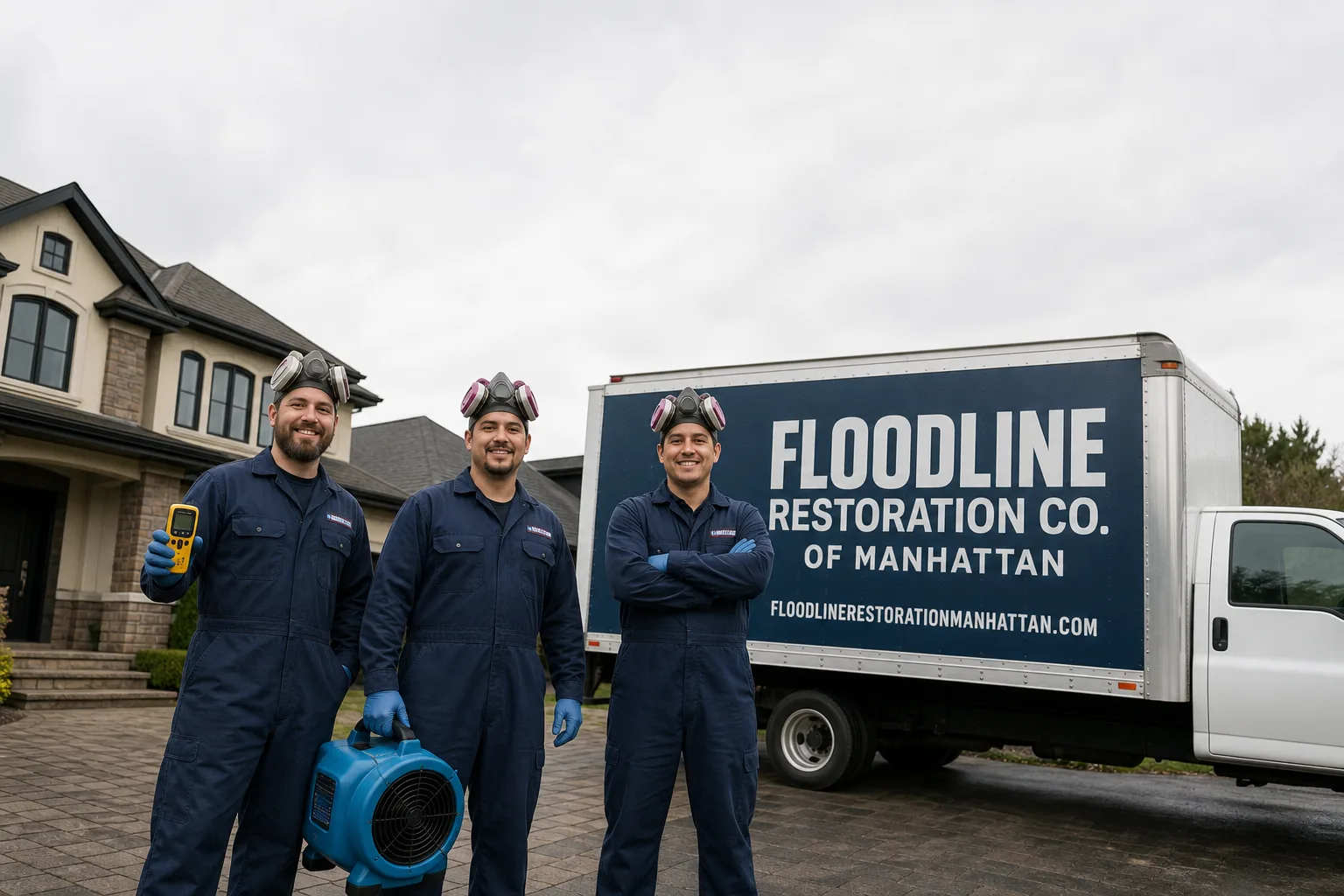
Free visual inspection and a written scope of work before any mitigation begins - photos, moisture readings, and drying logs go in your claim file
The scope we write is the scope we bill. Anything new gets shown to you, in writing, before we touch it.
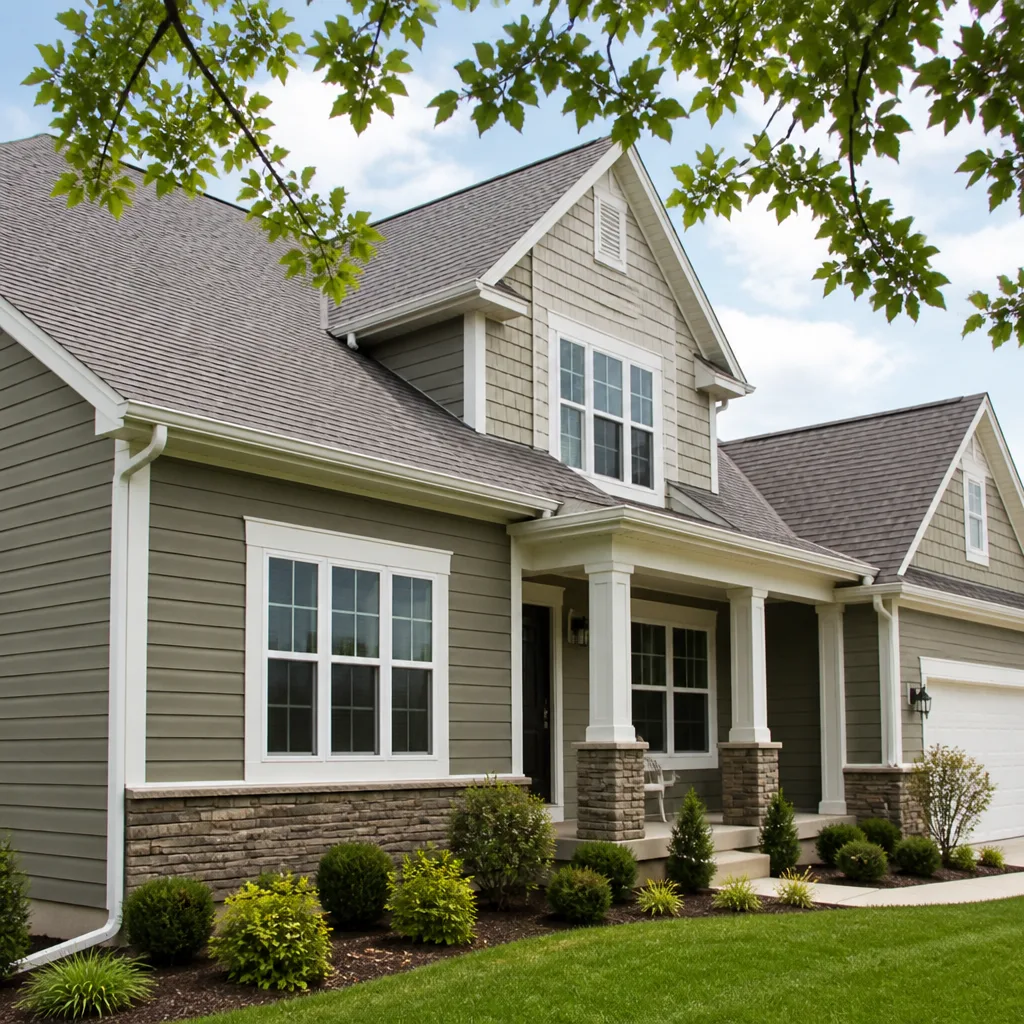
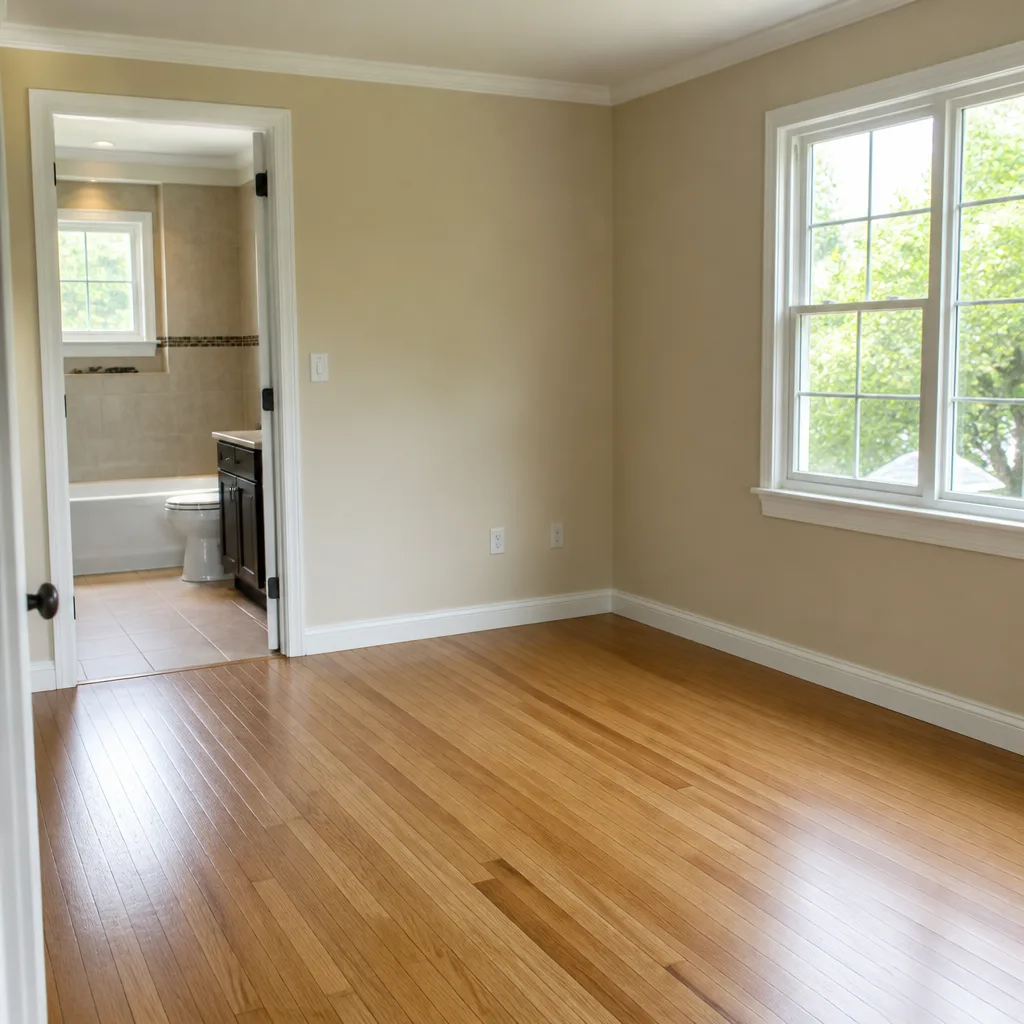
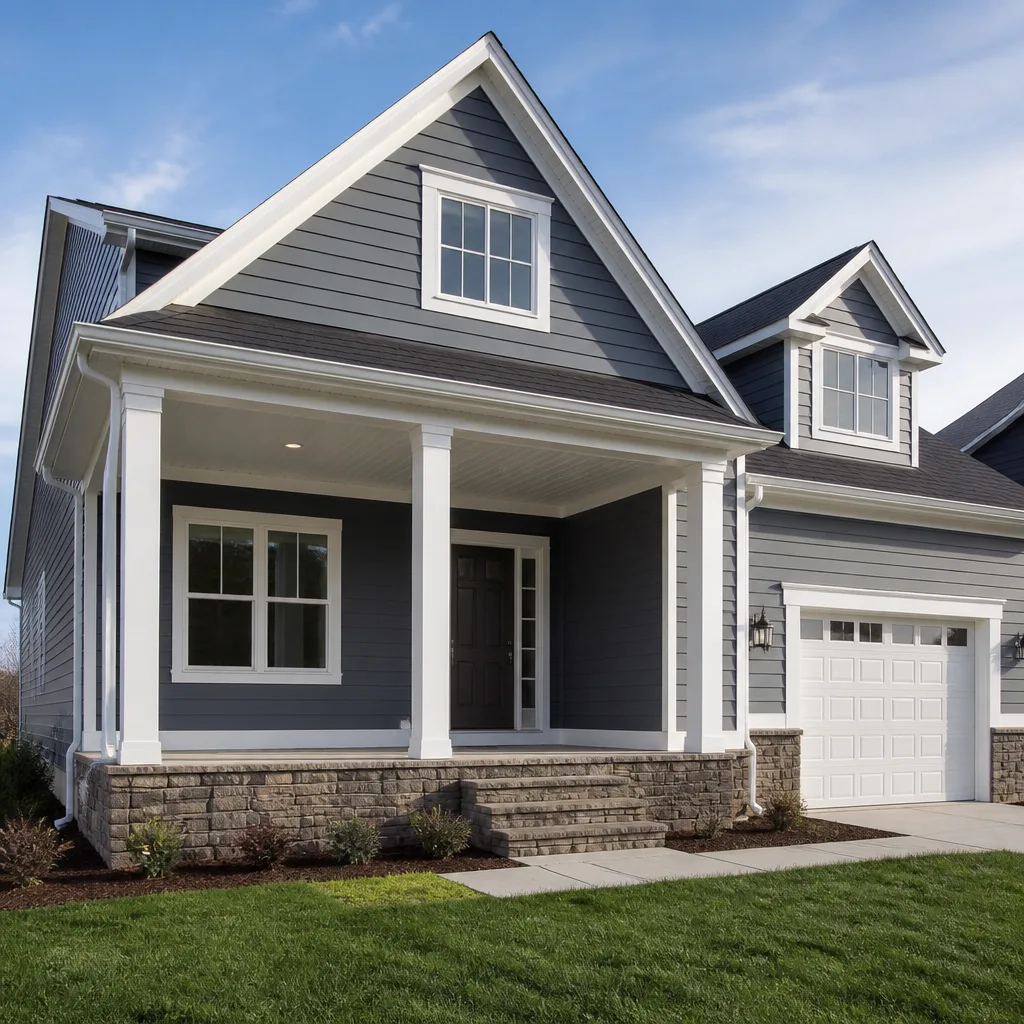
 Before
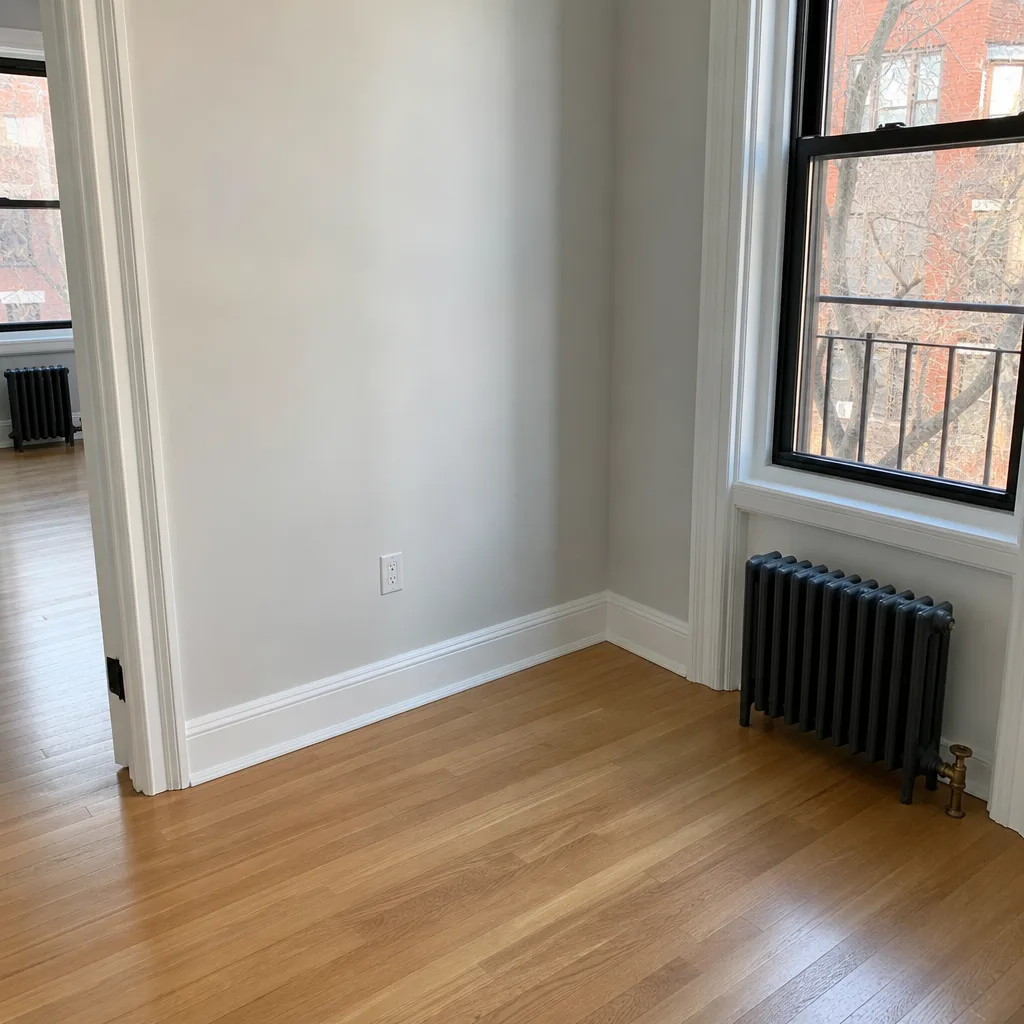 After
After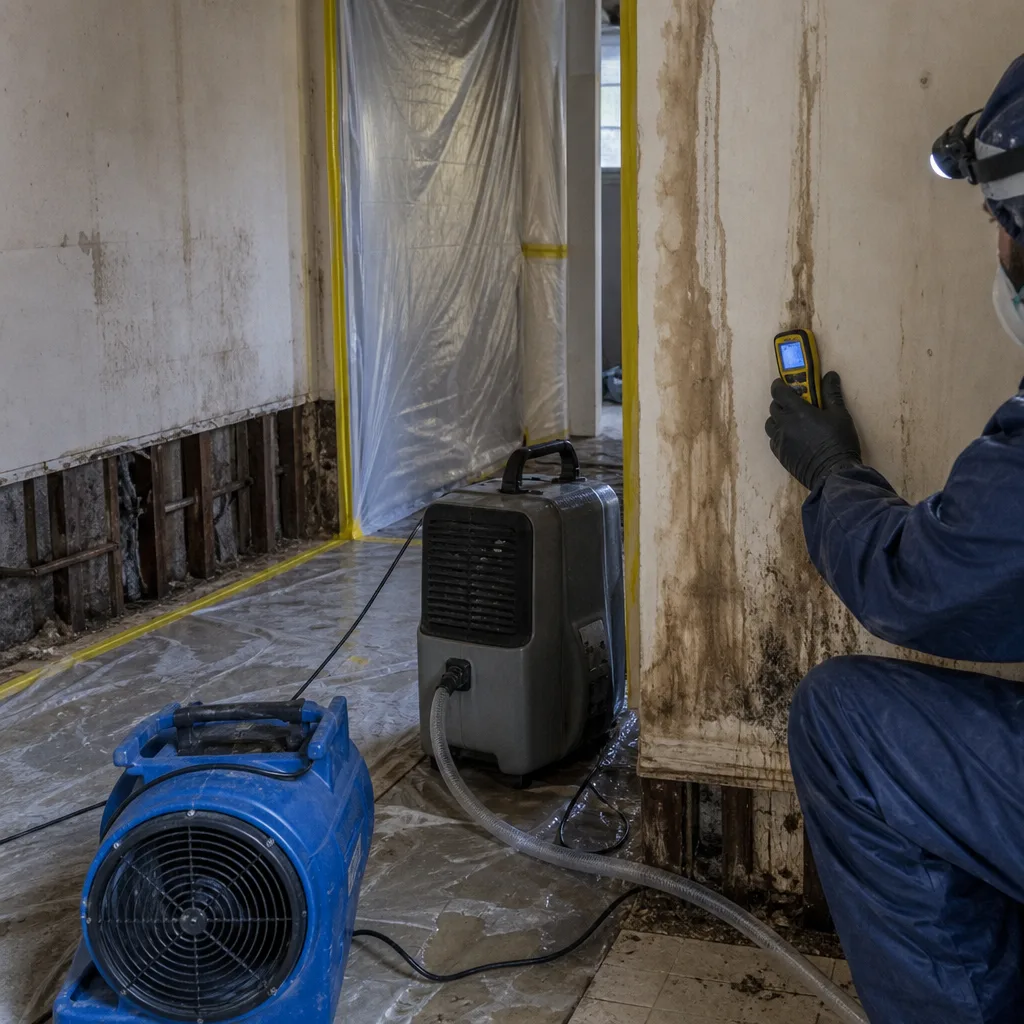 Before
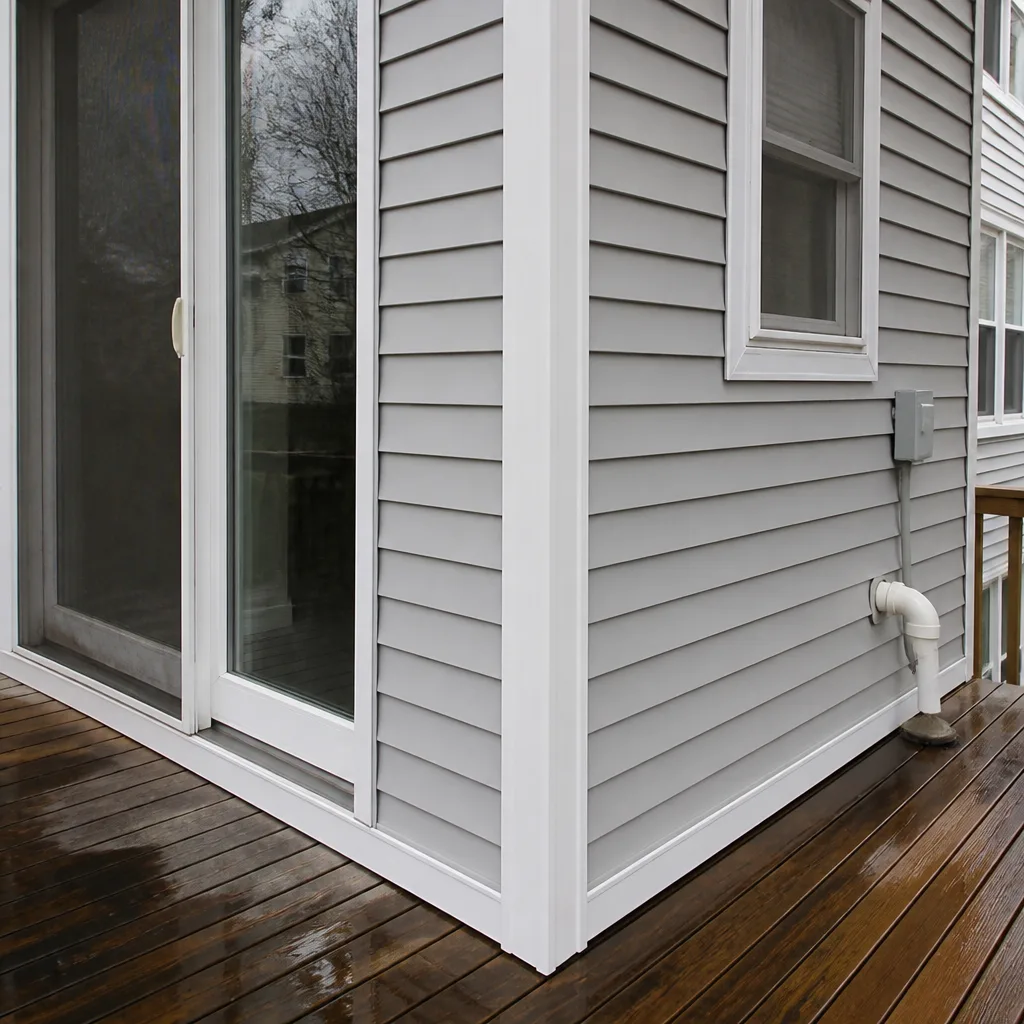 After
After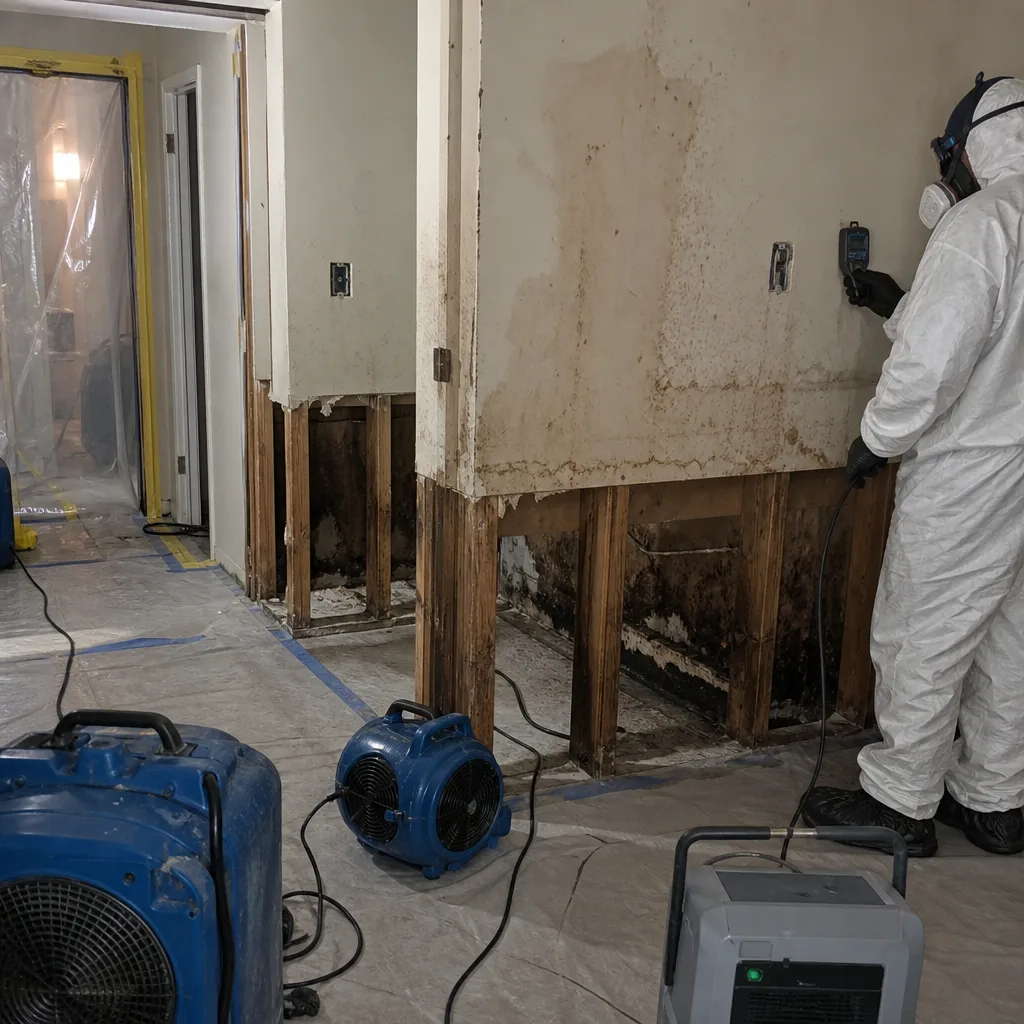 Before
 After
After24/7 Emergency Mold Remediation in New Hyde Park
Mold remediation in New Hyde Park typically costs $1,800-$6,500 depending on how far the colony has spread behind walls and whether containment is needed on shared foundation lines. We answer the phone with a live dispatcher around the clock, every day, including holidays. Call (917) 924-4221 and a certified crew from Floodline Restoration Co. of Manhattan can be at your door in New Hyde Park within 45 minutes for a free visual inspection. The first hour matters because mold that started in a finished basement after a sump failure will wick into drywall and baseboards within 24 to 48 hours, and what began as a $500 dry-out becomes a $4,000 containment and removal scope. We dispatch from our New York City office directly into New Hyde Park, so you are not waiting on a franchise call center three states away.
Understanding Mold Remediation Severity in New Hyde Park Properties
Not every mold problem in New Hyde Park is the same job, and the difference usually comes down to where the water came from and how long it sat. Category 1 water is clean supply water, say a failed washing machine hose. Category 2 carries contaminants, like sump pit overflow. Category 3 is sewage or storm backflow, and that changes both the remediation protocol and the health risk. On a 1950s Cape Cod off Hillside Avenue, the finished basement paneling hides what the foundation actually looks like, so our first move is always moisture mapping with thermal imaging, not just looking at the stain on the ceiling tile. New Hyde Park’s housing stock, mostly 1940s through 1960s Cape Cods and small ranches, was built with poured concrete or block foundations that have outlived their waterproofing. Original plumbing that has corroded in Long Island’s mildly hard water creates slow, hidden leaks behind finished walls for months before anyone sees a dark spot. By the time visible mold appears, the colony has usually been active behind that drywall for weeks. Severity here is rarely about the species alone. It is about whether the moisture source is still feeding the colony, and in New Hyde Park with its flat drainage and high water table, that source is often groundwater pressing against the foundation, not a single spill.
Why New Hyde Park Property Owners Choose Floodline Restoration Co. of Manhattan
- 45-minute response commitment to New Hyde Park. We send a crew from our New York City dispatch the moment you call, and we tell you upfront when they will arrive.
- A live person answers, 24 hours a day. No automated phone tree at 2 a.m. You get a dispatcher who knows the streets around New Hyde Park and can route a certified crew immediately.
- IICRC-certified crews, trained to AMRT and WRT standards. Our technicians hold certifications in Applied Microbial Remediation and Water Restoration, so the same person who finds the mold understands the moisture that feeds it.
- Free visual inspection with moisture readings. We do not charge to walk your basement, check the parging, and tell you whether you have a five-day dry-out or a full containment job.
- Direct insurance billing. We document everything and bill your carrier directly. You never play messenger between Floodline and the adjuster.
- One team from extraction to rebuild. The crew that cuts out the wet drywall is the same crew that treats the framing and hangs new rock. No mid-job handoff to a subcontractor you did not hire.
Our Mold Remediation Process
Inspection & Assessment
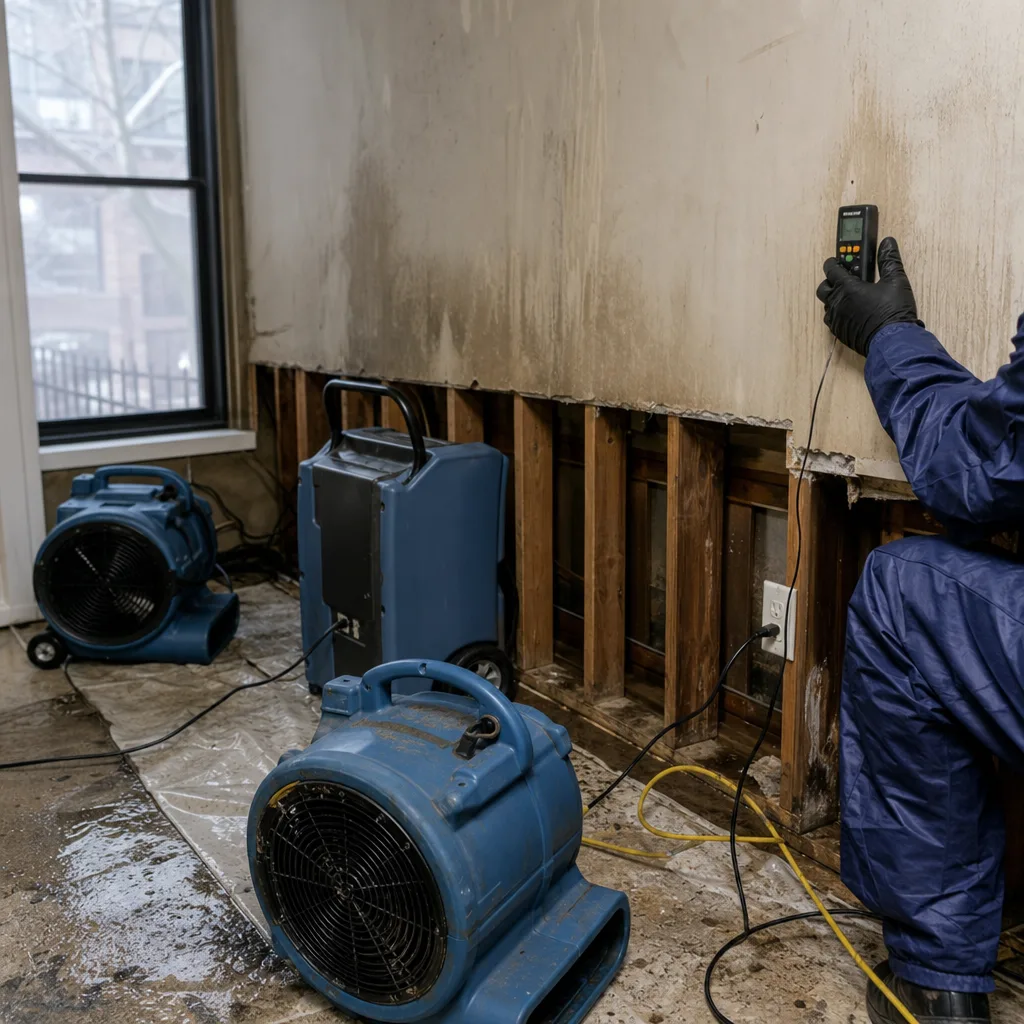
We start with thermal imaging, hygrometer readings, and visual inspection of every finished wall, baseboard, and foundation crack. On zero-lot-line homes in New Hyde Park, we check the shared wall on both sides before recommending containment.
Containment & Stabilization
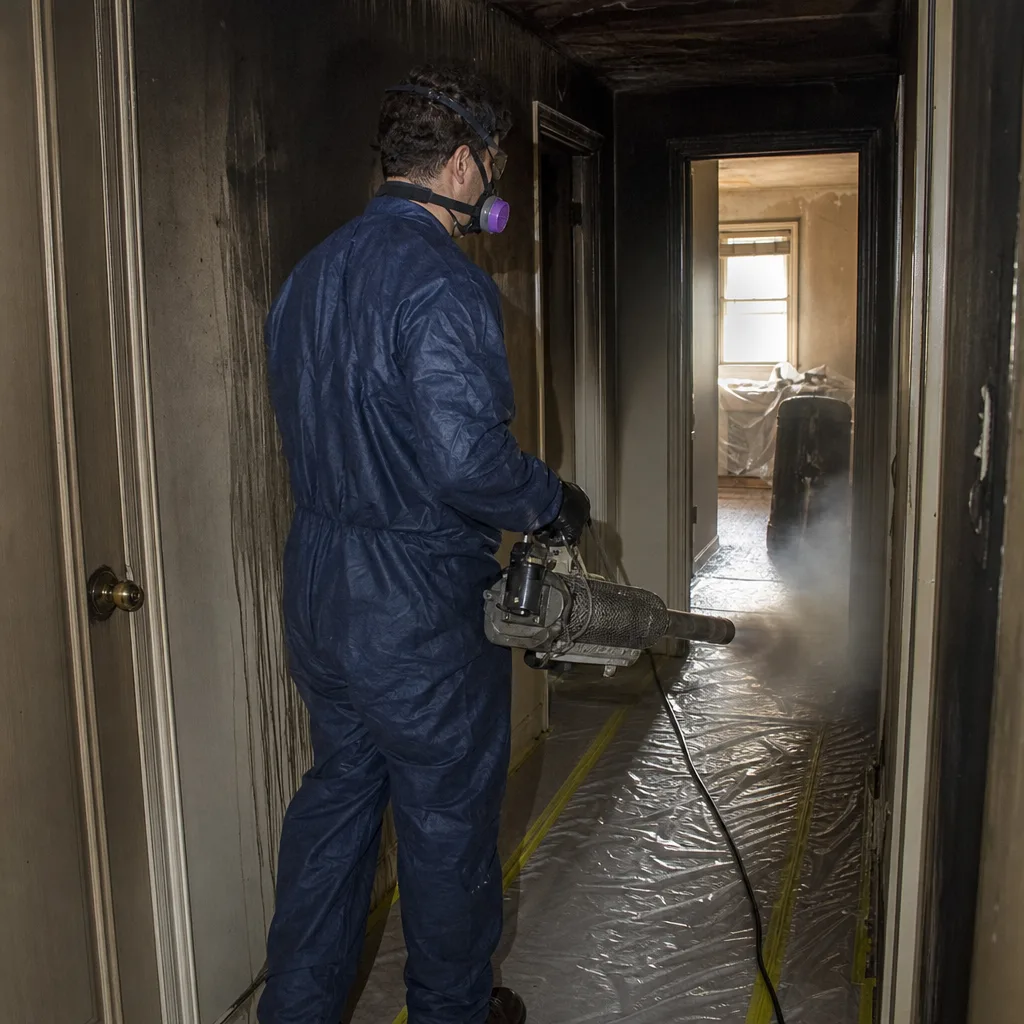
We seal the affected area with negative air pressure and HEPA-scrubbed exhaust so spores do not migrate through the house or into the neighbor’s foundation through shared block. Stabilization means stopping the active moisture source first, whether that is a leaking supply line or ground seepage.
Drying & Dehumidification
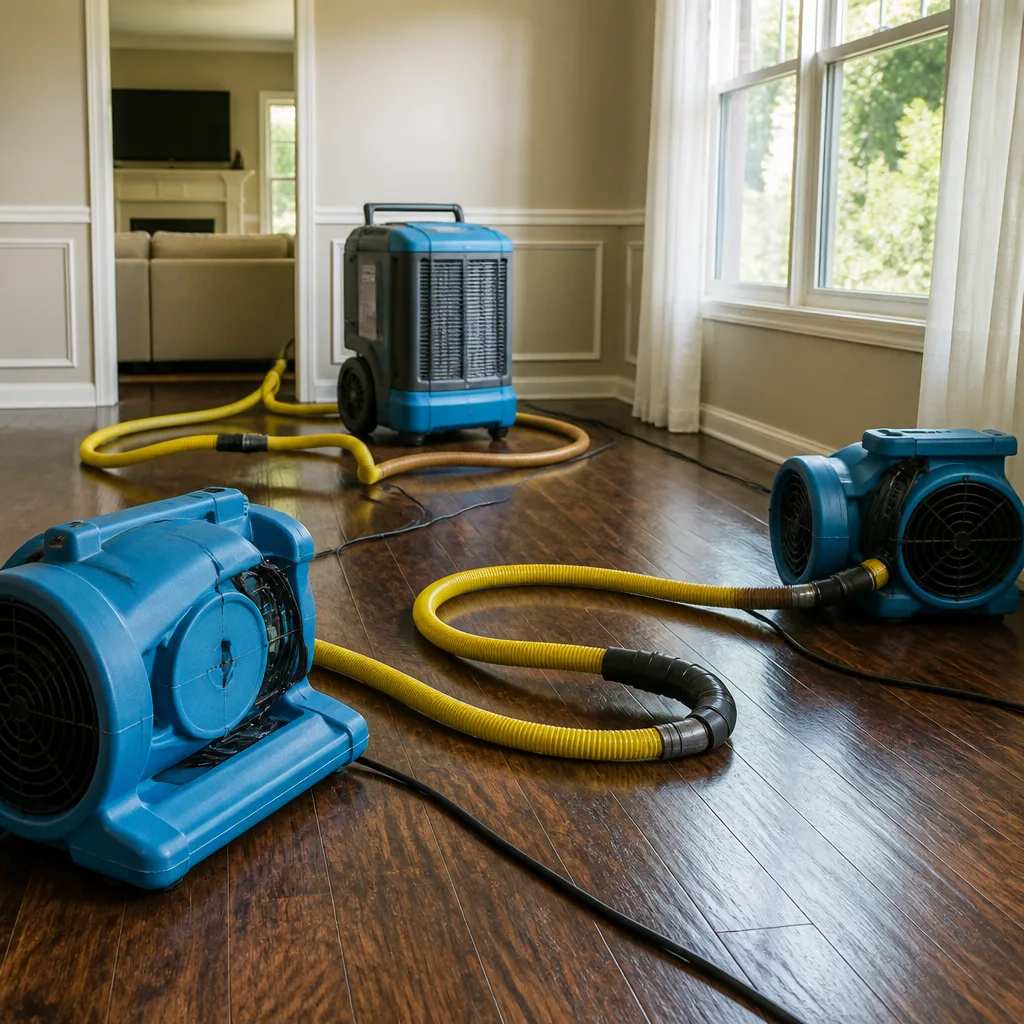
We set professional-grade Dri-Eaz dehumidifiers and XPOWER air movers to pull moisture from wall cavities and the concrete itself. Daily readings are logged until the dry standard is met, and you get a copy of that log.
Cleaning & Sanitization
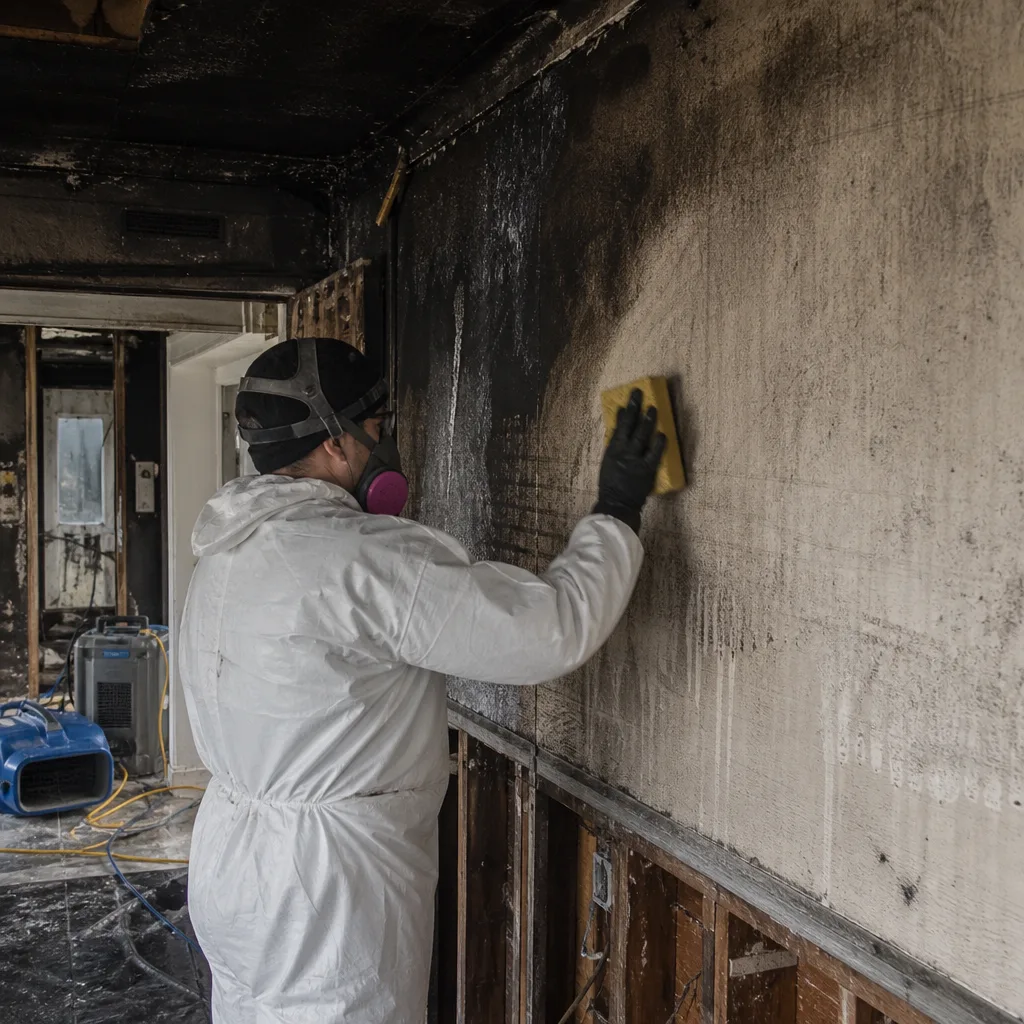
We remove contaminated porous materials that cannot be salvaged, HEPA-vacuum structural framing, and apply antimicrobial treatment to block and concrete where the colony was active. Every surface gets cleaned before any rebuild happens.
Specialty Treatment for Mold Remediation
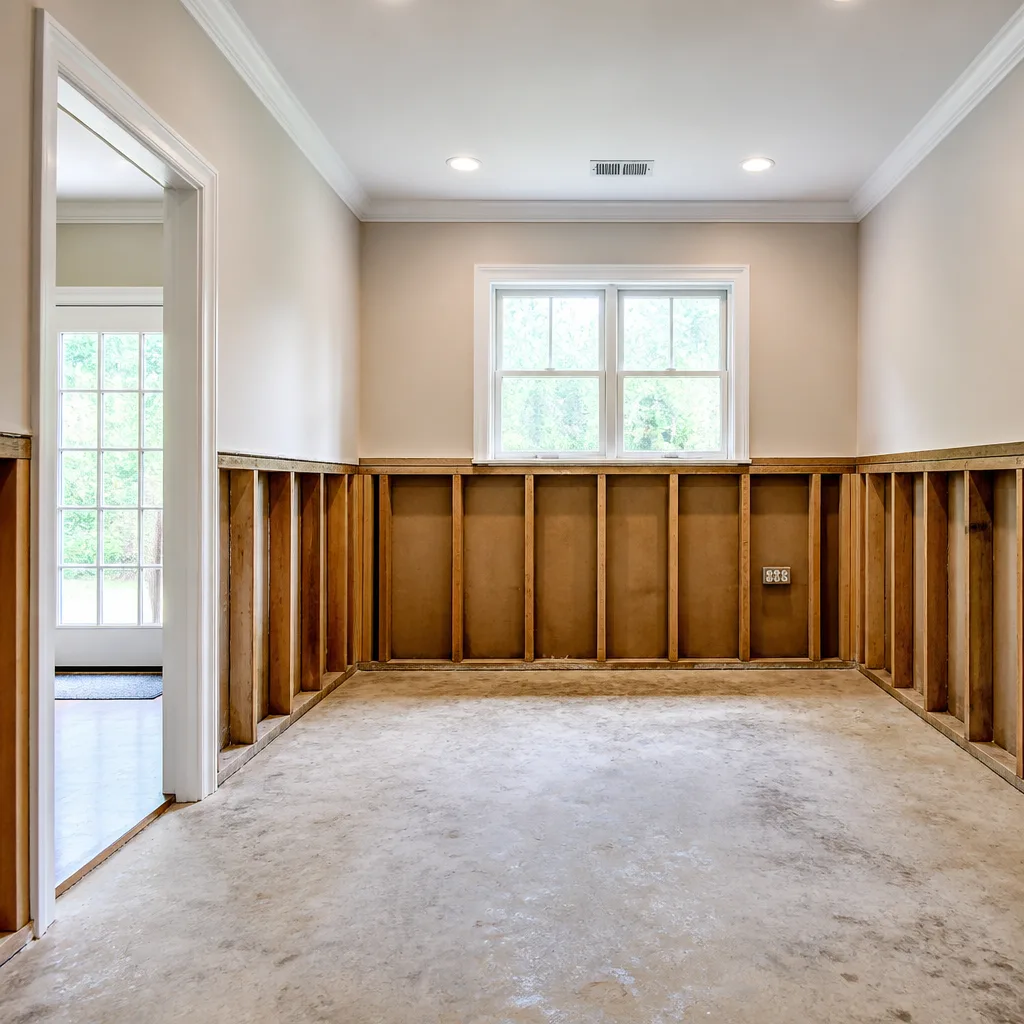
For crawl spaces in New Hyde Park ranches, we apply moisture barriers and treat joists against future fungal growth. For finished basements, we cut back drywall to the flood line and inspect the cavity behind it, because that is where hidden colonies live.
Repairs & Restoration
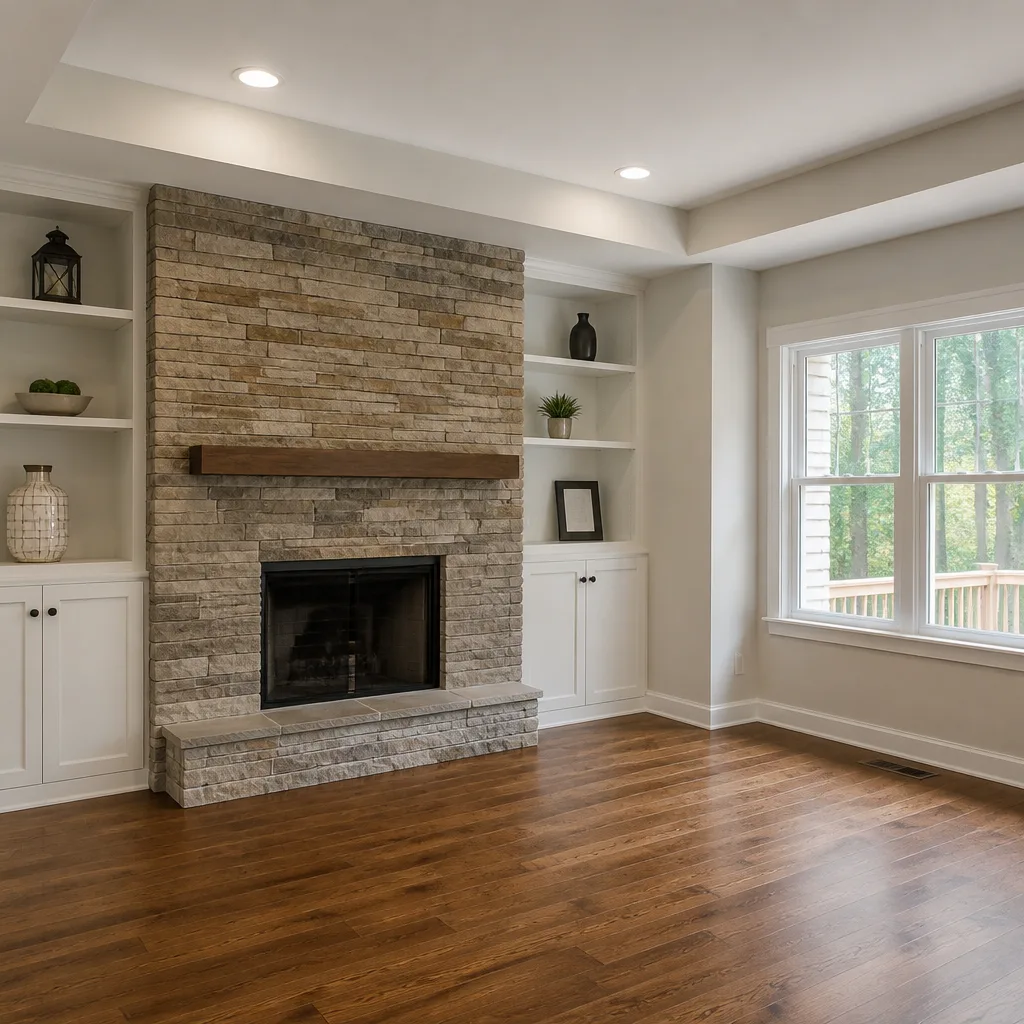
The same certified crew hangs new drywall, repaints, and replaces what was removed. You get a written scope before work starts and a 90-Day Done Right Promise when we finish, no arguing, in writing.
Need Emergency Mold Remediation in New Hyde Park Now?
Crews minutes away, answering live 24 hours a day. The sooner we start, the less it costs.
Working With Your Insurance Company
Mold remediation claims in Nassau County are scrutinized harder than most because carriers know the finished basements here hide damage behind walls. We document from the first hour. That means photos of every room, moisture readings before and after drying, a line-item scope of work, and direct adjuster communication so the claim file is complete before the carrier ever asks a question. Our team has handled hundreds of New Hyde Park mold claims, and we know what the adjuster needs to approve a finished basement tear-out versus a simple dry-out. The documentation package goes to your insurer, not to you as a homework assignment.
What We Provide Your Insurer
- Thorough documentation of the loss
- Photos of all damage, room by room
- Moisture readings and drying logs
- A detailed, line-item scope of work
- Direct coordination with your carrier
Built for New Hyde Park’s Loss Calendar
New Hyde Park sits on the flat, nearly impermeable glacial outwash of the Hempstead Plains, with one of Long Island’s highest water tables. That geography dictates the mold calendar here. January deep freezes burst supply lines in uninsulated foundation walls, but the water often runs behind finished drywall before anyone notices a pressure drop. March and April bring thaw and spring rain, when groundwater rises against 60-year-old parging and seeps through hairline cracks into finished basements. July and August thunderstorms overwhelm the aging municipal storm infrastructure, which has virtually no natural grade to drain the flat terrain, pushing water through basement windows and sump pits. September nor’easters repeat the same cycle. Hurricane Sandy in 2012 caused widespread mold damage across Nassau County, and we now return to the same New Hyde Park addresses where hasty emergency remediation in 2012 and 2013 left colonies behind drywall that is resurfacing today. Most of our local mold calls are not one-time spills. They are recurring basement intrusions on a five-to-seven-year cycle, and the fix requires more than a pump-out. It requires remediation plus moisture control built for this water table.
Mold Remediation Across New Hyde Park’s Neighborhoods
New Hyde Park’s neighborhoods were built fast after the war, and each pocket has its own mold profile. Around Lakeville Road, the 1950s Capes sit tight against neighbor walls, so containment on a shared foundation line is standard on every job. Near New Hyde Park Road and the Herricks school district, the 1960s ranches have crawl spaces with limited ventilation, and we regularly find joist mold that started from ground moisture and never dried out. South of Hillside Avenue, many blocks are zero-lot-line with finished basements added in the 1970s and 1980s, often with paneling over cinder block that has trapped condensation for decades. North of the LIRR tracks toward the North New Hyde Park border, the homes are slightly larger but still on the same flat Hempstead Plains, and sump pit failures after heavy rain are the leading trigger. We work all of these streets from one New York City dispatch, so our response time is the same whether you are off Jericho Turnpike or tucked into a cul-de-sac near Denton Avenue. The building stock changes block by block, but the water table underneath it does not.
Specialized Mold Remediation Services We Offer in New Hyde Park
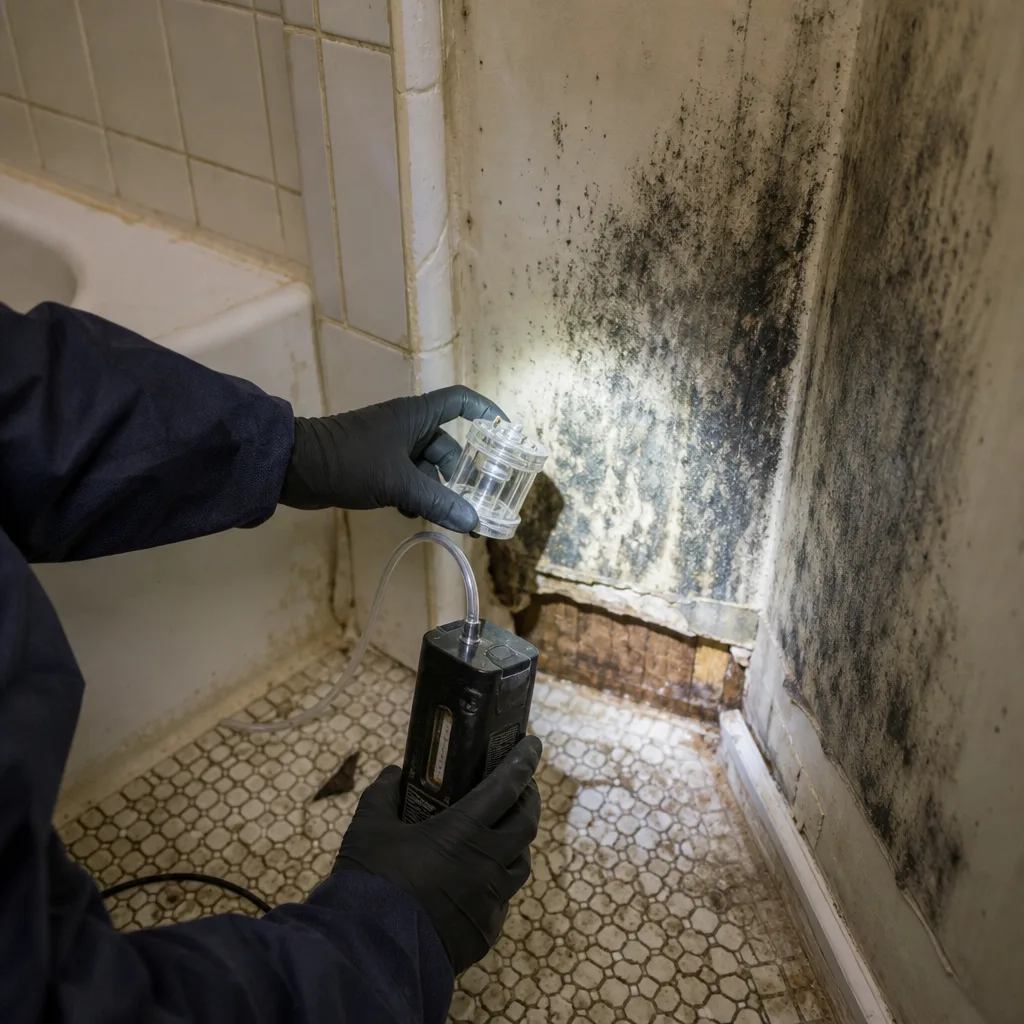
Mold Inspection & Testing
A visual inspection is free, but when a homeowner is buying or selling a New Hyde Park Cape Cod, or when a musty smell persists with no visible stain, we recommend moisture mapping first and lab testing only where it adds evidence. In finished basements here, the mold is usually behind drywall or paneling, not on it, so inspection means knowing where to look, not just looking harder.
Mold Removal
Removal means cutting out the contaminated material, not spraying bleach on a stain. On a 1950s ranch off Denton Avenue, that often means removing 1970s paneling, treating the block behind it, and rebuilding with mold-resistant drywall. We do the removal and the rebuild with the same crew so nothing gets lost between trades.
Black Mold Remediation
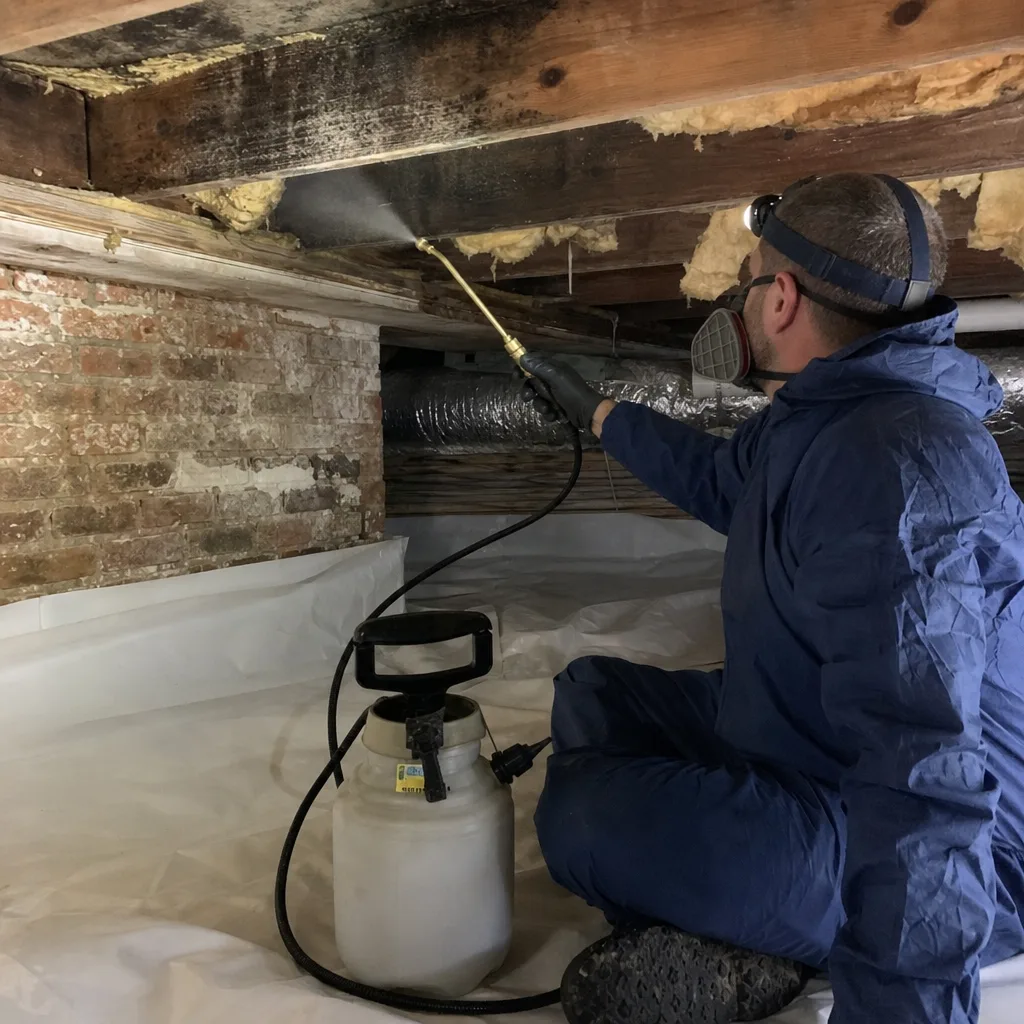
Stachybotrys, the black mold homeowners fear most, needs constant moisture to thrive, and New Hyde Park finished basements with failed sump pits provide exactly that. We treat every suspected black mold job with full containment, negative air pressure, and clearance testing at the end. The Keystone Standard applies here: if it is not done right, we make it right, in writing.
Air Quality Restoration
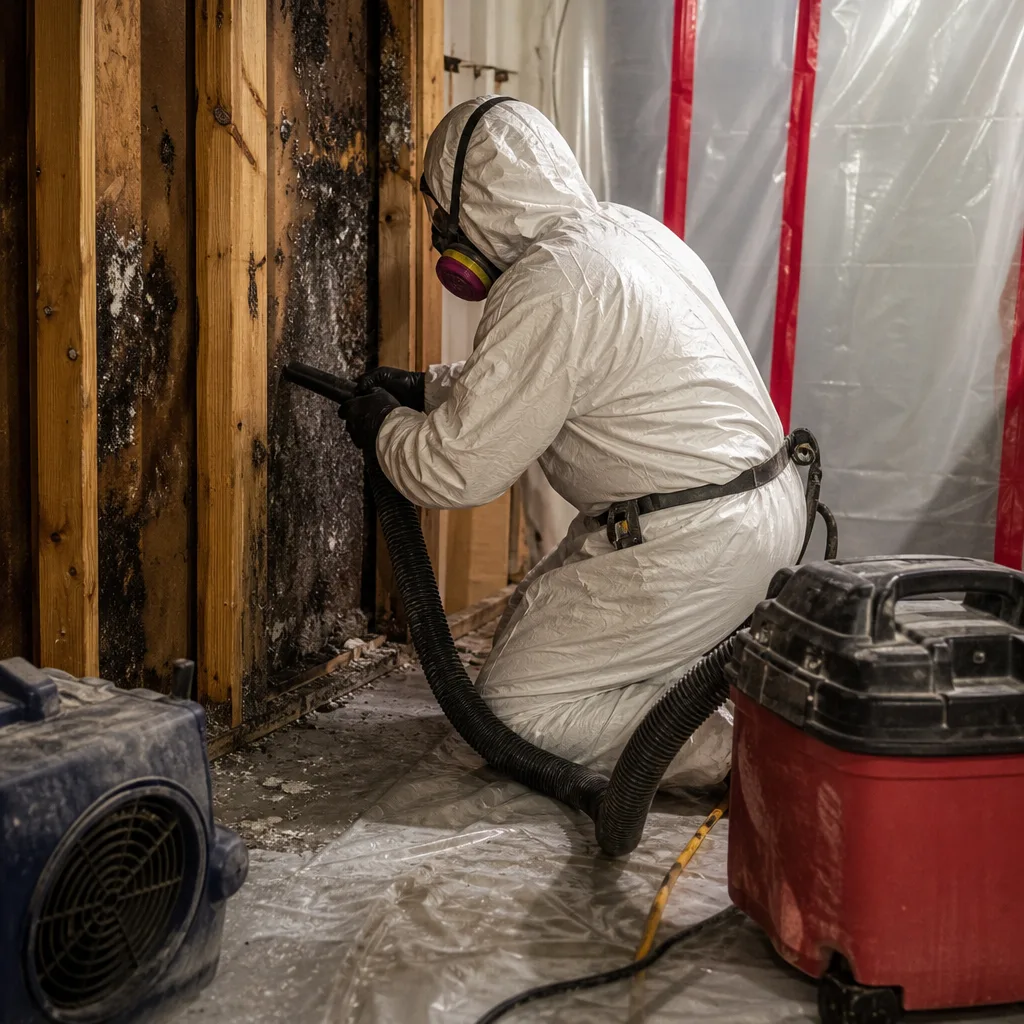
After a basement mold job, the spores that were disturbed during demolition are still in the air. We run HEPA air scrubbers during the tear-out and after, and we do not call the job finished until a clearance test, where required, confirms the air in the living space is cleaner than the air outside. That step is often skipped by cheaper crews, and skipped clearance is why mold problems come back.
Crawl Space Treatment
New Hyde Park ranches built in the 1960s have crawl spaces with dirt floors and low clearance, perfect for fungal growth on floor joists. We seal the ground with a moisture barrier, treat the joists with antimicrobial, and install ventilation or dehumidification where the space allows. The goal is to break the humidity cycle, not just clean the existing growth.
Moisture & Humidity Control
Every mold remediation in New Hyde Park ends with a moisture control recommendation, because the water table and flat drainage are not going to change. That may mean a perimeter drain, a sump pump upgrade, a dehumidifier sized for the finished basement square footage, or new parging on the foundation walls. We write the moisture plan into the scope so the remediation is not a temporary fix.
What happens when you call
- 1
A real person answersNo phone trees - you reach a local pro.
- 2
You get an upfront price rangeHonest numbers before anyone is dispatched.
- 3
A background-checked tech heads outLicensed & insured, dispatched right away.
- 4
You approve before work beginsNothing starts until you say go.
Mold Remediation Costs in New Hyde Park, NY
A straightforward mold removal job in an unfinished New Hyde Park basement, say a 10-by-10 colony on exposed block, typically runs $1,800 to $3,200. A finished basement with containment, drywall removal, framing treatment, and rebuild usually lands between $4,000 and $6,500. Crawl space treatment with vapor barrier and joist cleaning runs $2,200 to $4,500 depending on square footage. What moves the price is containment complexity, which in New Hyde Park is higher than most Nassau communities because zero-lot-line shared walls require negative air pressure and neighbor-side inspection. Insurance coverage depends on the water source. Sudden supply-line bursts are usually covered. Gradual seepage from groundwater is often not, unless you have a specific rider. The free visual inspection gives you a firm written scope before any work starts, so there is no ambiguity about cost. Call (917) 924-4221 for an exact quote.
We Also Serve Cities Near New Hyde Park
Our New Hyde Park crews also run daily to Floral Park, Glen Oaks, Bellerose, and Elmont. Same 45-minute response commitment, same live 24-hour dispatch, same certified crew from extraction to rebuild. If you are across the border and see water on the floor, call the same number.
Serving New Hyde Park, NY - Our Local Coverage Area
We’re based in the New Hyde Park area and know this community well. Use the map below to see our service coverage - if you’re nearby, we can almost certainly help.
New Hyde Park Mold Remediation Questions, Answered
How fast does mold grow after a basement flood in New Hyde Park?
Mold can begin colonizing in 24 to 48 hours after a flood, and in New Hyde Park finished basements with drywall and paneling, the wicking action pulls water several feet up the wall within the first day. By day five, the colony is established behind the wall face where you cannot see it. Call (917) 924-4221 the same day the water appears.
Why do mold problems keep coming back in New Hyde Park basements?
Because the water table and flat Hempstead Plains drainage do not change, and most quick-fix remediations treat the visible mold without addressing the ongoing moisture source. In New Hyde Park, that source is almost always groundwater pressure against aging block foundations or a sump system that fails every few years. Our mold remediation includes a moisture control plan so the cycle stops.
Does a finished basement in a New Hyde Park Cape Cod change how you handle mold remediation?
Yes, significantly. A finished basement means drywall or paneling covers the foundation, so moisture hides behind it and mold grows for weeks before detection. Remediation usually requires cutting back the wall covering to the moisture line, treating the concrete behind, and rebuilding. The same crew does all of it, and the price reflects the added labor of removing and replacing finished surfaces.
What does ‘category 1/2/3 water’ mean for mold remediation in New Hyde Park?
Category 1 is clean water from a supply line. Category 2 is contaminated water, like sump overflow or washing machine discharge. Category 3 is sewage or storm backflow. The category determines how aggressively we remove porous materials and whether antimicrobial treatment of concrete is required. On New Hyde Park zero-lot-line homes, category 2 and 3 events also trigger containment on shared foundation walls.
Do New Hyde Park homes need a mold inspection even if there’s no visible mold?
Often yes, especially in finished basements or after any past water event. The mold here hides behind 1970s paneling and drywall that wick moisture from the inside out. A musty smell, recurring allergy symptoms, or a known past flood are all reasons to have moisture mapping done even when the walls look clean. The inspection is free, and it either finds the problem or gives you a documented clean baseline.
How long does mold remediation take in a New Hyde Park home?
A contained removal in an unfinished basement usually takes two to three days of active work. A finished basement with rebuild runs five to seven days, including drying time. Daily moisture readings are logged throughout, and you get the drying log for your records and your insurer. We do not rush the drying phase, because mold returns when moisture is left behind.
Are your mold remediation crews certified?
Yes. Our technicians are background-checked, uniformed, and certified to IICRC, RIA, and IFA standards. The mold-specific certification is IICRC Applied Microbial Remediation Technician, which covers containment, removal, and clearance procedures. We list certifications on the scope of work you sign before we start.
What should I do in the first 30 minutes after finding mold or water in my New Hyde Park basement?
Do not disturb the mold by scrubbing it or cutting into the wall, which releases spores. Shut off the water source if you can identify it, move valuables out of the wet area, and call (917) 924-4221. A live dispatcher answers, and a crew can be in New Hyde Park within 45 minutes to start moisture mapping and containment.
Written by Curt Bowman, Owner at Floodline Restoration Co. of Manhattan, serving New Hyde Park and surrounding Nassau County communities.