
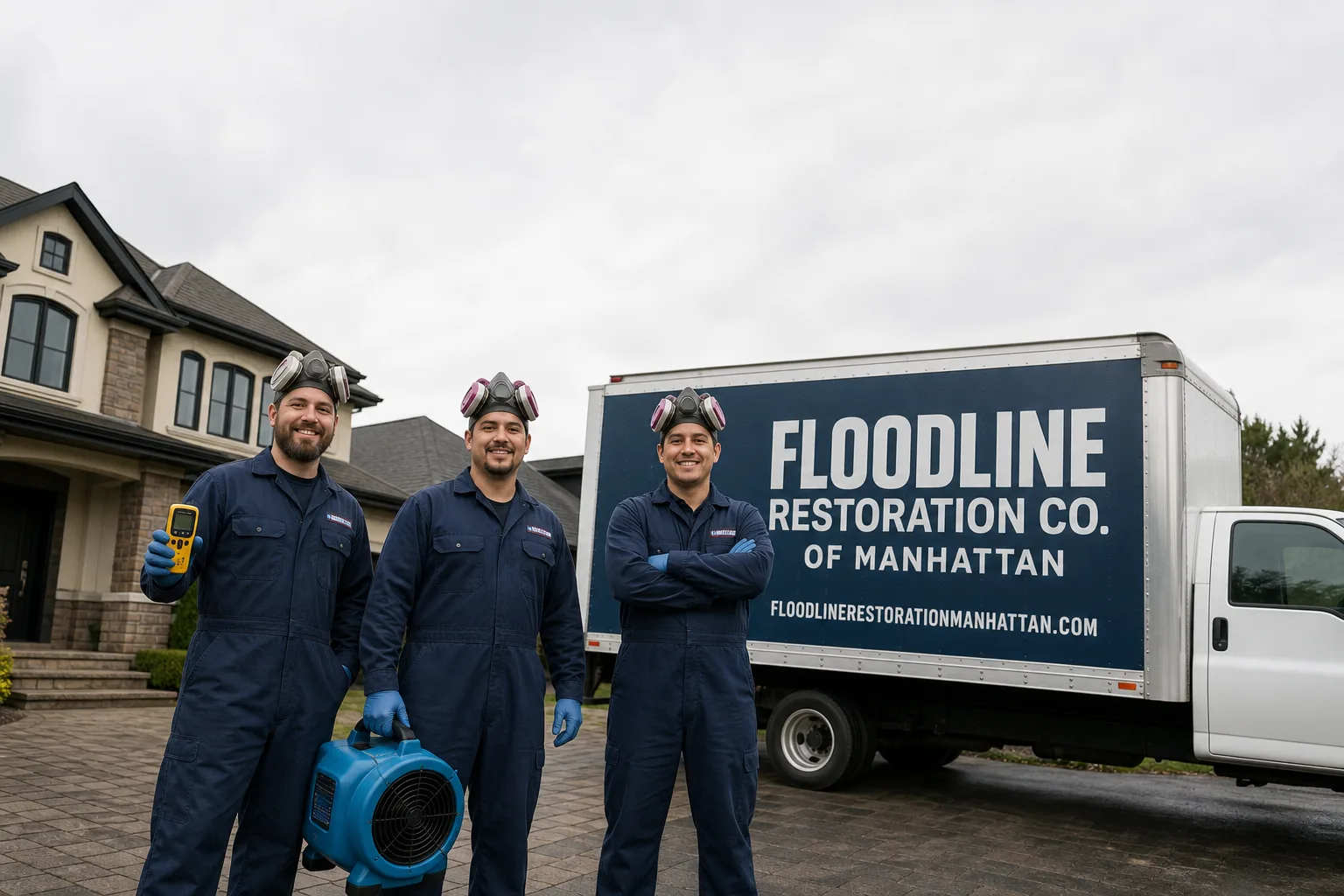
Free visual inspection and a written scope of work before any mitigation begins - photos, moisture readings, and drying logs go in your claim file
The scope we write is the scope we bill. Anything new gets shown to you, in writing, before we touch it.






 Before
 After
After Before
 After
After Before
 After
After24/7 Emergency Reconstruction & Cleanup in Cliffside Park
Reconstruction and cleanup in Cliffside Park starts with one fact: water moves sideways here. Properties on the Palisades ridge take moisture through foundation walls and party walls, not just up from sumps the way flatland towns do. That changes what has to be torn out, what has to be dried, and what the HOA will flag during the walkthrough. Our crews answer live at (917) 924-4221 around the clock, and we dispatch into Cliffside Park with moisture mapping equipment on the truck, because the first hour after a loss determines whether you replace drywall or rebuild a floor system.
We don’t put you through an answering service. A real dispatcher picks up at two in the morning, and a certified crew reaches the job the same visit. The visual inspection is free, and we’ll tell you straight what needs to come out and what can be saved. Every estimate has a written scope before work starts, so you and the HOA know exactly what’s happening and what it costs.
Understanding Reconstruction & Cleanup Severity in Cliffside Park Properties
The severity conversation in Cliffside Park is different than in Edgewater or Fairview, because so much of the borough’s housing stock is pre-war masonry that shares walls with the escarpment. Category 1 water from a supply line is a clean extraction and targeted drying job. Category 3 water, the kind that carries sewage or midslope storm surge, means containment, antimicrobial treatment, and removal of saturated materials to the studs. The real variable here is how far moisture has migrated laterally. In a 1930s brick rowhouse on the upper ridge, water entering one unit travels through mortar beds and sill plates into the adjoining unit, undetected until the baseboards swell or mold blooms in the closet.
We moisture-map every affected wall, including the party wall, before we write a single line item. Deteriorated parapet flashing on a low-slope roof can send water down three floors of a pre-war co-op, saturating cavities that never see daylight. High-rise condos on the ridge bring a different failure mode: stacked mechanicals, cast-iron drain lines from the 1950s, and slab pours that trap moisture against the cliff face. The reconstruction side follows the same discipline. We don’t hang new drywall until the moisture log says the structure is dry, and we document every reading so the carrier and the HOA see the same data we do.
Why Cliffside Park Property Owners Choose Floodline Restoration Co. of Manhattan
- 45-minute response commitment to Cliffside Park. We stage crews for Bergen County dispatch and we commit to a 45-minute response window for emergency storm, water, and sewer losses in the borough.
- Live answer, 24 hours a day. You get a human being on the phone, any hour, any day. Not a recording, not a call-back. That call starts the clock on mitigation.
- IICRC-certified crews, trained to the WRT and FSRT standards. Water restoration techs hold WRT certification; fire and smoke techs hold FSRT. We train internally to RIA and IFA standards as well.
- Free visual inspection with moisture mapping. We assess the damage, trace where the water came from and where it went, and hand you a written scope. No cost, no obligation.
- Direct insurance billing. We bill your carrier directly and speak with the adjuster ourselves. You’re not the messenger, and you don’t carry the paperwork burden.
- One team from extraction to reconstruction. The same certified crew that runs the first day of drying is the crew that hangs the drywall and matches the baseboard. No mid-job handoff to a subcontractor you didn’t choose.
Our Reconstruction & Cleanup Process
Inspection & Assessment
We walk the property, identify the water category, and run thermal imaging and moisture meters along every affected surface, including shared walls. For Cliffside Park’s hillside properties, we pay particular attention to the foundation wall facing the escarpment and any sill plates below grade.
Extraction & Stabilization
We remove standing water with truck-mounted and portable extraction units, then cut out saturated materials that cannot be economically dried. Trapped water in wall cavities behind plaster and lath is the biggest hidden cost in pre-war Cliffside Park buildings, and we find it before it rots the framing.
Drying & Dehumidification
We place Dri-Eaz air movers, Phoenix dehumidifiers, and Injectidry drying systems where they’ll move air through wet materials, not just over the surface. Daily moisture readings are logged and shared with you and your carrier until the structure reaches the dry standard.
Cleaning & Sanitization
Affected surfaces get HEPA vacuuming and antimicrobial treatment appropriate to the water category. For Category 3 losses, we run HEPA air scrubbers to capture airborne contaminants before any reconstruction material goes in.
HOA & ARB Compliance Review
Before we hang drywall or touch finishes, we check the building’s architectural review board requirements, door and window finish schedules, and quiet-hours rules. Reconstruction in Cliffside Park has two inspectors: the code official and the HOA, and we answer to both.
Repairs & Restoration
We rebuild to the written scope: drywall, flooring, trim, paint, and any structural repair identified during drying. We match existing profiles and finishes, and we walk the job with you before we call it done. Then the 90-Day Done Right Promise kicks in.
Need Emergency Reconstruction & Cleanup in Cliffside Park Now?
Crews minutes away, answering live 24 hours a day. The sooner we start, the less it costs.
Working With Your Insurance Company
Cliffside Park losses involving shared walls and HOA-governed buildings often trigger disputes over scope, because the carrier’s estimate assumes flat-grade drying and the actual job requires cliff-face moisture tracing and party-wall drying. We handle that conversation for you. From the first hour, our crews photograph every affected area, log every moisture reading, and write a line-item scope that spells out what the Palisades’ lateral seepage actually requires. We coordinate with your adjuster directly, provide any documentation they request, and bill the carrier where coverage applies. You see the same paperwork your adjuster sees. One team, one story, and no argument about whether the third-floor baseboard was really wet.
What We Provide Your Insurer
- Thorough documentation of the loss
- Photos of all damage, room by room
- Moisture readings and drying logs
- A detailed, line-item scope of work
- Direct coordination with your carrier
Built for Cliffside Park’s Loss Calendar
Cliffside Park’s Reconstruction & Cleanup season never really stops, but it has a rhythm. January and February bring freeze-thaw cycles that hammer the Palisades traprock and the brick facades of hillside buildings, opening hairline cracks that let snowmelt wick into foundation walls. March and April are the months we see gravity-fed seepage at its worst, as saturated ground above the escarpment drains sideways into garden-level units and basement slabs. Summer thunderstorms hit the steep street grid hard; stormwater barrels down Anderson Avenue and the cross streets, and ground-floor walk-downs take water through door saddles and window wells. Nor’easters in the fall bring wind-driven rain against the river-facing elevations, and every parapet failure on a pre-war co-op eventually becomes a three-floor water loss. The pattern is predictable, and we staff for it.
Reconstruction & Cleanup Across Cliffside Park’s Neighborhoods
Upper-ridge blocks along Palisade Avenue and Gorge Road deal with the escarpment directly. Homes and condos there take water through foundation walls facing the cliff, and reconstruction often means replacing sill plates and floor framing, not just drywall. The mid-slope streets running between Anderson Avenue and the river, the older brick rowhouse rows, are parapet leak territory. We’ve rebuilt units where a failed parapet on the top floor sent water down through three stacked bathrooms and into a ground-level kitchen ceiling. The high-rise condominium buildings near the riverfront present multi-unit claims with HOA coordination, shared mechanical chases, and finish schedules that the ARB actually enforces. Down near the Fairview line in the 07010 ZIP, garden-level units take surface runoff through window wells and bulkhead stairs during heavy summer storms. None of this surprises us anymore, and all of it gets written into the scope on day one.
This is where our Reconstruction & Cleanup team works differently. Most contractors treat a Cliffside Park water loss like a flatland loss with a nicer view. We trace the water from the traprock inward, dry the party walls that the insurance photos barely show, and rebuild to the standard the HOA will actually sign off on. The borough’s position on the Palisades is the defining fact of every estimate we write here.
Specialized Reconstruction & Cleanup Services We Offer in Cliffside Park
Full-Service Reconstruction
We rebuild what the water, fire, or storm took out. On cliff-adjacent properties, that routinely means reframing rotted sill plates, sistering floor joists, and re-sheathing walls before any finish work begins. We coordinate with the HOA and the building’s engineer where required, and we don’t hand the job to a subcontractor at the halfway mark.
Drywall & Flooring Repair
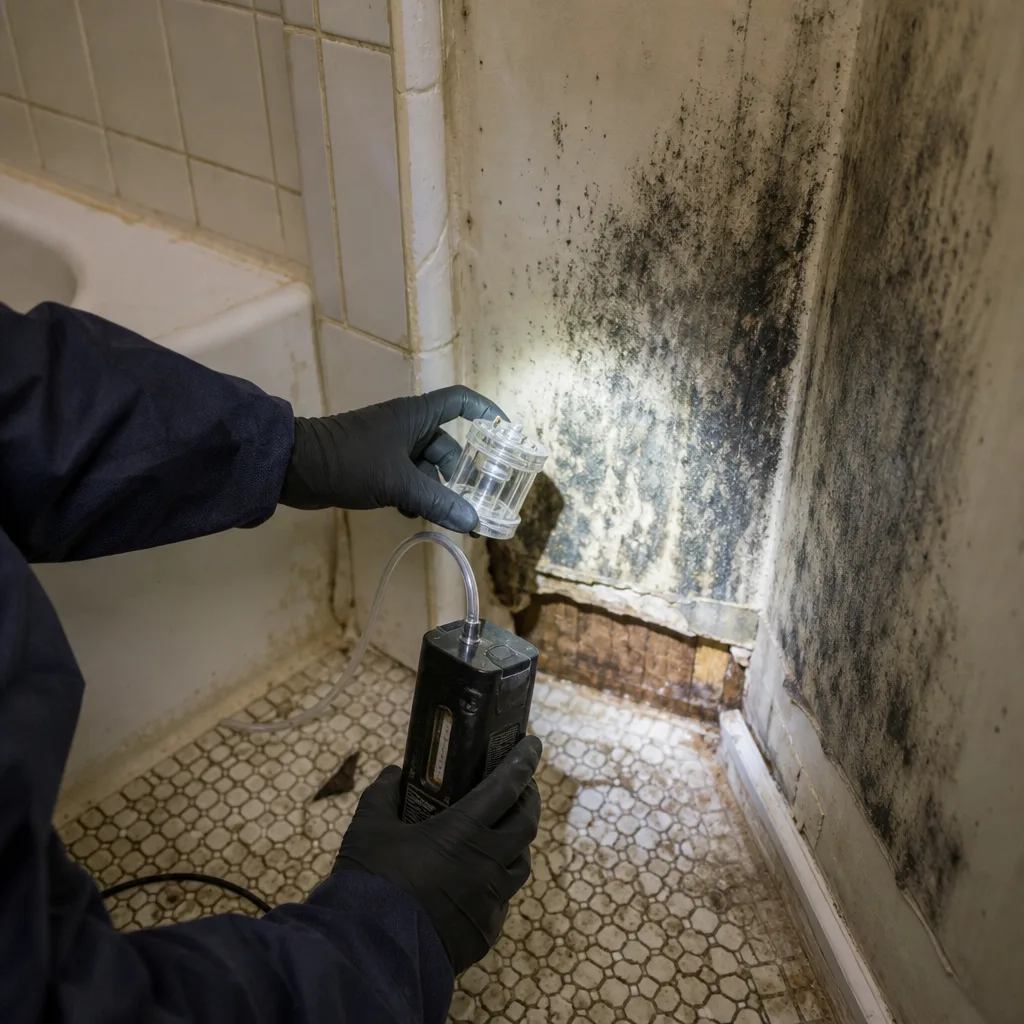
In Cliffside Park’s pre-war buildings, drywall repair is really about moisture control and finish matching. We cut out saturated panels, dry the cavity to the standard, and reinstall with the same finish level and profile the adjacent walls carry. For flooring, we match original oak strip, subfloor thickness, and the transition details the building was originally built with. ARB-compliant finishes are part of the scope, not an afterthought.
Contents Restoration & Pack-Out
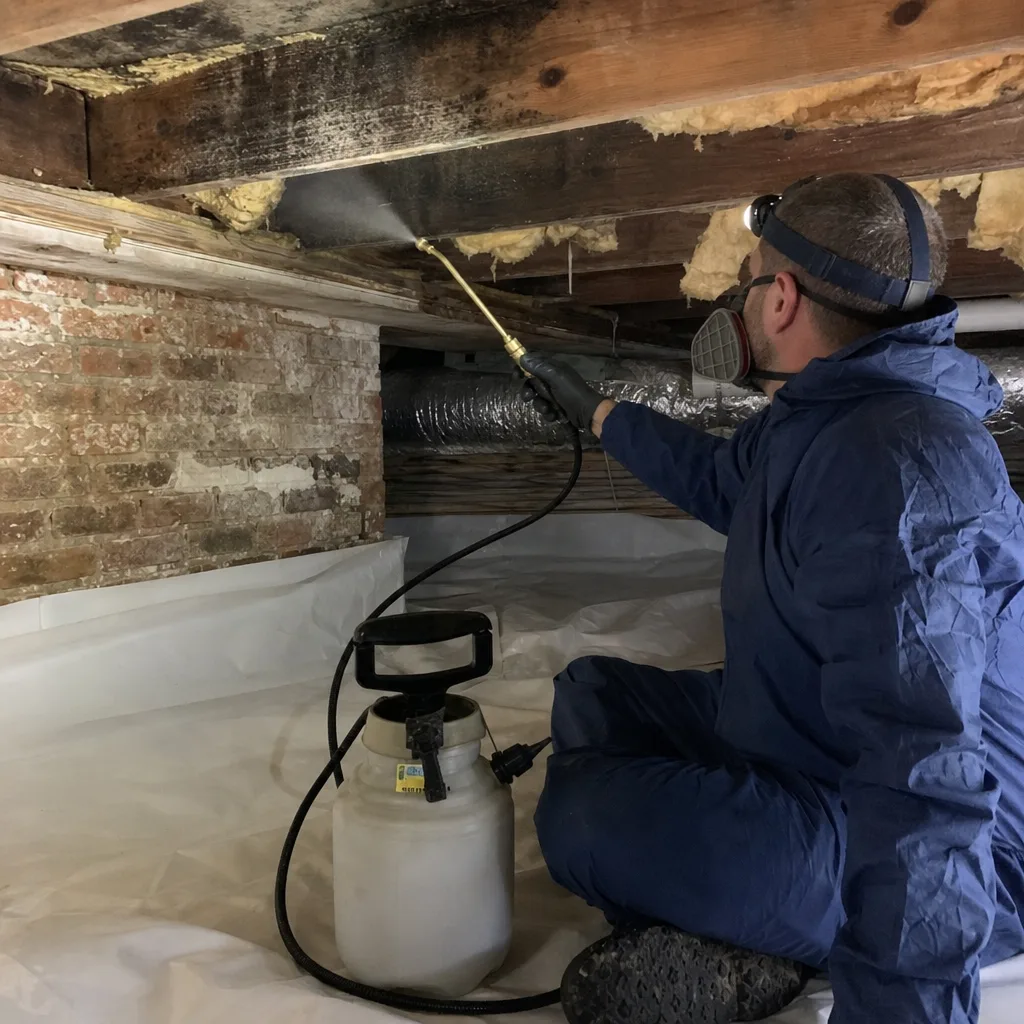
When a three-floor parapet leak soaks a pre-war co-op, the furniture, rugs, and personal effects need somewhere to go while the unit dries. We pack out contents with an inventory, restore what can be restored, and store the rest in a climate-controlled facility. Everything is documented for the carrier, and you’re never asked to play warehouse manager.
Carpet & Upholstery Cleaning
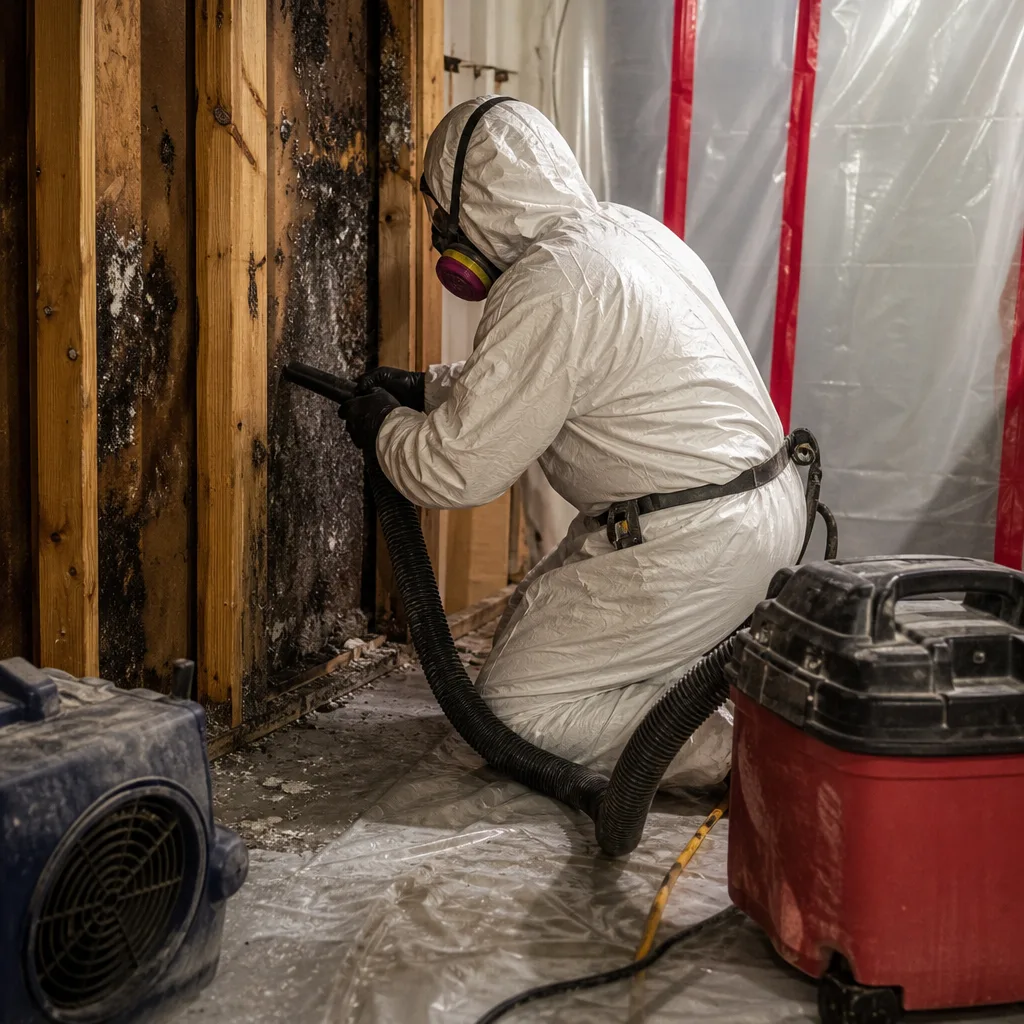
Not every water loss requires demolition. A clean Category 1 supply-line failure on a second-floor unit can often be extracted and dried in a single visit, followed by professional carpet cleaning and deodorization. We run truck-mounted extraction, HEPA-vacuum the carpet, and verify dryness with a moisture meter before we call the room done.
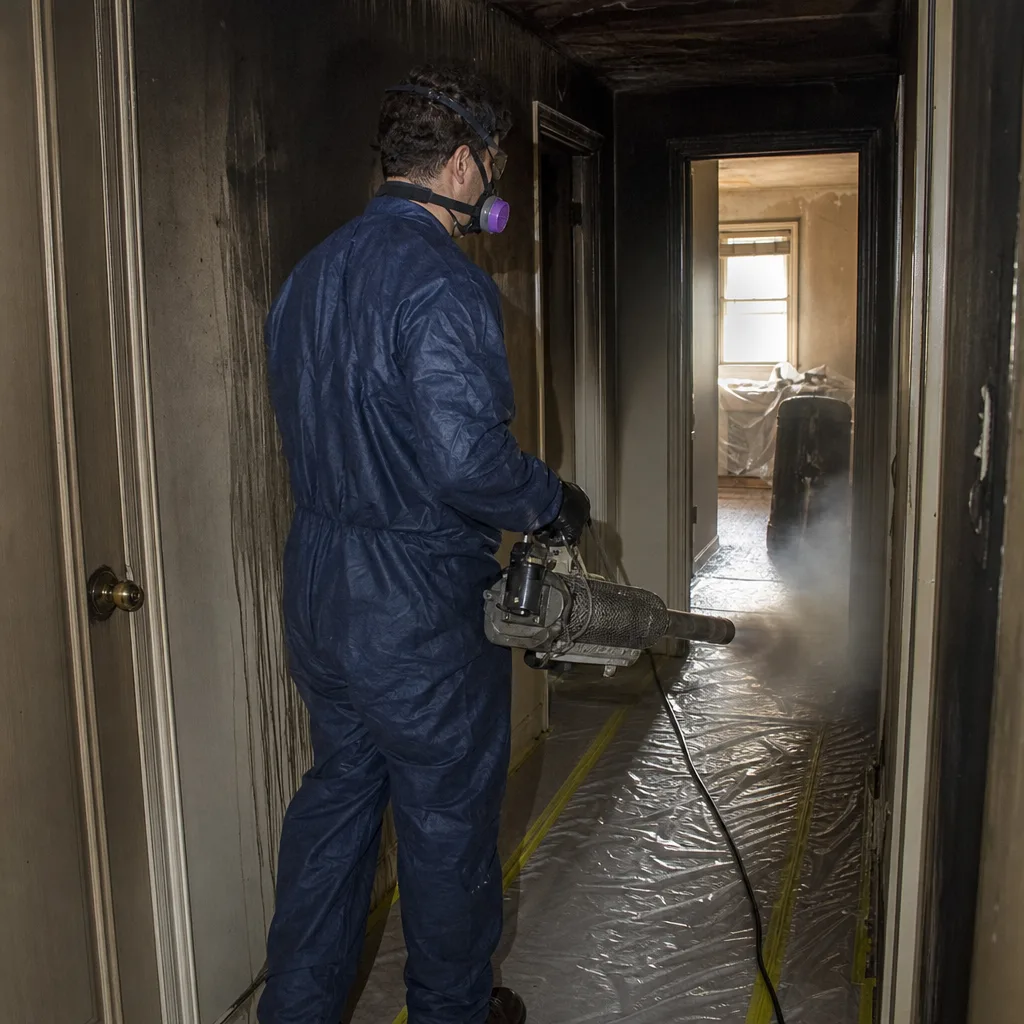
Post-Construction Cleanup
After the rebuild is finished, the job isn’t. We HEPA-vacuum every surface, wipe down walls and trim, clean the windows, and remove every scrap of construction debris. Your unit is ready to live in, not ready to be cleaned. For HOAs with strict move-back inspection requirements, we document the final clean.
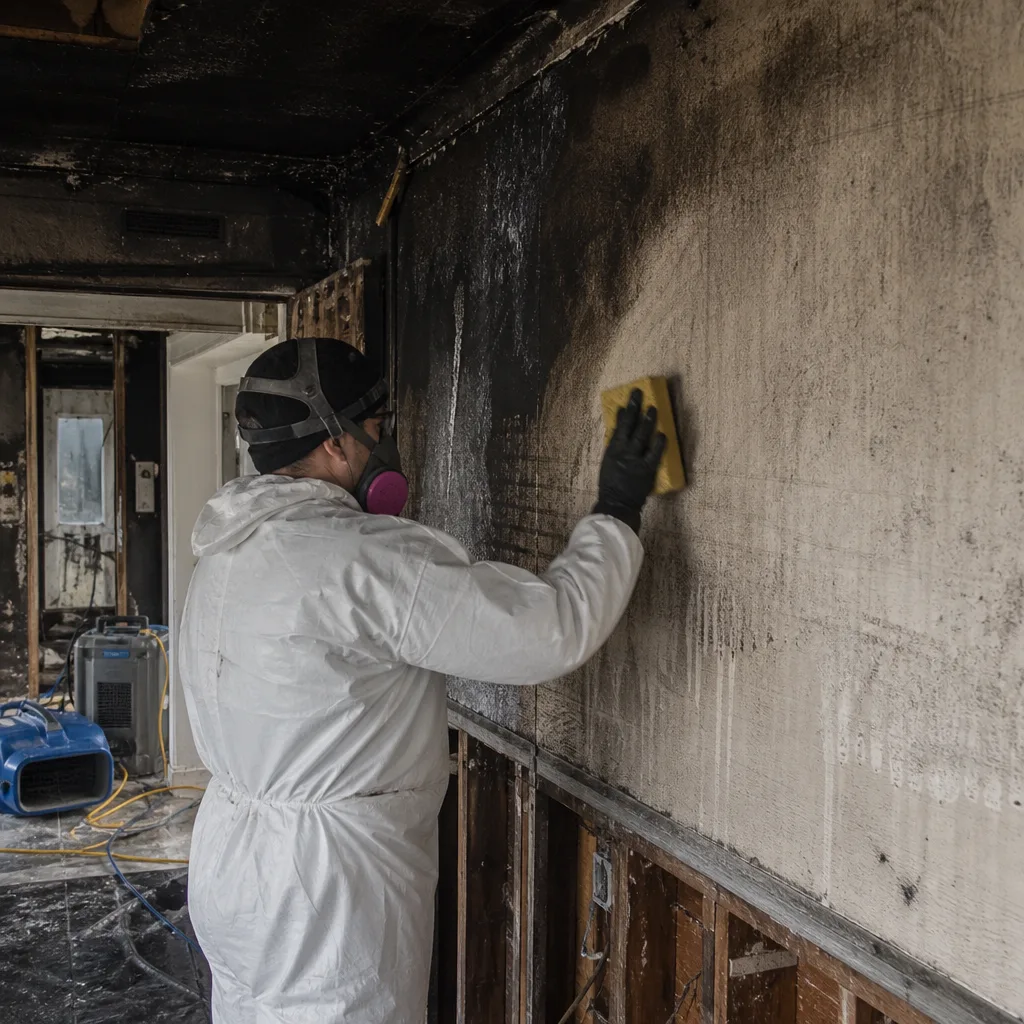
Insurance Claim Documentation
Most Cliffside Park losses involve a carrier, and most disputes come from what wasn’t documented. We provide photo logs, moisture maps, daily drying records, and a line-item scope written in the carrier’s expected format. For ARB-related disputes over finishes and materials, we provide the paperwork the board asks for, so the claim doesn’t stall over a baseboard profile.
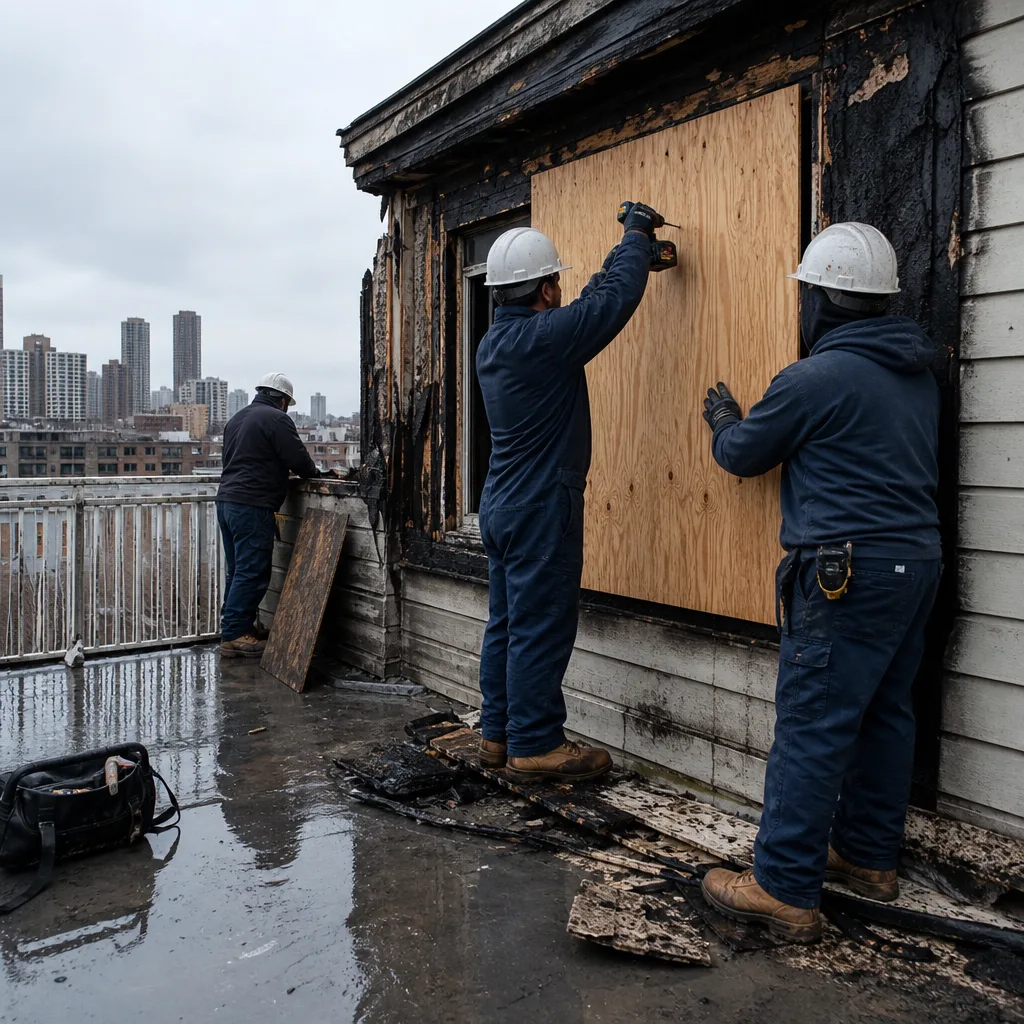
What happens when you call
- 1
A real person answersNo phone trees - you reach a local pro.
- 2
You get an upfront price rangeHonest numbers before anyone is dispatched.
- 3
A background-checked tech heads outLicensed & insured, dispatched right away.
- 4
You approve before work beginsNothing starts until you say go.
Reconstruction & Cleanup Costs in Cliffside Park, NJ
Reconstruction and cleanup costs in Cliffside Park run higher than flatland Bergen County towns because the escarpment adds work the insurance scope doesn’t always anticipate. A straightforward Category 1 extraction and drying job in a single unit typically runs $2,800 to $5,600, depending on how many rooms are wet and whether the water reached the party wall. Category 3 losses with containment, antimicrobial treatment, and drywall removal to the studs usually land between $6,500 and $14,000 for a garden-level or ground-floor unit. Full reconstruction after a parapet leak that soaked three floors can range from $18,000 to $45,000 or more, depending on framing repair, finish matching, and the HOA’s approved materials. Contents pack-out and restoration adds $2,000 to $8,000 to the average claim.
The fastest way to a firm number is the free visual inspection. We map the moisture, write the scope, and hand you a line-item estimate before any work starts. Call (917) 924-4221 and we’ll schedule it. Estimates are free, and you’ll know exactly what the job requires.
We Also Serve Cities Near Cliffside Park
Our crews cover the surrounding Bergen County communities with the same 45-minute response commitment and the same one-team approach. That includes Fairview, Edgewater, Ridgefield, and Palisades Park. If you’re on the Fairview border or down by the Edgewater waterfront, the phone number is the same: (917) 924-4221.
Serving Cliffside Park, NJ - Our Local Coverage Area
We’re based in the Cliffside Park area and know this community well. Use the map below to see our service coverage - if you’re nearby, we can almost certainly help.
Cliffside Park Reconstruction & Cleanup Questions, Answered
Will Cliffside Park’s ARB require a specific drywall finish or paint sheen in my condo after water damage?
Yes, in most buildings, the architectural review board’s standards apply even to emergency restoration work. We check the building’s finish schedule before we hang drywall, and we use the sheen and texture the board has approved. If the previous finish was a specific flat or eggshell, we match it. The ARB walkthrough is part of our closeout process, and we don’t ask you to argue with the board on our behalf. Call (917) 924-4221 and we’ll pull the building’s requirements before we write the estimate.
How do you dry a ground-floor unit on the Palisades when the water is seeping in sideways from the cliff face?
You dry it from the inside out, with the moisture source addressed first. Where lateral seepage is active through a traprock-adjacent foundation wall, we install or recommend a curtain drain or interior dimple mat to intercept the water, then run Injectidry and Dri-Eaz systems to pull the trapped moisture from the wall cavity and slab. Standard dehumidification alone won’t stop ongoing seepage. We moisture-map the wall to find how far the water has migrated, and we don’t close the wall until the readings prove the cavity is dry. Call (917) 924-4221 for a free inspection.
My pre-war brick co-op has a parapet leak that soaked three floors. Can you rebuild without triggering an insurance dispute over the scope of work?
In most cases, yes, because we document the full vertical migration path before we write the scope. A parapet leak isn’t a one-floor loss. We photograph every damaged ceiling, open the wet cavities on all three floors, and log the moisture readings floor by floor. The carrier’s adjuster sees the same evidence we see. When the scope is documented from the first day, disputes over whether the third floor was really wet tend to disappear. Call (917) 924-4221 and we’ll coordinate directly with your carrier.
What if my HOA says I can’t run loud drying equipment during evening hours?
We work within the building’s quiet-hours rules. That means adjusting the drying plan, using smaller or quieter equipment where possible, and extending the drying window slightly if needed. We don’t put you in the position of violating a building rule to dry your unit. The HOA’s requirements go in the written scope, and we document any drying schedule adjustments for the carrier. Call (917) 924-4221 and we’ll plan around the building’s rules from day one.
Do you handle pack-out and contents restoration for units above the Palisades where mold started within 48 hours?
Yes. Mold can begin colonizing in as little as 48 hours after water intrusion, and pre-war units with shared masonry walls are particularly vulnerable. We do full pack-out with itemized inventory, restore contents that can be restored, HEPA-vacuum and air-scrub affected spaces, and store everything in a climate-controlled facility until the unit is rebuilt. The inventory doubles as your insurance documentation, so nothing gets lost between the unit and the claim. Call (917) 924-4221 to start the pack-out.
How fast can someone actually get to Cliffside Park?
We commit to 45 minutes for emergency storm, water, and sewer losses in Cliffside Park. Our dispatch is live around the clock, so the clock starts when you call, not when you leave a message. For non-emergency reconstruction work, we schedule the inspection at a time that works for you, usually within a day or two. Call (917) 924-4221 and a real person will tell you exactly when the crew will arrive.
How long does drying and reconstruction take on a typical Cliffside Park water loss?
Most structural drying jobs in Cliffside Park run three to five days, assuming the moisture is caught before it saturates framing. Lateral seepage from the Palisades can extend drying because the source has to be addressed before the cavity will release the moisture. Reconstruction after drying depends on the scope: a single-room drywall and flooring replacement can be done in a week, while a multi-floor parapet leak with framing repair often takes three to six weeks. We give you a written timeline before work starts, and we update it if the moisture data changes the plan.
Do I really need full remediation, or can this just be cleaned and painted over?
If the water was clean Category 1 and the area is dried within 24 to 48 hours, cleaning and repainting is sometimes a legitimate path, and we’ll tell you that. If the water was Category 2 or 3, or if the moisture sat in the wall cavity long enough to reach the sill plate, painting over it will fail, and the mold will re-bloom behind your new paint. The free inspection gives you the straight answer, with moisture readings to prove it. Call (917) 924-4221 and we’ll tell you what we’d do if it were our unit.
Written by Curt Bowman, Owner at Floodline Restoration Co. of Manhattan, serving Cliffside Park and the surrounding Bergen County communities. Founded in 2010, built around a dispatch board, not a sales desk.