
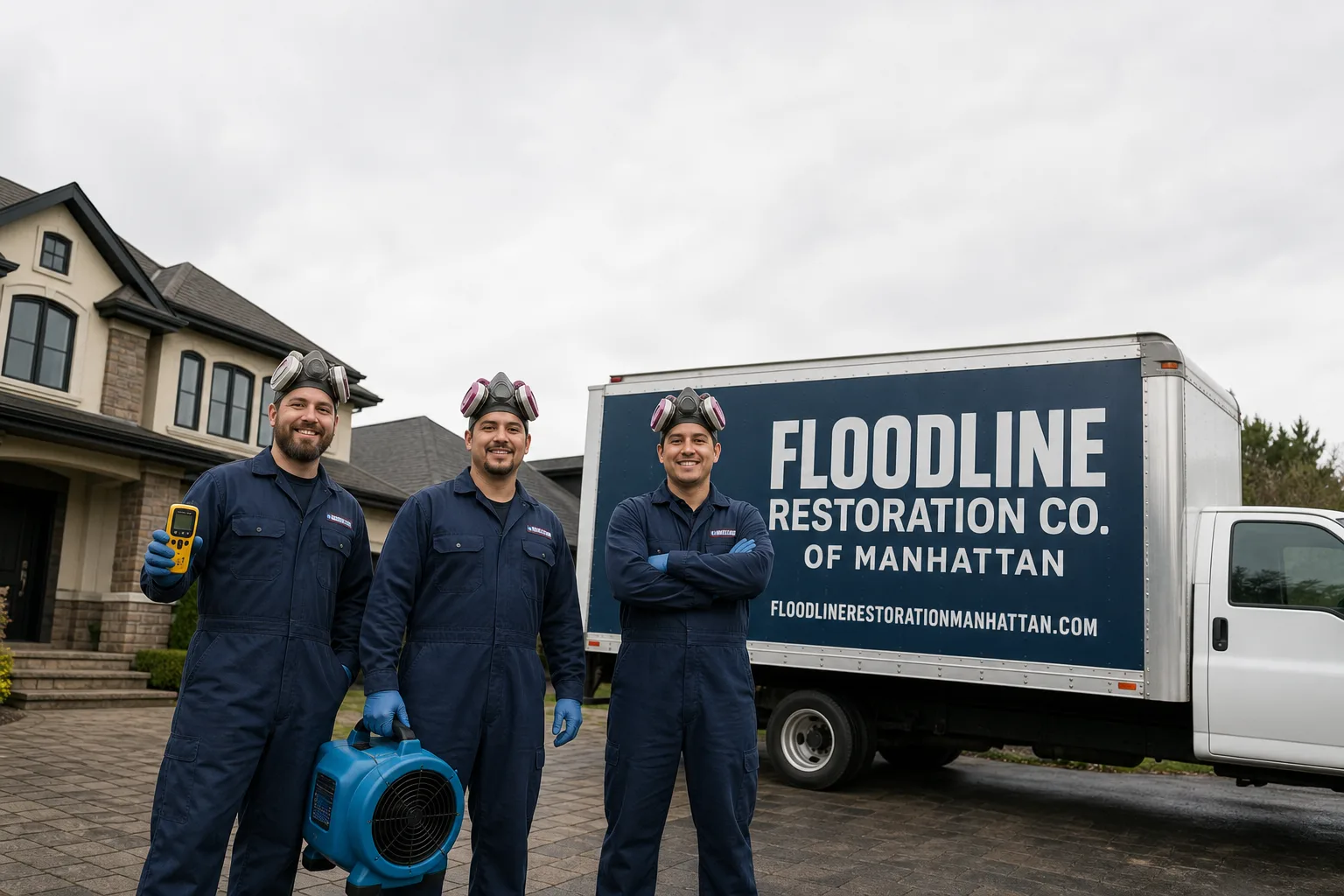
Free visual inspection and a written scope of work before any mitigation begins - photos, moisture readings, and drying logs go in your claim file
The scope we write is the scope we bill. Anything new gets shown to you, in writing, before we touch it.






 Before
 After
After Before
 After
After Before
 After
After24/7 Emergency Reconstruction & Cleanup in Rego Park
Reconstruction and cleanup after water or fire damage in Rego Park typically costs $2,500-$10,000 for single-unit cosmetic work and $15,000-$60,000 for multi-floor co-op rebuilds, and we dispatch crews to Queens Boulevard, Saunders Street, and 63rd Drive within 45 minutes of your call. The first hour matters because saturated drywall and oak parquet in these brick co-op buildings start wicking moisture into shared mechanical chases almost immediately, and once mold sets into original lath-and-plaster backup walls behind the drywall, the job doubles in scope. Call (917) 924-4221 any hour, any day. A live dispatcher answers, not a recording, and we’ll have a certified crew at your door that same visit.
Understanding Reconstruction & Cleanup Severity in Rego Park Properties
We classify every Reconstruction & Cleanup job by the water category and the affected square footage, but in Rego Park’s mid-century co-ops there’s a structural factor most generalists miss: the shared mechanical chases and original cast-iron drain stacks mean “one unit’s damage” is rarely one unit’s damage. Category 1 water from a supply-line break is clean but still wicks upward into drywall and downward into sheet flooring within hours. Category 2 water from a roof leak or failed parapet carries dissolved contaminants from 50-year-old roofing adhesive and pigeon debris. Category 3 water, which is what a failed cast-iron stack produces, contains sewage and requires containment, air scrubbing, and removal of porous surfaces down to the studs. Severity in Rego Park is also a function of authorization speed. Because a co-op board or managing agent must approve wall openings in writing, a category 1 leak discovered on Friday night may sit under containment, not drywall removal, until Monday. That’s the local reality, and we plan every response around it.
Why Rego Park Property Owners Choose Floodline Restoration Co. of Manhattan
- 45-minute response commitment to Rego Park. Our nearest crews stage along Queens Boulevard and the LIE service roads, so we’re not crossing the East River when you call about a burst riser at 2 a.m.
- 24/7 live answer, every time. A real dispatcher picks up the phone within three rings. You won’t reach a menu of extension options, and you won’t leave a voicemail.
- IICRC-certified crews (WRT, FSRT, AMRT). Background-checked, uniformed technicians trained to the restoration industry’s recognized standards, not a rotating cast of day laborers.
- Free visual inspection with a written scope. We walk the damage, map the moisture, and put a line-item plan in your hands before any wall is opened. No surprises on the bill, ever.
- Direct insurance billing. We bill the master policy, the HO-6 carrier, or both, depending on what the damage falls under. You don’t play messenger between Floodline and the adjuster.
- One team from extraction to rebuilding. The same crew that reads the moisture map on day one handles daily readings, hands you the log, and rebuilds what needs rebuilding. No mid-job handoff to a sub you’ve never met.
Our Reconstruction & Cleanup Process
Inspection & Assessment
We arrive with thermal imaging and hygrometers, map the moisture perimeter, and photograph every surface before anything moves. In a Rego Park co-op, we also flag the areas that will need board or managing-agent sign-off before demolition can begin.
Extraction & Stabilization
Standing water comes out with truck-mounted extraction units, and we stabilize the unit with temporary shoring or turn-offs as needed. Category 3 water from a failed stack gets full containment and disposal in accordance with local code.
Drying & Dehumidification
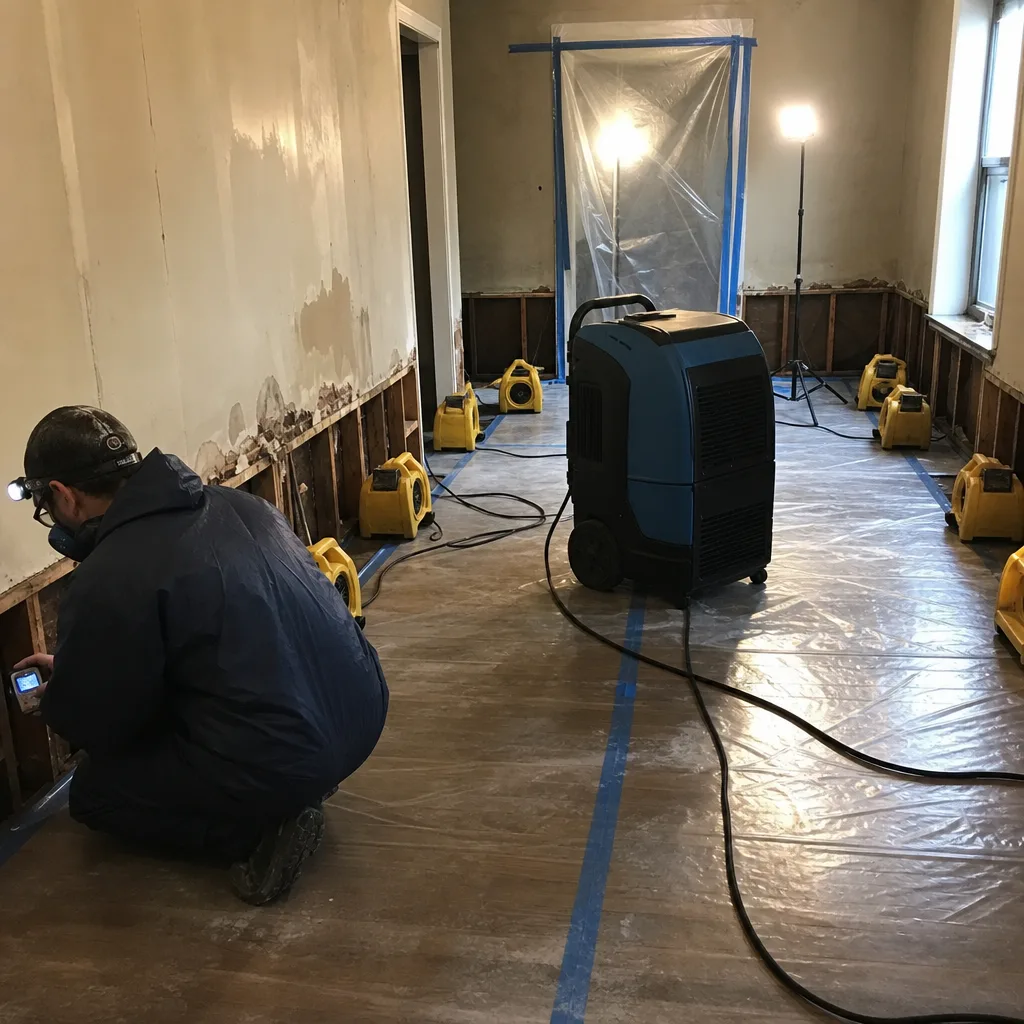
Dri-Eaz and Phoenix dehumidifiers plus XPOWER air movers are placed according to the moisture map, not scattered at random. We return daily for readings and adjust placement until the building material hits its dry standard.
Cleaning & Sanitization
We run HEPA air scrubbers during and after demolition, clean every exposed surface, and if the loss involved category 3 water, we apply antimicrobial treatment before reconstruction begins.
Reconstruction-Specific Treatment
Before new drywall goes up, we inspect the adjoining chases and stack walls for hidden moisture. In shared co-op buildings, we record post-remediation readings and take photos for both carriers before closing up.
Repairs & Restoration
We hang and finish drywall, match and refinish flooring, repaint, and rehang cabinetry. The finished work is documented and covered by the 90-Day Done Right Promise, given in writing.
Need Emergency Reconstruction & Cleanup in Rego Park Now?
Crews minutes away, answering live 24 hours a day. The sooner we start, the less it costs.
Working With Your Insurance Company
We’ve worked both sides of the Rego Park insurance equation: the co-op master policy, which typically covers the building shell, common chases, and original plumbing, and the shareholder’s HO-6 policy, which covers interior finishes, upgrades, and personal contents. The line between them moves depending on what your proprietary lease says, and we document from the first hour so neither carrier can dispute what happened. We photograph room by room before demolition, log moisture readings daily, and generate industry-standard, line-item estimates that adjusters recognize. If your adjuster wants a call at 8 p.m., we take it. You shouldn’t be the one explaining why three units on a shared stack all need drying at once. Our Reconstruction & Cleanup team coordinates directly with both carriers so you don’t carry the paperwork.
What We Provide Your Insurer
- Thorough documentation of the loss
- Photos of all damage, room by room
- Moisture readings and drying logs
- A detailed, line-item scope of work
- Direct coordination with your carrier
Built for Rego Park’s Loss Calendar
Rego Park’s Reconstruction & Cleanup workload follows a pattern we can set a calendar by. January and February bring the deep-freeze breaks: supply lines in the top-floor co-op units along 63rd Road and Saunders Street freeze and split during cold snaps, sending water down through four or five floors before anyone notices. Late winter and early spring are the flat-roof season, as freeze-thaw cycles work on the original membranes and parapet joints of 1950s and 1960s buildings until water finds a path into the ceiling assemblies. Summer brings the thunderstorm flash events and the occasional nor’easter tail, when wind-driven rain enters around aging window frames and through cracked masonry. Fall, as we saw on Saunders Street last year, is cast-iron stack failure season, when 60-year-old pipes corroded from the inside finally let go. The pattern is predictable. The damage doesn’t wait for board meetings.
Reconstruction & Cleanup Across Rego Park’s Neighborhoods
Rego Park isn’t one place, and the loss patterns shift block by block. Along Queens Boulevard, the larger postwar co-ops with doormen and full-time supers tend to have faster authorization processes but more complex multi-unit stack failures, and we’ve rebuilt kitchen ceilings at the third-floor level while the fifth-floor unit above was still drying out. Around 63rd Drive, the smaller self-managed co-ops move slower on sign-off, but the damage is often more contained. Over in the Crescents, the co-ops with dedicated parking and low-rise layouts tend to see more ground-floor water intrusion from drainage issues than from stack failures. Up near the Middle Village border on Eliot Avenue, owner-occupied two-families and brick row houses experience simpler claims but older mechanical systems, and we’ve pulled 70-year-old galvanized riser sections that crumbled in our hands. Each block has its own rhythm. We know the buildings, the managing agents, and the supers who answer the door at 2 a.m.
Specialized Reconstruction & Cleanup Services We Offer in Rego Park
Full-Service Reconstruction in Rego Park
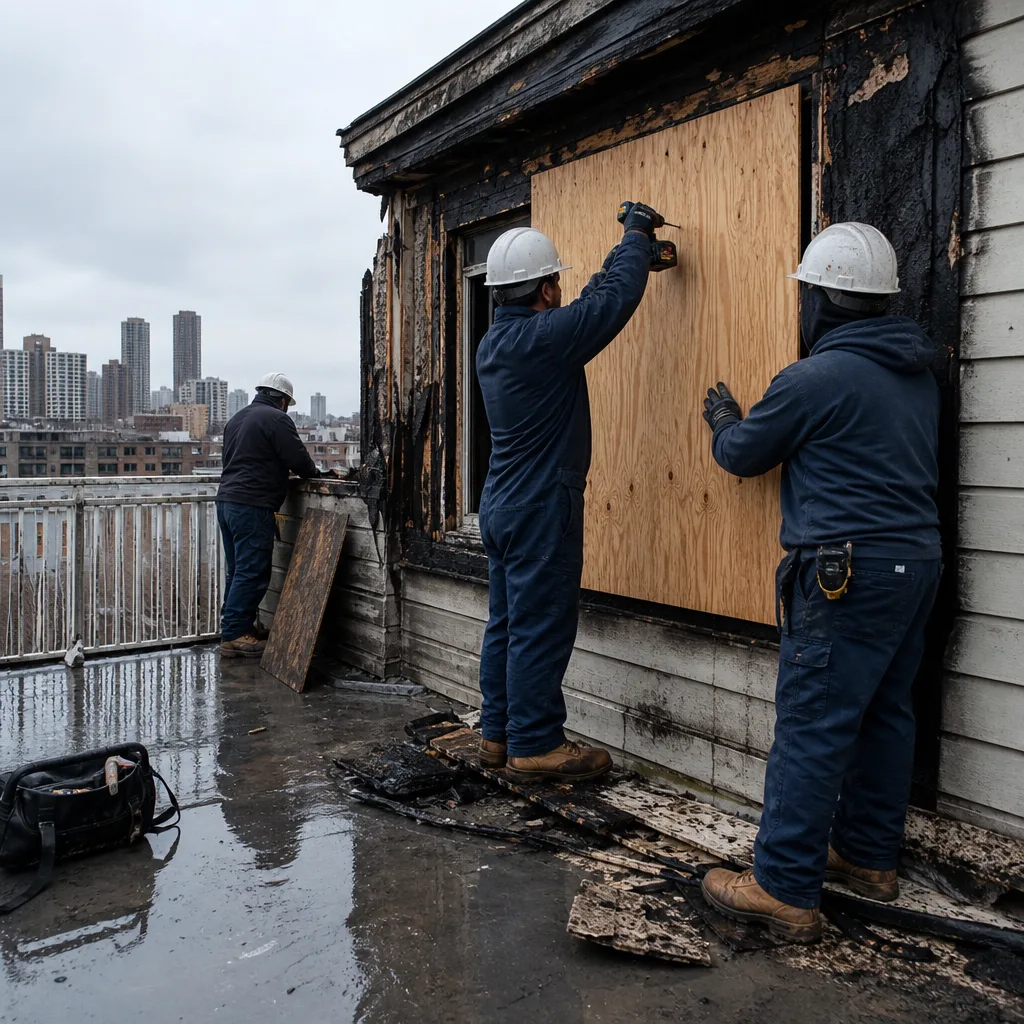
When a stack failure guts three stacked kitchens along Saunders Street, you need a crew that can do the entire rebuild without handing you to a general contractor who’s never seen the original damage. We rebuild from studs to finishes, including cabinetry, tile, millwork, and custom closet systems, and every step is documented in the moisture log and photo file. The result looks like the original, only dry and code-compliant.
Drywall & Flooring Repair in Rego Park
Rego Park’s co-ops mix original oak parquet, post-flood sheet vinyl, and newer engineered flooring, and the drying strategy changes with each. We match existing flooring species and grade when replacement is necessary, and we coordinate with co-op rules about installation hours and freight elevator access. Drywall is finished to the same skim-coat standard your co-op association expects, not a production-grade taping job.
Contents Restoration & Pack-Out in Rego Park
When a unit has a cast-iron stack failure and finishes are saturated, the contents usually need to move out before work starts. We pack out, inventory, photograph, and store contents in a climate-controlled facility, then clean and return them when the unit is rebuilt. For co-op residents, we coordinate the pack-out with your property management so the building’s elevator and loading dock are respected.
Carpet & Upholstery Cleaning in Rego Park
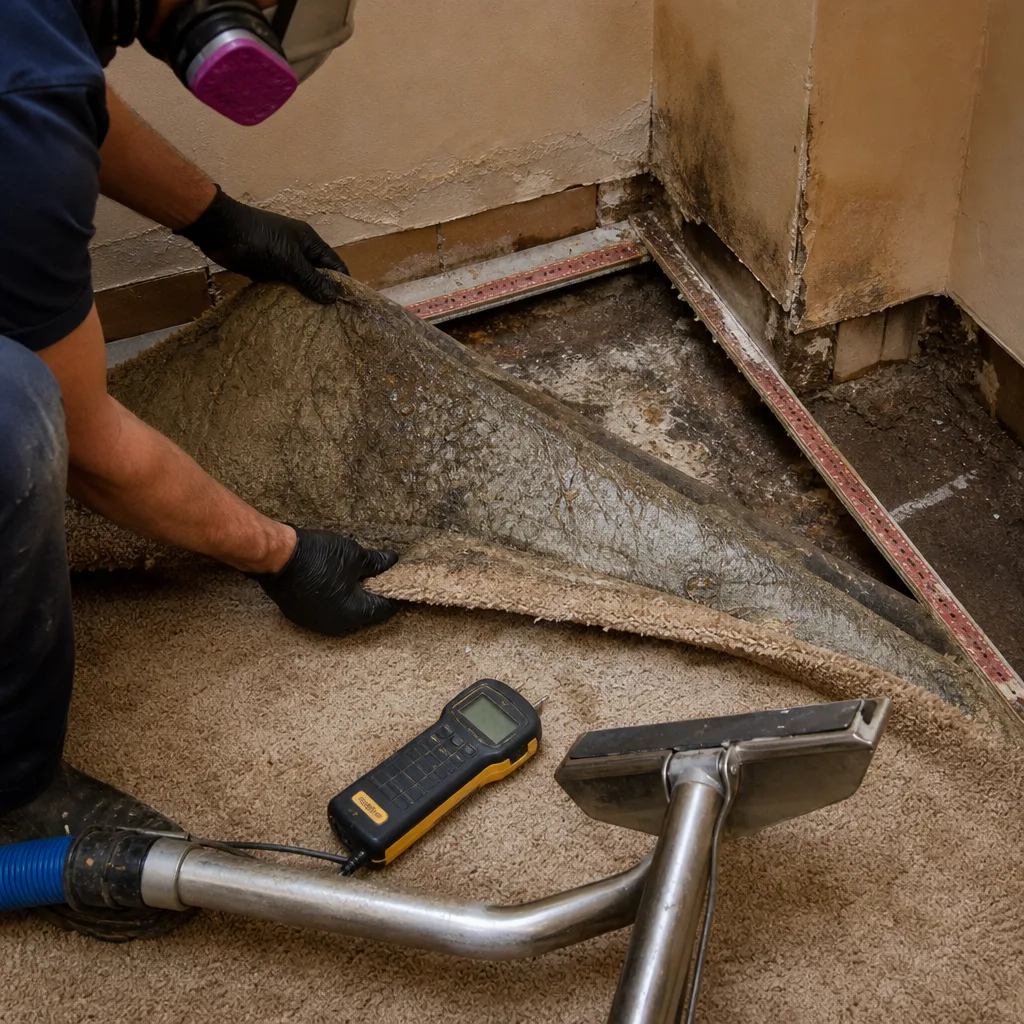
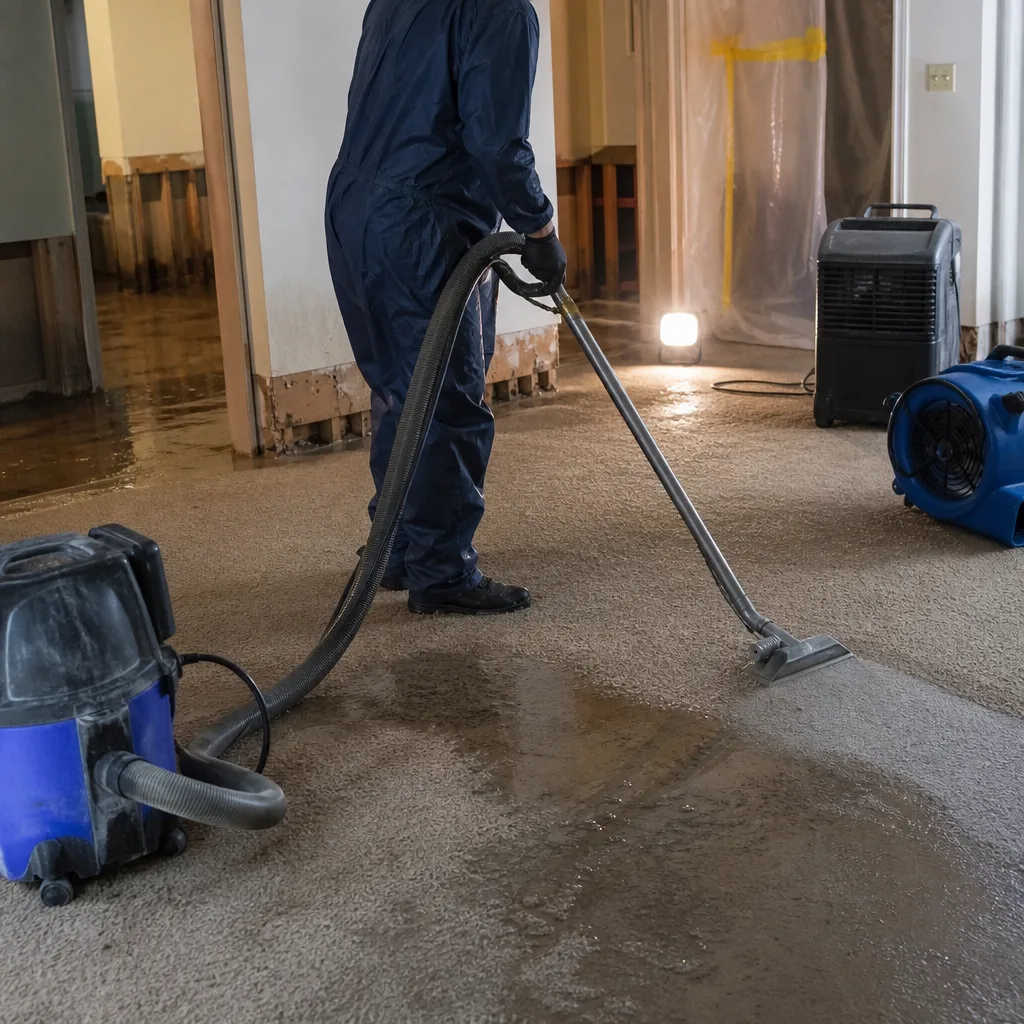
In many Rego Park co-ops, wall-to-wall carpet sits over the original wood parquet, and we clean and dehumidify salvageable carpet in place when the water is category 1 or 2 and the pad can be replaced. Area rugs and upholstery are extracted, dried with the Injectidry system when needed, and sanitized before we schedule them back in.
Post-Construction Cleanup in Rego Park
After reconstruction, your unit is left with drywall dust in the light fixtures and a fine layer of construction particulate on every surface. We run a final HEPA air scrub, wipe, vacuum, and detail the unit including inside cabinets, closets, and window tracks, so the first night back in your apartment doesn’t taste like demo day.
What happens when you call
- 1
A real person answersNo phone trees - you reach a local pro.
- 2
You get an upfront price rangeHonest numbers before anyone is dispatched.
- 3
A background-checked tech heads outLicensed & insured, dispatched right away.
- 4
You approve before work beginsNothing starts until you say go.
Reconstruction & Cleanup Costs in Rego Park, NY
Straightforward, here’s what Rego Park jobs cost in our market. A single-room drywall replacement and repaint runs $1,800-$3,200. A complete bathroom rebuild after a stack failure, including demolition, framing, plumbing rough-in repair if needed, tile, and fixtures, usually lands between $12,000 and $28,000 depending on finish level and co-op access restrictions. A full kitchen rebuild runs $25,000-$45,000. Multi-unit coordination, when one stack event affects three or four units, can push the total project to $60,000 or more, split between the master policy and individual HO-6 carriers according to each unit’s proprietary lease. If you’re paying out of pocket, the senior and veteran 5% discount always applies, and the $50 off any repair over $250 stacks on top where it fits. The free visual inspection gives you a written scope before anything opens, so the number on paper is the number you plan against. Call (917) 924-4221 and we’ll walk it with you.
We Also Serve Cities Near Rego Park
We run crews into Forest Hills, Elmhurst, Corona, and Middle Village with the same 45-minute response commitment. If you’re in a co-op in Forest Hills with a failed rafter or a rental building in Elmhurst with a sewage backup, call the same number and the same live dispatcher will answer.
Serving Rego Park, NY - Our Local Coverage Area
We’re based in the Rego Park area and know this community well. Use the map below to see our service coverage - if you’re nearby, we can almost certainly help.
Rego Park Reconstruction & Cleanup Questions, Answered
Do I need co-op board approval before Floodline Restoration Co. can start reconstruction in my Rego Park apartment?
Yes, and this is the single most important thing to understand about reconstruction in Rego Park: virtually every co-op proprietary lease and house rule requires written authorization from the board or managing agent before any wall, floor, or ceiling can be opened, even in an emergency. Missing that sign-off can halt the job mid-demolition, trigger fines, and create a billing dispute with your carrier. Our team prepares and submits the documentation the board needs while we complete the emergency extraction and stabilization, so the 24-72 hour coordination window doesn’t leave your unit sitting in standing water while you wait.
How does a cast-iron drain stack failure in a Queens Boulevard co-op affect Reconstruction & Cleanup across multiple units?
When a cast-iron stack fails, category 3 water doesn’t respect co-op ownership lines. It travels down through the wall cavity into every unit below, saturating drywall, flooring, and cabinetry along the path. Restoration requires coordinated access to each affected unit, sometimes with permission from multiple shareholders and their carriers, and reconstruction often proceeds floor by floor once the stack is repaired. Last fall, our crew responded to a cast-iron drain stack failure in a six-story co-op on Saunders Street near Queens Boulevard. With authorization from the co-op board in hand, we performed category 3 water extraction, set up containment and air movers, and replaced saturated drywall and oak flooring across three stacked units, coordinating with two different insurance carriers and documenting every step for the board’s file.
What is the difference between master policy and HO-6 coverage for Rego Park reconstruction work, and how do you handle it?
The master policy covers the building itself and common elements: the original plumbing, the shared mechanical chases, the structural framing, and the roof. Your HO-6 policy covers your interior finishes, upgrades, personal property, and any improvements made since the co-op was converted. In practice, a stack failure means the master policy pays for the pipe repair and the opening and closing of common wall cavities, while your HO-6 pays for your drywall, paint, flooring, and kitchen cabinets. We bill both carriers directly according to the damage we document, and we send the same moisture log and photo file to both so there’s no disagreement about what was wet and what needed replacing.
How quickly can mold start on wet drywall after a roof leak in my Rego Park co-op, and what do you do about it?
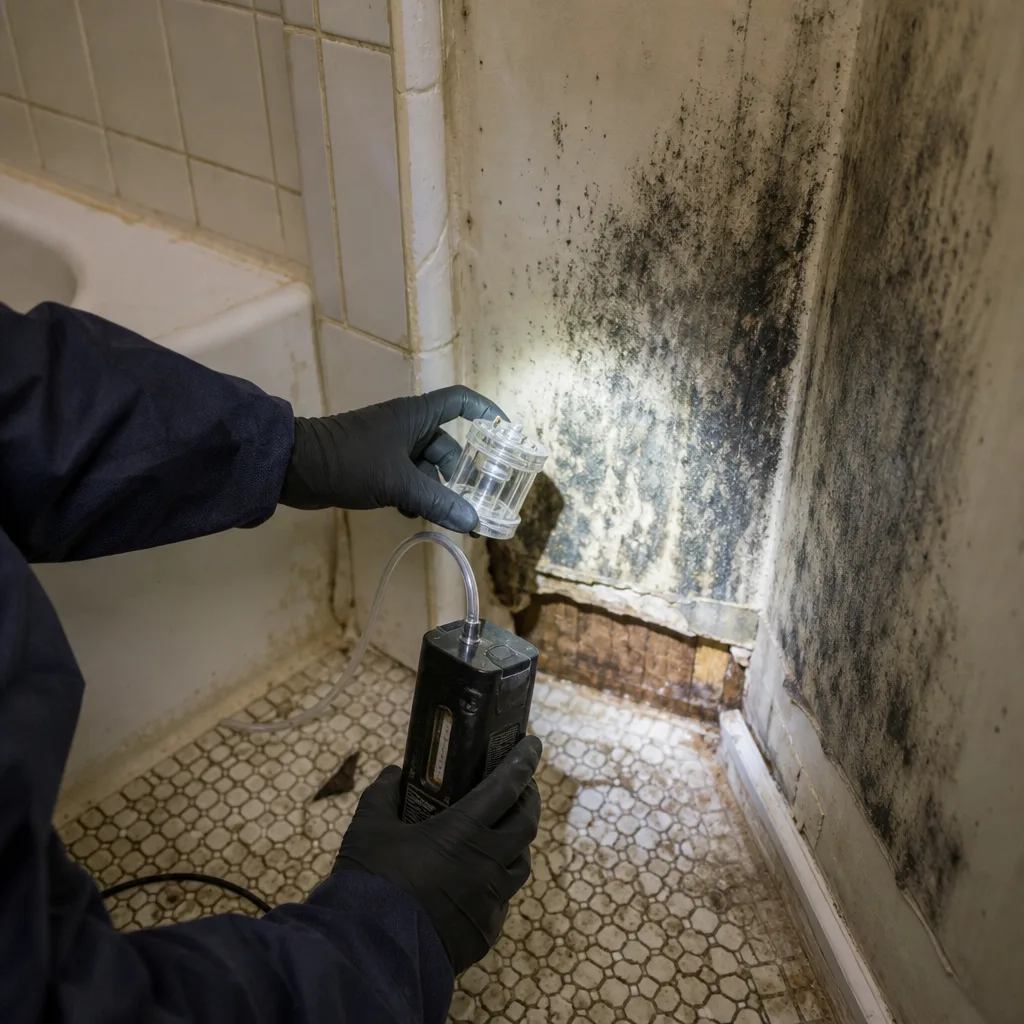
Mold can colonize damp drywall within 24 to 48 hours when the material stays wet and the temperature is above 68 degrees, which describes a Rego Park co-op ceiling leak in any month except deep winter. The sooner we start drying and air movement, the less chance of mold establishing. If we see mold, we set containment, run HEPA air scrubbers, remove the affected board, and clean the framing before we rebuild. We also check the shared wall cavity behind the affected unit, because mold spores move through chases and electric conduit paths, and the next unit over may be growing it too.
Does Floodline Restoration Co. handle pack-out and contents cleaning for Rego Park co-op residents while their unit is being rebuilt?
Yes. When a unit needs significant reconstruction, we pack out, inventory, photograph, and clean the contents, then store them in a climate-controlled facility and return them when the rebuild is complete. We coordinate with your property management so we use the building’s freight elevator and loading dock on the co-op’s schedule, and every item is labeled and logged before it leaves the apartment. The documentation we give you doubles as a contents claim inventory for your HO-6 carrier.
How fast can Floodline Restoration Co. actually get to a Rego Park apartment after a water or fire loss?
We commit to 45 minutes from your call. Our nearest crews are staged along Queens Boulevard and the Long Island Expressway service roads, and dispatch goes to whoever is closest, not whoever is on an alphabetical list. A live person answers the phone 24 hours a day, seven days a week, so at 2 a.m. you’ll talk to a dispatcher who can tell you exactly which truck is moving and when it’ll arrive at your lobby.
Can I stay in my Rego Park co-op during reconstruction, or should I plan to be out?
Depends on the scope. For a single-room drywall job or a bathroom rebuild, most residents stay, and we work around your hours and your co-op’s construction window. For a multi-room gut or anything involving category 3 water, we usually recommend staying elsewhere until the drying phase is complete and the demolition has been cleared. If your loss is covered, your HO-6 policy may include loss-of-use coverage for a temporary rental. We document the condition of the unit in a way that supports that claim.
What certifications do your crews carry for Reconstruction & Cleanup work in Rego Park?
Our technicians are IICRC-certified in water damage restoration (WRT), fire and smoke restoration (FSRT), and applied microbial remediation (AMRT), and they’re trained to IFA standards as well. Every crew member is background-checked and wears a Floodline uniform. We use Dri-Eaz, Phoenix, and XPOWER equipment for extraction, drying, and air scrubbing, and we work to the IICRC S500 and S520 standards. The certification number is documented in your job file, and we’re glad to show it.
What should I do in the first 30 minutes after I discover water damage in my Rego Park co-op?
Call (917) 924-4221 first, then if it’s safe, shut off the water at the fixture or the building’s main riser valve if you know where it is. Do not open walls or ceilings, both for your safety and because unauthorized demolition can create a liability problem with the co-op board. Do not run ceiling fans or HVAC, which can spread moisture and any mold spores through the ductwork. Photograph what you can from the doorway. Then stay out and let our team start extraction when we arrive.
Written by Curt Bowman, Owner at Floodline Restoration Co. of Manhattan, serving Rego Park and the surrounding boroughs since 2010.
If you’re standing in a wet apartment on Saunders Street with a co-op board meeting three days away, call (917) 924-4221 now. We’ll be there when we say, and the line the water left is where we start.