
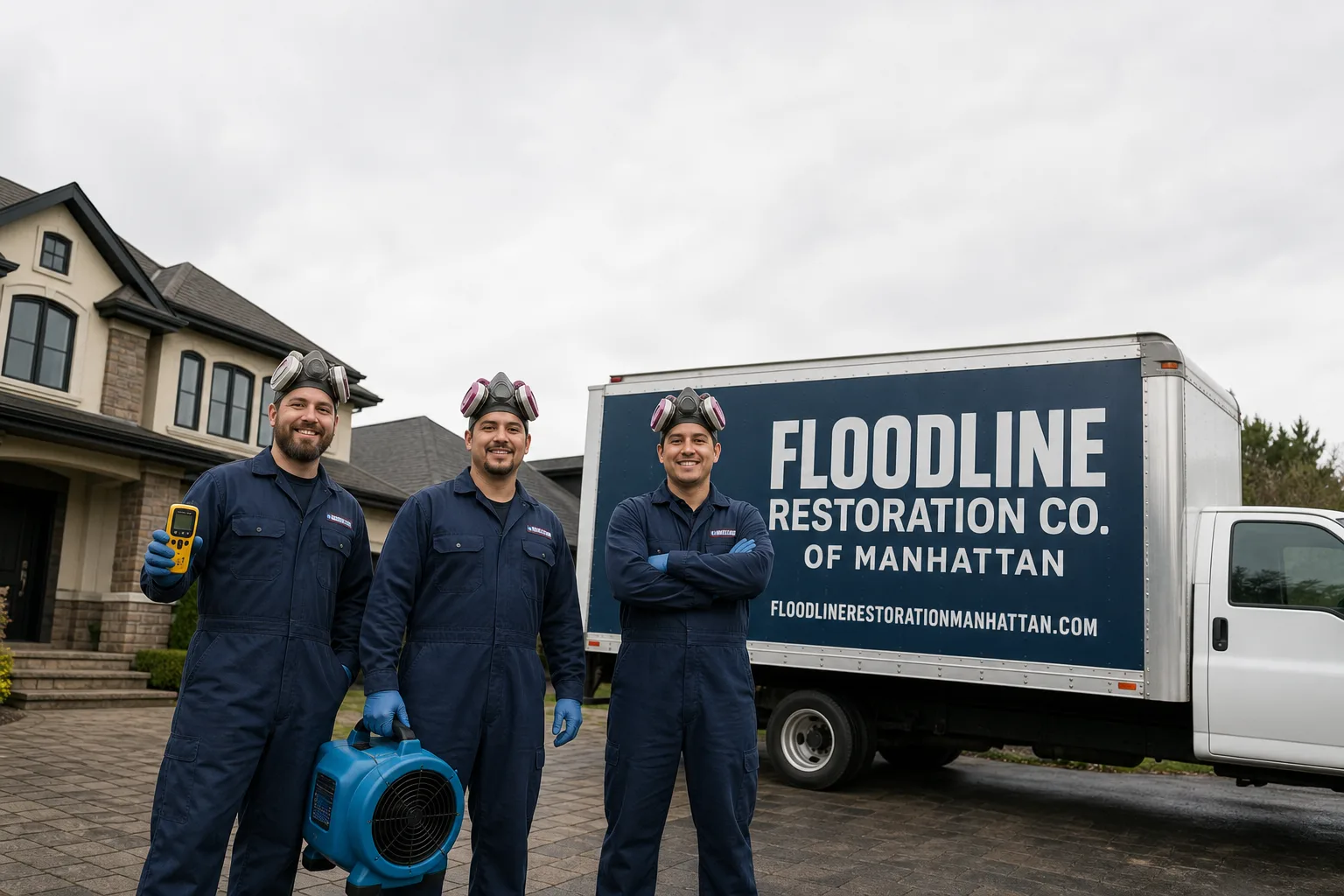
Free visual inspection and a written scope of work before any mitigation begins - photos, moisture readings, and drying logs go in your claim file
The scope we write is the scope we bill. Anything new gets shown to you, in writing, before we touch it.






 Before
 After
After Before
 After
After Before
 After
After24/7 Emergency Reconstruction & Cleanup in Harrington Park
When a Harrington Park basement takes on water from the Pascack Brook or a nor’easter rips through a raised ranch off Elm Street, the first call should reach a live person. Ours always does. Call (917) 924-4221 and a dispatcher answers, not a recording. We send a certified crew to Harrington Park immediately, because the first hour after water intrusion or smoke migration determines whether you’re looking at a cleanup or a full gut-and-rebuild. A free visual inspection tells us exactly what you’re facing. The line the water left is where we start.
We’re Floodline Restoration Co., and our Reconstruction & Cleanup team has handled repeat floods, legacy plumbing failures, and post-fire rebuilds in Bergen County for years. We know this borough’s houses, its permit office, and its insurance terrain. That local knowledge gets your claim moving fast and your house dry faster.
Understanding Reconstruction & Cleanup Severity in Harrington Park Properties
Not every Harrington Park flood is the same, and neither is every Water Damage Restoration - Harrington Park rebuild. Restoration professionals classify water by contamination level. Category 1 is clean supply water, like a burst copper line under a kitchen sink. Category 2 carries some contaminants, like a washing machine overflow. Category 3, the kind we see regularly along the Pascack Brook corridor, is grossly contaminated water carrying sewage, soil, and runoff bacteria. A 1962 split-level on Elm Street with Category 3 water in the basement needs a very different response than a 1980s ranch with a clean-water dishwasher leak.
Harrington Park’s housing stock makes severity calls trickier. Most homes here were built between 1950 and 1975. That means block or slab foundations that wick water upward, original galvanized steel plumbing at the end of its service life, and raised ranches with knee walls and crawlspaces that trap humidity. Moisture hides behind original 1950s vinyl tile or beneath paneling, then blooms into Mold Remediation in Harrington Park territory within 48 to 72 hours in a Bergen County summer. Thermal imaging and moisture mapping are not luxuries here. They’re what tells us whether we can dry in place or whether that drywall has to come out to four feet.
Why Harrington Park Property Owners Choose Floodline Restoration Co. of Manhattan
- 45-minute response commitment: When you call from Harrington Park, a crew is dispatched immediately. We’ll be there when we say.
- 24/7 live answer, always: A real person picks up at 2 a.m. during a January deep freeze, not a phone tree. That matters when a supply line bursts while you’re sleeping.
- IICRC-certified crews: Our technicians hold WRT, FSRT, and AMRT certifications. They’re background-checked, uniformed, and trained to IICRC, RIA, and IFA standards.
- Free visual inspection: Before anything is torn out, you get eyes on the damage and an honest read on scope. No pressure. A square deal: no surprises on the bill.
- Direct insurance billing: We bill your carrier directly and document every reading, every photo, every line item. You never play messenger.
- One team from extraction to reconstruction: The same crew that maps moisture on day one rebuilds your drywall on day ten. No mid-job handoff.
Our Reconstruction & Cleanup Process
Inspection & Assessment
We arrive, walk the property, and document everything. Thermal imaging finds moisture you can’t see. We note pre-existing conditions because in Harrington Park, where repeat Pascack Brook floods are common, insurers and Bergen County officials both scrutinize what was there before the loss.
Extraction/Stabilization
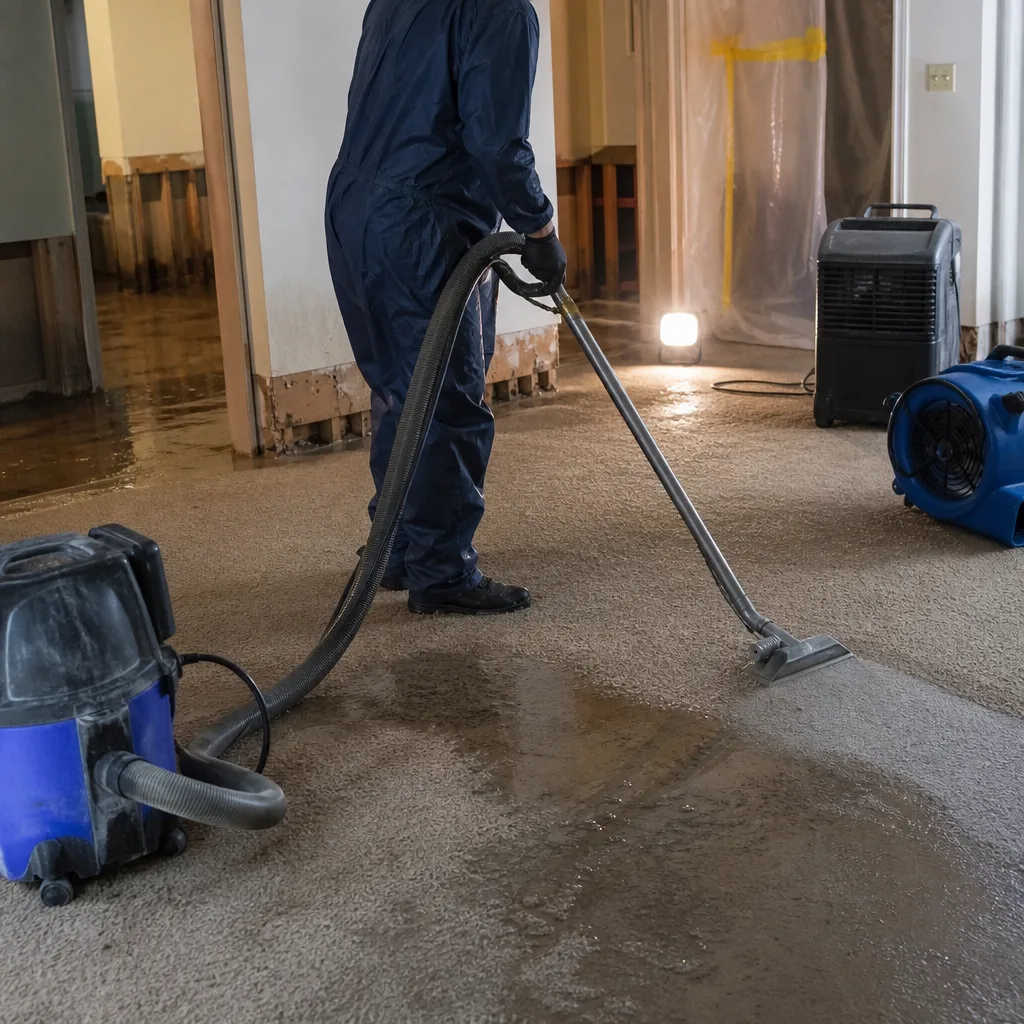
Category 2 and 3 water come out first with truck-mounted extraction. Damaged drywall, carpet, and insulation are removed to the flood line. We stabilize what can be saved and contain what can’t.
Drying & Dehumidification
Professional-grade Dri-Eaz and Phoenix air movers and dehumidifiers go in, placed according to a moisture map we build on day one. In a block foundation home near the Pascack Brook, drying the structure, not just the air, is what prevents cupped hardwood six months later.
Cleaning & Sanitization
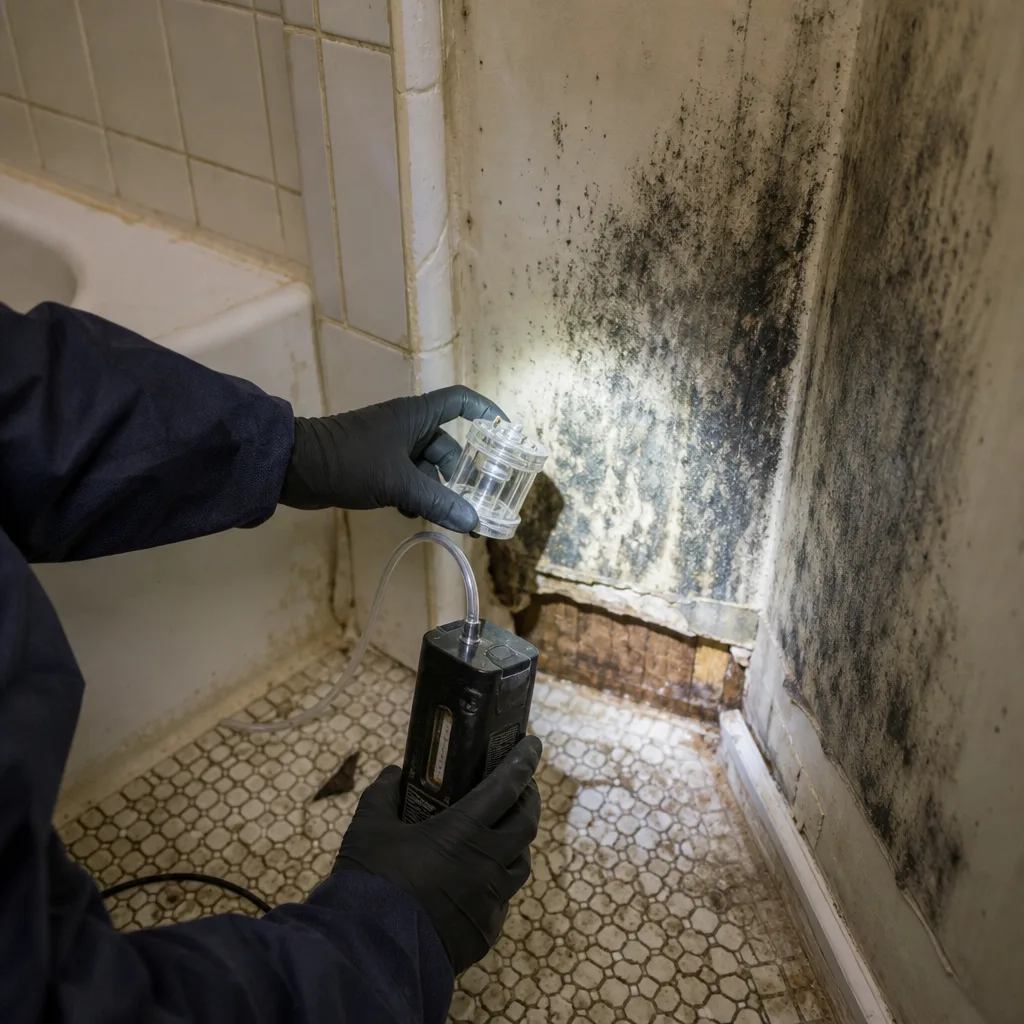
HEPA air scrubbers run while surfaces are cleaned and sanitized. For Category 3 losses, we apply EPA-registered antimicrobials to studs and substrates before anything gets closed up.
Contents Restoration & Pack-Out
Salvageable contents from a split-level on Highland Street or a ranch on Elm Street get packed out, cleaned, and stored until the rebuild is done. We document everything for your claim.
Repairs & Restoration
Drywall, flooring, trim, and paint. The same crew that extracted and dried now rebuilds, using flood-resistant materials where they make sense. We finish with a moisture log and our 90-Day Done Right Promise in your hands.
Need Emergency Reconstruction & Cleanup in Harrington Park Now?
Crews minutes away, answering live 24 hours a day. The sooner we start, the less it costs.
Working With Your Insurance Company
In Harrington Park, where FEMA-designated flood zones and repeat losses are part of the landscape, your insurance claim lives or dies on documentation. We start building the file the moment we arrive: photos of the loss, room by room, before anything is disturbed. Then moisture readings on day one and every day after until we hit the dry standard. Your adjuster can request those drying logs at any time. We hand them over without hesitation because they show exactly what happened and what we did about it. A detailed, line-item scope of work goes to your carrier before reconstruction starts. We talk to your adjuster directly so you don’t have to. Done right, and backed in writing.
What We Provide Your Insurer
- Thorough documentation of the loss
- Photos of all damage, room by room
- Moisture readings and drying logs
- A detailed, line-item scope of work
- Direct coordination with your carrier
Built for Harrington Park’s Loss Calendar
Harrington Park’s loss calendar runs on Bergen County weather. November through March, nor’easters pack heavy wet snow and ice, and ice dams form along the eaves of those mid-century ranches and split-levels. Ice-dam water moves down behind siding and into wall cavities, soaking insulation and drywall before anyone sees a stain on the ceiling. January and February deep freezes burst galvanized supply lines in unheated crawlspaces and garages. March and April bring snowmelt and spring rain, when the Pascack Brook swells and basements along its corridor take on groundwater. July and August thunderstorm flash floods hit sudden and hard. And in the 48 to 72 hours after any warm-weather water event, mold starts colonizing the poorly vented crawlspaces common to 1950s and 60s construction here. We’re built for this calendar because we’ve worked it for years.
Reconstruction & Cleanup Across Harrington Park’s Neighborhoods
Harrington Park is a borough of about 4,800 people, but the damage patterns shift block by block. Homes along Elm Street, Highland Street, and the streets nearest the Harrington Park stretch of the Pascack Brook corridor flood with enough regularity that we know those basements by address. Raised ranches on the east side of the borough, nearer to the border with Closter, tend to carry crawlspace moisture problems that turn into mold without ever showing a puddle. The split-levels clustered around Highland Avenue and the older sections near the center of town often still have original copper and galvanized plumbing. When that fails, it fails at a joint inside a wall, which means drywall removal and structural drying rather than a simple mop-up. Farther north along Harriot Avenue, the larger mid-century homes built on slab foundations wick groundwater differently than block foundations do. Knowing which house type you’re standing in on Tappan Road versus Elm Street determines where we place drying equipment and whether a vapor barrier replacement is part of the scope. That’s not knowledge you get from a national franchise playbook. It’s what we’ve learned from years of working Harrington Park’s streets.
Field Note: Elm Street Repeat Flood
Our crew recently handled a repeat flood loss on Elm Street, a 1962 split-level where the original galvanized plumbing had failed again during a nor’easter. We performed category 3 water extraction, removed the damaged drywall to 4 feet, and mapped moisture readings in the block foundation walls. Readings stayed above 25% for three days, so we set up containment and air movers to hit structural drying targets before rebuilding with flood-resistant materials.
Specialized Reconstruction & Cleanup Services We Offer in Harrington Park
Full-Service Reconstruction
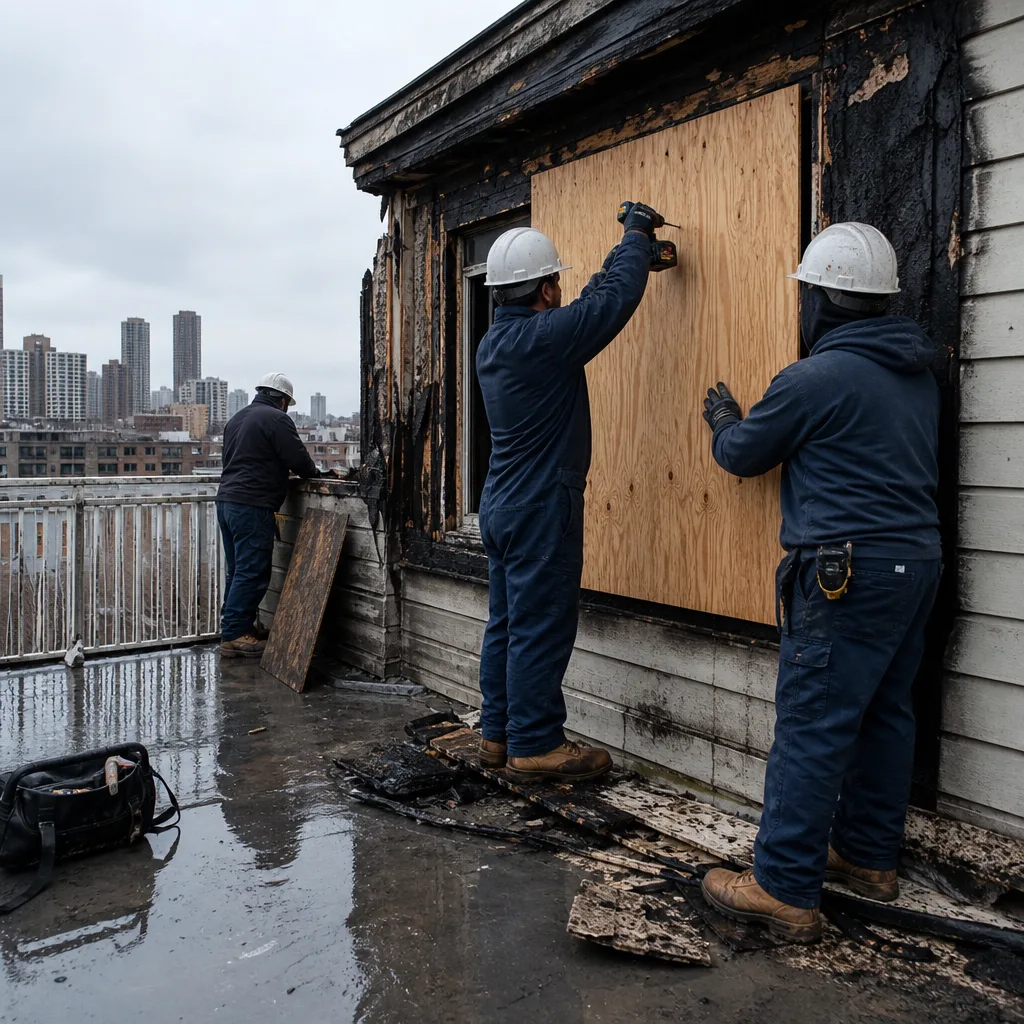
After a Pascack Brook flood or a house fire, Harrington Park Commercial Restoration customers and homeowners alike need more than drying. They need walls rebuilt, flooring replaced, trim milled, and paint matched. We do it all with the same certified crew that started the job, so there’s no handoff to an unfamiliar subcontractor. A written scope before work starts means you know exactly what’s being done and what it costs.
Drywall & Flooring Repair
Water damage in a 1960s split-level usually means drywall removed to the flood line and flooring that may have wicked moisture into the subfloor. We cut, replace, tape, and finish drywall to match existing texture, then install flooring that suits the room. In crawlspace homes, we check the vapor barrier before new flooring goes down. Skipping that step is how you get cupped hardwood six months after a successful-seeming dry-out.
Contents Restoration & Pack-Out
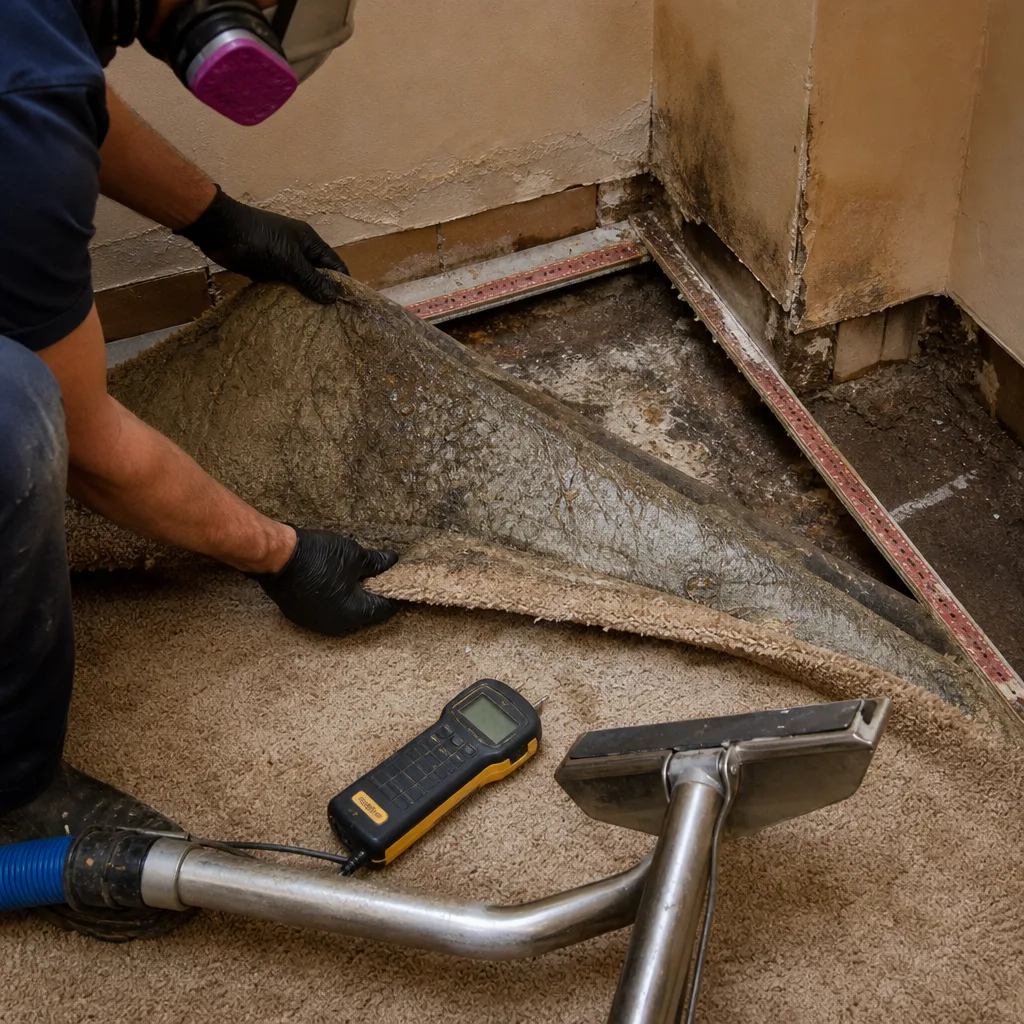
Furniture, rugs, clothing, paperwork, and keepsakes from a Harrington Park home need a safe place while the structure is being rebuilt. We pack out, clean, and store contents in a secured facility, documenting every item for your insurer. Rugs and upholstery are cleaned using professional-grade Dri-Eaz and XPOWER equipment and inspected before anything comes back into your house.
Carpet & Upholstery Cleaning
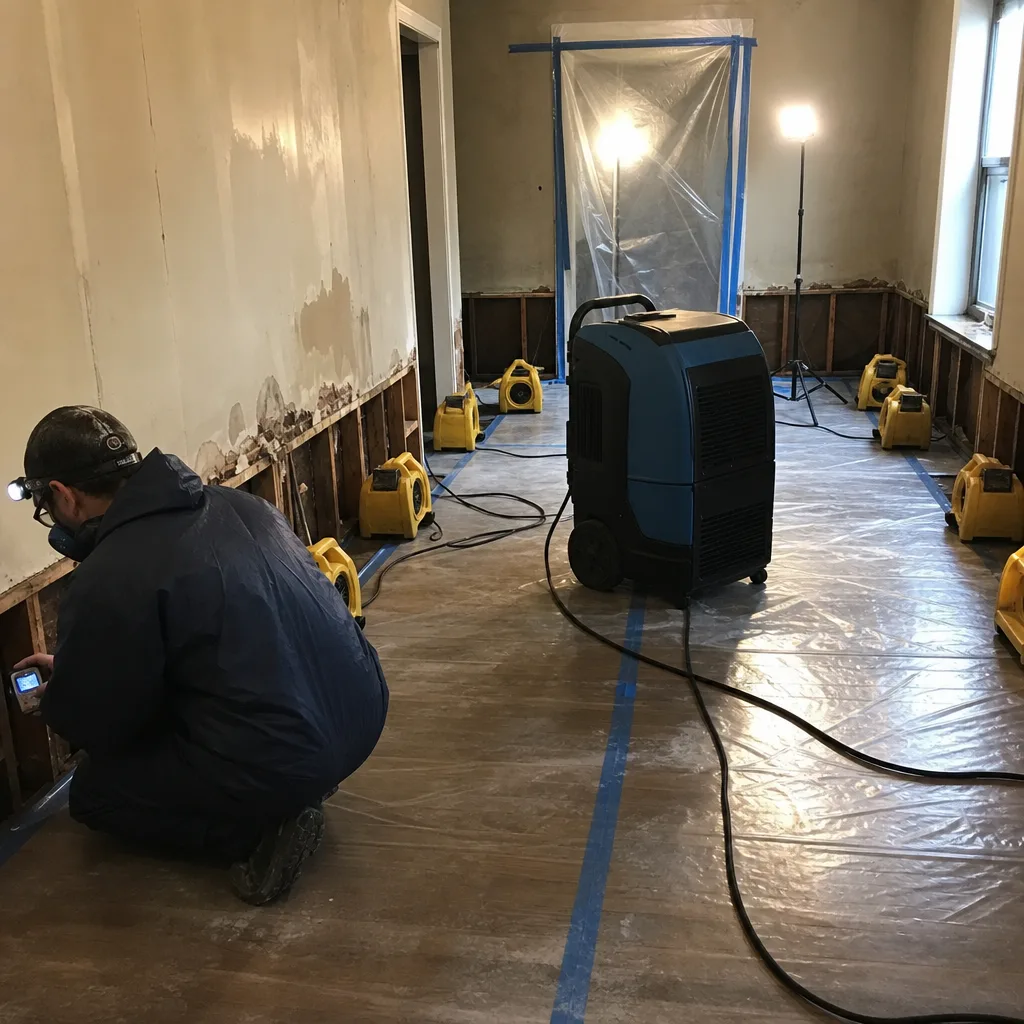
Post-construction dust and debris settle into carpet fibers and upholstery. Even after a clean rebuild, a thorough cleaning is what makes a house feel like yours again. We use hot water extraction and professional-grade equipment to pull out construction dust, soot residue, and the fine silt that follows a flood. Bergen County homes with older carpet over slab floors benefit from deeper extraction that reaches past the surface.
Post-Construction Cleanup
Once the drywall is up and painted, the last thing you want is to chase dust for a month. Our post-construction cleanup clears every surface, floor, and air duct of construction residue. HEPA filtration runs during and after the job to capture fine particulates common after sanding and demolition in Harrington Park’s older homes.
What happens when you call
- 1
A real person answersNo phone trees - you reach a local pro.
- 2
You get an upfront price rangeHonest numbers before anyone is dispatched.
- 3
A background-checked tech heads outLicensed & insured, dispatched right away.
- 4
You approve before work beginsNothing starts until you say go.
Reconstruction & Cleanup Costs in Harrington Park, NJ
What does reconstruction and cleanup actually cost in Harrington Park? A full-service reconstruction after a Category 3 basement flood in a split-level home typically runs $8,500 to $18,000 depending on square footage, flooring replacement, and whether electrical or plumbing repairs are needed. Drywall removal and replacement alone, where water reached four feet up the wall, usually runs $2,800 to $5,500. Contents pack-out and restoration for a three-bedroom home ranges from $1,800 to $4,500. Carpet and upholstery cleaning after a flood or fire runs $350 to $900. These are Harrington Park ranges, not national averages. What moves the price is what you’d expect: how high the water went, whether it was Category 1 or Category 3, how long it sat before extraction started, and whether your insurer is covering the full scope. The free inspection is the honest path to a firm number. Call (917) 924-4221 and we’ll put a written scope in front of you, with no obligation.
We Also Serve Cities Near Harrington Park
Floodline Restoration Co. serves Reconstruction & Cleanup in Harrington Park and the surrounding Bergen County communities. Crews regularly respond to Norwood, Westwood, Closter, and Haworth. If your home sits in one of these towns and you’re facing water, fire, or storm damage, the same live-answer dispatch line reaches us. Call (917) 924-4221.
Serving Harrington Park, NJ - Our Local Coverage Area
We’re based in the Harrington Park area and know this community well. Use the map below to see our service coverage - if you’re nearby, we can almost certainly help.
Harrington Park Reconstruction & Cleanup Questions, Answered
How do you document a repeat-loss property in Harrington Park before starting reconstruction?
We document pre-loss condition with photos, thermal imaging, and moisture readings before any demolition or pack-out happens. In Harrington Park, where Pascack Brook flood addresses are known to Bergen County officials and insurers, this pre-existing condition record is what separates a covered repeat-loss claim from a denied one.
My 1960s ranch on Highland Street has original copper plumbing that burst-do I need full drywall removal or can you dry in place?
It depends on where the water went and what category it is. Clean Category 1 water trapped inside a wall cavity can sometimes be dried in place using Injectidry systems and targeted air movement. But if water wicked into insulation, or if the drywall has been wet for more than 48 hours, removal to the flood line is the safer and cheaper long-term call. We’ll tell you honestly which path your Highland Street home needs after the moisture map is built.
What does pack-out involve for a split-level home in Harrington Park after a sewer backup?
Pack-out means we remove salvageable contents, inventory every item with photos and descriptions for your insurer, clean and sanitize what can be saved, and store it in a secured facility until reconstruction is finished. For a sewer backup, which is always Category 3 water, anything porous that absorbed contaminated water is documented for disposal, and we work with your adjuster on valuation.
Why does my Harrington Park insurance adjuster require drying logs?
Drying logs prove the structure actually reached the dry standard before we closed up the walls. Adjusters in Bergen County require them because they’ve seen claims where contractors rebuilt over wet framing and the mold came back a year later, generating a second claim. Our daily moisture readings, taken with hygrometers and thermal imaging, are handed to you and your carrier with every job. It’s how we stand behind the work in writing.
The Pascack Brook flooded my crawlspace again-can you remove the vapor barrier and replace it?
Yes. We remove the compromised vapor barrier, dry the crawlspace to the structural drying standard using Dri-Eaz and Phoenix dehumidifiers, and install a new vapor barrier suited to a home in a FEMA-designated flood zone. We also check for mold behind the old barrier and document everything for your repeat-loss claim.
How fast can a crew reach my Harrington Park home after I call?
We commit to a 45-minute response time for emergency calls in Harrington Park. A live dispatcher answers 24/7, and a certified crew heads your way immediately. For Pascack Brook flood events, where extraction speed directly affects the scope of reconstruction, that response time often means the difference between drying and gutting.
Can we stay in our Harrington Park home during reconstruction?
It depends on the scope. A single-room drywall replacement after a clean-water leak often allows you to stay with containment in place. A Category 3 flood that requires gutting a basement or an upper floor rebuild may mean temporary relocation, especially for older Harrington Park homes where dust and demolition happen in tight quarters. We’ll give you a straight answer based on your specific loss, and we’ll coordinate timing with your insurer.
What should I do in the first 30 minutes after a flood or sewage backup in Harrington Park?
Call us at (917) 924-4221. Then, if it’s safe, shut off water at the main, kill power to the affected area if water is near outlets or the panel, and stay out of standing water if sewage is involved. Do not use a shop vac on contaminated water. Do not move wet contents across dry areas. The first call is what starts the clock on your claim and your dry-out.
Written by Curt Bowman, Owner at Floodline Restoration Co., serving Harrington Park and Bergen County since 2010.