
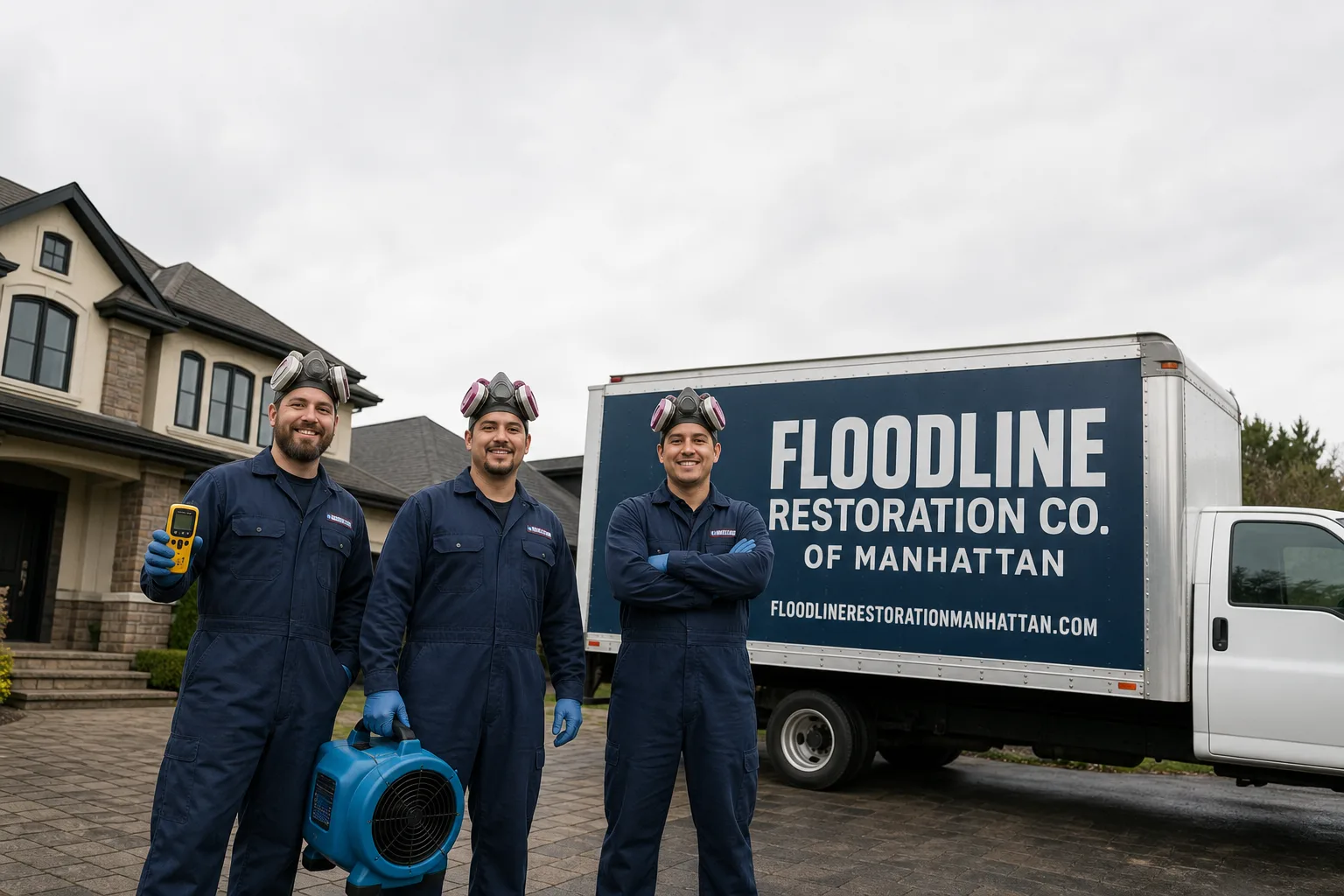
Free visual inspection and a written scope of work before any mitigation begins - photos, moisture readings, and drying logs go in your claim file
The scope we write is the scope we bill. Anything new gets shown to you, in writing, before we touch it.
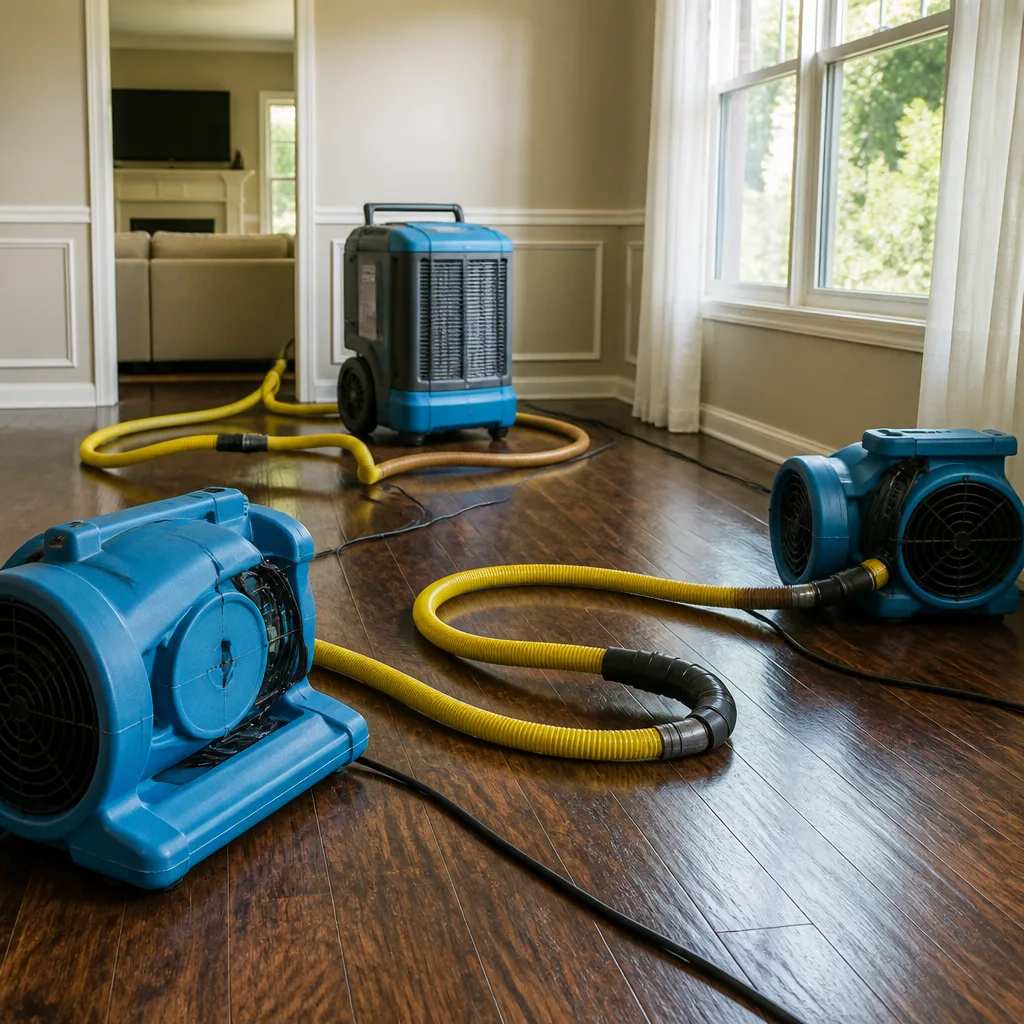
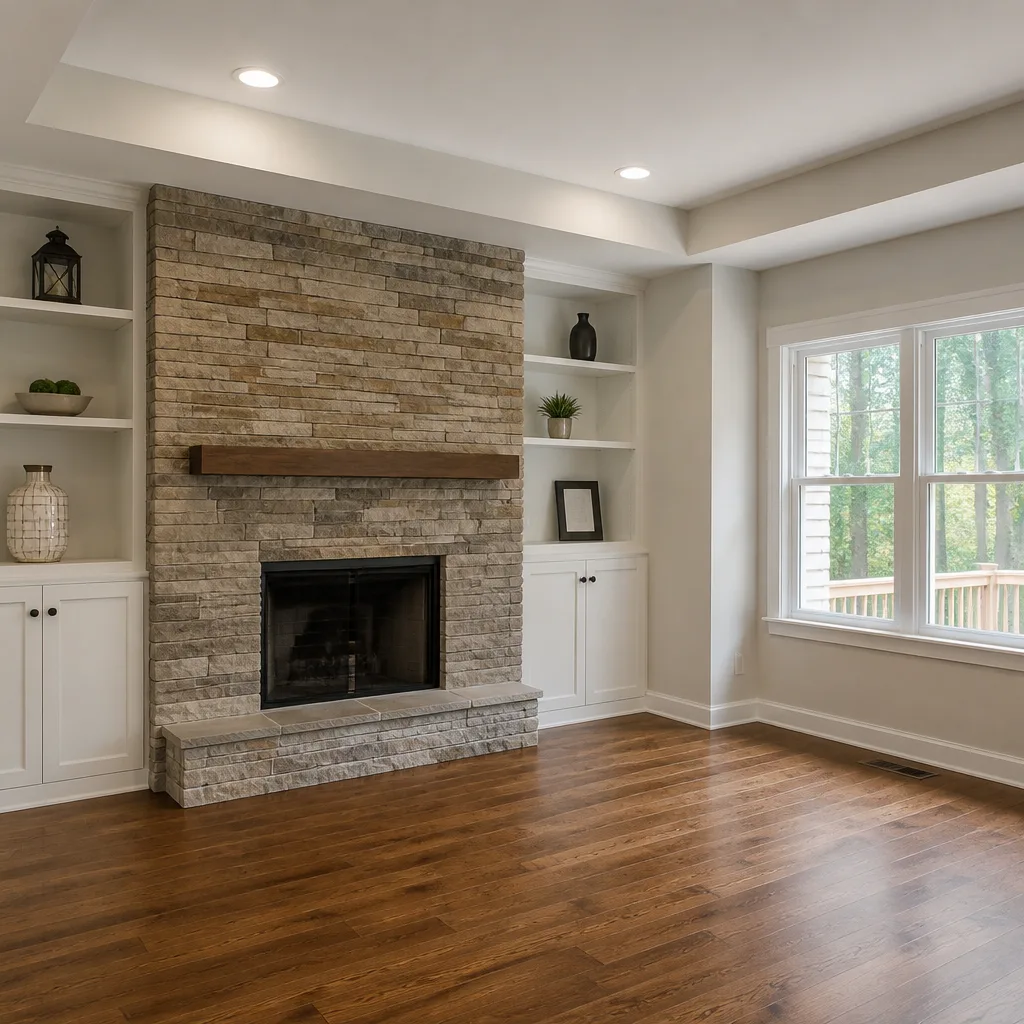
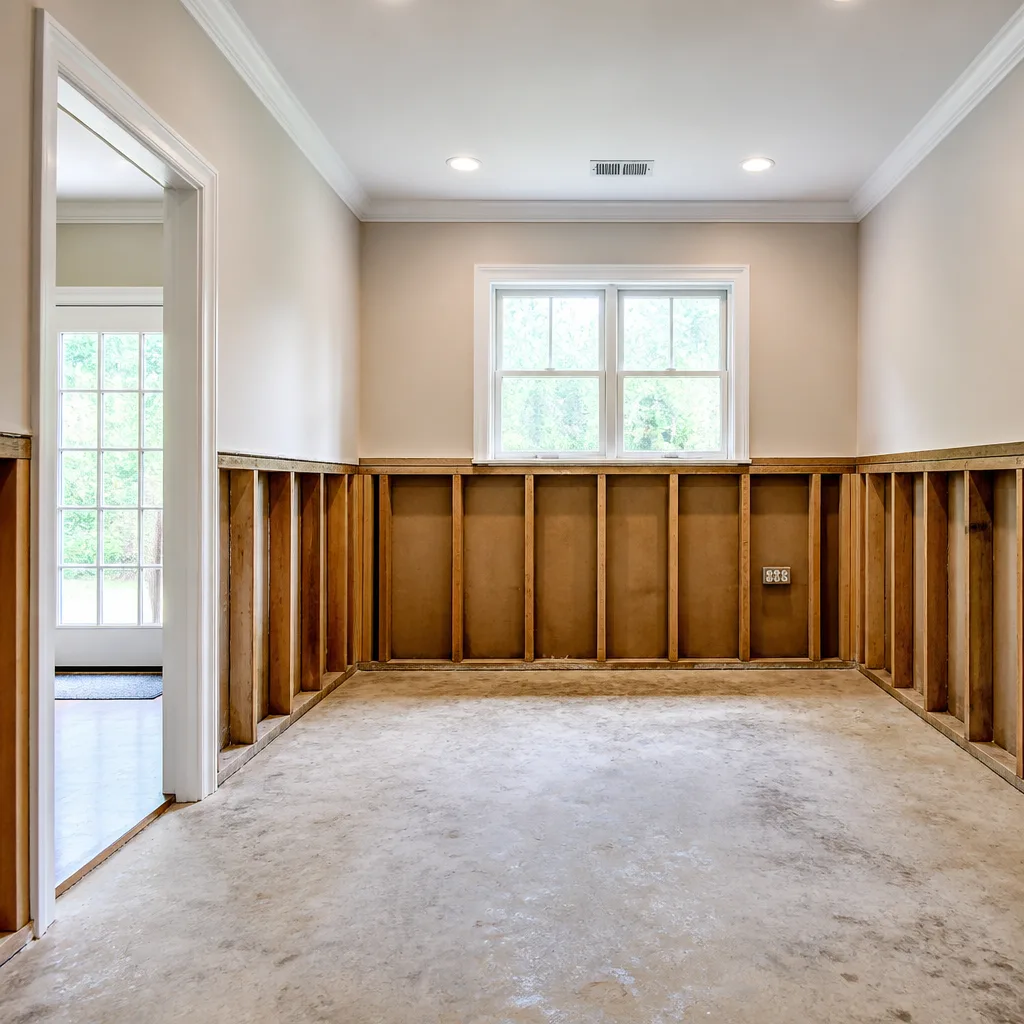
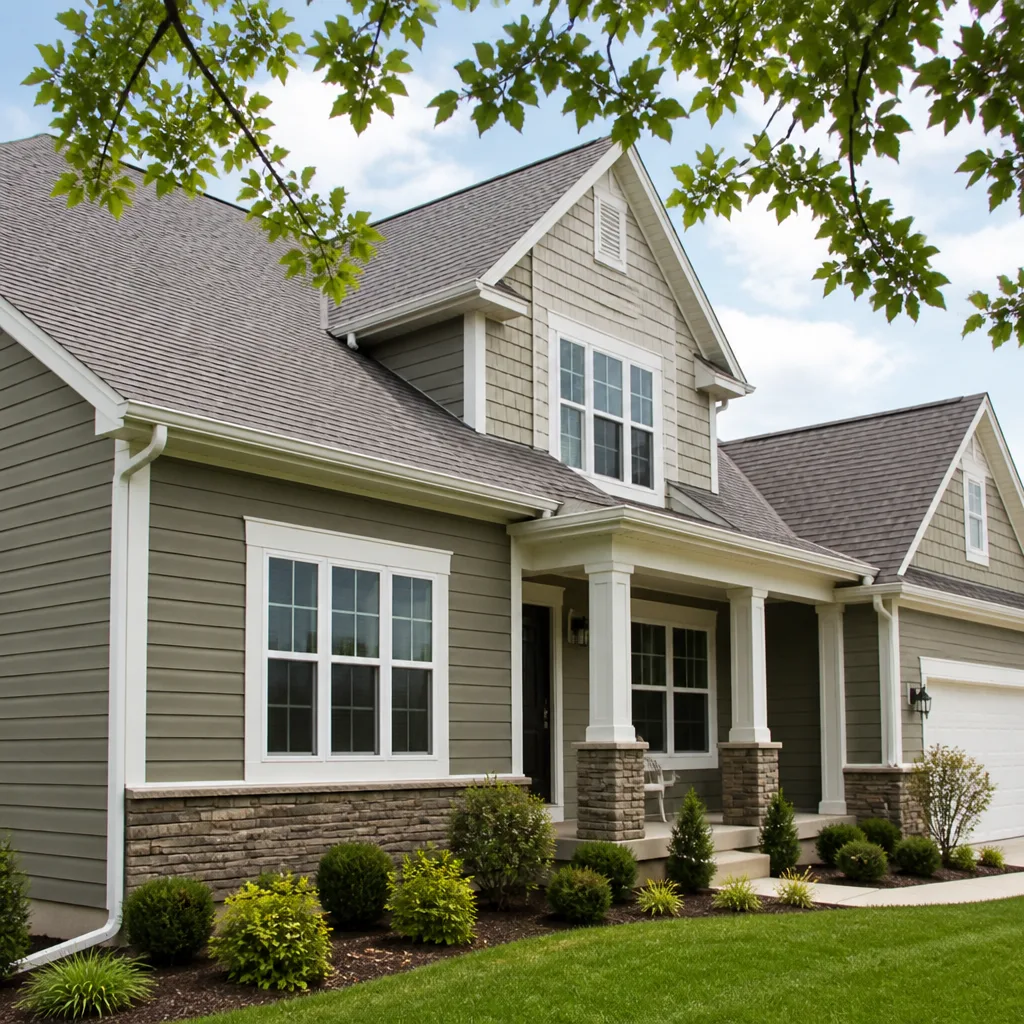
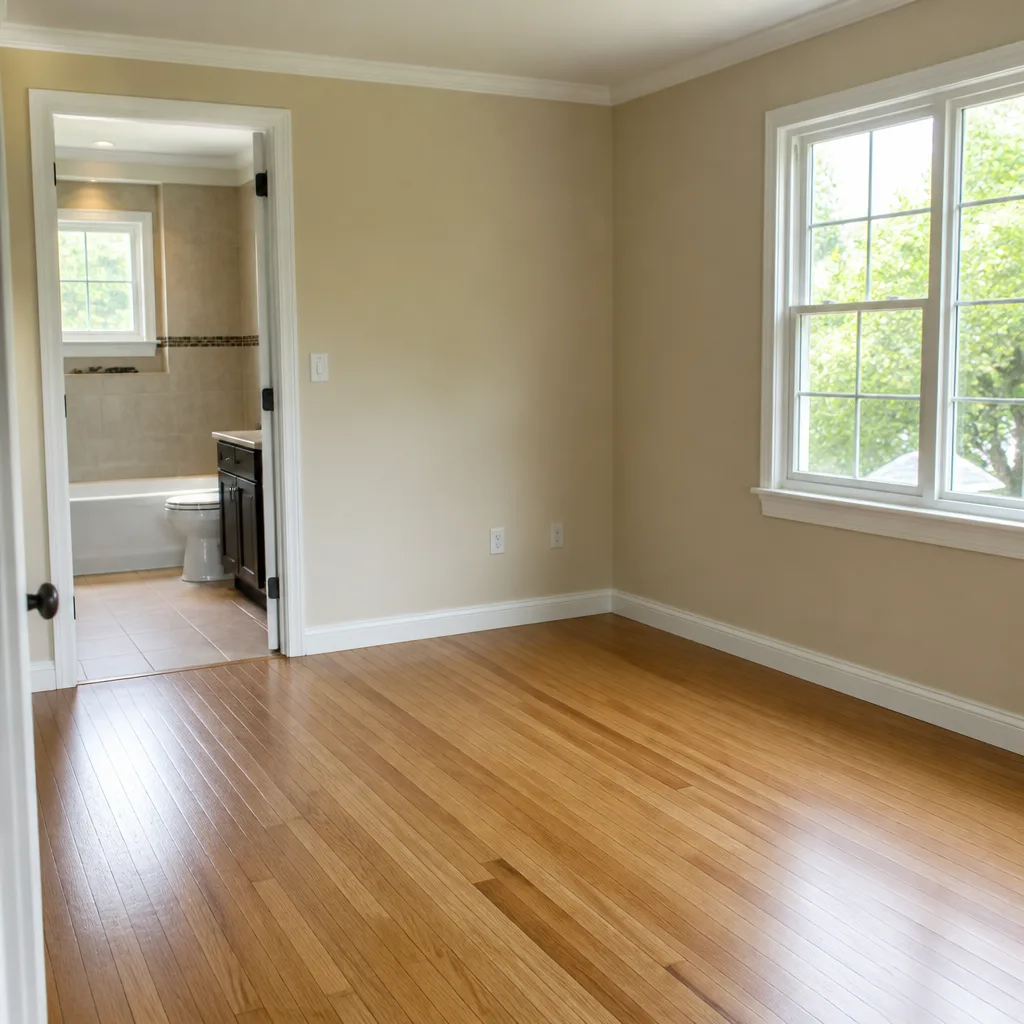
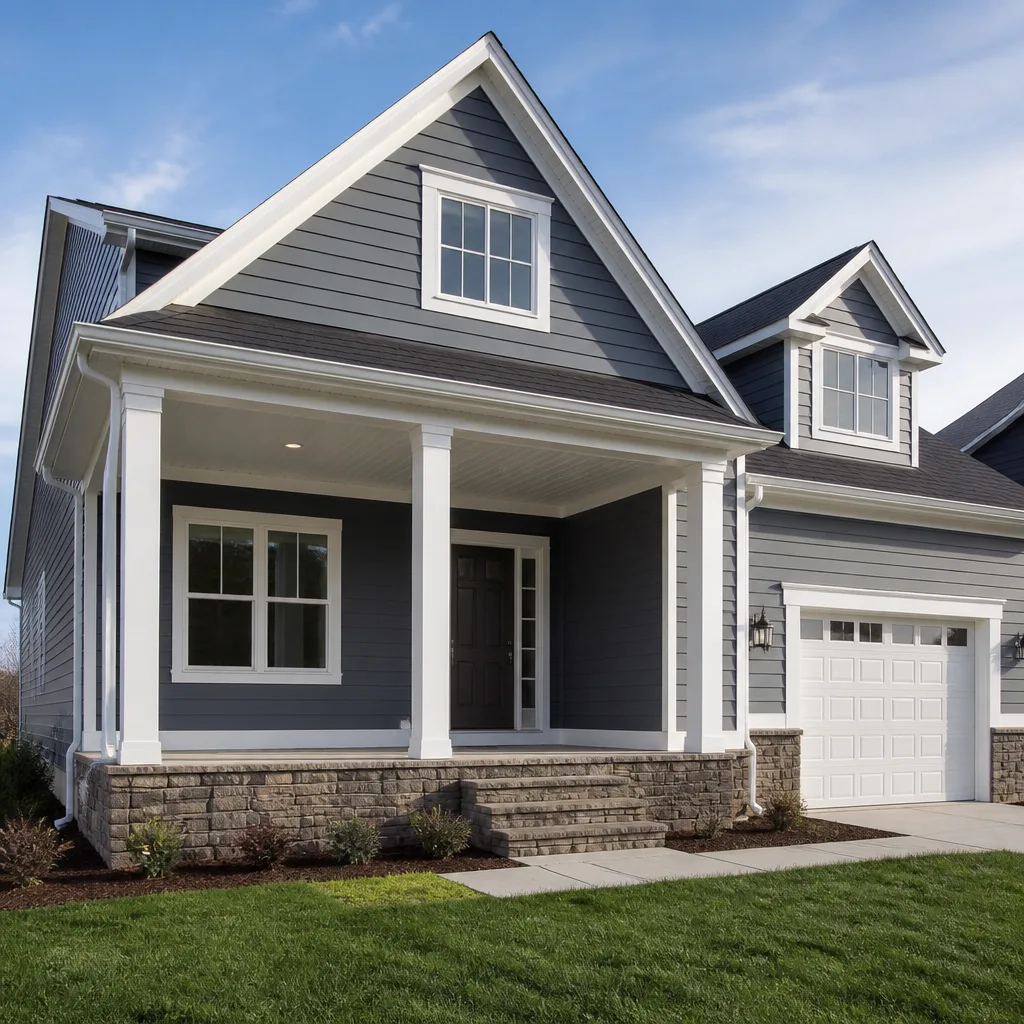
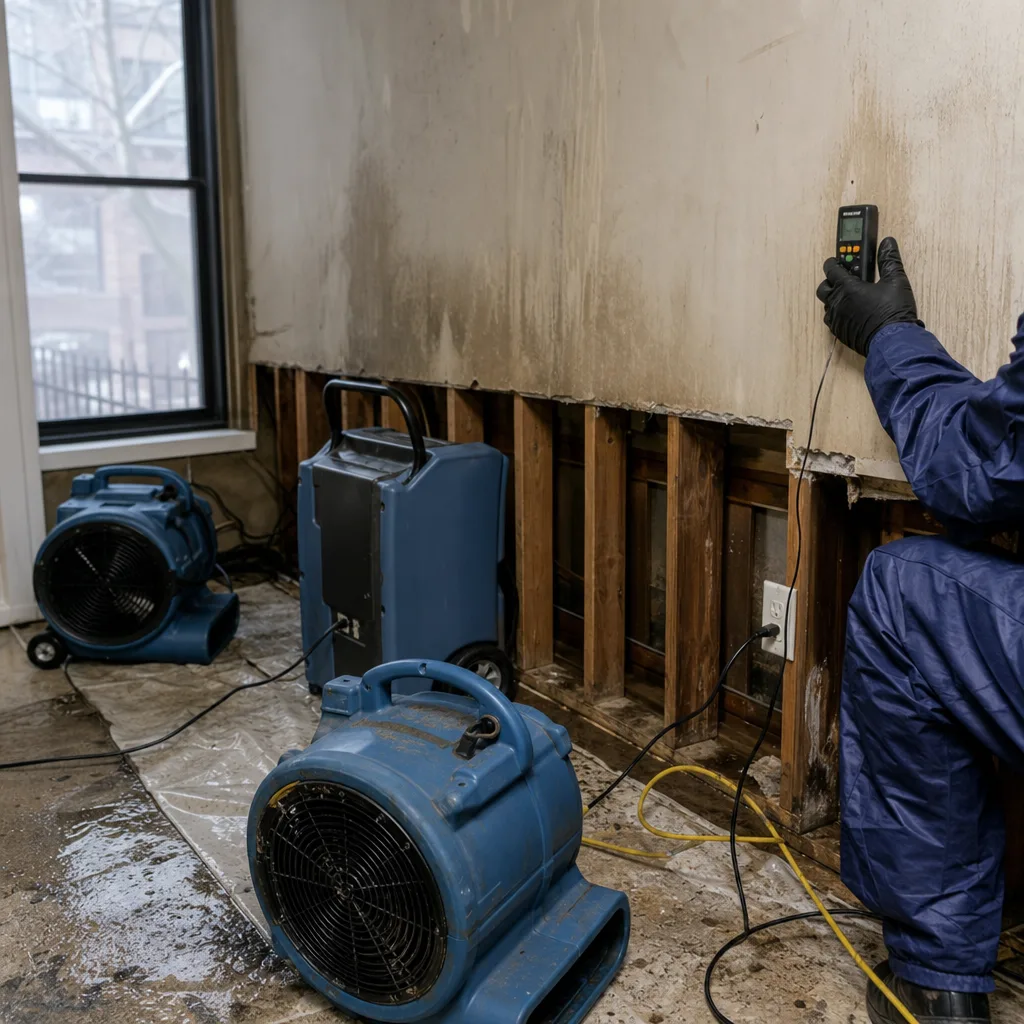 Before
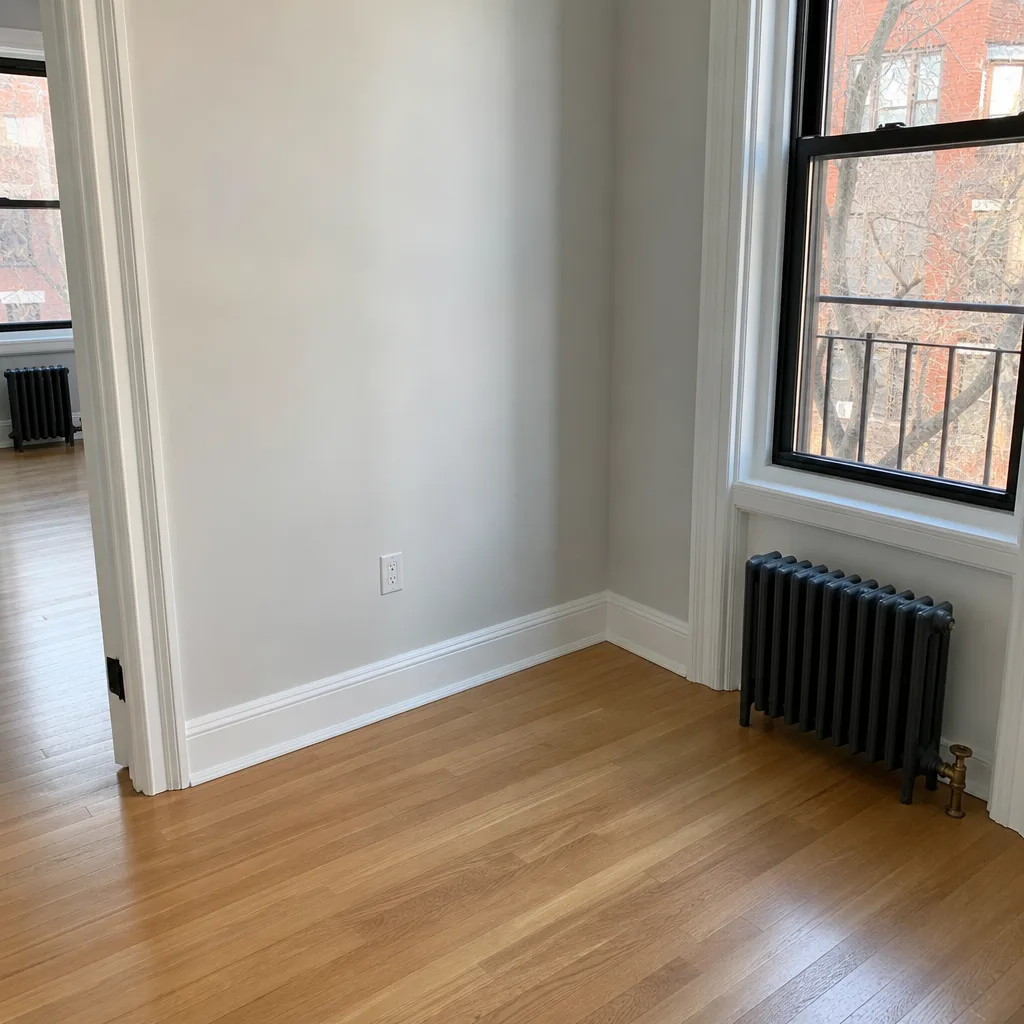 After
After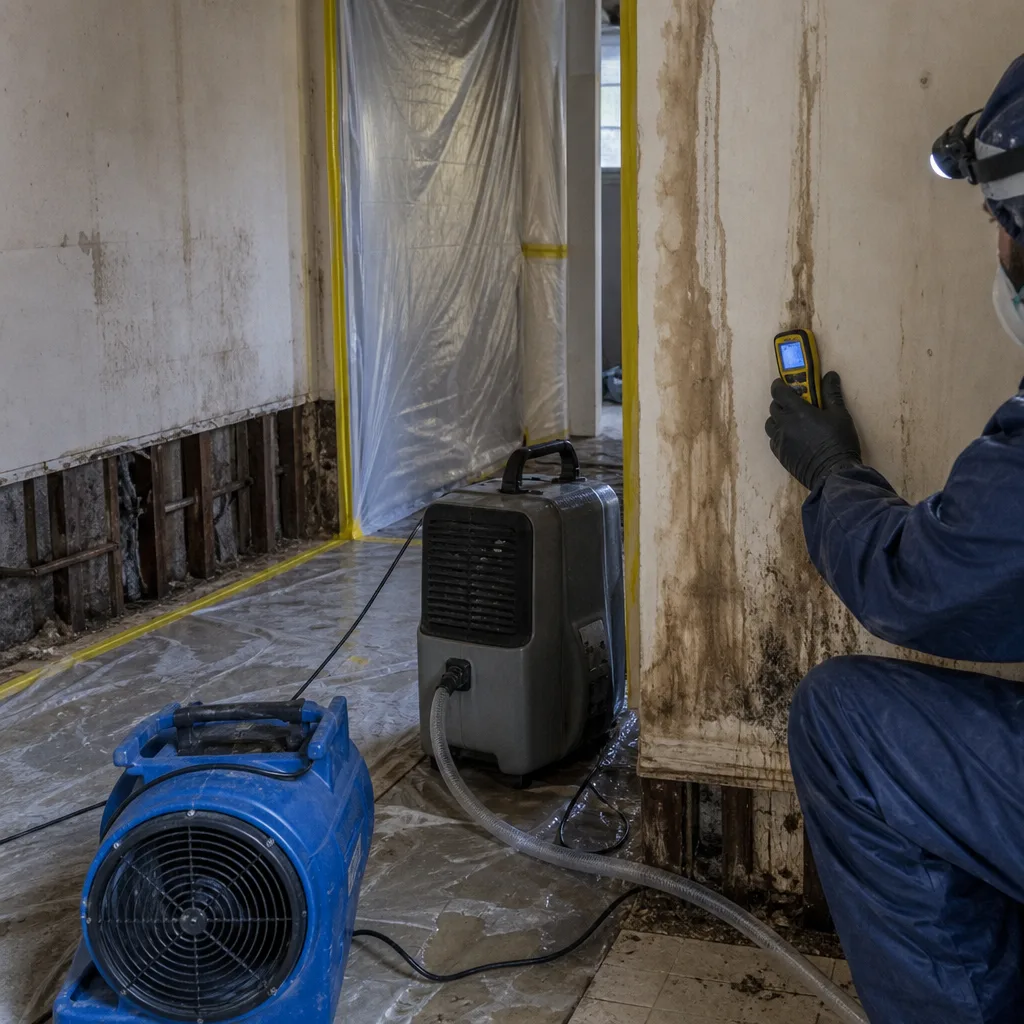 Before
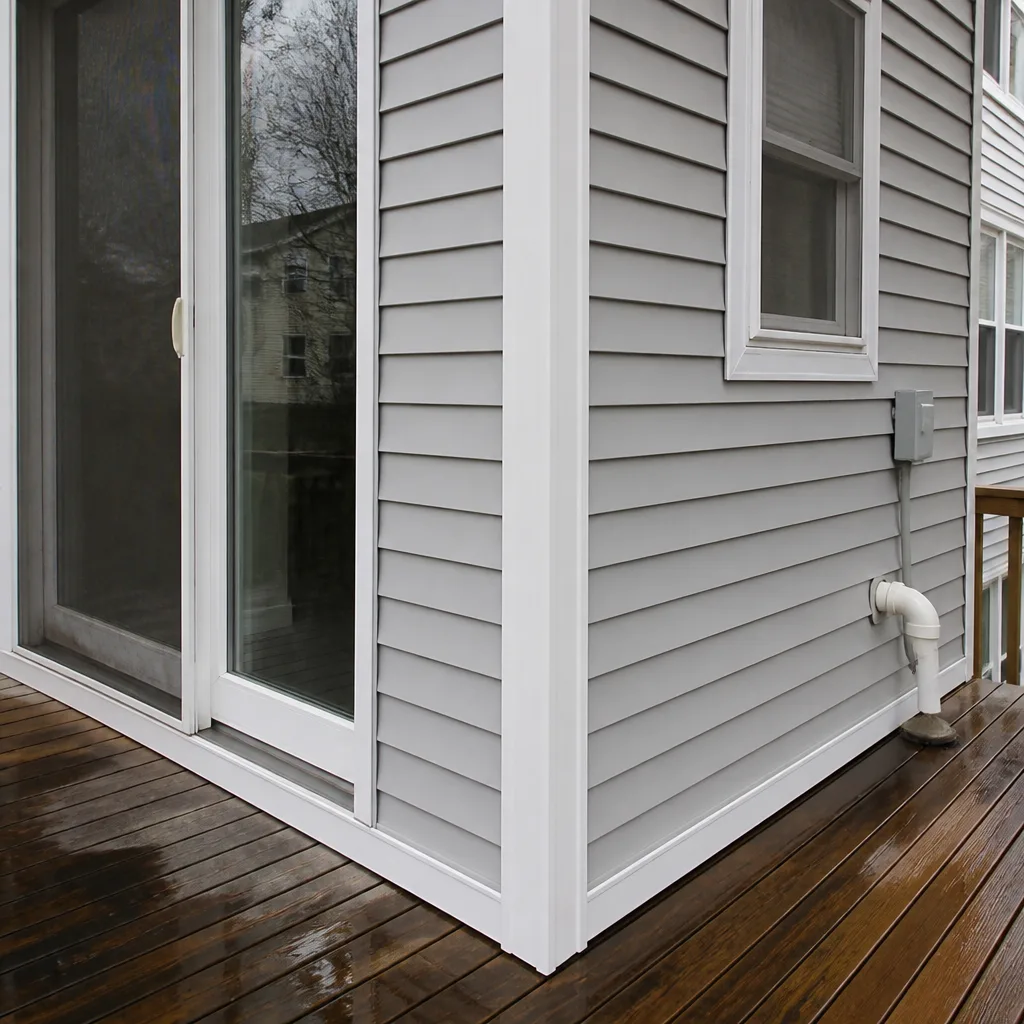 After
After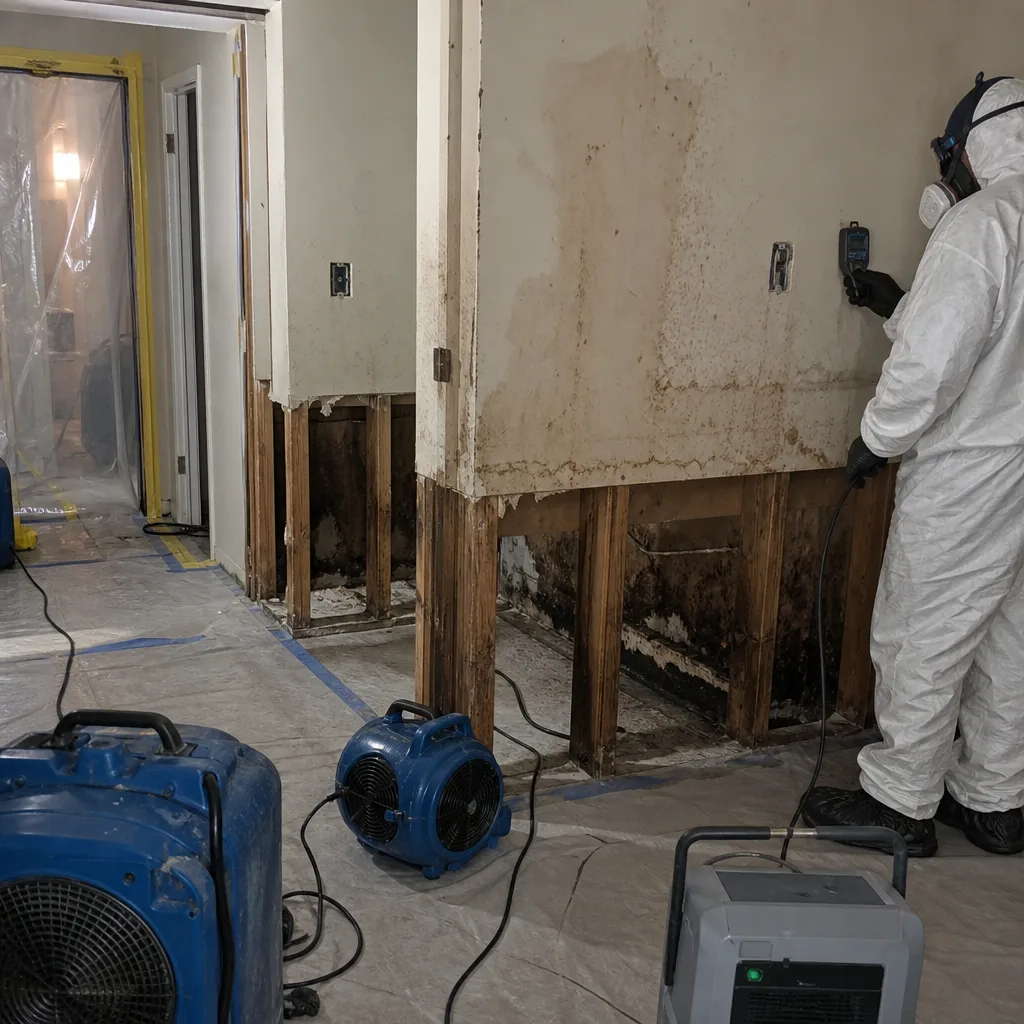 Before
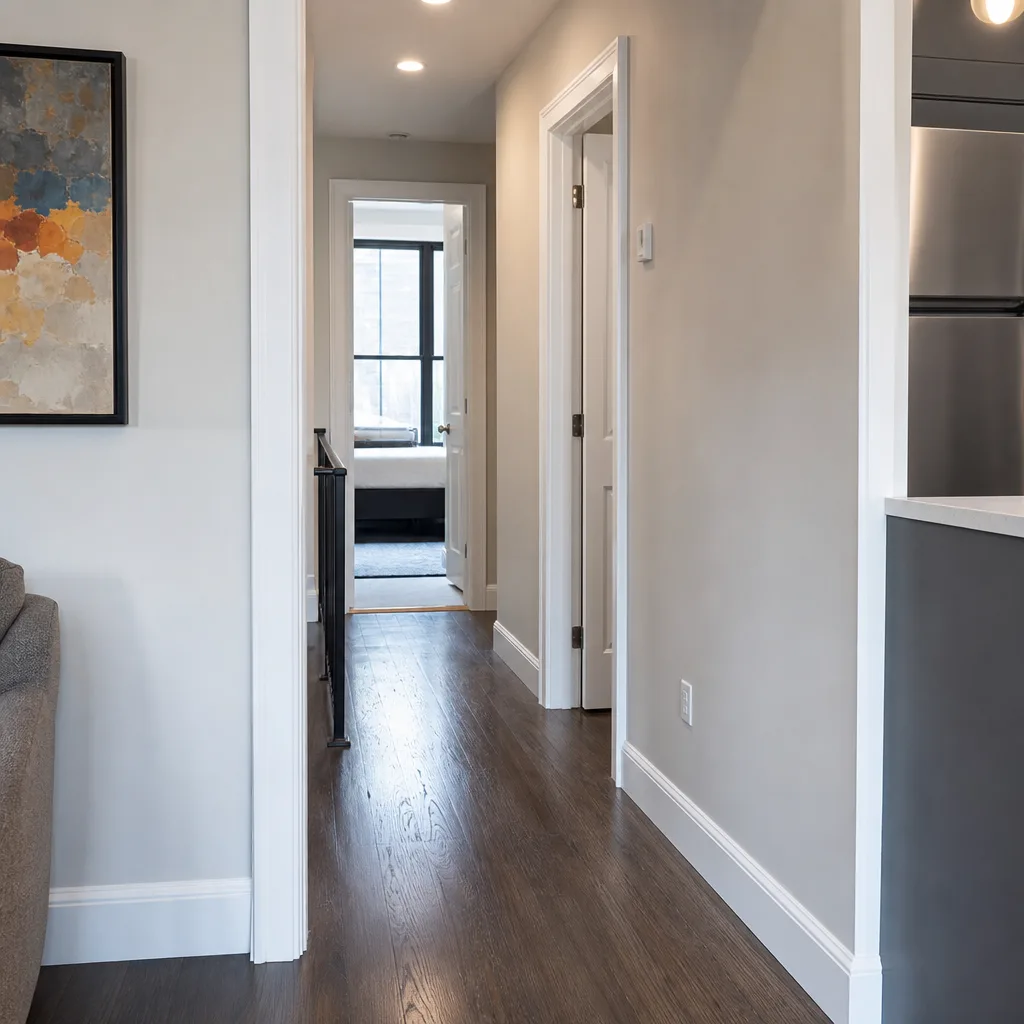 After
After24/7 Emergency Reconstruction & Cleanup in Mamaroneck
Mamaroneck Commercial Restoration after a flood, fire, or sewage backup typically requires a licensed contractor who can handle both the immediate mitigation and the full rebuild, because the village’s pre-war housing stock and its position at the confluence of the Mamaroneck River and Long Island Sound create damage patterns that most single-trade contractors aren’t set up for. Our crews answer live at (917) 924-4221 around the clock and can reach most Mamaroneck addresses within 45 minutes. We start with a free visual inspection, then get extraction or stabilization running the same visit. The first hour matters here more than most places: combined river-and-surge saturation seeps into plaster-and-lath walls fast, and what looks dry on the surface in a 1920s Tudor or colonial is often hiding a second moisture problem the initial reading misses.
Understanding Reconstruction & Cleanup Severity in Mamaroneck Properties
Mamaroneck’s dominant housing stock, built largely between the 1920s and 1940s in the Tudor, colonial, and Craftsman styles, changes how we classify and treat damage. Plaster-and-lath walls absorb water differently than modern drywall. They hold it longer, release it slower, and can look bone dry on the surface while moisture sits trapped behind the baseboard line for weeks. We use moisture mapping with thermal imaging and hygrometers to find what the eye can’t. When nor’easters push the Mamaroneck River over its banks through downtown and the Washingtonville neighborhood while storm surge drives inland from the Harbor, we routinely see what the industry calls category 2 water: contaminated runoff carrying silt, sewage constituents, and salt. That water demands Water Damage Restoration in Mamaroneck with antimicrobial treatment after extraction, not just drying. Salt is the quiet complication. It stays in wood framing and plaster, pulls moisture from the air on humid days, and speeds corrosion on fasteners, junction boxes, and anything metal that wasn’t sealed. A standard dry-and-patch job that ignores salt load will fail within a season or two near the Sound.
Why Mamaroneck Property Owners Choose Floodline Restoration Co. of Manhattan
- 45-minute response commitment. When the Mamaroneck River rises or a supply line lets go at 2 a.m., we dispatch a crew from our New York City office immediately. A live person answers, not a recording.
- 24/7 live answer, every day. You’ll never reach a voicemail tree at Floodline Restoration Co. A dispatcher picks up at any hour, including holidays and nor’easter nights when every other local crew is already booked.
- IICRC-certified crews. Our technicians carry WRT, FSRT, and AMRT certifications and have run hundreds of jobs in Westchester’s pre-war housing stock. They know what plaster hides.
- Free visual inspection. Before any work starts, we walk the damage with you, explain what we’re seeing in plain English, and give you a written scope. No pressure, no surprises.
- Direct insurance billing. We document from the first hour, send the carrier a line-item estimate in their format, and talk to the adjuster ourselves. You don’t play messenger.
- One team from extraction to reconstruction. The same certified crew that pulls soaked insulation and sets up containment handles the drywall, flooring, and finish work. No mid-job handoff, no inherited crew that wasn’t there on day one.
Our Reconstruction & Cleanup Process
Inspection & Assessment
We arrive, walk the property, and run moisture mapping with thermal imaging and hygrometers. On a 1930s Tudor near the Washingtonville neighborhood, that mapping told us the plaster walls were saturated 24 inches up, not the 12 the homeowner could see. The written scope starts here.
Extraction & Stabilization
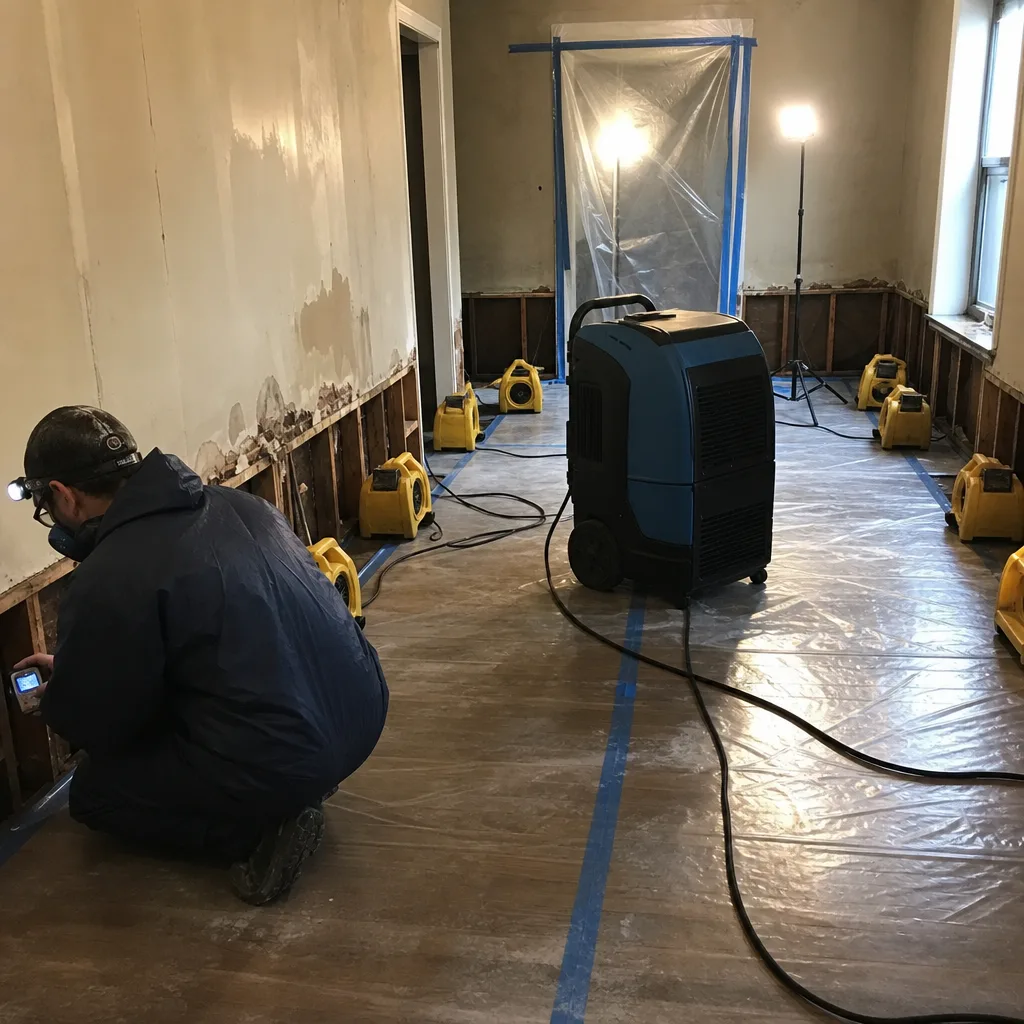
We pull standing water with truck-mounted extraction units, remove soaked drywall and fiberglass insulation, and set up containment to stop cross-contamination. In category 2 water events like the ones Mamaroneck sees during river-and-surge flooding, we treat framing with antimicrobial before anything else.
Drying & Dehumidification
Industrial air movers and LGR dehumidifiers run until the dry standard is met, with daily moisture readings logged and shared with you and your carrier. On pre-war plaster homes, we schedule a second reading at the 10-14 day mark because plaster releases water slowly and hides it well.
Cleaning & Sanitization
HEPA air scrubbers run throughout the affected space while we clean and sanitize every surface that water touched. Salt residue from Sound-driven surge gets special attention: it’s corrosive, and leaving it behind means rusted fasteners and warped hardwood months later.
Contents Restoration & Pack-Out
We pack out salvageable belongings, clean and restore them off-site when needed, and store them until the rebuild is done. In Mamaroneck’s older homes, that often includes family pieces that can’t be replaced, so we document and handle everything with care.
Repairs & Restoration
The same crew rebuilds what came out: drywall, flooring, trim, and finishes matched to the home’s era. We use coated fasteners and materials suited to salt-air exposure near the Sound. The job ends with a final walkthrough and the 90-Day Done Right Promise in writing.
Need Emergency Reconstruction & Cleanup in Mamaroneck Now?
Crews minutes away, answering live 24 hours a day. The sooner we start, the less it costs.
Working With Your Insurance Company
Most Mamaroneck homeowners carry flood insurance through FEMA’s NFIP or a private carrier, and most reconstruction after a river or surge event is at least partially covered. The difference between a smooth claim and a denied one often comes down to documentation in the first 48 hours. We photograph every affected room before demolition begins, log moisture readings daily, and write the scope in the line-item format carriers expect. Our team talks directly with your adjuster, sends the photos and drying logs as they’re generated, and answers their questions so you don’t have to. When the claim is approved, we bill the carrier directly for covered work. You see the numbers before anything is submitted, and you get a written scope before any work starts.
What We Provide Your Insurer
- Thorough documentation of the loss
- Photos of all damage, room by room
- Moisture readings and drying logs
- A detailed, line-item scope of work
- Direct coordination with your carrier
Built for Mamaroneck’s Loss Calendar
Mamaroneck’s damage season isn’t one season. It’s a calendar. January and February bring deep freezes that burst aging supply lines in 1920s colonials with original cast-iron or galvanized pipe. March and April thaw the ground, raise the water table in the village’s full basements, and turn every low spot in the Harbor area into seepage. Summer thunderstorms drop two inches in an hour and flash-flood the Washingtonville neighborhood and areas near the Mamaroneck River faster than storm drains can take it. Fall nor’easters are the big one: sustained wind-driven rain on top of river flooding, with storm surge backing up from Long Island Sound through the Harbor. Properties near Harbor Island and the train station regularly take on water from two directions in one storm. That’s the pattern that makes Reconstruction & Cleanup here different from Larchmont or Rye. It’s not one bad night. It’s a calendar of water.
Reconstruction & Cleanup Across Mamaroneck’s Neighborhoods
The Washingtonville neighborhood sits low and close to the river, and when the Mamaroneck River climbs its banks, basements there fill fast and stay full until extraction starts. We know the route down Mamaroneck Avenue and the side streets well, and we know the housing stock: tight lots, older colonials, full basements close to the water table. Over near Harbor Island and the train station, storm surge meets river overflow, and we see combined-source saturation that sneaks into floor cavities and behind plaster. On the Orienta side, the homes sit higher but catch the full brunt of wind-driven rain off the Sound, and salt air works on exterior hardware year-round. The Heathcote Hill area has some of the village’s oldest housing stock, pre-1930 in places, where original plaster-and-lath demands the patience of a 10-14 day second moisture reading. Wherever you are in Mamaroneck, we’re responding to local conditions, not a generic checklist.
Specialized Reconstruction & Cleanup Services We Offer in Mamaroneck
Full-Service Reconstruction
When a nor’easter or river flood takes out a basement, a kitchen, or a first floor, we rebuild from the studs up: framing repairs, insulation replacement, drywall, trim, painting, and finish work matched to the home’s age. On a 1930s Tudor near the Washingtonville neighborhood, we arrived after the river and the surge hit together, ran moisture mapping on the plaster-and-lath walls, cut out soaked drywall 24 inches up, treated the framing, and rebuilt to pre-loss condition. That job ended with a follow-up reading that caught a hidden pocket behind the baseboards, which we opened, dried, and closed properly.
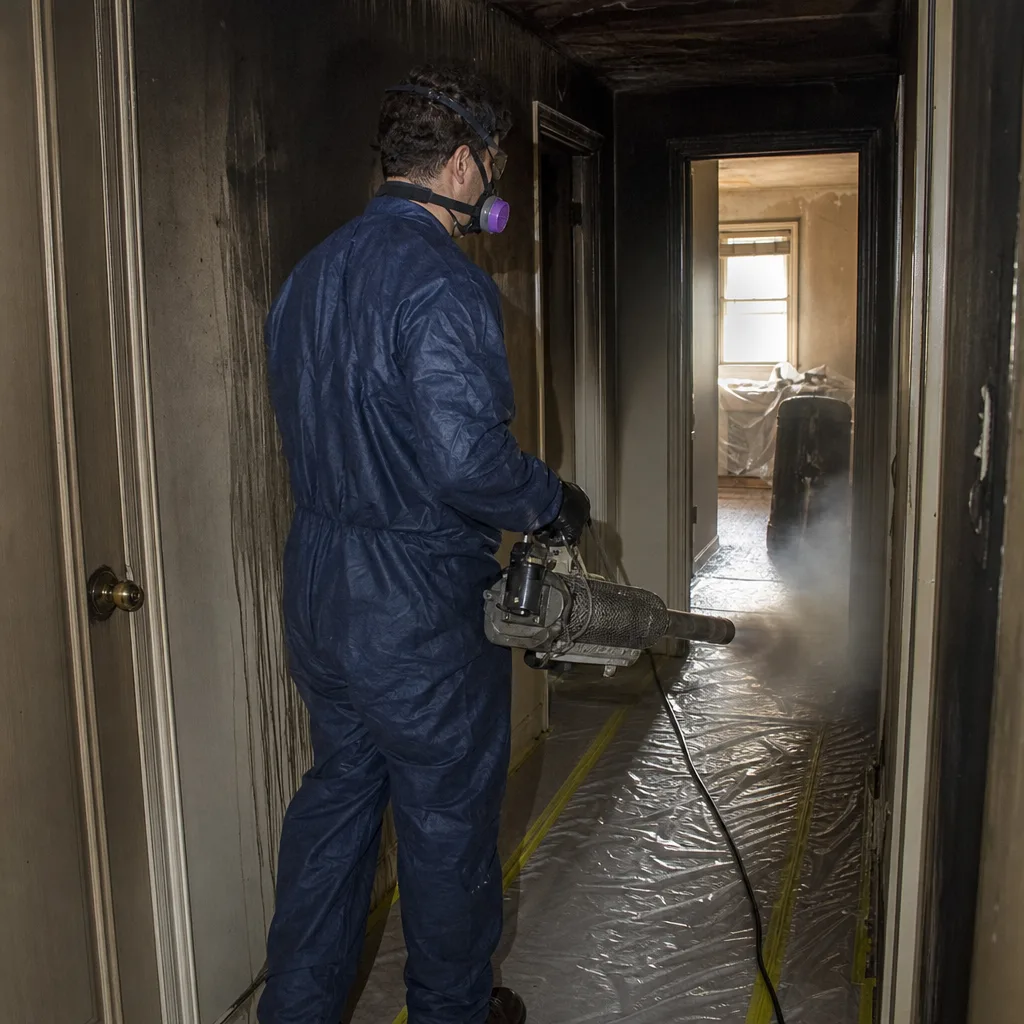
Drywall & Flooring Repair
Water-soaked drywall in a Mamaroneck basement needs cutting back to the true moisture line, not just the visible stain. We cut to the mapped reading, replace with mold-resistant board where appropriate, and match texture and paint. Hardwood floors near the Sound suffer warp and cupping when structural drying is stopped early, so we keep readings going until the floor is stable, then sand, refinish, or replace boards as the damage warrants.
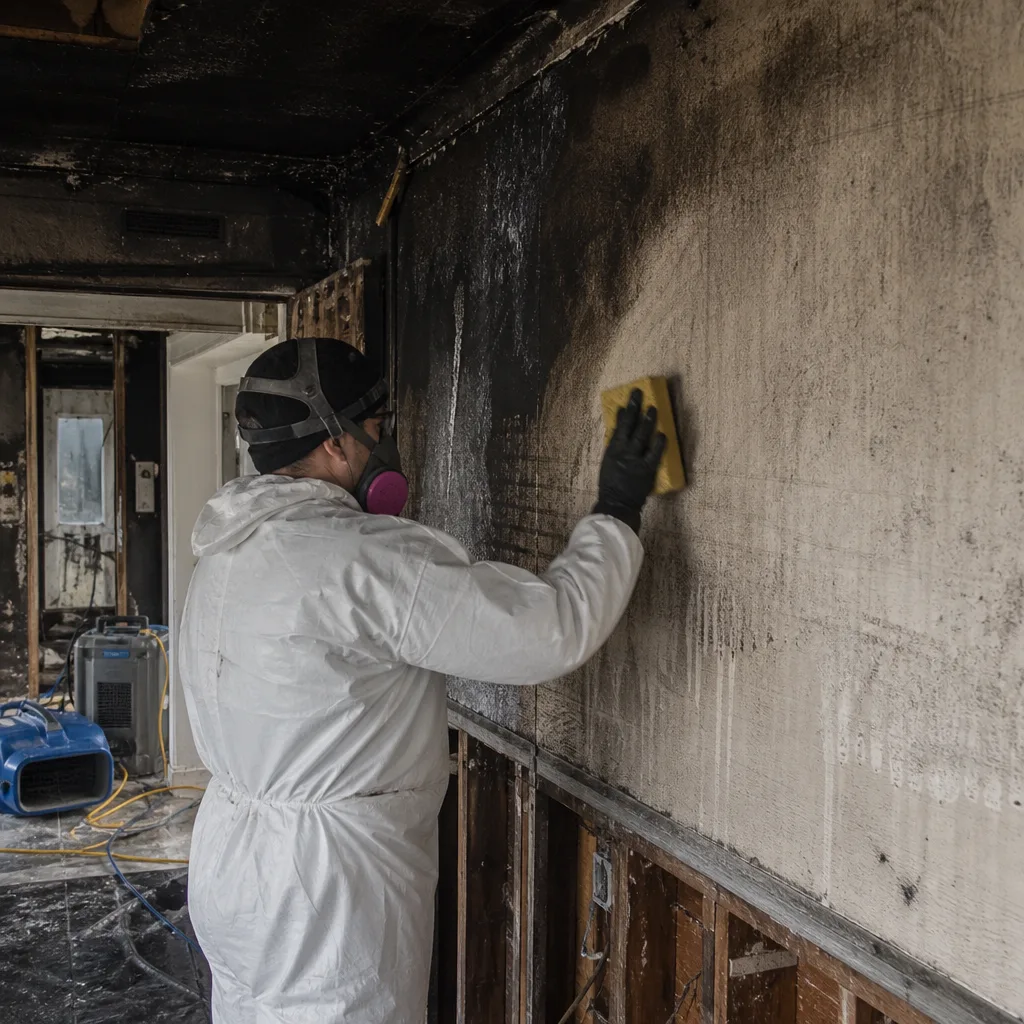
Contents Restoration & Pack-Out
Mamaroneck homes hold decades of belongings, and a flood doesn’t distinguish between the holiday china and the cardboard boxes in the corner. We pack out what’s salvageable, clean and restore items off-site when needed, and store everything until the rebuild is finished. Documentation is part of the job: every item gets photographed and logged for your insurance claim before it leaves the house.
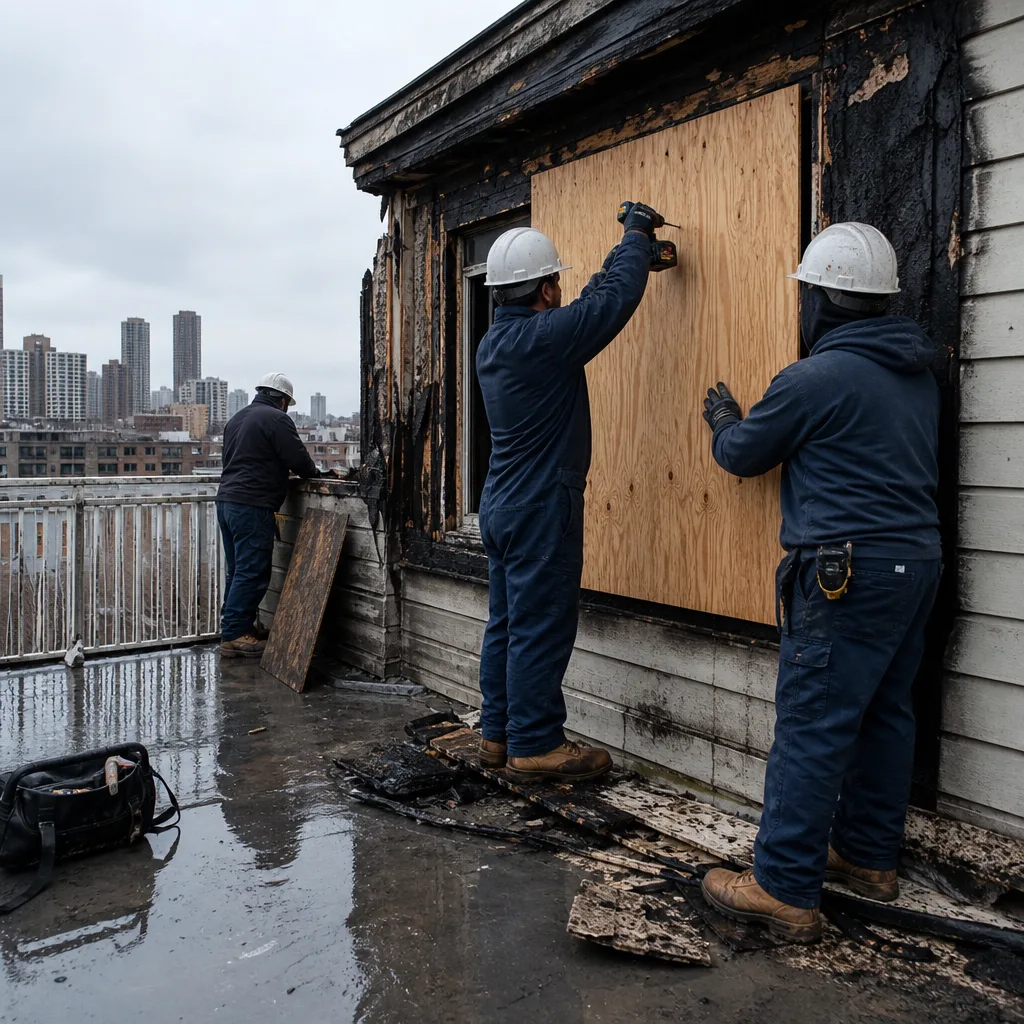
Carpet & Upholstery Cleaning
Category 2 water in a Mamaroneck basement usually means the carpet and pad come out and get replaced, but salvageable rugs and upholstery on upper floors near a smoke event or light water exposure can often be restored. We use hot-water extraction and professional-grade drying, and we’ll tell you honestly when replacement is the smarter money.
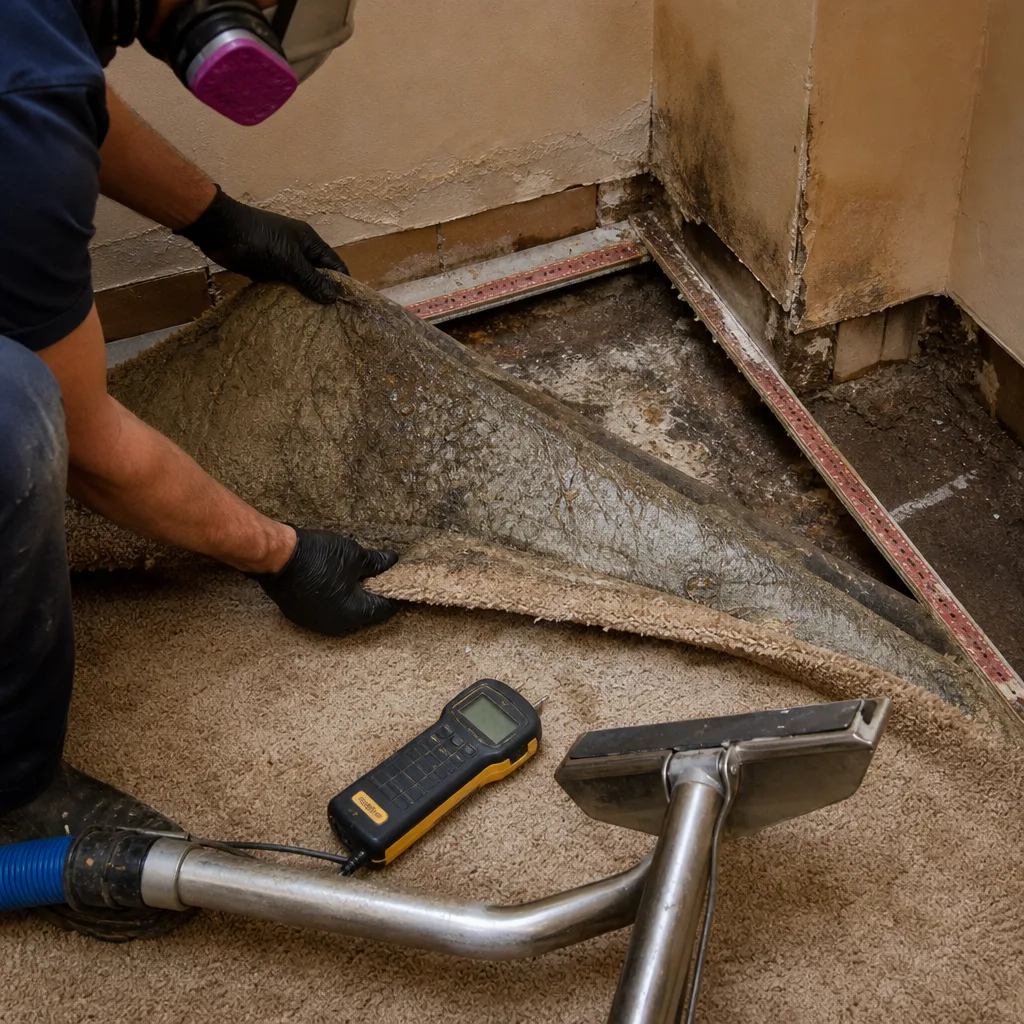
Post-Construction Cleanup
After any rebuild, the fine dust from drywall compound and sanding gets everywhere, into the ducts, the trim, the spaces between floorboards. We run HEPA air scrubbers during the work and do a full post-construction clean at the end: surfaces, floors, ducts, and fixtures. You move back into a house that’s finished, not a job site you have to clean yourself.
What happens when you call
- 1
A real person answersNo phone trees - you reach a local pro.
- 2
You get an upfront price rangeHonest numbers before anyone is dispatched.
- 3
A background-checked tech heads outLicensed & insured, dispatched right away.
- 4
You approve before work beginsNothing starts until you say go.
Reconstruction & Cleanup Costs in Mamaroneck, NY
A typical Mamaroneck basement cleanup after category 2 water runs $3,500-$8,000 for extraction, drying, antimicrobial treatment, and disposal. Full basement reconstruction, including drywall, flooring, and finish work, lands between $12,000 and $30,000 depending on square footage and how much of the original material was pre-war plaster. Kitchen rebuilds after a supply-line burst run $18,000-$45,000. Post-construction cleanup alone is $800-$2,500. What moves the price: the water category, how high the water climbed, whether salt is present, and whether the home has plaster-and-lath walls that need extra drying time. Most Mamaroneck flood claims are covered by NFIP or private flood insurance, and we bill carriers directly for covered work. For out-of-pocket repairs, we offer $50 off any repair over $250 and a senior and veteran 5% discount. The free inspection gives you a firm line-item scope before you commit to anything.
We Also Serve Cities Near Mamaroneck
Our crews serve Reconstruction & Cleanup in Mamaroneck and the surrounding Westchester communities. We respond regularly to Harrison, Larchmont, Rye, and New Rochelle, and we know how each town’s flood patterns differ from what we see along the Mamaroneck River and the Harbor. If you’re nearby and dealing with water, fire, or storm damage, the same live dispatcher answers.
Serving Mamaroneck, NY - Our Local Coverage Area
We’re based in the Mamaroneck area and know this community well. Use the map below to see our service coverage - if you’re nearby, we can almost certainly help.
Mamaroneck Reconstruction & Cleanup Questions, Answered
Why do Mamaroneck homes near the train station need a second moisture reading after initial drying?
Homes near the train station sit low and close to both the Mamaroneck River and the Sound, so combined-source saturation pushes water deep into plaster-and-lath walls and floor cavities. Plaster releases that water slowly, so a surface reading taken on day three can look dry while moisture still sits trapped behind the baseboard. Our crews schedule a second moisture reading 10-14 days after initial drying on any pre-war plaster home because skipping it is exactly how hidden mold colonies start - which is why proper Mold Remediation - Mamaroneck starts with thorough drying verification. Call (917) 924-4221 and we’ll explain what we found and what we recommend.
Does living near Harbor Island mean I need different reconstruction materials after a flood?
Yes. Salt air and salt-laden storm surge near Harbor Island accelerate corrosion on uncoated fasteners, junction boxes, and metal framing. We use coated or stainless fasteners, mold-resistant drywall where appropriate, and materials rated for coastal exposure. Standard inland materials will corrode in 2-3 years near the Sound. A square deal means using the right material the first time, and our written scope spells that out before work begins.
How does Mamaroneck’s double-source flooding affect my reconstruction timeline?
When river flooding and coastal surge hit simultaneously, properties take on water from two directions, and saturation is deeper and more persistent than a single-source event. Drying that would take 3-4 days inland can take 7-10 days here, plus the 10-14 day follow-up reading on plaster walls. Reconstruction simply cannot start until the framing is dry to a verified standard. Rushing that step is how warped hardwood floors and hidden mold happen. For an honest timeline for your specific address, call (917) 924-4221.
What does “category 2 water” mean for my Mamaroneck basement cleanup?
Category 2 water is contaminated runoff. In Mamaroneck, that typically means river water carrying silt, sewage constituents, and salt from storm surge. It’s not clean water from a supply line, and it requires antimicrobial treatment on framing and materials after extraction, not just drying. Carpet and pad exposed to category 2 water are almost always replaced. If a contractor tells you they can just dry out a category 2 basement without containment and antimicrobial treatment, walk away and call (917) 924-4221 for a proper scope.
Why do my garage-door springs and hinges rust so fast near Mamaroneck’s coast?
Salt air from Long Island Sound lands on every metal surface and sits there. Uncoated steel springs, standard hinges, and opener chains near the coast corrode in 2-3 years instead of the 10-plus you’d expect inland. For garage doors in Mamaroneck’s salt-air zone, we recommend galvanized or coated springs, stainless hardware, and nylon rollers. We inspect and replace corrosion-prone hardware during reconstruction work so the new door doesn’t fail from the same salt damage that got the old one.
How fast can you actually get to my Mamaroneck home?
Our commitment is 45 minutes for most Mamaroneck addresses. Our dispatchers know the village’s bottlenecks, especially Mamaroneck Avenue during rush hour and the train station crossings, and crews are positioned around Westchester for exactly that reason. A live person answers at (917) 924-4221 at any hour, and you’ll know your arrival window before you hang up.
Will my insurance cover reconstruction after a Mamaroneck flood?
If you carry flood insurance through NFIP or a private carrier, most reconstruction after river or surge flooding is covered, minus your deductible. The key is documentation: photos before demolition, daily moisture logs, and a line-item scope in the carrier’s format. We handle all of that and talk to your adjuster directly so you don’t have to. If you don’t carry flood insurance, we’ll still document everything the same way in case a future claim or assistance program applies.
What should I do in the first 30 minutes after water enters my Mamaroneck home?
Shut off power to the affected area if you can do so safely, don’t wade through standing water if there’s any chance it’s contaminated, and call (917) 924-4221. Move valuables and documents to a dry upper floor if you can do it without risk. Don’t tear out drywall or carpet yourself: doing it wrong can spread contamination and complicate your claim. Take photos from several angles without disturbing anything. Then let our crew handle the rest.
Written by Curt Bowman, Owner at Floodline Restoration Co. of Manhattan, providing full-cycle Reconstruction & Cleanup from first extraction to finished rebuild across the Mamaroneck River and Long Island Sound communities.