

Free visual inspection and a written scope of work before any mitigation begins - photos, moisture readings, and drying logs go in your claim file
The scope we write is the scope we bill. Anything new gets shown to you, in writing, before we touch it.






 Before
 After
After Before
 After
After Before
 After
After24/7 Emergency Reconstruction & Cleanup in Little Italy
Reconstruction and cleanup in Little Italy after a water loss, fire, or mold event typically runs $2,800 to $14,500 depending on how far damage has spread through the building, and emergency response should begin within hours, not days. Our crews serve the Mulberry, Mott, and Elizabeth Street corridor around the clock, every day of the year. Call (917) 924-4221 and a live dispatcher answers – not a recording – and gets a certified team moving toward your tenement immediately. The first hour decides whether original plaster gets dried and saved or torn out and replaced.
Understanding Reconstruction & Cleanup Severity in Little Italy Properties
Little Italy’s building stock makes severity assessment different from almost anywhere else in Manhattan. Most structures along Mulberry, Mott, and Elizabeth Streets are 5 to 6 story brick tenements built between the 1880s and 1920s, with horsehair-bound plaster over wood lath, tin ceilings, cast-iron soil stacks, and shared masonry party walls. When water moves through these assemblies, it behaves differently than in modern drywall construction. Category 1 water from a supply line can degrade into Category 2 within 24 hours once it contacts decades of accumulated dust, plaster binders, and aging pipe insulation. Category 3 water – from sewage backups or exterior flooding – carries pathogens that require full containment, antimicrobial treatment, and often selective demolition. We moisture-map every affected cavity with thermal imaging and penetrating meters, because lime-based plaster hides water far longer than gypsum board ever will. Nor’easter wind-blown rain entering through deteriorated mortar joints can run inside a wall cavity for weeks before a stain appears. By then, mold colonies often span multiple floors.
Why Little Italy Property Owners Choose Floodline Restoration Co. of Manhattan
- 45-minute response commitment for Little Italy jobs: our dispatch board tracks crews by proximity to the Mulberry Street corridor, and a team is usually on scene within the hour.
- Live answer, 24 hours a day: you reach a human being who knows the difference between a party-wall leak and a contained unit loss. No voicemail tree, no callback.
- IICRC-certified crews trained to WRT, FSRT, and AMRT standards: the technicians walking your floors hold the same certifications the insurance carriers recognize.
- Free visual inspection with a written scope: before any work begins, you get the line-item plan and a firm number. You approve it in writing first.
- Direct insurance billing, handled carrier-to-carrier: we send the documentation, the moisture logs, and the scope to your adjuster. You don’t play messenger.
- One team from first extraction to final paint: the same certified crew that sets containment also rebuilds the wall. No mid-job handoff, no inherited subcontractor.
Our Reconstruction & Cleanup Process
Inspection & Assessment
We walk every affected room with thermal imaging cameras and penetrating moisture meters. In a Little Italy tenement, that means checking the party wall, the floor assembly, and the ceiling cavity above. We document everything before a single tool comes off the truck.
Extraction & Stabilization
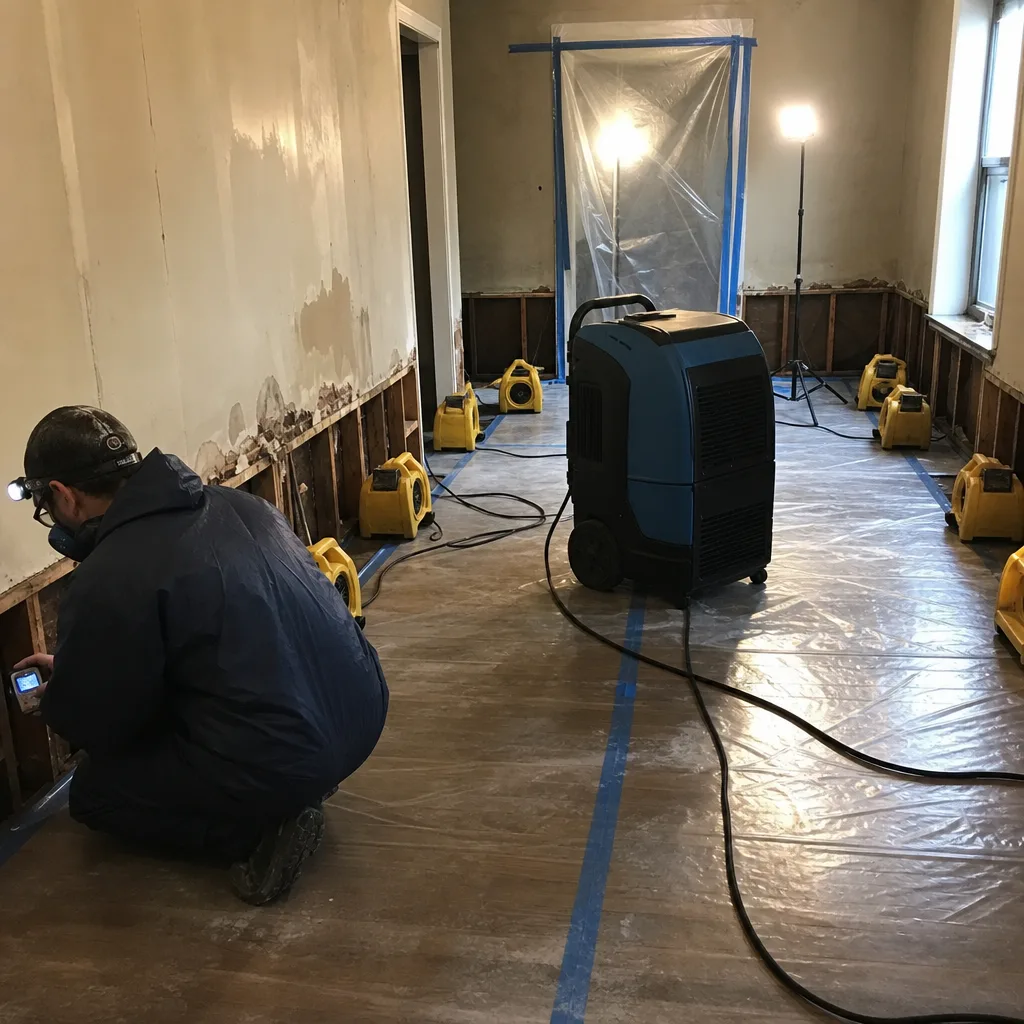
Standing water comes out with truck-mounted extractors and sub-surface tools. We stabilize any sagging original tin or plaster that can still be saved, and we build containment before demolition begins.
Drying & Dehumidification
Dri-Eaz and Phoenix air movers plus desiccant dehumidifiers go in next. For horsehair plaster walls, we typically run Injectidry mat systems that pull moisture through the original surface without losing the material. Daily moisture readings get logged in writing.
Cleaning & Sanitization
HEPA air scrubbers run continuously during disturbance work. All affected surfaces receive antimicrobial treatment where water category requires it, and we clean for soot residue, mold spores, or sewage contamination according to IICRC standards.
Specialty Treatment for Little Italy Buildings
This is where the work diverges from standard restoration. Original tin ceilings get hand-cleaned and re-secured rather than replaced. Cast-iron waste lines get camera-inspected before walls close. Lead-paint and asbestos protocols stay in place on any pre-1978 structure.
Repairs & Restoration
Once the dry standard is met, we rebuild. Drywall, lath, flooring, paint – the same crew that ran the drying handles the finish work. You get one accountable team from start to finish, and the 90-Day Done Right Promise in writing on the final walkthrough.
Need Emergency Reconstruction & Cleanup in Little Italy Now?
Crews minutes away, answering live 24 hours a day. The sooner we start, the less it costs.
Working With Your Insurance Company
On a Little Italy party-wall loss, the claim can involve two landlords, two carriers, and sometimes the NYC Landmarks Preservation Commission. We have handled those multi-party files and we know what documentation each party needs. From the first hour, we photograph every affected surface room by room. We log moisture readings daily until the structure meets the dry standard. We build a line-item scope of work that your adjuster can read without asking twenty questions. Our team communicates with your carrier directly – you get copied, never dragged into the middle. The 90-Day Done Right Promise stays in force regardless of how the claim is resolved.
What We Provide Your Insurer
- Thorough documentation of the loss
- Photos of all damage, room by room
- Moisture readings and drying logs
- A detailed, line-item scope of work
- Direct coordination with your carrier
Built for Little Italy’s Loss Calendar
January and February bring deep freezes that burst supply lines in uninsulated tenement walls and send Category 1 water down through multiple floors before anyone notices. Spring thaw pushes groundwater against century-old foundation walls, and basement seepage becomes a recurring complaint in buildings along Mulberry and Mott. Summer thunderstorms overwhelm flat tar-and-gravel roofs that already pond water, sending runoff through deteriorated parapet joints and into wall cavities. Nor’easters – the big fall and winter blows – drive wind-blown rain horizontally into aging mortar and brownstone copings. Then comes September, and the Feast of San Gennaro shuts Mulberry Street down for roughly eleven days. Any late-summer project with dumpster or equipment staging on the block has to be scheduled around NYC DOT street-use permits, which are nearly impossible to obtain during that window. We build that blackout into every project timeline as a matter of course.
Reconstruction & Cleanup Across Little Italy’s Neighborhoods
The Mulberry Street corridor between Canal and Houston is the heart of the old neighborhood, and it’s also where the oldest tenements create the most complex multi-floor losses. When a radiator valve fails on the fourth floor of a 1910 walk-up, water travels down through the floor assembly, the party wall, and often into the commercial space on the street level before anyone sees it. Mott Street buildings tend to be slightly newer – 1900 to 1920 – but the cast-iron soil stacks are just as old and just as prone to hidden leaks at the hub joints. Elizabeth Street has more mixed occupancy, with residential floors above restaurants and markets, which means a single loss can involve health department concerns, commercial tenant turnover, and residential displacement at once. Broome and Grand Streets – the northern edge of the district – still hold pre-war walk-ups with original tin and plaster, but they sit closer to modern SoHo construction, so the party-wall dynamics shift. Our crews know each corridor’s building patterns and typical failure points, which means fewer surprises once the walls open.
Specialized Reconstruction & Cleanup Services We Offer in Little Italy
Full-Service Reconstruction
A water loss in a pre-1920 Little Italy tenement rarely ends at drying. Original plaster that cannot be saved gets removed and rebuilt with compatible materials, tin ceilings get re-secured or replicated, and cast-iron stacks get camera-scoped before the walls close. Our same crew handles all of it. You don’t chase a separate contractor for the rebuild phase, and you don’t explain the history of the damage to someone new.
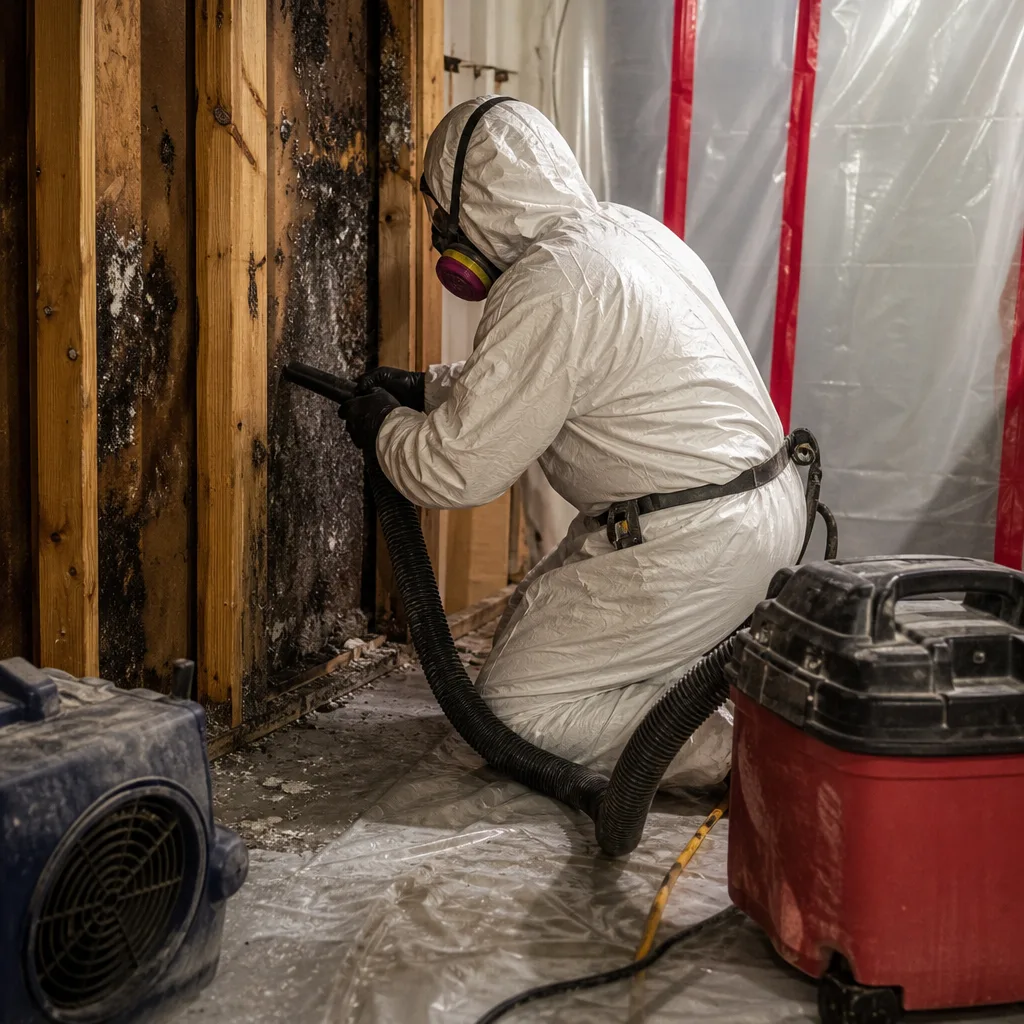
Contents Restoration & Pack-Out
When a Category 2 loss hits an entire floor, we often pack out the unit’s contents for cleaning, inventory, and safe storage while structural drying runs. In a Little Italy tenement, closets are small and apartments are tight. Having a contents team that knows how to move furniture through a 28-inch doorway without destroying the jamb matters. We photograph, box, log, and track every item.
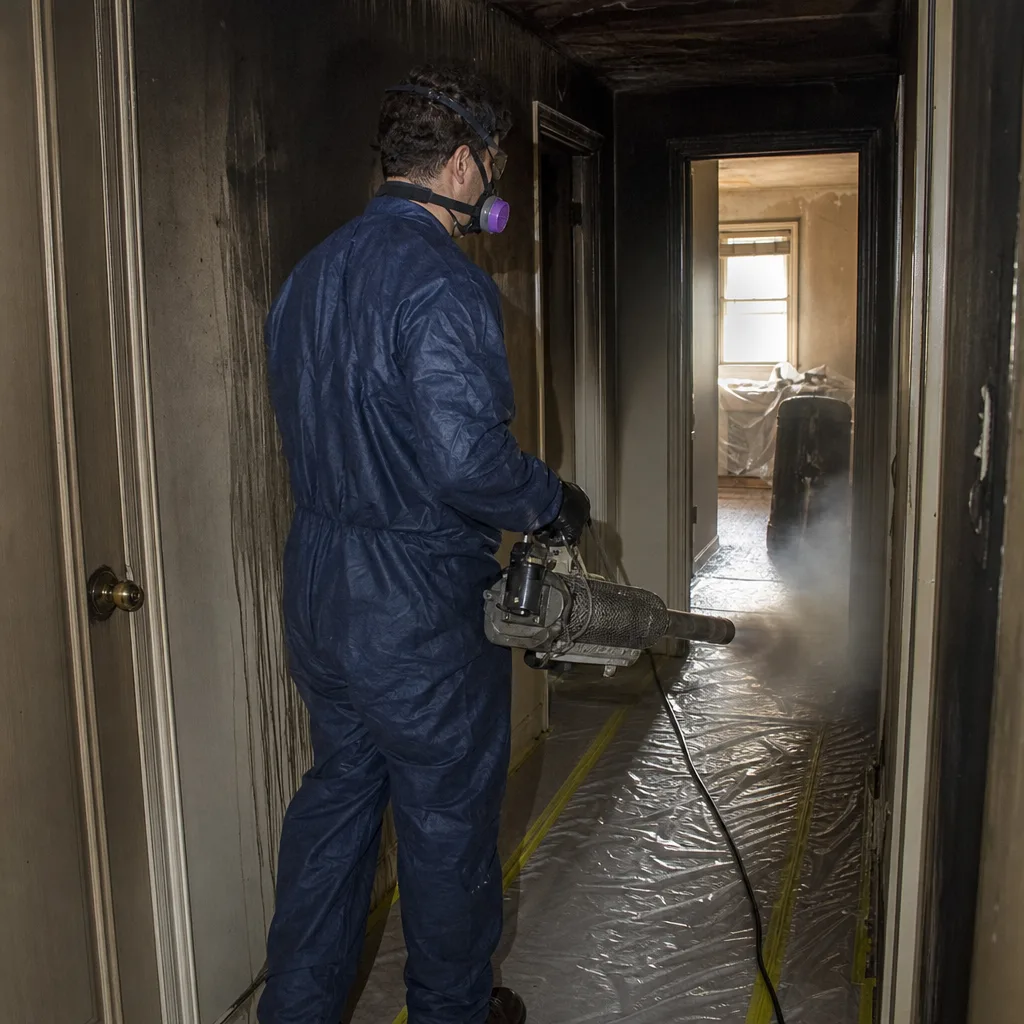
Insurance Claim Documentation
On a party-wall loss, documentation is the difference between a claim that settles in six weeks and one that drags for six months. We photograph every surface, log every moisture reading, and separate each landlord’s scope of work for their respective carriers. Our Reconstruction & Cleanup team has handled multi-carrier files where the LPC is also involved, and we know what each party asks for.
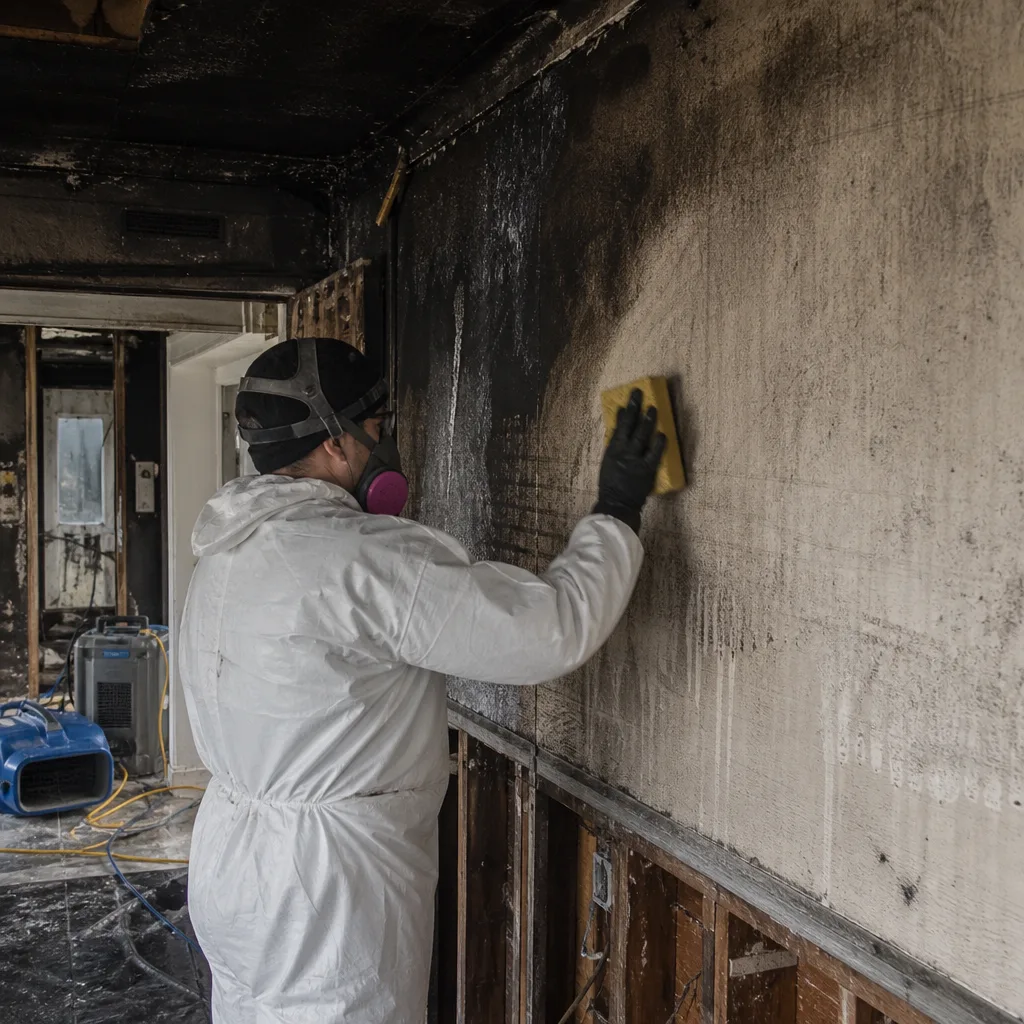
Drywall & Flooring Repair
Modern drywall sections still exist in some Little Italy renovations, and we match texture, thickness, and finish after cutting out damaged areas. Hardwood floors in these buildings are often original – narrow oak strips that predate World War I. We dry, sand, and refinish where possible instead of replacing.
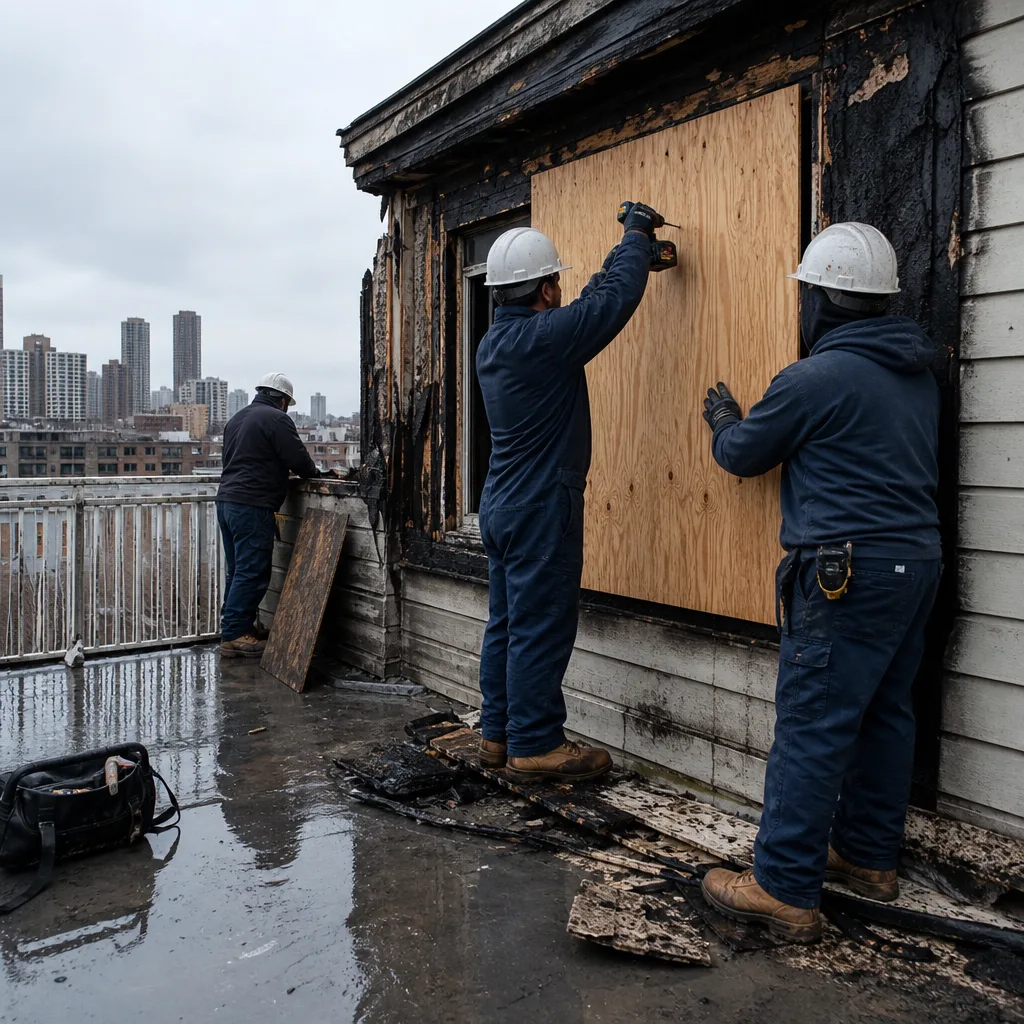
Carpet & Upholstery Cleaning
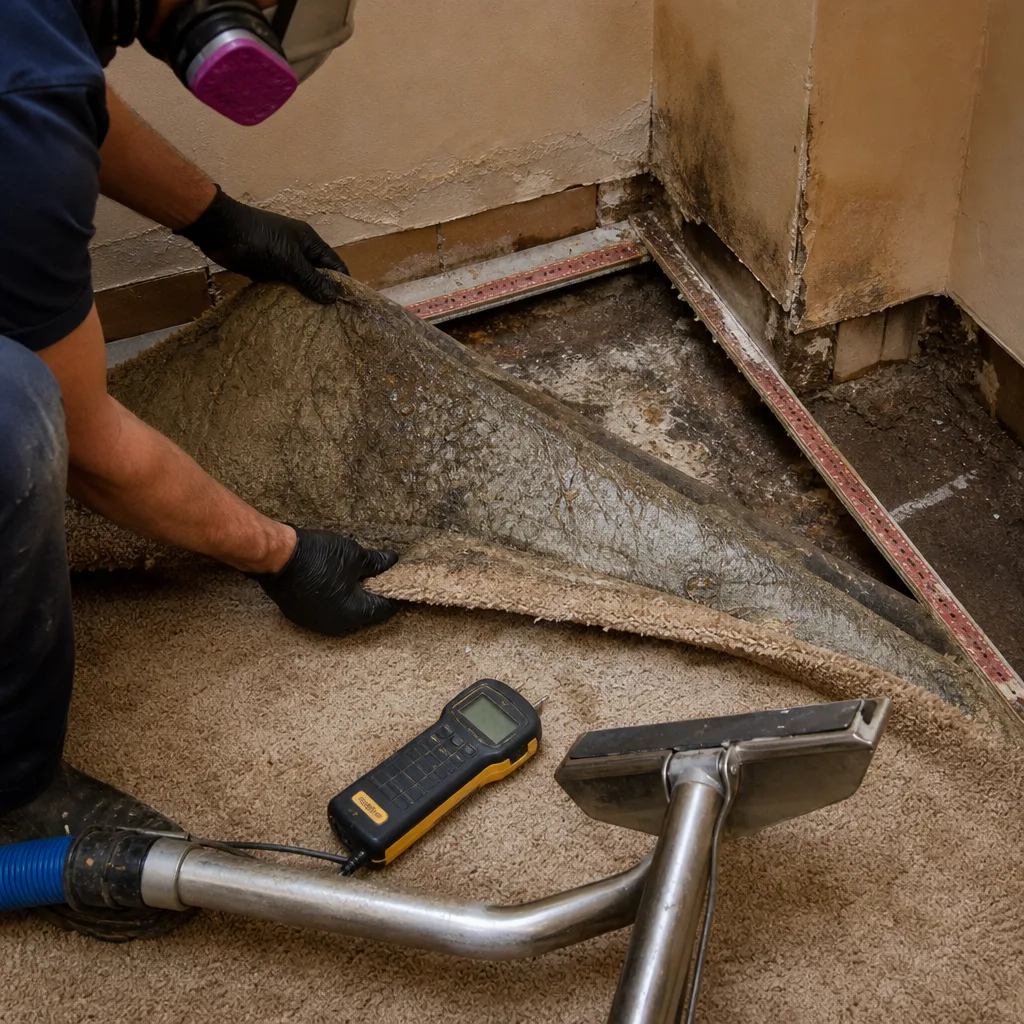
Post-loss carpet in a Little Italy apartment often carries Category 2 water and decades of embedded dust. We hot-water extract, sanitize, and deodorize where salvage is realistic, and we tell you honestly when replacement is cheaper than restoration. No pressure either direction.
Post-Construction Cleanup
After the rebuild wraps, HEPA vacuuming and surface cleaning remove the fine dust that settles into every crevice of a pre-war apartment. We clean the tin, the moldings, the window tracks, and the radiators – the places that hold dust from demolition and drywall work.
What happens when you call
- 1
A real person answersNo phone trees - you reach a local pro.
- 2
You get an upfront price rangeHonest numbers before anyone is dispatched.
- 3
A background-checked tech heads outLicensed & insured, dispatched right away.
- 4
You approve before work beginsNothing starts until you say go.
Reconstruction & Cleanup Costs in Little Italy, NY
A contained Category 1 water loss in a single room – drying, minor repairs, and repainting – typically runs $2,800 to $5,200 in Little Italy. A Category 2 loss from a radiator or supply line that crosses multiple floors and wets the party wall usually lands between $6,500 and $12,000. A Category 3 event – sewage backup or exterior floodwater – with full containment, pack-out, and structural repair commonly runs $10,000 to $18,500. What moves the price: how many floors the water traveled, whether original plaster and tin can be saved, whether the shared masonry wall needs cavity drying on both sides, and whether lead or asbestos abatement protocols are triggered. The free visual inspection gives you a firm line-item scope before any work starts, and a written approval is required before we spend a dollar. Call (917) 924-4221 for an exact quote on your situation. Estimates are free.
We Also Serve Cities Near Little Italy
Our crews run across lower Manhattan and the northern Bronx corridor daily. We serve Little Italy plus Fairview, Harrison, East Bronx, and Hunts Point. If you are in a neighboring area with a loss, the same live dispatch number gets you the same response: (917) 924-4221.
Serving Little Italy, NY - Our Local Coverage Area
We’re based in the Little Italy area and know this community well. Use the map below to see our service coverage - if you’re nearby, we can almost certainly help.
Little Italy Reconstruction & Cleanup Questions, Answered
How fast can a crew reach my Little Italy building?
Most Little Italy calls get a crew on scene within 45 minutes. Our dispatch board tracks the closest certified team to the Mulberry, Mott, and Elizabeth Street corridor at all hours. A live dispatcher answers the phone day or night at (917) 924-4221.
Will insurance cover reconstruction after a water loss in a pre-war tenement?
Most policies cover sudden and accidental water damage, including the reconstruction that follows, when proper documentation exists. We photograph every surface from the first hour and submit moisture logs and a line-item scope directly to your carrier. On party-wall losses involving two landlords, we separate each unit’s scope so each carrier handles its portion cleanly.
How does the Feast of San Gennaro affect a Reconstruction & Cleanup project on Mulberry Street?
The feast shuts Mulberry Street down for roughly eleven days each September, and NYC DOT street-use permits for dumpsters, trailers, or scaffolding on the block become nearly impossible to obtain during that window. We build the blackout period into every late-summer project timeline. If your loss happens during the feast, we stage equipment on a cross street and carry tools in by hand.
Can you dry out original horsehair plaster and tin ceilings in a Little Italy tenement, or do they always need to come out?
Original horsehair plaster and tin can usually be saved if drying starts within 24 to 48 hours. We use Injectidry mat systems that pull moisture through the plaster surface without removing the material, and we hand-clean tin rather than replacing it. If the water sat longer and mold has begun to germinate inside the lime-based plaster, removal is often the only correct path.
What happens when a water loss in my tenement wets the neighbor’s apartment through the shared masonry wall?
This is one of the defining complications of Little Italy construction. The shared masonry party wall means water and mold spores move through the wall cavity into both units. We build containment across both sides, run negative air, and document each landlord’s scope separately for their respective carriers. On a Mott Street job, our crew had to contain two units and a shared stairwell because a cast-iron soil stack leaked into the adjacent building’s wall cavity.
Is lead paint or asbestos going to slow down reconstruction in a pre-1920 Little Italy building?
Yes, and it should. Any pre-1978 structure in Little Italy carries near-universal lead paint presence, and asbestos wraps on pipes and ducting are common. Our crews follow IICRC and RIA protocols for disturbance work, with HEPA containment and proper disposal. It adds time and cost, but it protects you and your neighbors, and it keeps the project compliant.
Why does a Category 2 water loss from a radiator in Little Italy often require a pack-out of the entire floor?
Tenement apartments are tight, and water from a failed radiator valve travels down through the floor assembly before it shows on the ceiling below. By the time you see it, it has often crossed into the unit beside you through the party wall. Packing out the affected floor lets us set proper containment, run drying equipment without obstruction, and move furniture out before further damage occurs. We inventory, photograph, and store contents safely.
What should I do in the first 30 minutes before the crew arrives?
If it is safe, shut off the water supply at the nearest valve. Do not touch electrical panels, soaked outlets, or sagging ceilings. Turn off any HVAC system to avoid spreading soot or mold spores. Then call (917) 924-4221. Document what you can with your phone, and stay out of the affected area. The crew handles the rest.
Written by Curt Bowman, Owner at Floodline Restoration Co. of Manhattan, serving Little Italy and the surrounding boroughs for over 42 years.