
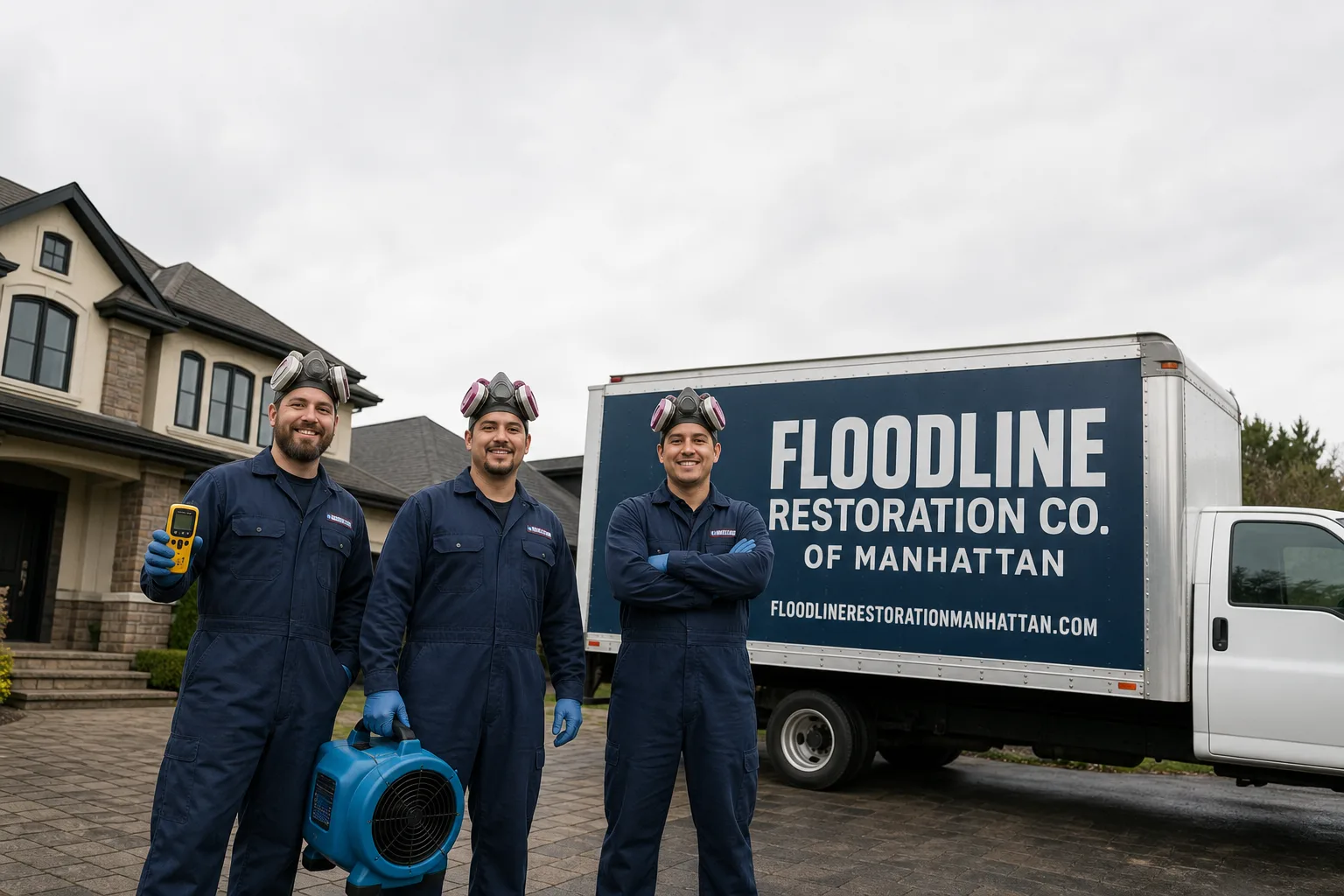
Free visual inspection and a written scope of work before any mitigation begins - photos, moisture readings, and drying logs go in your claim file
The scope we write is the scope we bill. Anything new gets shown to you, in writing, before we touch it.






 Before
 After
After Before
 After
After Before
 After
After24/7 Emergency Water Damage Restoration in Upper West Side
Water damage restoration in Upper West Side moves on one clock: the water’s. A burst supply line in a pre-war co-op can soak through lath-and-plaster, parquet, and the ceiling below within 40 minutes. When you call (917) 924-4221, a live dispatcher answers. Not a recording. Not a callback queue. We dispatch a crew into Upper West Side immediately, and extraction is running the same visit on most jobs. Free visual inspection, free moisture assessment, and a written scope before any work begins. The first hour decides whether you’re drying floors or replacing them.
Understanding Water Damage Restoration Severity in Upper West Side Properties
We classify water by its contamination level. Category 1 is clean water from a supply line or radiator valve. Category 2 carries detergents or biological material. Category 3 is grossly contaminated, typically sewage or street backflow. The category dictates everything: drying strategy, antimicrobial treatment, what gets removed and what gets saved. In Upper West Side’s pre-war buildings, severity is compounded by materials. Wet lath-and-plaster holds moisture differently than modern drywall. Herringbone parquet swells and cups within hours if not stabilized. Cast-iron riser pipes sweat and condense into wall cavities that haven’t been opened since the building went up. We use thermal imaging and penetrating moisture meters to map water that already left the visible area. Because in these buildings, the visible stain is rarely the full extent of the loss.
Why Upper West Side Property Owners Choose Floodline Restoration Co. of Manhattan
- 45-minute response commitment: When you call, we commit to a crew heading your way within 45 minutes. Upper West Side dispatch means no waiting for a truck from another borough.
- 24/7 live answer: A real person picks up at 2 a.m. Always. Curt Bowman built this company around a dispatch board, not a sales desk.
- IICRC-certified crews: Our technicians hold WRT and ASD certifications and train to RIA and IFA standards. Background-checked, uniformed, and accountable by name.
- Free visual inspection: We look, we measure, we tell you exactly what you’re facing. No charge, no obligation.
- Direct insurance billing: We bill your carrier directly and talk to your adjuster ourselves. You’re not the messenger.
- One team, start to finish: Extraction, drying, and rebuild are handled by the same certified crew. No mid-job handoff to strangers.
Our Water Damage Restoration Process
Inspection & Assessment
We map every affected surface with thermal imaging and moisture meters. We identify the water category, the source, and the migration path. In Upper West Side co-ops, we also pull the proprietary lease to establish responsibility before work begins.
Extraction & Stabilization
Professional-grade extraction removes standing water fast. In pre-war buildings, that means controlled extraction from hardwood, plaster cavities, and subfloor spaces without further damaging century-old materials.
Drying & Dehumidification
We set Dri-Eaz and Phoenix dehumidifiers with XPOWER air movers, configured for the specific materials involved. Lath-and-plaster dries differently than drywall, and our drying chambers account for that. Daily readings are logged until we hit the dry standard.
Cleaning & Sanitization
We apply antimicrobial treatments appropriate to the water category and affected materials. HEPA filtration runs where needed to keep mold spores from colonizing damp cavities.
Historic Finish Protection
In Upper West Side units with original crown moldings, herringbone parquet, or period plasterwork, we protect what’s salvageable before demolition or drying proceeds. Pack-out, negative air pressure, and controlled demolition protect the finishes that survived the water.
Repairs & Restoration
The same crew that extracted the water rebuilds what needed removing. Plaster matching, parquet repair, baseboard replacement. Done to the building’s standard, not a generic patch. Backed by the 90-Day Done Right Promise in writing.
Need Emergency Water Damage Restoration in Upper West Side Now?
Crews minutes away, answering live 24 hours a day. The sooner we start, the less it costs.
Working With Your Insurance Company
Water damage claims in Upper West Side co-ops are rarely simple. The master policy, the unit owner’s HO-6, and the building’s management company all have different interests and different obligations. We’ve handled this for over 42 years across the metro. From the first hour, we document everything: photos room by room, moisture readings with dates and times, and a line-item scope that matches what your carrier needs to process the claim. We talk to your adjuster directly. We explain the technical findings in terms adjusters understand. When the proprietary lease determines who pays for what, we provide the documentation that supports the correct classification. You get a square deal: no surprises on the bill.
What We Provide Your Insurer
- Thorough documentation of the loss
- Photos of all damage, room by room
- Moisture readings and drying logs
- A detailed, line-item scope of work
- Direct coordination with your carrier
Built for Upper West Side’s Loss Calendar
January and February are the danger months for burst supply lines and failed radiator valves, when freeze-thaw cycles stress century-old cast-iron and galvanized plumbing. February freeze events are the most common cause of Category 1 floods in pre-war co-ops along West End Avenue and Riverside Drive. March brings roof ice damming on tall masonry buildings, driving melt water into cornices and top-floor units. Late spring and summer bring thunderstorms that overwhelm cellar drains and trigger sewer backups in basement-level units, introducing Category 3 water into spaces that house building mechanicals and storage. Nor’easters hit in the fall and early winter, when heavy rain on saturated ground pushes into subgrade spaces. Upper West Side property owners live with this calendar every year. We plan crews around it.
Water Damage Restoration Across Upper West Side’s Neighborhoods
Along Riverside Drive, the large pre-war co-ops sit on elevated ground above the Hudson, so river flooding is rare. But cellar water intrusion from storm surges and sewer backups during nor’easters is a recurring issue. West End Avenue runs through the heart of the co-op corridor, where 10-to-15-story buildings share riser lines and drainage stacks; one unit’s overflow becomes the hallway’s stain and the unit below’s ceiling damage. Central Park West properties, including the grand Beaux-Arts towers like the Ansonia and the Belnord, bring the added complexity of landmark-level finishes and strict alteration rules. The brownstone blocks between Amsterdam and Columbus Avenue are a different animal entirely: rowhouse cellars, shared party walls, and original floor joists that channel water into the building next door. We’ve worked all four corridors. The building type dictates the restoration approach, and we’ve seen every type this neighborhood has.
Specialized Water Damage Restoration Services We Offer in Upper West Side
Emergency Water Extraction
Standing water in a pre-war Upper West Side apartment doesn’t wait. Our extraction teams arrive with truck-mounted and portable extraction units, removing water from hardwood, carpet, tile, and subfloor cavities. In co-op buildings, speed protects not just your unit but the units below. Call (917) 924-4221 and extraction is running the same visit on most jobs.
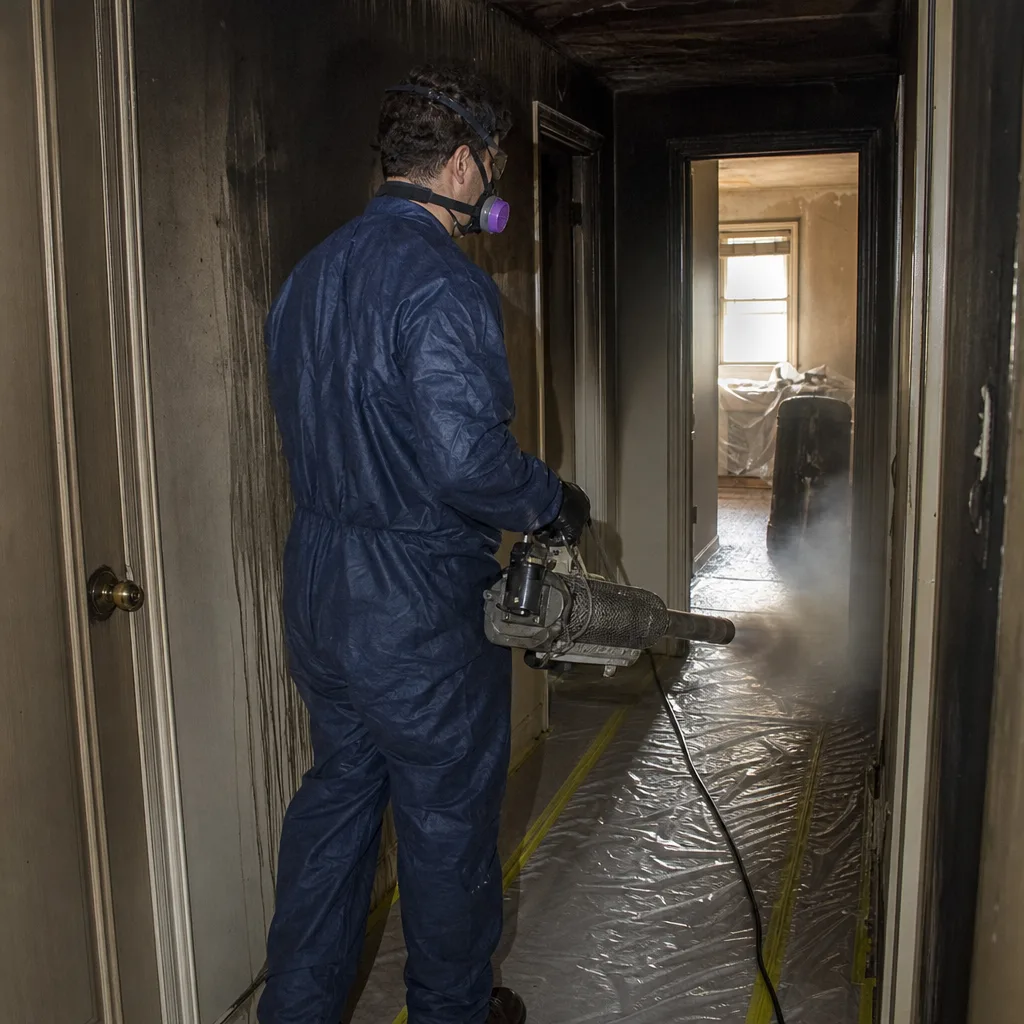
Structural Drying & Dehumidification
Drying a pre-war apartment is different from drying a modern condo. Lath-and-plaster walls can delaminate if dried too aggressively. Herringbone parquet cups and warps if the subfloor moisture isn’t managed. We use Dri-Eaz and Phoenix dehumidifiers with XPOWER air movers, configured specifically for the materials in your unit. Daily moisture readings are logged and shared with you and your carrier until the dry standard is met.
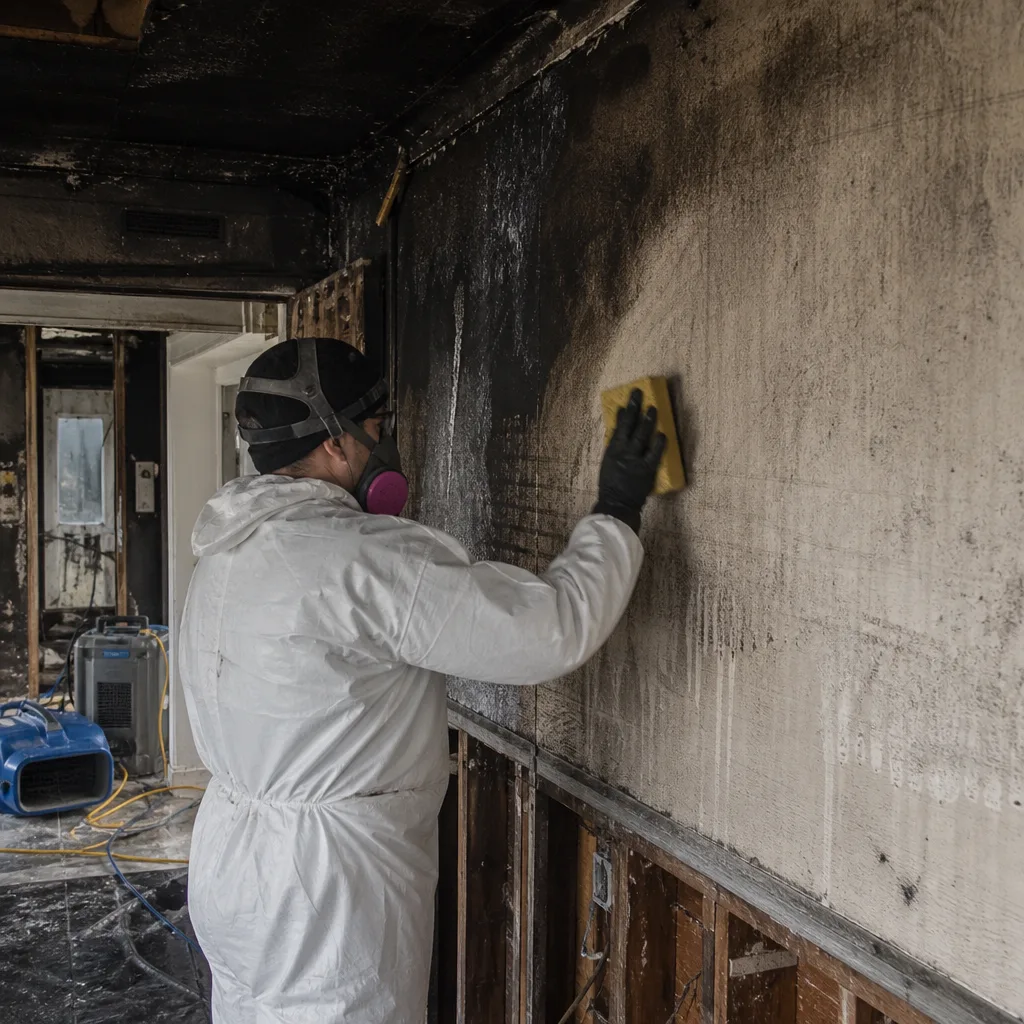
Burst Pipe Restoration
A burst pipe in an Upper West Side co-op is rarely just a plumbing repair. The water travels. A branch line failure in a sixth-floor unit on West End Avenue soaks the ceiling below, the hallway, and sometimes the unit two floors down. We extract, dry, and restore the full damage path. And because we understand co-op leases, we know whether the source line is a building riser or an owner branch line before the first invoice is written.
What happens when you call
- 1
A real person answersNo phone trees - you reach a local pro.
- 2
You get an upfront price rangeHonest numbers before anyone is dispatched.
- 3
A background-checked tech heads outLicensed & insured, dispatched right away.
- 4
You approve before work beginsNothing starts until you say go.
Water Damage Restoration Costs in Upper West Side, NY
Upper West Side pricing reflects the housing stock. A simple Category 1 cleanup from a radiator valve leak in a single unit typically runs $2,800 to $6,500 when caught early. Structural drying with full moisture mapping in a pre-war apartment runs $4,000 to $11,000 depending on square footage, the number of affected rooms, and whether plaster cavities need to be opened. Burst pipe restoration involving multiple units in a co-op cascade commonly runs $15,000 to $45,000 when drying and rebuild are combined. Sewage backup cleanup (Category 3) starts around $5,500 and rises with the extent of contamination. What moves the price: the number of affected units, whether ceilings need to be opened for drying, the level of finish matching required, and the co-op approval chain. The free visual inspection gives you a firm, line-item scope before any work begins. We bill your carrier directly. Current standing offers include $50 off any repair over $250 and a Senior & Veteran 5% discount, always.
We Also Serve Cities Near Upper West Side
Floodline Restoration Co. of Manhattan serves water damage restoration across the wider metro. Our crews regularly handle jobs in Fairview, Harrison, East Bronx, and Hunts Point. Same live dispatch, same certified crews, same 90-Day Done Right Promise.
Serving Upper West Side, NY - Our Local Coverage Area
We’re based in the Upper West Side area and know this community well. Use the map below to see our service coverage - if you’re nearby, we can almost certainly help.
Upper West Side Water Damage Restoration Questions, Answered
In an Upper West Side co-op, who pays for water damage from a burst riser pipe versus a branch line?
The answer lives in your building’s proprietary lease, not city code. A riser pipe is generally the building’s responsibility; a branch line serving only your unit is generally yours. But no two UWS co-ops draw that line the same way. We pull the governing documents before scoping any job, so you know who pays before the dehumidifiers are placed. Call (917) 924-4221 for guidance specific to your building.
How quickly can mold start on wet plaster and hardwood in a pre-war UWS apartment?
Mold colonization can begin within 24 to 48 hours on wet organic materials in a warm apartment. Old plaster and hardwood provide plenty of food. That’s why we commit to a 45-minute dispatch response in Upper West Side. The sooner extraction and drying begin, the lower the mold risk.
Do you have to match original plaster and moldings when repairing water damage in a landmark UWS building?
Yes, and this is where most restoration companies fall short. In landmark-designated buildings along Central Park West and Riverside Drive, the Landmarks Preservation Commission and your co-op board expect restoration, not replacement with modern materials. Our crews match plaster profiles, crown molding profiles, and parquet patterns to the existing finishes. We’ve done it in century-old units, and we’ll do it in yours.
What does ‘Category 3 water’ mean for a basement flood in a Riverside Drive building?
Category 3 water is grossly contaminated, typically sewage or storm backflow. In Riverside Drive co-ops, basement floods during nor’easters often introduce Category 3 water into storage rooms and mechanical spaces. This requires full antimicrobial treatment, removal of porous materials that absorbed the water, and containment during the work. It’s not a mop-and-fan situation.
Why do I need moisture mapping and drying logs if my UWS apartment only looks a little wet?
Because in pre-war construction, water travels behind what you can see. A small stain on a ceiling could mean a soaked plaster cavity above it. Moisture mapping with thermal imaging finds what’s hidden. Drying logs prove to you and your carrier that the affected materials actually reached the dry standard, not just the visible surface. Without them, you’re trusting a guess.
How fast can someone actually get to my Upper West Side apartment?
We commit to a 45-minute dispatch from our NYC office, with crews stationed to serve Upper West Side directly. A live dispatcher answers at (917) 924-4221 24 hours a day, every day.
Will my insurance cover water damage restoration in a co-op?
It depends on the source of the water, your HO-6 policy, and your building’s proprietary lease. We handle direct billing to your carrier and coordinate with the master policy carrier when building responsibility is involved. Our documentation from the first hour supports your claim.
What should I do in the first 30 minutes after discovering water damage in my UWS apartment?
Shut off the water source if you can safely reach the valve. Move small valuables and electronics out of the water’s path. Call (917) 924-4221. Do not use a wet-dry vac on Category 3 water. Do not place fans randomly. Let us assess the category, map the moisture, and start extraction correctly. The first hour decides how much gets saved.
Written by Curt Bowman, Owner at Floodline Restoration Co. of Manhattan, serving Upper West Side since the company’s founding in 2010.