
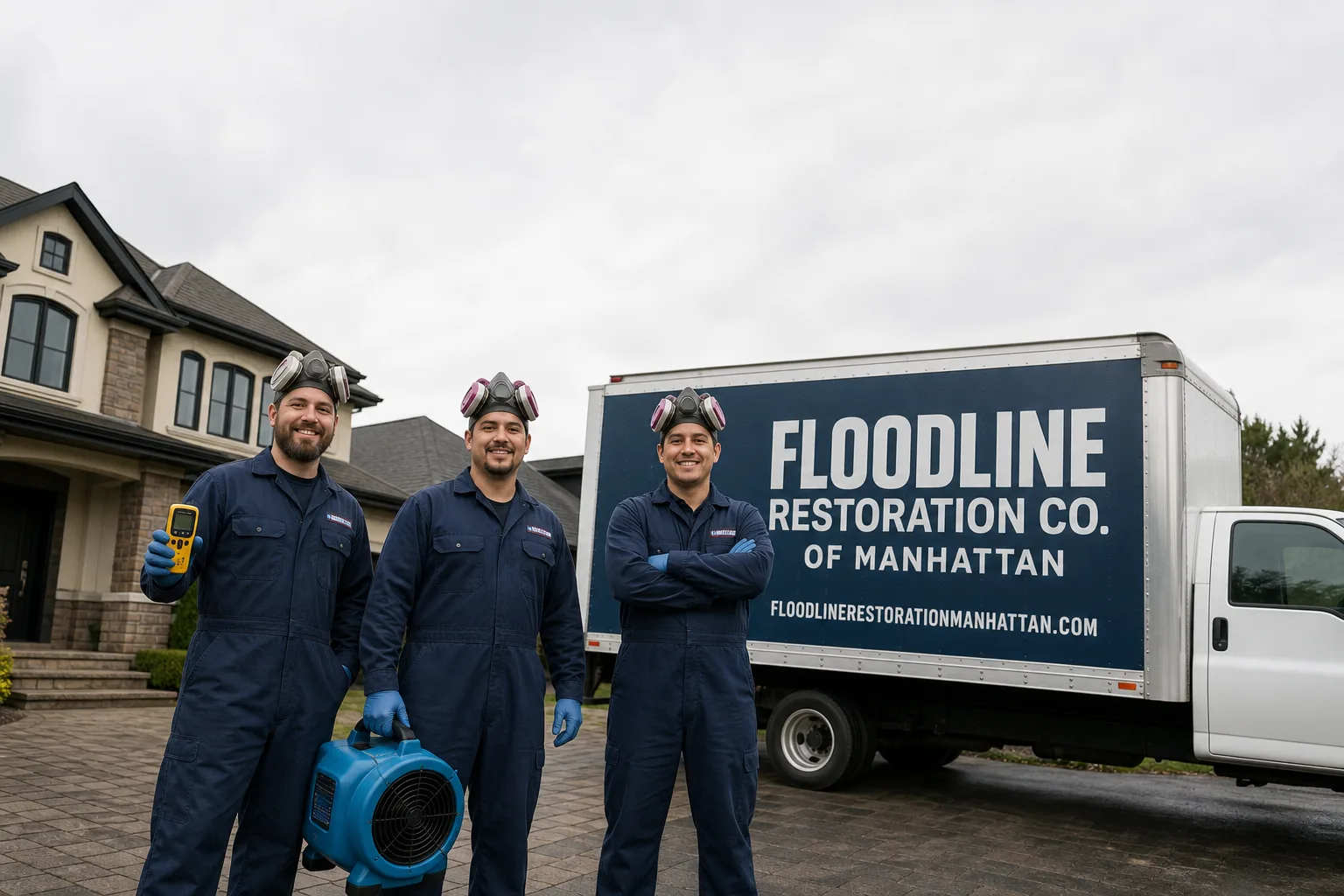
Free visual inspection and a written scope of work before any mitigation begins - photos, moisture readings, and drying logs go in your claim file
The scope we write is the scope we bill. Anything new gets shown to you, in writing, before we touch it.






 Before
 After
After Before
 After
After Before
 After
After24/7 Emergency Reconstruction & Cleanup in Westwood
Reconstruction and cleanup in Westwood, NJ typically starts with a phone call, not a form. If water is rising in a 1960s colonial basement off Mill Road or smoke has moved through a cape cod near Westwood Avenue, call (917) 924-4221 right now. A live dispatcher answers at any hour, and our crews begin structural drying, extraction, or soot containment the same visit. The first hour matters because wet drywall and soaked insulation in a Westwood basement start growing mold within 24 to 48 hours, and every day of delay adds cost to the rebuild. We provide a free visual inspection, a written scope before any work starts, and the full Reconstruction & Cleanup process handled by one certified team from the first extraction to the final coat of paint.
Understanding Reconstruction & Cleanup Severity in Westwood Properties
Westwood’s housing stock is predominantly 1950s to 1970s single-family colonials and cape cods with full or partial basements. That construction predates modern waterproofing standards. Most of these homes still have original cast-iron or galvanized drain lines. When a nor’easter stalls over the Arthur Kill and the sanitary system backs up, those lines force Category 3 water, sewage-contaminated, back through floor drains and into finished basements.
That’s a full reconstruction loss, not a mop-up. Category 3 water requires containment, removal of saturated drywall and carpet, antimicrobial treatment, and structural drying before any reconstruction starts. Homes in this part of southwestern Staten Island also sit in FEMA-designated flood zones. Repeat storm-surge events have saturated foundation block walls over decades, and the freeze-thaw cycle each winter widens the cracks. Efflorescence and spalling on block walls are not cosmetic problems; they signal water moving through the foundation. That must be addressed before interior rebuilds, or the new drywall fails inside three years. Severity in Westwood is rarely “minor” when water is involved, because the housing stock is old, the water table is high, and the storm history is unforgiving.
Why Westwood Property Owners Choose Floodline Restoration Co. of Manhattan
- 45-minute response commitment: Our local dispatch grid keeps crews minutes from Westwood’s residential blocks, not hours. A live person takes the call, and a uniformed crew is on the road immediately.
- A real person answers the phone, 24/7: No automated system, no recorded menu, no callback list. You call, a dispatcher answers, and help is dispatched before you hang up.
- IICRC-certified crews: Our technicians hold WRT and FSRT certifications and train to IICRC, RIA, and IFA standards. They see the full scope, not just the wet patch.
- Free visual inspection: We walk the property, measure moisture with thermal imaging and hygrometers, and tell you honestly whether you need full reconstruction or targeted cleanup. No charge, no obligation.
- Direct insurance billing: We bill your carrier directly and speak with your adjuster on your behalf. You are not the messenger between us and the insurer.
- One team from extraction to reconstruction: The same crew that sets the drying plan in Westwood handles the rebuild. No mid-job handoff to an unfamiliar subcontractor, no inherited crew that has never seen the moisture log.
Our Reconstruction & Cleanup Process
Inspection & Assessment
We arrive on-site, map the affected areas, and identify the water category, soot type, or structural damage. For Westwood’s older homes, that includes checking foundation walls, drain lines, and insulation. We give you a written scope with clear numbers before any work begins.
Extraction & Stabilization
Standing water is removed with truck-mounted extraction units, and saturated materials are cut out to the dry line. If there is structural risk from a compromised wall or ceiling, we stabilize it the same visit so no one is at risk.
Drying & Dehumidification
We set Dri-Eaz air movers and Phoenix dehumidifiers, map moisture daily with hygrometers, and hold the structure at the dry standard. For Westwood’s humidity in flood season, this is non-negotiable. Hidden moisture behind baseboards and under flooring is where repeat mold losses come from.
Cleaning, Sanitization & Treatment
All affected surfaces are cleaned and treated with antimicrobials. Where mold growth is present, we set containment and run HEPA air scrubbers in the affected zones. Air scrubbers run until air sampling clears, not just when the wall looks dry.
Contents Restoration & Pack-Out
We catalog, clean, and restore salvageable contents, and pack out items requiring off-site restoration. Our documentation includes photos and line items for every piece. That record goes to your insurer with the rest of the claim file.
Repairs & Restoration
Drywall, flooring, trim, paint, and any structural rebuild is done by the same Floodline crew that started the job in Westwood. The 90-Day Done Right Promise covers the work in writing. If it’s not done right, we make it right.
Need Emergency Reconstruction & Cleanup in Westwood Now?
Crews minutes away, answering live 24 hours a day. The sooner we start, the less it costs.
Working With Your Insurance Company
Insurance carriers respond to documentation. From the first hour on a Westwood loss, we photograph every affected room, log moisture readings with dated records, and build a line-item scope of work that matches your policy’s coverage triggers. If you have post-Sandy ICC coverage, the standard is even higher, and we know how to meet it. Our team speaks directly with your adjuster, answers their technical questions, and submits supplements as the job uncovers hidden damage. You don’t have to translate between a contractor and an insurer. You pay your deductible and we handle the rest. That’s how direct insurance billing is supposed to work.
What We Provide Your Insurer
- Thorough documentation of the loss
- Photos of all damage, room by room
- Moisture readings and drying logs
- A detailed, line-item scope of work
- Direct coordination with your carrier
Built for Westwood’s Loss Calendar
Westwood’s damage season is shaped by the tidal corridor it sits in. Hurricane season in late summer and early fall brings storm surge from the Arthur Kill and Raritan Bay. Nor’easters in late fall and winter push water against the same southwestern Staten Island shoreline. When those events line up with a saturated water table, even a moderate storm becomes a flood event in basements that were never waterproofed to modern code.
Winter brings its own problem. Freeze-thaw cycles open hairline cracks in older foundation block walls, letting groundwater seep through the floor slab. Burst supply lines in unheated crawl spaces or garages are a January constant in 1950s ranches along the Hackensack River side of the neighborhood. Spring thaws then reveal water damage that started weeks earlier, and by then the mold has moved into the sill plates. Westwood owners deal with at least two of these a season, and the ones who call early pay less. The ones who wait see a cleaning turn into a reconstruction.
Reconstruction & Cleanup Across Westwood’s Neighborhoods
Westwood’s residential blocks tell a consistent story, but the details change block by block. The homes off Bergen Turnpike toward the southern end of the neighborhood sit closest to the tidal influence of the Arthur Kill, and they carry the highest flood-zone exposure. Full basements there are more likely to take Category 3 water during a storm surge event, and reconstruction involves the most stringent ICC documentation. The streets around Westwood Avenue and north toward Emerson show a mix of ranches and small colonials with shallow basements and older drainage systems, where a nor’easter backs up municipal storm lines and sends groundwater up through floor drains.
Homes along the western edge near Mill Road and the old rail right-of-way have some of the oldest foundations in the area, with unwaterproofed block walls that spall from decades of freeze-thaw cycles. Restoration there often means rebuilding a foundation wall section before any drywall goes back. Up near the border with Hillsdale, the homes are slightly newer but sit on flat lots where surface water pools against the foundation after heavy rain. Every one of these patterns shows up in our moisture mapping and dictates what the rebuild actually requires. A Westwood job is not a generic water job with a different zip code.
Specialized Reconstruction & Cleanup Services We Offer in Westwood
Full-Service Reconstruction
When a Westwood basement takes storm surge or a sewer backup, the damage usually ends at the drywall but starts at the foundation. We rebuild walls, floors, and ceilings, and we handle structural repairs to block walls and sill plates. The finished result meets current code, not the standard the home was built to in 1962.
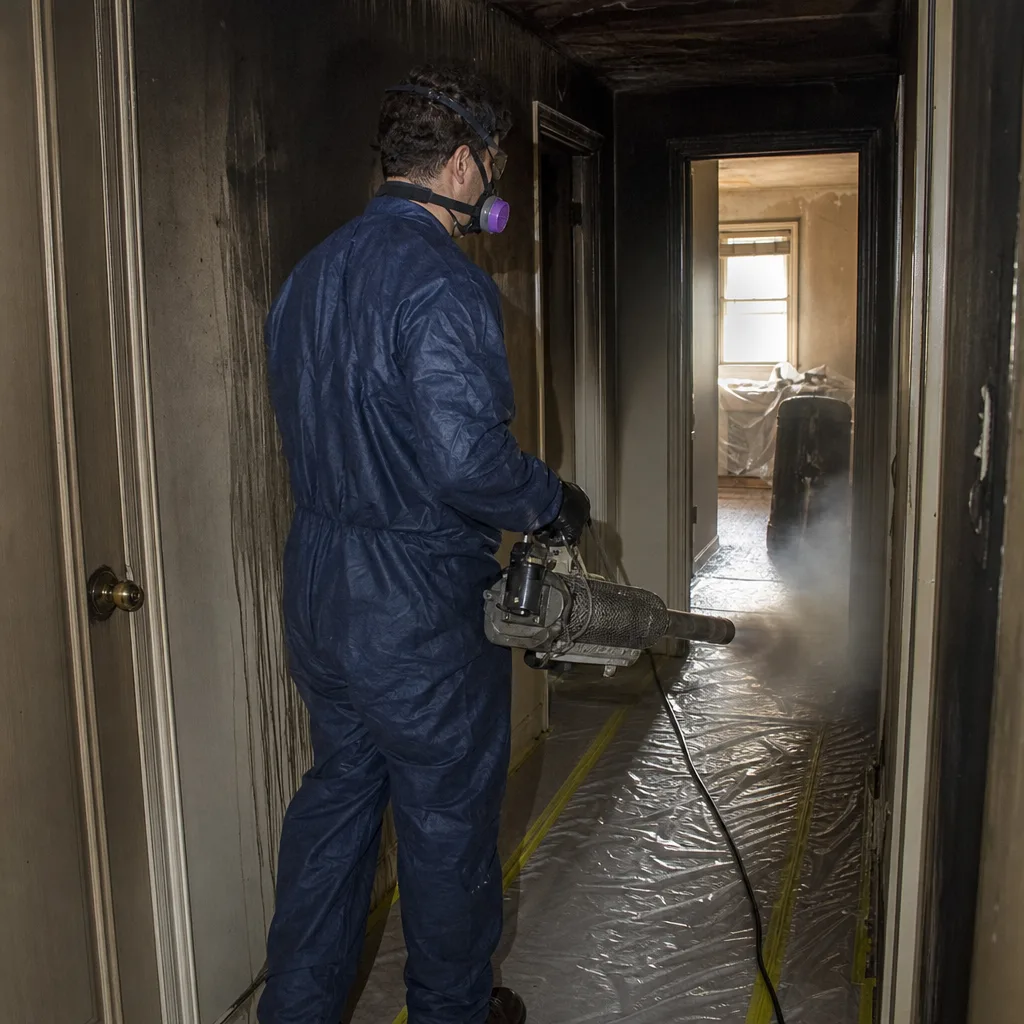
Drywall & Flooring Repair
Saturated drywall and buckled laminate are the most common interior losses in Westwood’s colonials and cape cods. We cut to the dry line, treat the framing, and install new materials that match the existing profile. For tile floors over concrete slabs, we address moisture migration before resetting the tile, or the grout cracks within a season.
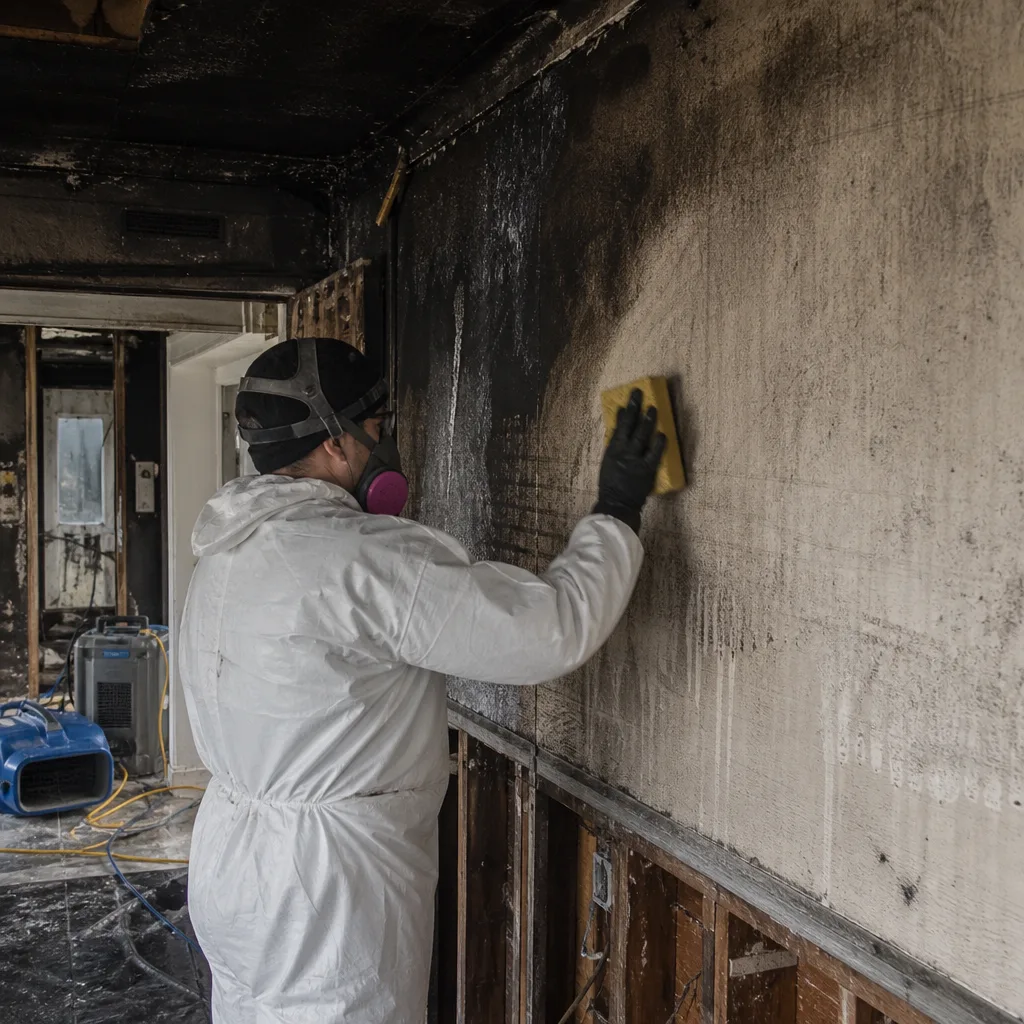
Contents Restoration & Pack-Out
Furniture, rugs, books, and family records from a flooded Westwood basement are often restorable, but only if they are pulled, dried, and treated quickly. We pack out contents, catalog every piece with photos, restore what can be saved, and store it properly until the rebuild is done. Your claim file gets a complete inventory with values. That documentation is the difference between a full payout and a denied contents claim.
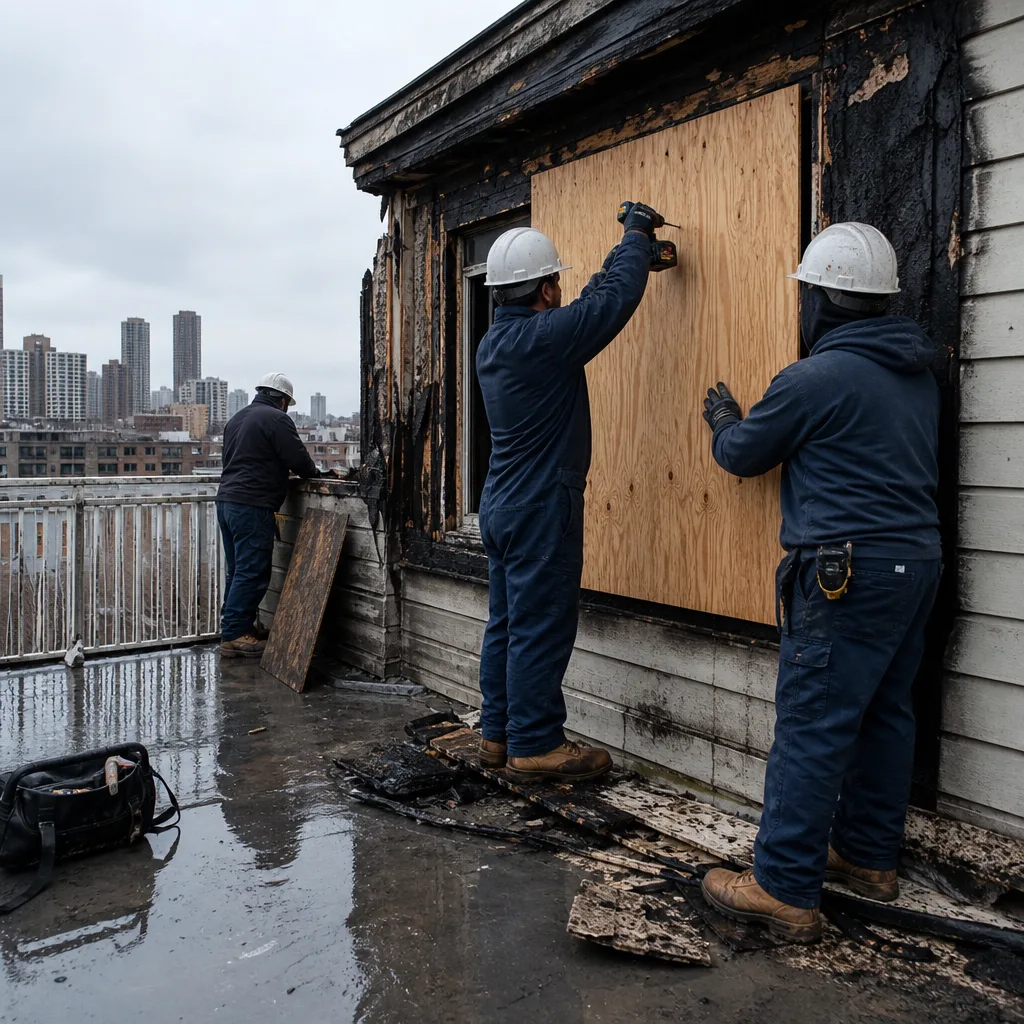
Carpet & Upholstery Cleaning
After a fire or Category 1 water event on a single floor, carpet and upholstery can often be cleaned rather than replaced. We run professional-grade extraction and drying equipment, then sanitize and deodorize. For Westwood’s older homes with plaster walls and original woodwork, this is often the least invasive restoration path.
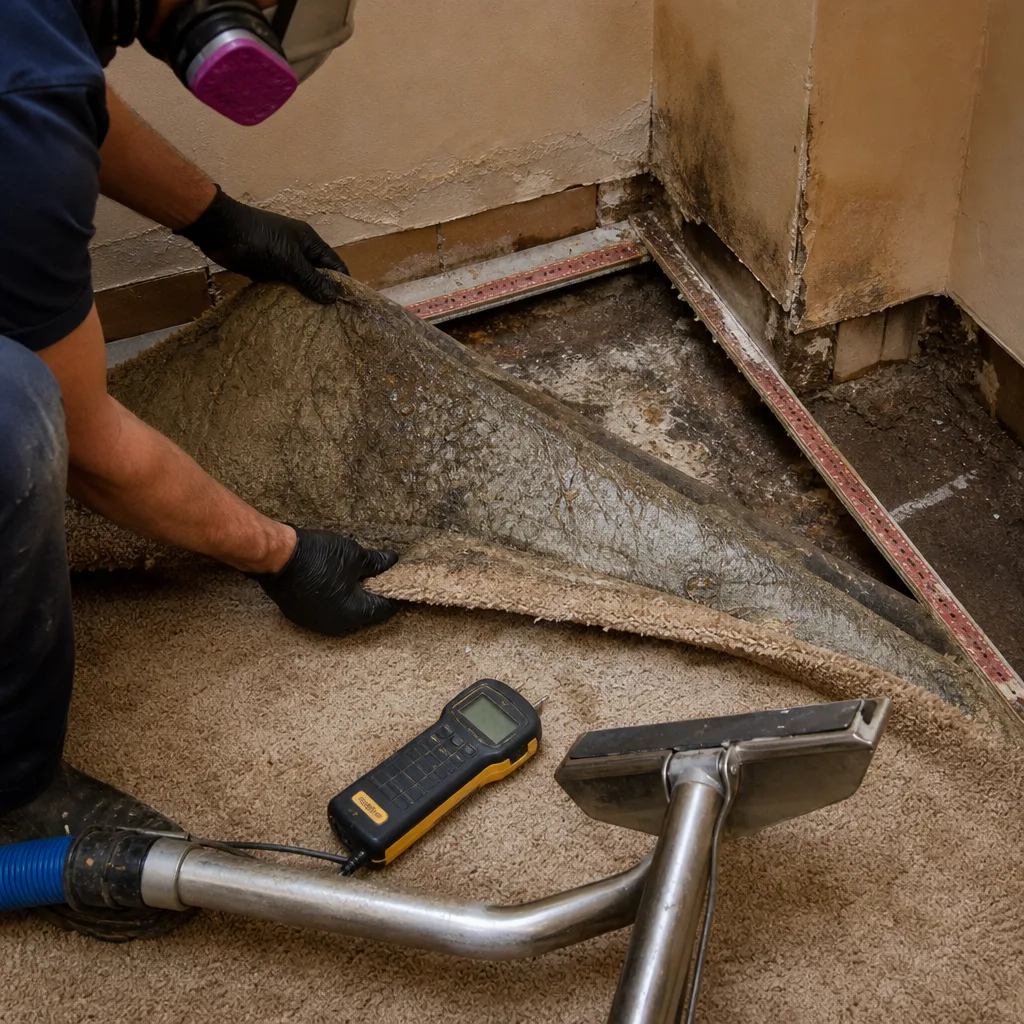
Post-Construction Cleanup
After we rebuild, the sawdust and drywall dust are ours to remove. We clean the workspace, HEPA-vacuum the surfaces, and remove all debris from the property. You move back into a finished space, not a construction site with a fresh coat of paint.
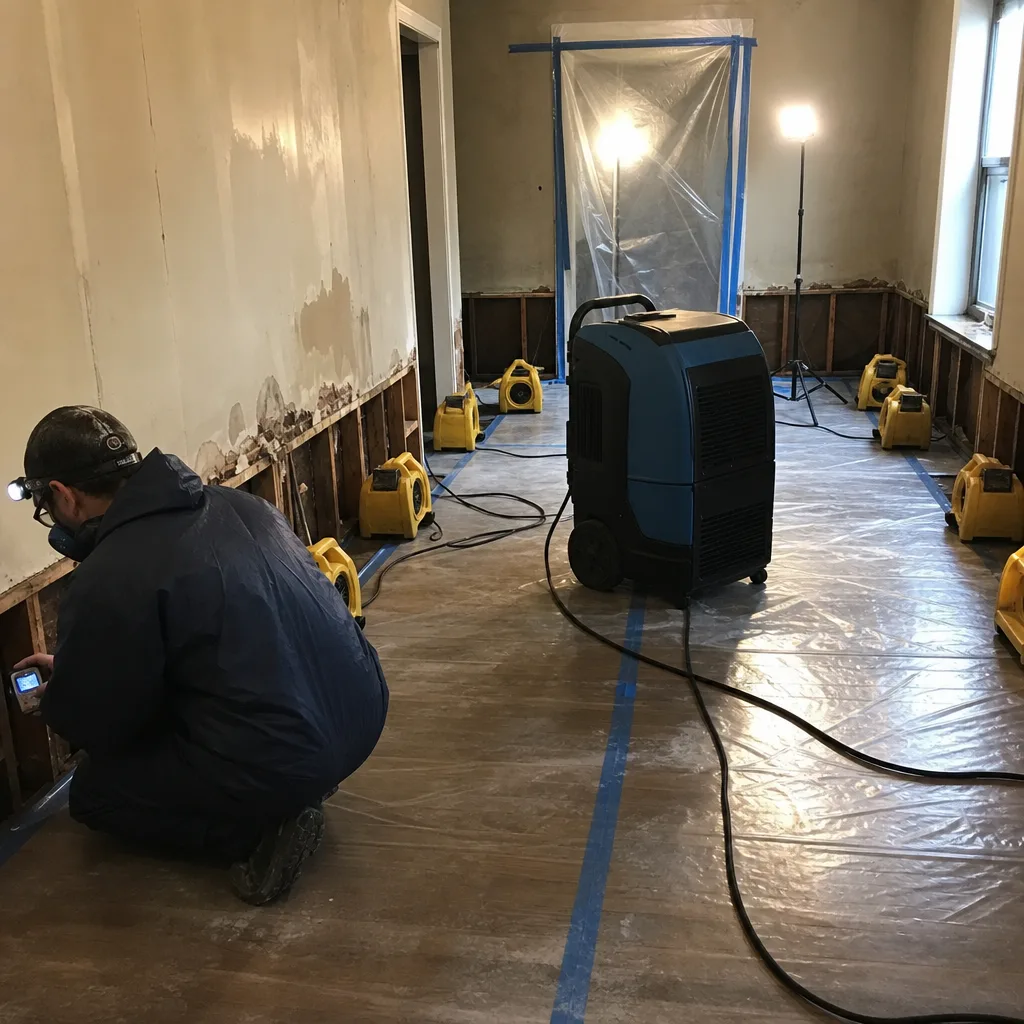
Insurance Claim Documentation
For Westwood homeowners with ICC coverage, this is not a checkbox. FEMA elevation and floodproofing trigger thresholds require a level of proof that most restoration contractors simply don’t produce. We do. Our moisture maps, drying logs, and photo-documented line-item scopes meet the standard that keeps your supplement approved instead of denied.
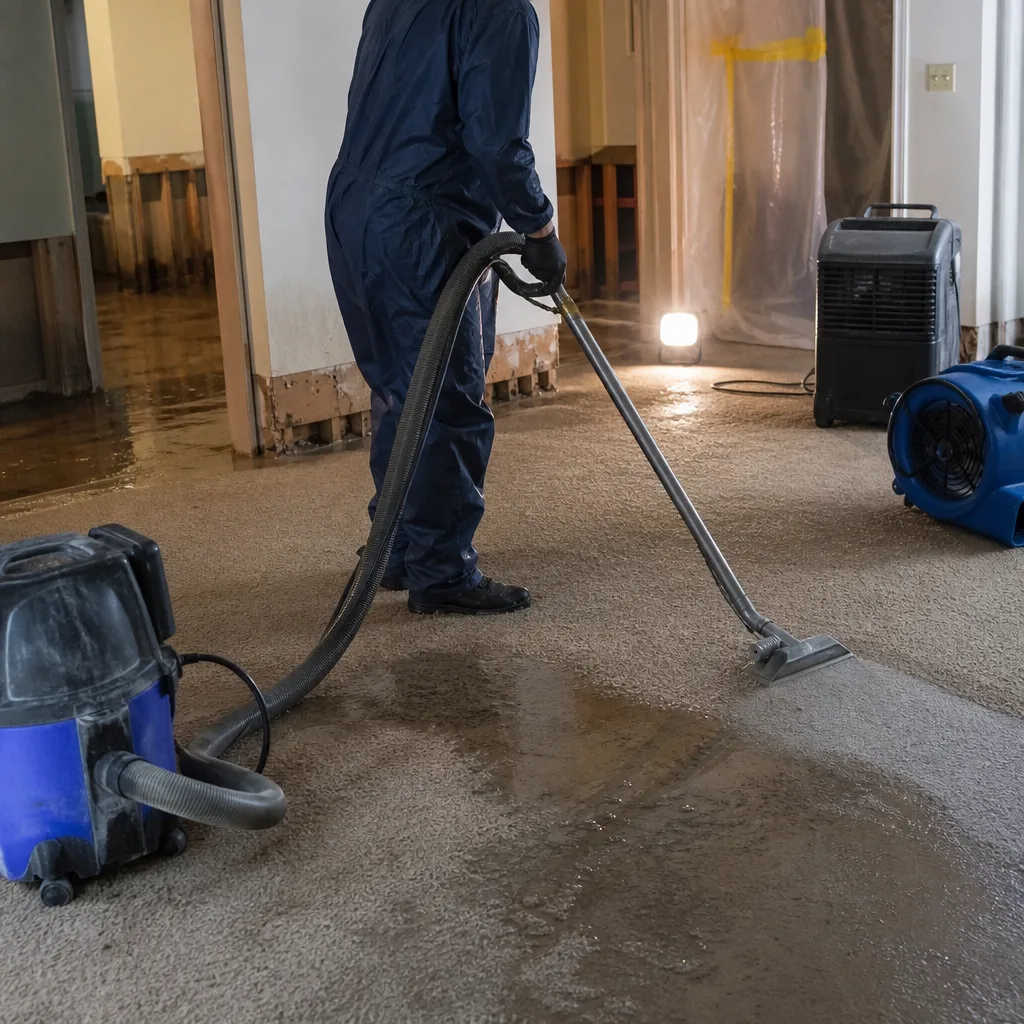
What happens when you call
- 1
A real person answersNo phone trees - you reach a local pro.
- 2
You get an upfront price rangeHonest numbers before anyone is dispatched.
- 3
A background-checked tech heads outLicensed & insured, dispatched right away.
- 4
You approve before work beginsNothing starts until you say go.
Reconstruction & Cleanup Costs in Westwood, NJ
Reconstruction and cleanup costs in Westwood run wide because the losses vary from a single-room cleaning to a full basement rebuild. A carpet and pad removal with drying after a clean-water supply line break in a Westwood basement typically runs $1,200 to $2,800. A Category 3 sewer backup that requires cutting out drywall, treating framing, and rebuilding a finished basement runs $8,000 to $22,000 depending on finishes, storage, and contents restoration. Full-house reconstruction after storm surge, where the first floor and basement both take water and the foundation needs repair, commonly lands between $35,000 and $90,000. What moves the number: the water category, how long the material sat wet, whether the foundation was already compromised, and the finish level of the room. Insurance typically covers the bulk of these losses when documentation is tight from the first hour. Your deductible is often your only out-of-pocket cost. Call (917) 924-4221 for a free inspection and a written scope with exact numbers, no obligation, no surprises on the bill.
We Also Serve Cities Near Westwood
Floodline Restoration Co. of Manhattan serves the full Pascack Valley and the towns across the Kill. In addition to Westwood, our crews handle reconstruction and cleanup in Harrington Park, Hillsdale, Park Ridge, and Norwood. Response times differ by location, but the live answer and the written scope do not.
Serving Westwood, NJ - Our Local Coverage Area
We’re based in the Westwood area and know this community well. Use the map below to see our service coverage - if you’re nearby, we can almost certainly help.
Westwood Reconstruction & Cleanup Questions, Answered
How does Westwood’s post-Sandy ICC coverage affect my reconstruction and cleanup claim?
ICC coverage reimburses you for rebuilding to current flood zone elevation and floodproofing standards, not just returning to pre-loss condition. That means your claim needs documentation showing the rebuild meets the elevation certificate and floodproofing trigger thresholds. Contractors who don’t understand this leave Westwood clients with denied supplements. We document every step to that standard from day one. Call (917) 924-4221 to have your loss documented correctly.
How fast can mold start growing on wet drywall in a Westwood basement after a sewer backup?
Mold can begin growing on wet drywall within 24 to 48 hours in a Westwood basement, especially in summer when the humidity sits high and the water table is elevated. Category 3 water makes it worse because the organic material in sewage feeds the growth. That’s why we treat every sewage backup as an emergency and start extraction the same visit, not the next day. Call (917) 924-4221 immediately if your basement is wet.
Why does Westwood require a different insurance documentation package than Tottenville or Bergen County?
Westwood sits in FEMA-designated flood zones in the tidal corridor near the Arthur Kill, and a large share of homeowners here enrolled in ICC coverage after Sandy. Tottenville has similar storm surge exposure but different elevation standards, and most of Bergen County has no flood-zone designation at all. Your documentation has to prove the rebuild meets elevation and floodproofing thresholds, not just that the damage happened. Our scopes are built for that requirement. Call (917) 924-4221 and we will explain how your policy applies.
Can you clean and restore contents from a flooded Westwood basement without replacing them?
Often, yes. Furniture, rugs, clothing, and paper records can be restored when they are pulled quickly, dried properly, and treated with the right antimicrobials. We pack out, catalog, and restore what can be saved, and we provide your insurer with a photo-documented inventory with values for anything that cannot. The faster the contents come out of a wet Westwood basement, the higher the salvage rate. Call (917) 924-4221 and we can assess what is restorable.
How do Westwood’s older foundation walls affect a rebuild after water damage?
Most Westwood homes from the 1950s and 1960s have block foundation walls that were never waterproofed to modern code. Decades of freeze-thaw cycles and groundwater pressure have caused efflorescence and spalling, and if you put new drywall over a wall that is still moving water, the rebuild fails inside a few years. Our assessments check the foundation before we rebuild the interior. That’s the difference between doing it once and doing it twice. Call (917) 924-4221 for a free inspection.
What should I do in the first 30 minutes after a flood or sewer backup in my Westwood home?
Shut off the electricity to the affected area if you can reach the panel without stepping in water. Do not walk through Category 3 water without proper protection. Call (917) 924-4221. Take photos of the standing water and visible damage for your claim file, and move small items to dry ground if it’s safe. Do not use a wet/dry vac to remove sewage-affected water yourself; the cross-contamination risk is not worth it. Our crew will arrive within the hour and take it from there.
Are your technicians certified for reconstruction work in Westwood?
Yes. Our technicians are background-checked, uniformed, and certified to IICRC standards, including WRT and FSRT, and train to RIA and IFA standards. They carry the certifications for water damage, fire and smoke, and applied microbial remediation, which is the certification that matters for mold-contaminated Westwood basements. You will see the same certified crew from day one through the final inspection.
Can we stay in our Westwood home during a basement reconstruction?
Usually yes, because containment barriers and HEPA air scrubbers isolate the work zone from the living space. If the damage affects the main living areas or the kitchen, or if air quality testing indicates migration, we will advise you to relocate temporarily. The answer depends on what we find in the moisture mapping and air sampling. Either way, we will tell you honestly before we start, and your insurance will typically cover temporary relocation when it is required.
Written by Curt Bowman, Owner at Floodline Restoration Co. of Manhattan, serving Westwood and the surrounding communities.