
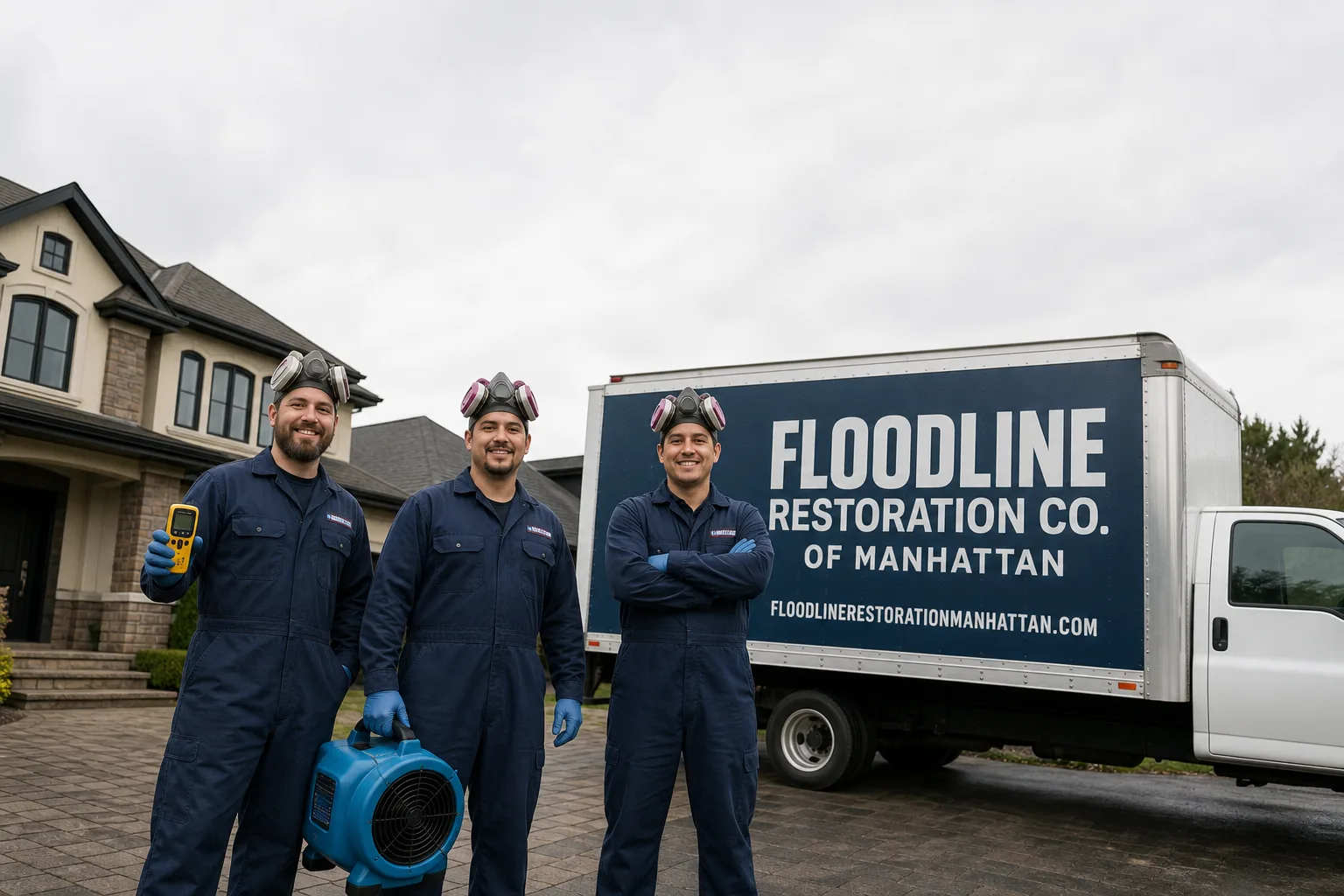
Free visual inspection and a written scope of work before any mitigation begins - photos, moisture readings, and drying logs go in your claim file
The scope we write is the scope we bill. Anything new gets shown to you, in writing, before we touch it.






 Before
 After
After Before
 After
After Before
 After
After24/7 Emergency Storm & Disaster Restoration in Westwood
Storm damage in Westwood moves fast. Water from the Arthur Kill, wind from a nor’easter, or a failing roof during a heavy squall can turn a dry basement into a flooded one before you finish your coffee. We answer the phone live, 24 hours a day, and our crews reach Westwood homes fast enough to stop the loss from spreading. Call (917) 924-4221 the moment you see water, wind damage, or a leak, and we’ll have a certified team at your door for a free visual inspection. The first hour decides whether you’re drying a floor or replacing it.
Understanding Storm & Disaster Restoration Severity in Westwood Properties
Westwood’s housing stock runs to 1950s through 1970s single-family colonials and cape cods, most with full or partial basements. That matters because those basements sit below grade in a tidal corridor, and the water that finds them during a storm is rarely clean. We classify water damage by category. Category 1 is clean supply water. Category 2 carries contaminants. Category 3, the kind that backs up through older cast-iron drain lines or pushes through a failed foundation wall during an Arthur Kill surge, is grossly contaminated and requires removal, not just drying. Mopping up Category 3 as if it were a spill is how mold takes hold within 48 hours. Westwood also has a share of original panel boxes and cellulose insulation. When Category 3 water reaches those materials, the correct scope includes pack-out and antimicrobial treatment, not a fan and a dehumidifier aimed at the floor. Moisture mapping with thermal imaging and hygrometers tells us what’s actually wet behind the drywall. Structural drying logs tell your insurer it was done to standard.
Why Westwood Property Owners Choose Floodline Restoration Co. of Manhattan
- 45-minute response commitment. When water is moving through your house, time is the enemy. Our dispatch is built for speed, and our crews know the quickest routes into Westwood’s residential streets.
- A real person answers, day or night. At 2 a.m., you get a live dispatcher, not a recording. That’s been the rule since Curt Bowman founded this company in 2010.
- IICRC-certified crews. Our technicians hold WRT and FSRT certifications, and we train beyond them to RIA and IFA standards. The person reading your moisture map is certified to read it correctly.
- Free visual inspection. We walk the damage with you before any work is scheduled. You see what we see. Then we write the scope.
- Direct insurance billing. We bill your carrier directly and talk to your adjuster ourselves. You don’t play messenger.
- One crew from extraction to rebuild. No handoff to a stranger. The same background-checked, uniformed technicians who extract the water are the ones who rebuild the wall.
Our Storm & Disaster Restoration Process
Inspection & Assessment
We arrive, walk the property, and identify every affected area. Thermal imaging finds water behind walls that looks dry. We classify the water category and map the moisture readings before we touch anything.
Extraction & Stabilization
Standing water comes out first, using truck-mounted extraction and submersible pumps. In Westwood basements with older drain lines, we also check for backflow and sewage contamination before deciding what can be saved.
Drying & Dehumidification
We set Dri-Eaz and Phoenix air movers and dehumidifiers in a calculated layout, not scattered around. Daily moisture readings get logged until the dry standard is met. That log goes to you and your carrier.
Cleaning & Sanitization
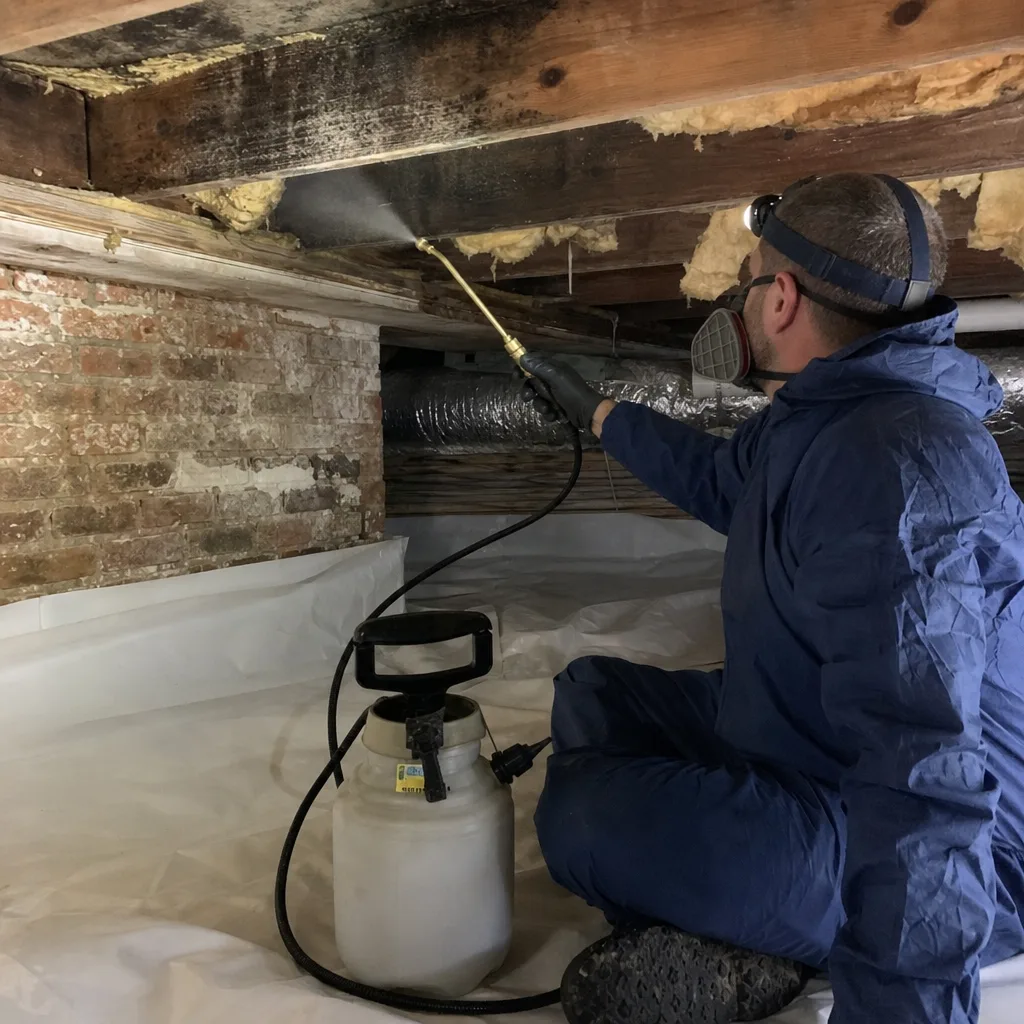
Contaminated surfaces get antimicrobial treatment. HEPA air scrubbers run to pull particulates out of the air. Anything that can’t be sanitized gets removed or replaced.
Storm-Specific Specialty Treatment
Wind damage to doors and tracks gets documented and repaired, not overlooked. Emergency board-up and roof tarping happen before interior work begins, so the opening doesn’t let the next storm in.
Repairs & Restoration
We rebuild what was removed. Drywall, flooring, trim, insulation, and any structural repairs are done by the same crew that started the job. Every phase carries the 90-Day Done Right Promise in writing.
Need Emergency Storm & Disaster Restoration in Westwood Now?
Crews minutes away, answering live 24 hours a day. The sooner we start, the less it costs.
Working With Your Insurance Company
Westwood sits in a FEMA flood corridor, which means your claim involves more paperwork than a typical water loss. We handle that so you don’t have to. From the first hour on site, we photograph every room, document every category of water, and log every drying reading. Our estimators write line-item scopes in the format your carrier expects, and we communicate directly with your adjuster. For Westwood homeowners with ICC coverage, that documentation discipline matters even more. A claim can be denied for lack of pre-loss condition evidence. We make sure that never happens on our watch.
What We Provide Your Insurer
- Thorough documentation of the loss
- Photos of all damage, room by room
- Moisture readings and drying logs
- A detailed, line-item scope of work
- Direct coordination with your carrier
Built for Westwood’s Loss Calendar
Westwood’s location at Staten Island’s southwestern edge means the storm season behaves differently here than it does a few miles inland. Nor’easters push surge from both the Arthur Kill and Raritan Bay, and when that water moves uphill into basement foundations, the older block walls take the hit. Winter brings freeze-thaw cycles that expand existing cracks in unwaterproofed foundation blocks, so a January cold snap can open the same path a March rainstorm then fills. Spring thaw and heavy rain back up the original cast-iron drain lines under these 1960s colonials, and sewage smell follows within hours. Summer thunderstorms hit fast, overwhelming old gutters and pushing water over window wells. Then hurricane season runs August into October, and Westwood homeowners who haven’t checked their storm doors or roof flashing find out the hard way. We plan our local response around that calendar, and we keep crews staged to reach Westwood streets quickly when the next surge line forms.
Storm & Disaster Restoration Across Westwood’s Neighborhoods
Westwood’s streets hold different loss patterns depending on where they sit relative to the water and the age of the block. Around Woodrow Road, the post-war colonials run deep and take surge water in their basements; we see foundation wall failures and soaked insulation there first. Over by Bloomingdale Road, the capes sit on smaller lots, and heavy rain sends groundwater under the slab rather than through walls, which changes which drying equipment we set. Homes near Poillon Avenue sit closer to the tidal influence, and we classify water there more conservatively, treating unknowns as contaminated until testing says otherwise. Down by Sharrotts Road, older panel boxes and original drain lines cluster, so a storm backup there often carries electrical and drain replacement scope a newer home wouldn’t need. Getting to those blocks fast matters, and our dispatchers know the route to each one.
Specialized Storm & Disaster Restoration Services We Offer in Westwood
Storm Damage Cleanup
Wind throws branches, debris, and sometimes roof material into Westwood yards and through windows. We clear the damage, tarp what’s exposed, and document every exterior impact so your carrier sees what the storm actually did. Then we start interior cleanup before secondary damage sets in.
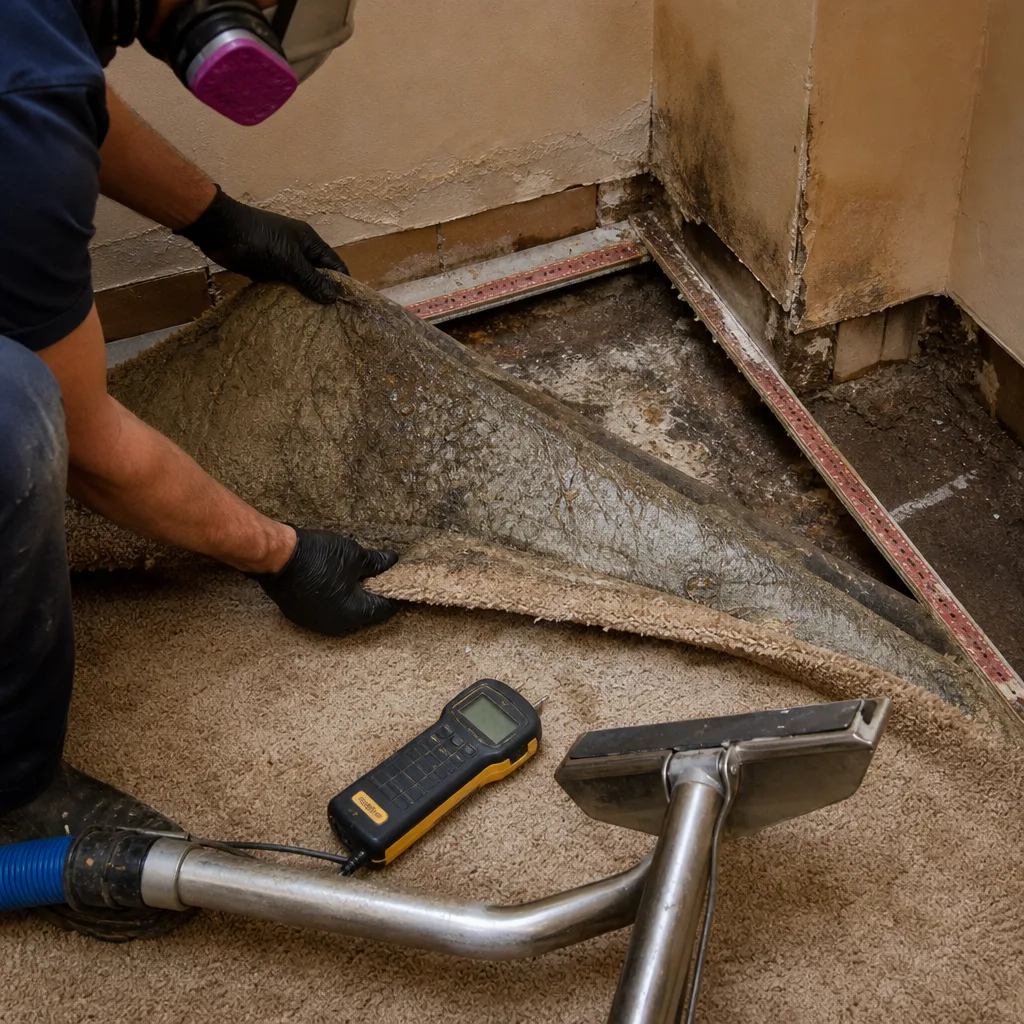
Flood Damage Restoration
Arthur Kill surge doesn’t behave like a burst pipe. We classify it correctly from the first reading, remove what’s contaminated, and dry what can be saved. In Westwood homes with ICC coverage, we document the flood line and all pre-loss condition evidence your claim requires.
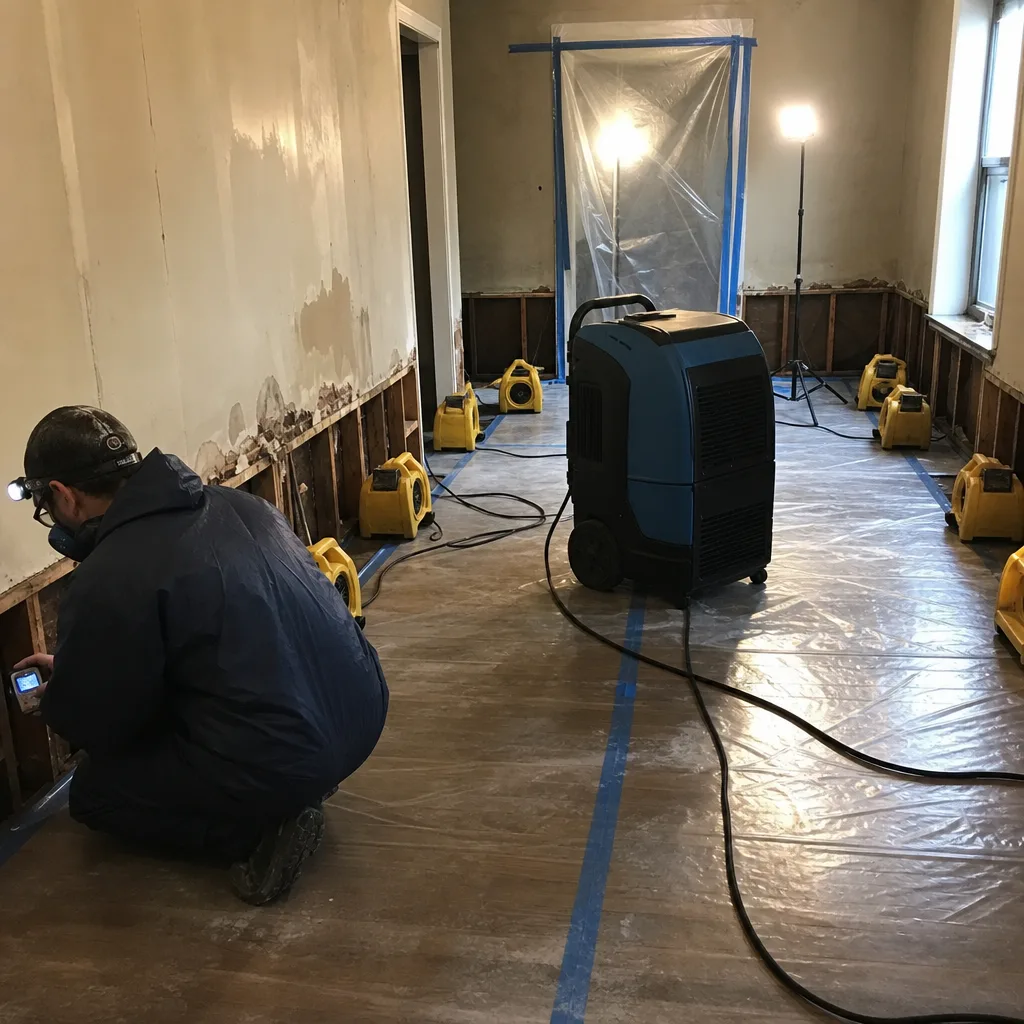
Emergency Board-Up
A broken window or a wind-damaged door leaves your home open to the next storm and to anyone walking the block. We board openings on arrival, using materials that keep weather out and keep the structure safe until permanent repairs are scheduled.
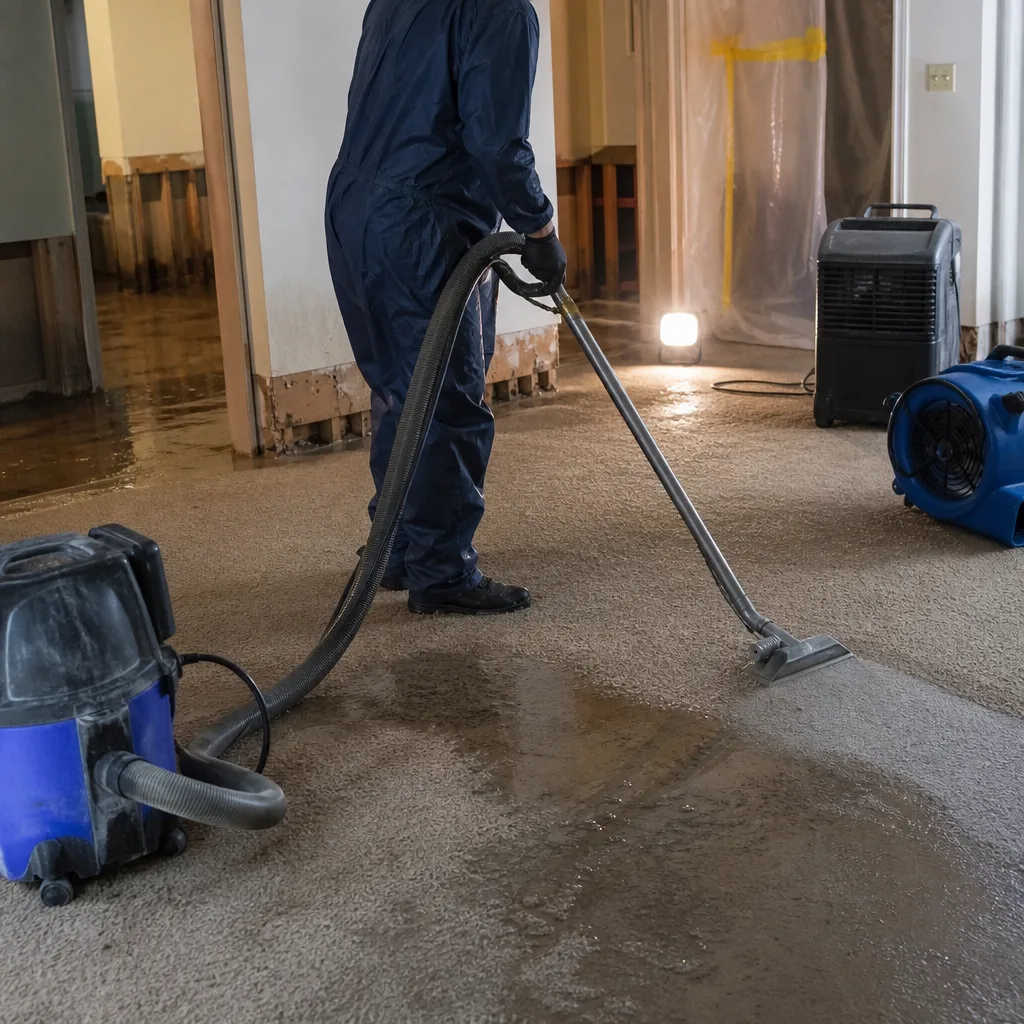
Roof Tarping
Missing shingles and lifted flashing are common after nor’easters on Westwood’s colonials. We tarp the affected area same-visit, seal the perimeter, and photograph the work for your insurer. A tarp deployed in the first hour prevents thousands in interior water damage.
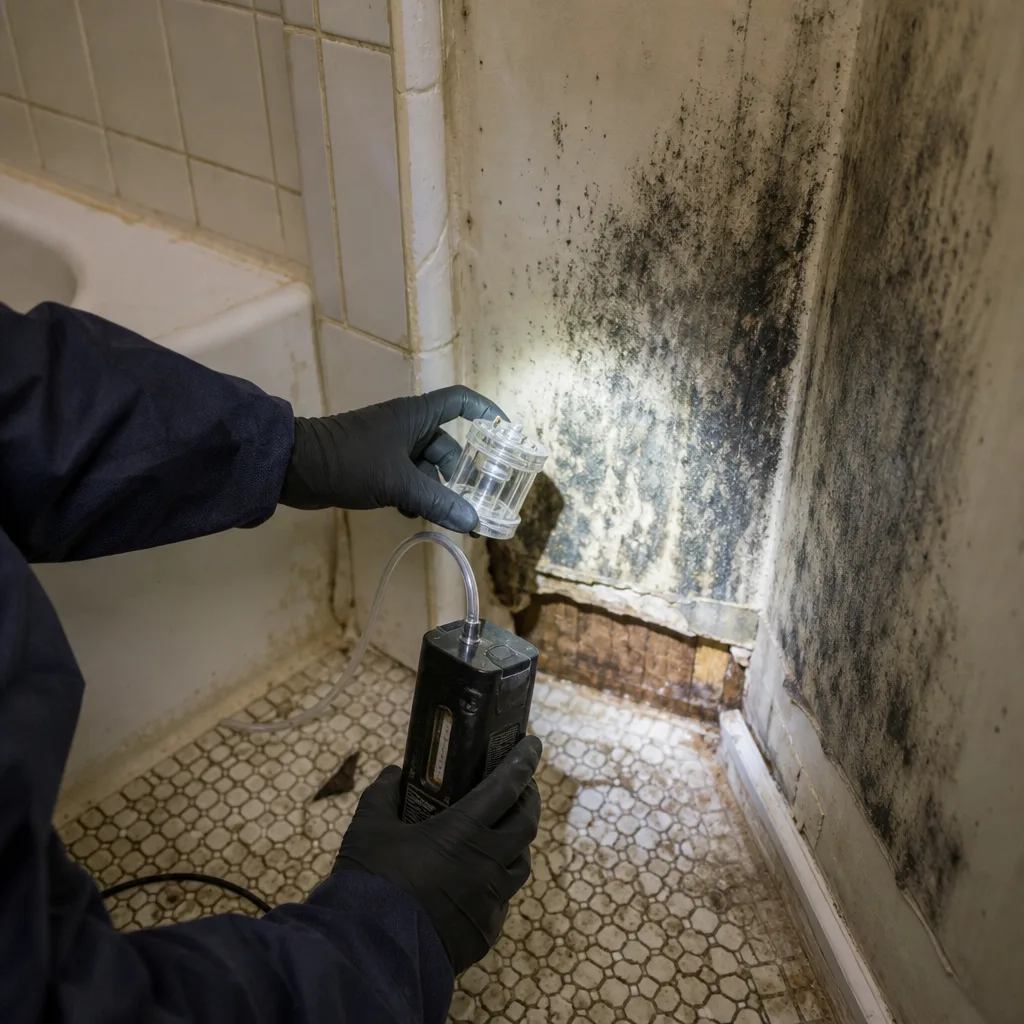
Debris Removal
Fallen limbs, soaked drywall, ruined insulation, and storm-damaged flooring all have to leave the property before drying and rebuilding can start. Our crews remove and dispose of it properly, with the debris pile documented for your claim.
What happens when you call
- 1
A real person answersNo phone trees - you reach a local pro.
- 2
You get an upfront price rangeHonest numbers before anyone is dispatched.
- 3
A background-checked tech heads outLicensed & insured, dispatched right away.
- 4
You approve before work beginsNothing starts until you say go.
Storm & Disaster Restoration Costs in Westwood, NJ
Westwood restoration pricing depends on what actually got wet and for how long. Basement water extraction and drying on a 1960s colonial typically runs $3,200 to $6,800, depending on square footage and water category. Category 3 contamination disposal and antimicrobial treatment adds $1,800 to $4,500. Emergency board-up runs $350 to $900 per opening. Roof tarping runs $650 to $1,500 depending on roof pitch and access. Full basement rebuild after a surge, including drywall, insulation, and flooring, often lands between $18,000 and $45,000. If your claim involves ICC elevation or floodproofing documentation, that scope gets documented separately and billed to the carrier with the rest. Out-of-pocket homeowners still get the same line-item scope before work starts. Call (917) 924-4221 and we’ll do the inspection free, then give you the number in writing.
We Also Serve Cities Near Westwood
Our crews handle storm and disaster work across the surrounding area, including Harrington Park, Hillsdale, Park Ridge, and Norwood. If you’re in one of those towns, call the same number: (917) 924-4221.
Westwood Storm & Disaster Restoration Questions, Answered
Which parts of Westwood require wind-rated storm doors and impact-resistant reinforcement before hurricane season?
Westwood homes exposed to wind off the Arthur Kill, especially around Poillon Avenue and the lower blocks near Sharrotts Road, take direct gusts that weaker doors and tracks can’t survive. Post-storm, we inspect door tracks, hinges, and panel fastening for deformation. If a door is wind-damaged, the right repair includes reinforced framing and impact-rated hardware, not just a new slab in the old track. We check this during every storm inspection.
How do Westwood’s ICC coverage requirements change the way my flood damage scope is documented?
ICC coverage pays for elevation, floodproofing, and code updates after a qualifying flood loss, but only when the damage is documented to the carrier’s standard. We photograph the flood line on every wall, log the water category, and produce a pre-loss condition record room by room. Without that, your ICC claim gets delayed or denied. Our drying logs and moisture maps are built to satisfy the threshold, and we coordinate the supplement directly with your adjuster.
What does a failing storm door or track look like before the next Arthur Kill surge hits Westwood?
You’ll see the door bind when it opens, or light showing around the jamb, or track screws pulling loose from the frame. Sometimes the panel bows slightly in the middle. A door that doesn’t close square won’t hold against the next surge, and wind pressure will finish what the last storm started. If you’re seeing any of these signs before the next storm, call us. Inspecting and reinforcing now costs less than replacing a door and the interior after the fact.
How do you handle older basement drain lines in Westwood when stormwater backs up during heavy rain?
Original cast-iron and galvanized lines under 1950s and 1960s colonials clog and back up when storm volume exceeds what they were sized for. We scope the line first to see what’s blocking it, then extract the backed-up water and classify it. If it’s contaminated, we treat it as Category 3, remove saturated materials, and sanitize. If the line itself is cracked or collapsed, that’s a repair we scope and complete before rebuilding begins, so the next storm doesn’t send the same water back in.
Why do some Westwood restoration crews dry a basement when it should have been removed, and how do you avoid it?
Some crews treat every basement flood as Category 1 because drying is faster and cheaper for them. In Westwood, surge water from the Arthur Kill and Raritan Bay is contaminated. If it’s Category 3 and you dry instead of remove, mold takes hold within 48 hours and you’re doing the job twice. We classify water on site, using testing where there’s doubt, and we write the category into your scope so there’s no confusion. Then we remove what can’t be saved and dry the rest with logs.
How quickly can you actually get to a Westwood home?
We commit to a 45-minute response for emergency calls in Westwood. Our dispatch coordinates crews from staging points that keep us close to the neighborhood’s residential streets, so we’re not driving from across the bridge when your basement is filling. Call (917) 924-4221 and a live person will give you a straight answer on arrival time.
Can we stay in our Westwood home during storm damage restoration?
If the damage is isolated to a basement or one section of the house, you can often stay while we work, with containment set to keep dust and contaminants separate. If Category 3 water reached living areas or the electrical panel is affected, we’ll tell you plainly when staying isn’t safe. That call gets made on the first inspection, and we tell you before any work starts.
What should I do in the first 30 minutes after storm water enters my Westwood basement?
Call (917) 924-4221 first, then shut off power to the basement if you can do so safely from the panel. Don’t enter standing water if the panel is below grade or you see submerged outlets. If the water came from outside or from a drain backup, treat it as contaminated until it’s tested. Stay out of the water, leave the panel alone if it’s wet, and let our crew handle extraction and classification when we arrive.
Serving Westwood, NJ - Our Local Coverage Area
We’re based in the Westwood area and know this community well. Use the map below to see our service coverage - if you’re nearby, we can almost certainly help.
Get Storm & Disaster Restoration in Westwood Started Now
If you’re staring at a wet basement on Woodrow Road or a wind-damaged door on a street off Bloomingdale, call (917) 924-4221. We answer live. We get a crew to Westwood fast. And we stand behind the work with the 90-Day Done Right Promise, in writing, no arguing. That’s the deal, and it’s been the deal since Curt Bowman started this company. Call now for a free estimate.
Written by Curt Bowman, Owner at Floodline Restoration Co. of Manhattan, providing storm and disaster restoration to Westwood property owners since the company’s founding.