
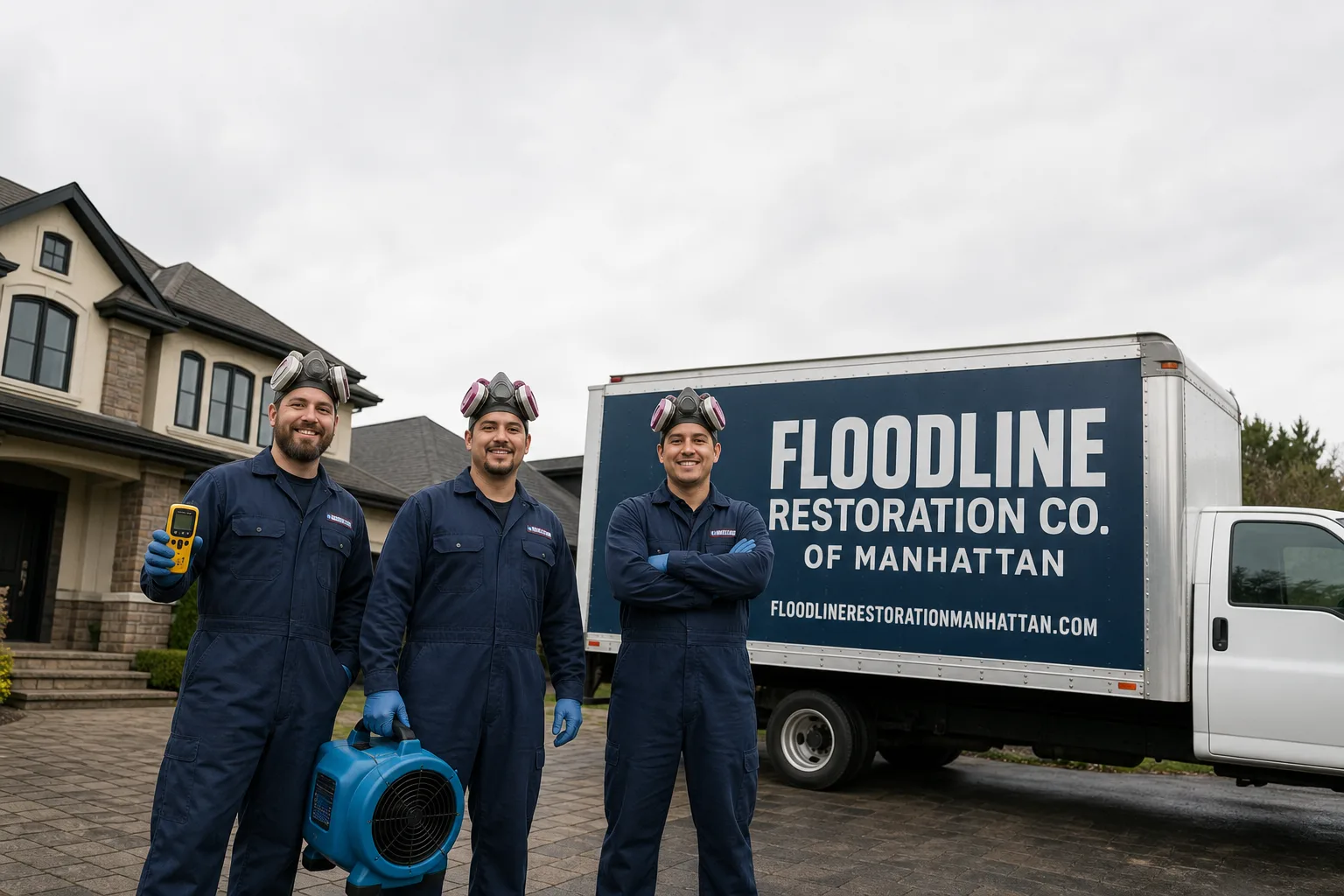
Free visual inspection and a written scope of work before any mitigation begins - photos, moisture readings, and drying logs go in your claim file
The scope we write is the scope we bill. Anything new gets shown to you, in writing, before we touch it.






 Before
 After
After Before
 After
After Before
 After
After24/7 Emergency Water Damage Restoration in Chinatown
Water damage restoration in Chinatown typically costs $1,800-$6,500 depending on the water category and how far it has wicked into brick masonry, and a certified crew can usually be on-site within 45 minutes. When water is moving through a 100-year-old tenement, every hour it sits means deeper saturation into lime mortar and faster mold colonization. If you’re standing in water right now, call (917) 924-4221 and a live dispatcher will pick up. Not a recording. Not a callback queue. A person who can route a crew to Mott Street, Canal Street, or East Broadway while you’re still on the line.
Floodline Restoration Co. of Manhattan runs 24/7 emergency response across Chinatown. Our Water Damage Restoration crews arrive with professional-grade extraction and drying equipment already on the truck, and the first visual inspection costs you nothing. The first hour determines whether you’re looking at a $2,000 dry-out or a $15,000 rebuild. We’d rather get there early and keep the scope small.
Understanding Water Damage Restoration Severity in Chinatown Properties
Not all water is the same, and in Chinatown the building itself changes the math. The neighborhood’s walk-ups were built between roughly 1880 and 1920, unreinforced brick with lime mortar and original cast-iron or galvanized supply lines. When a pipe lets go on the third floor of a six-story tenement on Mott Street, water doesn’t pool politely on the floor. It channels through chaseways, saturates the mortar bed, and wicks laterally into party walls shared with the building next door.
We classify the water first. Category 1 is clean water from a supply line. Category 2 has contaminants from washing machines or dishwashers. Category 3 is grossly contaminated, carrying sewage, grease-trap overflow, or decades of accumulated organic material from a ground-floor kitchen. In Chinatown specifically, a Category 1 leak that travels through a shared wall with a seafood market can pick up enough biological load to require Category 3 treatment by the time we open the ceiling. Moisture mapping with thermal imaging and penetrating meters tells us exactly where the water went, and that map drives the drying plan, the containment setup, and the scope for the rebuild.
Why Chinatown Property Owners Choose Floodline Restoration Co. of Manhattan
- 45-minute response commitment: When you call from a Chinatown walk-up with water running down a stairwell, we commit to having a crew dispatched and rolling within 45 minutes, every hour of the day.
- Live answer, 24/7: A real dispatcher picks up at 2 a.m. on a Sunday. You’ll never punch through an automated tree while water keeps spreading through your floor joists.
- IICRC-certified crews: Our technicians hold WRT and ASD certifications and train continuously on structural drying in pre-war masonry buildings, because drying a brick party wall is not the same as drying drywall in a suburban split-level.
- Free visual inspection: We’ll walk the loss with you, show you what we’re seeing, and give you a straight read before any invoice exists.
- Direct insurance billing: We document everything from the first hour, write the estimate in industry-standard line items, and talk to your adjuster directly. You never carry messages between us and the carrier.
- One team, start to finish: The same Floodline crew that extracts the water runs the daily moisture readings and rebuilds the damaged section. No mid-job handoff to a sub you never met.
Our Water Damage Restoration Process
Inspection & Assessment
We map moisture with thermal imaging and penetrating meters, trace the source, and classify the water category. In Chinatown, that often means checking the floor below and the commercial tenant’s plumbing before we even open a wall.
Extraction & Stabilization
Truck-mounted and portable extractors pull standing water fast. We shut off the source, remove saturated materials that can’t be saved, and set containment to stop cross-contamination through shared stairwells and hallways.
Drying & Dehumidification
Dri-Eaz dehumidifiers, XPOWER air movers, and Injectidry floor mat systems run continuously. We take daily moisture readings and log them until the dry standard is met, usually 3 to 9 days in old brick construction.
Cleaning & Sanitization
Affected surfaces get antimicrobial treatment appropriate to the water category. HEPA air scrubbers run during demolition and cleaning to capture mold spores and fine particulate before they settle elsewhere in your unit.
Structural Drying Verification
We verify that brick, mortar, and framing have returned to dry standard before any rebuild begins. The moisture log goes to you and your carrier. No one reopens a wall until the numbers say it’s dry.
Repairs & Restoration
The same crew handles the rebuild: drywall, plaster repair, flooring, trim, paint. We stand behind the full cycle of work with the 90-Day Done Right Promise, in writing.
Need Emergency Water Damage Restoration in Chinatown Now?
Crews minutes away, answering live 24 hours a day. The sooner we start, the less it costs.
Working With Your Insurance Company
Water damage claims in Chinatown’s older buildings get complicated fast. The source might be in your unit or two floors below in a commercial space. Coverage depends on where the water came from, how long it sat, and what the policy says about gradual seepage versus sudden discharge. We document from the first hour so the carrier sees exactly what happened, not a summary written weeks later from memory.
What We Provide Your Insurer
- Thorough documentation of the loss
- Photos of all damage, room by room
- Moisture readings and drying logs
- A detailed, line-item scope of work
- Direct coordination with your carrier
We bill the carrier directly when coverage applies. You stay out of the middle. Curt Bowman built Floodline Restoration around this principle: the homeowner should never play messenger between a restoration crew and an insurance adjuster. If a question comes up about your claim, we’re the ones who answer it.
Built for Chinatown’s Loss Calendar
Chinatown’s water damage season runs all year, but the triggers shift. January and February bring deep freezes that snap corroded supply risers in unheated stairwells and basement service rooms. A burst pipe on the top floor of a walk-up on Mulberry Street will find every chaseway on the way down, and by the time anyone notices, the water has already reached three floors. Spring thaw pushes groundwater up through old cellar slabs, especially in the low-lying blocks around Canal Street where the street grid still marks the route of a former drainage canal. Summer thunderstorms overwhelm roof drains and skylights on flat-roofed tenements, and nor’easters in the fall drive wind-driven rain through aging parapets and cornices. Then there are the human-made floods: seafood tank overflows, grease-trap failures, and restaurant kitchen mishaps that send hundreds of gallons into the shared masonry system. We plan our dispatch around this calendar, and we keep equipment staged for the failures we know are coming.
Water Damage Restoration Across Chinatown’s Neighborhoods
Chinatown is not one neighborhood. It’s a patchwork of distinct blocks, each with its own building rhythm and failure pattern. The Mott Street corridor, lined with restaurants and food stalls from Canal to Worth, gives us some of our most complex jobs, because residential units above commercial kitchens live with chronic humidity long before any acute leak happens. The blocks around East Broadway and Henry Street hold many of the neighborhood’s larger tenement buildings, often with shared drain lines serving multiple units, which means a blockage on the fourth floor backs up into the third before anyone calls us. Along Division Street and the Bowery, older walk-ups sit tight against the sidewalk with little rear access, so we stage equipment from the street and run hoses through front windows. Up near Bayard and Pell Streets, the buildings are older still, many with original cast-iron risers that have been patched for decades. Each corridor changes how we route crews, where we park, and how fast we can get extraction running. Knowing these blocks well is part of why our response time holds.
Specialized Water Damage Restoration Services We Offer in Chinatown
Emergency Water Extraction
Standing water in a Chinatown walk-up does not wait. We arrive with truck-mounted and portable extractors sized for tight stairwells and narrow hallways. In many tenements, there’s no elevator, so the equipment goes up the same stairs the water came down. Same visit, extraction is running.
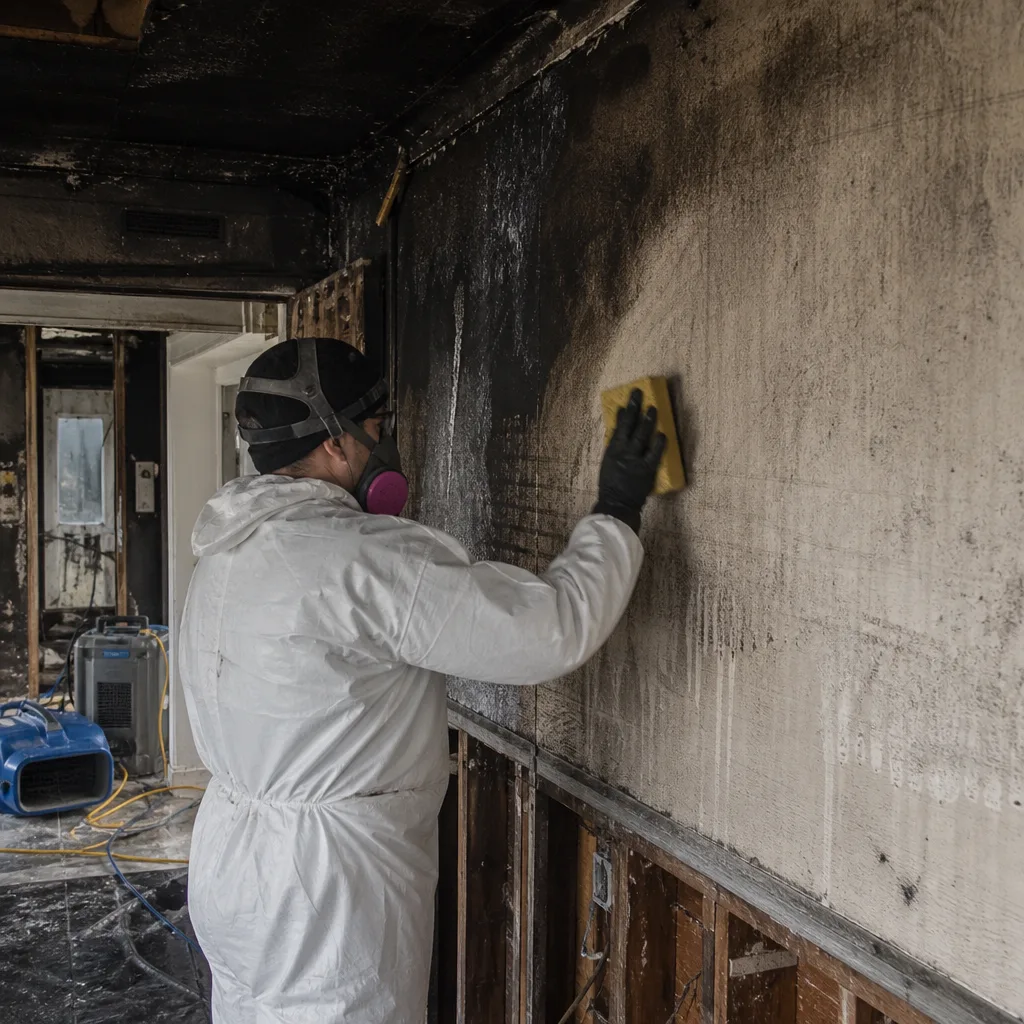
Structural Drying & Dehumidification
Brick and lime mortar hold water much longer than gypsum and pine. Our drying plans for Chinatown buildings assume slow release and deep wicking. We use Dri-Eaz dehumidifiers, XPOWER air movers, and Phoenix dryers configured for the room layout and wall assembly, with daily moisture readings logged until the brick itself hits the dry standard.
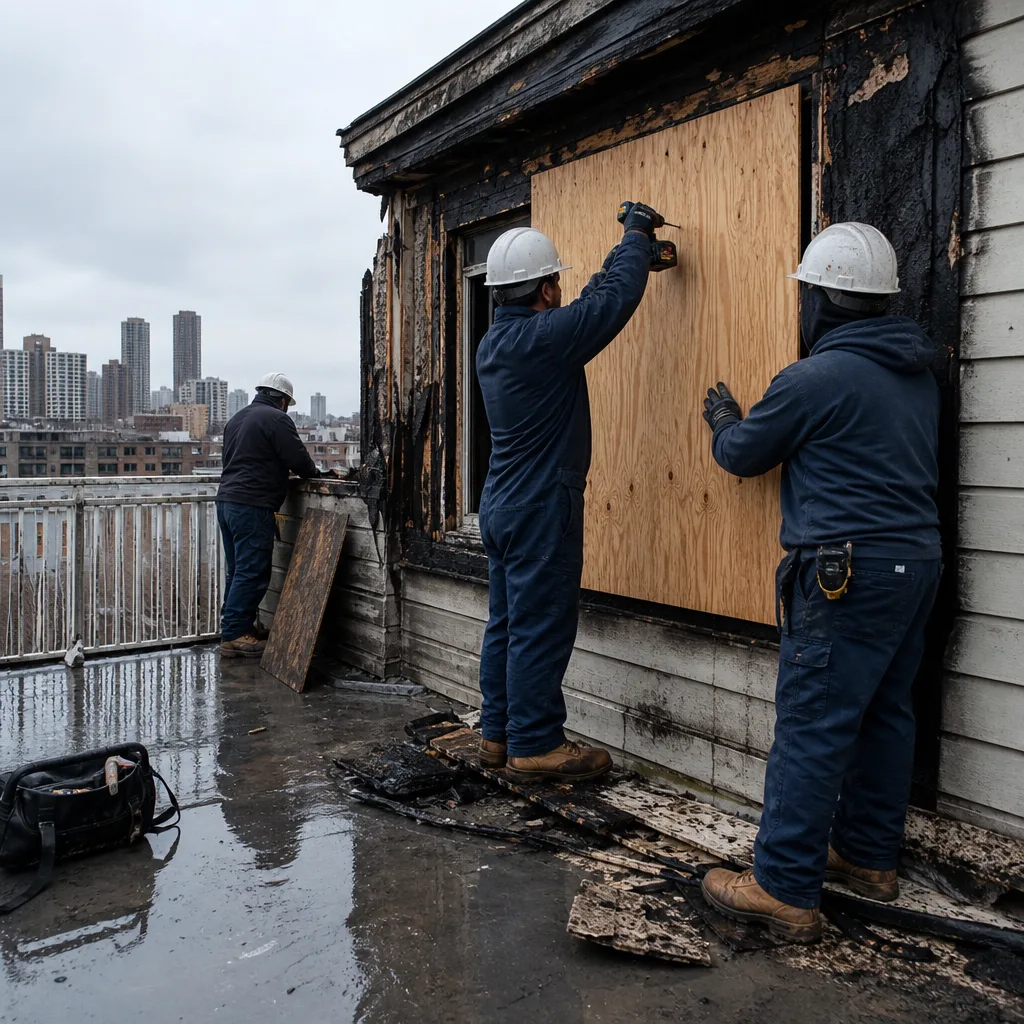
Flood Cleanup
Whether the water came from a nor’easter pushing storm surge toward the East River blocks or a failed sump in a basement on Pell Street, flood cleanup in this neighborhood means more than mopping. We remove contaminated building materials, sanitize what can be saved, and dry the structure properly. Then we rebuild it.
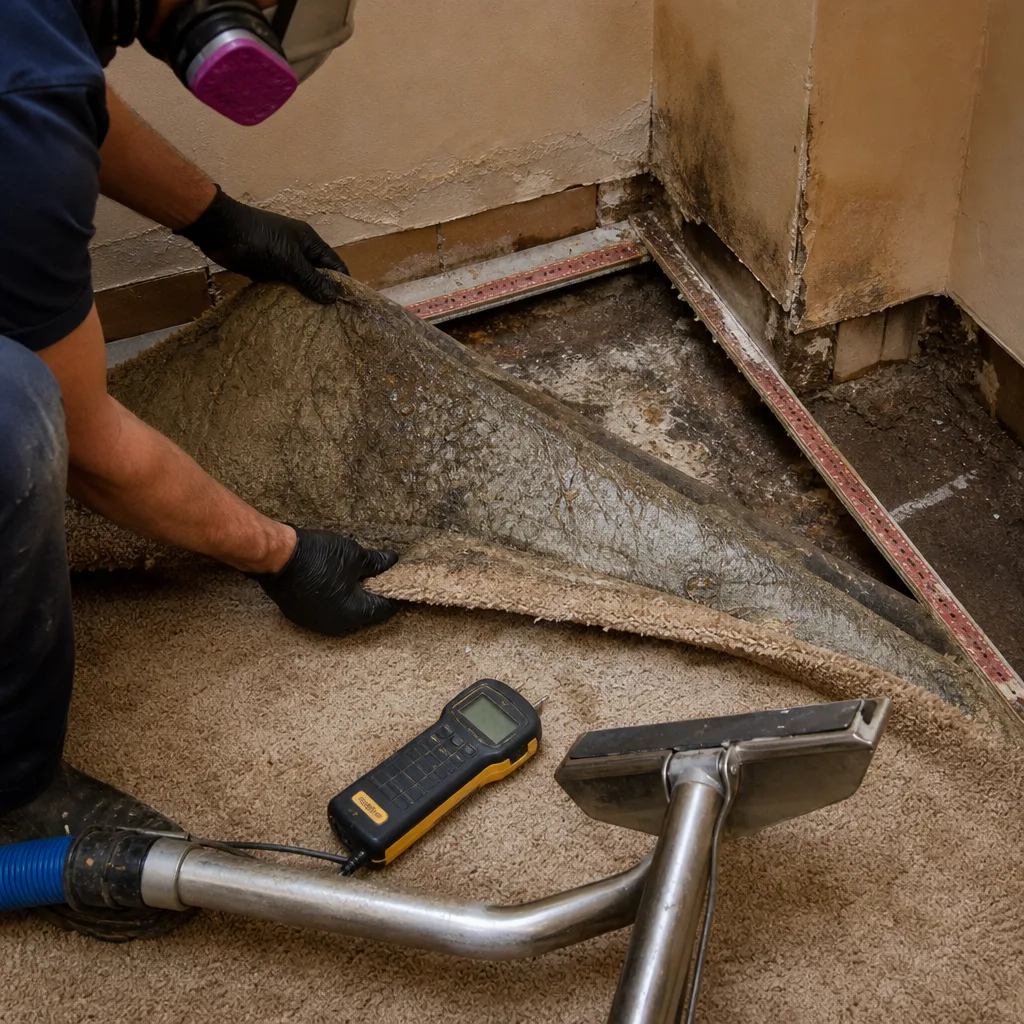
Burst Pipe Restoration
When a supply line lets go in the middle of the night in a pre-war building, the water runs until the shutoff is found. In subdivided tenements, finding that shutoff can mean accessing a locked basement or a commercial unit that closed hours ago. We handle all of that, and then we restore what the pipe destroyed.
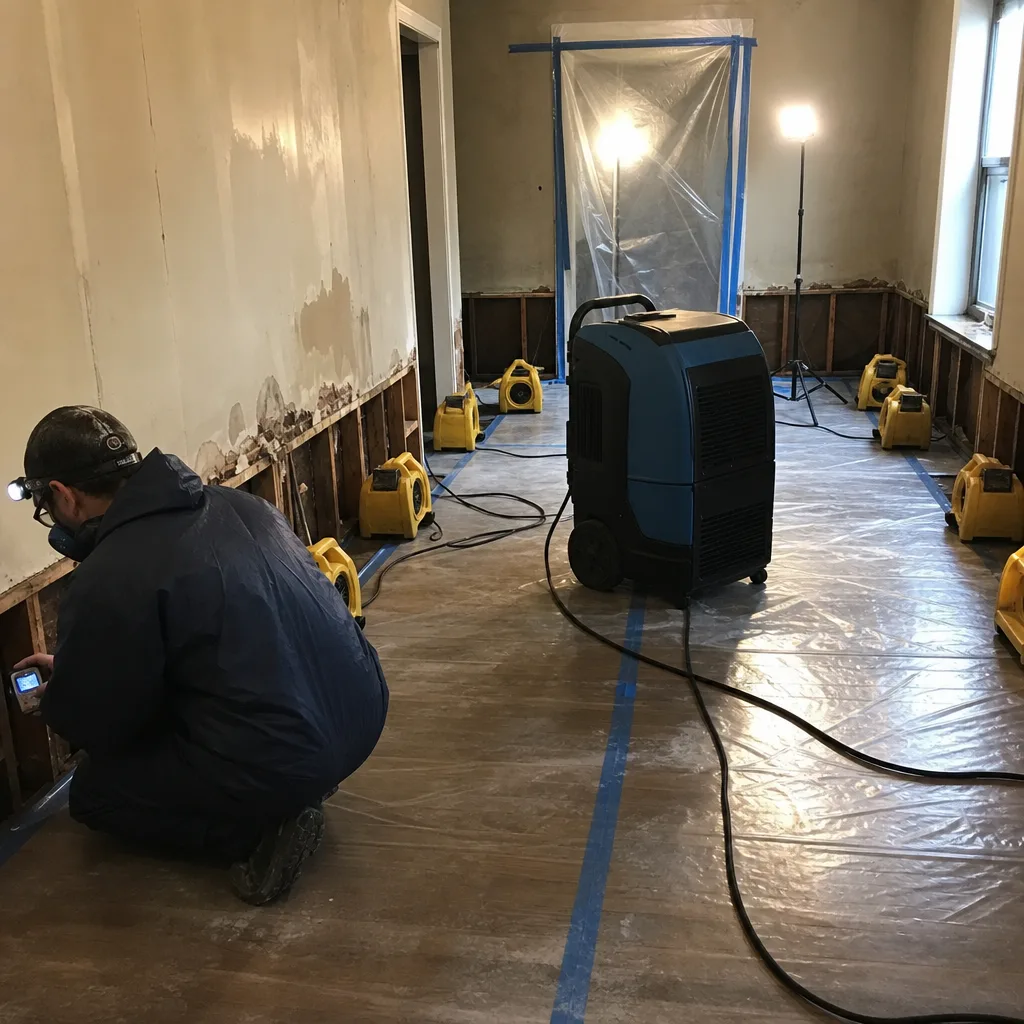
Basement Water Removal
Chinatown sits on low ground, partly over filled land near the old Collect Pond drainage system. Basements here were damp long before the last century ended. When a basement takes on water, we pump it out, dry the slab and walls, and tell you honestly whether the water came from inside the building or from the groundwater table outside it.
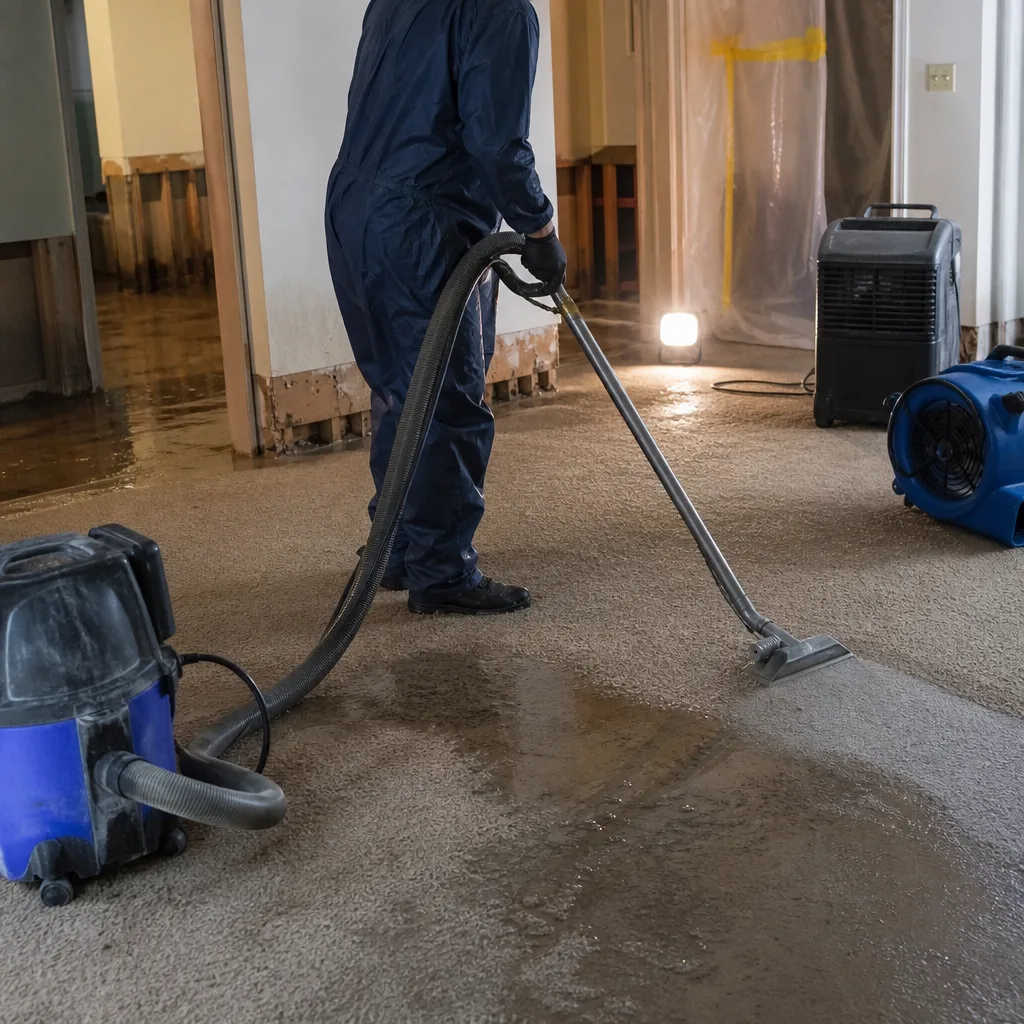
What happens when you call
- 1
A real person answersNo phone trees - you reach a local pro.
- 2
You get an upfront price rangeHonest numbers before anyone is dispatched.
- 3
A background-checked tech heads outLicensed & insured, dispatched right away.
- 4
You approve before work beginsNothing starts until you say go.
Water Damage Restoration Costs in Chinatown, NY
For Water Damage Restoration in Chinatown, here’s what property owners typically pay in this market:
- Category 1 clean-water extraction and dry-out: $1,800-$3,200 for a single room, $3,500-$5,500 for a full apartment
- Category 2 or 3 contaminated water remediation: $4,000-$8,500 depending on affected area and containment requirements
- Burst pipe restoration with rebuild: $6,000-$18,000 when framing, drywall, and flooring replacement are included
- Basement water removal and drying: $2,500-$6,000 for typical Chinatown basements with masonry walls
- Party wall drying after a ground-floor commercial overflow: $3,000-$7,000, higher when access through the commercial tenant adds coordination time
What moves the price? Age of the building, how many units are affected, whether the water traveled through a shared wall with a commercial space, and how fast we’re called. Insurance covers most sudden-discharge events. Out-of-pocket scenarios usually involve long-standing seepage or pre-existing conditions. The free visual inspection gives you a firm scope in writing before any work begins, so you’re never guessing at the number.
We Also Serve Cities Near Chinatown
Floodline Restoration Co. of Manhattan serves the full lower Manhattan and South Bronx area. Our crews regularly work in Fairview, Harrison, East Bronx, and Hunts Point, responding to water damage calls with the same 24/7 live dispatch and 45-minute response commitment.
Chinatown Water Damage Restoration Questions, Answered
Why does water damage in Chinatown often smell like fish even when the leak is from a clean pipe?
Because the water traveled through a party wall or chaseway shared with a ground-floor seafood market or restaurant kitchen, picking up organic material along the way. The biological load transforms what started as Category 1 clean water into Category 2 or 3 contaminated water by the time it reaches your apartment. That’s why we classify water at the damage site and treat it accordingly, not based on where it started.
Can you dry out a Chinatown brick party wall without tearing it open?
Often yes. We use penetrating moisture meters to map how deep the water went, then run Injectidry systems and high-capacity dehumidifiers to pull moisture through the masonry. But if the wall cavity is saturated and mold has established, we’ll open it, because sealed-in wet mortar will keep wicking for months and the odor will return. We’ll show you the readings and explain the decision before we cut.
What happens if the leak starts in a ground-floor market but damages my apartment above?
We scope the full path, not just your unit. That means coordinating with the commercial tenant, usually operating in Cantonese or Mandarin, to shut down the source and gain access to their space for monitoring. Our team handles that communication, sets containment at the stairs and landings, and documents everything for both your carrier and the commercial tenant’s carrier. You don’t negotiate access alone.
How long does a typical Chinatown water damage job take compared to newer buildings?
Plan for two to four times longer drying in old brick and lime mortar than in a modern drywall building. A single-room extraction and dry-out in a Chinatown tenement typically runs 5 to 9 days. Newer construction with gypsum board over stud framing often dries in 3 to 4 days. The brick simply holds more water and releases it more slowly, and rushing the dry-out means hidden moisture returns later as mold.
Do I need to worry about mold from a small roof leak in a Chinatown walk-up?
Yes. In a pre-war building with minimal vapor barriers, a small roof leak that drips for weeks can saturate plaster, lath, and the top course of brick, creating ideal conditions for mold inside walls you can’t see. If you notice staining on a top-floor ceiling or a persistent musty smell, call us before the leak becomes a bigger structural problem. Early intervention is far cheaper than remediation after mold spreads.
How quickly can someone actually get to my building?
In Chinatown, we commit to a 45-minute response from call to dispatch. Our crews know the blocks, the stairwells, the parking restrictions, and the commercial tenant patterns. That local knowledge cuts real time. Call (917) 924-4221 and a live dispatcher starts routing a crew immediately.
Will my insurance cover water damage from a neighbor’s commercial space?
Usually, though the path of recovery may go through the commercial tenant’s policy or the building’s master policy. We handle direct coordination with the carriers involved, produce documentation that shows exactly where the water originated and how it traveled, and bill directly where coverage exists. You don’t have to sort out liability before we start the work.
What should I do in the first 30 minutes after I notice water?
Shut off the water source if you can reach it safely. Move small valuables and electronics out of the water’s path. Do not use a household vacuum to remove water. Take photos of the standing water and any visible damage. Then call (917) 924-4221. The sooner we arrive, the less the water spreads through the masonry, and the smaller the final scope.
Serving Chinatown, NY - Our Local Coverage Area
We’re based in the Chinatown area and know this community well. Use the map below to see our service coverage - if you’re nearby, we can almost certainly help.
Call Floodline Restoration Co. of Manhattan
Water damage in Chinatown does not wait for business hours, and neither do we. Crews are staged locally, dispatch is live around the clock, and the first inspection is free. We handle sewer overflows, broken supply risers, ceiling and roof leaks, and the kind of multi-floor failures that older tenements deliver. And we stand behind the work with the 90-Day Done Right Promise, in writing. If it’s not done right, we make it right.
Call (917) 924-4221 for a free estimate. A real person answers.
Written by Curt Bowman, Owner at Floodline Restoration Co., serving New York City since 2010.