
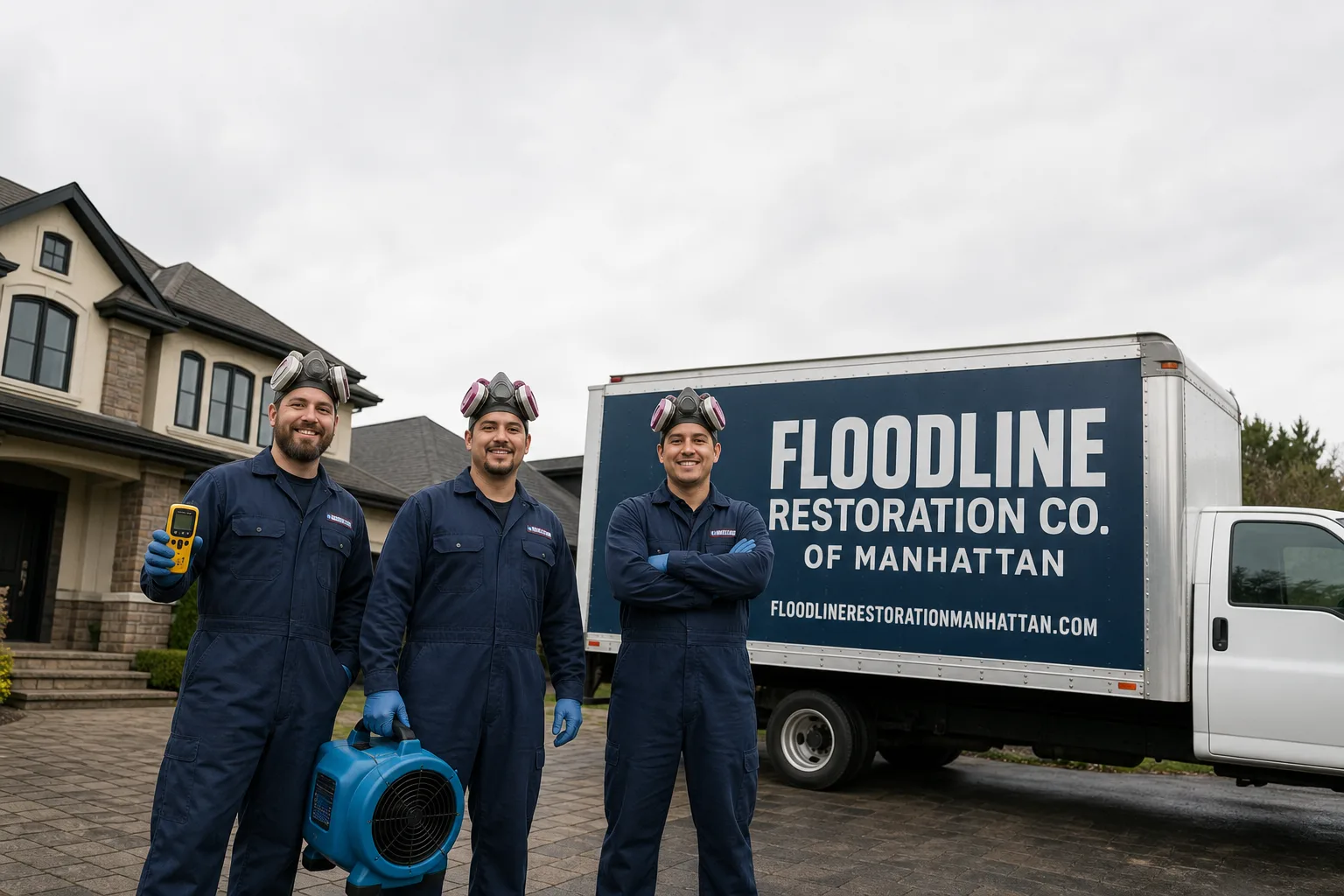
Free visual inspection and a written scope of work before any mitigation begins - photos, moisture readings, and drying logs go in your claim file
The scope we write is the scope we bill. Anything new gets shown to you, in writing, before we touch it.
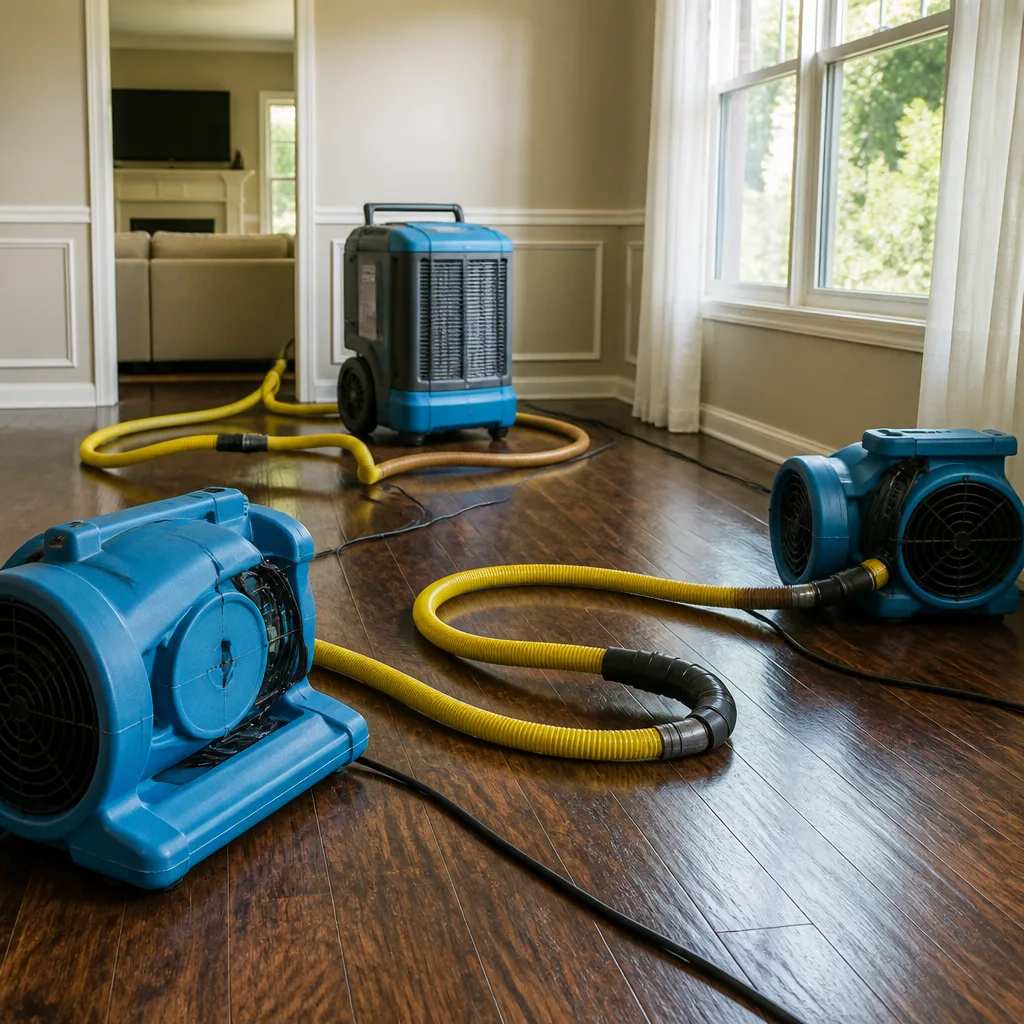

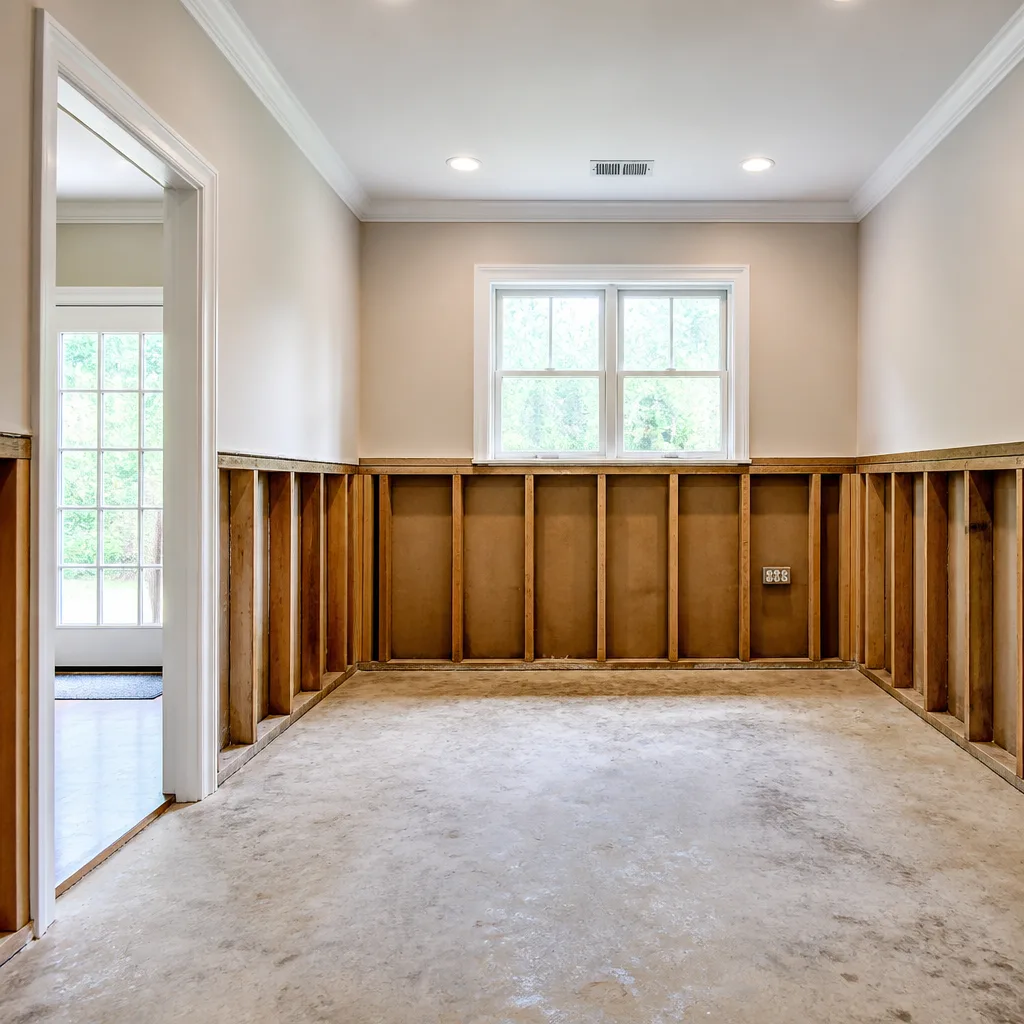

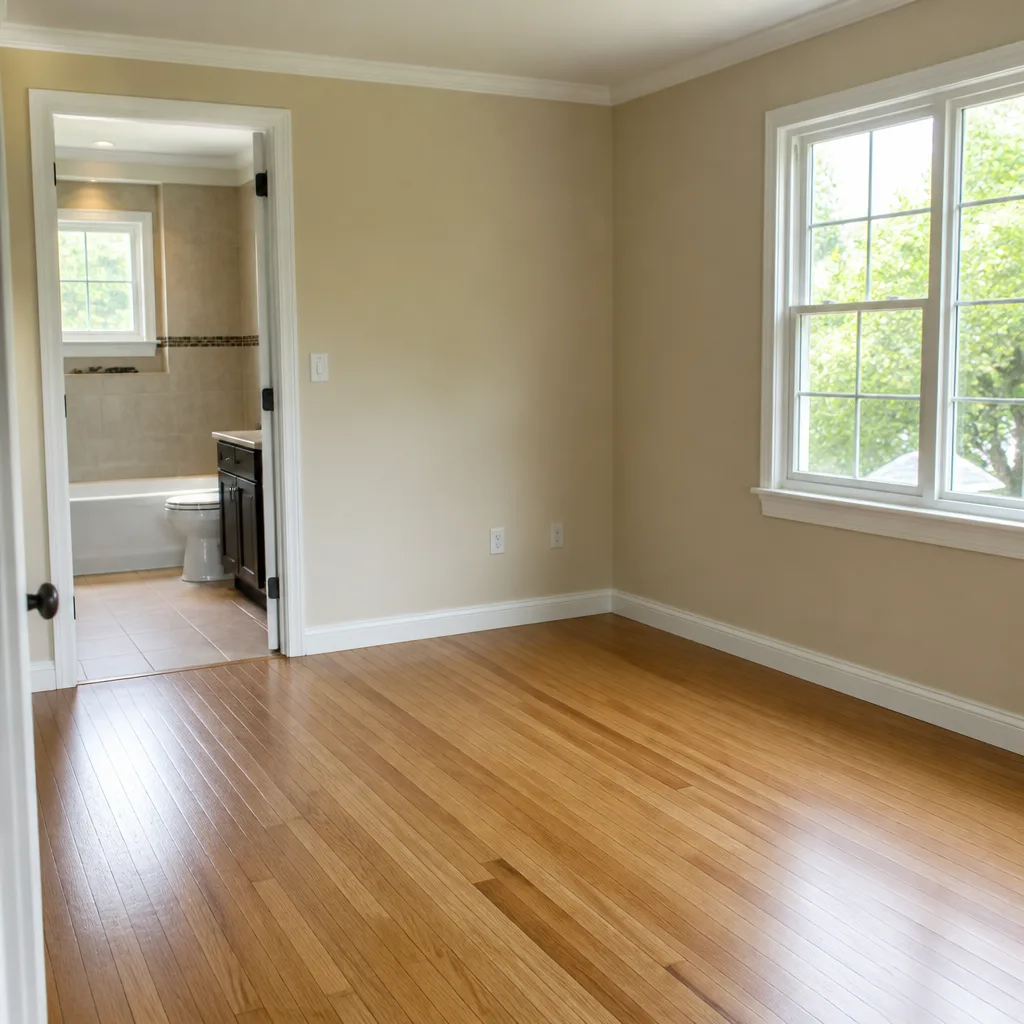

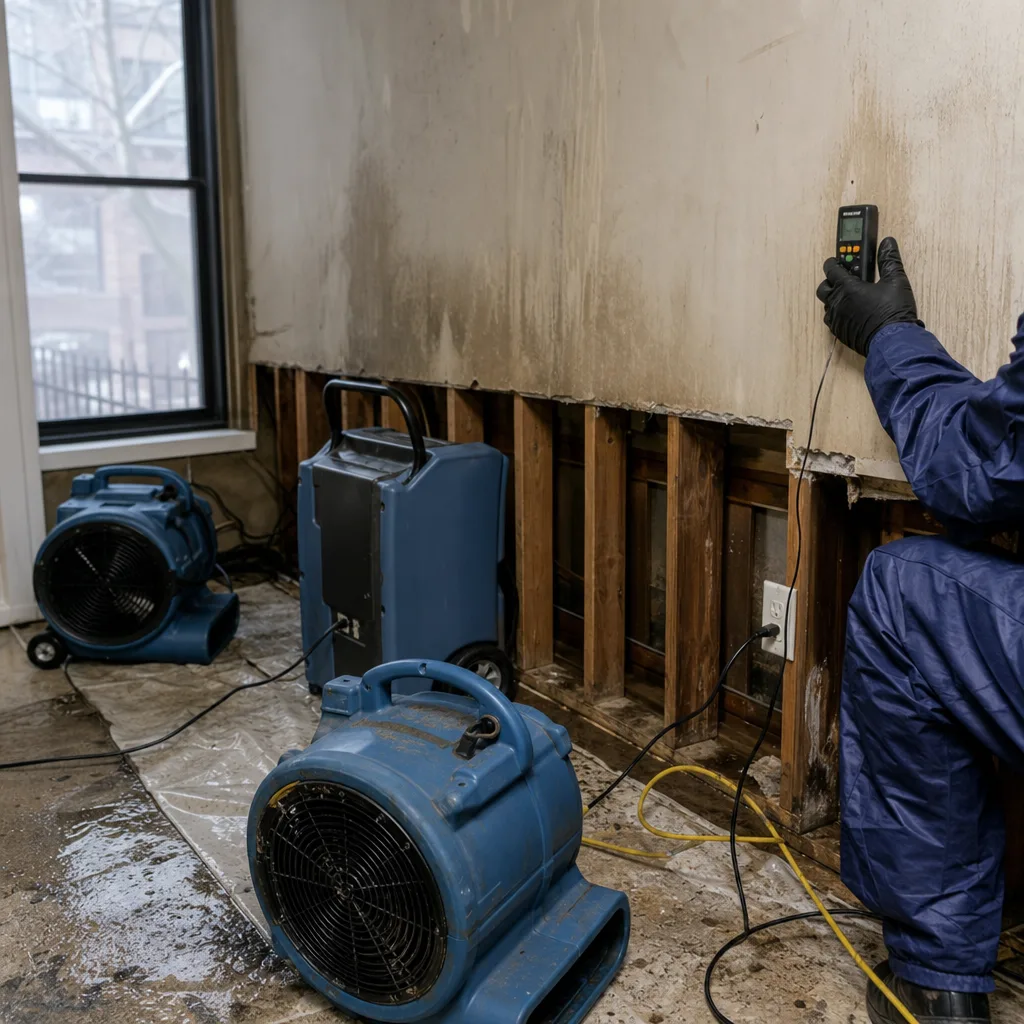 Before
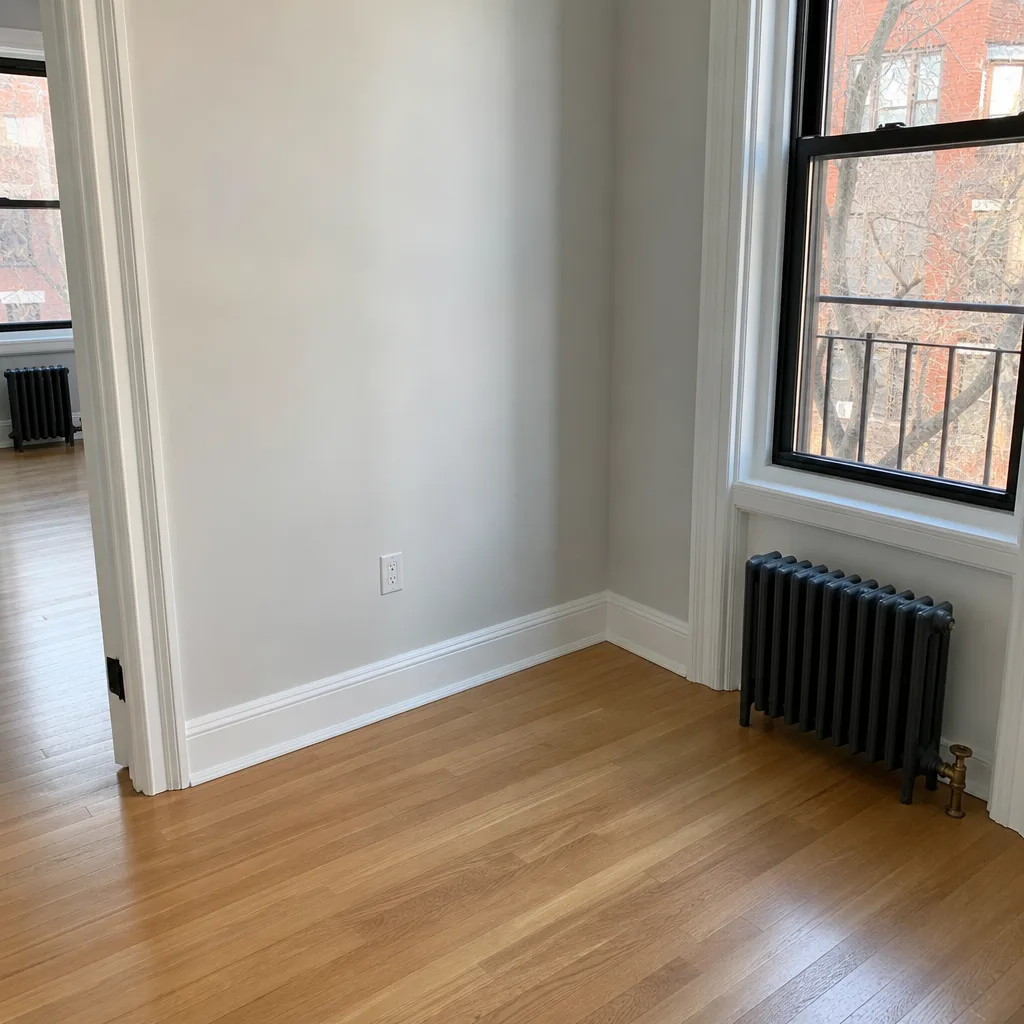 After
After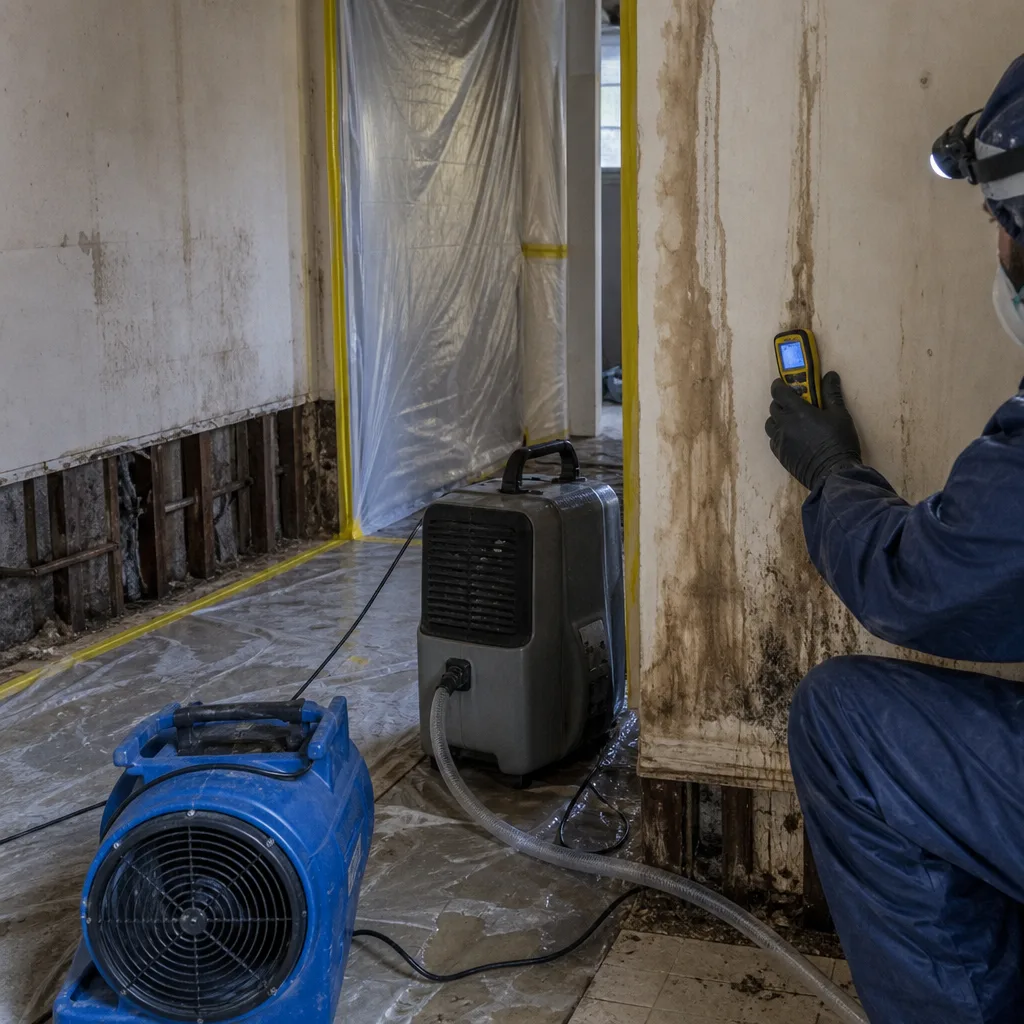 Before
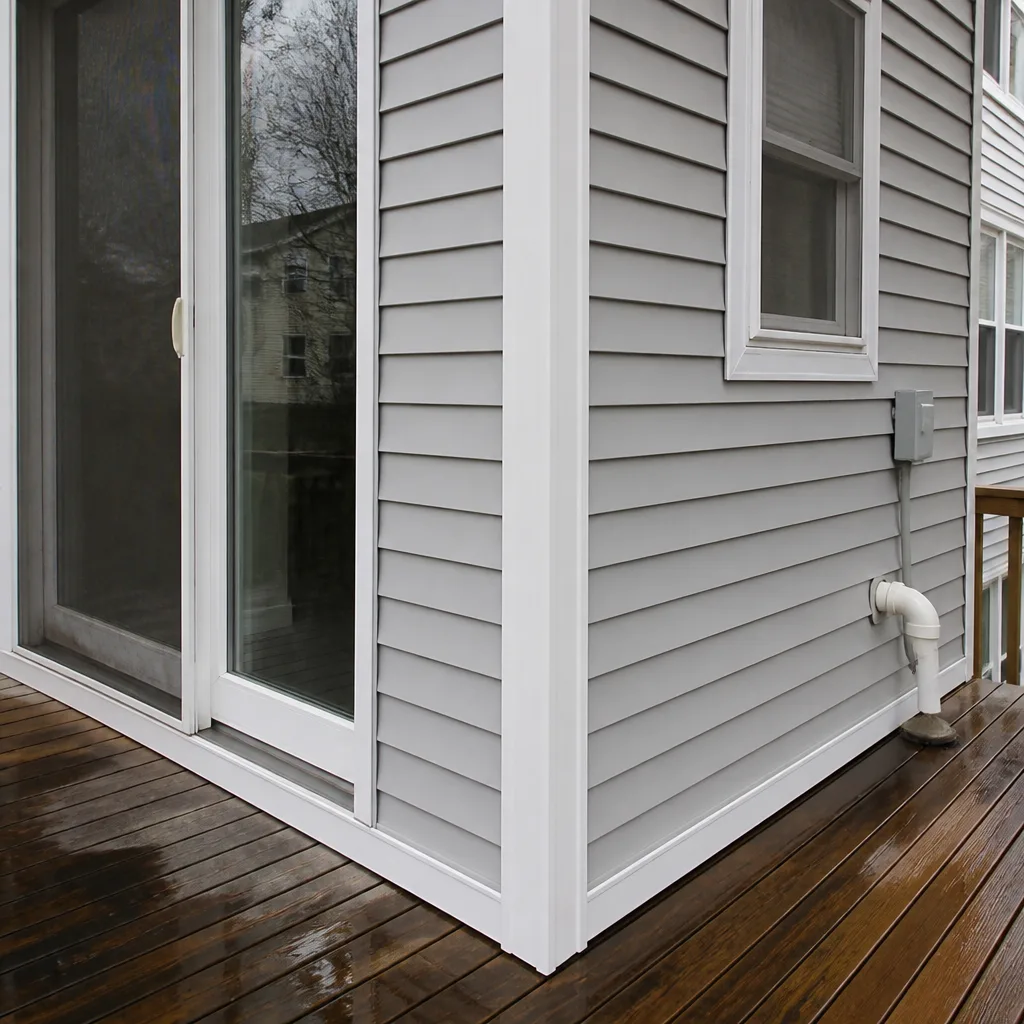 After
After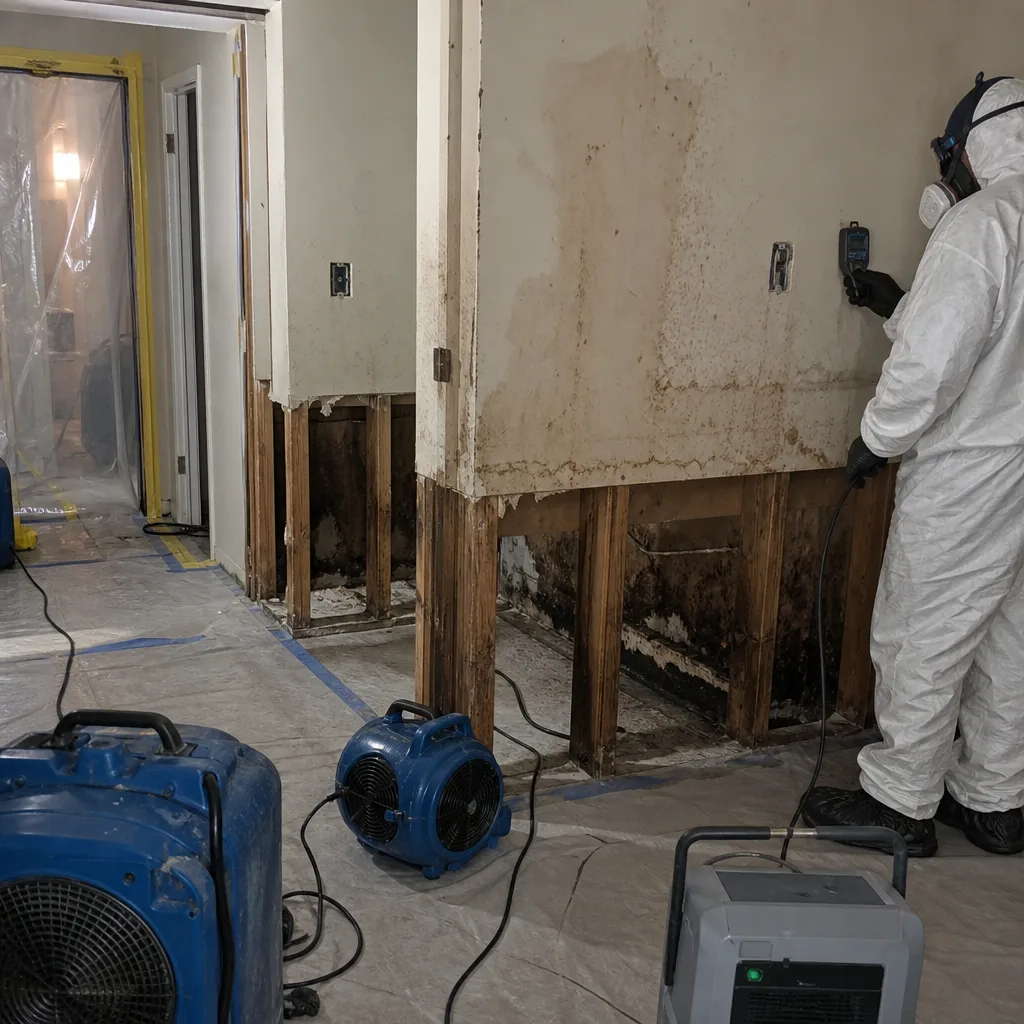 Before
 After
After24/7 Emergency Water Damage Restoration in Red Hook
Water damage restoration in Red Hook typically costs between $2,100 and $7,800 depending on the water category, square footage affected, and whether historic materials like horsehair plaster or wide-plank flooring are involved. Most emergency extraction jobs in Red Hook can be started the same day you call. A live dispatcher answers at (917) 924-4221 around the clock, and a certified crew from Water Damage Restoration can be rolling toward your property within 45 minutes.
Red Hook homes don’t wait well. The longer water sits against a fieldstone foundation or soaks into original plaster, the more the damage spreads and the more the restoration bill climbs. We handle the whole thing: extraction, drying, cleaning, and rebuild, done by one team that sees the job through from the first wet vacuum to the final coat of paint.
Understanding Water Damage Restoration Severity in Red Hook Properties
We classify water damage by category, and that classification drives every decision that follows. Category 1 is clean water from a supply line or a failed appliance hose. Category 2 carries significant contamination, like washing machine discharge or sump overflow. Category 3 is grossly contaminated: sewage, river water, ground water that has percolated through soil. In Red Hook, the spring snowmelt pushing through fieldstone basement walls is almost never Category 1. It’s carrying silt, organics, and whatever has been living in the soil against your foundation.
Severity also depends on the structure. A 1940s Cape with gypsum board walls dries differently than an 1840s Greek Revival with original horsehair plaster over wood lath. Moisture mapping matters more in old Red Hook homes because water migrates unpredictably through mortared stone, hardwood subfloors, and wall cavities that were never built with drying in mind. We use thermal imaging and penetrating moisture meters to find what’s wet, then we set drying goals that protect the materials, not just the humidity reading.
Why Red Hook Property Owners Choose Floodline Restoration Co. of Manhattan
- 45-minute response commitment: Crews are staged to reach Red Hook properties fast. When a pipe bursts at 6 a.m., you’re not waiting until noon for someone to look at it.
- 24/7 live answer: A real person picks up the phone at 2 a.m. Not an answering service, not a callback queue. A dispatcher who can send help.
- IICRC-certified crews: Our technicians hold WRT and ASD certifications and train to IICRC, RIA, and IFA standards. They show up uniformed and background-checked.
- Free visual inspection: We look at the loss before we quote. You get a straight answer about what’s wet, what’s salvageable, and what needs to go.
- Direct insurance billing: We bill your carrier directly and keep the paperwork moving. You never play messenger between us and your adjuster.
- One team, start to finish: From first extraction to final reconstruction, it’s the same crew. No mid-job handoff, no inherited subcontractors who weren’t there on day one.
Our Water Damage Restoration Process
Inspection & Assessment
We map the moisture, classify the water, and document every affected surface. In older Red Hook homes, this includes checking what’s behind plaster walls and under flooring, not just what’s visibly wet. You get a written scope before any equipment is set.
Extraction / Stabilization
We remove standing water with truck-mounted extraction units and submersible pumps, then stabilize the environment to stop secondary damage. For wide-plank floors, this is where the right call saves thousands in tear-out costs.
Drying & Dehumidification
We run professional-grade Dri-Eaz and Phoenix dehumidifiers alongside XPOWER and B-Air air movers. On antique flooring, we add Injectidry wood-floor drying systems that pull moisture from beneath planks without warping them. Daily moisture readings are logged until the dry standard is met.
Cleaning & Sanitization
Affected surfaces are cleaned, sanitized, and treated with antimicrobials appropriate to the water category. We pay special attention to fieldstone mortar joints, where bacteria and mold spores hide.
Historic Materials Treatment
Plaster stabilization, controlled drying of horsehair walls, and wood floor restoration are handled with techniques suited to pre-Civil War construction. Over-drying a 150-year-old plaster wall can crack it beyond repair; we monitor conditions daily to prevent that.
Repairs & Restoration
From replacing rotted subfloor sections to rebuilding damaged walls, our reconstruction crews finish what the extraction team started. One scope, one team, one point of accountability.
Need Emergency Water Damage Restoration in Red Hook Now?
Crews minutes away, answering live 24 hours a day. The sooner we start, the less it costs.
Working With Your Insurance Company
Insurance claims move better when documentation is thorough from the first hour. We photograph everything, build a line-item scope using industry-standard estimating software, and communicate directly with your adjuster. You don’t have to translate restoration terminology or argue about whether a drying chamber was medically necessary. Curt Bowman’s team has handled thousands of water losses across the Hudson Valley, and we know what carriers need to approve a claim without delay.
What We Provide Your Insurer
- Thorough documentation of the loss
- Photos of all damage, room by room
- Moisture readings and drying logs
- A detailed, line-item scope of work
- Direct coordination with your carrier
Built for Red Hook’s Loss Calendar
Red Hook’s water damage season runs on a different clock than the suburban developments twenty minutes south. January and February bring deep freezes that crack supply lines in unheated crawlspaces and unfinished basements of older farmhouses. When the temperature swings hard, pipes that have survived since the Eisenhower administration finally give way at the threaded joints.
March and April are the snowmelt window, and that’s the busiest time for basement water removal in Red Hook. Saturated soil, frozen ground below the surface, and fieldstone foundations mean water has nowhere to go but in. Tropical Storm Irene in 2011 is still the benchmark disaster for local contractors, but every spring brings a smaller version of the same problem to homes throughout the town. Summer thunderstorms hit fast and hard, overwhelming old gutters and downspouts, and autumn nor’easters drive rain sideways against 200-year-old clapboard and window sills that have never been modernized.
Water Damage Restoration Across Red Hook’s Neighborhoods
The village center, with its concentration of Greek Revival and Federal homes along South Broadway and East Market Street, presents tight access and historic materials on nearly every job. Driveways are narrow, parking is limited, and the plaster is almost always original. Our crews carry equipment in stages when needed, and every technician knows how to work around original trim without leaving a mark.
Upper Red Hook, toward the Bard College area and along River Road, is farmhouse country. Pre-Civil War structures with fieldstone foundations dominate the landscape, and the losses there tend to be bigger because water travels farther through open floor plans and connected ells. The homes along Linden Avenue and in the newer developments near Red Hook High School present a different profile: 1960s ranchers and split-levels with concrete block foundations and drywall interiors, where the calls are more often supply-line breaks and appliance failures than groundwater intrusion.
West of Route 9G, the neighborhoods near the Saw Kill and the town’s historic mill sites deal with creek overtopping and saturated low-lying ground in heavy rain. Each area has its own failure pattern, and we plan our approach accordingly.
Specialized Water Damage Restoration Services We Offer in Red Hook
Emergency Water Extraction
When water is standing in a Red Hook basement, every hour it sits costs more in flooring, drywall, and cabinetry. We arrive with truck-mounted extraction equipment that removes hundreds of gallons in the first hour, then set up containment and drying. Most extraction jobs in Red Hook are complete the same visit.
Structural Drying & Dehumidification
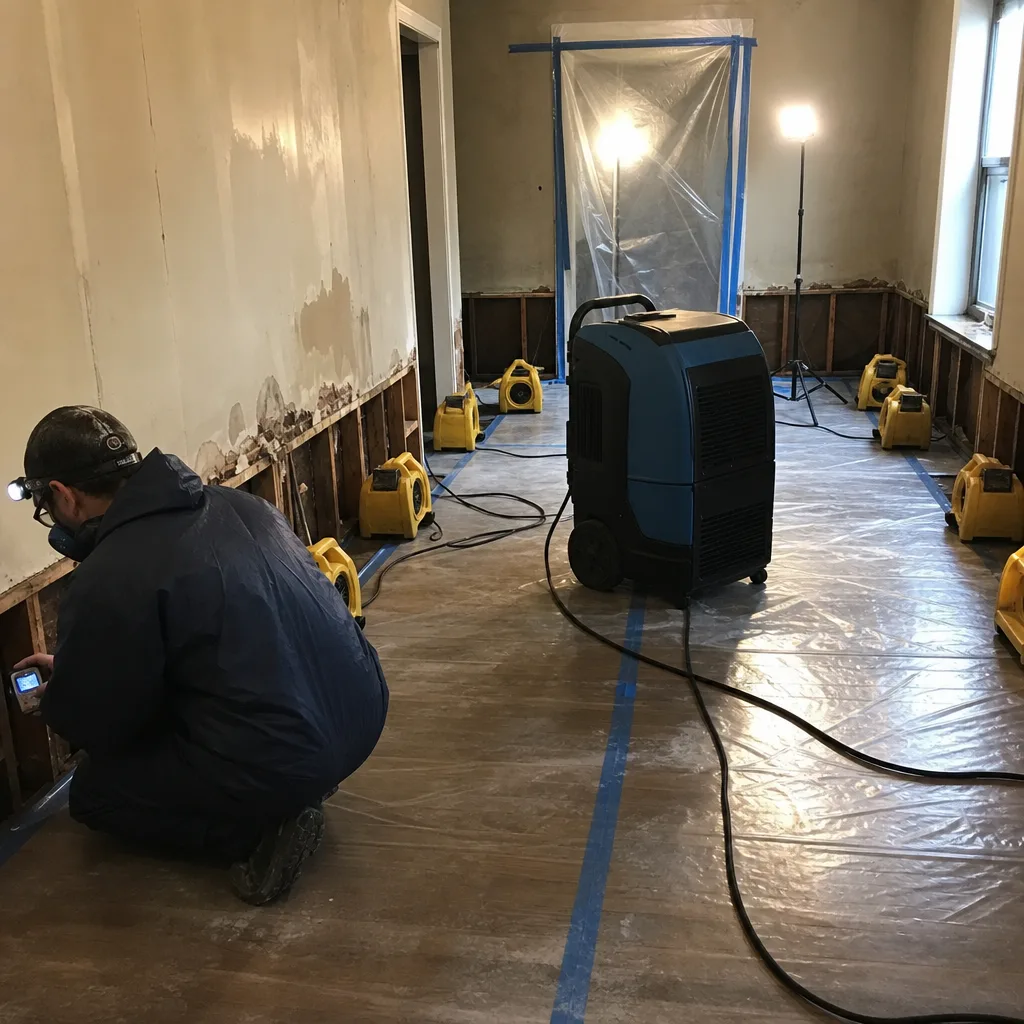
Drying an old Red Hook farmhouse is not the same as drying a modern condo. We set drying chambers that account for high ceilings, thick plaster, and fieldstone that holds moisture for weeks. Dri-Eaz LGR dehumidifiers pull water from the air while Phoenix and XPOWER air movers direct flow across walls and floors. Daily moisture readings tell us when the structure has actually reached dry standard, not just when the air feels dry.
Flood Cleanup
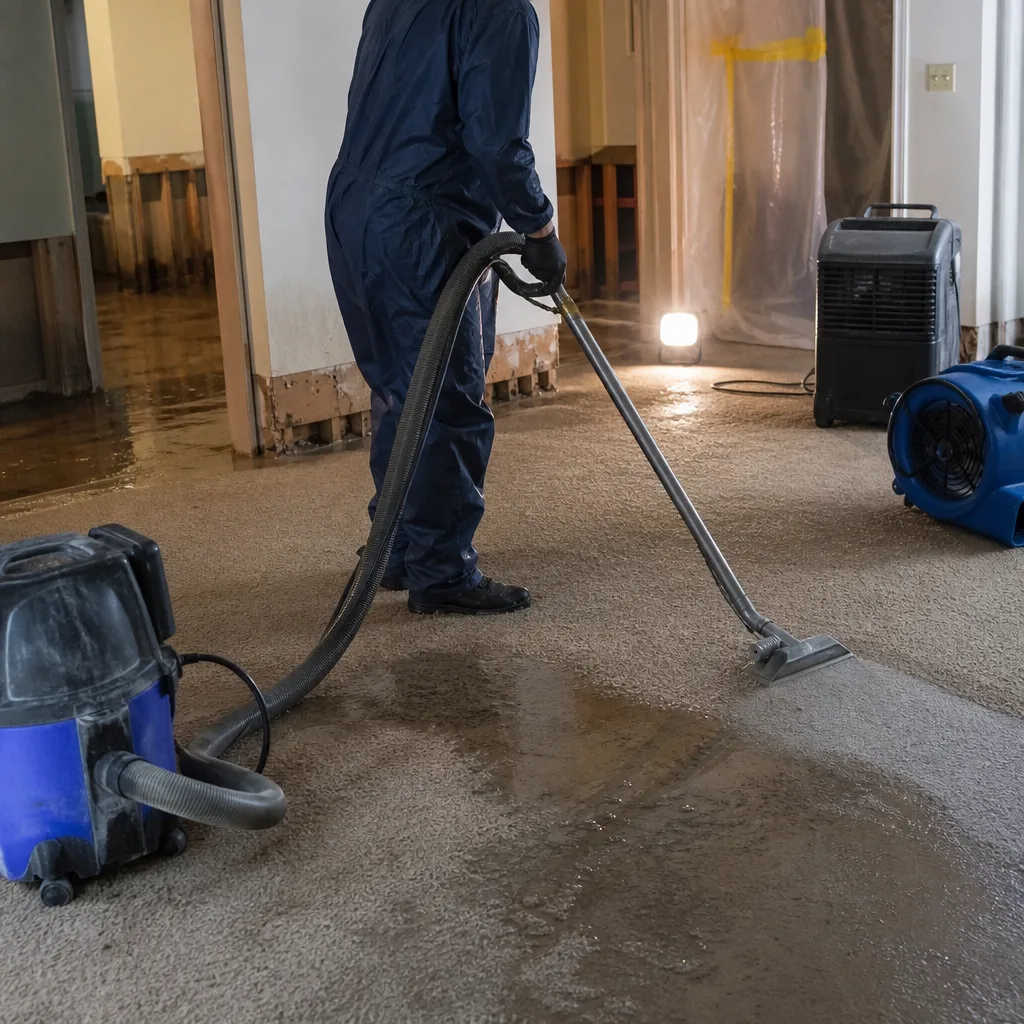
After a flood, the first order of business is getting contaminated water and silt out of the house. Then we start the real work: removing soaked materials that can’t be saved, treating surfaces that can, and setting up drying to prevent mold. Red Hook properties near the Saw Kill and low-lying farmland see this scenario every few years.
Burst Pipe Restoration
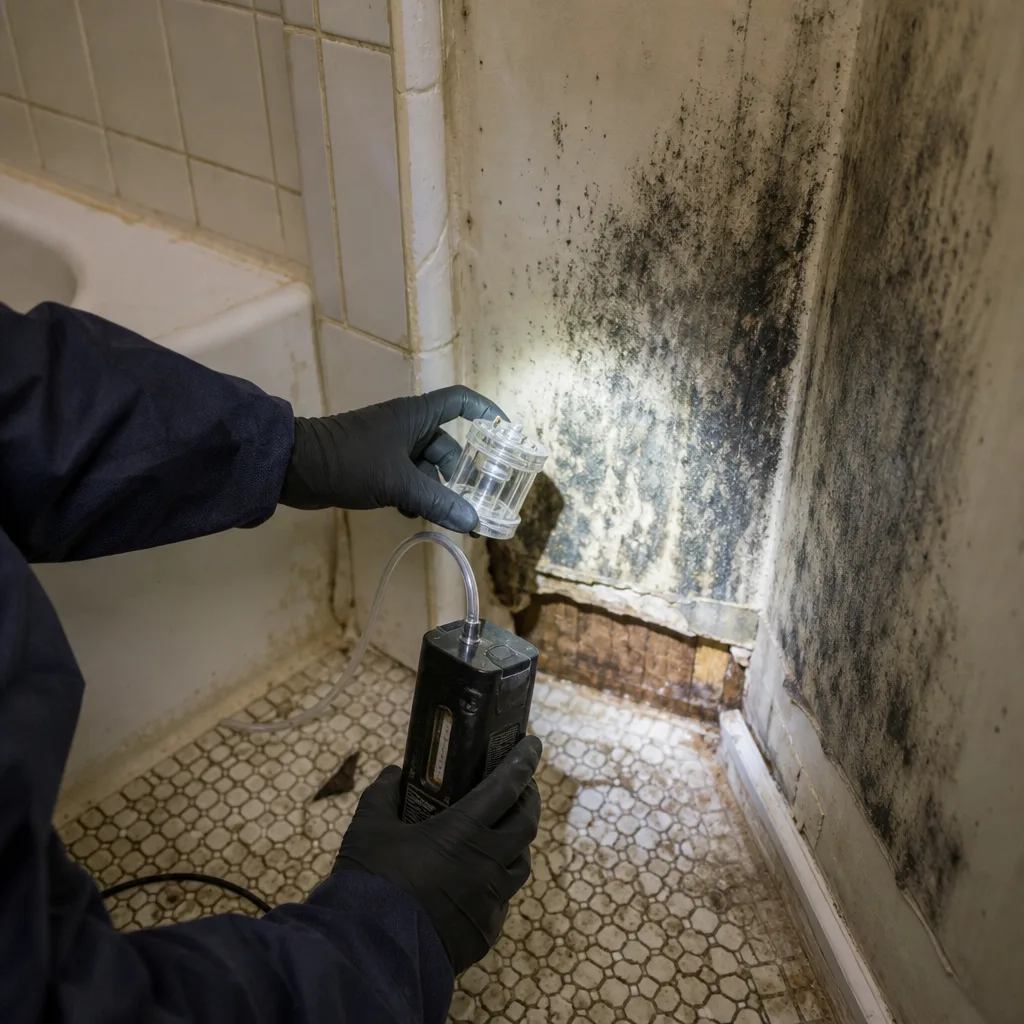
A frozen pipe in a Red Hook crawlspace or unheated kitchen wall can release four to eight gallons per minute. By the time you find it, the damage is usually done. We locate the source, stop the flow, extract the water, and dry the structure. Then we repair what was damaged, often within the same week.
Basement Water Removal
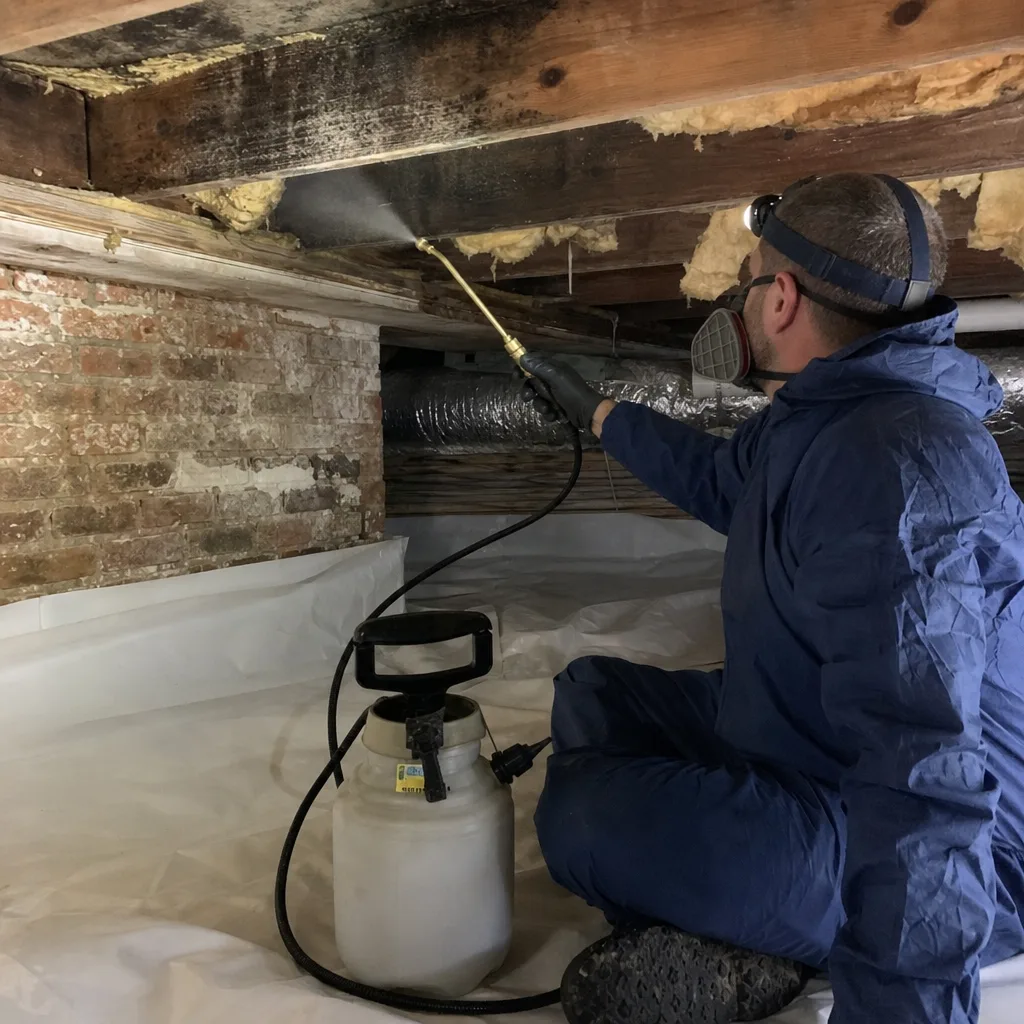
Spring snowmelt through fieldstone walls is the single most common basement water call we get in Red Hook. Using Injectidry floor drying systems, we can often save original wide-plank flooring that other contractors would rip out. The plaster walls get stabilized and dried slowly, not blasted with heat that cracks horsehair backing.
Ceiling & Roof Leak Water Damage
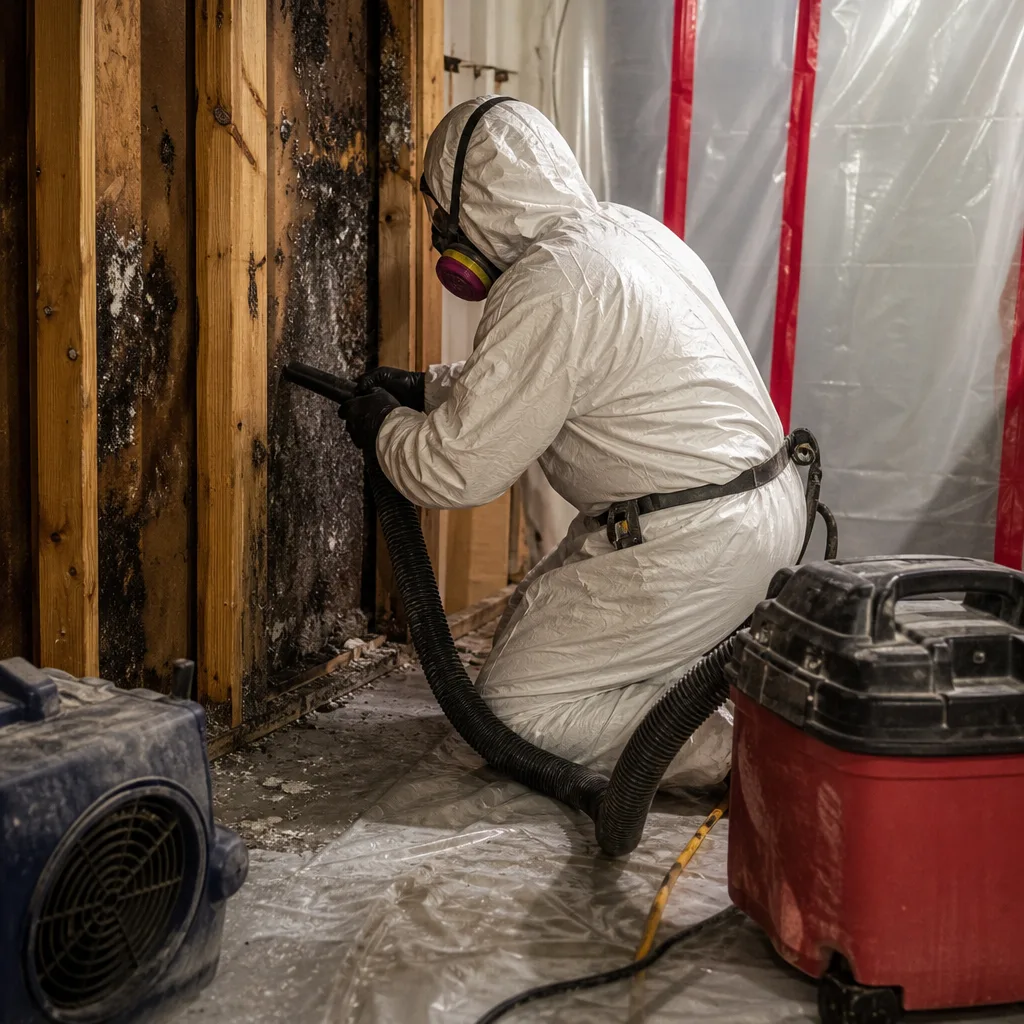
Ice dams on steep-pitched 19th-century roofs send water into attic spaces and down through ceilings in January and February. We dry the ceiling cavity, treat any wood framing that’s at risk, and repair the plaster or drywall once the leak is stopped. We can recommend a roofer, but we handle everything below the roof line.
What happens when you call
- 1
A real person answersNo phone trees - you reach a local pro.
- 2
You get an upfront price rangeHonest numbers before anyone is dispatched.
- 3
A background-checked tech heads outLicensed & insured, dispatched right away.
- 4
You approve before work beginsNothing starts until you say go.
Water Damage Restoration Costs in Red Hook, NY
Here’s what Red Hook homeowners actually pay. Emergency water extraction alone runs $850 to $1,900 for a single room or basement section. Full structural drying with equipment placement and daily monitoring adds $1,200 to $3,400 depending on square footage and how long it takes to reach dry standard. Basement water removal from spring snowmelt through fieldstone walls, including drying and antimicrobial treatment, typically lands between $2,800 and $6,900. Burst pipe restoration in an older home with plaster walls runs $2,100 to $7,800 when you include plaster repair and repainting. Flood cleanup on a whole first floor can reach $9,000 to $15,000 or more, but most covered losses are handled through insurance after the deductible.
The free visual inspection is how we get to a firm number. You see the scope in writing before work starts. No surprises on the bill.
We Also Serve Cities Near Red Hook
Our crews cover the surrounding Hudson Valley communities including Red Hook and the nearby towns of Greenville, Chelsea, Shrub Oak, and Shenorock. If you’re anywhere in the area and you’ve got water where it shouldn’t be, call us. We’ll be there when we say.
Serving Red Hook, NY - Our Local Coverage Area
We’re based in the Red Hook area and know this community well. Use the map below to see our service coverage - if you’re nearby, we can almost certainly help.
Red Hook Water Damage Restoration Questions, Answered
How do you dry a fieldstone foundation wall after spring snowmelt water intrusion in Red Hook without damaging the lime mortar?
We dry fieldstone walls with low-heat, controlled dehumidification and directed air movement, not aggressive heat or rapid drying. Lime mortar from the 18th and 19th centuries can crack and crumble if dried too fast, so we monitor humidity in the stone and mortar joints daily and adjust equipment accordingly. The goal is to bring moisture content down gradually without pulling water out of the mortar faster than the stone can release it.
Why does water damage restoration in Red Hook almost always involve historical plaster walls, and what does that change?
Most pre-Civil War homes in Red Hook were built with horsehair plaster applied over wood lath, and that material behaves very differently than modern drywall when wet. Plaster can hold large amounts of water without visible sagging, then crack or separate from the lath during drying. That changes our approach: slower drying targets, daily plaster inspections, and moisture meters on the lath itself.
How do you classify water from Red Hook’s fieldstone basements-is it ever Category 1, or always Category 3?
Water that comes through a fieldstone foundation wall has traveled through soil, so it’s almost always Category 2 or Category 3 depending on surrounding conditions. Category 1 water comes only from a clean source like a supply line. When groundwater enters a Red Hook basement, we treat it as contaminated and apply antimicrobial treatments after extraction and throughout drying.
What’s the biggest mistake a contractor makes when drying an old wide-plank floor in a Red Hook farmhouse?
The biggest mistake is using standard air movers on the surface only, which dries the top of the planks while the bottom stays wet. That causes cupping, warping, and permanent damage. The correct approach for wide-plank flooring is a wood-floor drying system like Injectidry that pulls moisture through the plank from underneath, combined with controlled dehumidification. We’ve saved 200-year-old oak floors in Red Hook that other companies wanted to tear out.
How long before hidden mold becomes a health risk after a water event in an older Red Hook home?
Mold can begin growing within 24 to 48 hours in a warm, damp environment, and the risk increases every day after that. In old homes with plaster walls and fieldstone foundations, moisture hides in cavities and mortar joints where you can’t see it. That’s why we recommend starting extraction and drying the same day you discover the water, not waiting a week to see if it dries on its own.
How fast can a crew actually get to Red Hook?
Our commitment is 45 minutes from the time you call to the time a crew is dispatched and rolling toward your property. Actual arrival depends on where in Red Hook you are and current conditions, but we stage crews to serve the town and surrounding areas continuously, around the clock. Call (917) 924-4221 and a live dispatcher will give you a straight answer.
Will insurance cover water damage from spring snowmelt through my Red Hook basement walls?
Most standard homeowners policies cover sudden and accidental water damage, but groundwater seepage through foundation walls is often excluded unless you carry specific flood or water backup coverage. The fastest way to know is to call us for a free visual inspection. We document exactly what happened, and our team can help you understand what your policy likely covers before you file.
Can my family stay in the home during drying and restoration?
It depends on the water category and which areas are affected. Category 1 water from a supply line usually allows you to stay in the home with containment set up around the drying area. Category 2 or 3 water may require temporary relocation, especially if an older Red Hook home’s air systems could spread contaminants. We’ll give you a clear answer during the inspection, based on what we find.
Written by Curt Bowman, Owner at Floodline Restoration Co. of Manhattan, serving Red Hook and the surrounding Hudson Valley communities.