
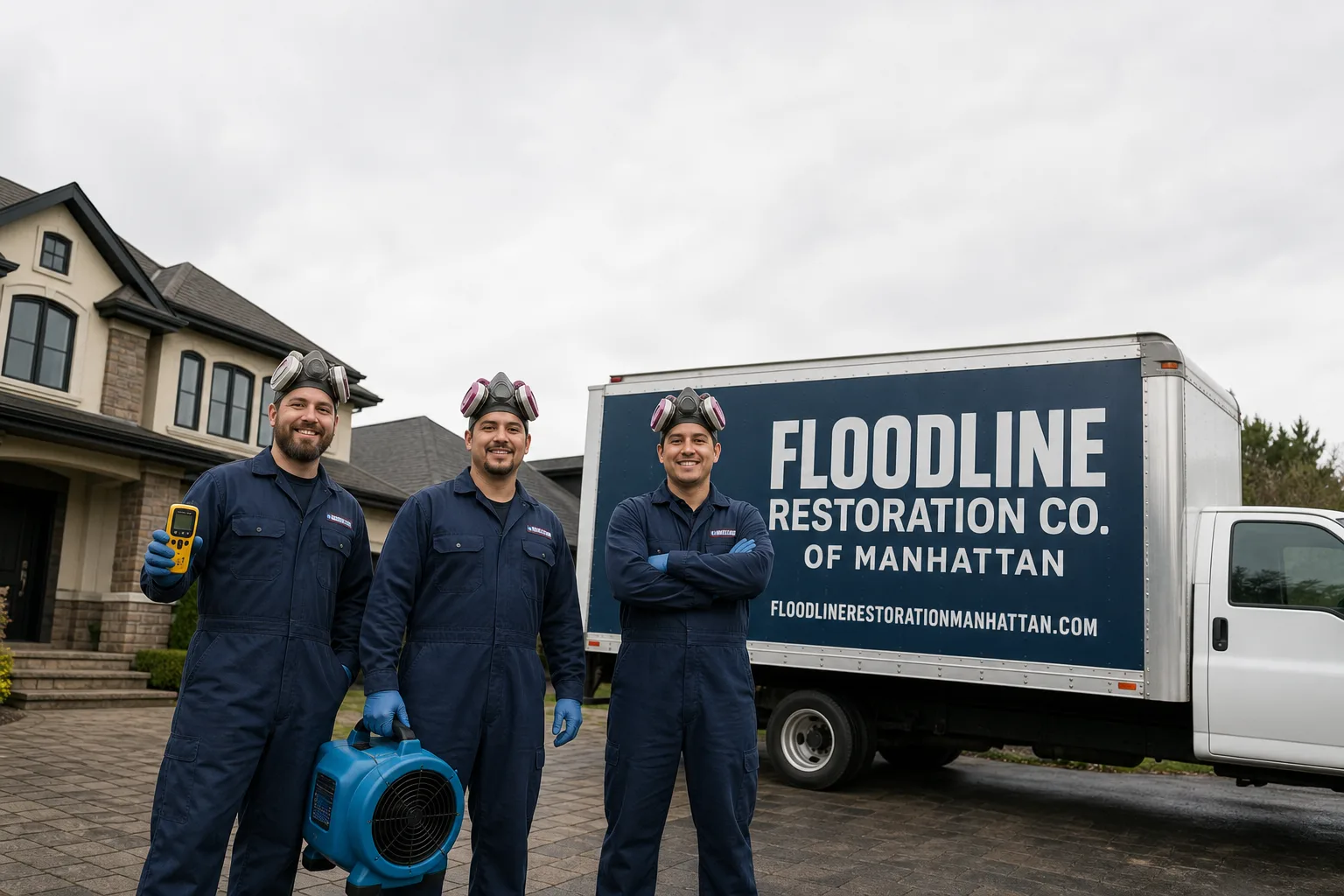
Free visual inspection and a written scope of work before any mitigation begins - photos, moisture readings, and drying logs go in your claim file
The scope we write is the scope we bill. Anything new gets shown to you, in writing, before we touch it.






 Before
 After
After Before
 After
After Before
 After
After24/7 Emergency Water Damage Restoration in South Valley Stream
Water damage restoration in South Valley Stream typically runs $2,800-$7,500 for a basement flood from tidal backflow, and $1,900-$4,200 for a burst supply line in a postwar Cape Cod. Most jobs start within 45 minutes when you call (917) 924-4221, because our crews stage response routes through the southern Nassau corridor and we answer live at 2 a.m., not with a recording. The first hour matters more here than inland: water that enters through foundation vents on Mill Road is already category 3 black water from Hook Creek, and it’s moving through original plaster and wood floors that hold moisture for weeks if the first extraction pass isn’t aggressive enough. We’ll send a uniformed, background-checked crew to your South Valley Stream door, run a free visual inspection, and start extraction the same visit.
Understanding Water Damage Restoration Severity in South Valley Stream Properties
Most South Valley Stream homes were built between 1945 and 1965, and their materials behave differently from modern drywall construction. Original plaster walls with rock lath wick water upward, wood-framed floors sit close to grade, and oil-fired heating equipment in basements means electrical panels and burners are often below the floodline. We classify water by category before we touch it: category 1 is clean supply-line water, category 2 is gray water from appliances, and category 3 is black water from tidal surge, sewage, or wetland backflow. In South Valley Stream, we assume category 3 on any storm intrusion from Hook Creek or the southern-end streets, because the water has mixed with estuary sediment and whatever the tide carried in. That changes the whole scope: containment, antimicrobial treatment, and more aggressive exploratory demo to expose cavities behind plaster and under subfloors that a moisture meter alone won’t reveal. We use thermal imaging and penetrating moisture meters, not just a visual check, and we log daily readings until the structure hits dry standard, measured against a pre-loss baseline wherever we can establish one.
Why South Valley Stream Property Owners Choose Floodline Restoration Co. of Manhattan
- 45-minute response commitment - crews stage in the South Shore corridor specifically so South Valley Stream callers get a technician on site fast, not a callback.
- 24/7 live answer, every call - a real dispatcher picks up at 2 a.m. and starts routing; no automated prompts between you and a crew.
- IICRC-certified crews, WRT and ASD on every water job - our techs hold Water Damage Restoration Technician and Applied Structural Drying certifications, and we never send an uncertified sub.
- Free visual inspection with moisture mapping - we map the affected area before we quote, so you see the scope, not a guess.
- Direct insurance billing - we talk to your adjuster, not you playing messenger between two parties.
- One team from first extraction to finished rebuild - the same certified crew that pulls water on day one rebuilds the wall on day ten, so nothing gets handed off or lost in translation.
Our Water Damage Restoration Process
Inspection & Assessment
We walk the property with thermal imaging cameras and penetrating moisture meters, mapping every affected surface. In South Valley Stream, that means checking original plaster walls, subfloor cavities, and foundation vents for hidden water from prior storm cycles.
Extraction & Stabilization
Truck-mounted and portable extractors pull standing water, including the category 3 tidal water common along the Hook Creek side. We stabilize the structure immediately, shutting off power to affected zones and opening wall cavities where water is trapped.
Drying & Dehumidification
Professional-grade Dri-Eaz and Phoenix air movers, dehumidifiers, and Injectidry drying mats go in, sized to the structure, not a guess. We run daily moisture readings and hand you and your carrier the log.
Cleaning & Sanitization
For category 3 water, we apply antimicrobial treatments inside wall cavities and under floors, and HEPA-scrub the air to remove spores before they colonize. For category 1 or 2, we clean and deodorize surfaces to pre-loss condition.
Basement & Crawl Space Treatment
South Valley Stream basements sit at or near the water table, so we treat below-grade spaces differently: drainage checks, sump pump verification, and subfloor drying with targeted airflow, not just ambient dehumidification.
Repairs & Restoration
We rebuild what we opened: plaster repair, new drywall, flooring, trim, and paint. The same crew that extracted on day one finishes the rebuild, and the whole job is backed by the 90-Day Done Right Promise in writing.
Need Emergency Water Damage Restoration in South Valley Stream Now?
Crews minutes away, answering live 24 hours a day. The sooner we start, the less it costs.
Working With Your Insurance Company
South Valley Stream water damage claims get complicated fast, especially on repeat flood losses where FEMA Zone AE documentation matters. We handle that side cleanly. From the first hour we photograph everything, room by room, and we hand your adjuster a line-item scope with moisture readings attached, using industry-standard estimating software carriers recognize. We coordinate directly with your insurer, including on repeat claims where prior Sandy-era damage may still be active behind walls, so you’re not the one explaining why a 1958 Cape Cod still holds moisture eight years after the last big storm. The goal is simple: a claim that gets approved without a paperwork fight, and a job that gets finished and backed by our 90-Day Done Right Promise, in writing.
What We Provide Your Insurer
- Thorough documentation of the loss from first arrival
- Photos of all damage, room by room
- Moisture readings and daily drying logs
- A detailed, line-item scope of work
- Direct coordination with your carrier
Built for South Valley Stream’s Loss Calendar
Water damage in South Valley Stream follows a predictable rhythm, and restoration work here reflects the town’s position on the South Shore fringe. Nor’easter season, roughly November through March, pushes tidal backflow from Hook Creek into basement vents on the southern-end streets, and those jobs are category 3 from the first minute. January and February bring deep freezes that burst supply lines in unheated crawl spaces under 1950s ranches, and that water is clean but fast-moving, saturating wood-framed floors within hours. Spring thaw sends snowmelt and rising groundwater into basements through hairline foundation cracks, a slow seep that rots subflooring before homeowners see a stain. Summer thunderstorm flash flooding overwhelms street drains on the flat grid, sending sheet water through window wells and bulkhead doors. The constant through all of it: South Valley Stream’s housing stock is old enough and close enough to grade that every event becomes an opportunity for hidden moisture to sit in original plaster and oak subflooring, which is why aggressive drying and documentation matter here more than a quick extraction-and-move-on.
Water Damage Restoration Across South Valley Stream’s Neighborhoods
The southern section of South Valley Stream, closest to the Hook Creek wetlands and the Mill Pond, is where we see repeat storm intrusion through foundation vents and bulkhead doors. Streets south of the Sunrise Highway sit lower and drain toward tidal channels, so a moderate nor’easter that barely dampens a Harrison driveway can send six inches of black water into a South Valley Stream basement. Over toward Green Acres Road and the older grid around Valley Stream Boulevard, we see more burst-pipe and appliance-failure work: original galvanized supply lines finally letting go after sixty years, and washing machines on second floors leaking through original plaster ceilings. The Hutchinson River Parkway edge has a mix of split levels with crawl spaces that hold water against floor joists, and the northern blocks along the Merrick Road corridor tend toward older colonial frames where ice damming and roof leaks in winter become ceiling water damage by February. Every neighborhood shares the same baseline condition: postwar construction, wood framing close to grade, and plaster that hides water until it’s been soaking for weeks. That’s why we don’t quote a water job in South Valley Stream sight unseen; we walk it, map it, and show you the numbers.
Specialized Water Damage Restoration Services We Offer in South Valley Stream
Emergency Water Extraction
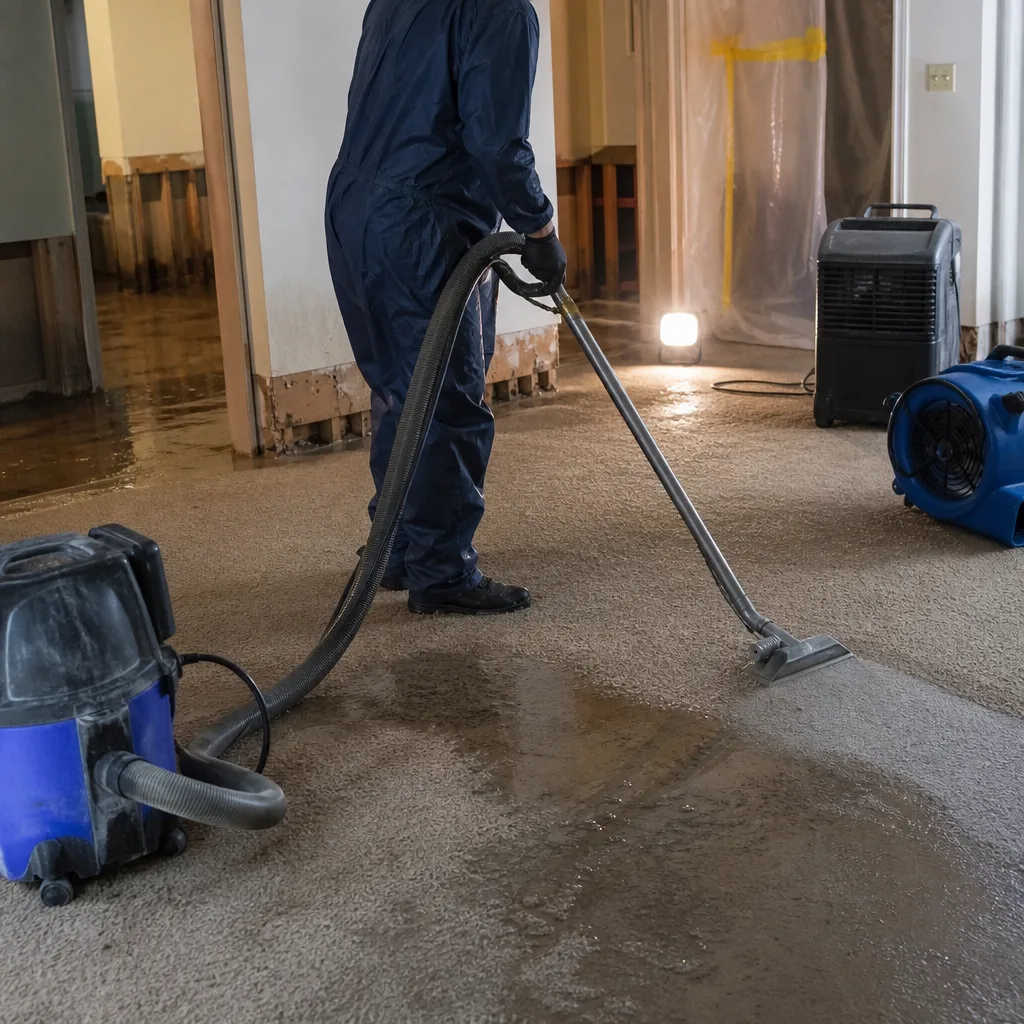
When tidal backflow or a burst pipe has standing water in a South Valley Stream basement, extraction starts the same visit. We run truck-mounted extractors and portable units sized to the room, and we pull water from wall cavities and under subfloors, not just the visible pond.
Structural Drying & Dehumidification
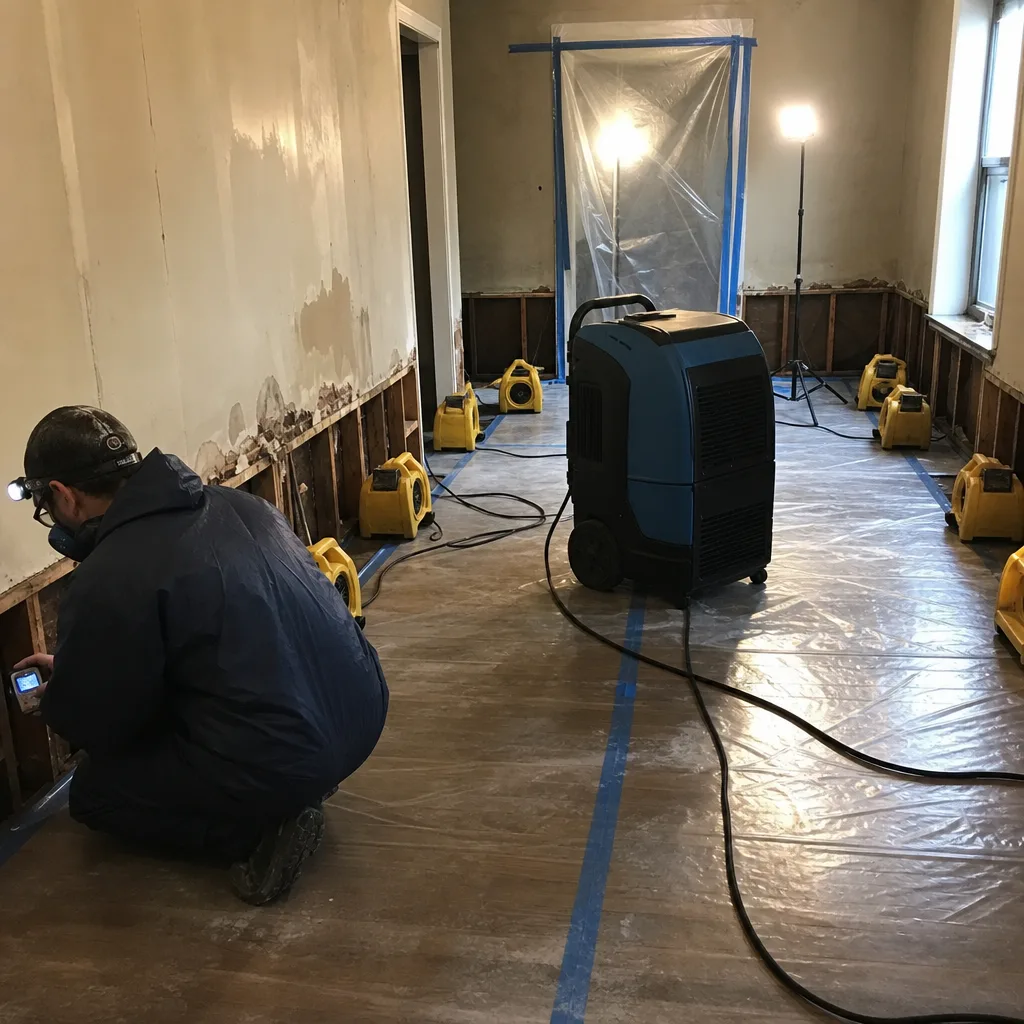
This is where South Valley Stream jobs differ most from inland Nassau. Original plaster and oak subfloors hold water for weeks if drying isn’t aggressive. We run Dri-Eaz and Phoenix air movers with targeted drying mats, and we log moisture readings daily until the structure hits dry standard, with a copy of that log going to you and your carrier.
Flood Cleanup
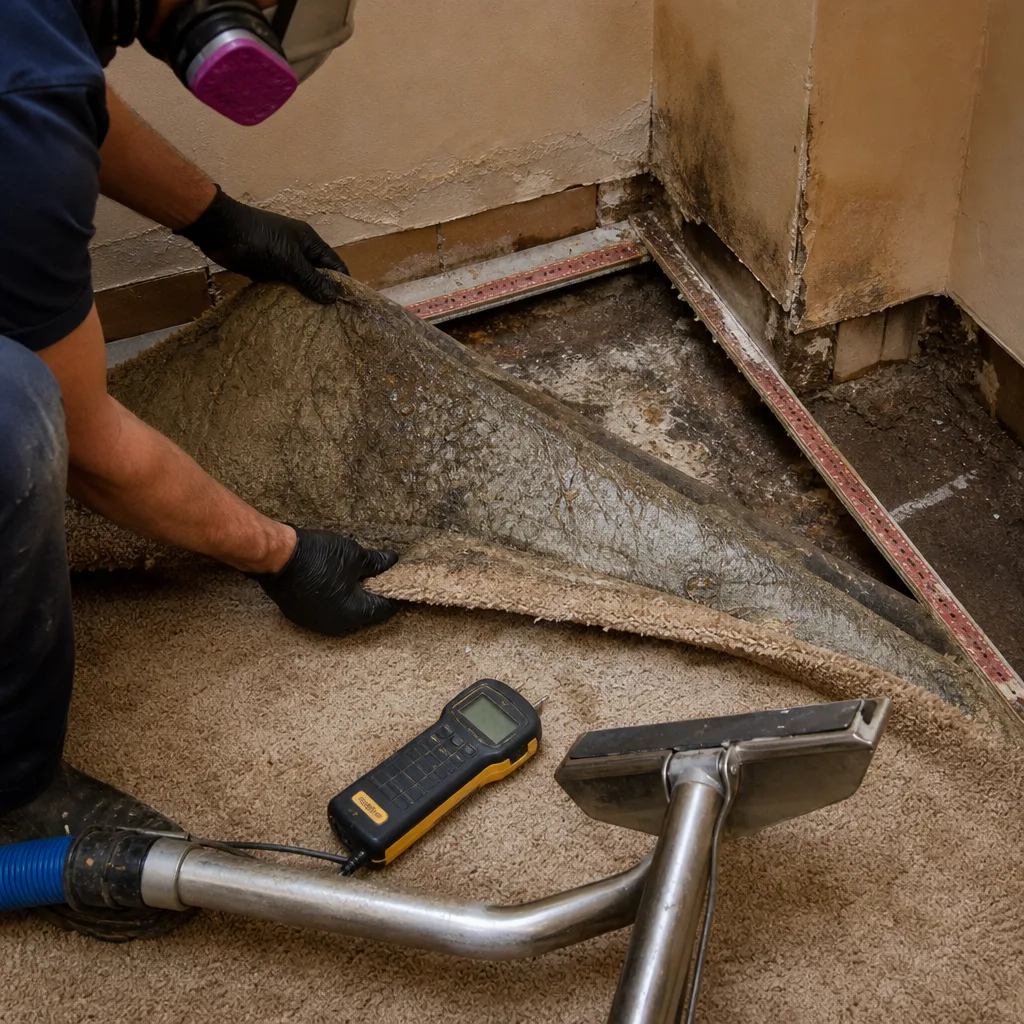
For category 3 tidal floods, we contain the affected area, remove contaminated materials to industry standards, and apply antimicrobial treatment inside wall cavities and under floors. The repeat nature of South Valley Stream flooding means the cleanup has to be thorough enough to prevent a mold problem from establishing between storm seasons.
Burst Pipe Restoration
It’s cold on the South Shore, and 1950s galvanized pipe doesn’t last forever. A burst supply line in a South Valley Stream crawl space saturates the subfloor before you notice dripping. We trace the full water path, open what needs opening, dry it, and rebuild the sections we cut.
Basement Water Removal
Basement water removal in South Valley Stream isn’t about pumping the visible water and leaving. We extract, check the sump and drainage path, map moisture in joist bays and sill plates, and set drying equipment sized to the basement’s volume and the amount of water the materials absorbed.
What happens when you call
- 1
A real person answersNo phone trees - you reach a local pro.
- 2
You get an upfront price rangeHonest numbers before anyone is dispatched.
- 3
A background-checked tech heads outLicensed & insured, dispatched right away.
- 4
You approve before work beginsNothing starts until you say go.
Water Damage Restoration Costs in South Valley Stream, NY
A typical basement flood from tidal backflow in South Valley Stream runs $3,200-$7,500, with the high end reflecting category 3 black water, antimicrobial treatment, and salvageable plaster repair. Burst supply line restoration in a ranch or Cape Cod runs $1,900-$4,200, depending on how far the water traveled through the subfloor. Ceiling water damage from a roof or ice dam runs $1,400-$3,000, including drying and plaster or drywall repair. What moves the price in South Valley Stream specifically: whether door and window trim are original wood worth saving, how much exploratory demo is needed behind old plaster, and whether the loss is category 3 from tidal water or category 1 from a supply line. Insurance-covered losses follow the same scope; you pay your deductible and we bill the carrier directly. The free visual inspection gives you a firm written scope before any work starts, so there are no surprises on the bill afterward, and that’s a promise we put in writing.
We Also Serve Cities Near South Valley Stream
Our crews respond to water damage calls across the South Shore and into the Bronx edge, including Water Damage Restoration coverage for Fairview, Harrison, East Bronx, and Hunts Point. Same 45-minute response commitment, same live 24/7 dispatch, and the same South Valley Stream standard of documented drying and direct insurance billing.
Serving South Valley Stream, NY - Our Local Coverage Area
We’re based in the South Valley Stream area and know this community well. Use the map below to see our service coverage - if you’re nearby, we can almost certainly help.
South Valley Stream Water Damage Restoration Questions, Answered
How does tidal flooding from Hook Creek affect water damage restoration in South Valley Stream compared to inland Nassau?
Tidal backflow from Hook Creek and surrounding wetlands is category 3 black water, not clean groundwater, so every South Valley Stream flood job requires antimicrobial treatment, containment, and more aggressive demo than a comparable inland burst-pipe loss. The water carries estuary sediment and contaminants into wall cavities and subfloors, which is why we treat tidal flooding as a contamination event from the first minute, not a simple extraction.
Do South Valley Stream homes built before 1965 need different drying after a burst pipe in the basement?
When a modern drywall wall gets wet, you can often dry it in place. Original plaster walls in a 1958 Cape Cod hold water behind the plaster, against the lath, and down into the sole plate, so we run longer drying cycles with targeted airflow into wall cavities and under floors. Pre-loss baseline moisture readings matter, because some of these homes carry residual moisture from past storm cycles that was never fully dried, and we need to know what “dry” actually means for your structure.
What should I expect from a water damage scope of work for a repeat flood in the southern end of South Valley Stream?
Expect a scope that includes exploratory demo, not just extraction and drying. For repeat flood losses near the tidal fringe, we open walls to inspect for residual Sandy-era moisture, document everything for your insurer with elevation and FEMA Zone AE context, and run a full antimicrobial cycle inside the cavities before we close anything up. The scope will be line-itemed and reviewed with you before work starts.
How quickly can mold start in a South Valley Stream basement after tidal backflow?
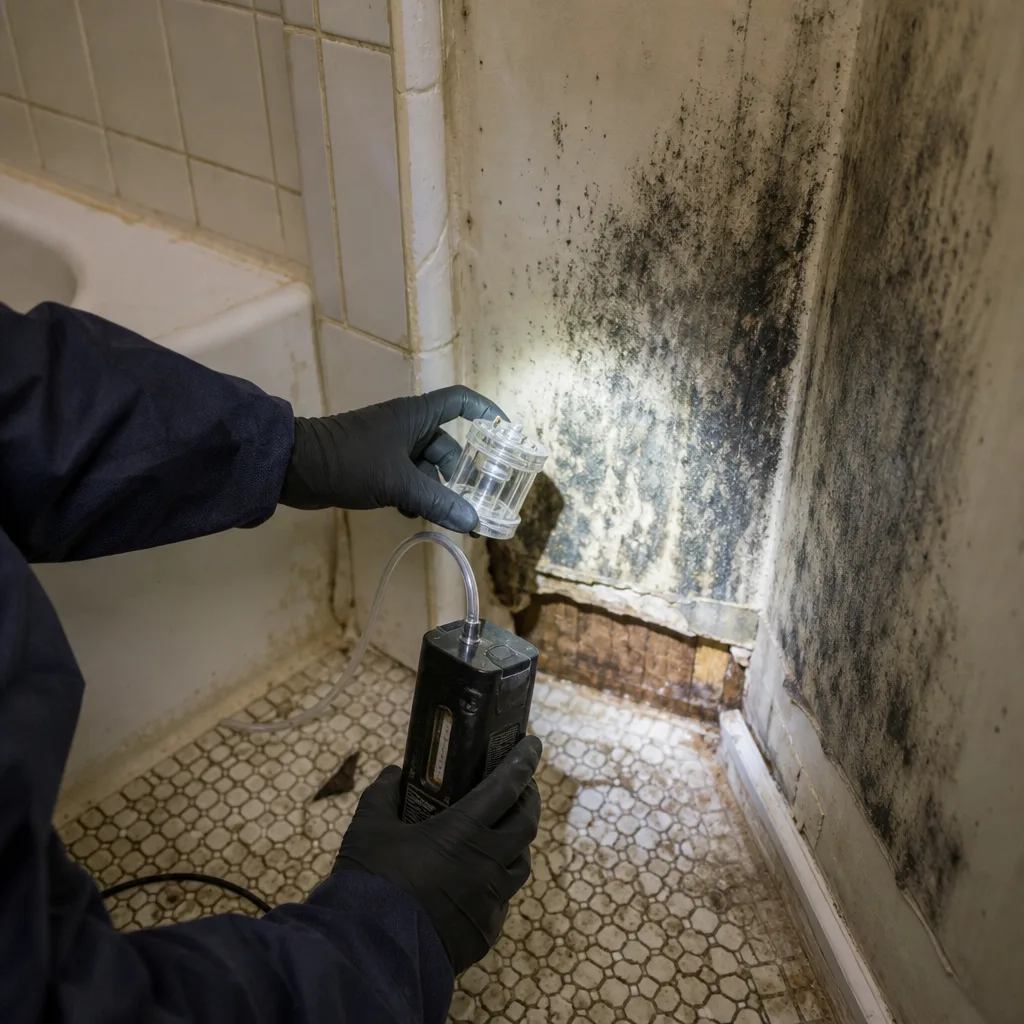
Mold can begin colonizing within 24 to 48 hours in a damp South Valley Stream basement, especially behind original plaster and under wood subfloors where moisture sits undisturbed. Tidal water accelerates the problem because it brings organic material with it, so we treat every category 3 flood as an active mold prevention job from the first extraction pass, not a wait-and-see situation.
Why do restoration crews in South Valley Stream require more aggressive exploratory demo than in nearby inland towns?
Because the town’s housing stock is older, closer to grade, and built with materials that hide water. Original plaster, rock lath, and oak subfloors don’t release moisture the way modern drywall does, and many homes carry residual water from prior storm events that was never properly dried. Exploratory demo is the only way to find hidden pockets of moisture and contamination before they become recurring mold problems.
How fast can someone actually get here?
We commit to a 45-minute response window for South Valley Stream calls, with crews staged in the South Shore corridor so we’re not driving from across the island. A live dispatcher answers at any hour, and extraction starts the same visit, not on a follow-up appointment. Call (917) 924-4221 and we’ll tell you exactly when the crew arrives.
Will insurance cover this?
Most South Valley Stream water damage claims are covered under homeowner’s policies, but tidal flood losses depend on your flood insurance status, FEMA zone, and whether prior claims were fully resolved. We document the loss from the first hour, provide moisture logs and a line-item scope to your adjuster, and bill your carrier directly, so you aren’t the go-between on a complicated repeat-flood claim.
What should I do in the first 30 minutes?
Call (917) 924-4221, then shut off power to the affected area if you can safely reach the panel. Don’t walk through standing water from Hook Creek flooding, and don’t start pulling up flooring or opening walls yourself; the water is often category 3 black water at that point. Move sentimental items and paperwork to a dry room if safe, and let us handle the rest from there.
Written by Curt Bowman, Owner at Floodline Restoration Co. of Manhattan, serving South Valley Stream since 2010.