
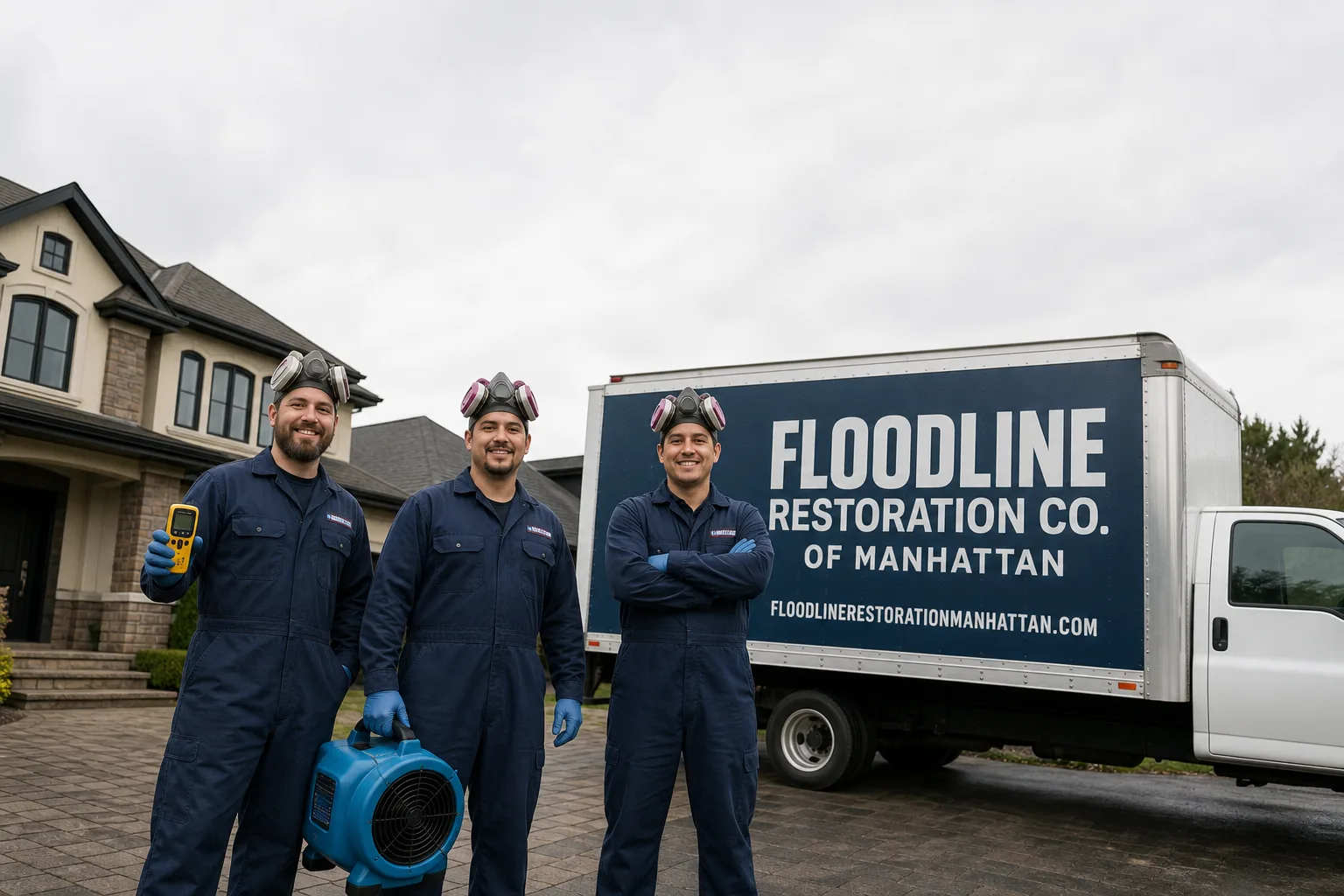
Free visual inspection and a written scope of work before any mitigation begins - photos, moisture readings, and drying logs go in your claim file
The scope we write is the scope we bill. Anything new gets shown to you, in writing, before we touch it.






 Before
 After
After Before
 After
After Before
 After
After24/7 Emergency Storm & Disaster Restoration in Little Ferry
Storm and disaster restoration in Little Ferry starts with a live person on the phone, any hour, any day. Call (917) 924-4221 and a dispatcher answers, not a recording. We dispatch crews into Little Ferry within 45 minutes of your call, and the first visual inspection is free. When the Hackensack River backs over the bulkhead or a nor’easter punches a hole in your roof, the first hour determines whether you’re drying a room or rebuilding a wing. Saltwater and sewage-tinged silt don’t wait. Neither do we.
Understanding Storm & Disaster Restoration Severity in Little Ferry Properties
Little Ferry sits at near-sea-level elevation, directly against the tidal Hackensack River. That changes what storm restoration means here. When water enters your home from river backflow or storm surge, it’s not clean rainwater. It’s category 3 water, the trade term for water carrying sewage, salt, bacteria, and silt. The protocols are different from a burst supply line. We test, we map, we treat with antimicrobials, and we document everything for your flood carrier. Most homes in Little Ferry are post-WWII Cape Cods, ranches, and small split-levels built in the 1940s through 1960s. They have shallow basements and crawl spaces that act as collection basins. Many of those subfloor assemblies absorbed saltwater during Sandy and were never fully remediated. We open walls expecting a layered history. That’s the reality in this borough.
Why Little Ferry Property Owners Choose Floodline Restoration Co. of Manhattan
- 45-minute response commitment. Our crews stage within reach of Little Ferry, so a certified technician is at your door fast when the water is rising.
- A live person answers, 24/7. No automated menus at 2 a.m. You talk to a dispatcher who knows this business and this area.
- IICRC-certified crews. Our technicians hold WRT, FSRT, and AMRT certifications and have worked the Meadowlands’ flood profile for years.
- Free visual inspection. We walk the property, mark the waterline, and tell you straight what you’re facing before any work begins.
- Direct insurance billing. We bill your carrier directly and handle the adjuster conversation. You don’t play messenger.
- One team from extraction to rebuild. The same certified crew that runs the first extraction handles the drying log and rebuilds what needs rebuilding. No mid-job handoff.
Our Storm & Disaster Restoration Process
Inspection & Assessment
We arrive, walk the property inside and out, and use thermal imaging and hygrometers to find where water is hiding. We map the affected areas with moisture readings and establish the water category. This written assessment becomes the baseline for your insurer.
Extraction & Stabilization
We remove standing water with truck-mounted extractors and portable units. Debris is cleared, contents are moved to dry areas, and the structure is stabilized before drying begins. If exterior openings are damaged, we board up or tarp immediately.
Drying & Dehumidification
We place Dri-Eaz dehumidifiers and XPOWER air movers according to a calculated drying chamber plan, not guessing. Daily moisture readings are logged and shared with you and the carrier until the dry standard is met. On Meadowlands homes, that’s measured, not assumed.
Cleaning & Sanitization
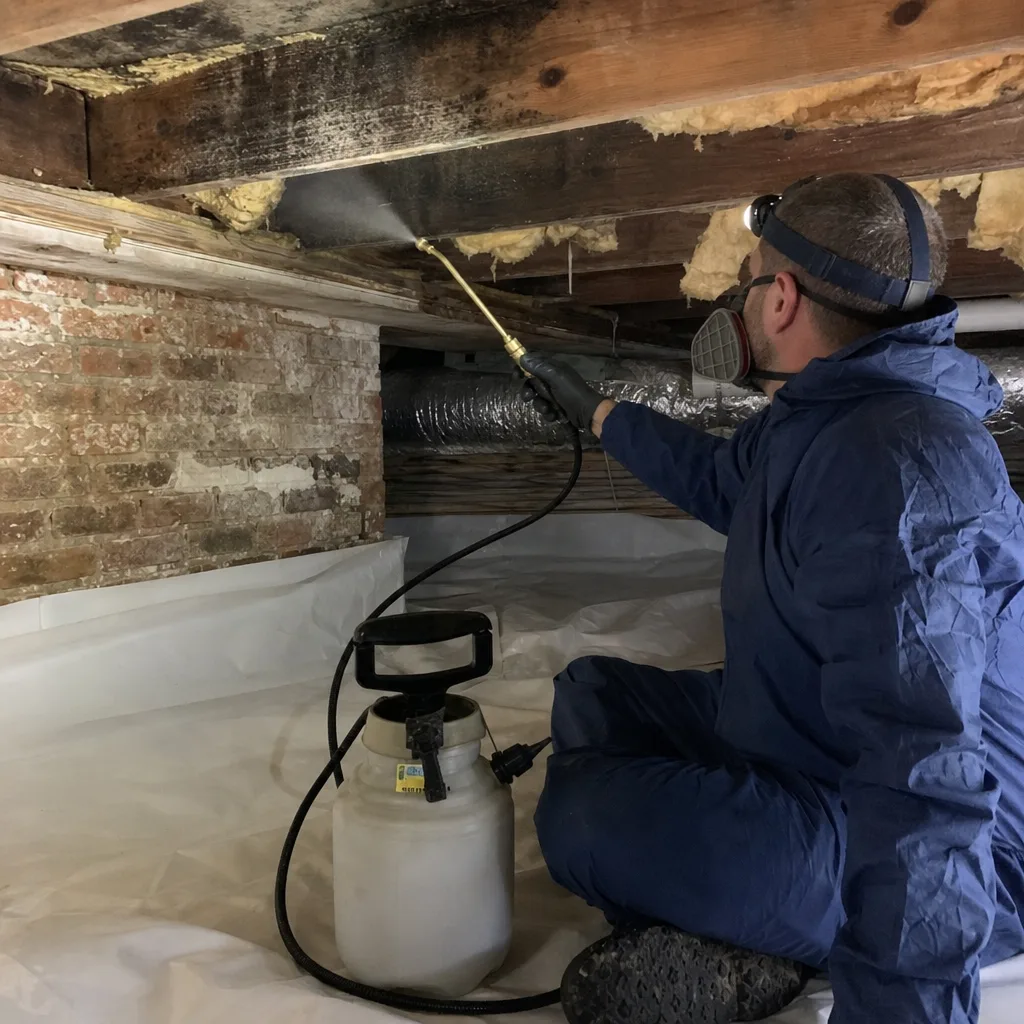
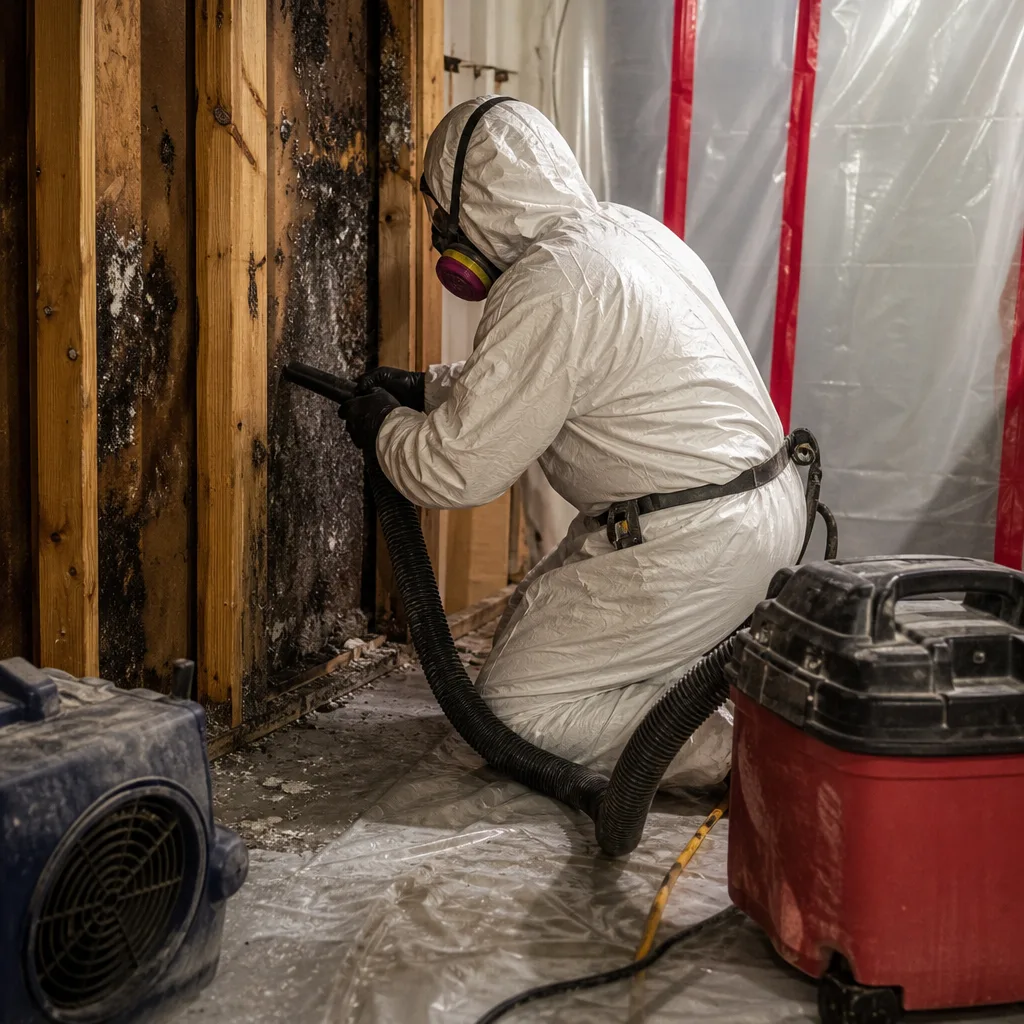
Category 3 water demands more than drying. We flood-cut contaminated drywall, remove salt-laden insulation, and apply antimicrobial treatments to framing and sill plates. HEPA air scrubbers run during work to protect the rest of the house.
Mold Prevention & Specialty Treatment
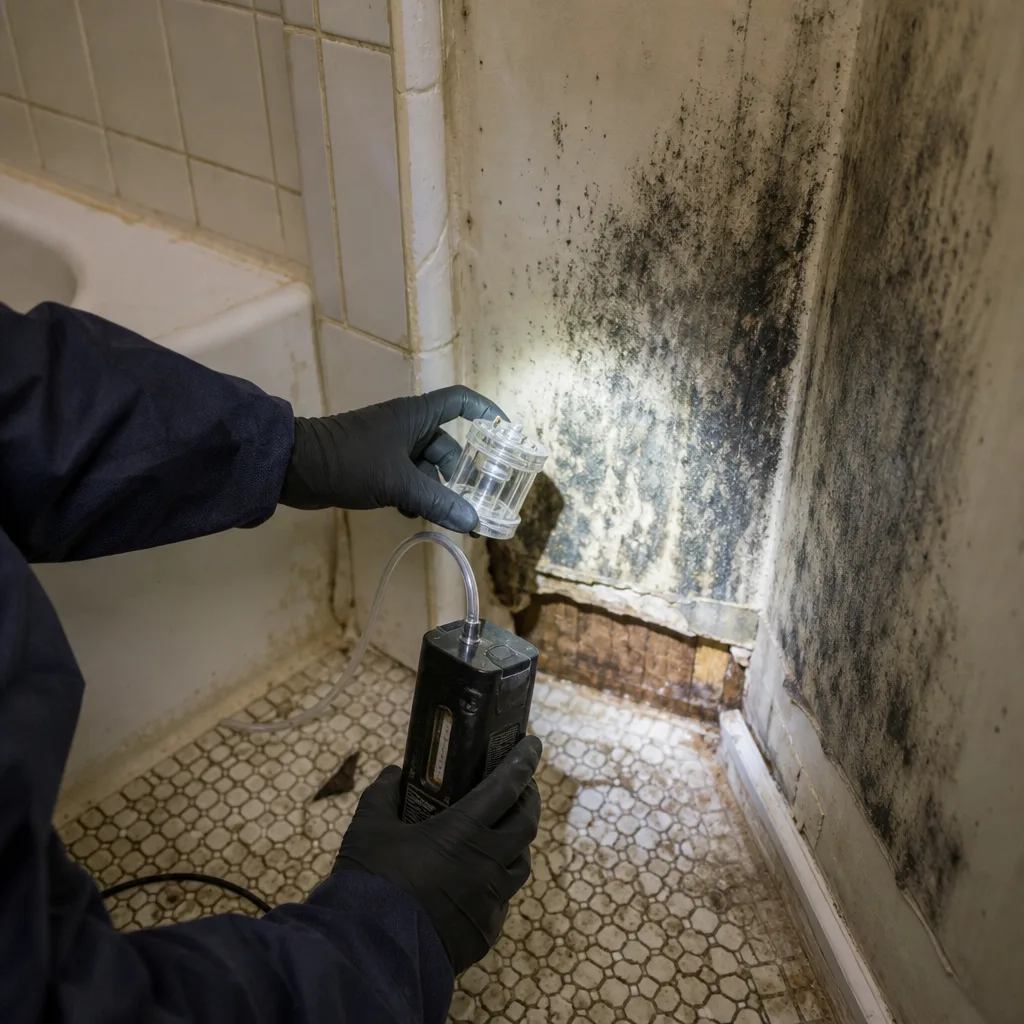
Given Little Ferry’s humidity and Sandy’s legacy, we treat exposed cavities with antimicrobial fogging before rebuild. Any old mold colonies found behind newer drywall are contained and remediated as part of the scope, with clearance testing when your carrier requires it.
Repairs & Restoration
We rebuild what was cut out: drywall, trim, flooring, subfloor assemblies, and roof sections. The crew that started extraction finishes the job. You get a moisture log and our 90-Day Done Right Promise in writing before we leave.
Need Emergency Storm & Disaster Restoration in Little Ferry Now?
Crews minutes away, answering live 24 hours a day. The sooner we start, the less it costs.
Working With Your Insurance Company
Little Ferry homeowners carry flood policies tied to FEMA Write-Your-Own programs. Those claims demand documentation. We start building the file from the first hour: photos of the waterline, moisture readings, a line-item scope, and a clear separation between new damage and any Sandy-era conditions hiding behind drywall. We write estimates in the format insurers expect and speak directly with your adjuster. You never have to negotiate the technical details alone. The more precise the documentation, the smoother the claim.
What We Provide Your Insurer
- Thorough documentation of the loss
- Photos of all damage, room by room
- Moisture readings and drying logs
- A detailed, line-item scope of work
- Direct coordination with your carrier
Built for Little Ferry’s Loss Calendar
Little Ferry’s storm losses don’t wait for a named hurricane. The tidal Hackensack River backs into residential streets during king tides and nor’easters, even when inland towns stay dry. January deep freezes burst supply lines in 1940s Cape Cods where pipes run through uninsulated crawl spaces. Spring thaw and heavy sustained rainfall saturate the Meadowlands’ low-lying lots, forcing water in through foundation seams. Summer thunderstorms overwhelm storm drains quickly in a borough with minimal topographic relief. And every few years, a Sandy-scale surge reminds everyone why flood insurance here is not optional. We plan for all of it. The dispatch calendar is built around what this river does, not what the national weather maps say.
Storm & Disaster Restoration Across Little Ferry’s Neighborhoods
Little Ferry is small, but the response routes vary. Homes along Mehrhof Road and the streets running east toward the Hackensack River take the first hit when backflow arrives. These low lots sit closest to the bulkhead, and we’ve seen repeated partial floods there, not just 2012. The central streets around Washington Avenue and Liberty Street hold the borough’s older post-WWII stock, with shallow basements and crawl spaces that hide water for days. Properties near the Teterboro line and Redneck Avenue sit marginally higher, but wind-driven rain and roof damage drive their storm losses more than standing water. We route crews from Route 46 down main avenues, knowing which blocks drain last and which basements flood first. That local knowledge cuts response time.
Specialized Storm & Disaster Restoration Services We Offer in Little Ferry
Flood Damage Restoration
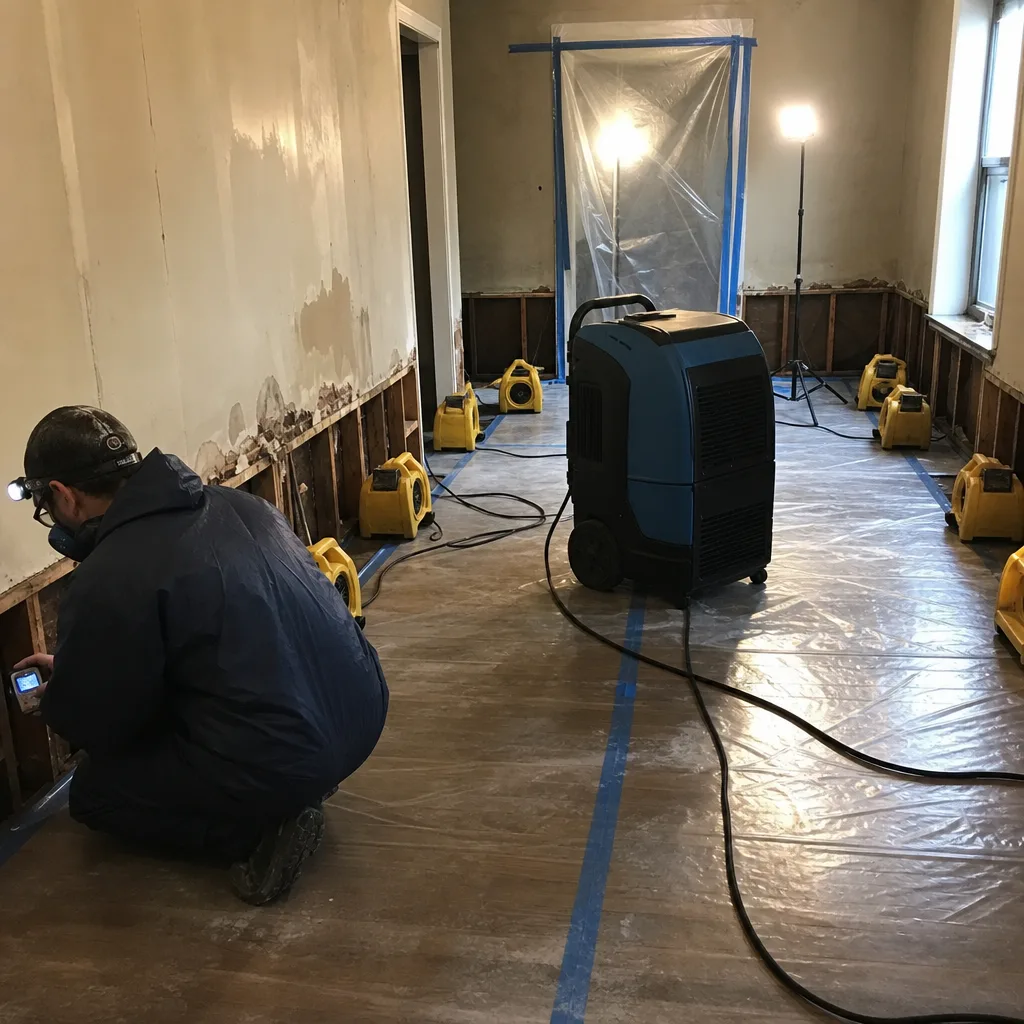
This is the service Little Ferry needs most. Tidal backflow from the Hackensack River brings category 3 water into basements and crawl spaces. We extract, flood-cut, treat, dry, and document for your flood carrier. Salt and silt don’t just wet a house. They change the scope.
Storm Damage Cleanup
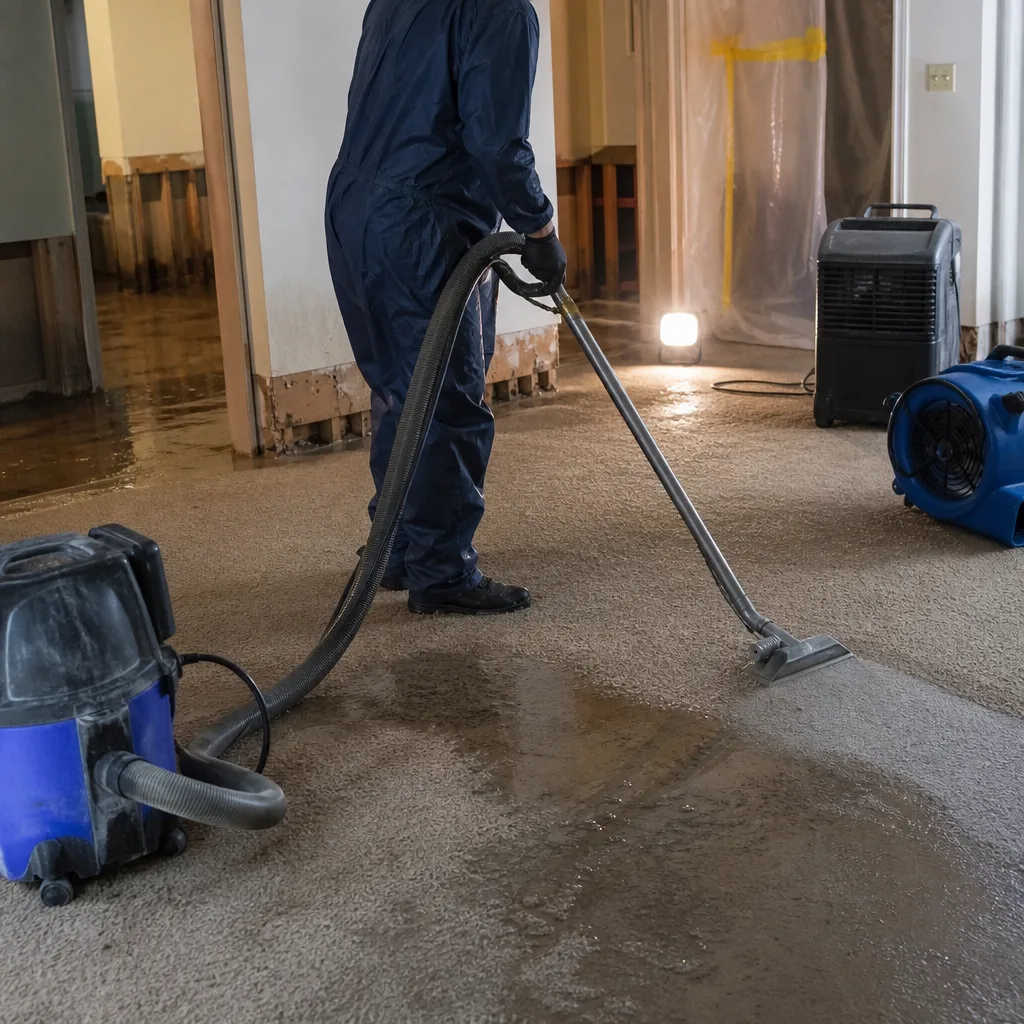
Fallen branches, storm debris, blown-out windows, and flooded yards. We clear the site, secure openings, and get the property safe before we start interior work. In a borough this low, debris left in the street becomes a drainage problem for the whole block.
Roof Tarping
Nor’easters strip shingles off 1940s and 1950s roofs. Even if water hasn’t dripped through your ceiling, a tarp stops wind-driven rain from saturating the attic and feeding mold. We tarp fast, then schedule the permanent repair. The tarp buys you time. It’s not the final answer.
Emergency Board-Up
Broken windows or blown-out doors after a storm need to be secured the same night. We board up with plywood and fasteners, make the property safe, and document the damage for your carrier before anyone else touches it.
Debris Removal
Storm debris, downed limbs, and wind-blown trash get hauled off the property. We separate what’s contaminated from what’s not, keep a record for your claim, and leave the site clear for the next phase of work.
What happens when you call
- 1
A real person answersNo phone trees - you reach a local pro.
- 2
You get an upfront price rangeHonest numbers before anyone is dispatched.
- 3
A background-checked tech heads outLicensed & insured, dispatched right away.
- 4
You approve before work beginsNothing starts until you say go.
Storm & Disaster Restoration Costs in Little Ferry, NJ
A flood damage restoration job in Little Ferry runs $1,800 to $7,500 depending on how far the water traveled and whether category 3 protocols are required. Most borough jobs land in the $2,500 to $4,500 range when water hit a finished basement, plus $800 to $2,000 if full flood-cutting and antimicrobial treatment are needed. Roof tarping runs $350 to $900 for a typical Cape Cod or ranch. Debris removal runs $250 to $800 depending on volume. Emergency board-up runs $200 to $600 per opening. What moves the price: whether the Hackensack River backed in (category 3, higher), how much drywall has to come out, and whether Sandy-era damage is hiding behind newer work. Insurance typically covers the bulk of flood losses here, especially with FEMA Write-Your-Own policies. We do free visual inspections, and the written scope means you know the number before we start. Call (917) 924-4221 and we’ll put a real number on it.
We Also Serve Cities Near Little Ferry
Our crews handle storm and disaster restoration across the Meadowlands. We serve South Hackensack, Ridgefield Park, Moonachie, and Teterboro. Same live dispatch, same certified crews, same 90-Day Done Right Promise on every job.
Little Ferry Storm & Disaster Restoration Questions, Answered
Why is floodwater in Little Ferry almost always treated as category 3 even when it looks like ordinary rainwater?
Because the source is the Hackensack River or storm drain backflow, not sky water. The river carries sewage outflows, road runoff, silt, and salt. Once it enters your home, it’s classified as category 3 water regardless of appearance. Treating it as category 3 means flood-cutting walls, removing contaminated insulation, and applying antimicrobial treatments. Skipping that step leaves sewage-tinged silt in wall cavities that turns into a health problem and a bigger claim dispute. Call us if you’re unsure. A free inspection settles the question.
How do you tell storm damage from old Sandy-era water damage in a Little Ferry home?
We pull baseboard and inspect what’s behind the drywall. A fresh event leaves a distinct waterline, saturated material, and active moisture readings. Sandy-era damage shows as a dried, darker line further down the wall, often with mold already on the old sill plate. We document both separately because your flood carrier will only pay for the new loss. Our moisture mapping separates the two. It’s a skill built from years of working the borough.
Do I need roof tarping after a nor’easter if my roof isn’t visibly leaking?
Yes, often. Nor’easters strip shingles and crack flashing even when no water shows on your ceiling yet. Wind-driven rain can enter under lifted shingles and soak the attic over days. By the time you see a ceiling stain, the decking and insulation are already wet. Tarping now stops that. It’s a $350 to $900 decision that prevents a $4,000 repair later. Call (917) 924-4221 and we’ll take a look before the next rain comes.
Why do crawl spaces in Little Ferry homes take so long to dry after a flood?
Little Ferry’s crawl spaces are low, tight, and sit below grade on lots with minimal relief. The ground itself holds water, and the air inside stays humid for weeks. You can’t dry a crawl space with a box fan. You need calculated airflow from XPOWER air movers, Dri-Eaz dehumidification, and moisture mapping to know when the structure actually hits the dry standard. Rushing this step is why buckled hardwood returns months after a flood. We don’t rush it.
How does living near the Meadowlands affect how fast mold appears after a storm?
The Meadowlands holds humidity. After any water event, the moisture that sits in your wall cavities has nowhere to go. Mold begins colonizing in 24 to 48 hours here, faster than in inland towns. That’s why response time matters more in Little Ferry than almost anywhere else in Bergen County. Our 45-minute commitment isn’t marketing. It’s the difference between drying a cavity and cutting it out. Call us the same day. Don’t wait to see if it dries on its own.
What should I do in the first 30 minutes after storm water enters my home?
First, kill the power to affected areas. Second, call (917) 924-4221. Third, don’t walk through standing water if you can avoid it, especially if it’s river backflow. Don’t run a shop vac on water you believe came from the Hackensack River, and don’t pull up carpet yourself. Category 3 water needs professional extraction and disposal. The less you disturb the contamination, the cleaner the remediation and the smoother the claim.
Will my flood insurance cover storm restoration in Little Ferry?
Most Little Ferry homeowners carry FEMA Write-Your-Own flood policies. Standard homeowner’s insurance does not cover rising water, but flood insurance does. The key is documentation. We photograph the waterline, log moisture readings, and separate new damage from any old Sandy-era conditions. That documentation is what moves the claim forward. We bill your carrier directly and speak with your adjuster. You don’t handle the paperwork alone.
What certifications do your restoration crews actually hold?
Our technicians are trained to IICRC, RIA, and IFA standards. That includes WRT for water damage restoration, FSRT for fire and smoke restoration, and AMRT for applied microbial remediation. They show up in uniform, background-checked, and they’ve worked Little Ferry’s flood profile for years. You never get a subcontractor crew on their first day. You get the crew that knows what the Hackensack River does to a 1950s foundation.
Serving Little Ferry, NJ - Our Local Coverage Area
We’re based in the Little Ferry area and know this community well. Use the map below to see our service coverage - if you’re nearby, we can almost certainly help.
Contact Floodline Restoration Co. of Manhattan for Little Ferry Storm & Disaster Restoration
If your basement is filling or your roof is open to the sky, call (917) 924-4221 now. A live dispatcher answers, not a recording. We’ll have a certified crew in Little Ferry fast, ready to extract, stabilize, and start the documentation your flood carrier needs. Same-day emergency response, free visual inspection, direct insurance billing, and the Storm & Disaster Restoration work backed by our 90-Day Done Right Promise in writing. We built this company for exactly what Little Ferry faces. We’ll be there when we say.
Written by Curt Bowman, Owner at Floodline Restoration Co. of Manhattan, serving Little Ferry and the Meadowlands.