
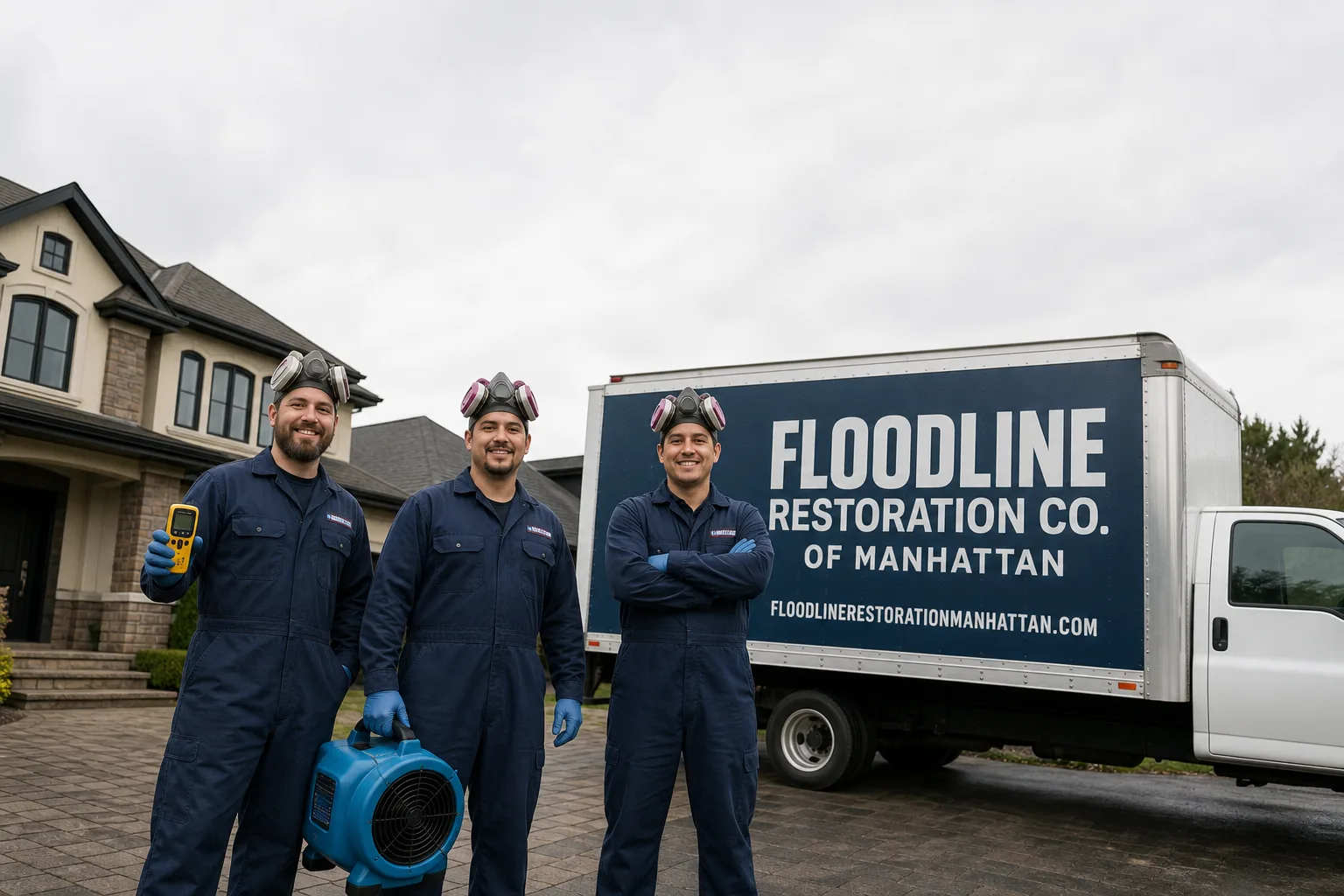
Free visual inspection and a written scope of work before any mitigation begins - photos, moisture readings, and drying logs go in your claim file
The scope we write is the scope we bill. Anything new gets shown to you, in writing, before we touch it.






 Before
 After
After Before
 After
After Before
 After
After24/7 Emergency Storm & Disaster Restoration in Long Island City
Storm damage in Long Island City rarely waits for business hours. Whether a nor’easter drove East River water into a Hunters Point basement or a summer squall tore roofing off a Vernon Boulevard loft, the first hours determine whether you’re facing a cleanup or a full reconstruction. Our crews answer live at (917) 924-4221 around the clock, every day of the year, and we dispatch teams into Long Island City within 45 minutes of your call. The first hour matters because brackish river water starts corroding electrical panels and galvanized steel within days, not weeks.
Every Long Island City job starts with a free visual inspection. We walk the damage, mark the floodline, and tell you straight what needs to happen and what it will cost before any equipment comes off the truck. No pressure, no inflated scope. Just a clear plan from a crew that has worked LIC’s saltwater floods, wind-driven leaks, and post-Sandy moisture problems for years.
Understanding Storm & Disaster Restoration Severity in Long Island City Properties
Not all storm water is equal, and in Long Island City the difference matters more than in inland Queens. Floodwater from the East River is Category 3 water: brackish, contaminated with sewage and harbor sediment, and corrosive to anything metal it touches. A basement sump overflow from a thunderstorm might be Category 2 water, while a clean supply-line break inside a building falls under Category 1. We classify the water before we touch it because the classification dictates the entire restoration scope.
Long Island City’s building stock makes severity assessment more complicated than the water category alone. Converted pre-war lofts in Hunters Point have original heavy-timber framing that wicks water vertically through brick party walls, spreading moisture far beyond the visible puddle. Newer waterfront high-rises trap humidity in sealed envelope spaces, and below-grade mechanical rooms in Zone AE buildings sit below base flood elevation by definition. Moisture mapping with thermal imaging and hygrometers tells us where the water actually went, not just where it pooled.
Wind-driven storm damage follows a different path. Missing roofing on a LIC warehouse conversion lets rain travel across open floor plates, and a single failed window seal on an east-facing Jackson Avenue high-rise can force water through multiple ceiling cavities before anyone notices a stain. The severity question is always: how long has water been moving, and what did it touch along the way.
Why Long Island City Property Owners Choose Floodline Restoration Co. of Manhattan
- 45-minute response commitment. When a storm hits LIC, our crews are already staged in the area. We commit to dispatch within 45 minutes of your call, and we meet that commitment because we schedule around emergencies, not around a sales desk.
- 24/7 live answer, every time. A real dispatcher picks up at 2 a.m. during a January freeze or a July thunderstorm. You will never reach an automated system when your basement is filling with East River water.
- IICRC-certified crews on every job. Our technicians hold WRT, FSRT, and AMRT certifications, and they arrive in uniform with background checks already on file. You know who is walking into your home.
- Free visual inspection, no obligation. We assess the damage, give you a straight read on severity, and quote a firm scope. You decide. No one pressures you into unnecessary work.
- Direct insurance billing. We document everything from the first hour, bill the carrier directly, and talk to your adjuster so you don’t have to play messenger between Floodline and the insurance company.
- One team from extraction to reconstruction. The same crew that runs the dehumidifiers also rebuilds the drywall. No handoff, no second contractor, no friction between drying and reconstruction.
Our Storm & Disaster Restoration Process
Inspection & Assessment
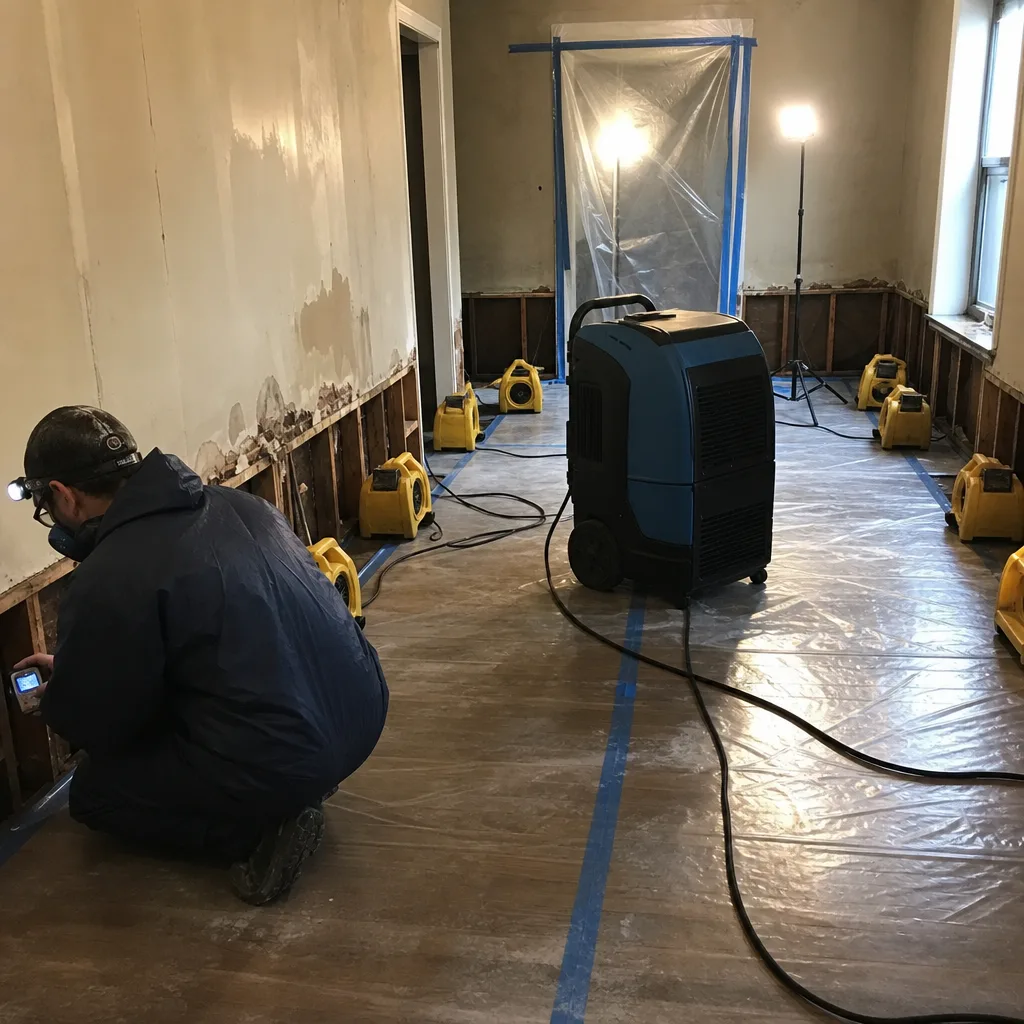
We arrive, walk every affected room, and mark the floodline where visible. Thermal imaging and moisture meters map how far water has wicked into walls, floors, and structural framing. You get a written scope before any work starts.
Extraction & Stabilization
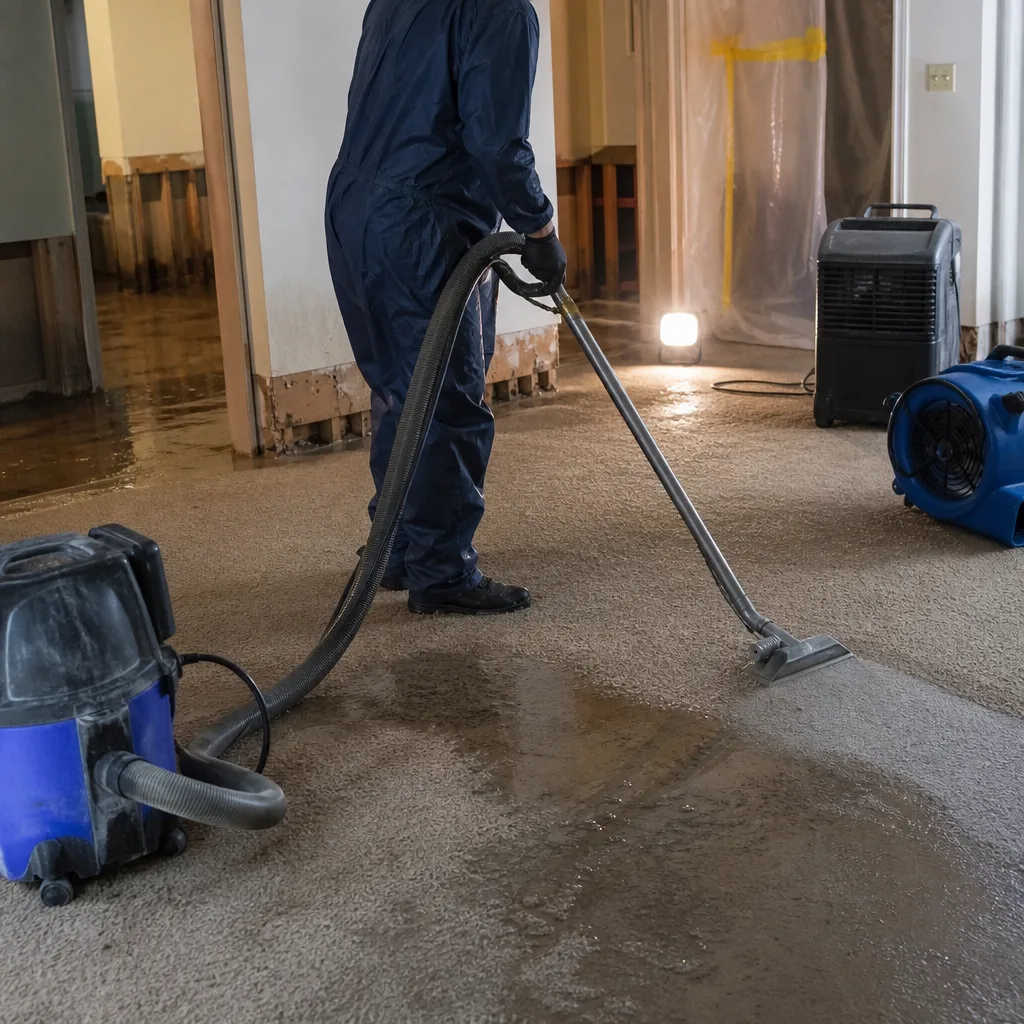
Standing water comes out first, using truck-mounted and portable extraction units. We remove saturated drywall, carpet, and insulation that cannot be saved, and we set up containment to stop contaminated dust and spores from spreading through the building.
Drying & Dehumidification
Dri-Eaz dehumidifiers and XPOWER air movers run continuously, positioned by moisture map readings. We record daily readings on every affected material, and we keep running equipment until structural wood and drywall hit pre-loss moisture levels.
Cleaning & Sanitization
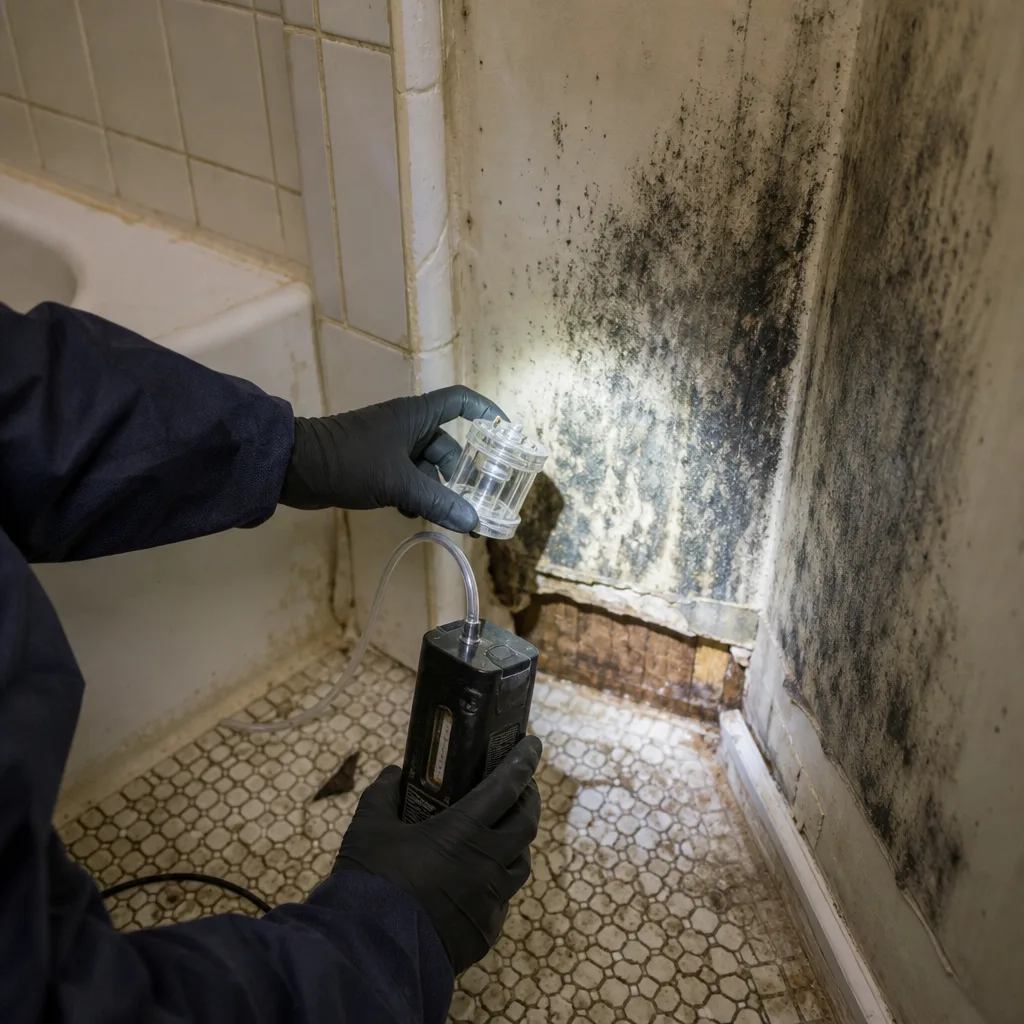
Category 2 and 3 water leaves biological contamination behind. We apply antimicrobial treatments to affected surfaces, clean salvageable contents, and run HEPA air scrubbers to pull particulates from the air. Your home is clean, not just dry.
Saltwater-Specific Treatment
Long Island City storm water is brackish, so we rinse and treat metal surfaces, electrical raceways, and mechanical equipment that salt would otherwise corrode. This step is non-negotiable in Zone AE buildings, and it is the difference between a complete restoration and a recurring corrosion problem.
Repairs & Restoration
We replace drywall, insulation, flooring, and finish work, and we rebuild mechanical rooms to current code. If your building requires BFE documentation for DOB sign-off, we coordinate with your expeditor and engineer so the job passes inspection the first time.
Need Emergency Storm & Disaster Restoration in Long Island City Now?
Crews minutes away, answering live 24 hours a day. The sooner we start, the less it costs.
Working With Your Insurance Company
Storm and disaster restoration claims in Long Island City carry extra documentation weight because so many buildings sit in FEMA flood Zone AE. Your carrier wants proof of cause, category classification, moisture readings, and a detailed scope before they release funds. We build that file from the first hour on site, so nothing gets challenged later. Our team photographs every affected room, logs every moisture reading daily, and writes line-item scopes that speak the language adjusters expect to see.
We bill your carrier directly for covered work. You are not advancing money and hoping for reimbursement, and you are not stuck interpreting policy language alone. When your adjuster has questions about why a LIC basement mechanical room needed full gut-out rather than spot drying, we answer with documented evidence, not opinion.
What We Provide Your Insurer
- Thorough documentation of the loss
- Photos of all damage, room by room
- Moisture readings and drying logs
- A detailed, line-item scope of work
- Direct coordination with your carrier
Built for Long Island City’s Loss Calendar
Long Island City sees storm losses in a rhythm that mirrors the East River itself. January and February deep freezes burst supply lines in unheated basement mechanical rooms, and the floodwater sits in sub-grade spaces until someone notices a ceiling stain two floors up. Spring snowmelt and heavy rain push groundwater into the same below-grade rooms through foundation cracks and floor drains, a problem made worse by LIC’s high water table and proximity to the river.
Summer brings thunderstorm flash flooding that overwhelms the neighborhood’s combined sewer system, backing Category 2 water up through basement floor drains in minutes. Fall is nor’easter season, when storm surge and wind-driven rain attack the waterfront blocks around Hunters Point and the east-facing facades along Jackson Avenue. The converted brick-and-heavy-timber lofts throughout LIC feel nor’easters hardest: wind pushes rain through aging window frames and roofing, and water spreads laterally across original open floor plans before anyone knows there’s a problem.
Every storm season leaves behind a fresh crop of buildings with incomplete drying from the last event. Post-Sandy reconstruction in basement mechanical rooms often skipped full substrate drying, so chronic moisture hides behind new finishes until the next wet season reveals it. We find those problems with moisture mapping, and we fix them properly the first time.
Storm & Disaster Restoration Across Long Island City’s Neighborhoods
Hunters Point is ground zero for East River storm surge in Long Island City. The converted warehouse lofts along Vernon Boulevard and 51st Avenue have below-grade mechanical rooms that were inundated during Sandy and remain in the 100-year floodplain today. When a nor’easter pushes river water into these basements, salt contamination and BFE compliance drive the restoration scope, not just water removal.
Court Square and Queens Plaza present a different profile. The newer glass-and-steel high-rises around Jackson Avenue and 44th Drive rarely flood at street level, but wind-driven rain forces water through curtain-wall joints and window seals on upper floors, and the damage often travels down multiple levels before detection. These jobs are about drying concealed cavities without tearing out architectural finishes unnecessarily.
Dutch Kills and the industrial blocks around Review Avenue bring their own set of problems. Aging pre-war walkups and active light-industrial buildings have flat roofs that pond water and drain poorly. Storm water finds the path of least resistance through roofing, skylights, and aging parapet flashing, then drips through ceilings and into tenant spaces. Emergency board-up and roof tarping keep the damage from multiplying before permanent repairs start.
Along the East River waterfront from Center Boulevard to Gantry Plaza State Park, the newer residential buildings face salt spray and wind-driven rain against east and south-facing facades. Repeated exposure leaves window seals and exterior flashings compromised, and moderate coastal storms drive water into units that never saw a drop during construction. Our crews know these buildings and the typical failure points in their envelopes.
Specialized Storm & Disaster Restoration Services We Offer in Long Island City
Flood Damage Restoration
Long Island City flood damage always carries the saltwater question. East River water is brackish, and a basement pump-out without salt rinse and corrosion protection leaves galvanized steel, electrical panels, and even new mechanical equipment failing within months. Our flood restoration includes Category 2 and 3 water extraction, salt-specific treatment of metal surfaces, structural drying, and BFE documentation for any below-grade system we restore. We do the whole job, not just the pump-out.
Storm Damage Cleanup
After wind and rain pass, LIC properties are left with debris, broken glass, saturated materials, and often hidden water migration through converted loft floors and original brick party walls. We clear debris, remove unsalvageable material, set up containment, and dry the building properly. Storm cleanup in Long Island City without moisture mapping leaves behind the conditions for mold and corrosion, and we do not do incomplete work.
Emergency Board-Up
A broken window on Jackson Avenue or a punctured roof on a Hunters Point loft conversion puts your whole building at risk overnight. We board up openings, tarp compromised roofs, and secure the property before looters, rain, or animals get inside. Emergency board-up in Long Island City is not a temporary patch and a shrug; it is the first step in a written restoration plan.
What happens when you call
- 1
A real person answersNo phone trees - you reach a local pro.
- 2
You get an upfront price rangeHonest numbers before anyone is dispatched.
- 3
A background-checked tech heads outLicensed & insured, dispatched right away.
- 4
You approve before work beginsNothing starts until you say go.
Storm & Disaster Restoration Costs in Long Island City, NY
Storm and disaster restoration in Long Island City runs higher than inland Queens because saltwater adds treatment steps and Zone AE compliance adds documentation. A typical basement flood cleanup with full extraction, drying, and sanitization runs $4,000 to $12,000 depending on square footage and water category. Roof tarping and emergency board-up run $800 to $3,500 as a first stabilization step. Full restoration of a below-grade mechanical room after East River inundation, including salt treatment and BFE documentation, runs $15,000 to $45,000 or more depending on equipment replacement.
What moves the price: how long water sat before we arrived, whether structural framing needs drying or replacement, and whether your building requires expeditor and engineer involvement for DOB sign-off. Insurance covers most storm-related losses, and we bill your carrier directly. The free visual inspection is how you get a firm scope and an exact number before committing to anything. Call (917) 924-4221 and we’ll come look.
We Also Serve Cities Near Long Island City
Our crews serve the full Storm & Disaster Restoration team across Queens and the surrounding area, including Storm & Disaster Restoration in Sunnyside, Woodside, Astoria, and Maspeth. If you are in a neighboring community and need help, call the same 24/7 dispatch line and we will route a team to you.
Long Island City Storm & Disaster Restoration Questions, Answered
How does saltwater flooding in Long Island City differ from freshwater basement flooding for restoration?
Saltwater flooding in Long Island City requires rinsing and treating every metal surface the water touched, because brackish East River water corrodes galvanized steel, electrical panels, and mechanical equipment within weeks. Freshwater flooding from a supply-line break does not carry that corrosion risk. We treat saltwater jobs with dedicated rinses and protective applications before drying begins.
Why do LIC storm restoration jobs often require a DOB expeditor and structural engineer?
Because Long Island City sits in FEMA flood Zone AE, NYC post-Sandy rules require mechanical systems rebuilt in Zone AE buildings to be elevated above base flood elevation. A restoration in a below-grade mechanical room must document BFE compliance before DOB signs off. We coordinate with your expeditor and engineer so the restoration passes inspection the first time.
Which parts of a LIC loft conversion are most vulnerable to wind-driven storm water during a nor’easter?
The east-facing windows and roof edges on converted Hunters Point lofts take the brunt of nor’easter wind and rain. Original wide-open floor plans mean water that enters through one failed window or roof penetration travels laterally across the entire floor, soaking drywall and insulation far from the entry point. We moisture-map these buildings thoroughly because visible damage rarely shows the full extent.
How quickly can mold appear in a LIC basement after a minor East River flood?
Mold can begin growing in a damp Long Island City basement within 24 to 48 hours, especially in the warm, humid months. Saltwater actually slows some mold growth but speeds up corrosion, so the two problems compound: you may not see mold immediately, but the corrosion is already underway. Call us the same day water appears, and we can usually prevent both.
Why do some LIC buildings keep getting moisture problems years after Hurricane Sandy?
Most often, the original post-Sandy restoration did not fully dry the substrate before new finishes went over it. Moisture trapped behind drywall, under flooring, or inside original brick party walls keeps re-wetting the space every time groundwater rises. We find these hidden reservoirs with moisture mapping and remove them, so the problem stops recurring.
How fast can you actually get to a Long Island City property?
We commit to 45-minute dispatch into Long Island City, and we meet that commitment because our crews are staged throughout the area during storm events. A live dispatcher takes your call at (917) 924-4221 any hour, any day, and a certified team is on the way immediately.
Can we stay in our LIC home during storm restoration?
Sometimes. If the affected area can be contained and the building’s utilities remain safe, you can often stay in place. If Category 3 water contaminated living spaces, or if electrical systems are compromised, we will tell you plainly that temporary relocation is safer. We give you a straight answer based on the actual conditions, not a blanket policy.
What should we do in the first 30 minutes after storm water enters our Long Island City building?
Call us at (917) 924-4221 first. Do not walk through standing water if electrical panels or outlets are nearby. Do not run any equipment or appliances that got wet. If you can safely turn off power to the affected area, do so. Then stay out and let our crew assess the scene with proper equipment and protection.
Serving Long Island City, NY - Our Local Coverage Area
We’re based in the Long Island City area and know this community well. Use the map below to see our service coverage - if you’re nearby, we can almost certainly help.
The Long Island City Saltwater Problem Other Restoration Companies Miss
Long Island City sits in FEMA flood Zone AE, and the East River’s brackish water means every post-storm restoration here must treat Category 2 or 3 water as salt-contaminated. That salt attacks galvanized steel, electrical panels, and even brand-new mechanical equipment within weeks if not rinsed and protected. We see a recurring failure pattern in LIC that virtually never appears inland in Astoria or Sunnyside: a building got pumped out and dried after a flood, everything looked fine, and then six months later the boiler controls corroded out or the panel breakers started tripping. The water was gone. The salt was not.
That is why our Long Island City storm restoration always includes a salt-specific treatment phase: rinsing metal surfaces, applying corrosion inhibitors where appropriate, and documenting every treated material in the drying log for your insurance carrier. It is not an add-on. It is part of doing the job correctly here.
When a nor’easter pushed several inches of East River water into a Hunters Point warehouse conversion, our crew was on-site within 90 minutes. We set up containment around the basement mechanical room, ran our Dri-Eaz dehumidifiers and XPOWER air movers, and used moisture mapping to identify saltwater wicking into the original brick party walls. After extracting the Category 3 water, we removed saturated drywall, applied antimicrobial treatment, and documented drying logs until the structural wood hit pre-loss moisture readings, all before the client’s DOB expeditor arrived to sign off on the BFE compliance.
That job is not unusual for Long Island City. It is what a complete storm restoration looks like here. If you have water in your building, call (917) 924-4221 and we will get the same process started for you. Long Island City property owners deserve restoration that accounts for LIC’s actual conditions, not a generic pump-out and a shrug.
Written by Curt Bowman, Owner at Floodline Restoration Co., serving Long Island City since 2010.