
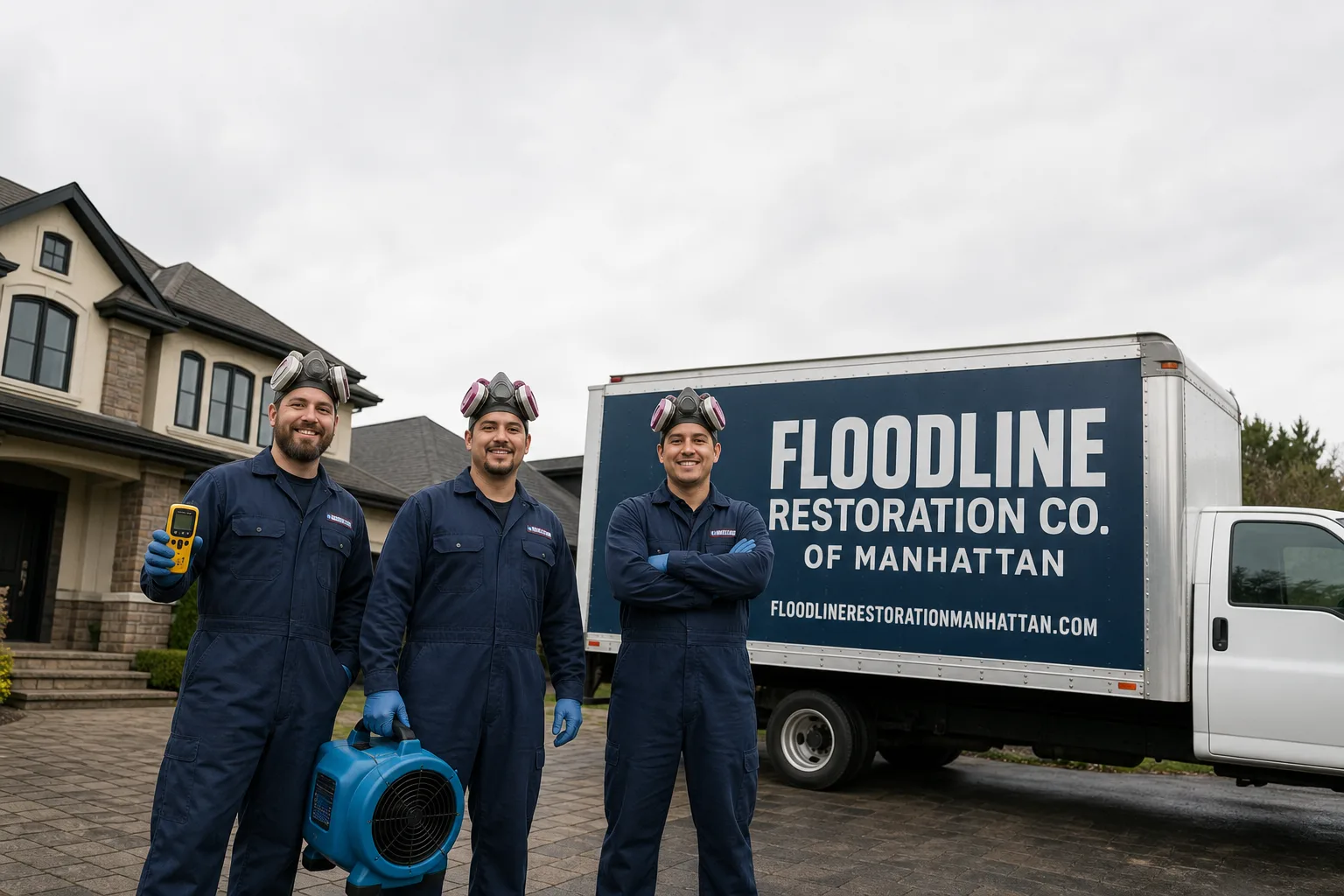
Free visual inspection and a written scope of work before any mitigation begins - photos, moisture readings, and drying logs go in your claim file
The scope we write is the scope we bill. Anything new gets shown to you, in writing, before we touch it.
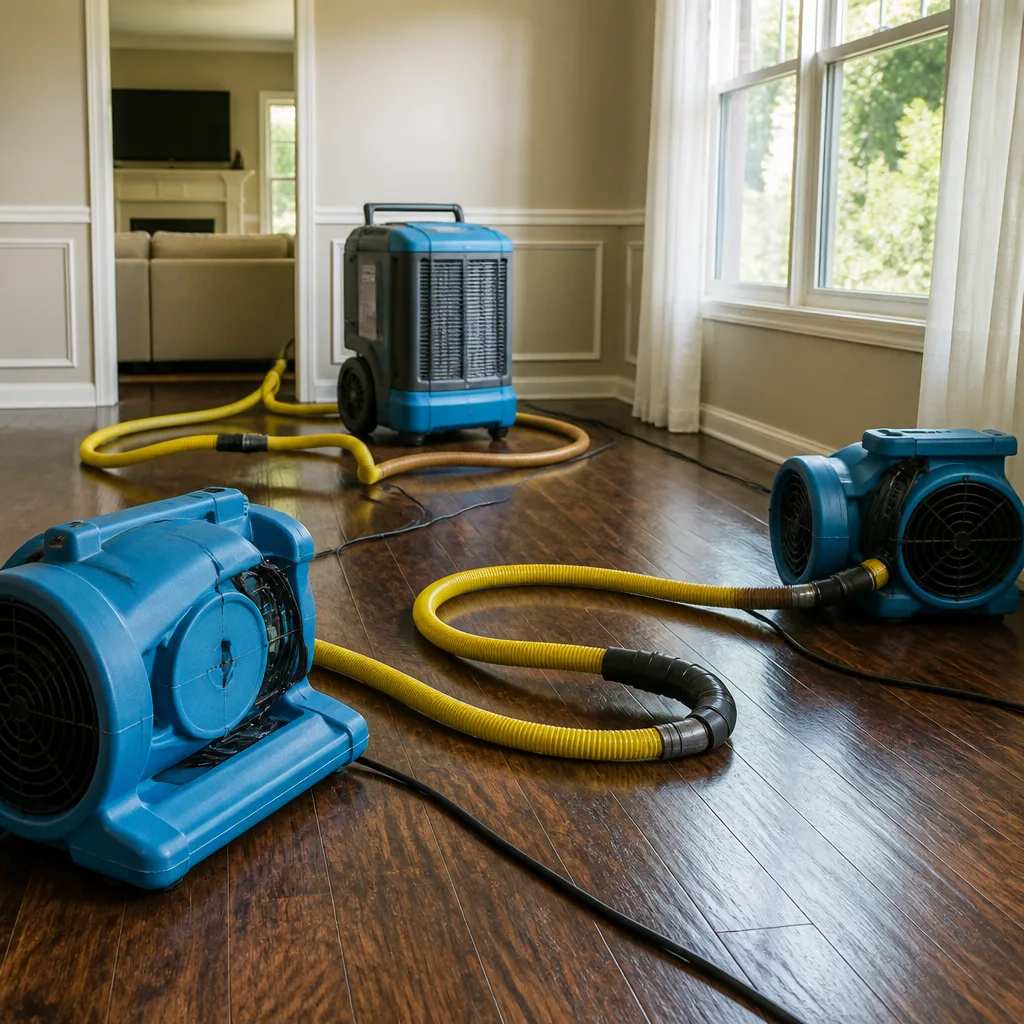
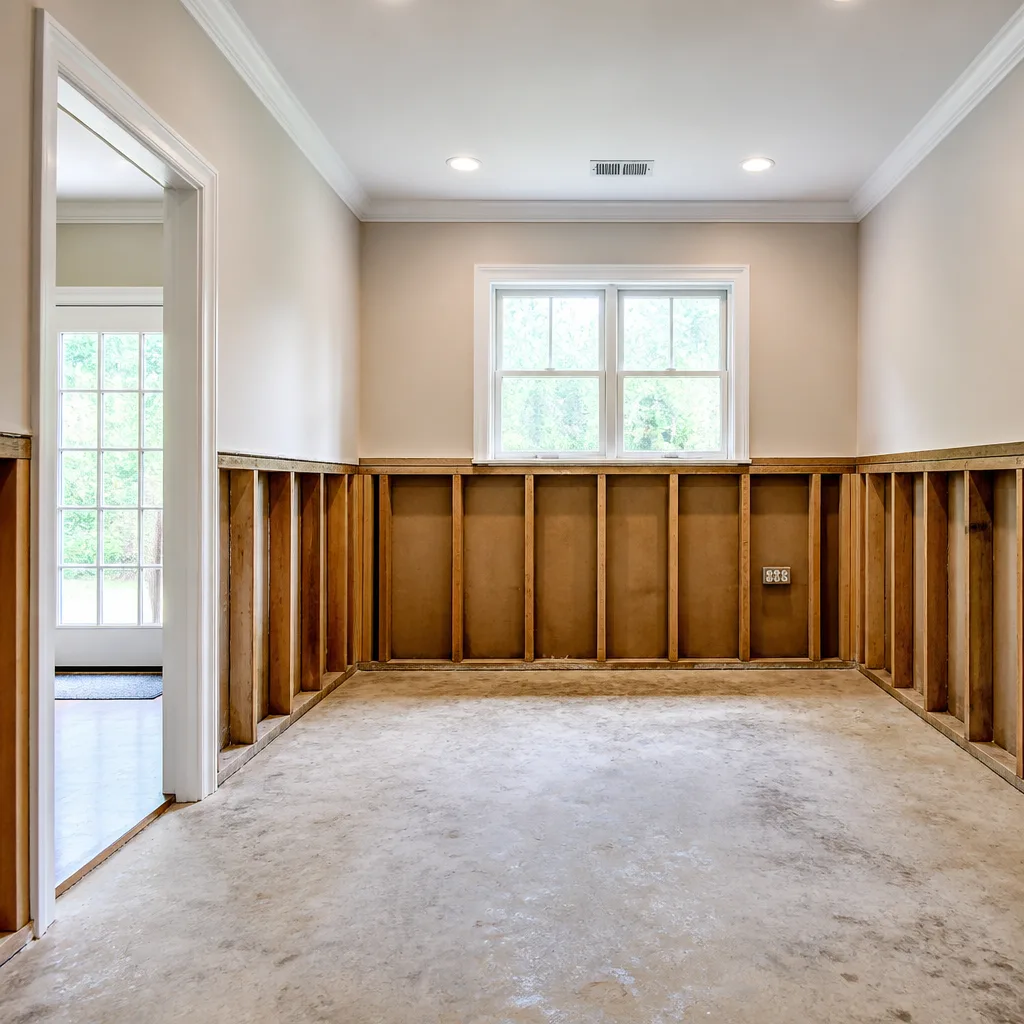

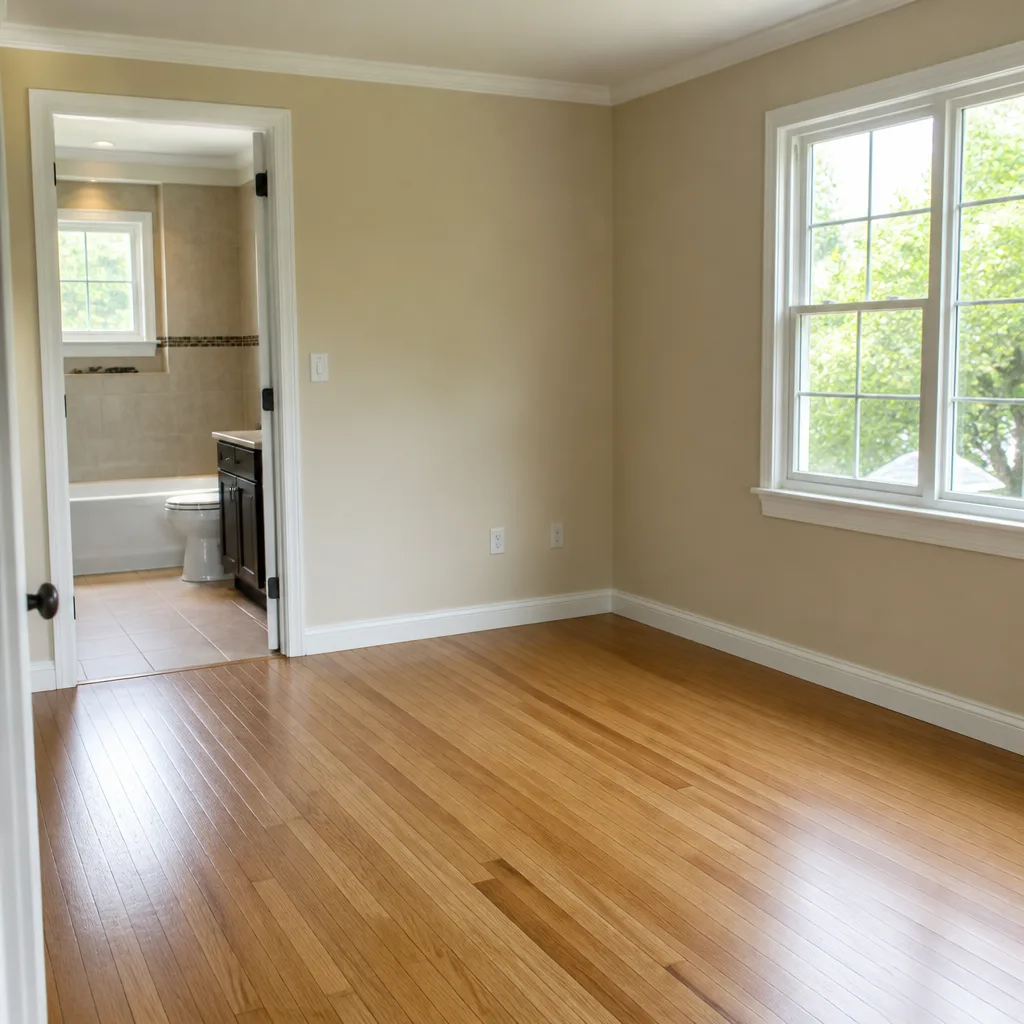
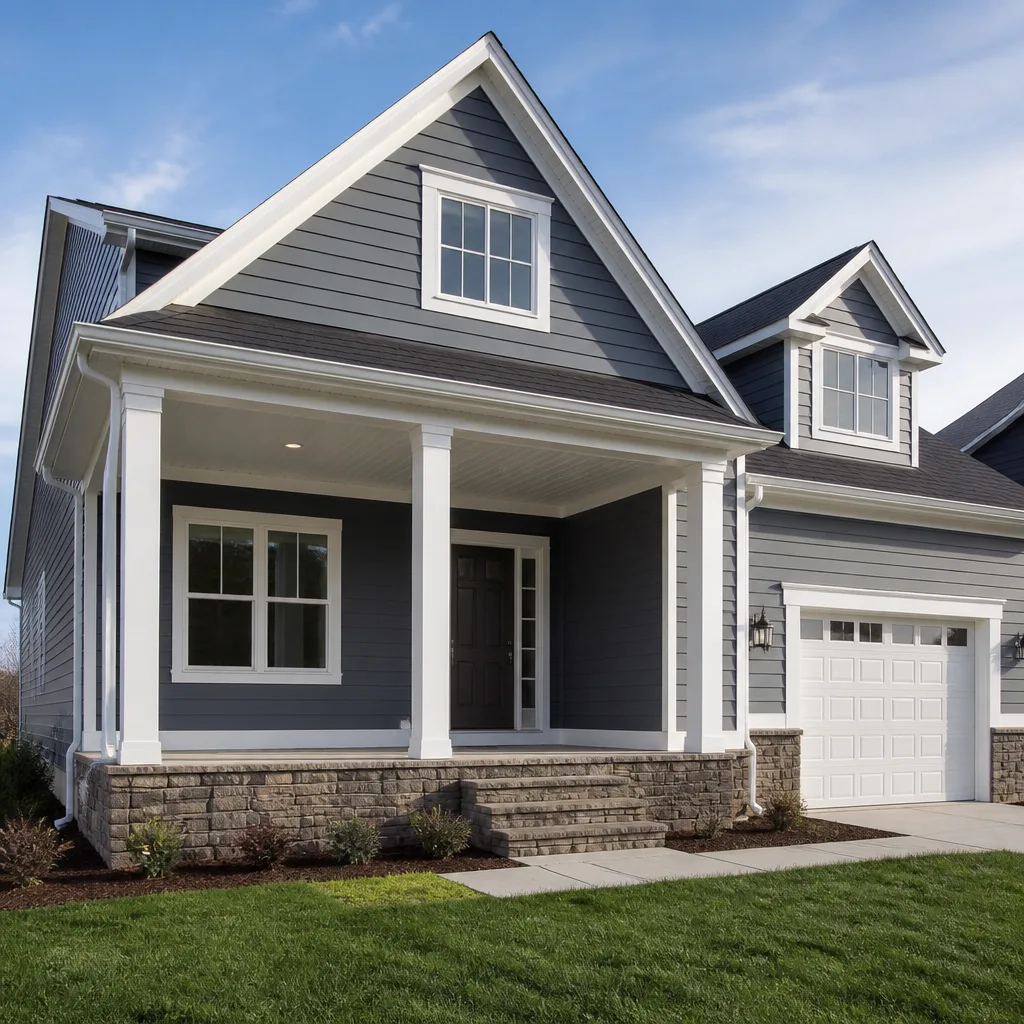
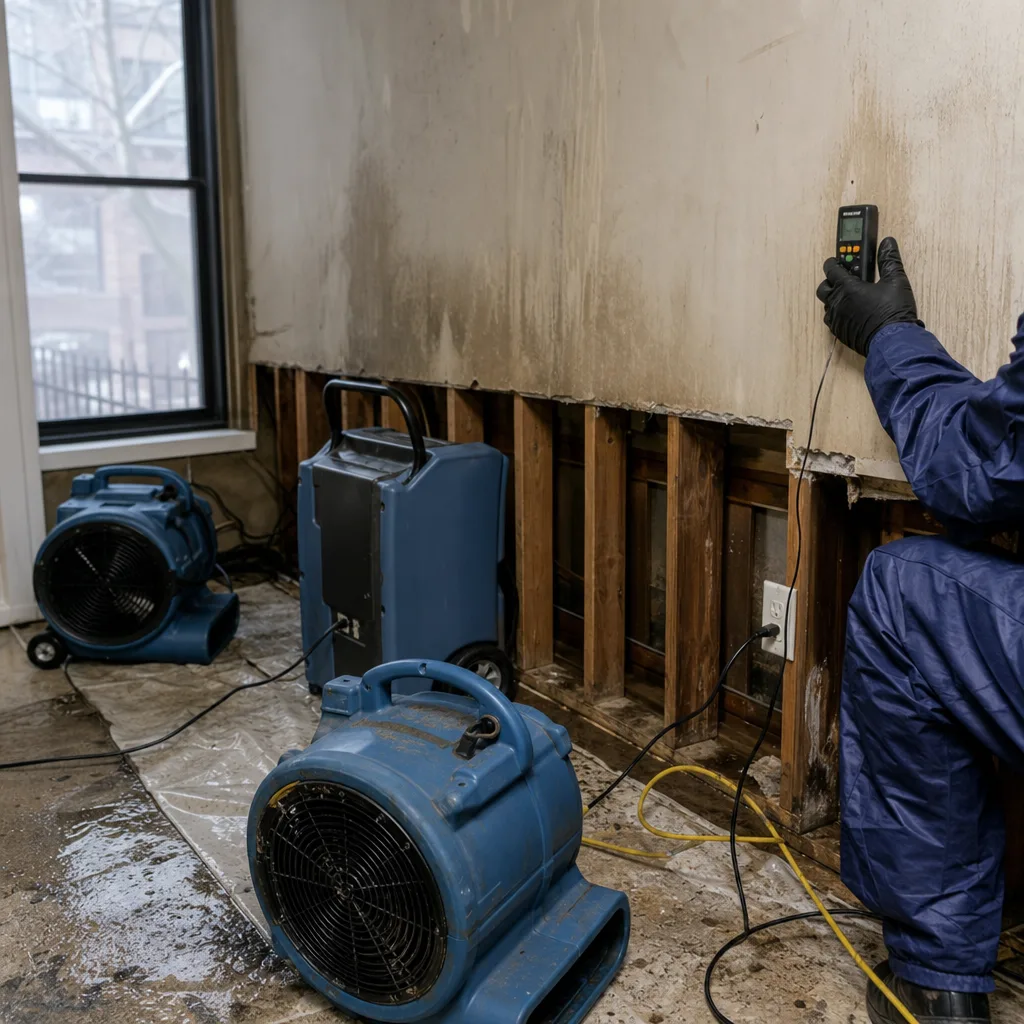 Before
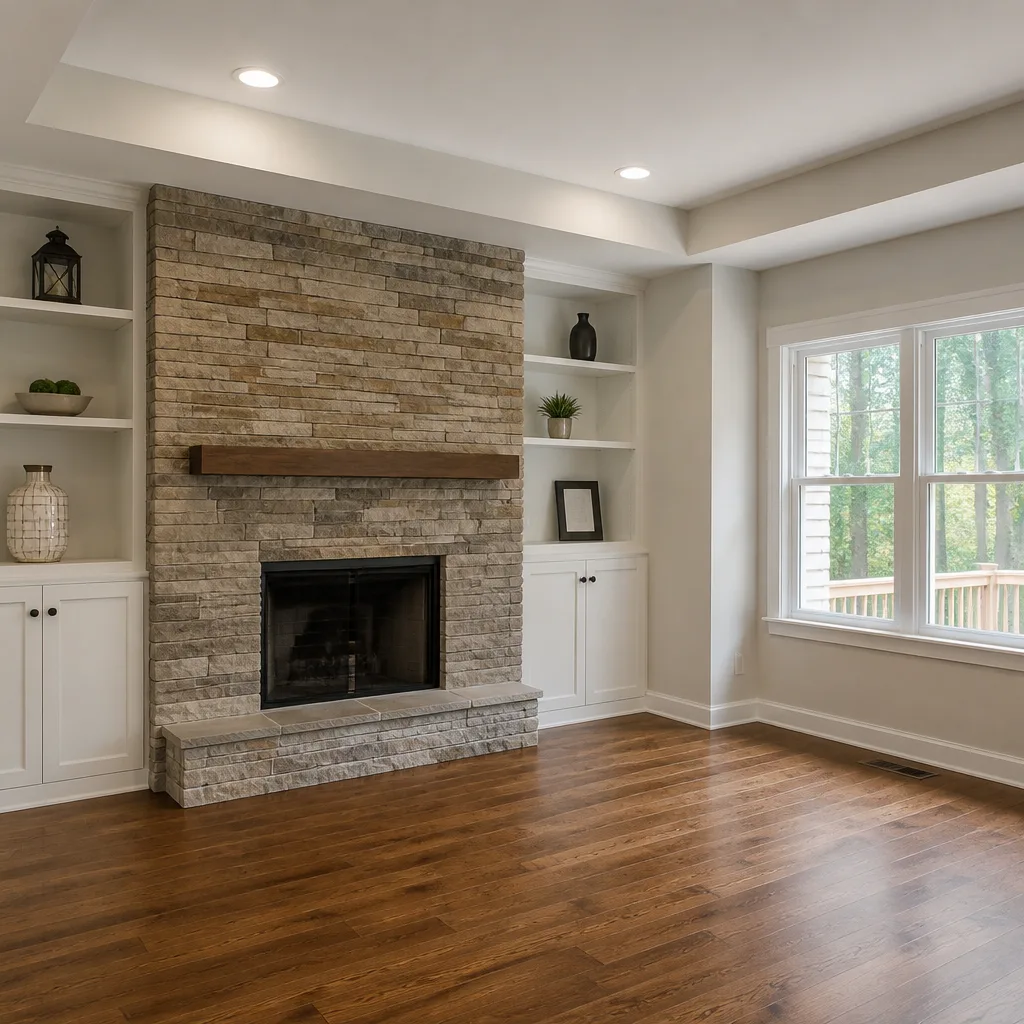
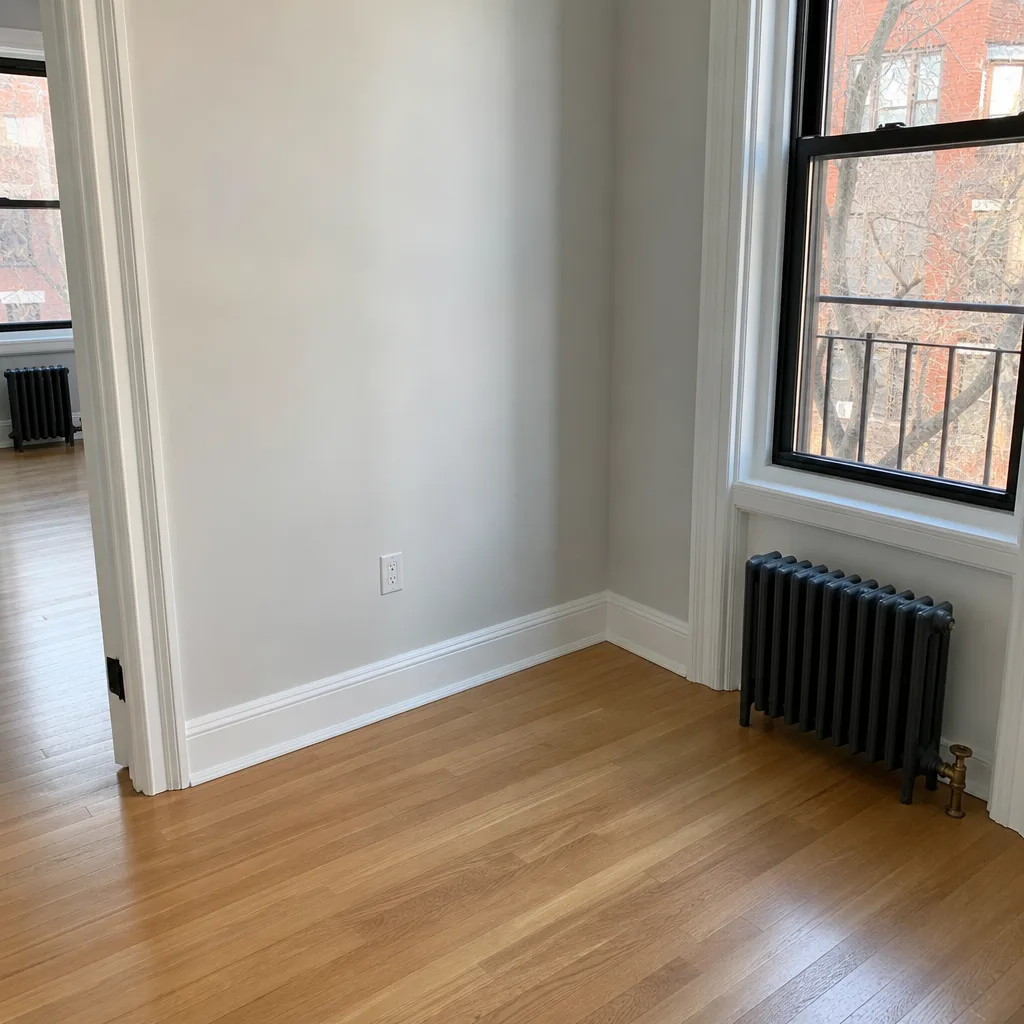 After
After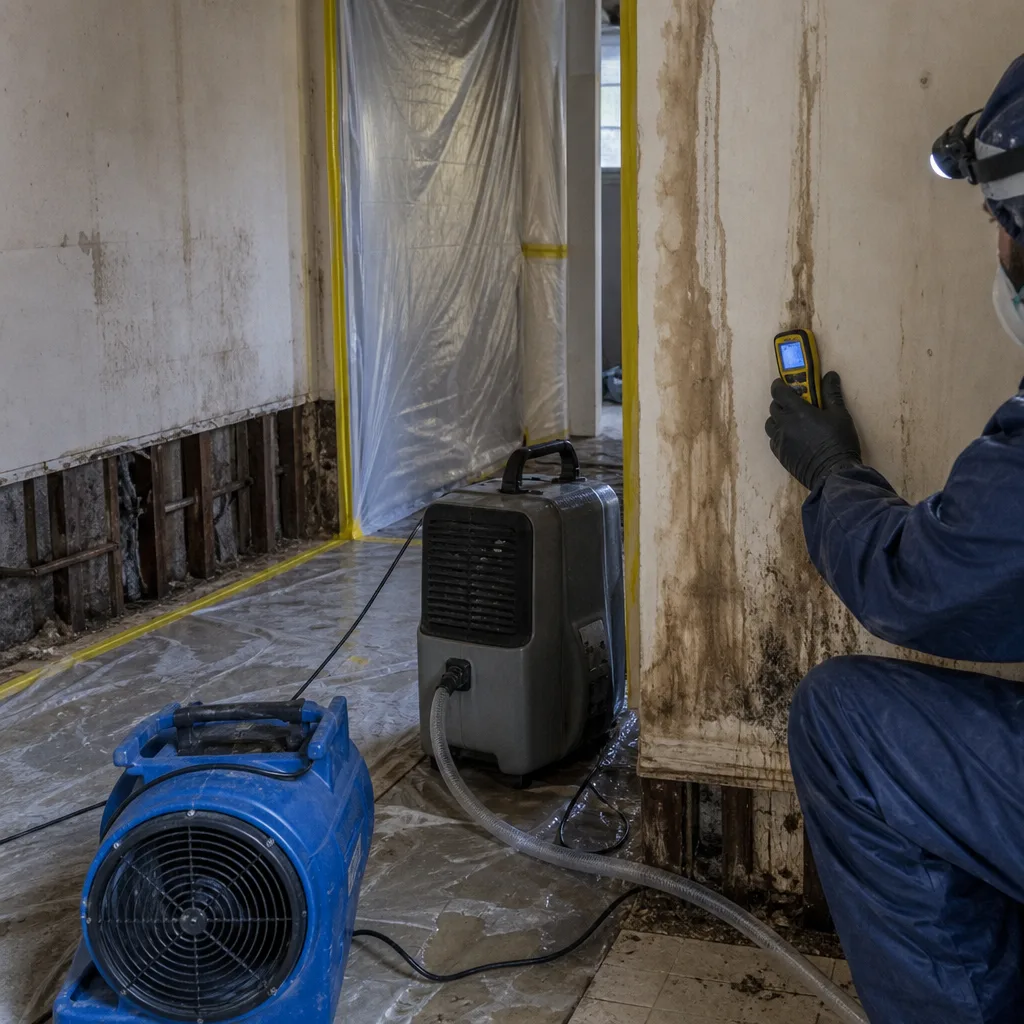 Before
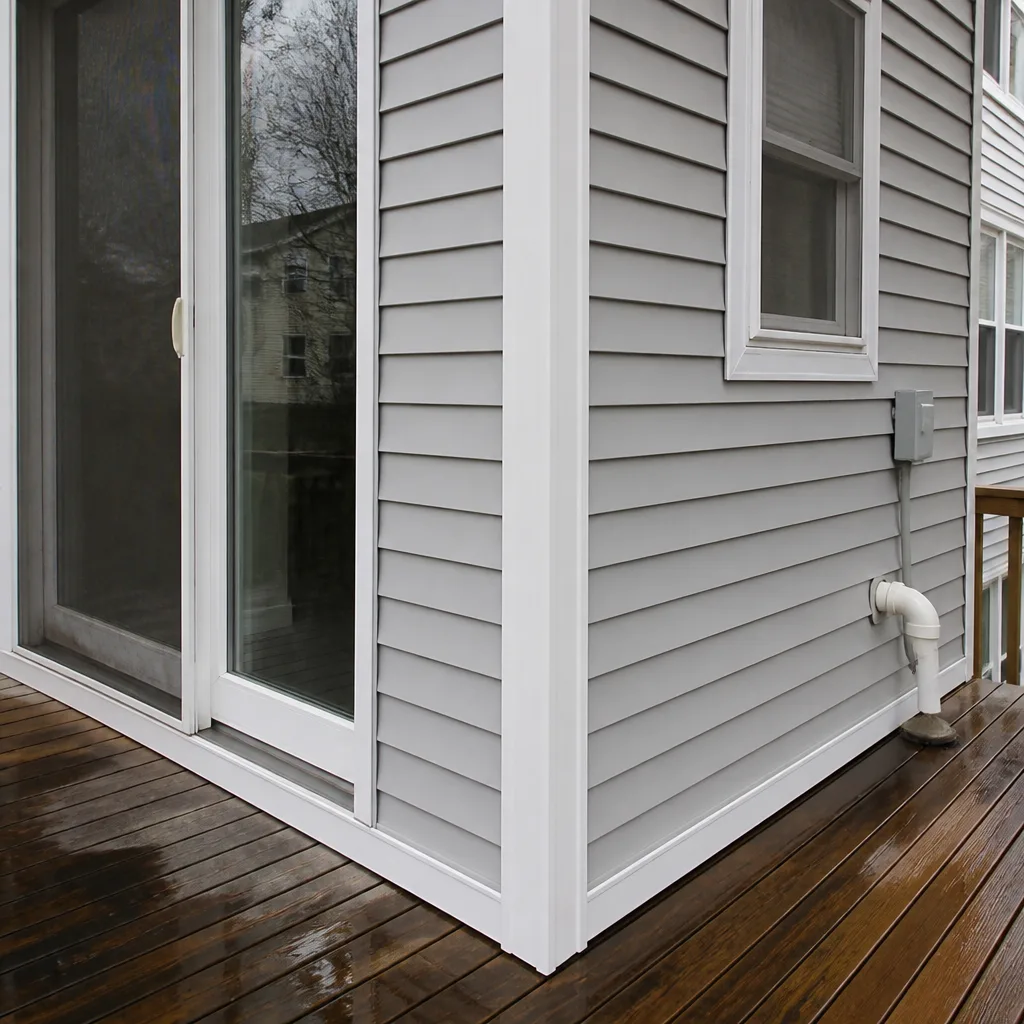 After
After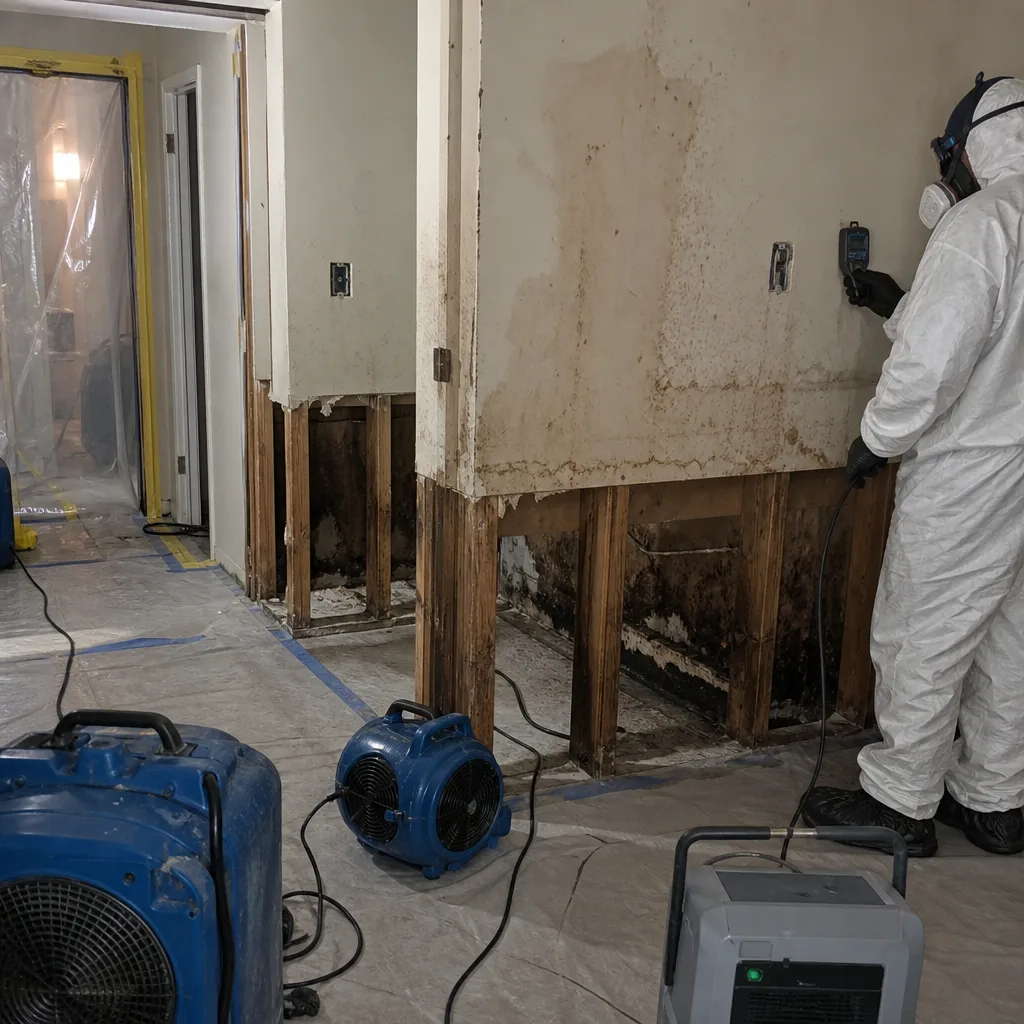 Before
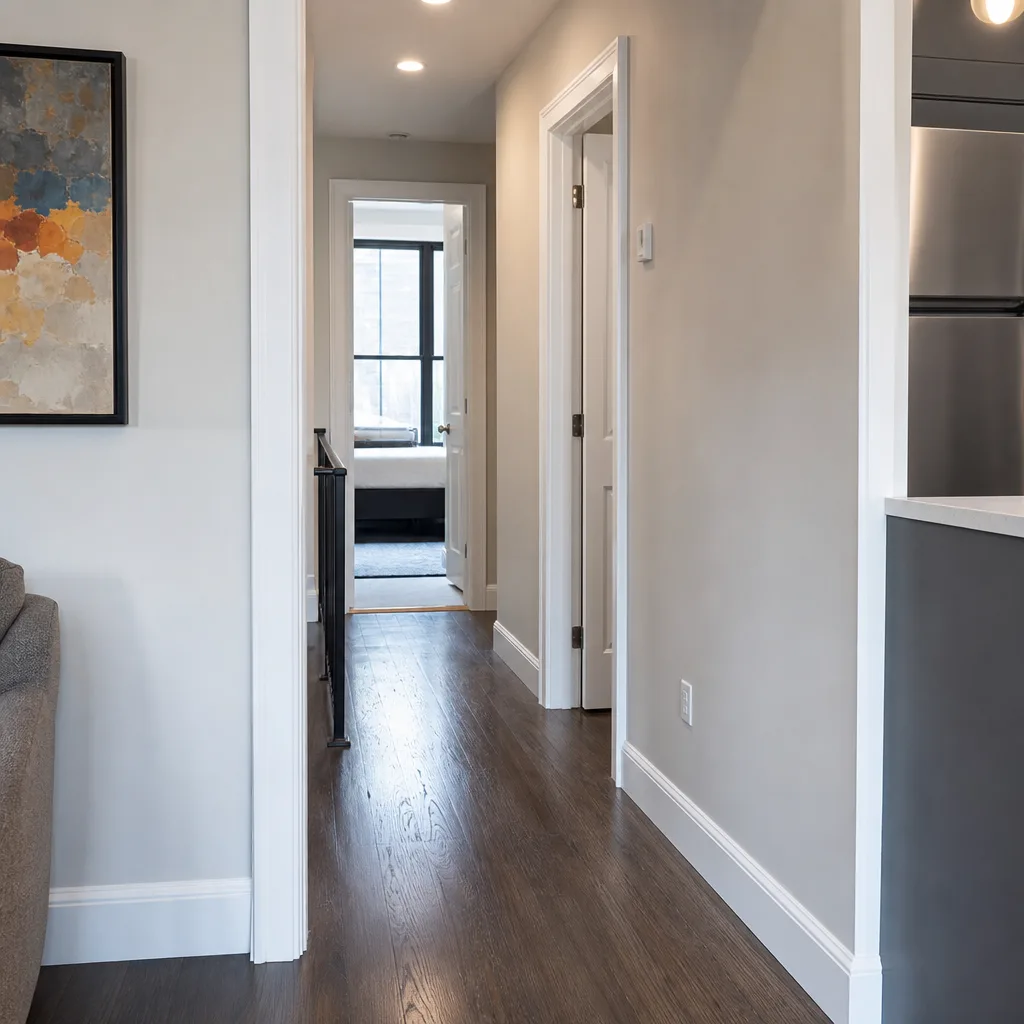 After
After24/7 Emergency Storm & Disaster Restoration in Port Washington
Storm and disaster restoration in Port Washington moves on one clock: the tide, not the hour. When a nor’easter pushes water up Main Street from Manhasset Bay while Hempstead Harbor drives it in from the other side, waiting until morning compounds the damage by the foot. Our crews answer live at (917) 924-4221 around the clock, seven days a week, and dispatch into Port Washington immediately. A certified team reaches your street, assesses the intrusion or wind damage, and starts extraction or board-up the same visit. The first hour after water enters a 1920s Colonial or a Manorhaven split-level is the difference between drying out plaster and replacing it. We do a free visual inspection on every call. No recording, no answering service. A person who knows restoration work picks up, even at 2 a.m., and starts moving resources toward your house.
Understanding Storm & Disaster Restoration Severity in Port Washington Properties
Storm damage in Port Washington splits into two severity tracks. The first is wind: nor’easters and tropical remnants drive rain and salt spray horizontally, and doors, windows, soffits, and roof edges give way on older homes where fasteners are already fatigued by salt air and freeze-thaw winters. The second is water: tidal surge and storm-driven flooding introduce what we categorize in the trade as Category 3 water. That means salt water, harbor sediment, and whatever the surge picked up. It is contaminated, and it wicks fast. In a balloon-framed 1940s house on a sandy glacial till lot, water travels from the crawl space into wall cavities and original plaster, often without showing itself on the surface for days or weeks. Moisture mapping matters more than a quick visual read. We use thermal imaging and pin-type meters because surface readings miss what brine is doing inside the framing. The damage classification matters too, because it dictates the drying standard, the antimicrobial step, and whether the insurance carrier treats the loss as flood, storm, or wind-driven intrusion. We document that determination from the first hour because it shapes the entire claim.
Why Port Washington Property Owners Choose Floodline Restoration Co. of Manhattan
- 45-minute response commitment. From the time you call, a crew is rolling toward Port Washington, not calling you back when the office opens. Storm water does not pause.
- 24/7 live answer, every day of the year. A dispatcher picks up the phone. No prompts, no voicemail box. You tell us what happened and we tell you what happens next.
- IICRC-certified crews trained to WRT and ASD standards. Water restoration and structural drying certification means the moisture log we hand you and your carrier holds up under scrutiny.
- Free visual inspection and written scope. We walk the property, show you exactly what we found, and put it in writing before any work starts. No surprises on the bill.
- Direct insurance billing. We coordinate with your adjuster and bill the carrier directly so you are not playing messenger while your basement sits wet.
- One team from extraction to reconstruction. The same Floodline crew that tears out soaked plaster rebuilds it. No mid-job handoff to strangers.
Our Storm & Disaster Restoration Process
Inspection & Assessment
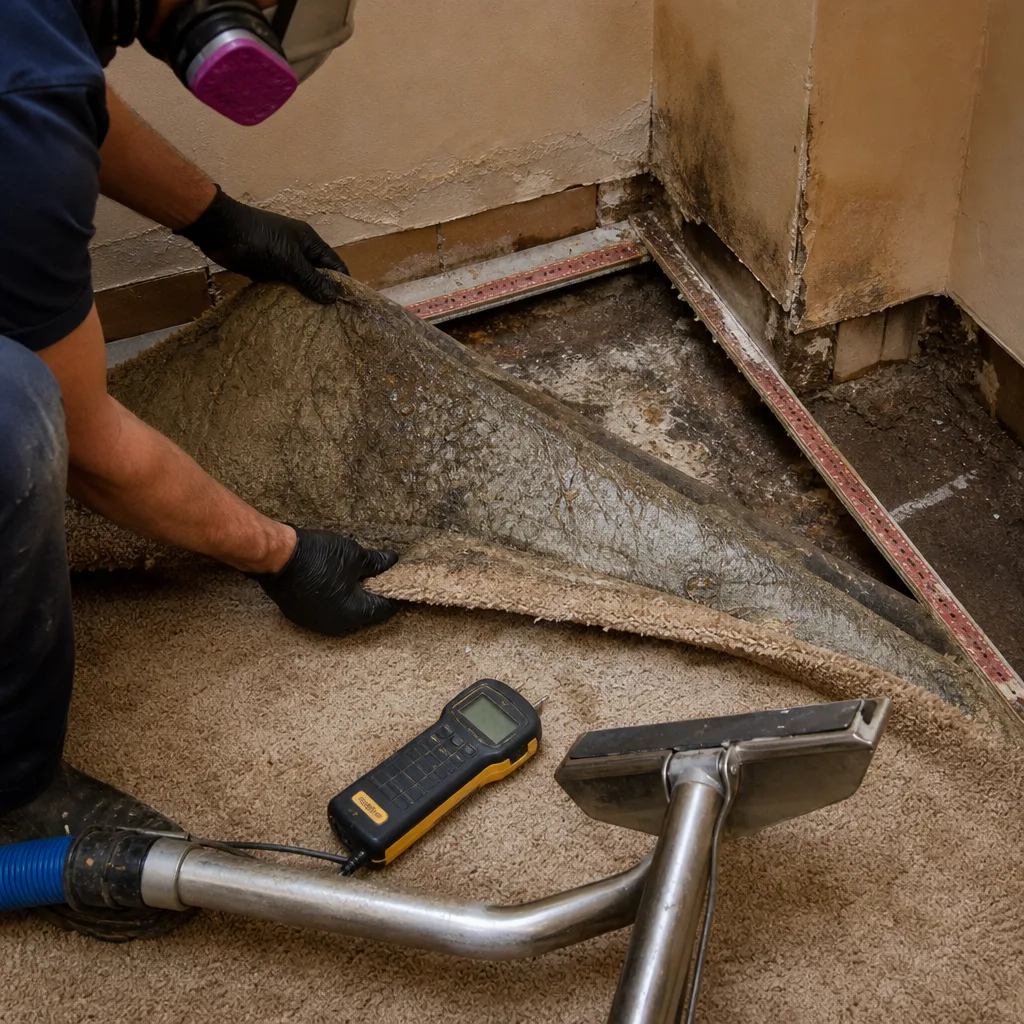
We begin with a full walk-through inside and out, documenting every point of entry, every damaged surface, and every wet cavity. Thermal imaging and moisture meters map the extent of intrusion so nothing gets missed behind finished walls.
Extraction & Stabilization
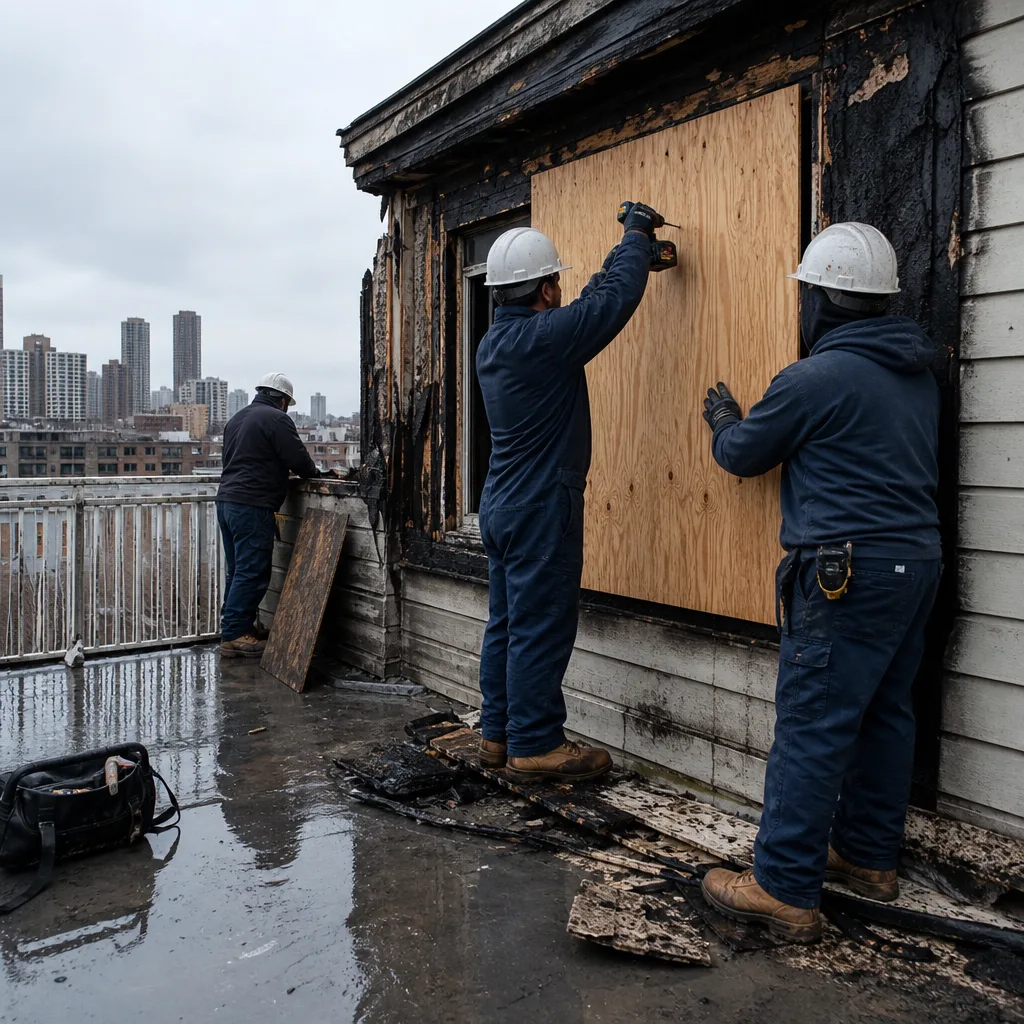
Every standing inch of water comes out, and every opening gets secured: board-up for breached windows and doors, tarping for roof loss. Stabilizing the structure stops wind-driven rain from entering twice.
Drying & Dehumidification
Professional-grade Dri-Eaz LGR dehumidifiers and XPOWER air movers run continuously, with daily moisture readings recorded until the structure reaches the dry standard. Injection drying reaches concealed cavities in balloon framing.
Cleaning & Sanitization
Saltwater leaves brine salts that corrode and feed mold. We clean all affected surfaces with antimicrobial treatment appropriate for Category 3 water, then verify with moisture content readings before any material goes back on.
Saltwater Specialty Treatment
Port Washington’s surge brings brine, not clean water. We flush salt residues from framing and concrete, treat electrical and HVAC contact points where corrosion begins, and monitor for the salt crystal reactivation pattern common after earlier storm events.
Repairs & Restoration
Reconstruction follows: drywall, flooring, trim, and any structural repair run by the same certified crew. We finish with a documented drying log and the 90-Day Done Right Promise in writing. If it is not done right, we make it right.
Need Emergency Storm & Disaster Restoration in Port Washington Now?
Crews minutes away, answering live 24 hours a day. The sooner we start, the less it costs.
Working With Your Insurance Company
Storm and disaster claims in Port Washington carry a particular wrinkle: whether the carrier classifies your loss as wind damage, flood, or storm surge changes what is covered and what is not. We have walked hundreds of these claims on the peninsula, and we document from the first hour with that distinction in mind. Photos of every room, moisture readings, wind-rating evidence on failed components, and a detailed line-item scope of work. Our team coordinates directly with your adjuster, and we bill the carrier directly so the homeowner is not financing a rebuild out of pocket while the claim sits in a queue. The drying log we hand over is the same one we use to declare the structure dry. No gap between what we tell you and what we tell your insurer. That mismatch is where homeowners get burned.
What We Provide Your Insurer
- Thorough documentation of the loss
- Photos of all damage, room by room
- Moisture readings and drying logs
- A detailed, line-item scope of work
- Direct coordination with your carrier
Built for Port Washington’s Loss Calendar
The loss calendar in Port Washington does not follow the seasons. It follows the tide cycles and the storm tracks. January’s hard freezes split supply lines in unheated crawl spaces under older Colonials near Shore Road, then the thaw in March finds the leak. Summer thunderstorms dump inches in an hour, and the flat, low-lying streets near Manorhaven and Bar Beach send that water directly into cellars. September through November is nor’easter season on Hempstead Harbor and Manhasset Bay, with sustained wind driving salt spray into roofing, siding, and every penetration that has not been sealed in a decade. Even a mild storm season leaves recurring water intrusion calls because year-round salt air and hard freeze-thaw winters have been quietly degrading exterior penetrations for years. That is the local pattern we work from: not waiting for the catastrophe, but catching the smaller failures before they become one.
Storm & Disaster Restoration Across Port Washington’s Neighborhoods
Response routes differ street by street in Port Washington, and so do the buildings. In Manorhaven, the low-lying blocks near Manorhaven Boulevard see some of the fastest water rise on the peninsula, with surge pushing up through storm drains and into crawl spaces, catching 1940s and 1950s homes at the floor plate before anyone can move a car. Port Washington Estates sits a bit higher, but older Gold Coast-era Colonials there carry original plaster walls and balloon framing; water that enters at the roofline runs down inside wall cavities and pools behind finished surfaces before it ever shows on Sheetrock. Over in Baxter Estates, hillside lots shed storm water onto flat ground below, and we regularly find hydrostatic pressure pushing groundwater through foundation cracks after heavy rain. Along Soundview Drive and the waterfront streets, wind-driven spray from Hempstead Harbor wears out flashing and window seals faster than inland blocks; those houses need board-up and tarping sooner when a nor’easter warning is posted. Each of these areas needs a different first move. Our crews know which one.
Specialized Storm & Disaster Restoration Services We Offer in Port Washington
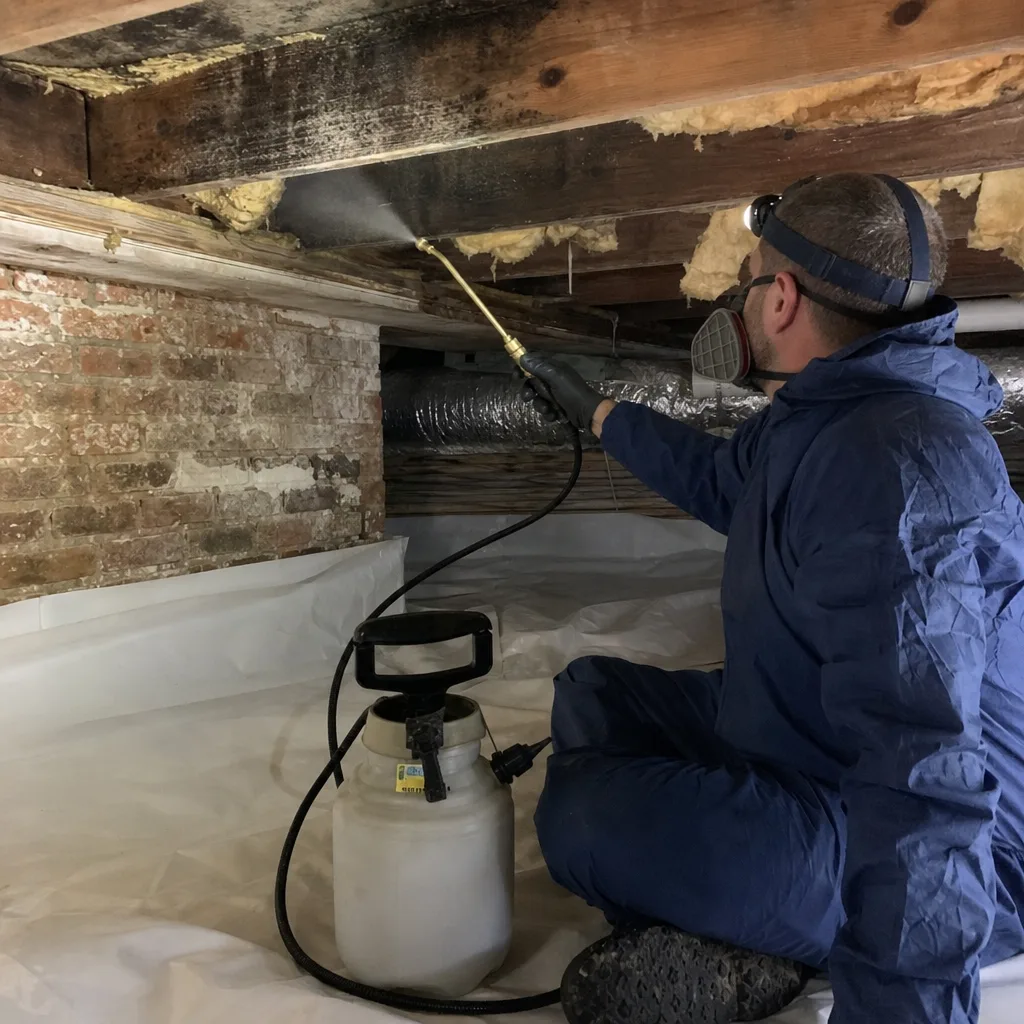
Emergency Board-Up
When storm wind takes out a window or a door on a Port Washington house, the opening is an invitation for the next gust. We board up same-day, same-visit, using plywood cut and anchored to secure the building from streetside or backyard entry. Commercial storefronts on Main Street get priority service when a storm warning is issued, because plate glass and wind load mixes badly and fast.
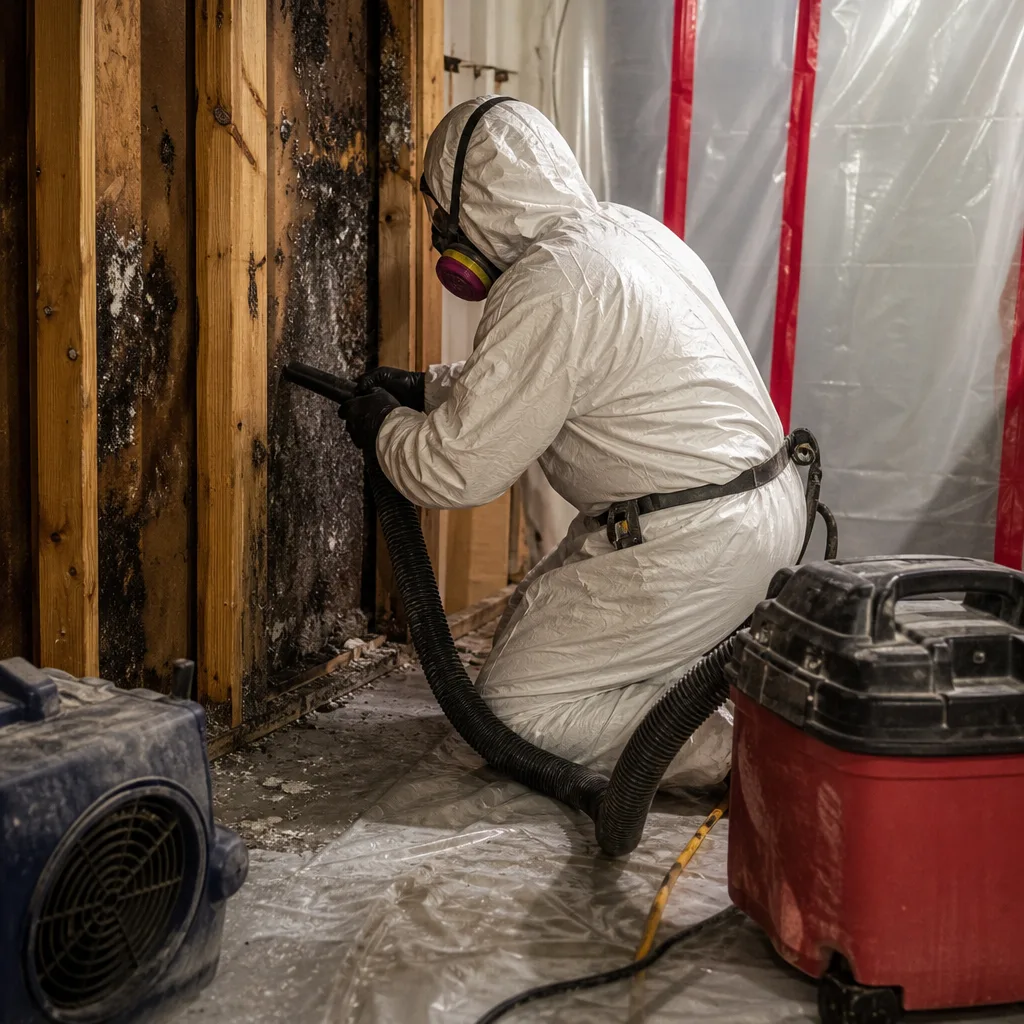
Wind Damage Repair
Wind damage in Port Washington is often a sequence, not a single event: first the soffit loosens, then the fascia lets go, then the roof edge starts peeling. We repair the full chain, not the visible piece. Where doors and windows show signs of fatigue before a storm, we reinforce and replace to meet Nassau County wind-load requirements, so the next nor’easter does not test the same weak point twice.
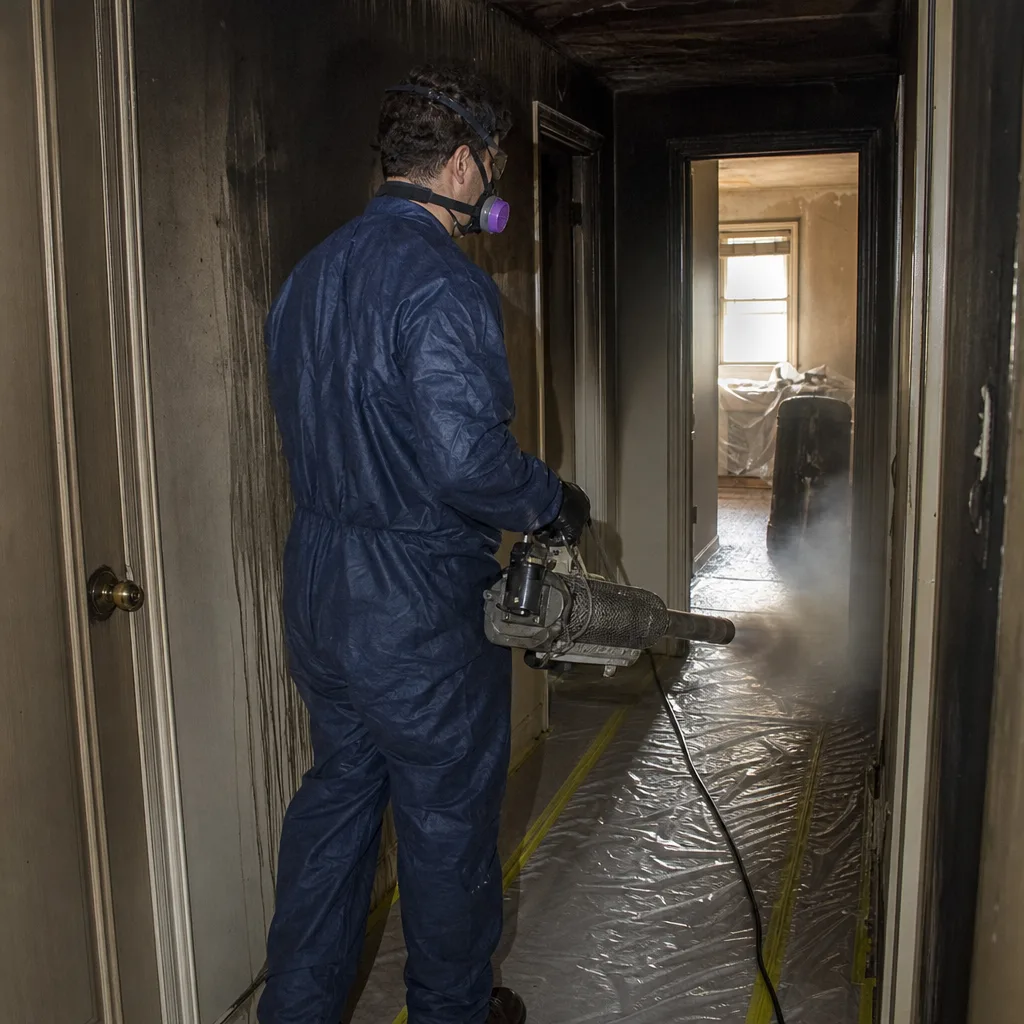
Storm Damage Cleanup
After a storm passes, the debris is the first thing you see, but the brine is the real problem. We clear downed branches, roofing material, and sodden insulation, then start the saltwater-specific cleaning. Power washing, antimicrobial treatment, and drying come in the same visit as the debris removal, because leaving salt residue on framing while you wait for cleanup is how mold gets a two-week head start.
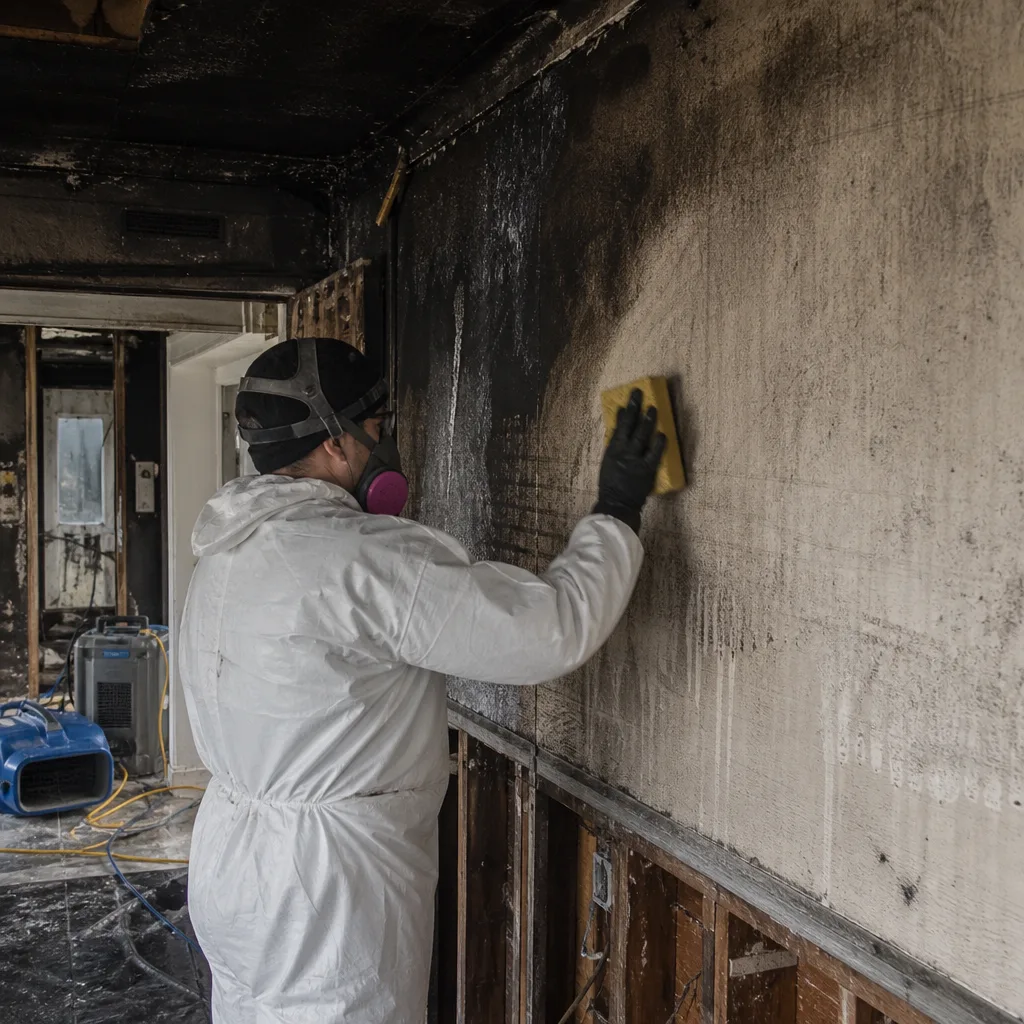
Flood Damage Restoration
Port Washington floods from two directions on the Cow Neck Peninsula, and the restoration has to account for both. Water extracted from a Manorhaven basement after a nor’easter is almost always Category 3, not clear rainwater. We treat it accordingly: full extraction, controlled demolition where needed, drying logs, and antimicrobial protocols built for saltwater intrusion. The water that recedes quickly is often the water that has already wicked deepest.
Roof Tarping
A tarp is not a repair, but it buys the hours and days that prevent a roofing loss from becoming a structural one. We install secured, weight-rated tarps that hold through sustained wind on exposed bayfront blocks. The goal is simple: stop wind-driven rain from entering the same wound a second time before permanent repairs can be scoped for insurance.
Debris Removal
Storm debris on Port Washington streets blocks access, conceals hazards, and slows your own recovery. We remove storm-related debris as part of the restoration scope, not as a separate afterthought. Branches, construction debris, and water-damaged contents get hauled off the property, and the site is left ready for drying or reconstruction.
What happens when you call
- 1
A real person answersNo phone trees - you reach a local pro.
- 2
You get an upfront price rangeHonest numbers before anyone is dispatched.
- 3
A background-checked tech heads outLicensed & insured, dispatched right away.
- 4
You approve before work beginsNothing starts until you say go.
Storm & Disaster Restoration Costs in Port Washington, NY
Storm damage cleanup in Port Washington runs between $1,800 and $7,500 depending on how many rooms took water and whether standing water was involved. Emergency board-up for a single window or door typically lands at $450 to $1,200, while a full storefront board-up on Main Street after a nor’easter runs $1,500 to $4,000. Roof tarping for a standard Colonial runs $600 to $1,800, with steep or slate roofs going higher. Full flood restoration, including extraction, drying, demolition, and antimicrobial treatment, runs $6,000 to $28,000 for residential properties here, before reconstruction. What pushes the price: category of water, how many wall cavities are involved, whether balloon framing is present, and how long the water sat before we arrived. Older Port Washington homes with original plaster and no moisture barrier run on the higher end. The free visual inspection gets you a firm written scope before any work begins, so the bill is a number you agreed to, not a surprise you discover later. Call (917) 924-4221 and we will be there.
We Also Serve Cities Near Port Washington
Our storm and disaster restoration crews work throughout the North Shore, including Port Washington and the surrounding communities. Homeowners in Sea Cliff, Manhasset, Glen Cove, and Great Neck call us for the same reason Port Washington does: live answer, fast dispatch, and one team that finishes the job. Storm water does not respect town lines, and neither does our commitment to showing up.
Serving Port Washington, NY - Our Local Coverage Area
We’re based in the Port Washington area and know this community well. Use the map below to see our service coverage - if you’re nearby, we can almost certainly help.
Port Washington Storm & Disaster Restoration Questions, Answered
What wind-rating or impact-rating should our storm doors and windows meet in Port Washington?
Doors and windows on new or replaced openings in Nassau County should meet the design wind load for exposure along Manhasset Bay and Hempstead Harbor, generally in the 110 to 130 mph range depending on exact siting and elevation; impact-rated products are not mandated for all single-family homes but are the right call on exposed waterfront blocks. The practical test is salt-worn hardware and failed seals: if your door no longer closes tight against the weatherstripping, the rating on the frame is not doing its job. We can assess what you have and tell you plainly whether it will hold the next nor’easter before the storm warning, not after.
What does a failing door look like before a nor’easter hits Port Washington?
A failing door tells you it is failing. Look for daylight through the weatherstripping, a deadbolt that drags, a threshold that has dropped at one corner, or hinges that have pulled away from the jamb. On older Port Washington Colonials, salt air corrodes the bottom hinge first, and the weight of the door starts bearing on the latch side. The door still opens and closes, so nobody thinks about it, but under sustained 50 mph wind from the harbor side, that door becomes the first point of water entry. We would rather reinforce it today than board it up during a storm warning.
How do you dry out a Port Washington basement after saltwater intrusion without hiding mold later?
You do it by treating saltwater as contaminated and invasive, not as something to vacuum and air out. Our crews extract all standing water, then use Dri-Eaz LGR dehumidifiers and XPOWER air movers with injection drying to reach behind finished surfaces and into framing. Daily moisture readings go in a log until the structure reaches the dry standard, typically 10 to 14 days for balloon-framed Port Washington homes. Then we apply antimicrobial treatment and re-check. The shortcut method, where a contractor sets fans and calls it dry when the floor feels okay, leaves brine salts in the wall cavities, and that is the condition that reactivates mold after the next storm. We will not sign off on a house that is still wet inside the framing.
Why do so many post-Sandy homes in Manorhaven need a second remediation after a smaller storm?
Because the first remediation stopped at the surface. After Sandy, hundreds of Manorhaven homes were remediated quickly, often by out-of-area crews who treated the intrusion as freshwater. Saltwater had wicked into wall cavities and plaster, and the drying never reached it. The house looked fine when it was resold. Then a smaller storm added moisture, the salt crystals in the wall pulled that moisture in, and dormant mold colonies reactivated behind the paint. Our crews now find this pattern on a regular basis, and we dry for it from day one using moisture mapping and cavity injection. A real drying log is the only honest proof that it was done right.
Can you board up a Port Washington storefront the same day a storm warning is issued?
Yes. When a nor’easter warning goes out, we move commercial board-up requests on Main Street and Shore Road to the top of the dispatch board. Plate glass and wind load from the harbor side create a dangerous combination, and an open storefront after hours invites looting and further wind damage. Our crew arrives with pre-cut plywood and anchoring hardware, secures the opening, and waits for the storm to pass before permanent glass or framing work begins.
How fast can someone actually reach my house in Port Washington?
We run a 45-minute response commitment for storm and disaster calls in Port Washington. That means a live dispatcher answers when you call (917) 924-4221, confirms your address, and a crew is dispatched immediately. For emergency board-up, tarping, or water extraction, we typically arrive within the hour. The longer water sits in a 1940s Colonial with plaster walls and balloon framing, the deeper the damage runs. We would rather start too early than too late.
Do I really need full restoration or can I just clean up after a storm?
It depends on what entered the house and where it went. If rain blew through an open window onto a tile floor, cleanup and drying may be enough. But if harbor surge or storm-driven water entered the wall cavities, a crawl space, or a basement on the Cow Neck Peninsula, you are dealing with Category 3 water that has already begun wicking into framing and plaster. Surface cleaning will not reach it, and mold gets the exact head start it needs. Our free inspection will tell you the truth: what needs full restoration and what does not. We do not oversell. We give you a written scope and an honest answer.
What should I do in the first 30 minutes after storm water gets into my home?
First, get everyone out of standing water, especially if electricity is still live. Then call (917) 924-4221 before you start moving furniture or mopping. Take photos if you can do it safely, because insurance documentation starts now. Do not touch electrical panels or outlets that may have been reached by water. And do not assume the water is clean just because it looks like rainwater. In Port Washington, storm surge brings harbor water, not sky water. The first 30 minutes of that water sitting in your wall cavities is where the damage starts compounding. Then call us. That is the whole list.
Written by Curt Bowman, Owner at Floodline Restoration Co. of Manhattan, serving Port Washington and Long Island’s North Shore with storm and disaster restoration for over 15 years.