
Free visual inspection and a written scope of work before any mitigation begins - photos, moisture readings, and drying logs go in your claim file
The scope we write is the scope we bill. Anything new gets shown to you, in writing, before we touch it.






 Before
 After
After Before
 After
After Before
 After
After24/7 Emergency Water Damage Restoration in East Village
Water damage in an East Village tenement rarely stays in one apartment. If a supply line bursts on the fifth floor of a new-law walk-up on East 7th Street, water follows the shared plumbing stack down through four or five occupied units before the building super can even locate the shutoff. That is exactly why our crews are dispatched inside the East Village area around the clock. A live dispatcher answers at (917) 924-4221, not a recording, and a certified technician rolls toward your block within 45 minutes. The first hour matters: standing water in a plaster-and-lath wall cavity starts wicking into the original wood joists, and once the moisture reaches the lath keys, you are not just drying a room anymore, you are saving the ceiling below. Our first visit includes a free visual inspection and moisture mapping before any work is quoted. No pressure, no guesswork. We find where the water went, not just where it pooled.
Understanding Water Damage Restoration Severity in East Village Properties
We classify every water loss by category before touching anything. Category 1 is clean water from a burst supply line or failed appliance hose. Category 2 is gray water with some contamination, common when an upstairs sink drain leaks through a shared stack, carrying soap and food waste into the apartment below. Category 3 is black water: sewage, storm surge, or anything that picked up bacteria from a basement floor drain. In East Village pre-war buildings, category distinctions matter more than they do in newer construction. A cast-iron drain line in a 1905 tenement may carry gray water that sat in a corroded pipe for decades, which pushes the contamination profile faster toward Category 3 once it escapes into the wall. Our techs run moisture mapping with thermal imaging and Dri-Eaz sensors across every affected unit, including the ceiling of the apartment below and the wall cavity behind the baseboards. Plaster and lath hold water differently than drywall, and original wood joists behave differently than engineered lumber. Structural drying in these buildings means reading the materials, not just the room air.
Why East Village Property Owners Choose Floodline Restoration Co. of Manhattan
- 45-minute response commitment. Our Manhattan dispatch board tracks crews by block, not by borough, so the tech closest to your East Village address gets the call.
- 24/7 live answer. A person picks up at 2 a.m. on Avenue C. Always. No automated menus, no answering service redirect. You tell us what is flooding, we tell you who is coming.
- IICRC-certified crews, WRT and ASD certified. Every tech on your job holds Water Damage Restoration Technician and Applied Structural Drying certifications from the IICRC, plus RIA and IFA training. Background-checked and uniformed.
- Free visual inspection before any quote. We document what we see, we do not sell what we have not measured. The inspection is yours to keep, even if you choose another contractor (you won’t).
- Direct insurance billing. We handle the carrier paperwork, the adjuster calls, and the documentation. You are not the messenger between a mitigation crew and a rebuild crew, because we are both.
- One team from extraction to reconstruction. The same certified crew that sets up air movers on day one handles the trim, the plaster, and the paint. No mid-job handoff to a stranger with a new clipboard.
Our Water Damage Restoration Process
Inspection & Assessment
We arrive, shut down the source if the building super hasn’t already, and map moisture across every affected floor. In a shared-stack tenement, that means checking the units above and below, not just the one that called. Thermal imaging and penetrating moisture meters show us water behind plaster, under baseboards, and inside the joist bays.
Extraction & Stabilization
We remove standing water with truck-mounted extraction units and portable XPOWER extractors for upper floors with no elevator access. Then we stabilize the structure: tarp if needed, containment barriers where Category 2 or 3 water is present, and packout of tenant belongings that could wick or mold.
Drying & Dehumidification
This is where East Village tenements separate good crews from great ones. Plaster walls dry slowly. Original wood joists dry slowly. We set up Dri-Eaz and Phoenix air movers plus LGR dehumidifiers, and we run daily hygrometer readings in every affected cavity until the dry standard is met, documented and shared with you and your carrier.
Cleaning & Sanitization
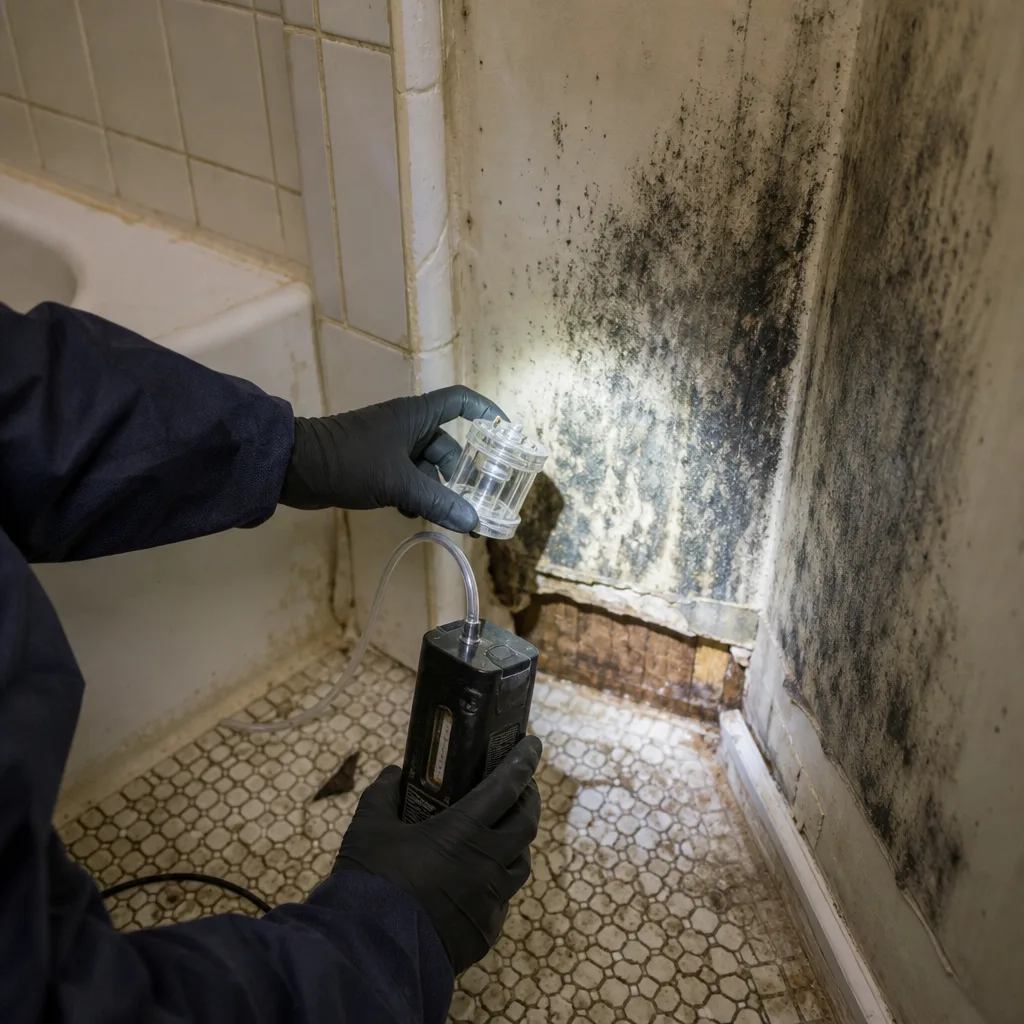
We apply EPA-registered antimicrobials to affected surfaces, vacuum and HEPA-filter every exposed area, and remove any building material that cannot be dried to a safe standard. If asbestos-containing materials are present, that step is handled by a licensed hazmat contractor before we touch the wall.
Tenement-Specific Treatment
In East Village, this step is not optional. We inspect the shared stack for hidden water in adjacent units, check sub-slab drains in the basement, and coordinate with the building’s managing agent on access, power, and liability releases. You cannot dry one apartment in a six-story walk-up and call the job done.
Repairs & Restoration
We rebuild what we opened: plaster patches, new joist sections, paint, trim, flooring. The same Floodline Restoration Co. of Manhattan crew handles it from first extraction to final coat, backed by the 90-Day Done Right Promise in writing. If it is not done right, we make it right. No arguing, no paperwork games.
Need Emergency Water Damage Restoration in East Village Now?
Crews minutes away, answering live 24 hours a day. The sooner we start, the less it costs.
Working With Your Insurance Company
We want your adjuster to see what we see, in writing, with documentation a carrier cannot argue with. That starts in the first hour, with photographs of the standing water, the affected rooms, and the building systems that failed. Most East Village homeowners and condo owners carry HO-3 or HO-6 policies that cover sudden and accidental discharge from plumbing systems, which means a burst supply line in a shared wall is generally a covered loss, minus your deductible. What gets claims denied is delay: if a carrier can argue the damage spread because remediation did not happen promptly, the payout shrinks. We bill your carrier directly, keep moisture logs and daily drying readings, and communicate with the adjuster so you do not have to translate between a contractor and an insurance desk. Every invoice is a line-item scope of work no carrier has ever kicked back for being vague.
What We Provide Your Insurer
- Thorough documentation of the loss
- Photos of all damage, room by room
- Moisture readings and drying logs
- A detailed, line-item scope of work
- Direct coordination with your carrier
Built for East Village’s Loss Calendar
January and February are the worst months for East Village water damage. The neighborhood’s 1880s-1920s tenements run uninsulated supply lines through exterior masonry chases, and when a polar vortex settles over Manhattan for five straight days, those lines freeze, split, and flood entire stacks of apartments. We get the call after the thaw, when the ice plug lets go and the pipe roars. Spring brings a different problem: thawing snow and heavy rain finds every crack in the old sewer lines beneath Avenue A and Avenue B, backing up floor drains in basement units. Summer thunderstorm flash flooding overwhelms the combined storm and sanitary sewers that serve the lower East Side, pushing Category 3 water through basement floor drains and up through any opening that sits below the curb line. Fall nor’easters dump rain on buildings with 100-year-old roof drains that simply cannot move water fast enough, and the overflow migrates down the parapet walls into top-floor units. Every season has a signature loss here, and we plan equipment staging around that calendar.
Water Damage Restoration Across East Village’s Neighborhoods
The response route into the East Village changes whether your building is on the Alphabet City side or the Cooper Square side. Crews running to a six-story walk-up on East 3rd Street near Avenue D thread through narrower streets and double-parked delivery trucks, which is why we keep extraction equipment in chassis that can be hand-carried up five flights. The Tompkins Square Park corridor, from East 7th to East 10th, holds some of the oldest new-law tenements in the neighborhood, and we routinely open those walls to find cast-iron stacks that have not been touched since the McKinley administration. Over by St. Mark’s Place, the mix of 1920s tenements and converted lofts means water from a restaurant basement can migrate sideways into residential foundations. On East 12th Street and the blocks around the old Beth Israel site, the building stock is a patchwork of pre-war walk-ups and mid-century plumbing retrofits, which makes moisture mapping essential because the pipe routes are not what the building drawings say they are. Each of these pockets floods differently, and we know the difference.
Specialized Water Damage Restoration Services We Offer in East Village
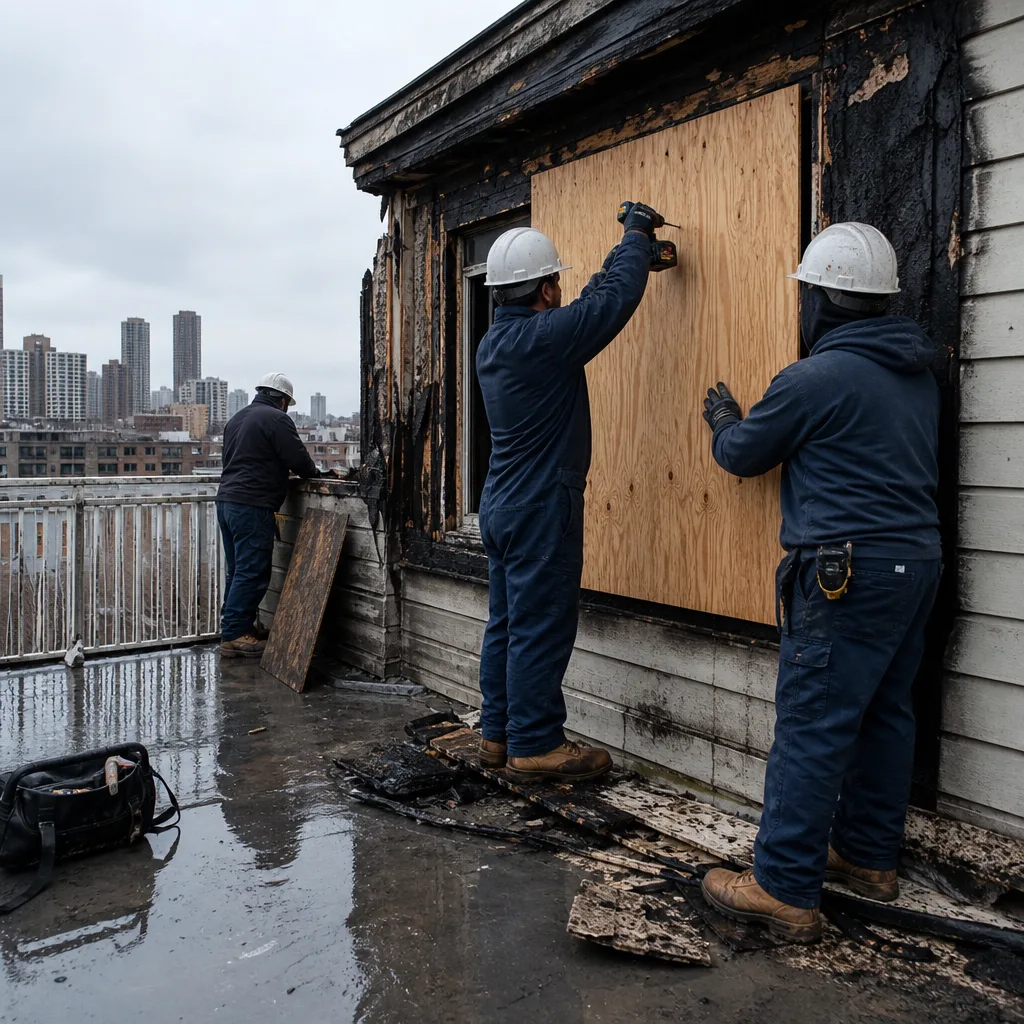
Emergency Water Extraction
Standing water in an East Village walk-up is an hour-by-hour problem. We run truck-mounted extraction at the curb and portable XPOWER and B-Air units in the hallways, moving water out of apartments on the third floor and up without access to a freight elevator. Extraction starts on the same visit when you call (917) 924-4221.
Structural Drying & Dehumidification
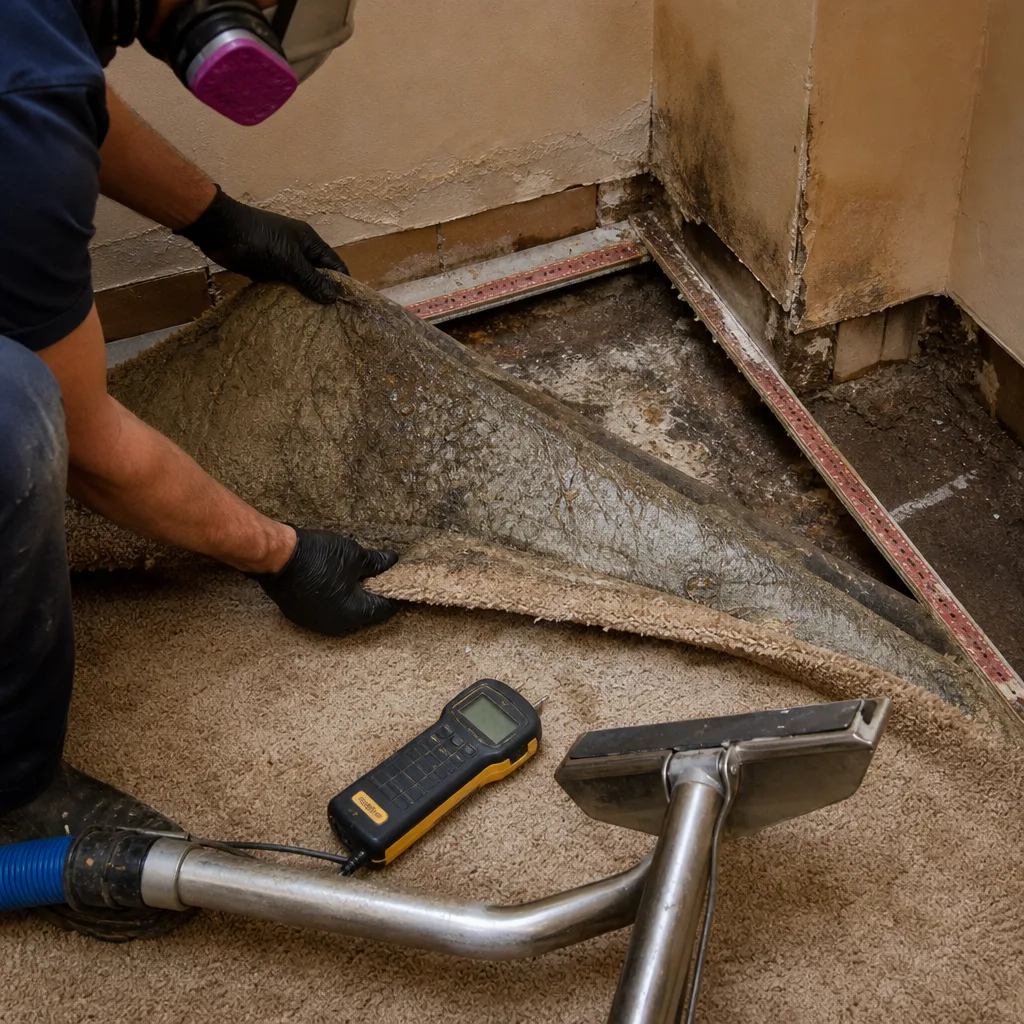
Plaster and lath dry slowly, and in a shared-stack tenement, a hidden damp cavity behind your neighbor’s wall will re-wet your space even after your unit is dry. We install Dri-Eaz and Phoenix LGR dehumidifiers with daily hygrometer readings, and we do not sign off until every mapped cavity in the affected stack hits the dry standard.
Flood Cleanup
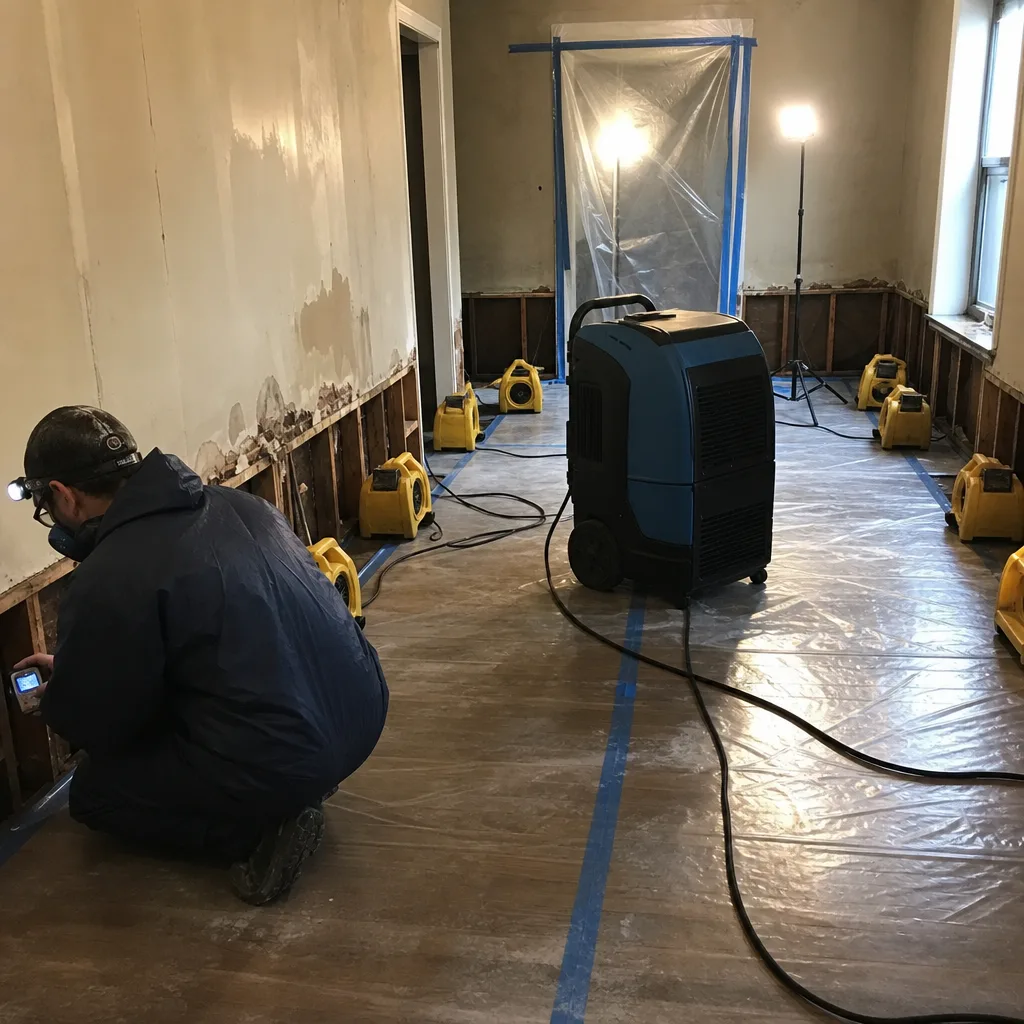
When the East River backs up the combined sewers during a summer storm or a nor’easter, basement apartments on Avenue B and Avenue C take Category 3 water through floor drains. Flood cleanup here means full containment, antimicrobial application, and removal of any material that absorbed contaminated water. This is not a mop-and-fan job.
Burst Pipe Restoration
A frozen supply line in an uninsulated chase on East 9th Street bursts below the floor, not at the fixture, which means water travels through the joist bay and down into the unit below before anyone sees a stain. We trace the pipe, map the spread, and restore every affected apartment in the stack, not just the one where the ceiling opened.
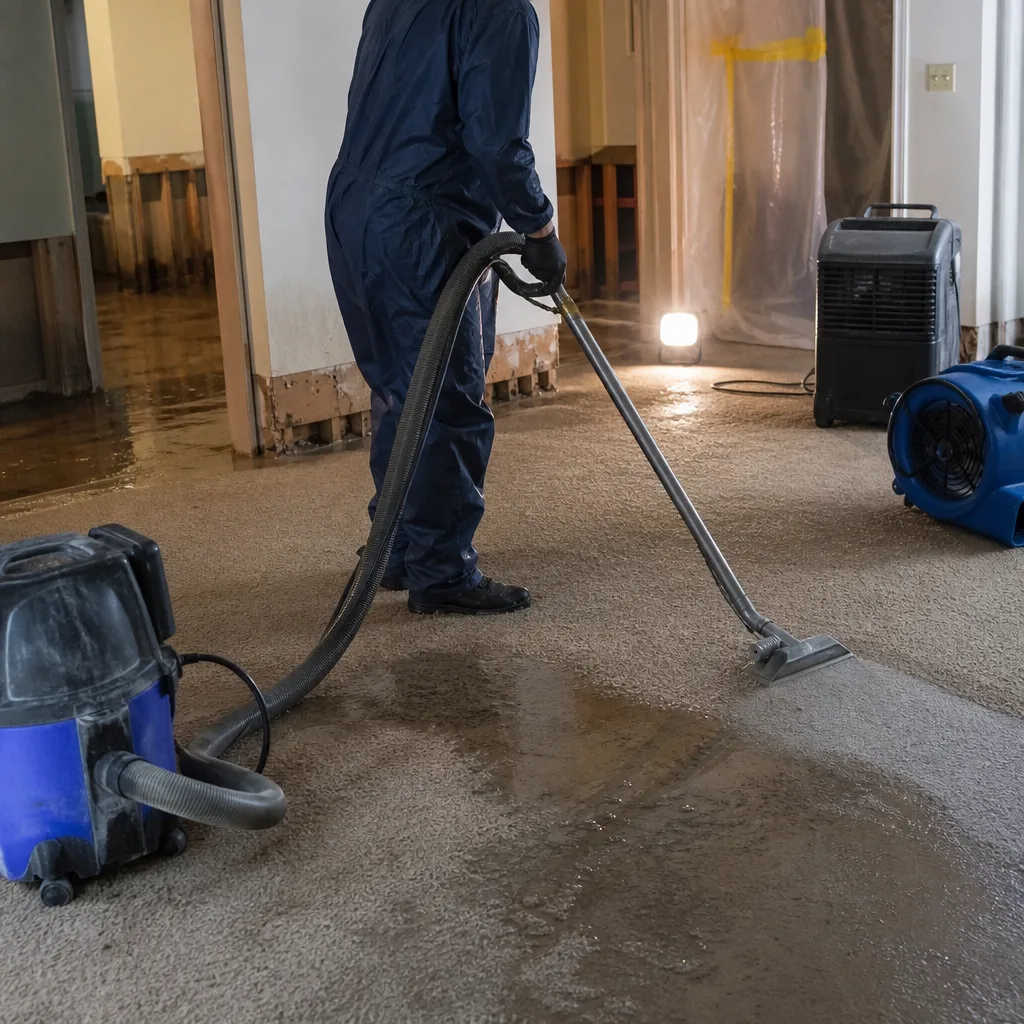
Basement Water Removal
East Village basements are almost always below grade, often with rubble stone foundations and old sump systems that have not run correctly since before ConEd buried its gas lines. We extract, dehumidify, and dry these spaces with equipment sized for tight stairwell access and no rear yard to spin a fan.
What happens when you call
- 1
A real person answersNo phone trees - you reach a local pro.
- 2
You get an upfront price rangeHonest numbers before anyone is dispatched.
- 3
A background-checked tech heads outLicensed & insured, dispatched right away.
- 4
You approve before work beginsNothing starts until you say go.
Water Damage Restoration Costs in East Village, NY
Honest numbers, East Village market. For a single-unit emergency extraction with containment, air movers, and dehumidification, expect $2,400 to $3,800. A burst supply line in a shared wall that affects three or four units typically runs $6,000 to $12,000 once you factor in multi-floor moisture mapping, tenant packouts, and structural drying across the stack. A basement sewage backup with Category 3 water, full containment, and antimicrobial treatment lands between $4,500 and $9,500 depending on how much flooring and wall material must go. What moves the price: the category of water, the number of affected units, whether hazmat assessment is required, and whether we can access wall cavities from inside or need a boom lift. Insurance covers the overwhelming majority of these losses, minus your deductible, and we bill the carrier directly. The free inspection gives you a firm, written scope with no obligation and no surprise on the bill. A square deal, in writing.
We Also Serve Cities Near East Village
Our Manhattan dispatch covers East Village and the blocks around it, including Fairview, Harrison, East Bronx, and Hunts Point. If you are on the edge of the neighborhood and water is rising, call first. We will tell you which crew is closest, not whether your address fits a coverage map.
Serving East Village, NY - Our Local Coverage Area
We’re based in the East Village area and know this community well. Use the map below to see our service coverage - if you’re nearby, we can almost certainly help.
East Village Water Damage Restoration Questions, Answered
How do you handle water damage in a five-story walk-up with no elevator?
We carry equipment by hand, in pieces, up the stairwell. Our techs break down extraction units and air movers into components that two people can lift through a standard tenement doorway. Drying gear can also be placed by boom lift through a window when the stairwell is too narrow or the power supply is too far. We have done this on East 7th, East 10th, and every block in between.
What happens if water from my apartment leaks into the rent-stabilized unit below?
We document both units, map the moisture in the shared joist bay, and dry the cavity as one connected space. You are responsible for your unit’s damage; the downstairs tenant’s damage is typically their own property or the building owner’s, depending on the lease. The shared wall and floor assembly is where the real restoration happens, and that is a building-wide issue, not a one-apartment issue. We coordinate with the managing agent and provide documentation for everyone’s insurer.
Do you have to test for asbestos before cutting into old tenement walls?
Yes, in most East Village buildings built before 1979, you have to test before opening walls or ceilings. Old-law and new-law tenements often contain asbestos in pipe wrap, ceiling texture, and floor tile. We coordinate with a licensed hazmat contractor for testing prior to any demolition, and if asbestos is present, it gets abated by a certified firm before our crew touches the wall. Ignoring this step earns DOB violations and exposes everyone to airborne fibers. We do not skip it.
How fast can you get drying equipment into a top-floor apartment on a block with no parking?
Within the same 45-minute dispatch window as any other East Village call. Our crews know the parking reality on Avenue A at 2 p.m. and plan for it: one tech handles the truck, another starts the carry. Equipment comes in through the front door, up the stairs, and is running before the water stops migrating. The apartment is the hard part, not the curb.
Does a burst pipe in a shared wall mean the whole building needs to be involved?
Not necessarily, but it almost always means at least the adjacent units above, below, and beside the burst need moisture readings. Water follows the vertical stack, so a failure on the fourth floor travels to the third and second before it pools. We start with the full stack mapped, then dry what actually got wet. No one opens walls in apartments that do not need it.
Will my homeowner’s insurance cover water damage from a burst pipe in East Village?
Most HO-3 and HO-6 policies cover sudden and accidental discharge from a plumbing system, including frozen supply lines. What gets questioned is neglect: a slow leak you knew about for months, or a shutoff valve that had failed and was never replaced. We document the failure point and the damage, and we bill your carrier directly. If the adjuster has questions, we answer them. Call (917) 924-4221 and we will explain what your policy covers, free.
Can we stay in the apartment during drying?
Usually yes for Category 1 water in a single room with containment up and air movers running. If the water is Category 2 or 3, or if the affected area includes a bedroom, bath, or the kitchen, we recommend relocation for your health and for the drying process to actually work. We will tell you straight, and document the recommendation for your insurer’s additional living expense coverage.
What should I do in the first 30 minutes after discovering water damage?
Shut the water at the source if you can reach it safely. Do not enter standing water if electrical outlets or appliances are submerged. Call the building super and then call us at (917) 924-4221. Move small valuables out of the water if it is safe. Do not use a shop vac on Category 2 or 3 water and do not open walls yourself. The first thirty minutes determine whether a wet apartment is a three-day dryout or a six-week gut renovation.
One more thing about how we work in this neighborhood. Our techs recently handled a burst supply line in a six-story new-law tenement on East 10th Street near Tompkins Square Park. The cast-iron riser failed during a January cold snap, sending water down through five apartments’ plaster-and-lath walls before the building super could shut the main. We ran moisture mapping on every floor with Dri-Eaz sensors, set up containment and air movers in the stairwell, and packed out tenant belongings while coordinating with the building’s managing agent and the DEP for category 3 water in the basement. That is what this job actually looks like in the East Village: one pipe, six apartments, a building full of tenants, and a superintendent who has to keep the heat on while we pull the water out. We have done it before. We will do it again, and this time it will be your building.
If you have water damage in the East Village right now, call (917) 924-4221. A live person answers, a certified crew dispatches, and the first inspection is free. If it is not an emergency yet, still call. We would rather tell you what to watch than bill you for a flood that could have been stopped. For everything we do in this neighborhood, from emergency extraction to full reconstruction, this is our Water Damage Restoration work, done by the same team from first pump to final coat.
Written by Curt Bowman, Owner at Floodline Restoration Co. of Manhattan, serving East Village properties with IICRC-certified crews and the 90-Day Done Right Promise in writing.