
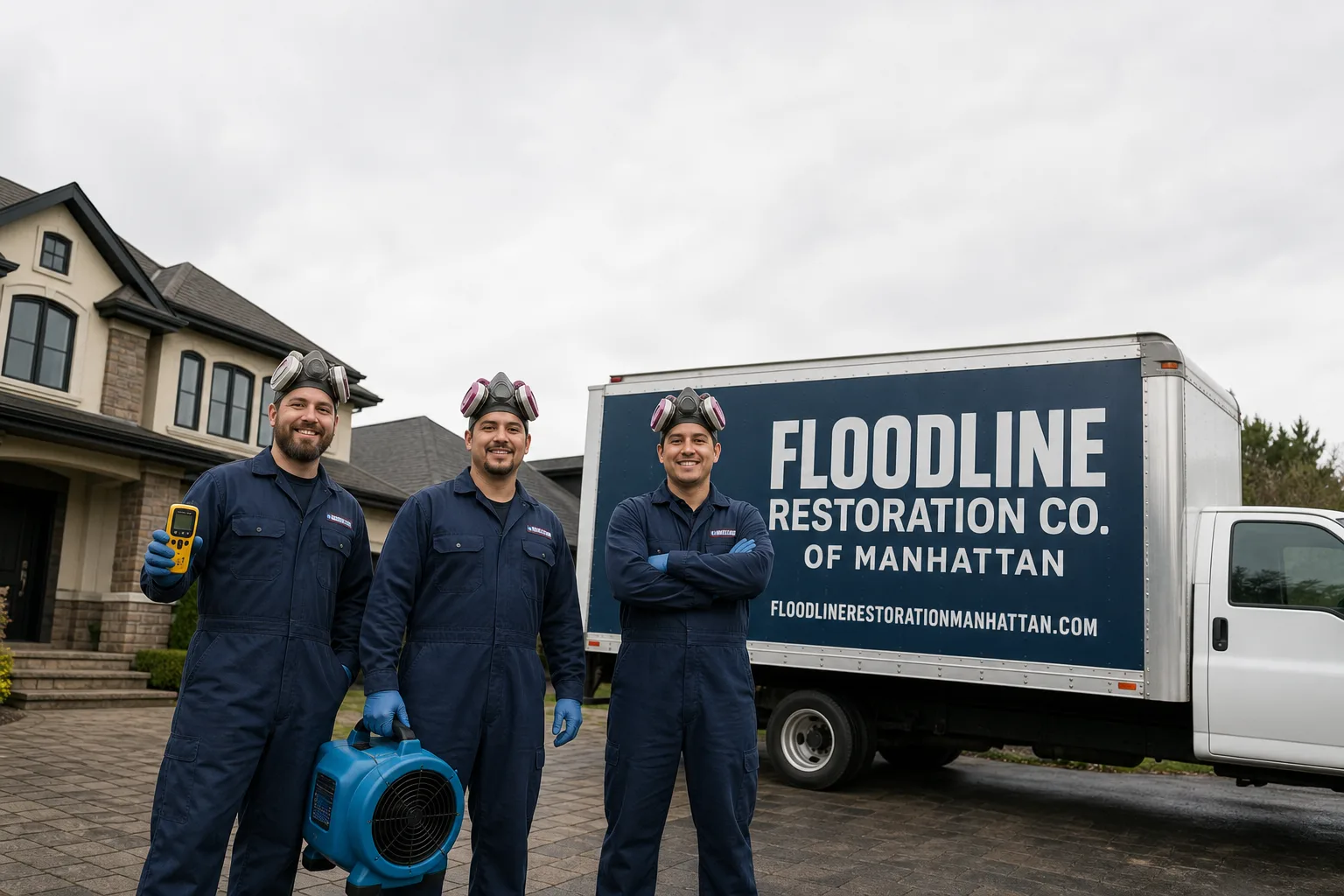
Free visual inspection and a written scope of work before any mitigation begins - photos, moisture readings, and drying logs go in your claim file
The scope we write is the scope we bill. Anything new gets shown to you, in writing, before we touch it.






 Before
 After
After Before
 After
After Before
 After
After24/7 Emergency Water Damage Restoration in Ossining
Water damage restoration in Ossining typically costs between $1,800 and $6,500 depending on the water category, affected square footage, and whether the damage involves an older rubble-stone foundation or plaster-and-lath interior. Most emergency extraction jobs in the village start within 45 minutes of a call to (917) 924-4221, because a live dispatcher answers around the clock and crews stage from nearby routes like 9A and Croton Avenue. When water is moving through a 1920s house, the first hour determines whether you’re drying floors or tearing them out. We don’t put you through a phone tree at 2 a.m. A person picks up, asks the right questions, and gets a certified crew rolling toward your street while you’re still standing in the wet basement.
Understanding Water Damage Restoration Severity in Ossining Properties
Not all water is the same, and the difference matters more in Ossining than in newer suburbs. Category 1 water comes from a clean source like a burst supply line. Category 2 carries significant contamination, think sump pump overflow or a failed French drain after heavy rain. Category 3 is grossly contaminated, and on the low blocks near the Hudson River, storm surge mixing with sewage from aging cast-iron laterals routinely pushes water into this category. The age of the house compounds the problem. Homes built between the 1880s and 1930s sit on rubble stone or unreinforced concrete block, and those foundations wick water upward into plaster walls and oak flooring. Moisture mapping with thermal imaging and hygrometers tells us how far the water traveled, but reading a 1920s Victorian requires knowing where the original drainage was laid and where it has since failed. Structural drying in these homes is not a formula. It’s a site-specific diagnosis, and treating every basement as a standard dry-out is how callbacks happen.
Why Ossining Property Owners Choose Floodline Restoration Co. of Manhattan
- 45-minute response commitment: Our crews stage from multiple points around Westchester and reach most Ossining addresses within 45 minutes of dispatch, with extraction equipment on the truck, not ordered afterward.
- 24/7 live answer, always a person: The dispatcher who picks up at 3 a.m. is the same kind of person who will answer at noon. No automated prompts, no callbacks, no “leave a message.”
- IICRC-certified crews, WRT and FSRT: Our technicians carry WRT and FSRT certifications through the IICRC, and our structural drying work follows RIA standards for daily moisture readings and drying logs.
- Free visual inspection: We walk the property, map the moisture, and show you what we found before any work begins. You see the readings. You keep the log.
- Direct insurance billing: We prepare the line-item scope, take the room-by-room photos, and talk to your adjuster directly. You are not the messenger between us and your carrier.
- One team from extraction to reconstruction: The same certified crew that reads the moisture map on day one handles the daily readings, hands you the drying log, and rebuilds what needs rebuilding. No mid-job handoff to a crew you never met.
Our Water Damage Restoration Process
Inspection & Assessment
We walk the entire affected area with thermal imaging cameras and penetrating moisture meters. On an Ossining hillside home, that means checking the uphill foundation wall first, because hydrostatic pressure rarely shows itself as a puddle on the floor before it shows as efflorescence on the stone.
Extraction/Stabilization
We pull standing water with truck-mounted and portable extraction units, then remove soaked carpet pad, baseboard, and any material that has wicked water beyond the 48-hour mold window. In a house with plaster-and-lath walls, we extract first and cut cautiously.
Drying & Dehumidification
We set Dri-Eaz LGR dehumidifiers and XPOWER air movers in a calculated layout, not a pile of fans. Daily readings are logged against the dry standard for the specific material, and the homeowner gets a copy of that log, as does the carrier when a claim is open.
Cleaning & Sanitization
Where category 2 or 3 water is present, we apply EPA-registered antimicrobials and run HEPA air scrubbers to capture airborne spores. In older Ossining homes, this step protects plaster cavities that can hide contamination for years.
Specialty Treatment for Water Damage Restoration
For plaster-and-lath walls, we use Injectidry systems to dry wall cavities in place, preserving original surfaces that would otherwise be gutted. For hardwood floors, we monitor the floor system’s moisture content and use drying mats where the finish allows.
Repairs & Restoration
Once the dry standard is met, we repair or rebuild what was removed: drywall, trim, flooring, cabinetry. The same crew does it, which means the person who knew the original damage is the person finishing the last piece of baseboard.
Need Emergency Water Damage Restoration in Ossining Now?
Crews minutes away, answering live 24 hours a day. The sooner we start, the less it costs.
Working With Your Insurance Company
Most homeowners in Ossining have never filed a water claim before, and the process can feel like learning a second language while the drywall is still dripping. We handle the documentation from the first hour: photos of every affected room, moisture readings on a dated log, the line-item scope of work, and a clear explanation of what the water category means for coverage. Your adjuster needs specific evidence, not a verbal summary, and we speak their language. We bill the carrier directly on approved claims, and we coordinate with your adjuster so you are not the one relaying messages between two parties who have never met. Curt Bowman built Floodline around the idea that a restoration company should make the disaster smaller, not add a second job called “dealing with the contractor.”
What We Provide Your Insurer
- Thorough documentation of the loss
- Photos of all damage, room by room
- Moisture readings and drying logs
- A detailed, line-item scope of work
- Direct coordination with your carrier
Built for Ossining’s Loss Calendar
The water that hits an Ossining house depends on the month. January and February bring the deep freezes that burst supply lines in uninsulated crawl spaces under the 1920s kitchens on streets like Revolutionary Road. March and April thaw the hillsides, and snowmelt finds every crack in a rubble-stone foundation, filling sump pits and overwhelming older French drains. July and August thunderstorms drop an inch an hour, and the steep pitch of Ossining’s roads turns a routine downpour into a river that finds window wells and walk-out basement doors. September through November brings nor’easters, the season we all watch, because a 4-inch rain event over saturated ground is when the downhill side of a block floods while the uphill side stays dry, depending entirely on elevation. The local loss calendar is predictable. Your house is either above the grade that floods or below it, and that line moves with each new storm.
Water Damage Restoration Across Ossining’s Neighborhoods
We respond to water damage in every corner of the village, and each area has a distinct profile. In the historic district around Downtown Ossining, near the Metro-North station, the blocks that slope toward the Hudson see storm-drain backflow during tidal events, and category 3 water is a real possibility in the low-lying basements there. Up on the hill around Snowden Avenue and the neighborhoods west of Route 9, the issue is almost always hydrostatic pressure: century-old fieldstone foundations that weep after every heavy rain, with water entering at the mortar joints rather than pooling on the floor. The Briarcliff Manor line, along the eastern edge, shares that upper-slope character with slightly newer construction, more 1950s concrete block than 1890s stone. Out toward the Millwood and Chappaqua borders, we see homes with long driveways and below-grade garages, where a failed window well or an overwhelmed yard drain quietly fills the basement over hours rather than minutes. The response route matters to us: getting to a wet basement near Indian Brook Road is a different drive than getting to a flooded train-station block, and our dispatch board knows the difference.
Specialized Water Damage Restoration Services We Offer in Ossining
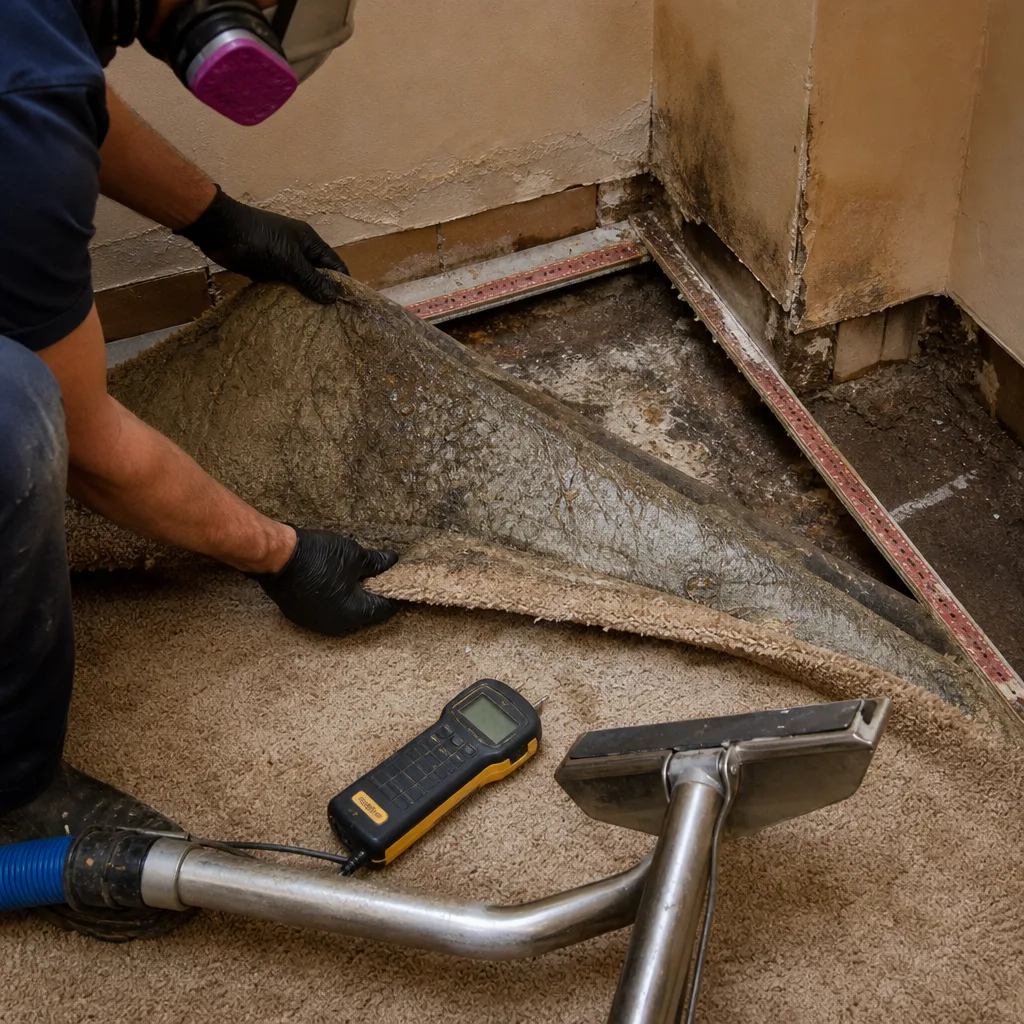
Basement Water Removal
Ossining basements built before 1930 were never meant to be dry in the modern sense. They were cellars. When a nor’easter overwhelms the original drainage or a cast-iron lateral backs up, the water has nowhere to go. We remove it, map where it entered, and dry the space to the standard the materials actually require, which in a rubble-stone cellar is often a longer, more careful process than in a modern poured foundation.
Flood Cleanup
Flood cleanup in Ossining’s low-lying blocks near the river is a different job than a sump failure on the hill. Tidal surge brings river water, storm debris, and often sewage through the same floor drain. That means full category 3 protocols: antimicrobial treatment, removal of saturated plaster-and-lath where contamination has penetrated, and air scrubbing during the entire dry-down. Cutting corners here leaves a smell in the walls that returns every humid summer.
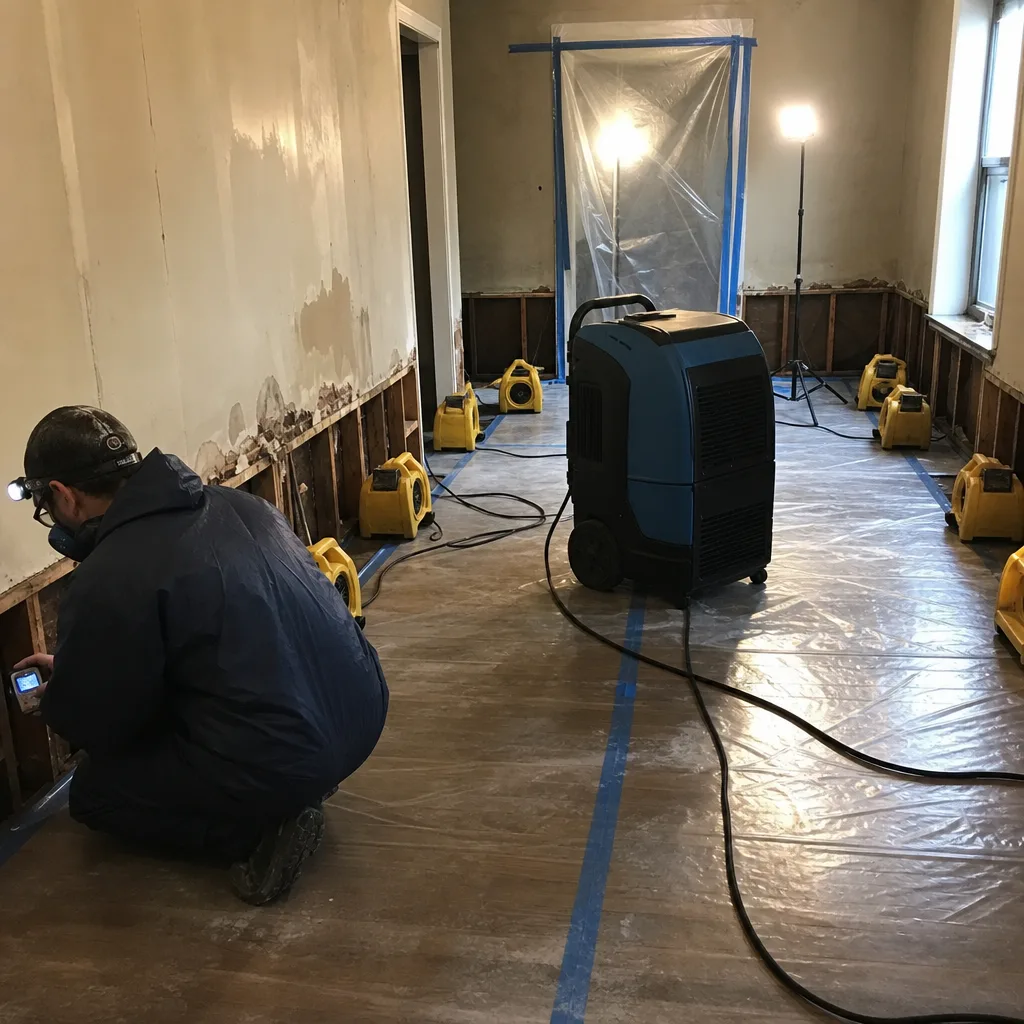
Structural Drying & Dehumidification
Daily moisture readings are not a formality. They are the difference between a basement that is dry today and a basement that smells like mildew next spring. We log readings against the dry standard for each material, using Dri-Eaz and Phoenix dehumidifiers sized to the cubic footage and the water class. In an 1880s house, that often means drying the stone itself, not just the air around it.
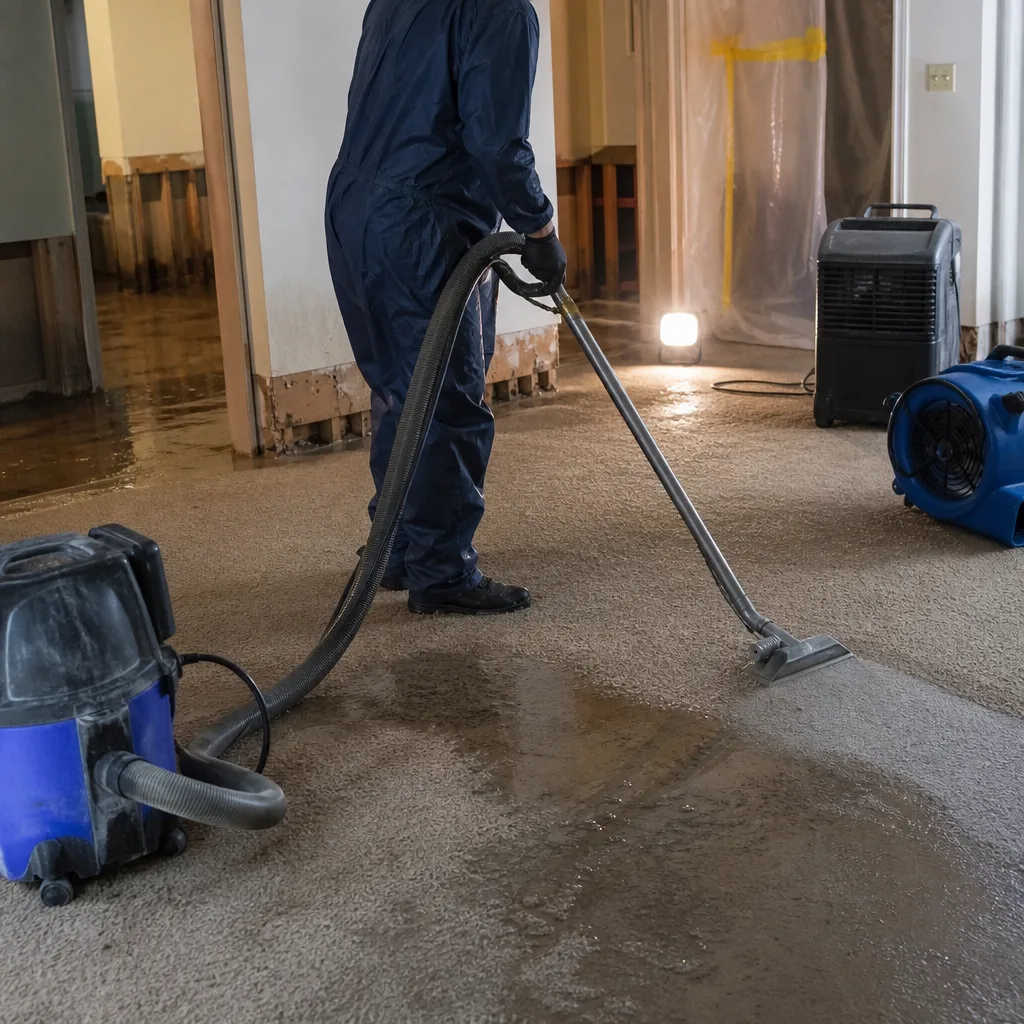
Emergency Water Extraction
When a supply line bursts in a third-floor bathroom of a Victorian on Snowden Avenue, water travels down through two floors of lath and horsehair before it reaches the basement. We extract at the source first, then chase the water downward through every layer, because in an old house the visible puddle is never the whole story. Speed matters, but so does thoroughness when the building envelope is a century old.
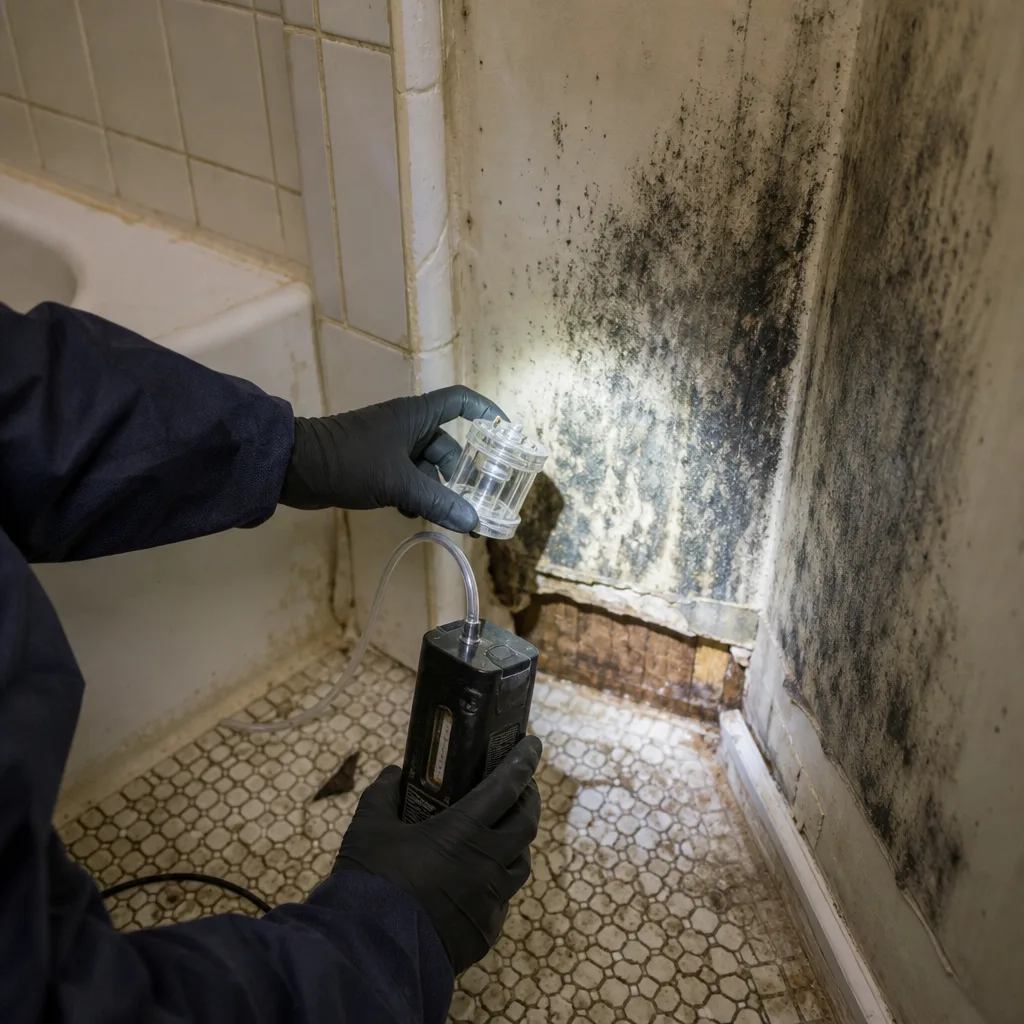
Burst Pipe Restoration
Frozen pipes are the most preventable and common winter disaster in Ossining’s older homes. Uninsulated copper in a north-facing wall gives out at the elbow during a January cold snap, and the damage is hidden until the drywall stains. We dry and restore the affected framing, replace the pipe where needed through our reconstruction side, and coordinate the entire repair so the plumber and the restoration crew are not stepping on each other.
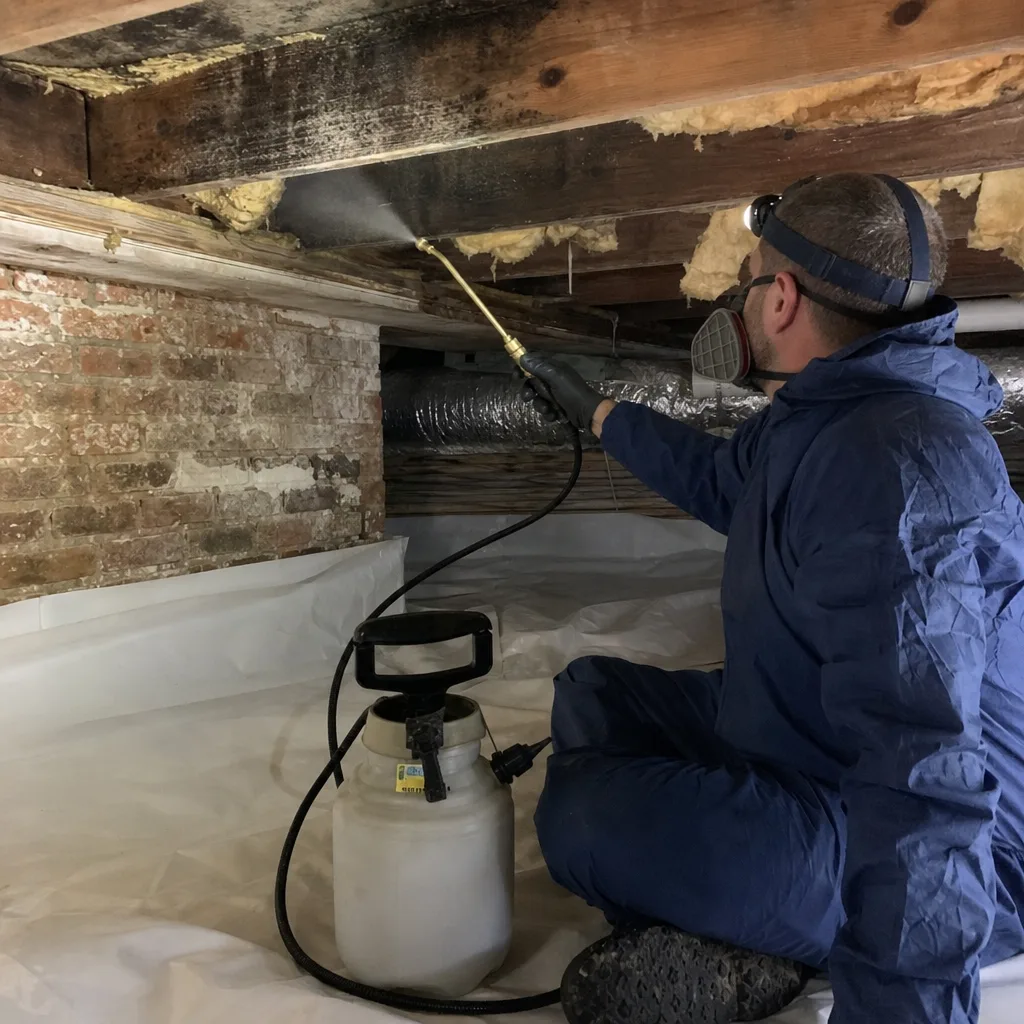
What happens when you call
- 1
A real person answersNo phone trees - you reach a local pro.
- 2
You get an upfront price rangeHonest numbers before anyone is dispatched.
- 3
A background-checked tech heads outLicensed & insured, dispatched right away.
- 4
You approve before work beginsNothing starts until you say go.
Water Damage Restoration Costs in Ossining, NY
A straight basement water extraction with drying in Ossining typically runs $1,800 to $3,500. Category 2 or 3 contamination, which is common near the train-station blocks and the low-lying streets along the Hudson, pushes the job to $4,000 to $6,500 because of antimicrobial treatment, possible plaster removal, and air scrubbing. Structural drying alone, without contamination, usually sits between $1,200 and $2,800 depending on the affected square footage and the water class. The free visual inspection is how you get a firm number. We come out, map the moisture, identify the water category, and hand you a line-item scope before you sign anything. Insurance covers most sudden and accidental events, and we bill the carrier directly on approved claims. Out-of-pocket jobs get the same written scope, same equipment, same guarantee. A square deal, no surprises on the bill.
We Also Serve Cities Near Ossining
Our crews respond daily to water damage in Ossining and the surrounding Westchester communities. We regularly work in Briarcliff Manor, Millwood, Pleasantville, and Chappaqua, where the housing stock and hillside drainage patterns create the same restoration challenges we handle in the village. If you are in one of these nearby towns and water is moving through your basement, call the same number: (917) 924-4221.
Ossining Water Damage Restoration Questions, Answered
How does Ossining’s hillside runoff affect water damage restoration in older homes?
Hillside runoff creates hydrostatic pressure against foundation walls, and in older Ossining homes with rubble-stone foundations, water is pushed through mortar joints and into the basement whenever the ground saturates. Restoration that only addresses the interior will fail when the next storm re-wets the same walls, so our inspection always includes a look at the uphill grade, the gutter discharge points, and the exterior drainage before we settle on a drying plan.
Do I need to know my home’s elevation relative to the Hudson River for a water damage claim?
Elevation matters block by block in Ossining. FEMA flood zones follow tight lines through the village, and a home on the downhill side of a street can be in a flood zone while the house across the street is not. Your elevation certificate determines whether a water event is covered under a flood policy or a standard homeowner policy, and knowing this before we quote prevents an under-scoped or over-scoped mitigation. We review this as part of the free inspection.
What category of water is typical in Ossining’s low-lying neighborhoods during storm surge?
During a tidal surge event, water backing through storm drains near the Metro-North station area is typically category 3, because river water mixes with sewage from the aging cast-iron laterals in the downtown core. That changes the restoration protocol entirely: full antimicrobial treatment, removal of contaminated plaster-and-lath where penetration occurred, and HEPA air scrubbing throughout the dry-down. Category 3 is not a distinction you want to guess at.
How do you dry plaster-and-lath walls in an old Ossining Victorian without tearing them out?
We use Injectidry wall cavity drying systems, which push dry air into the space between the lath and the exterior surface without opening the wall. This preserves original plaster, which in a 1920s house is part of the home’s character and expensive to replicate. If the plaster has already delaminated from the lath, we cut only the damaged section, never whole walls, and match the patch to the existing thickness and texture.
Is flat-roof water intrusion common in downtown Ossining and how is it restored?
Yes. The mid-century multi-family buildings and older commercial conversions in downtown Ossining carry flat or low-slope roofs, and water intrusion through a failed membrane or clogged roof drain shows up as ceiling stains on the top floor weeks after the rain stopped. We open the affected ceiling bays, dry the framing, treat for mold where necessary, and coordinate the roof repair with a qualified roofer so the restoration is not undone by the next storm.
How fast can you actually get to an Ossining home?
Most Ossining addresses are reached within 45 minutes of dispatch. Our crews stage from multiple points around Westchester, and the dispatcher who takes your call is the one who sends the truck. At 3 a.m. on a Sunday or noon on a Tuesday, the same live person answers and the same certified crew rolls out.
Will insurance cover water damage in a 100-year-old Ossining home?
Insurance covers sudden and accidental events, like a burst pipe or a storm overflow, regardless of the home’s age. Gradual seepage through a deteriorating foundation is typically a maintenance issue and is not covered. We document the cause honestly, because presenting a loss accurately to your carrier is part of why they approve legitimate claims, and why our estimates and photos are accepted without pushback so often.
Can I stay in my home during water damage restoration?
For category 1 water, staying is usually fine while drying equipment runs, though the air movers are loud and the dehumidifiers warm the space. For category 3 water, especially with sewage contamination, we recommend relocating during the active remediation, and your insurance policy may include additional living expense coverage for that period. We tell you the truth at the inspection, not after the work starts.
Serving Ossining, NY - Our Local Coverage Area
We’re based in the Ossining area and know this community well. Use the map below to see our service coverage - if you’re nearby, we can almost certainly help.
A Water Log and a Written Guarantee
We ran emergency water extraction in a 1920s Victorian on Snowden Avenue, just uphill from the Metro-North station, where a nor’easter overwhelmed the original French drain and sent category 2 water through the rubble-stone foundation. Our techs set up Dri-Eaz LGR dehumidifiers and XPOWER air movers inside a sealed containment, took moisture readings every 12 hours, and used Injectidry to dry the plaster-and-lath walls in place. Because the home sat above the FEMA flood plain, we were able to restore the original oak flooring to pre-loss condition without a full pack-out. That job, like every job we run in Ossining, ended with a moisture log in the homeowner’s hands and the 90-Day Done Right Promise in writing. If it is not done right, we make it right. No paperwork battles, no arguing. The line the water left is where we start, and we do not leave until the rebuild is finished by the same certified crew. For Water Damage Restoration in Ossining that respects the age of your house and the elevation of your street, call (917) 924-4221 for a free estimate.
Written by Curt Bowman, Owner at Floodline Restoration Co. of Manhattan, serving Ossining and Westchester County.