
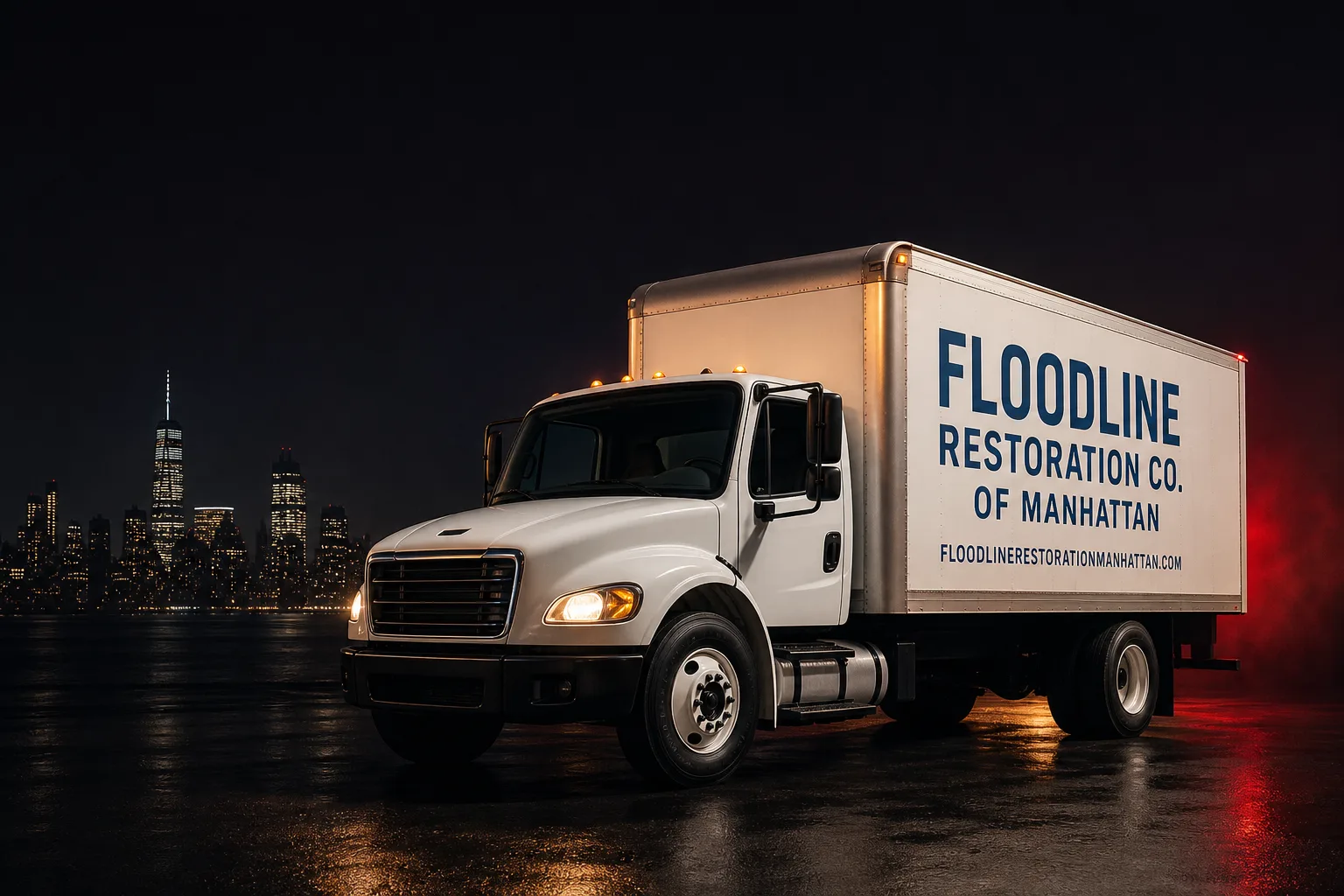
Free visual inspection and a written scope of work before any mitigation begins - photos, moisture readings, and drying logs go in your claim file
The scope we write is the scope we bill. Anything new gets shown to you, in writing, before we touch it.






 Before
 After
After Before
 After
After Before
 After
After24/7 Emergency Water Damage Restoration in Washington Heights
Water damage restoration in Washington Heights usually costs between $2,800 and $11,000 depending on how far the water traveled through the building, and emergency crews can reach most addresses within 45 minutes. Floodline Restoration Co. of Manhattan answers the phone with a live dispatcher at 2 a.m., not a recording, and we dispatch crews across Washington Heights around the clock. Call (917) 924-4221 the moment you see standing water, a spreading stain, or a ceiling starting to bow. The first hour determines whether you’re dealing with extraction and drying, or with a full tear-out and mold remediation behind original plaster walls.
Washington Heights buildings don’t fail like suburban houses do. Water leaves the pipe and travels down through stacked apartments, saturating plaster, hardwood, and the spaces between floors. We get extraction running the same visit, because every hour of delay in a pre-war walk-up is measured in additional units affected and additional carriers involved.
Understanding Water Damage Restoration Severity in Washington Heights Properties
Restoration professionals classify water into three categories, and the category determines everything about how we work. Category 1 is clean water from a supply line or burst pipe. Category 2, called grey water, carries biological or chemical contaminants: washing machine overflow, sump failures, or water that sat too long before extraction. Category 3 is black water: sewage, river water from flooding, or street backup through a floor drain. Most Washington Heights jobs start as Category 1 and degrade within 48 hours because water trapped in wall cavities and between joists breeds the bacteria that pushes it to Category 2 or worse.
In this neighborhood’s building stock, water class is just as important as category. Class 3 and 4 events, where water has wicked deep into original plaster walls, hardwood subfloors, and the chases around cast iron risers, demand structural drying plans built around moisture mapping and daily readings. Our technicians run Dri-Eaz and Phoenix equipment until the dry standard is documented, not just until the surface feels dry. The pre-war construction that makes Washington Heights buildings beautiful also makes them hold water in places you can’t see.
Why Washington Heights Property Owners Choose Floodline Restoration Co. of Manhattan
- 45-minute response commitment: We dispatch from our New York City office and crews reach most Washington Heights addresses within 45 minutes of your call, whether you’re on Broadway or up past Fort Tryon.
- 24/7 live answer: A real person picks up at every hour. You’ll never leave a voicemail and wait to hear back while water spreads through your apartment.
- IICRC-certified crews: Our water damage technicians hold WRT and FSRT certifications, and we train to RIA and IFA standards. Background-checked and uniformed on every job.
- Free visual inspection: We’ll assess the damage, map the moisture, and give you a written scope before any work starts. No pressure, no obligation.
- Direct insurance billing: We handle the claim paperwork and communicate with your adjuster directly. You never play messenger between us and your carrier.
- One team from extraction to reconstruction: The same Floodline crew that extracts the water handles structural drying and rebuilds what needs rebuilding. No mid-job handoffs, no inherited crew.
Our Water Damage Restoration Process
Inspection & Assessment
We walk the affected units, trace the water path, and run thermal imaging and moisture meters to map exactly what got wet. In Washington Heights pre-war buildings, that means checking the floor cavity below, the ceiling above, and the wall cavities that hide cast iron risers.
Extraction & Stabilization
Standing water comes out first, always. We run professional-grade extraction equipment including Dri-Eaz units, and we stabilize the site to stop any active leak at its source before drying begins.
Drying & Dehumidification
We set Phoenix dehumidifiers and air movers based on the moisture map from day one. Daily readings are logged until every affected material hits the dry standard, and that log goes to you and your carrier.
Cleaning & Sanitization
Affected surfaces get cleaned and sanitized with appropriate antimicrobial treatments. We also manage containment so dust and debris from one floor don’t spread through a stacked building.
Mold Prevention & Clearance
Before we close walls, we verify moisture levels in every cavity. If water sat long enough to create mold risk, we address it before it becomes a remediation problem. HEPA air scrubbers run during and after work where needed.
Repairs & Restoration
From new drywall and plaster to refinished hardwood and rebuilt ceilings, our crew handles the full Water Damage Restoration scope. We don’t hand you off to a different contractor for reconstruction.
Need Emergency Water Damage Restoration in Washington Heights Now?
Crews minutes away, answering live 24 hours a day. The sooner we start, the less it costs.
Working With Your Insurance Company
Most water damage in Washington Heights is covered by homeowners or renters insurance, but the claim goes smoother when documentation starts in the first hour. We photograph every affected room before we move anything, and we log moisture readings from day one through the final dry standard. That paper trail is what gets carriers to approve structural drying, wall and floor removal, and reconstruction without weeks of back-and-forth.
Floodline bills your carrier directly and communicates with your adjuster as needed. We’ve handled hundreds of claims, including multi-unit events where several policies cover one leak. You’ll know what your coverage does and doesn’t include before any work begins, because the scope is written down and you sign off on it first. That’s how it should work.
What We Provide Your Insurer
- Thorough documentation of the loss
- Photos of all damage, room by room
- Moisture readings and drying logs
- A detailed, line-item scope of work
- Direct coordination with your carrier
Built for Washington Heights’s Loss Calendar
Washington Heights runs on a seasonal water damage calendar, and we know it well. January and February are the burst pipe months: supply lines freeze inside uninsulated exterior walls of pre-war buildings, and the failure floods through the same stacked apartments. The highest-ridge location in Manhattan doesn’t protect old plumbing from deep freezes, and the freeze-thaw cycles on Fort Tryon’s exposed facades mean west-facing buildings see the worst of it.
Spring brings thaw and basement seepage as snowmelt and rain find their way through unrepointed brick and old mortar joints. Summer thunderstorms overwhelm flat roofs and clogged drains on six-story walk-ups, sending water down through top-floor ceilings. Fall nor’easters drive wind-blown rain against those same west-facing Hudson River facades, and we routinely find interior wall cavities saturated days before anyone sees a stain. If you live in Washington Heights long enough, the calendar repeats and so do the calls. We built our dispatch around it.
Water Damage Restoration Across Washington Heights’s Neighborhoods
Washington Heights isn’t one building type, and the response changes block by block. Up near Fort Tryon Park and along the ridge of Fort Washington Avenue, the older elevator buildings and walk-ups have original clay and cast iron stacks that fail with age. A drain line crack on the top floor becomes a five-unit event by morning. We route crews through West 181st Street and Broadway to reach those addresses fast because the buildings are dense and parking is tight.
Down in the lower 160s and along Amsterdam Avenue, tenant turnover runs high. Rental units sit empty while water spreads to the apartment below, and gaining access to every affected unit becomes the hardest part of the job. We know the drill: coordinate with landlords, superintendents, and tenants in Spanish when needed, and work with housing constraints that would stall a generic restoration crew. The neighborhoods near J. Hood Wright Park and the area around 168th Street’s hospital district have their own rhythms too: older co-op buildings where boards want documentation before work starts. We bring a written scope and a moisture map to every job, which keeps everyone moving.
Washington Heights is where we’ve learned that speed means nothing without access and documentation. Whether it’s a garden-level basement on Pinehurst Avenue or a top-floor unit on Cabrini Boulevard, the crew knows the buildings, knows the block, and knows what the calendar and the weather are going to throw at them.
Specialized Water Damage Restoration Services We Offer in Washington Heights
Emergency Water Extraction
Standing water in a pre-war apartment has to come out before it finds the floor below. We run Dri-Eaz extraction equipment and get water off hardwood, tile, and carpet fast. In Washington Heights, where stacked apartments mean your leak is someone else’s ceiling, extraction is the first thing we do and the thing we never delay.
Structural Drying & Dehumidification
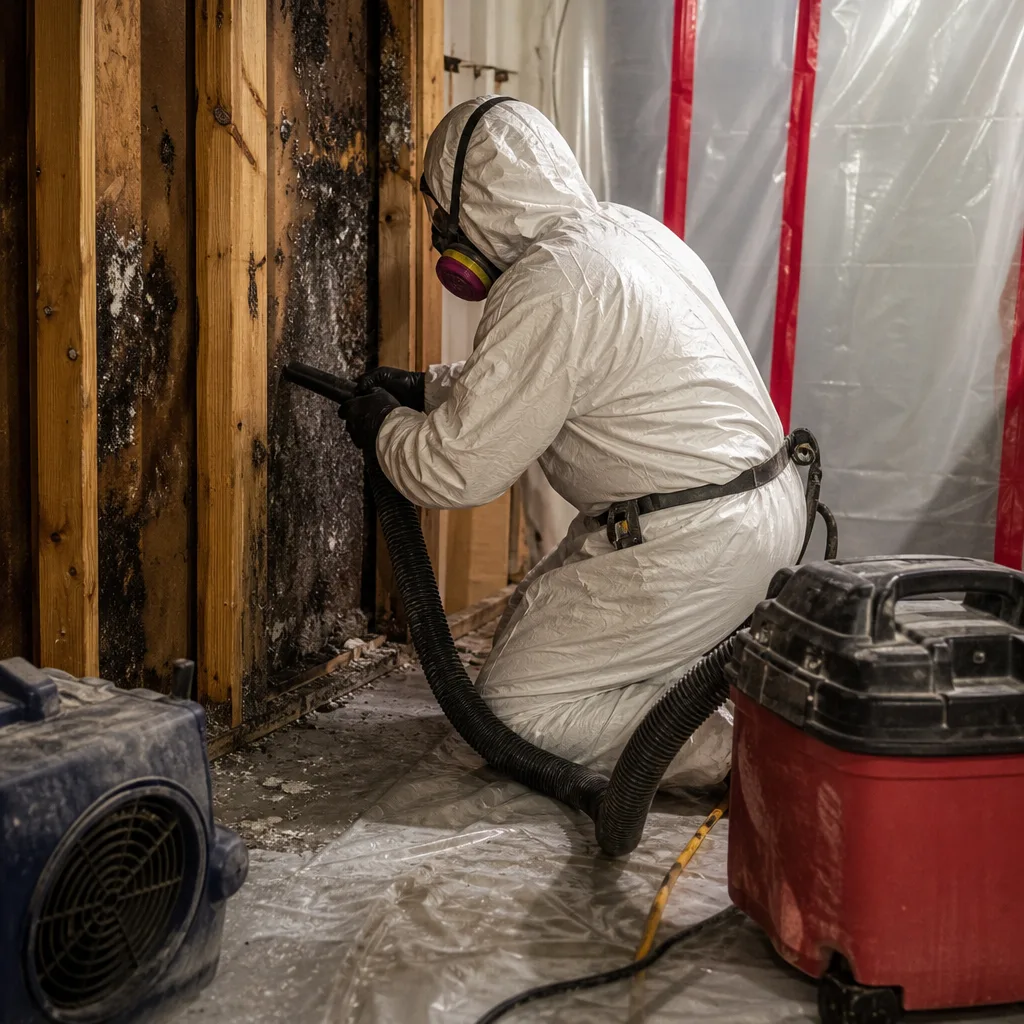
Plaster walls and original hardwood don’t dry on their own. We set Phoenix dehumidifiers and air movers based on a moisture map, not guesswork, and we take daily readings until every cavity, joist, and wall chase hits the dry standard. That log goes to you and your carrier. It’s the difference between a clean recovery and mold behind the walls six months later.
Burst Pipe Restoration
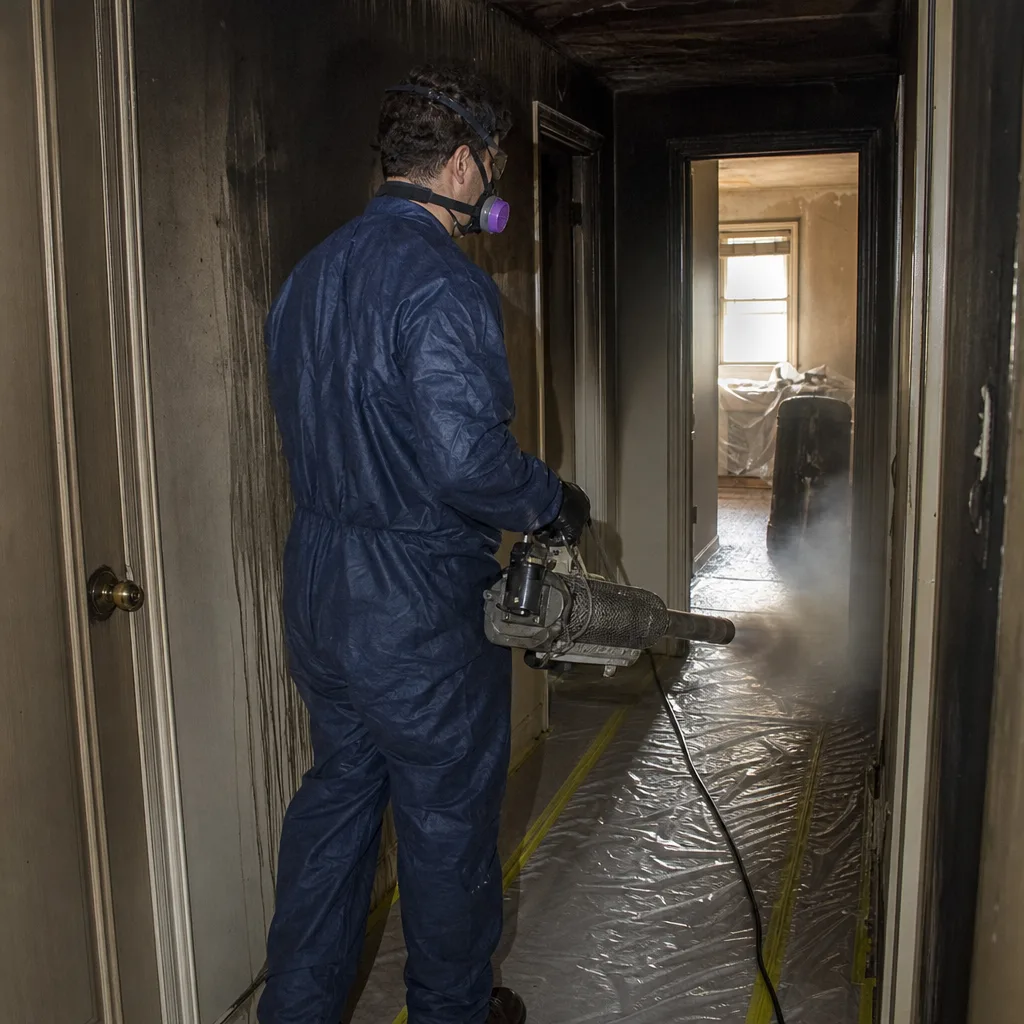
A frozen supply line on the top floor of a 1920s walk-up sends water through floor after floor. We stop the source, extract from every affected unit, and dry the building as one interconnected system. Asbestos testing on pipe insulation and lead paint screening are part of the job when we open pre-war walls. We do it in the right order and document everything.
Flood Cleanup
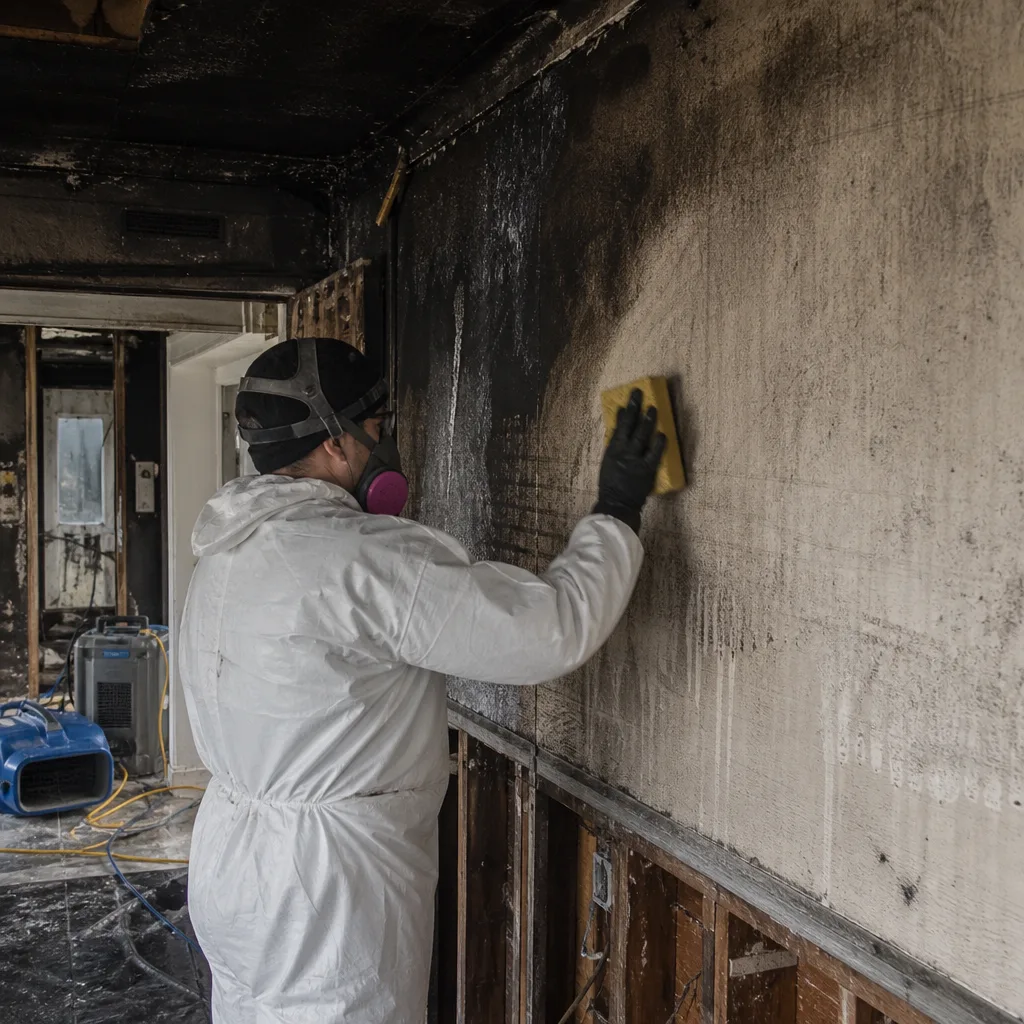
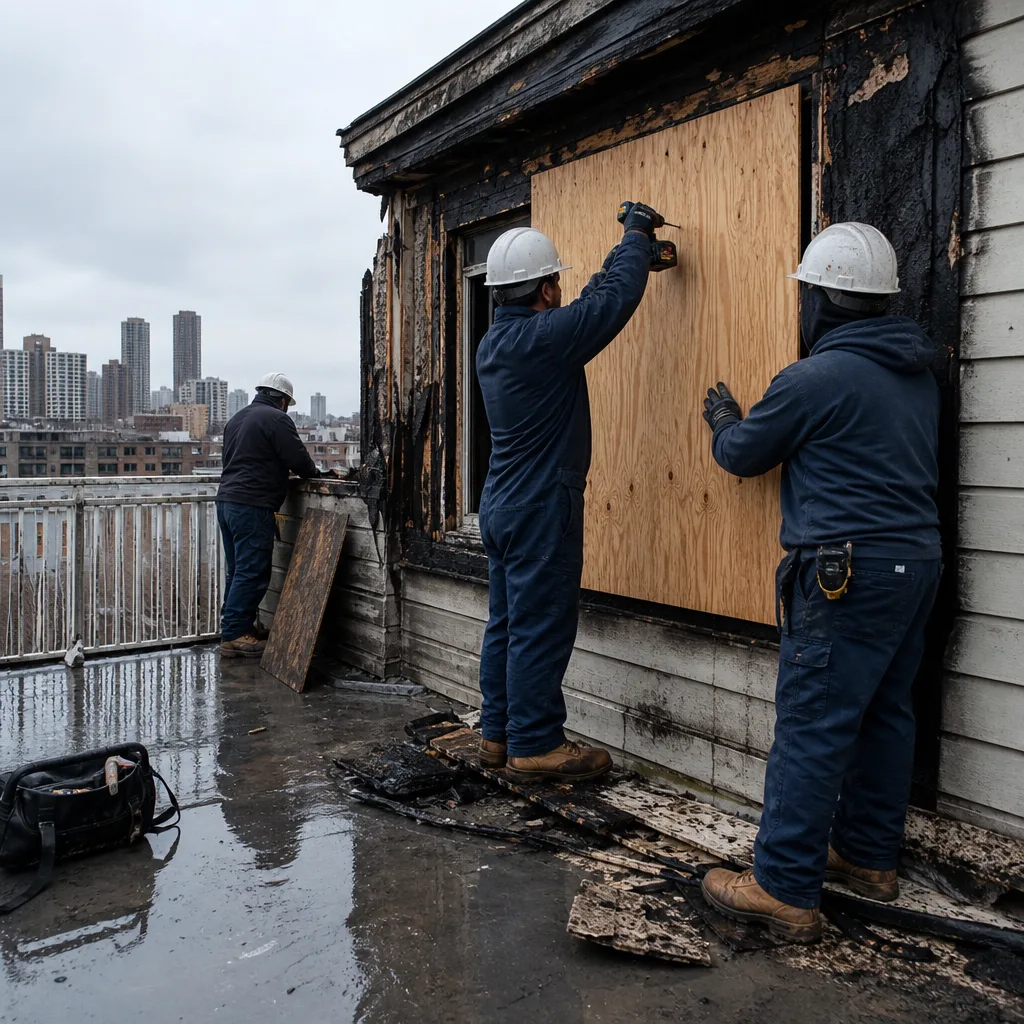
When storm water or a sewer backup comes through a basement floor drain on 181st Street, we treat it as Category 3 from the start. Containment, extraction, sanitization, and drying run in that order, and we handle the disposal of contaminated materials. Flood water in a high-density building carries risk you can’t clean with a mop.
Basement Water Removal
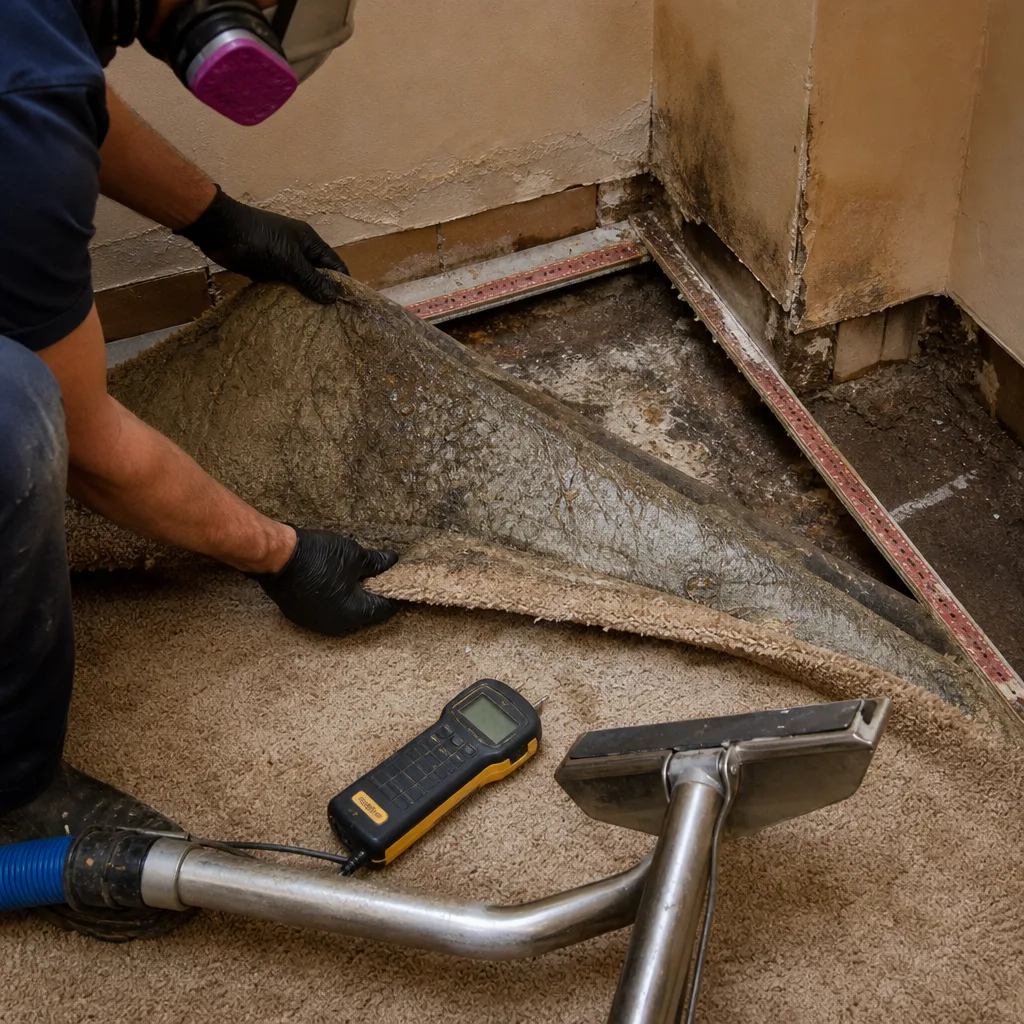
Washington Heights basements hold boilers, old storage, and decades of accumulated belongings. We remove the water, dry the space, and document what was damaged for your claim. Some of these basements have original stone and brick foundations that need structural drying, not just fans running for a few days.
What happens when you call
- 1
A real person answersNo phone trees - you reach a local pro.
- 2
You get an upfront price rangeHonest numbers before anyone is dispatched.
- 3
A background-checked tech heads outLicensed & insured, dispatched right away.
- 4
You approve before work beginsNothing starts until you say go.
Water Damage Restoration Costs in Washington Heights, NY
A straightforward Category 1 burst pipe with fast extraction in a single Washington Heights apartment typically runs $2,800 to $5,500. When water crosses into multiple units, or when pre-war walls require asbestos testing and lead abatement before drying can start, the job lands between $7,000 and $11,000 or more depending on how many apartments are affected and how much reconstruction is needed.
Emergency water extraction alone usually costs $1,200 to $2,500. Structural drying with professional equipment adds $1,500 to $4,000 depending on square footage and how long the drying runs. The variables that matter most in Washington Heights: whether the building pre-dates 1940 and triggers mandatory testing, how many floors the water crossed, and whether tenants or landlords control access to affected units. We give you a free visual inspection and a written scope before any work starts, so the number you sign off on is the number your insurance company sees. Call (917) 924-4221 for exact pricing on your situation. Estimates are free, and we won’t sell you work you don’t need.
We Also Serve Cities Near Washington Heights
Our crews cover Fairview, Harrison, East Bronx, and Hunts Point with the same live 24/7 dispatch and 45-minute response commitment. If you’re across the bridge and water is spreading, call first and we’ll get a crew moving.
Serving Washington Heights, NY - Our Local Coverage Area
We’re based in the Washington Heights area and know this community well. Use the map below to see our service coverage - if you’re nearby, we can almost certainly help.
Washington Heights Water Damage Restoration Questions, Answered
Why does water damage in a Washington Heights walk-up often involve multiple insurance claims at once?
Because a single burst pipe in a pre-war Washington Heights building routinely cascades water through five or six stacked apartments, each with its own lease and its own insurance carrier. When our crew dries a six-story walk-up, we document damage separately for each unit, coordinate with multiple adjusters, and keep the drying log segmented by apartment so every claim gets what it needs. Multi-claim coordination is standard practice here, not an exception.
Do we need to test for asbestos or lead before you can start drying our Washington Heights apartment?
In buildings constructed before 1940, which describes most of Washington Heights, asbestos pipe insulation and lead-based paint are legally presumed present until testing says otherwise. We can start extraction and set up containment immediately, but any work that opens walls or disturbs original pipe chases requires testing and, if confirmed, abatement first. Rushing past this isn’t an option, and doing it properly protects everyone in the building.
How fast can you start emergency water extraction in a Washington Heights pre-war building?
Most Washington Heights addresses get a crew on site within 45 minutes, and extraction starts the same visit. Faster extraction means less water migrating down through the building and fewer units affected. Call (917) 924-4221 and a live dispatcher will get the crew moving immediately.
What happens if water from a leaky roof on Fort Tryon’s ridge has been soaking our plaster walls for days?
Water that sits in original plaster walls for more than 48 hours creates a real mold risk, and the wall cavities in those Fort Tryon-area buildings hide moisture for days before you see a stain. We’ll moisture-map the entire affected area, open the walls where the readings say to, and run structural drying with Phoenix dehumidifiers until the dry standard is met. If mold has already started, we address it before closing anything up.
Can you handle a burst pipe that flooded a rent-stabilized building with tenants speaking only Spanish?
Yes. Our crews include Spanish-speaking technicians, and we work in rent-stabilized Washington Heights buildings routinely. We know how to communicate with tenants, coordinate with landlords and superintendents, and document everything for the multiple insurance claims that follow a cross-floor flood. Language is never a barrier to getting extraction started.
Do I really need full structural drying, or can I just run fans and wait?
Fans don’t dry the inside of pre-war plaster walls, wall chases, or the space between floors. Without professional-grade Dri-Eaz and Phoenix equipment and a moisture map to guide placement, hidden moisture stays trapped and becomes mold within weeks. Full structural drying costs more than fans, but it costs far less than mold remediation and reconstruction later.
Will my insurance cover water damage restoration in Washington Heights?
Most homeowner and renter policies cover sudden and accidental water damage from burst pipes or appliance failures, but coverage depends on the source and the policy language. We provide the documentation your carrier needs: photos from the first hour, daily moisture readings, and a line-item scope of work. We bill directly and talk to your adjuster so you don’t have to manage the claim yourself.
What should I do in the first 30 minutes after discovering water damage?
Shut off the water source if you can do it safely, and call (917) 924-4221. Don’t move furniture or pull up carpet: you’ll spread contaminated water. Don’t wait to see if it stops spreading, because in a Washington Heights walk-up, the water is already on its way to the apartment below. A live dispatcher is on the phone now, and a crew can be moving in minutes.
Last January, our crew responded to a category 2 water event in a six-story walk-up on West 181st Street near Fort Washington Avenue, where a failed cast iron drain stack sent grey water through four occupied rental units. We ran containment on each floor, extracted standing water with our Dri-Eaz equipment, and performed moisture mapping to identify saturated plaster walls and original hardwood floors. After asbestos testing on pipe insulation and lead-based paint screening, our structural drying plan with Phoenix dehumidifiers and air movers brought every unit back to pre-loss condition before mold could set in.
That job took coordination across four tenants, two landlords, and three insurance carriers, but it got done. In Washington Heights, that’s what the work asks of you, and we built our company around it. The 90-Day Done Right Promise backs every job in writing: if it’s not done right, we make it right, with no paperwork battles and no arguing. It’s called the Keystone Standard, and we’ve stood behind it for over 42 years.
If you’re dealing with water damage in Washington Heights, call (917) 924-4221. A live person answers, a free inspection gets you a written scope, and the same certified crew handles the job from first extraction to final repair. One team, one standard, done right.
Written by Curt Bowman, Owner at Floodline Restoration Co. of Manhattan, serving Washington Heights with live 24/7 dispatch and the 90-Day Done Right Promise.