
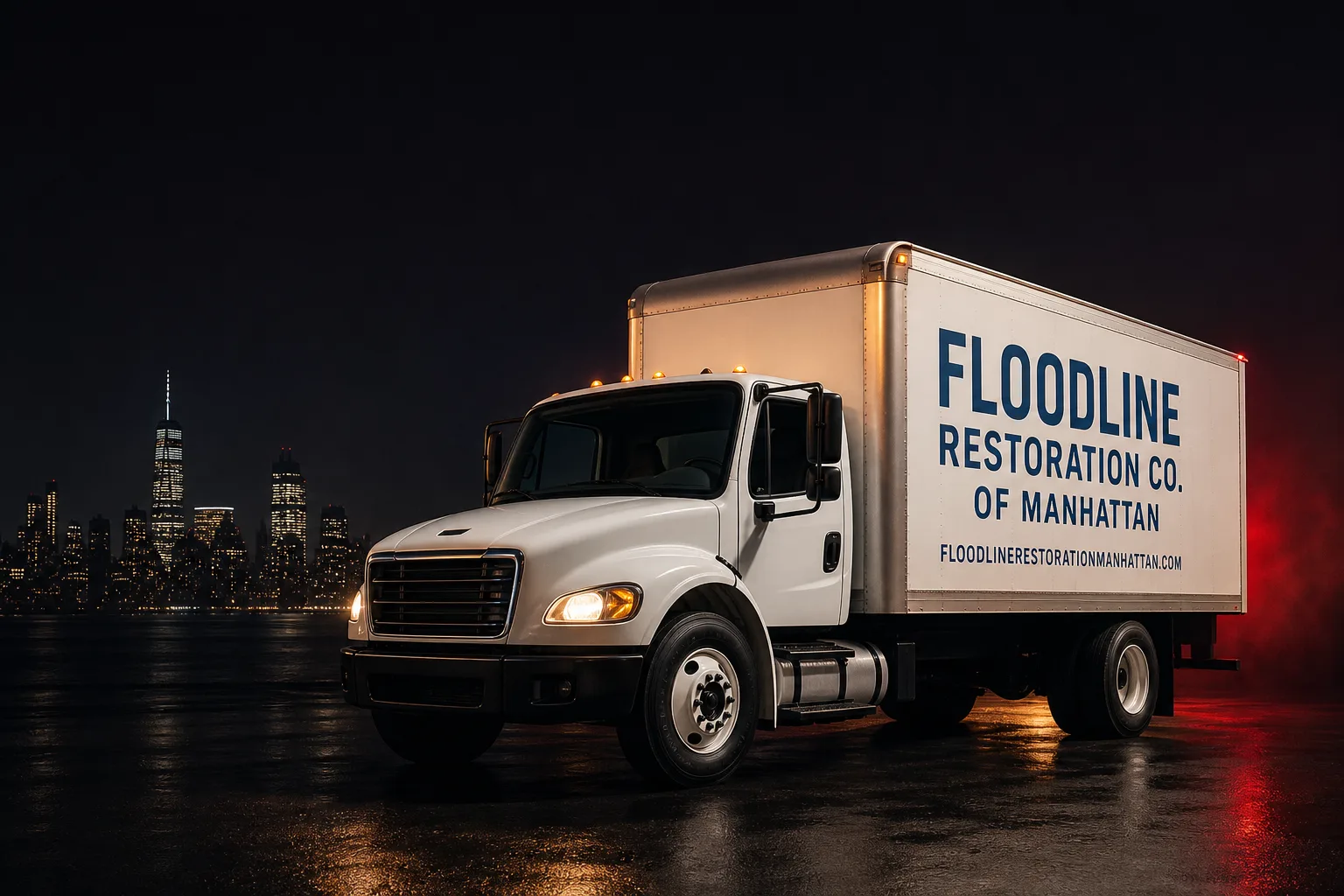
Free visual inspection and a written scope of work before any mitigation begins - photos, moisture readings, and drying logs go in your claim file
The scope we write is the scope we bill. Anything new gets shown to you, in writing, before we touch it.






 Before
 After
After Before
 After
After Before
 After
After24/7 Emergency Commercial Restoration in Charleston
Commercial restoration in Charleston means responding to a burst pipe in an unheated farm market office, a roof leak spreading through a connected barn, or mold blooming inside a 1910s retail space before the damage eats through the ledger. Floodline Restoration Co. of Manhattan answers live, 24 hours a day, and crews dispatch into Charleston with a 45-minute response commitment. Call (917) 924-4221 the moment water or smoke appears. The first hour decides whether you’re drying a floor or replacing it.
We know Charleston’s buildings. Most commercial structures here are wood-frame farmhouses converted to retail, attached agricultural outbuildings, and pre-war multi-unit properties with shared wall penetrations. A small leak in the hay loft becomes a Category 2 water job in the office below within hours. Our Commercial Restoration team starts with a free visual inspection, moisture mapping, and a written scope before any work begins.
Understanding Commercial Restoration Severity in Charleston Properties
Water damage is classified by contamination level. Category 1 is clean water from a supply line. Category 2 carries significant contamination (think washing machine overflow or sump failure). Category 3 is grossly contaminated, coming from sewage, floodwater, or standing water that has sat for days in an unconditioned space. Charleston’s older buildings complicate every category. A Category 1 pipe burst in a hay loft above a commercial market can drop through floorboards, wick into 19th-century lath-and-plaster walls, and pick up agricultural contaminants from a barn environment on its way into occupied space. That’s no longer a simple dry-out. That’s containment, air scrubbing, and structural drying with negative pressure between the affected zones.
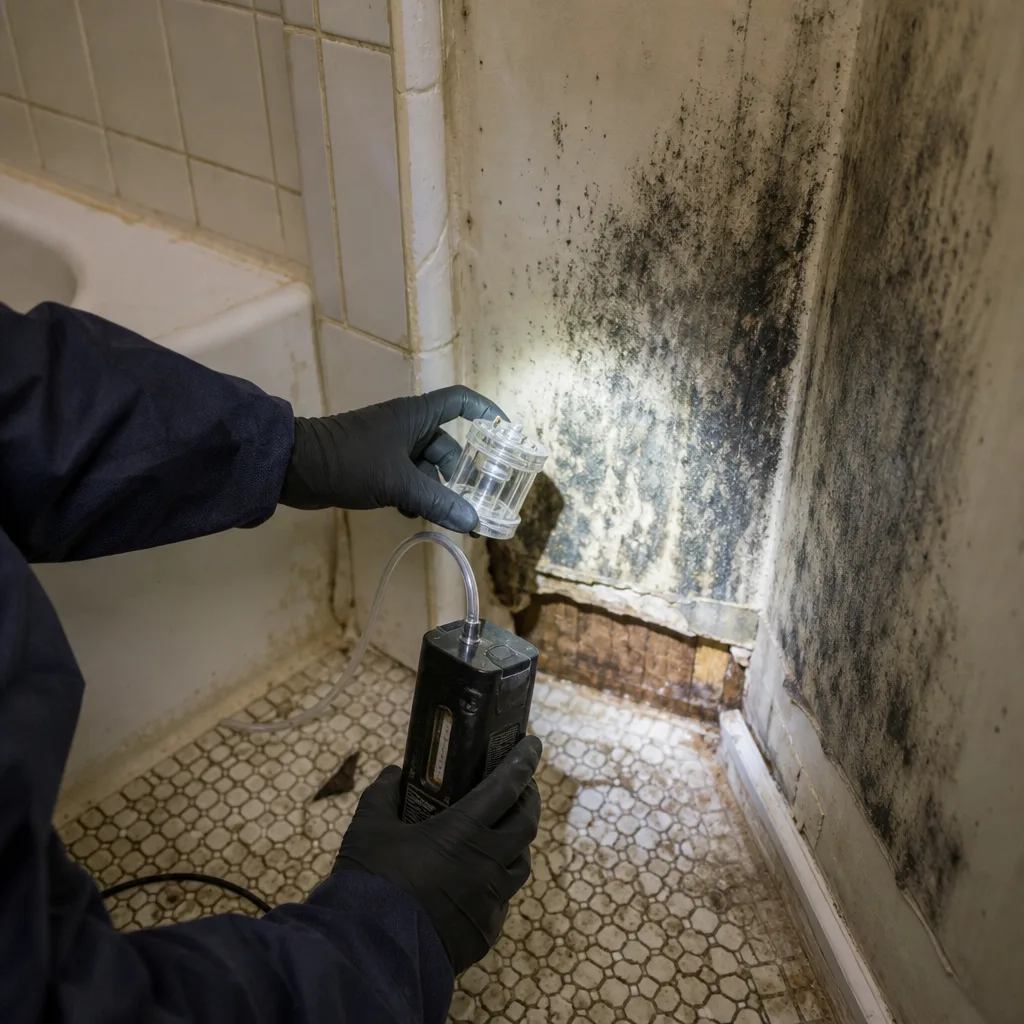
Mold follows moisture within 24 to 48 hours in Charleston’s humid summer months and in unconditioned spaces all year round. Our crews use thermal imaging and penetrating moisture meters to find water hidden behind horsehair plaster and old-growth timber. Without that step, you get a building that looks dry on the surface and rots from the inside out. Severity drives scope. Scope drives cost. We tell you which one you’re dealing with before equipment rolls in.
Why Charleston Property Owners Choose Floodline Restoration Co. of Manhattan
- 45-minute response commitment to any Charleston commercial property, with crews staged for Montgomery County’s hill-town roads and winter access limits.
- 24/7 live answer. A real person picks up at 2 a.m., not a recording. You describe the damage, we dispatch. No call center tree.
- IICRC-certified crews trained to WRT (Water Damage Restoration Technician), FSRT (Fire & Smoke Restoration Technician), and AMRT (Applied Microbial Remediation Technician) standards, led by Curt Bowman.
- Free visual inspection with moisture readings and photo documentation from the first hour, before any work is approved.
- Direct insurance billing. We document everything, bill your carrier directly, and you never play messenger between us and the adjuster.
- One team from extraction to reconstruction. The same background-checked, uniformed crew that sets containment also handles the rebuild, so nothing gets lost in a handoff.
Our Commercial Restoration Process
Inspection & Assessment
We arrive, walk the property, and identify every moisture path including shared wall penetrations from connected barns. Thermal imaging and penetrating meters give us a full map in under an hour.
Extraction & Stabilization
Truck-mounted extraction pulls standing water fast. We stop the source, shut down affected electrical, and stabilize the structure so the damage stops spreading while you’re still on the phone with your insurer.
Drying & Dehumidification
Dri-Eaz dehumidifiers, XPOWER air movers, and Injectidry panel drying for hard-to-reach cavities. Daily moisture logs until the building reaches pre-loss moisture readings, which we hand to you and your carrier.
Cleaning & Sanitization
HEPA air scrubbing and antimicrobial treatment on affected surfaces. For Category 2 or 3 water, we set containment and treat the space before drying begins, not after.
Commercial Restoration Specialty Treatment
Document and inventory recovery, electronic equipment drying, and odor control for Charleston’s connected agricultural spaces where barn air migrates into retail areas.
Repairs & Restoration
We rebuild what needs rebuilding, from plaster walls to flooring to structural framing. Same crew, same company, same 90-Day Done Right Promise in writing.
Need Emergency Commercial Restoration in Charleston Now?
Crews minutes away, answering live 24 hours a day. The sooner we start, the less it costs.
Working With Your Insurance Company
We’ve handled claims on Charleston’s farm-adjacent commercial buildings for years, and we know how adjusters think about connected-barn water damage. Documentation matters more than argument. From the first hour, we photograph every room, log every moisture reading, and build a line-item scope that matches industry estimating standards. Then we talk to your adjuster directly, so you don’t spend your week on hold. Most Charleston commercial policies cover sudden burst pipes and storm damage. Slow leaks and long-standing mold are often excluded. We’ll tell you what’s likely covered before you spend a dollar.
What We Provide Your Insurer
- Thorough documentation of the loss
- Photos of all damage, room by room
- Moisture readings and drying logs
- A detailed, line-item scope of work
- Direct coordination with your carrier
Built for Charleston’s Loss Calendar
Charleston’s commercial damage follows a seasonal rhythm, and sharp property owners plan around it. January and February bring deep freezes that burst supply lines in unheated hay lofts, attached barns, and seasonal farm stands. The same freeze-thaw cycles that wreck Montgomery County roads also crack old pipes behind 19th-century walls. Spring snowmelt sends runoff down the hill slopes into low-lying basements and root cellars, where Category 2 water sits until someone opens the door. Summer thunderstorms dump inches in hours, and Charleston’s old downspouts and shallow drainage can’t keep up. Come fall, the first hard freeze catches buildings that haven’t been winterized. Every season has a predictable failure mode here. Knowing which one you’re facing changes how fast we move and what equipment we bring.
Commercial Restoration Across Charleston’s Neighborhoods
Charleston stretches across rural Montgomery County, so “neighborhoods” here mean road corridors and hamlet clusters, not city blocks. Commercial properties along Route 30A and Charleston’s main four corners are older storefront buildings with apartments above, where a roof leak in the retail space migrates into ceiling cavities and along lath-and-plaster party walls. Properties on the Corbin Hill and Carlisle areas sit on higher ground with more exposed wind-driven rain against barn-side walls, and we see more exterior siding failures there. In the lowlands toward the Schoharie and the flats off Lynk Road, spring runoff finds basements and slab-on-grade agricultural shops. And every connected barn along the back roads, whether it’s attached to a farm market, an equipment shed, or a seasonal rental, carries the same risk: shared wall penetrations that let moisture and rodents move between agricultural and commercial space. Our crews know the roads, the building stock, and where the water goes in each part of Charleston.
Specialized Commercial Restoration Services We Offer in Charleston
Multi-Unit & HOA Restoration
Charleston’s multi-unit buildings, often converted farmhouses or older apartment blocks, share plumbing and framing across units. A pipe burst in one unit is rarely contained to one unit. We set containment per unit, isolate air pathways through shared attics and crawlspaces, and dry each space to its own pre-loss moisture target. HOA boards get a single point of contact and a written scope that holds up at the next meeting.
Business Interruption Minimization
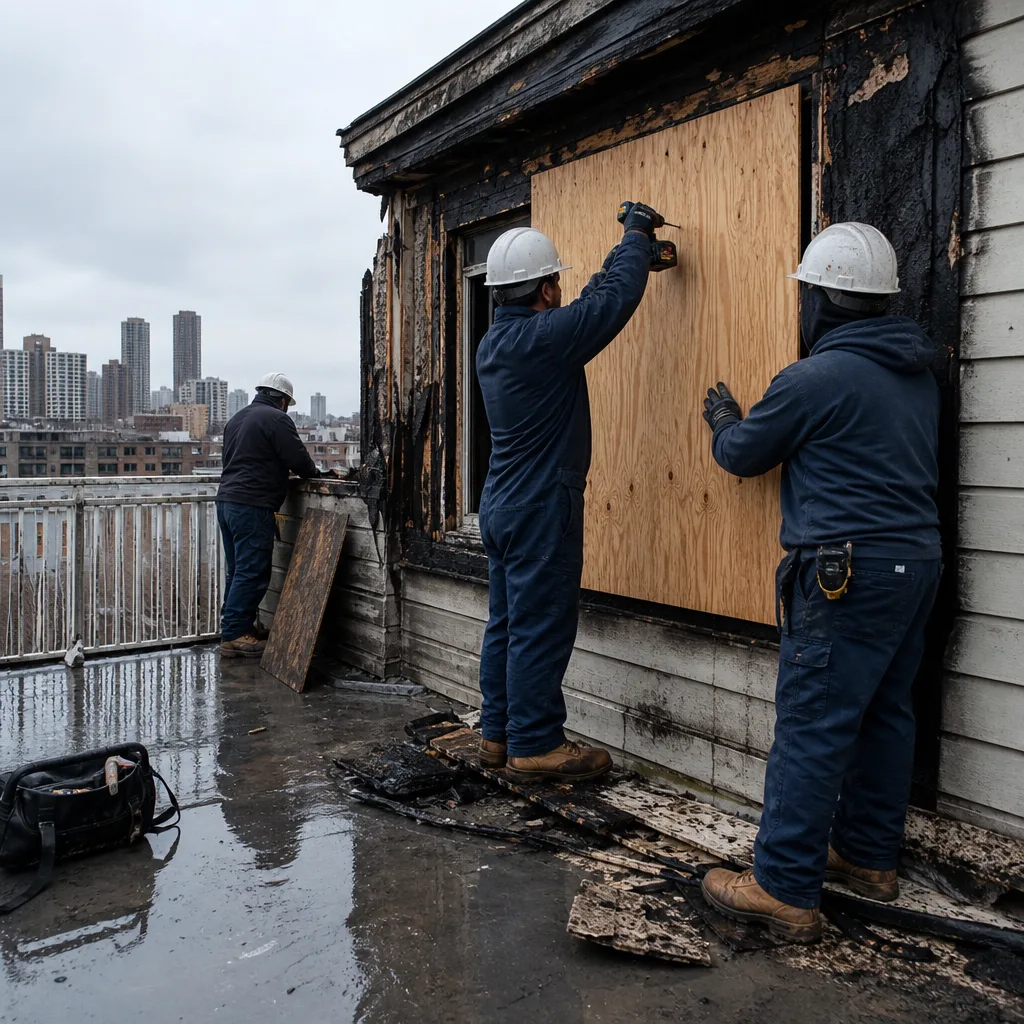
Every day a Charleston farm market, retail shop, or office stays closed costs more than the drying bill. We stage equipment before the first freeze, pre-plan large-loss response for agricultural buildings, and work nights and weekends when your customers aren’t on site. The goal is reopening, not just drying.
Document & Inventory Recovery
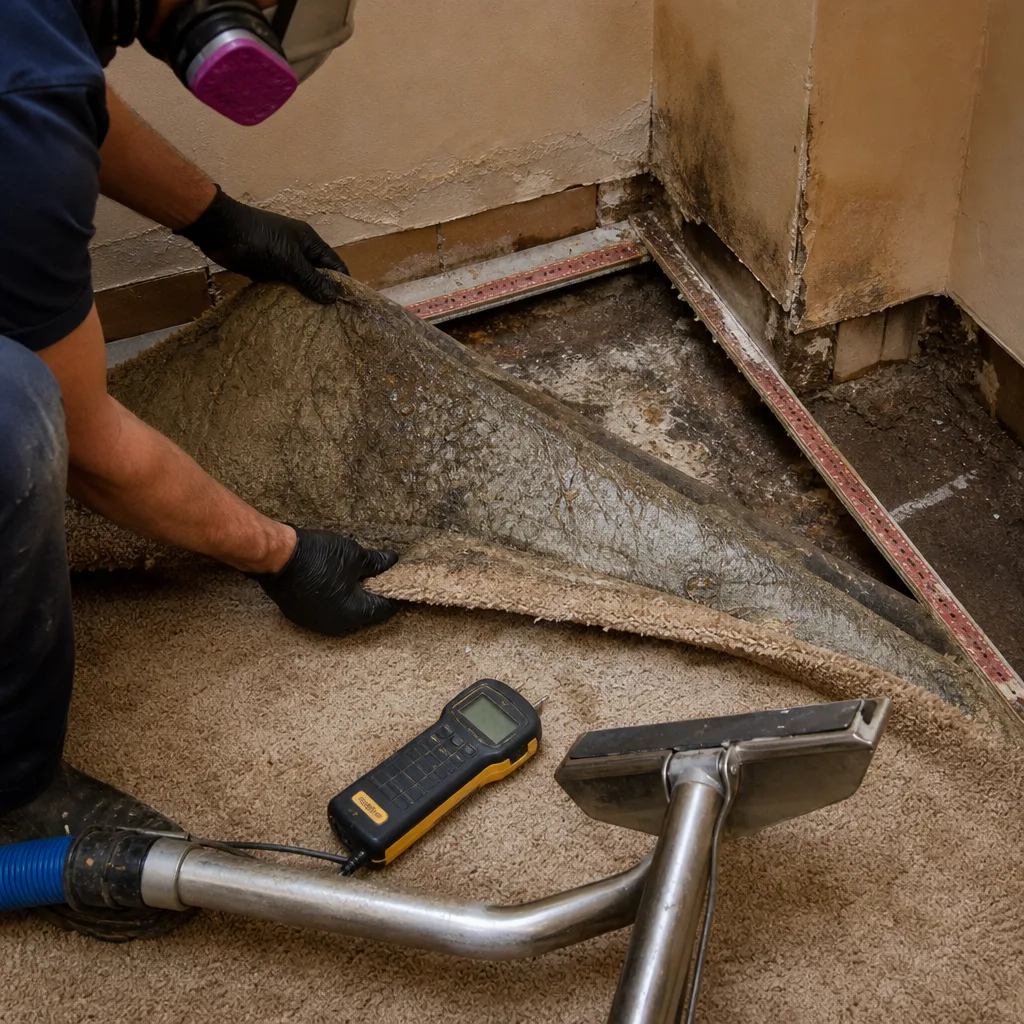
Paper records, seed inventories, equipment manuals, and tax documents stored in Charleston basements, root cellars, and attached barns absorb moisture fast. We use vacuum freeze-drying partnerships for saturated documents and Injectidry panel systems for wet shelving and cabinetry. A 1910s farm ledger doesn’t have to be a total loss.
Industrial Facility Cleanup
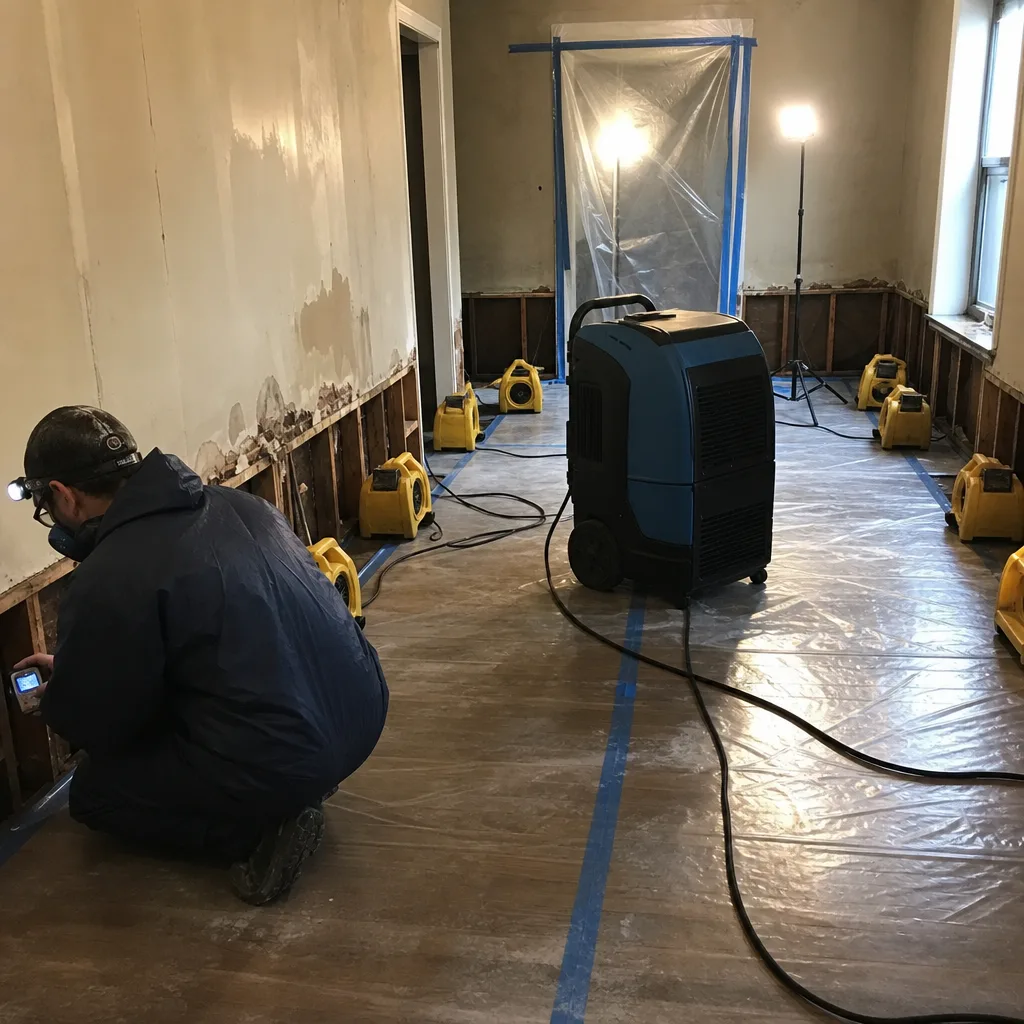
Charleston’s agricultural processing buildings and equipment shops present specific challenges: concrete floors with oil residue, overhead hay storage, and unconditioned spaces that never fully dry on their own. We bring Phoenix and B-Air equipment sized for large cubic footage and run containment barriers that isolate active work areas from clean storage.
Large-Loss Response
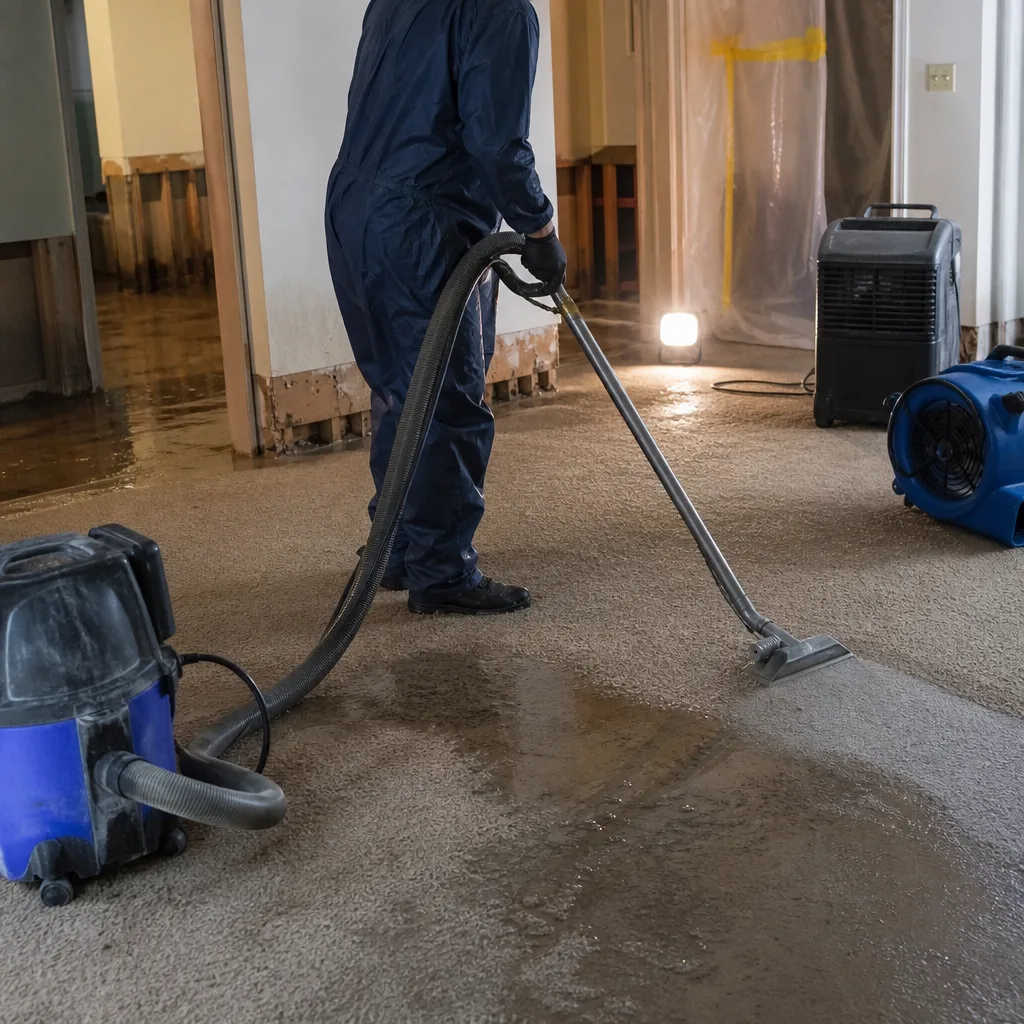
When a Charleston dairy barn, farm stand, or multi-unit building takes a full freeze-thaw pipe burst, the damage rarely stops at one floor. We arrive with truck-mounted extraction, multiple desiccant dehumidifiers, and enough air movement to dry thousands of square feet. A pre-set staging plan means no waiting for equipment to arrive from the metro office while water migrates.
What happens when you call
- 1
A real person answersNo phone trees - you reach a local pro.
- 2
You get an upfront price rangeHonest numbers before anyone is dispatched.
- 3
A background-checked tech heads outLicensed & insured, dispatched right away.
- 4
You approve before work beginsNothing starts until you say go.
Commercial Restoration Costs in Charleston, NY
Charleston pricing reflects the distance, the building stock, and the scope of agricultural-adjacent water damage. A small commercial kitchen or office pipe burst with Category 1 water runs $1,800 to $4,200 on average, including extraction, drying, and basic material repair. A connected barn leak that migrates into retail space with Category 2 water and mold containment typically lands between $6,500 and $15,000, depending on how far moisture traveled through shared wall cavities. Full structural drying of a large dairy barn with attached market space and document recovery runs $15,000 to $45,000. Insurance covers most sudden events; long-term seepage and pre-existing mold are often on the owner. Our free visual inspection gives you a firm line-item scope before you commit to anything.
We Also Serve Cities Near Charleston
Our crews cover Charleston and the surrounding Montgomery County hill towns, including Fairview, Harrison, East Bronx, and Hunts Point. If your commercial property sits within an hour of Charleston, we’ll be there with the same 45-minute commitment and live 24/7 dispatch.
Serving Charleston, NY - Our Local Coverage Area
We’re based in the Charleston area and know this community well. Use the map below to see our service coverage - if you’re nearby, we can almost certainly help.
Charleston Commercial Restoration Questions, Answered
How does Charleston’s connected-barn construction affect commercial restoration scope?
Connected barns share wall penetrations with main buildings, so water from an agricultural space moves into commercial areas unseen. This means restoration must include containment between the barn and occupied space, plus moisture mapping of the shared wall cavities. A job that looks like a small retail ceiling leak is often a full structural drying project.
What makes winter pipe bursts in Charleston farm shop buildings different from city commercial leaks?
Farm shop buildings are usually unconditioned and unheated, so a burst pipe sits in freezing air and spreads water into cold, non-drying materials for hours before anyone notices. The water often sits in Category 2 conditions by the time it’s found, and ice-dam roof leaks compound the damage from above. Call (917) 924-4221 the moment you see water, even if it’s after midnight.
Can our commercial records or inventory be saved after a root cellar or hay loft leak?
In most cases, yes. We use vacuum freeze-drying for waterlogged paper records and Injectidry panels for saturated shelving, cabinetry, and contents. The sooner we’re on site after the water appears, the higher the recovery rate. Photos and documentation for insurance start on the same visit.
Why do Charleston HOA and multi-unit restorations need different containment than single-family homes?
Multi-unit buildings share air pathways through attics, crawlspaces, and party walls. Setting containment in just the affected unit often fails because air pressure differences pull moisture into adjacent units. We map the building’s airflow before we set barriers, then dry each unit to its own moisture target with daily logs provided to the HOA.
Does remote location change how we estimate large-loss drying time in Charleston?
Yes. Charleston’s distance from supply houses and the metro office means equipment staging happens before the event, not after. We plan for multi-hour response lags by pre-positioning drying equipment and pre-setting containment materials during winter months. Drying time itself runs 3 to 7 days for most commercial spaces, longer for unconditioned agricultural buildings.
How fast can someone actually get to Charleston?
Our 45-minute response commitment applies throughout the Charleston service area. A live dispatcher answers 24/7, and the crew that arrives is the same team that stays through drying and rebuild. No handoffs, no third parties.
Will insurance cover commercial water damage in Charleston?
Sudden bursting pipes, storm damage, and fire suppression discharge are typically covered under commercial property policies. Slow leaks, long-standing mold, and lack of maintenance are commonly excluded. We document everything from the first hour and talk to your adjuster directly, so you get a straight answer on coverage before work begins.
What should I do in the first 30 minutes after discovering commercial water damage in Charleston?
Call (917) 924-4221. Then shut off the water source if you can do so safely, move electronics and paper records out of the water, and take quick photos with your phone. Don’t enter areas where electrical panels or wiring are wet. Leave containment and drying to a trained crew.
Written by Curt Bowman, Owner at Floodline Restoration Co. of Manhattan, serving Charleston and the surrounding hill towns with a 90-Day Done Right Promise on every commercial restoration job.