
Free visual inspection and a written scope of work before any mitigation begins - photos, moisture readings, and drying logs go in your claim file
The scope we write is the scope we bill. Anything new gets shown to you, in writing, before we touch it.
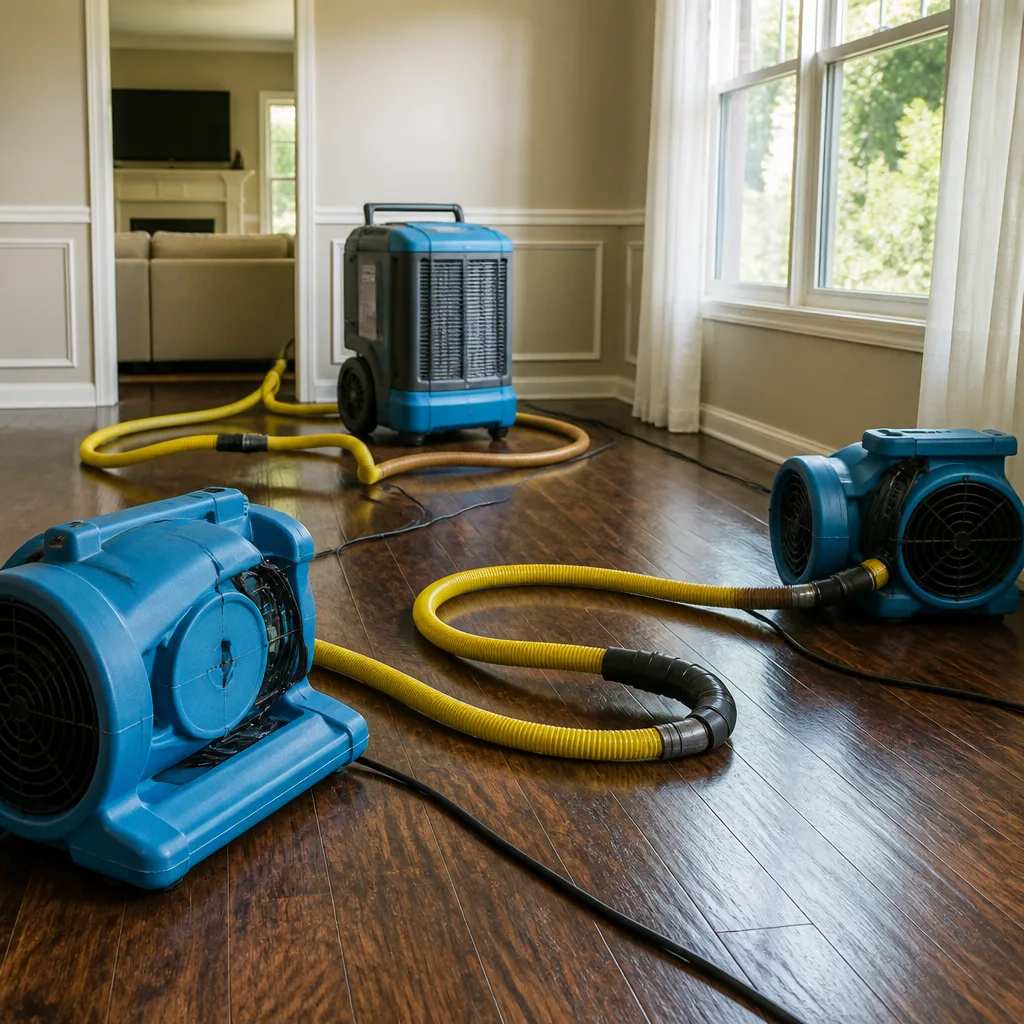
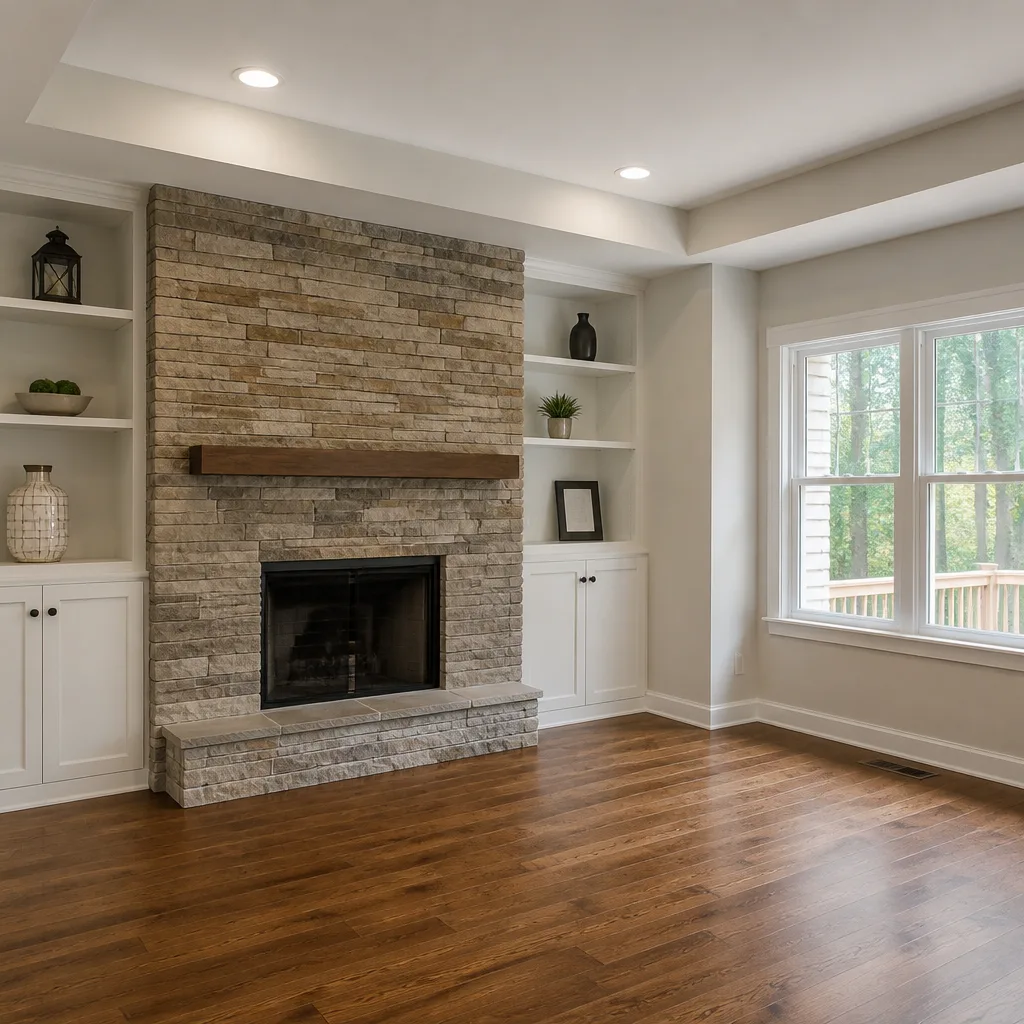
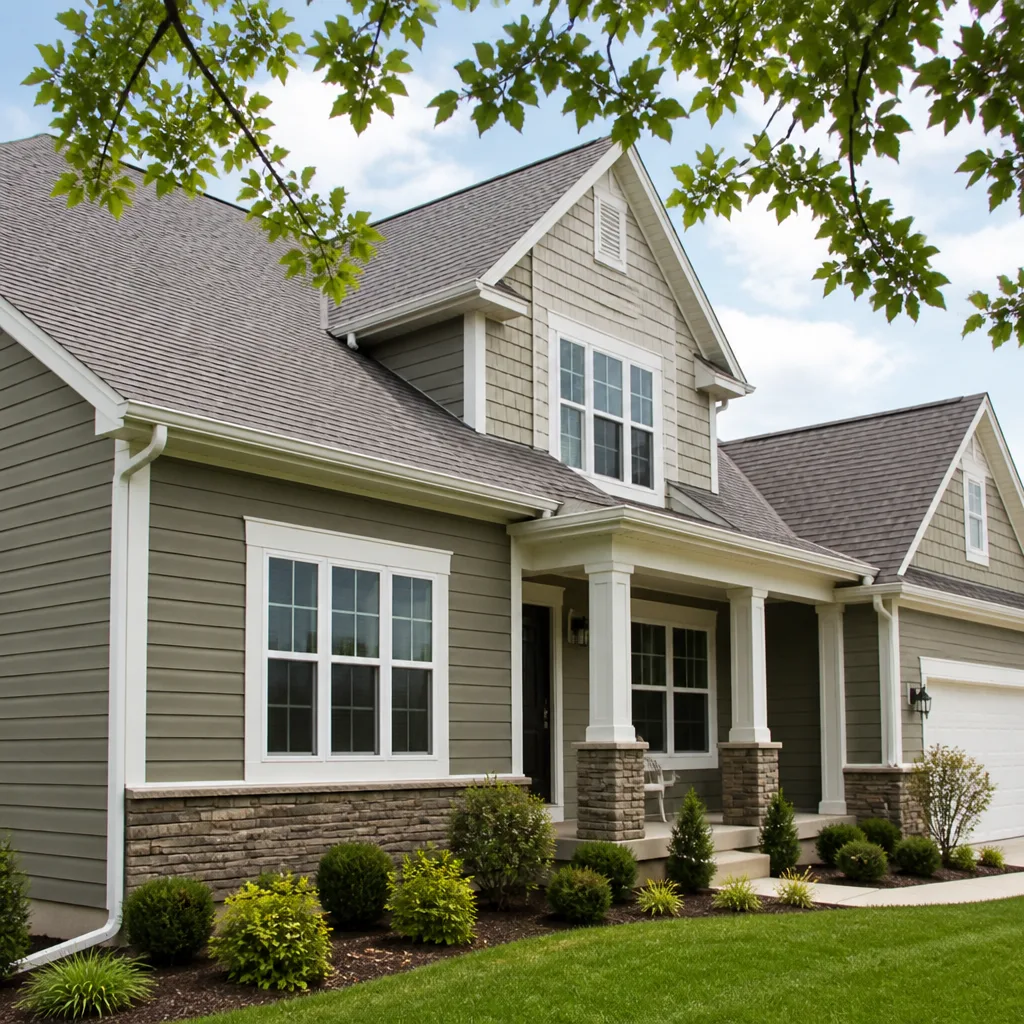
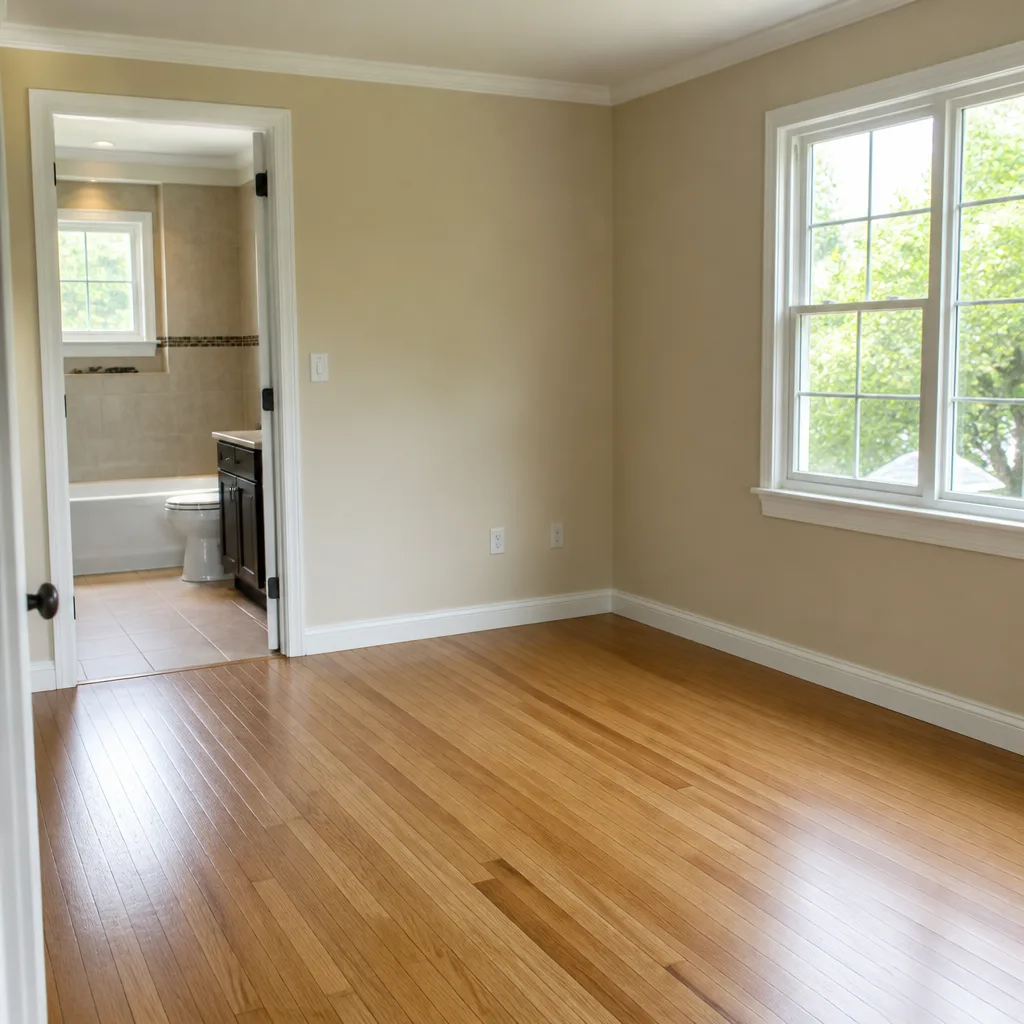
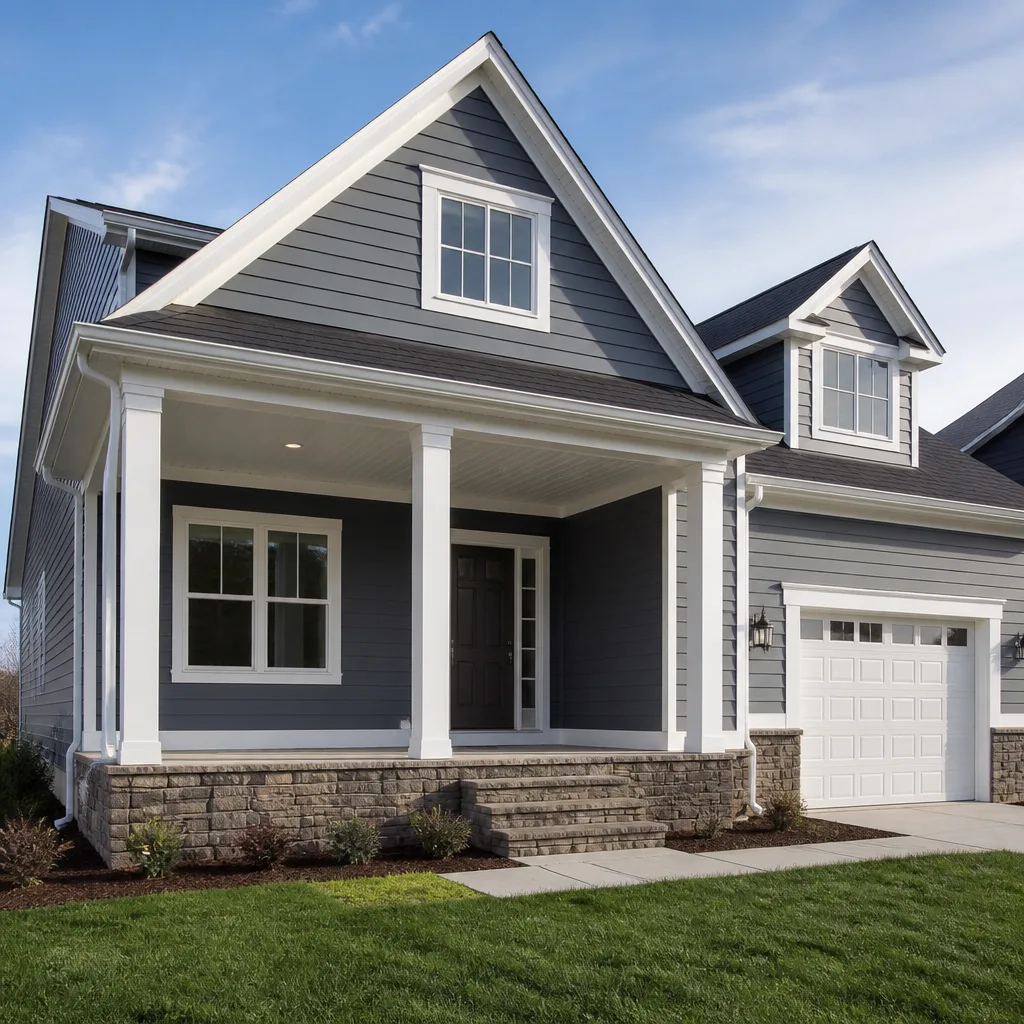
 Before
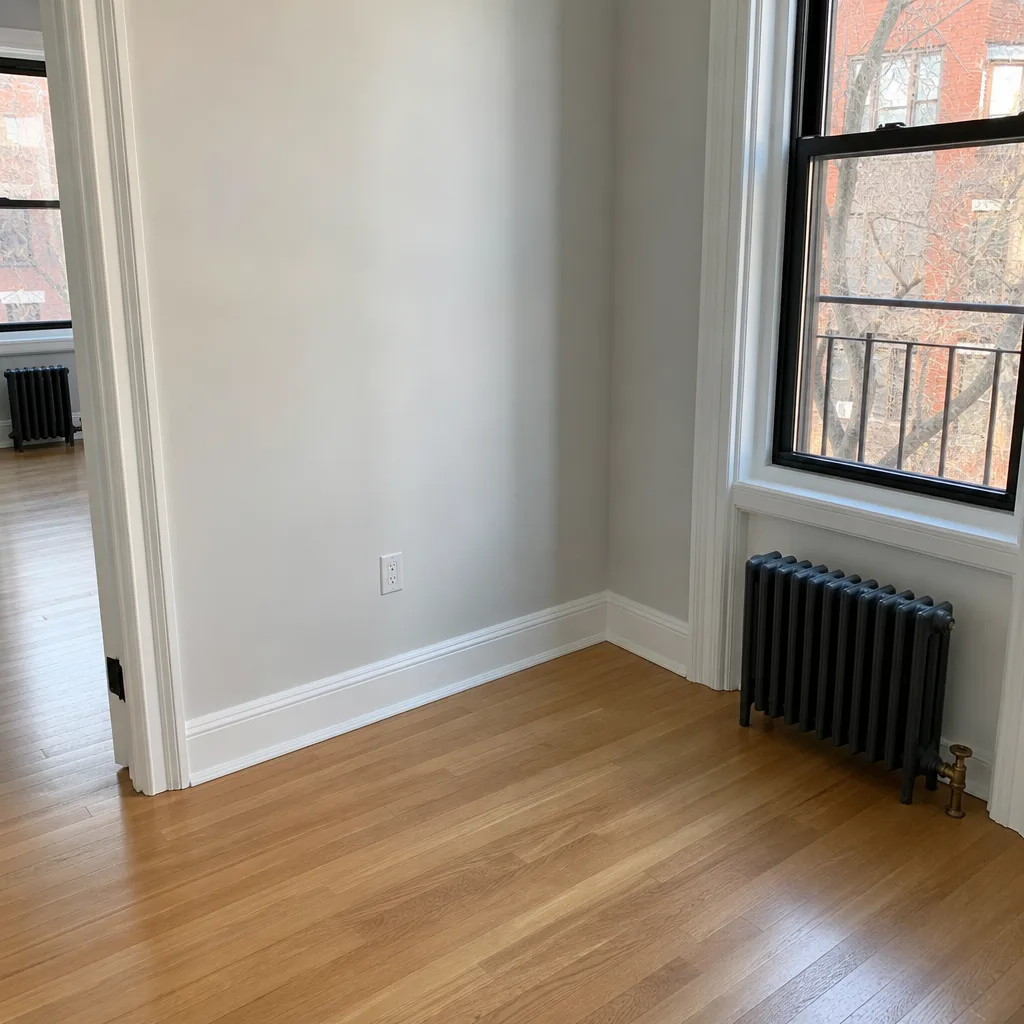 After
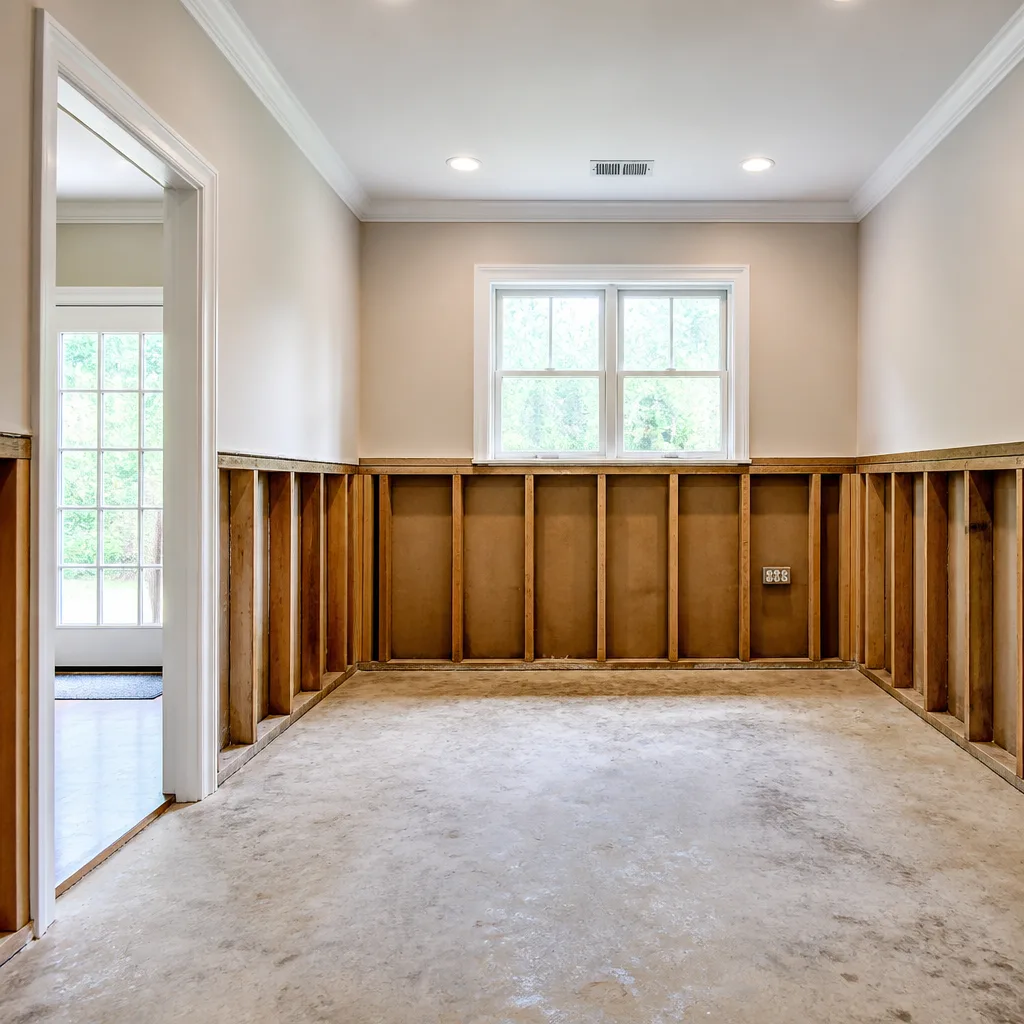
After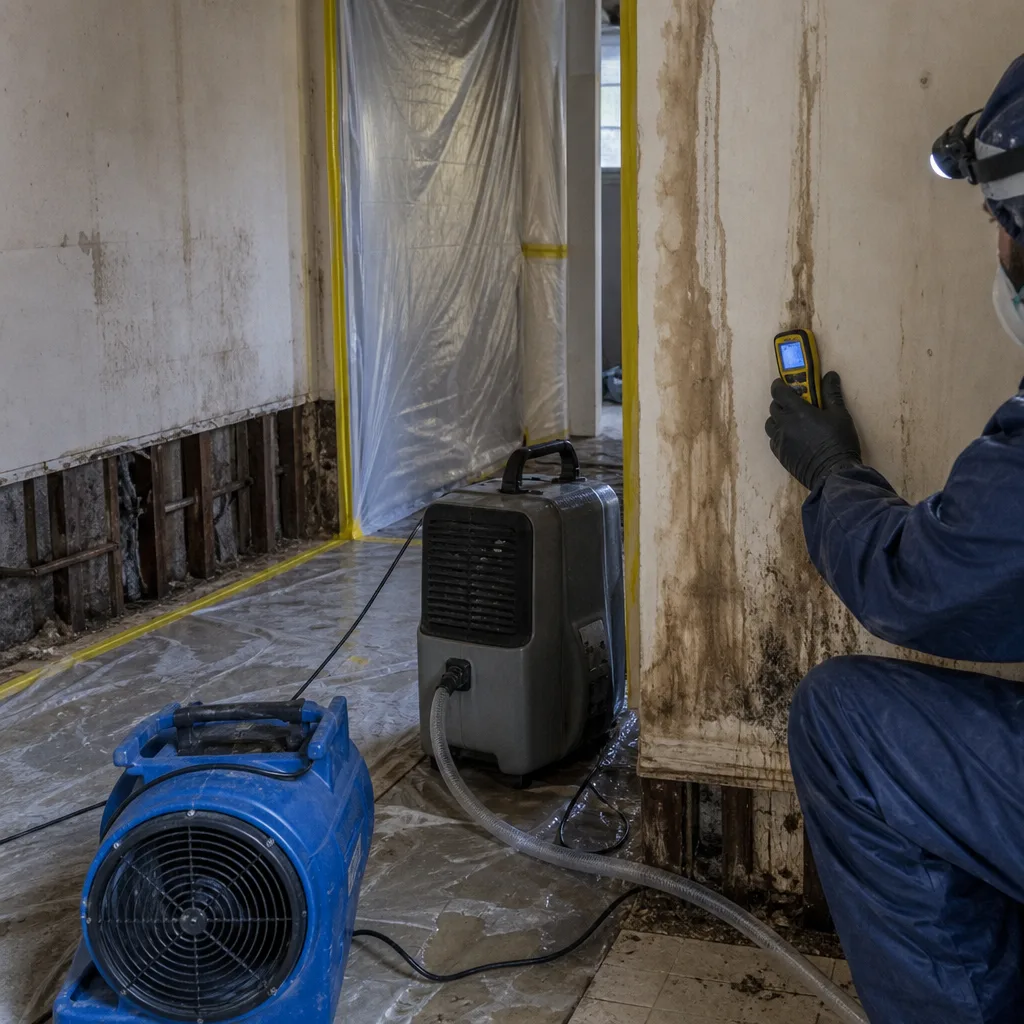 Before
 After
After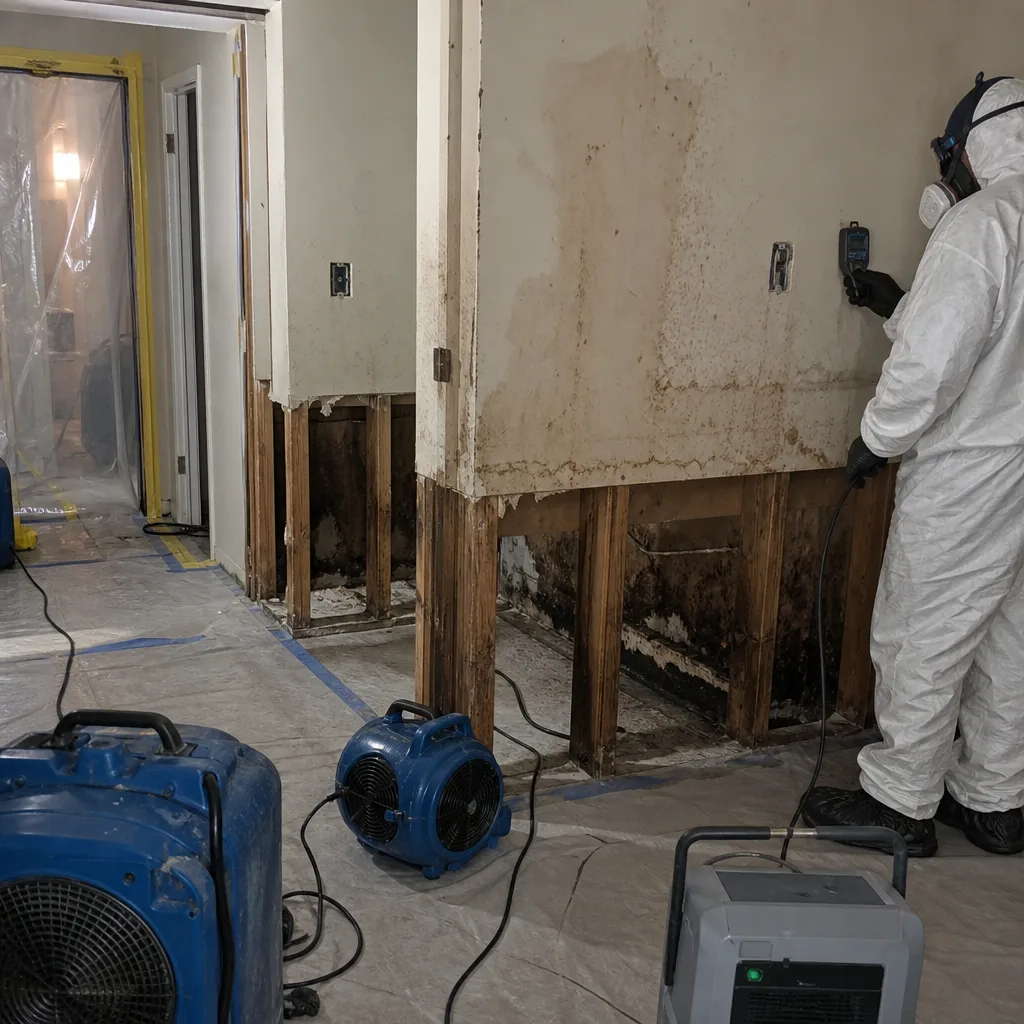 Before
 After
After24/7 Emergency Commercial Restoration in East Village
East Village commercial restoration starts with one honest number: a burst supply line or sprinkler discharge in a five-story pre-war tenement at 3 a.m. becomes a four-to-six-floor problem within the hour, not a single-unit cleanup. Our crews reach East Village addresses in about 45 minutes, run a free visual inspection, and start extraction the same visit. Call (917) 924-4221 and a live dispatcher answers, day or night, every day of the year.
The first hour matters because water in an 1880s-to-1920s East Village tenement does not stay where it landed. It travels down shared vertical plumbing stacks, through uninsulated plaster-and-lath walls, and into original wood joists that have been drying out for a century. What begins as a single commercial storefront leak is, by morning, a multi-floor restoration with rent-stabilized tenants, a building owner, and often the NYC Department of Buildings all in the room with you. We start fast because every hour delay expands the scope, and with it the insurance claim.
One call puts a certified commercial restoration crew with Dri-Eaz and XPOWER equipment on the way. Done right, and backed in writing.
Understanding Commercial Restoration Severity in East Village Properties
Not every East Village commercial water loss is the same job. The restoration industry classifies water into three categories. Category 1 is clean water from a supply line or faucet. Category 2 carries contaminants - think washing machine overflow or sump pump discharge. Category 3 is black water from sewage backups, street flooding, or the East River during a coastal surge, and it requires full containment, antimicrobial treatment, and often selective demolition. The category determines the entire protocol, from the drying plan to whether sheetrock gets cut at 24 inches or 48.
East Village’s building stock forces us to treat these categories with tighter margins. Plaster-and-lath walls in old-law tenements hold moisture longer than modern drywall. Original wood joists swell and shift. Asbestos-containing pipe wrap, floor tile, and ceiling texture are common in pre-1929 buildings, which means a restoration that starts as water extraction often triggers an NYC DEP hazmat assessment before demolition can legally proceed. Fire losses add soot residue types that require different cleaning agents - protein smoke from restaurant kitchens, synthetic smoke from retail inventory - and smoke migration through shared stairwells and air shafts requires containment on every landing, not just the occupied floor.
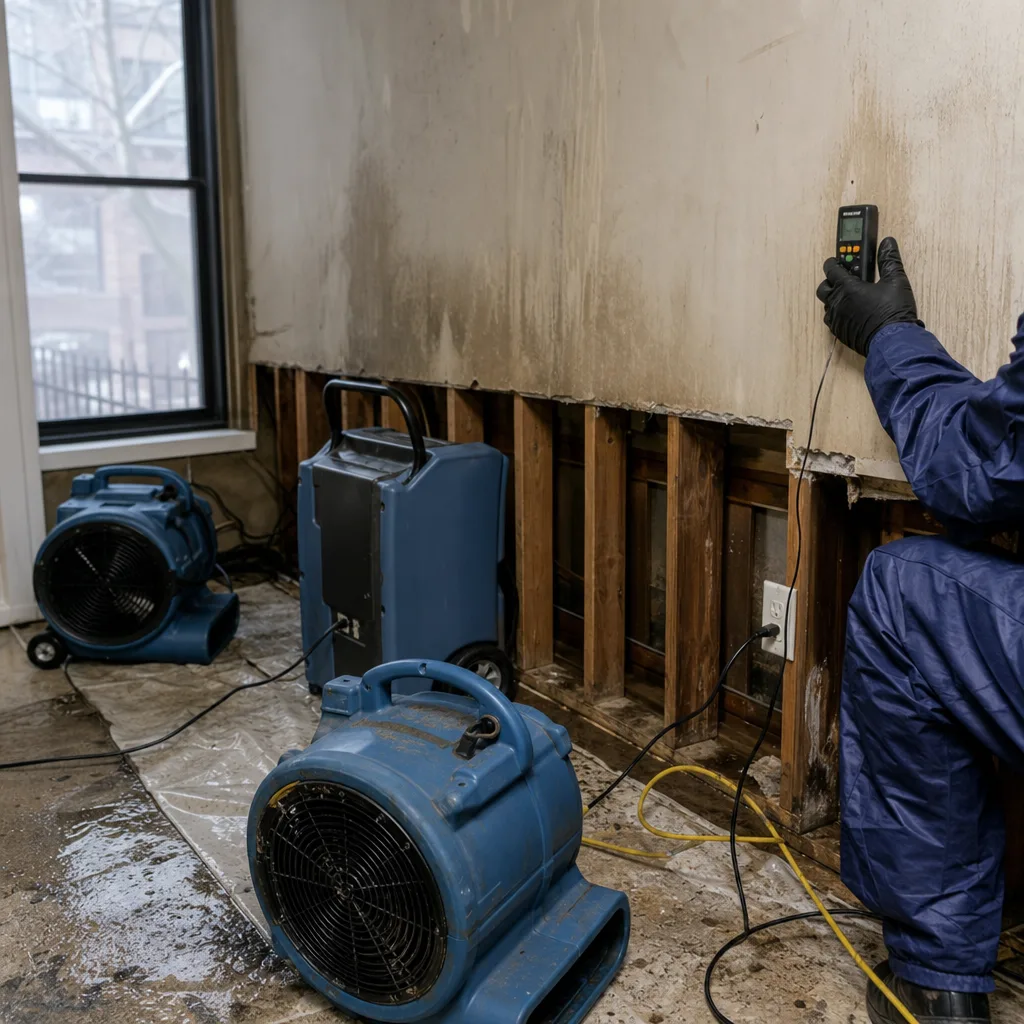
We bring thermal imaging to locate trapped moisture inside wall cavities you cannot see, hygrometers to track relative humidity in every affected room, and a written drying log updated daily until the dry standard is met. That log is what your insurance carrier and any DOB inspector will ask to see, and it is what separates a professional restoration from a mop-and-fan cleanup.
Why East Village Property Owners Choose Floodline Restoration Co. of Manhattan
- 45-minute response commitment. We dispatch from our New York City office with crews staged for East Village response, so the first truck usually arrives within three-quarters of an hour of your call.
- 24/7 live answer, never an automated system. A real dispatcher picks up at 2 a.m., takes your address, and puts a certified crew in motion. No menu prompts, no “leave a message.”
- IICRC-certified crews trained to WRT, FSRT, and AMRT standards. Water damage, fire and smoke, and mold restoration each have their own certifications, and our technicians hold them all.
- Free visual inspection with a written scope. You get a line-item scope of work before anything gets torn out, so there are no surprises on the bill. A square deal, in writing.
- Direct insurance billing. We bill your carrier directly, keep the adjuster updated, and never make you play messenger between two parties who should be talking to each other.
- One team from extraction to reconstruction. The same certified crew that reads the moisture map on day one handles daily readings, packs out damaged inventory, and rebuilds what needs rebuilding. No mid-job handoff, no inherited crew.
This is the 90-Day Done Right Promise, our company’s Commercial Restoration standard: if it isn’t done right, we make it right. In writing, tied to the K.E.Y.S. values code - Krafted right, Every time, Your home first, Standing behind it. Curt Bowman founded Floodline Restoration Co. in 2010 on a dispatch board, not a sales desk, and that philosophy still answers the phone.
Our Commercial Restoration Process
Inspection & Assessment
We walk every affected floor, not just the obvious one. Thermal imaging and moisture meters map the full migration path through shared walls and joists. You get a written scope and a firm price before work begins.
Extraction & Stabilization
Industrial extractors pull standing water from floors, stairwells, and utility spaces. We shut off and stabilize the source - a leaking supply line, a failed sprinkler head, a sump pump that quit - so no new water enters the building.
Drying & Dehumidification
Dri-Eaz LGR dehumidifiers and XPOWER air movers run continuously in a contained, zoned layout sized for East Village clearances. Daily moisture readings are logged and shared with you and your carrier.
Cleaning & Sanitization
Category 2 and 3 water events get antimicrobial treatments. Fire losses get soot-specific cleaning matched to the residue type. All affected surfaces are HEPA-vacuumed and wiped down.
Document & Inventory Recovery
We pack out salvageable records, retail stock, and equipment, then coordinate drying, cleaning, and inventory documentation for your insurance claim. Nothing gets thrown away without your sign-off.
Repairs & Restoration
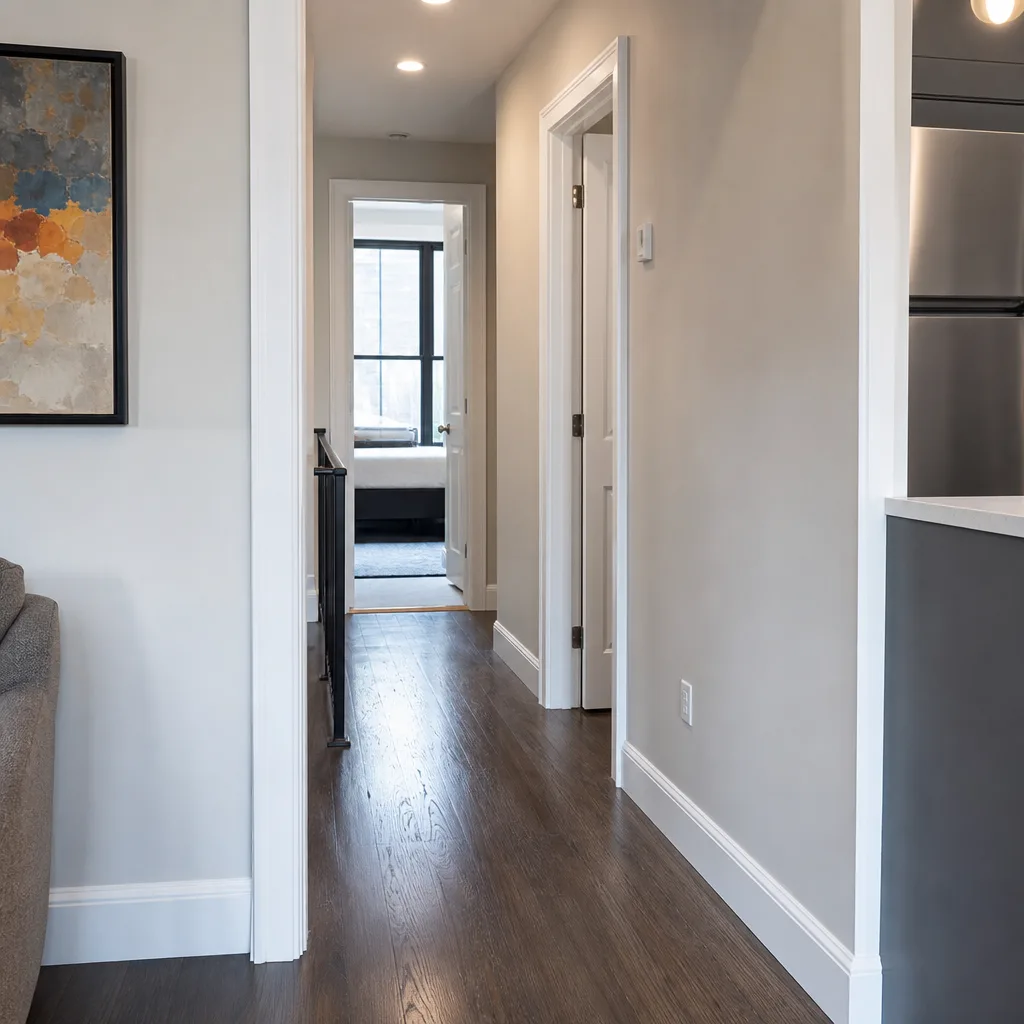
Our own crew rebuilds what was removed - sheetrock, flooring, paint - so the same people who handled extraction see the job through to the finished space. One accountable team, start to finish.
Need Emergency Commercial Restoration in East Village Now?
Crews minutes away, answering live 24 hours a day. The sooner we start, the less it costs.
Working With Your Insurance Company
Insurance is in the room on almost every East Village commercial restoration, whether anyone says so out loud or not. The carrier will ask for documentation, and the difference between a smooth claim and a denied one is usually the quality of that documentation from the first hour. We photograph everything before, during, and after. We log moisture readings daily. We write a line-item scope that matches the carrier’s estimating standards. And we talk to the adjuster directly, so you spend your day running your business instead of chasing paperwork.
The 90-Day Done Right Promise extends to this entire process. If the restoration isn’t right, we make it right - no arguing, no paper battles. We stand behind it.
What We Provide Your Insurer
- Thorough documentation of the loss
- Photos of all damage, room by room
- Moisture readings and drying logs
- A detailed, line-item scope of work
- Direct coordination with your carrier
Built for East Village’s Loss Calendar
East Village commercial restoration has a seasonal rhythm, and anyone who has operated a storefront or managed a building here for a few winters knows it. January deep freezes stress the uninsulated pipe chases in old-law and new-law tenements, and supply lines let go without warning - sometimes on the fourth floor, sometimes in the basement under a restaurant kitchen. The water follows gravity through shared vertical stacks, and a single burst becomes four floors of damage before the first mop comes out.
Spring thaw brings basement seepage into retail spaces and storage rooms as groundwater rises against lime-mortar foundations. Summer thunderstorms, short and violent, overwhelm corner curb drains along Avenue B and Avenue C and push Category 3 street water into ground-level storefronts. Nor’easters in fall and winter add wind-driven rain through aging parapets and roof scuppers. The lesson is the same across the calendar: the first call you make after a water event determines how much of your business you lose to downtime. Make it us.
Commercial Restoration Across East Village’s Neighborhoods
East Village commercial restoration demands a block-by-block understanding of the building stock. Along Avenue A between Houston and 14th, ground-floor restaurants and bars sit beneath four or five floors of rent-stabilized apartments, which means a kitchen sprinkler discharge or a failed ice machine supply line immediately engages tenant access coordination, not just a storefront cleanup. Our crews are used to working in occupied buildings where access to individual units has to be scheduled around tenant hours, and we keep containment and drying equipment running in tight stairwells without blocking egress.
Over near Tompkins Square Park, the mix of converted old-law tenements and newer infill buildings changes the drying calculus. A 1901 new-law building with original wood joists dries slower than a 1960s infill with modern framing, so our moisture maps and drying logs have to be recalibrated building by building. In the East 7th Street corridor between First Avenue and Avenue D, storefront retail and ground-floor medical offices share basements with active ConEd infrastructure, and we know which block faces have had recent gas line emergencies - we check sub-slab conditions early on any water loss that reaches below grade. And on the wider cross streets like St. Mark’s Place, multiple small commercial tenants often share a single wet wall, which means one restoration plan has to serve three or four businesses with different inventories and different insurance carriers.
When a category 2 supply-line break on East 7th Street between Avenues B and C flooded four floors of a 1912 new-law tenement, our techs moisture-mapped every affected unit, set containment on each landing, and ran Dri-Eaz LGR dehumidifiers and XPOWER air movers in tight stairwells - all while coordinating pack-out with rent-stabilized tenants and the building’s HOA. Structural drying reached pre-loss condition in four days, and we documented every drying log entry for the owner’s insurance scope of work. That is what full-cycle Commercial Restoration in East Village looks like here, and it is not a job a suburban warehouse crew can walk into cold.
Specialized Commercial Restoration Services We Offer in East Village
Office & Retail Restoration
Storefronts on Avenue A and St. Mark’s Place carry inventory, point-of-sale systems, and electronics that water ruins faster than walls. We extract, stabilize, and pack out stock the same day, then set drying zones sized for the space - not the hallway outside it. Documentation for your carrier covers every item, including what could be saved and what could not.
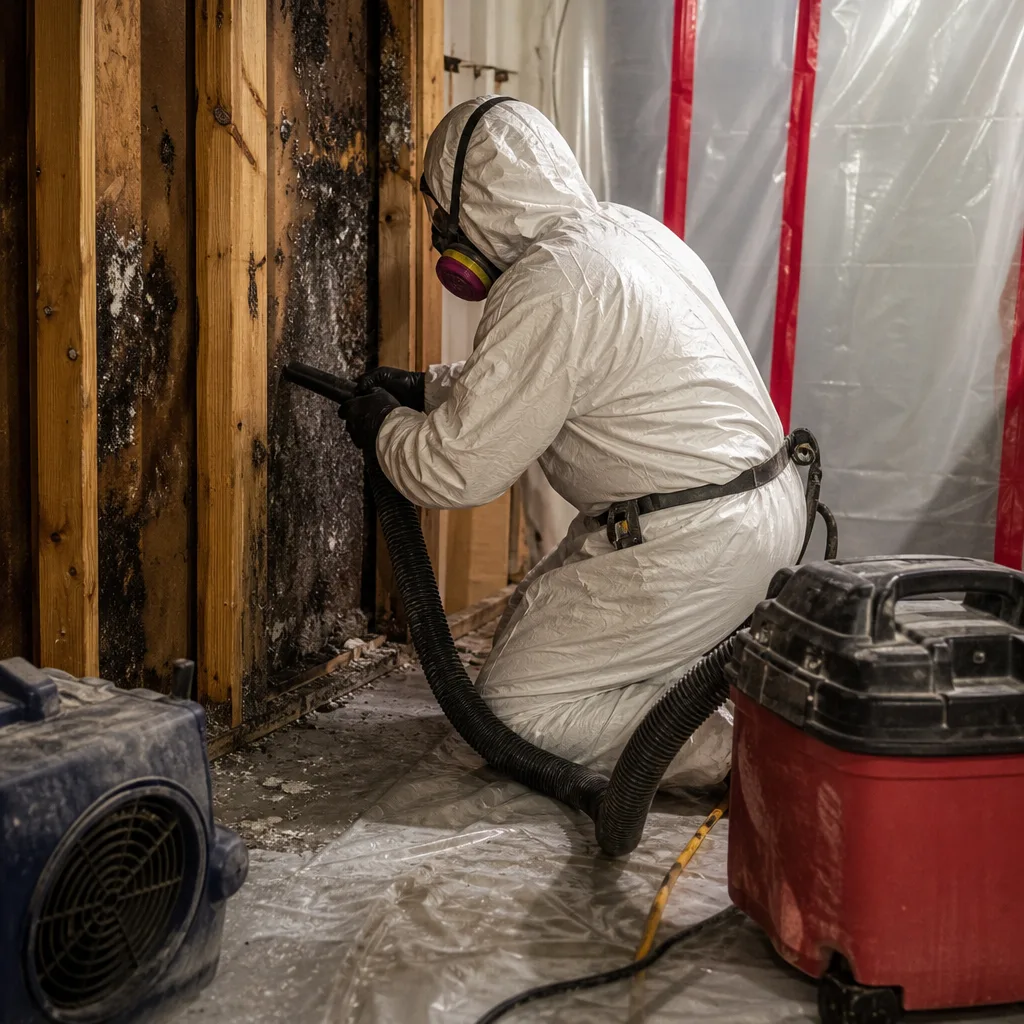
Multi-Unit & HOA Restoration
This is the heart of East Village work. A shared plumbing stack means one unit’s overflow becomes four floors of damage, and we coordinate containment, access, and drying with building ownership, rent-stabilized tenants, and sometimes the NYC Department of Buildings - all at once. We know the DOB permit process for work in occupied multiple dwellings, and we handle the paperwork so the job doesn’t stall on a stop-work order.
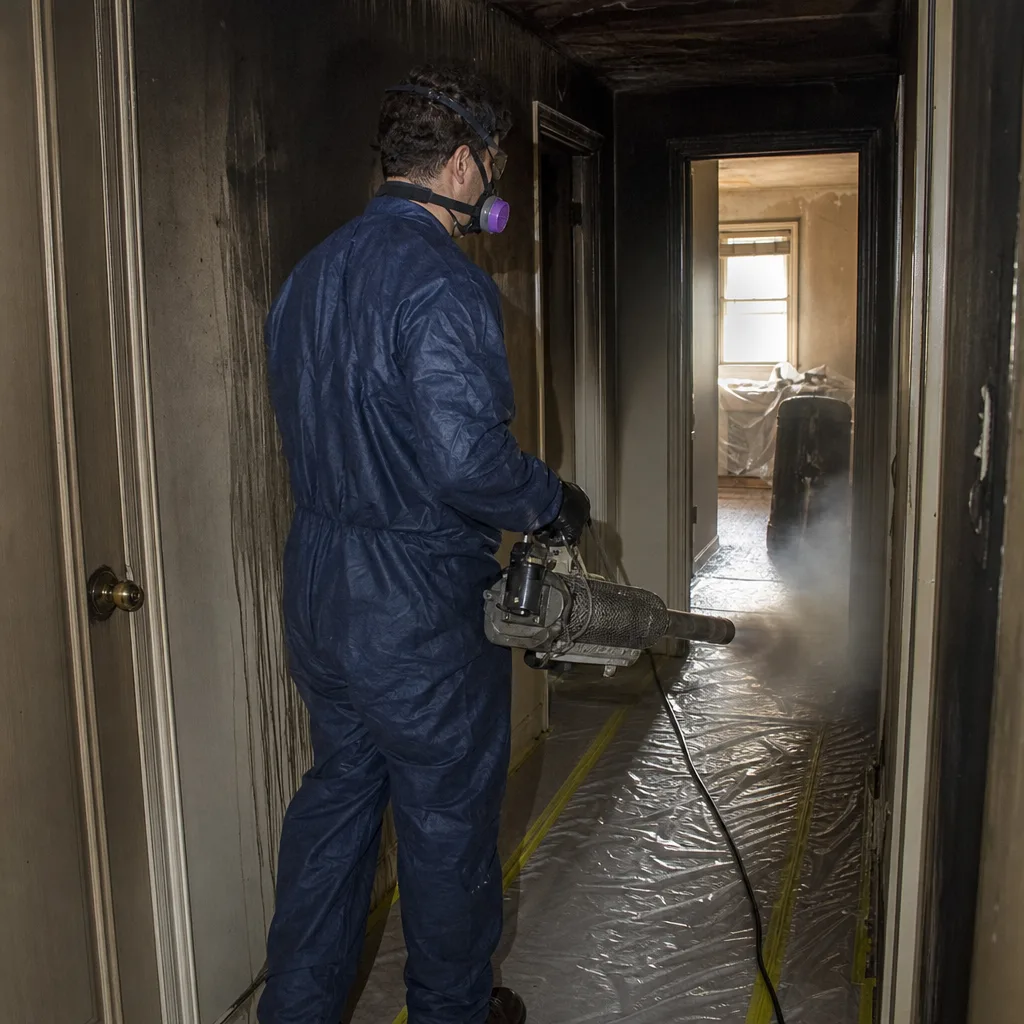
Industrial Facility Cleanup
Utility rooms, basement mechanical spaces, and storage cellars in pre-war East Village buildings are often where the failure starts - a booster pump, a water heater, a failed check valve. We clean and restore these spaces with Category 2 and 3 protocols, plus equipment recovery for boilers, electrical panels, and fire suppression systems that got wet.
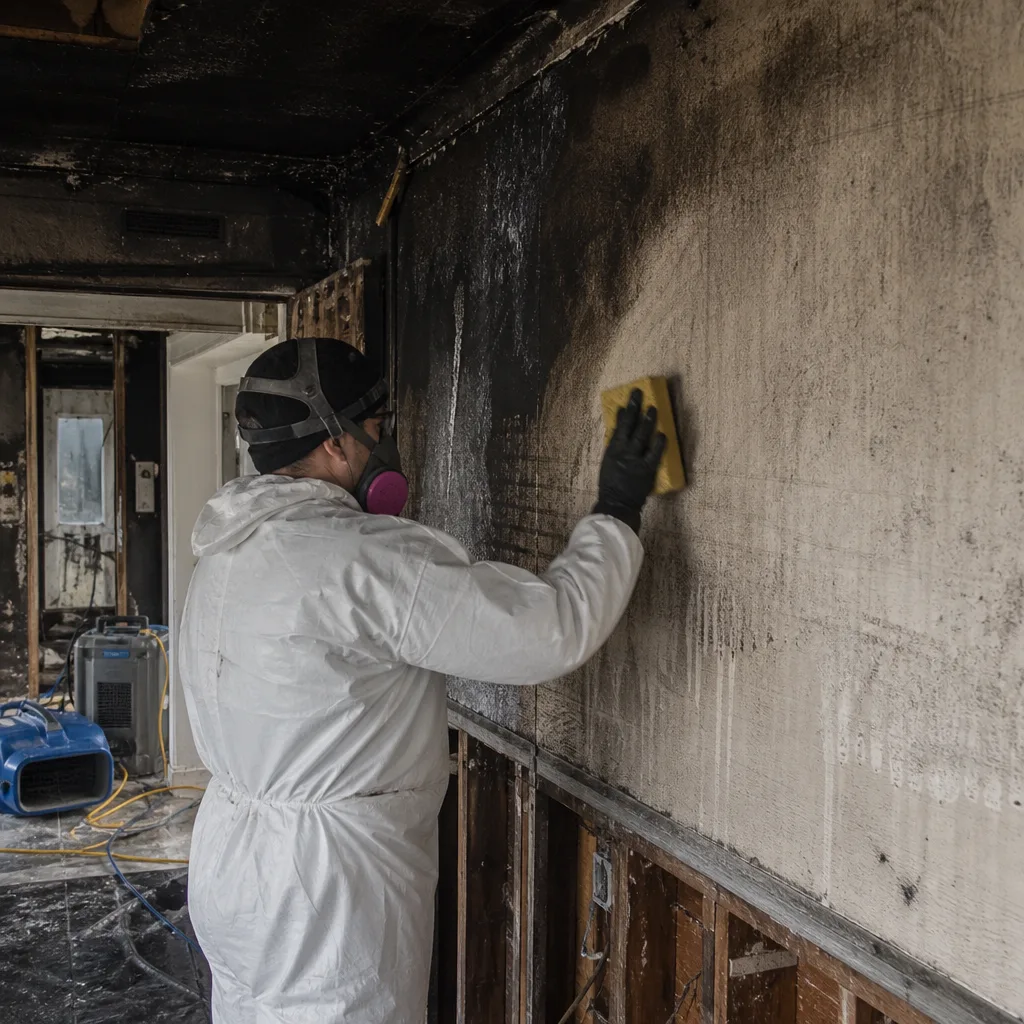
Large-Loss Response
When a fire on East 2nd Street or a pipe burst on East 9th affects an entire building rather than one unit, the response has to scale. We run multiple crews, multiple drying zones, and multiple HEPA air scrubbers simultaneously, with a single project lead coordinating documentation for every affected tenant and every involved carrier. One call from the building owner starts the whole thing.
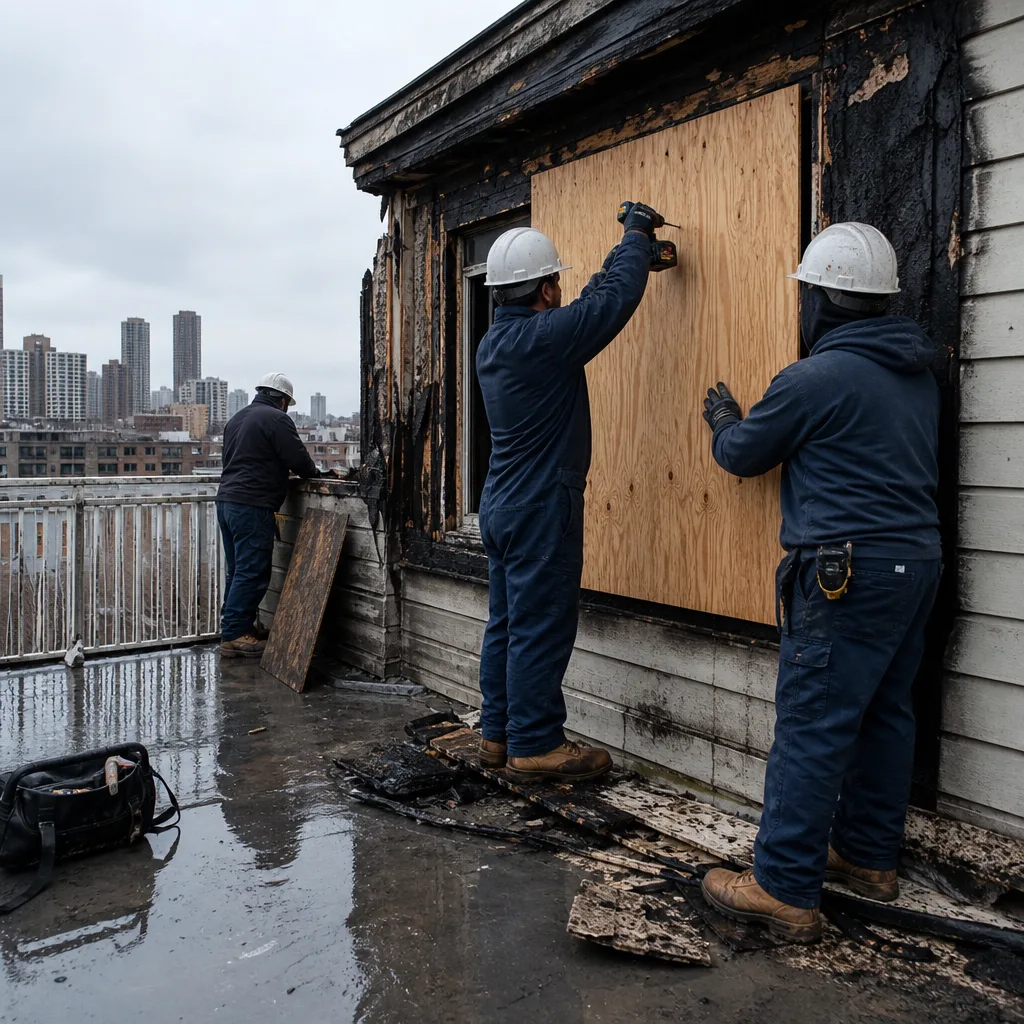
Business Interruption Minimization
Every day a storefront or office stays closed costs revenue on top of the repair bill. We set an aggressive drying schedule from day one, prioritize the spaces that can reopen fastest, and provide the insurance documentation needed to support a business interruption claim. In East Village’s walk-up buildings, that means working around tenant schedules and alternate-side parking without losing hours.
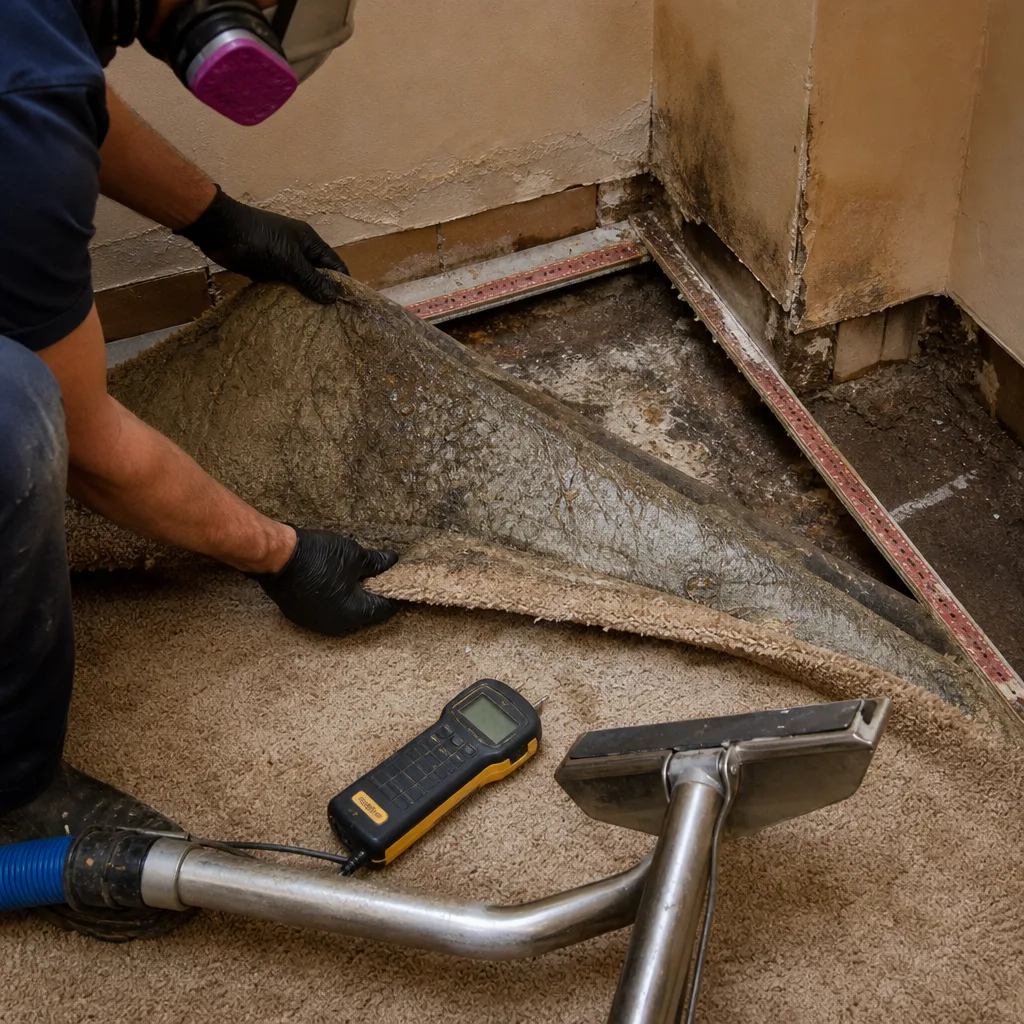
What happens when you call
- 1
A real person answersNo phone trees - you reach a local pro.
- 2
You get an upfront price rangeHonest numbers before anyone is dispatched.
- 3
A background-checked tech heads outLicensed & insured, dispatched right away.
- 4
You approve before work beginsNothing starts until you say go.
Commercial Restoration Costs in East Village, NY
Cost in East Village follows the building more than the damage. A single storefront water extraction with drying in a 1905 new-law tenement typically runs $2,800-$5,500. A multi-floor, shared-stack water event spanning four to six occupied units usually lands between $18,000 and $45,000, driven by containment on every landing, tenant pack-out coordination, and asbestos assessment on pre-war pipe wrap and floor tile. Sprinkler discharge in a restaurant with document and inventory recovery commonly falls in the $8,000-$22,000 range depending on how much stock and paperwork got wet.
What moves the price: water category, number of floors affected, whether asbestos-containing materials are present, and whether the DOB requires permits for selective demolition. Insurance-covered claims pay the bulk of these costs; a typical out-of-pocket scenario is a deductible between $1,000 and $10,000 depending on the policy. The fastest path to a firm number is a free visual inspection and a written scope of work - call (917) 924-4221 and a dispatcher sets it up while you’re still on the phone. And remember: $50 off any repair over $250, an $89 seasonal tune-up, and a 5% senior and veteran discount are always available, exactly as stated.
We Also Serve Cities Near East Village
Our crews respond across the surrounding area: Fairview, Harrison, East Bronx, and Hunts Point. If you manage a commercial building outside the immediate East Village blocks, the same certified crews and the same 45-minute response standard apply. One call covers the whole region.
Serving East Village, NY - Our Local Coverage Area
We’re based in the East Village area and know this community well. Use the map below to see our service coverage - if you’re nearby, we can almost certainly help.
East Village Commercial Restoration Questions, Answered
How does a burst pipe in one East Village tenement apartment become a commercial-scale restoration for the whole building?
Because water from a single supply-line break follows gravity through the shared vertical plumbing stack, and in 1880s-1920s old-law and new-law tenements that stack runs through uninsulated plaster-and-lath walls with original wood joists on every floor. The water breaches the walls on the floor where the pipe burst, then runs down inside the wall cavity to floors below, often wetting three to five additional units within hours. What started as one apartment’s emergency is now a multi-floor, multi-tenant restoration requiring containment, drying, and documentation for every affected unit. Call (917) 924-4221 the moment water appears - the earlier we map it, the fewer floors it reaches.
What role does the NYC Department of Buildings play in East Village commercial restoration after a water or fire event?
For work in occupied multiple dwellings, the NYC Department of Buildings often requires permits before selective demolition or structural repair begins, and inspectors may visit to verify that the work scope matches the filed application. We handle the DOB paperwork as part of the restoration, coordinate access for inspections, and keep the drying log and scope of work documented to the DOB’s satisfaction. Skipping this step is a common local failure - a stop-work order stalls mitigation and lets mold colonize wall cavities while everyone waits. We file before we demolish.
How do you handle asbestos in a 1910 East Village tenement when only the commercial storefront was affected by a water leak?
Pre-war East Village buildings frequently contain asbestos in pipe wrap, floor tile, and ceiling texture, and any demolition that disturbs those materials triggers a mandatory NYC DEP asbestos assessment before work can proceed. We test suspect materials, bring in licensed asbestos abatement where required, and sequence the job so the storefront’s restoration isn’t held hostage by a hazmat question upstairs. The assessment and abatement costs are typically insurance-covered as part of the loss, and we document everything for the claim.
Can you restore paper documents and inventory after a sprinkler discharge in an East Village restaurant?
Yes, but speed determines what survives. We pack out wet paper records, menus, lease documents, and financial records immediately, then freeze-dry or desiccate them in a controlled environment. Inventory recovery depends on the material: sealed goods can often be cleaned and saved, porous items usually cannot if they have been sitting wet for more than 48 hours. We document every item against the insurance claim so you know exactly what was saved, what was discarded, and what your carrier is covering. Call (917) 924-4221 right away - the window for paper recovery is measured in hours, not days.
How fast can you begin structural drying in a six-story East Village walk-up with no elevator and alternate-side parking restrictions?
Our crews arrive within about 45 minutes, and structural drying starts the same visit. We stage equipment at street level and carry air movers and dehumidifiers up the stairs - no elevator required. For alternate-side parking, our crews know the street-cleaning calendar for each block and move trucks accordingly, so the drying schedule isn’t interrupted. The constraint is never equipment access; it is how soon you call. Every hour of delay lets moisture migrate deeper into plaster, joists, and subflooring.
Will my commercial insurance cover a multi-floor water loss in an East Village tenement?
Standard commercial property policies typically cover sudden and accidental water damage, including burst supply lines and sprinkler discharges, and most policies also cover the cost of mitigation, drying, and restoration as part of the same claim. The key is documenting the cause and the full scope from day one, which is why our written scope, daily drying logs, and room-by-room photo documentation matter. We bill your carrier directly and handle the adjuster communication, so you don’t have to manage a three-way conversation while running a business.
Do we have to close our storefront during commercial restoration in East Village?
Not always. We prioritize isolating the affected area with containment barriers and negative air pressure so unaffected sections of the business can stay open during drying. For a kitchen leak in the back of a restaurant, the dining room can often remain open. For a fire loss with smoke migration through shared air shafts, full closure is usually unavoidable until air scrubbing and content cleaning are complete. We give you a straight answer on closure at the free visual inspection, not after you’ve already lost a week of revenue.
What should I do in the first 30 minutes after a commercial water loss in East Village?
Call us at (917) 924-4221 first, then kill the water at the main shutoff if you know where it is. Move what you can out of standing water - paperwork, electronics, inventory - without stepping into water that may be electrically charged. Do not open walls or start demolition; that can disturb asbestos and complicate the insurance claim. Do not run household fans on wet materials; that spreads moisture and helps mold colonize wall cavities. We’ll be there when we say, and the first hour is free to inspect.
Written by Curt Bowman, Owner at Floodline Restoration Co. of Manhattan, serving East Village with full-cycle restoration since 2010.