
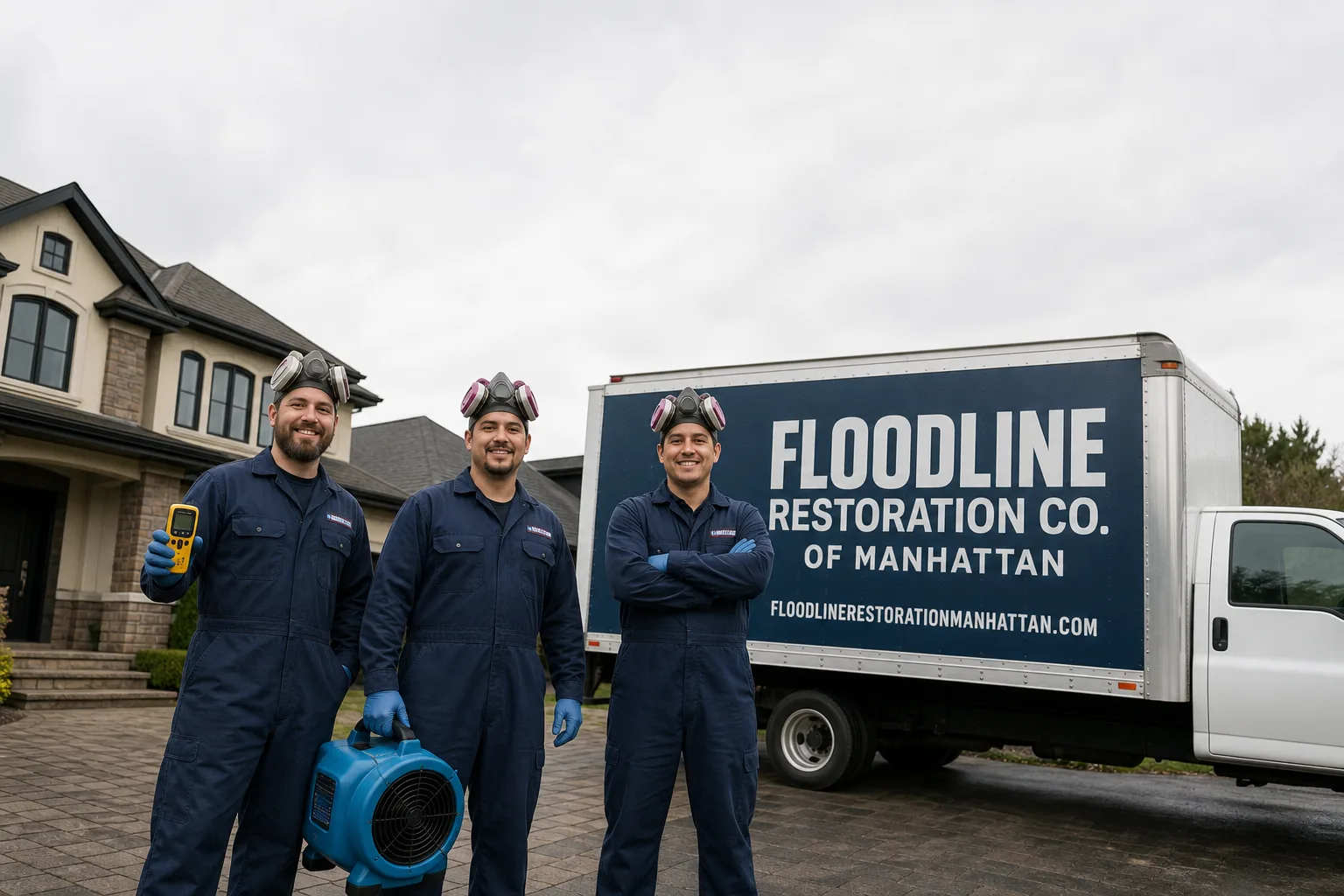
Free visual inspection and a written scope of work before any mitigation begins - photos, moisture readings, and drying logs go in your claim file
The scope we write is the scope we bill. Anything new gets shown to you, in writing, before we touch it.






 Before
 After
After Before
 After
After Before
 After
After24/7 Emergency Mold Remediation in Great Neck
Mold remediation in Great Neck costs $1,500-$6,000 for a typical contained room, with whole-basement jobs after flooding running $8,000-$19,000 depending on square footage and how much period trim needs removal. Most jobs here start with a water event - a nor’easter surge, a failed sump, groundwater pushing into a bay-side basement - and the mold follows within 48 to 72 hours. Call (917) 924-4221 any hour. A live dispatcher answers, and a certified crew reaches Great Neck streets fast because we know exactly how to get in: Northern Boulevard, Middle Neck Road, East Shore Road, Kings Point Road. The first hour is when containment goes up, air scrubbers start running, and the clock stops against the colony spreading behind horsehair plaster.
Understanding Mold Remediation Severity in Great Neck Properties
Mold in a 1940s Great Neck center-hall Colonial behaves differently than mold in a 2005 drywall-and-vinyl build. The older homes - and they dominate this peninsula - were framed in old-growth lumber, plastered with horsehair and lime, and finished with custom millwork that holds moisture like a sponge. When saltwater or groundwater wicks into those walls, the visible staining on the surface is often ten percent of what’s actually growing behind the plaster keys. We classify containment by how far the moisture has traveled: a contained bathroom ceiling patch is one thing, a finished Kings Point basement with wicking behind wainscoting is another. Our techs use thermal imaging and penetrating moisture meters to map the true boundary of the wet zone before any plaster knife touches the wall. That boundary, not the visible stain, sets the containment perimeter.
Why Great Neck Property Owners Choose Floodline Restoration Co. of Manhattan
- 45-minute response commitment to Great Neck. Our dispatch board routes the closest certified crew from the moment your call ends. We’ll be there when we say.
- A live person answers, 24/7. Two in the morning, you get a dispatcher who knows Great Neck streets - never a recording, never a call center script.
- IICRC-certified crews trained to AMRT and WRT standards. Mold remediation and water damage restoration are different disciplines. Our people carry both certifications and apply the right one.
- Free visual inspection with a written scope. Before any work starts, you get a line-item scope and a price in writing. No surprises on the bill.
- Direct insurance billing, including NFIP flood claims. We bill your carrier, coordinate with your adjuster, and hand you the drying log your Write Your Own policy will ask for.
- One team from containment to reconstruction. We don’t hand the job to a third-party rebuild crew. The same certified techs who removed the mold rebuild what came out.
Our Mold Remediation Process
Inspection & Assessment
We start with a moisture map, not a guess. Thermal imaging finds cold spots inside walls. Penetrating meters read moisture content at depth in plaster, framing, and subfloor. Air and surface samples get sent to an independent lab when clearance testing will be required for a claim or a sale.
Containment & Air Filtration
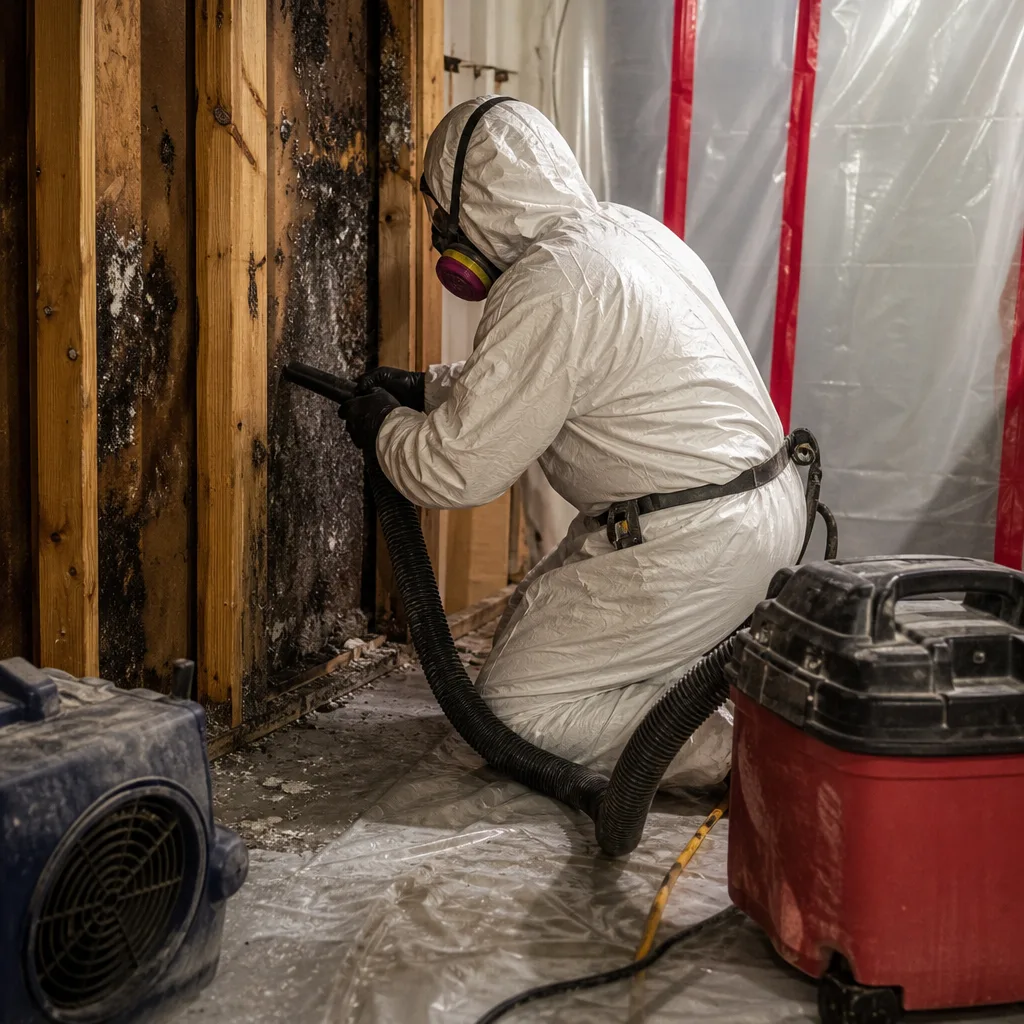
Before any drywall comes down, we build containment with 6-mil poly and negative air pressure. HEPA-filtered air scrubbers run continuously so spores removed from the affected room never drift into your living room or your kitchen.
Removal of Contaminated Materials
Water-damaged drywall, soaked plaster, carpet, and pad come out in sealed bags. On Great Neck’s older homes we often protect what can be saved - original millwork, doors, hardwood - rather than default to a gut-and-replace mindset.
Drying & Dehumidification
Dri-Eaz and Phoenix dehumidifiers pull moisture from the structure, not just the air. We log daily readings with a hygrometer until framing hits the dry standard. You get that log, not a promise.
Cleaning & Antimicrobial Treatment
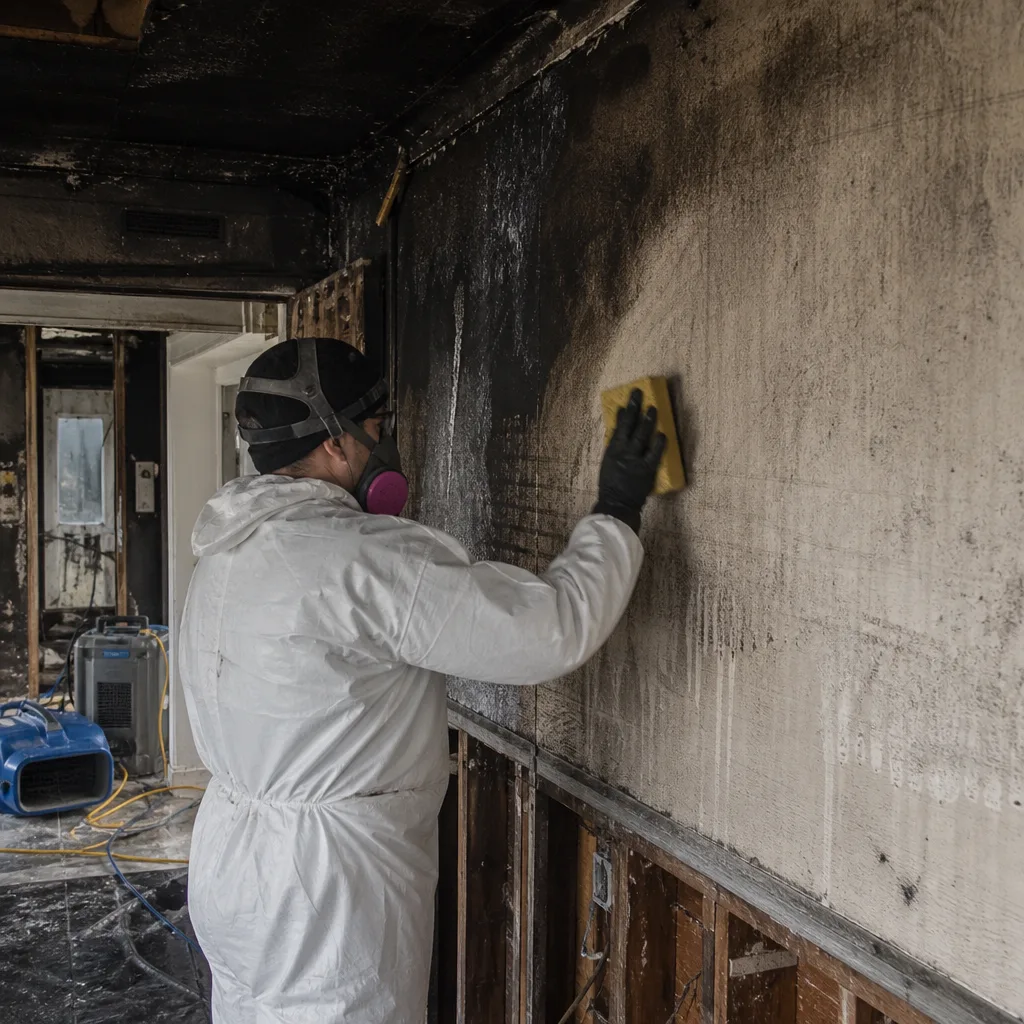
Exposed framing gets HEPA vacuuming, wire brushing where needed, and application of an EPA-registered antimicrobial. In Great Neck’s saltwater-exposed basements we also treat steel lally columns and check HVAC coils for corrosion at this stage.
Repairs & Restoration
We rebuild what came out - drywall, insulation, flooring, trim - matching period profiles where possible. The last step is clearance testing. You get a written post-remediation verification before we call the job done. And it’s backed by our 90-Day Done Right Promise, in writing.
Need Emergency Mold Remediation in Great Neck Now?
Crews minutes away, answering live 24 hours a day. The sooner we start, the less it costs.
Working With Your Insurance Company
Mold claims in Great Neck don’t follow the inland playbook. Because a large share of this peninsula sits in FEMA-designated Special Flood Hazard Areas, your mold problem often traces back to a flood event covered under a Write Your Own NFIP policy - and those adjusters expect documentation a standard cleanup crew never produces. We’ve handled enough of these claims to know what gets approved and what gets kicked back. From the first hour we photograph every surface, log baseline moisture readings, and record the drying curve daily. Then we package it: a line-item scope, room-by-room photos, and a moisture log an adjuster can sign off on without a second visit.
What We Provide Your Insurer
- Thorough documentation of the loss
- Photos of all damage, room by room
- Moisture readings and drying logs
- A detailed, line-item scope of work
- Direct coordination with your carrier
Built for Great Neck’s Loss Calendar
Great Neck’s mold season moves with the tides, not just the thermometer. Late summer hurricanes and autumn nor’easters push storm surge up Manhasset Bay and Little Neck Bay, saturating finished basements along East Shore Road, Steamboat Road, and the Kings Point waterfront. The water recedes in 48 hours; the mold is just getting started. Winter brings a quieter enemy: shallow groundwater. Great Neck sits barely above sea level, and after a soaking rain or a rapid snowmelt, the water table rises until it finds the hairline crack in a 1920s foundation wall. Spring and summer humidity - routinely 70% plus on the bay-side streets - keeps crawl spaces damp enough for mold to colonize floor joists even with no flood at all. If your home has a crawl space in Great Neck, you should be checking it quarterly, whether or not you’ve ever had water in the basement. We treat crawl spaces and basements differently because they fail differently here.
Mold Remediation Across Great Neck’s Neighborhoods
Great Neck isn’t one housing market; it’s a string of villages, each with its own typical failure mode. Kensington and Russell Gardens run heavy to 1930s-1950s brick and stucco homes with full basements - we see groundwater seepage and sump failures there, often behind finished walls. The areas around Middle Neck Road south of Northern Boulevard hold some of the oldest housing stock on the peninsula, much of it pre-1930 with fieldstone foundations and shallow crawl spaces that hold humidity like a terrarium. Kings Point and the east side toward Steppingstone Park are where saltwater intrusion does its worst: finished basements built to media-room spec, flooded by surge, with mold growing behind wainscoting and inside HVAC ducts even after the visible water is gone. University Gardens and Great Neck Plaza skew toward co-ops and apartment buildings, where a leak three floors up travels through common walls and the mold complaint lands in an apartment that looks dry. Mold Remediation here means knowing which village you’re in and what the water does there.
Great Neck is its own kind of job. Serving Great Neck means reading the water table, the surge line, and the plaster all at once - and that’s exactly what our crews do. Dispatch and scheduling are coordinated from Floodline Restoration Co. of Manhattan’s New York City office; the crews who arrive at your door are assigned locally and know the peninsula’s streets.
Specialized Mold Remediation Services We Offer in Great Neck
Mold Inspection & Testing
Great Neck homes built before 1960 hide mold behind horsehair plaster and under original hardwood. A surface swab won’t find it. We test air, surface, and cavity samples and send them to an independent lab so you get a real answer about what’s growing and where. If you’re buying or selling in Great Neck, a documented mold history matters - village buyers walk away from surprises.
Mold Removal
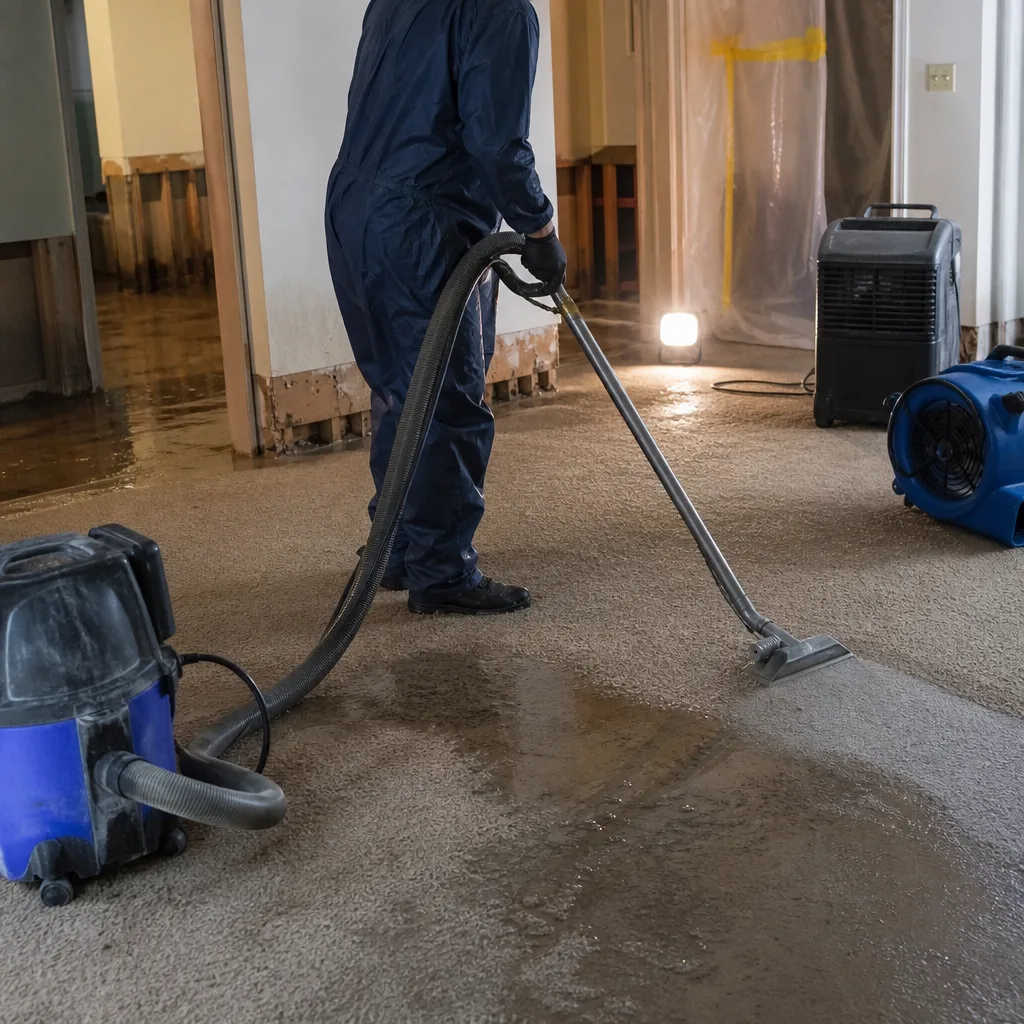
Removal means taking out the contaminated material, not painting over it. In Great Neck’s older homes we match the removal boundary to the moisture map, not the visible stain, because the colony behind the wainscot is the one that comes back in six months. Extraction is done under negative pressure, and everything leaves the house sealed.
Black Mold Remediation
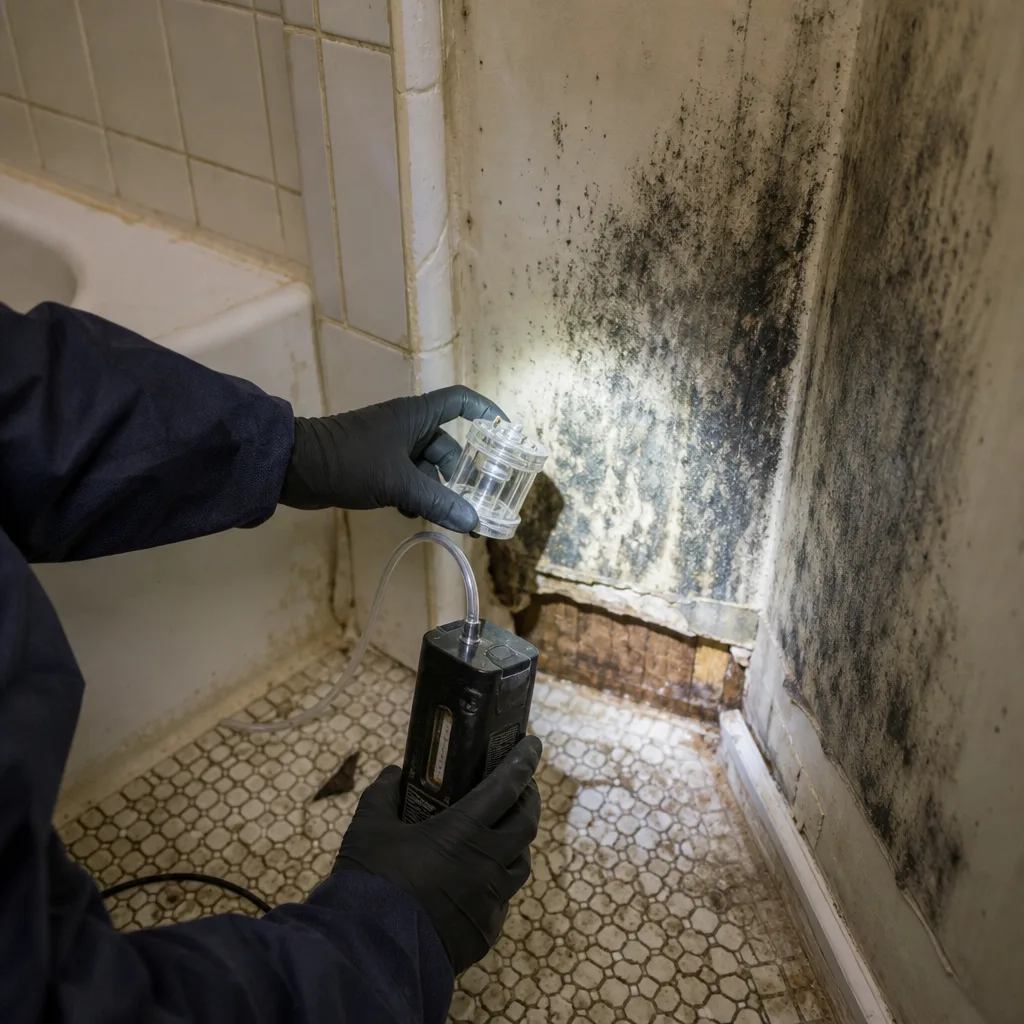
Stachybotrys - black mold - grows where water has sat for days, not hours. In Great Neck that means post-surge basements, slow plumbing leaks inside wall cavities, and crawl spaces that never dried out after Sandy. We treat it with the same containment discipline as any other mold: full enclosure, HEPA scrubbing, removal of saturated materials, and verified clearance before anyone lives in that space again.
Air Quality Restoration
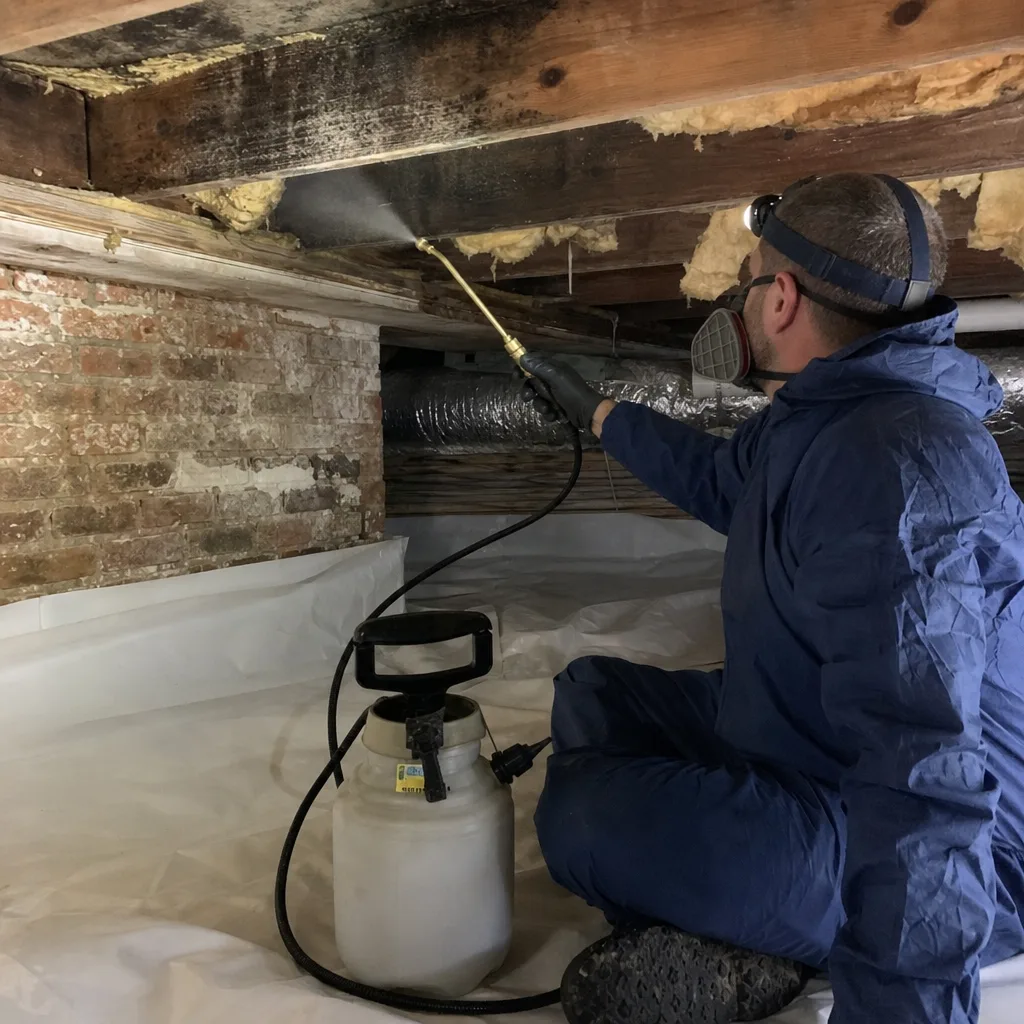
After mold removal, the air in your home carries whatever the demolition kicked up. Our HEPA scrubbers run throughout the job, and we finish with post-remediation air sampling. For Great Neck families with asthma, COPD, or immune-compromised members, that clearance test is the difference between a room that looks clean and a room that is clean.
Crawl Space Treatment
Great Neck’s shallow water table means crawl spaces here never fully dry on their own. We treat crawl spaces with encapsulation, vapor barriers, drainage improvements, and dehumidification sized to the square footage. A damp crawl space in a bay-side home will re-wet a house from below no matter how much mold you remove upstairs. This is the sub-service we emphasize most for Great Neck properties built before 1980.
Moisture & Humidity Control
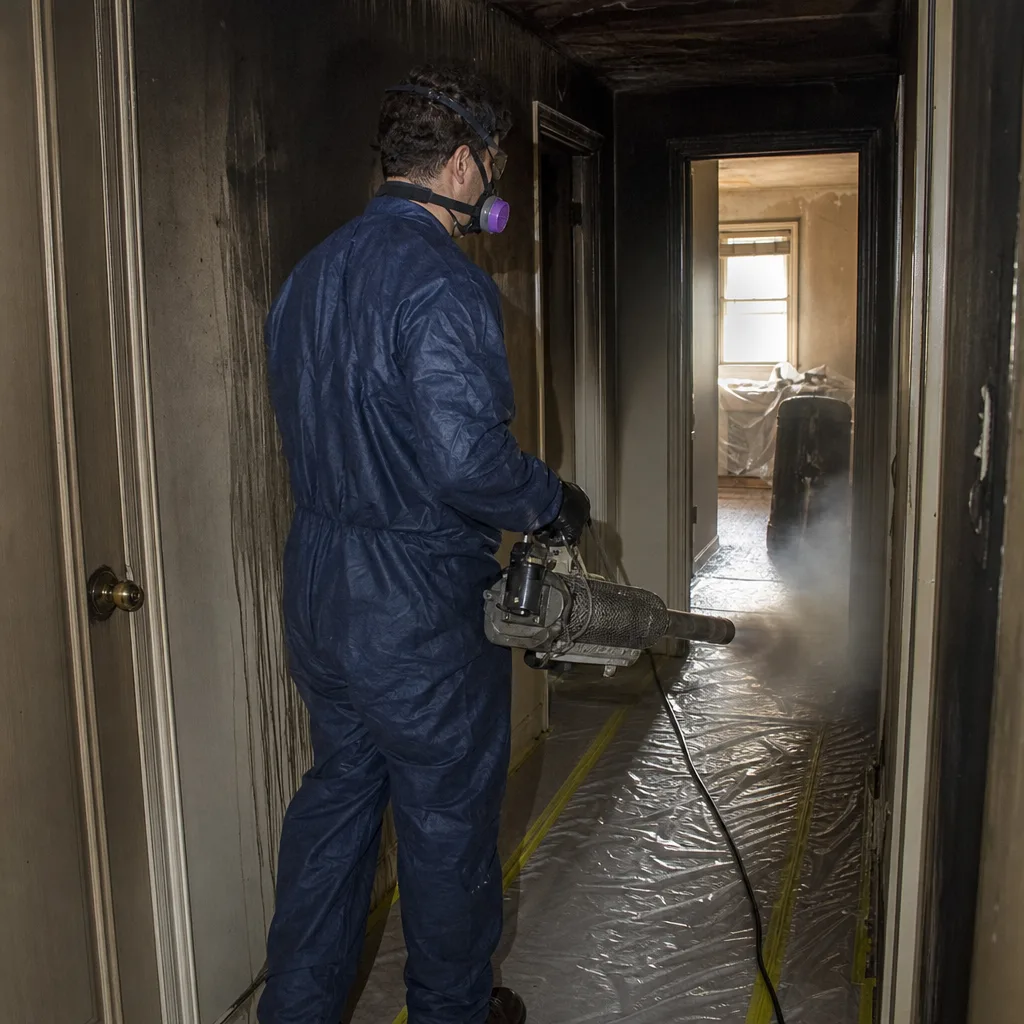
Mold doesn’t start with spores; it starts with water. We install and maintain the systems that keep a Great Neck basement or crawl space below the mold-friendly threshold: dehumidifiers, sump pumps, drainage mats, and perimeter systems. For homes on the flood plain, this is preventive work that pays for itself the next time Manhasset Bay tops its banks.
What happens when you call
- 1
A real person answersNo phone trees - you reach a local pro.
- 2
You get an upfront price rangeHonest numbers before anyone is dispatched.
- 3
A background-checked tech heads outLicensed & insured, dispatched right away.
- 4
You approve before work beginsNothing starts until you say go.
Mold Remediation Costs in Great Neck, NY
Here’s what homeowners in Great Neck can expect to pay in 2026. A contained bathroom or closet mold removal typically runs $1,500-$3,200. A standard finished basement - 500 to 800 square feet of drywall, insulation, and flooring removed and replaced - lands between $6,000 and $11,000. A full basement pack-out after saltwater flooding, with period-trim protection, antimicrobial treatment on framing, corrosion checks on mechanicals, and air quality clearance, runs $10,000-$19,000. Crawl space encapsulation on a typical Great Neck 1940s home runs $7,000-$13,000 depending on access and drainage work. What moves the price: how far moisture has traveled behind plaster, whether original millwork must be removed and reinstalled, and whether your adjuster requires pre- and post-remediation lab testing. The free visual inspection gives you a firm scope in writing - no estimate hidden behind “it depends.” Call (917) 924-4221 to schedule one.
We Also Serve Cities Near Great Neck
Floodline Restoration Co. of Manhattan serves the communities around the Great Neck peninsula where water and mold follow the same patterns: Little Neck, Glen Oaks, Manhasset, and Bellerose. Same crews, same documentation, same written guarantee.
Serving Great Neck, NY - Our Local Coverage Area
We’re based in the Great Neck area and know this community well. Use the map below to see our service coverage - if you’re nearby, we can almost certainly help.
Great Neck Mold Remediation Questions, Answered
How does saltwater flooding in Great Neck change the mold remediation scope of work compared to inland towns?
Saltwater flooding changes the job at the mechanical level, not just the drywall level. Salt corrodes steel lally columns, electrical panels, HVAC coils, and ductwork far faster than freshwater. Even when visible mold looks minor, we check corrosion on every mechanical in the affected zone. That often means replacing equipment inland crews would simply wipe down and leave. Salt also continues wicking through masonry and plaster long after the standing water is gone, so we extend drying times and run moisture readings longer on bay-side jobs.
Will you document moisture readings and drying logs for my NFIP flood claim?
Yes. Every job gets a written moisture log with daily readings from day one through the dry standard. We photograph every room, every wall, every piece of equipment placement. When your Write Your Own NFIP adjuster asks for documentation, we hand it over directly. You don’t play messenger. Call (917) 924-4221 and we’ll explain exactly what your carrier will expect before we start.
Can mold grow inside my Great Neck Tudor’s horsehair plaster walls without visible signs?
It can and it does. Horsehair plaster is lime-based and highly porous. Water trapped behind it - from a roof leak, a plumbing drip, or surge wicking - creates a dark, humid cavity where mold grows for weeks before staining appears on the wall surface. We use thermal imaging and penetrating moisture meters to find those hidden colonies. If you smell something musty in a Great Neck home built before 1960, there’s a reason, and it’s usually behind the plaster.
Do you handle crawl space encapsulation for bay-side homes with high groundwater?
We do. Great Neck’s shallow water table keeps crawl spaces damp year-round, and encapsulation is the most effective thing a homeowner here can do to prevent mold from returning. We install vapor barriers, seal vents, add drainage where the water table demands it, and size a dehumidifier to the square footage. Then we log humidity readings so you can see the number drop.
After mold remediation, will air quality testing prove the home is safe for my family?
Yes. We end every mold job with post-remediation air sampling sent to an independent lab. The clearance test compares indoor spore counts against an outdoor baseline taken the same day. You get the lab report, not just our word. If your family includes someone with respiratory issues, tell the dispatcher when you call (917) 924-4221 and we’ll flag the job for stricter clearance criteria.
How fast can you actually get a crew to Great Neck?
Our commitment is 45 minutes from your call to a crew on the road in your direction. Great Neck’s geography helps us: the peninsula is compact, and our dispatch board routes the closest available certified team. During big weather events - a nor’easter, a hurricane track - every restoration company on Long Island is busy. We still answer live, and we still give you a real arrival window, not a recording.
Will my homeowner’s insurance cover mold remediation in Great Neck?
It depends on the source of the water. If mold follows a covered water loss - a burst pipe, a storm that’s covered under your policy - remediation is often covered. If mold follows flood water, your NFIP policy may cover it as part of the flood claim if it was reported promptly. Long-standing moisture from a slow leak or chronic groundwater is usually not covered. We bill your carrier directly and coordinate with your adjuster either way. Call (917) 924-4221 and bring your policy number to the conversation.
What should I do in the first 30 minutes after I find mold in my Great Neck home?
Don’t disturb it. Don’t vacuum it, don’t wipe it with bleach, don’t run the HVAC system - moving air pushes spores into clean rooms. Turn off the fan if one is running. Keep family members and pets out of the room. If the mold is near a water source, shut off the water if you can do so safely. Then call (917) 924-4221. A live person will walk you through the next step while the crew is on the way.
Written by Curt Bowman, Owner at Floodline Restoration Co. of Manhattan, backed by the 90-Day Done Right Promise and the K.E.Y.S. values: Krafted right, Every time, Your home first, Standing behind it.