
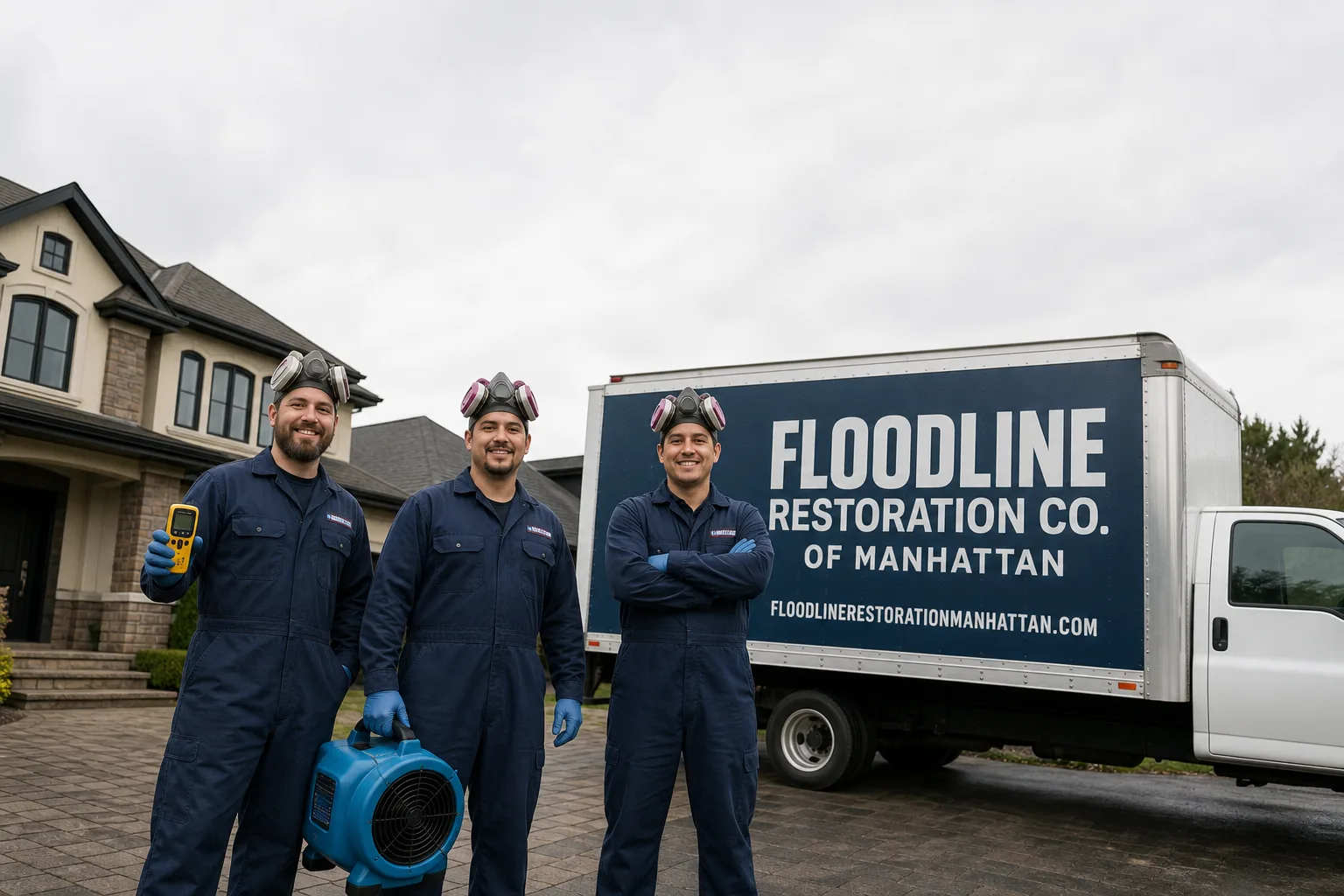
Free visual inspection and a written scope of work before any mitigation begins - photos, moisture readings, and drying logs go in your claim file
The scope we write is the scope we bill. Anything new gets shown to you, in writing, before we touch it.






 Before
 After
After Before
 After
After Before
 After
After24/7 Emergency Mold Remediation in Pleasantville
Mold remediation in Pleasantville typically costs $1,800-$6,500 depending on how far the colony has spread behind walls and whether structural drying is needed. Our crews answer live at (917) 924-4221 around the clock, and we can usually have a certified technician at your door within 45 minutes of your call. The first hour matters because mold in Pleasantville’s older homes moves through balloon-frame wall cavities surprisingly fast. A small patch behind a plaster wall can become a full-room containment job within days. We start with a free visual inspection so you know exactly what you’re dealing with before any work begins.
Understanding Mold Remediation Severity in Pleasantville Properties
Mold problems in Pleasantville rarely announce themselves the way they do in newer construction. The village’s 1920s-1940s commuter-era homes were built with horsehair-plaster-on-lath walls over balloon-frame studs, and that combination is unusually good at hiding moisture. Water travels through the lath, wicks upward through the plaster keys, and saturates framing cavities that run open from basement to attic. A surface moisture reading can show a wall at 12% while the cavity behind it sits at 28% with active mold growth. That’s why our technicians lean on moisture mapping and thermal imaging before any demolition. We classify mold jobs by containment level: Level One for isolated patches under ten square feet, Level Two for colonies between ten and thirty square feet, and Level Three for anything larger or involving HVAC ducts. In Pleasantville’s pre-WWII stock, what looks like a Level One patch near a cast-iron supply line often turns out to be Level Two or Three once we open the wall. Clearanace testing is standard before we hand a home back. The goal isn’t just killing the mold; it’s proving the air inside your home reads clean afterward.
Why Pleasantville Property Owners Choose Floodline Restoration Co. of Manhattan
- 45-minute response commitment to Pleasantville: We dispatch from a board, not a sales desk, so the first call a homeowner makes is the only call needed to get a crew moving.
- A live person answers, 24/7: At 2 a.m. you get a dispatcher who knows the difference between a contained bathroom patch and a balloon-frame wall migration. No recording, no callback queue.
- IICRC-certified crews: Our technicians hold WRT and AMRT certifications and follow IICRC S520 protocols for mold remediation, including containment, negative air, and post-remediation verification.
- Free visual inspection with every call: We walk the home before we quote anything, and you get a written scope of work with line-item pricing. You decide what happens next.
- Direct insurance billing: We document everything from the first hour, send photos and drying logs to your adjuster, and bill the carrier directly for covered losses.
- One team from containment to rebuild: We don’t hand off the job to a sub. The same certified crew that sets up containment handles the drying, the treated framing, and the finish work.
Our Mold Remediation Process
Inspection & Assessment
We start with moisture mapping through plaster and lath, not just surface probes. In Pleasantville’s balloon-frame homes, that means reading cavities, not walls. We look for the water source first, because mold is a symptom of a moisture problem, not the root of it.
Containment
Before any demolition, we seal the work area with 6-mil polyethylene and run negative air machines with HEPA filtration. In tight pre-WWII homes with shared wall cavities and forced-air ducts, this is the difference between a contained job and a whole-house spore spread.
Drying & Dehumidification
Dri-Eaz dehumidifiers and Phoenix air movers go in after the water source is stopped. We run hygrometers and log readings daily until the dry standard is met, then document every measurement for your insurer. Plaster and balloon-frame cavities take longer to dry than drywall, and we plan for that.
Cleaning & Sanitization
Affected framing gets wire-brushed, HEPA-vacuumed, and treated with an antimicrobial. Porous materials that can’t be salvaged, like saturated plaster keys or insulation, are removed in sealed bags. The goal is to leave the structure dry enough and clean enough that mold can’t return.
Air Quality Restoration
After remediation, we run an air scrubber and perform clearance testing. If you’re in a home near the train station with a rubble-stone basement, we may also recommend crawl space treatment and a dehumidification plan to keep groundwater wicking from restarting the problem.
Repairs & Restoration
We rebuild what we remove. Whether it’s plaster patching, new lath, or full wall replacement, the same crew that opened the wall closes it back to pre-loss condition, and the 90-Day Done Right Promise comes with it in writing.
Need Emergency Mold Remediation in Pleasantville Now?
Crews minutes away, answering live 24 hours a day. The sooner we start, the less it costs.
Working With Your Insurance Company
Most Pleasantville homeowners don’t realize that mold remediation is often covered when it stems from a sudden, accidental water loss, like a burst supply line or a storm-driven roof leak. Your policy won’t cover mold that grows from years of deferred maintenance, but if the water event was sudden and you reported it promptly, the remediation usually falls under the water damage portion of the claim. We handle the adjuster communication for you. From the first hour on site, we’re photographing, logging moisture readings, and building a line-item scope that matches industry estimating standards. You never have to play messenger between Floodline Restoration Co. of Manhattan and your carrier. The 90-Day Done Right Promise stays in writing regardless of who pays the bill.
What We Provide Your Insurer
- Thorough documentation of the loss
- Photos of all damage, room by room
- Moisture readings and drying logs
- A detailed, line-item scope of work
- Direct coordination with your carrier
Built for Pleasantville’s Loss Calendar
Pleasantville’s mold season runs on its own clock. January and February bring deep freezes that burst aging cast-iron and galvanized supply lines in the village’s pre-WWII homes. When a pipe lets go inside a plaster wall, the water doesn’t pool on the floor; it soaks into lath, plaster keys, and balloon-frame cavities, and mold can be growing within 48 hours even if the wall feels dry to the touch. March and April bring snowmelt and heavy rain that push groundwater into rubble-stone basements, especially on the blocks nearest the Pleasantville train station. Summer thunderstorms hit the hilly terrain hard, and runoff follows the Saw Mill River watershed into lower-lying streets and foundations. When storms cause widespread damage, our Pleasantville Storm & Disaster Restoration crews respond around the clock. Nor’easters in the fall and early winter pile ice dams onto the village’s older, lower-pitched roofs, forcing meltwater under shingles and into plaster ceilings. Each season has its own trigger, and each trigger requires a different remediation approach.
Mold Remediation Across Pleasantville’s Neighborhoods
The homes closest to the Pleasantville train station, along Bedford Road and Wheeler Avenue, were built when commuters first filled the village after the Harlem Line came through. These are the center-hall colonials and craftsman bungalows with rubble-stone foundations that wick groundwater slowly and hide mold colonies behind finished basement surfaces. Newer streets off Lake Street and Nannahagan Road have more varied construction, but plenty of the original post-war inventory remains. Around the Jacobs Burns Film Center, on Manville Road, we see the same pre-WWII plaster-and-lath walls mixed with mid-century renovations that created dead air spaces where mold thrives. The neighborhoods off Bear Ridge Road and up toward Graham Hills Park get more roof-driven water from ice dams and wind-blown rain. Each area has its own pattern, and our techs know them well enough to budget for the one thing everyone misses: the moisture you can’t see until you map it.
Specialized Mold Remediation Services We Offer in Pleasantville
Mold Inspection & Testing
We don’t test to scare you; we test to scope the job correctly. In Pleasantville’s balloon-frame homes, that means air sampling, cavity readings, and thermal imaging to find moisture that a surface probe would miss. You get a written report with the findings explained in plain English, not a three-page lab printout with no translation.
Mold Removal
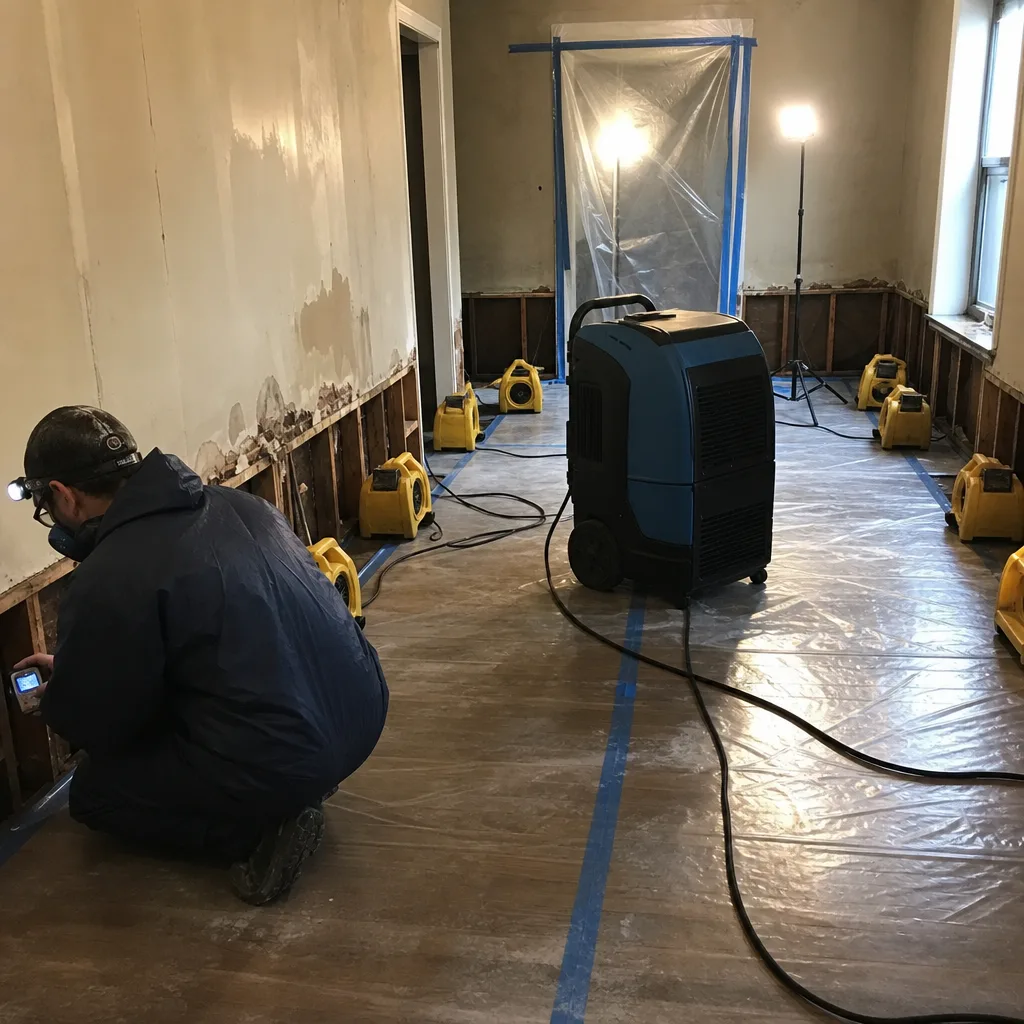
We remove the colony at its source, not just the surface stain. That means opening the wall where the moisture migration actually ran, treating the framing, and removing saturated porous materials in sealed bags. In a 1930s center-hall colonial near the train station, the affected area is rarely where the visible mold patch ends.
Black Mold Remediation
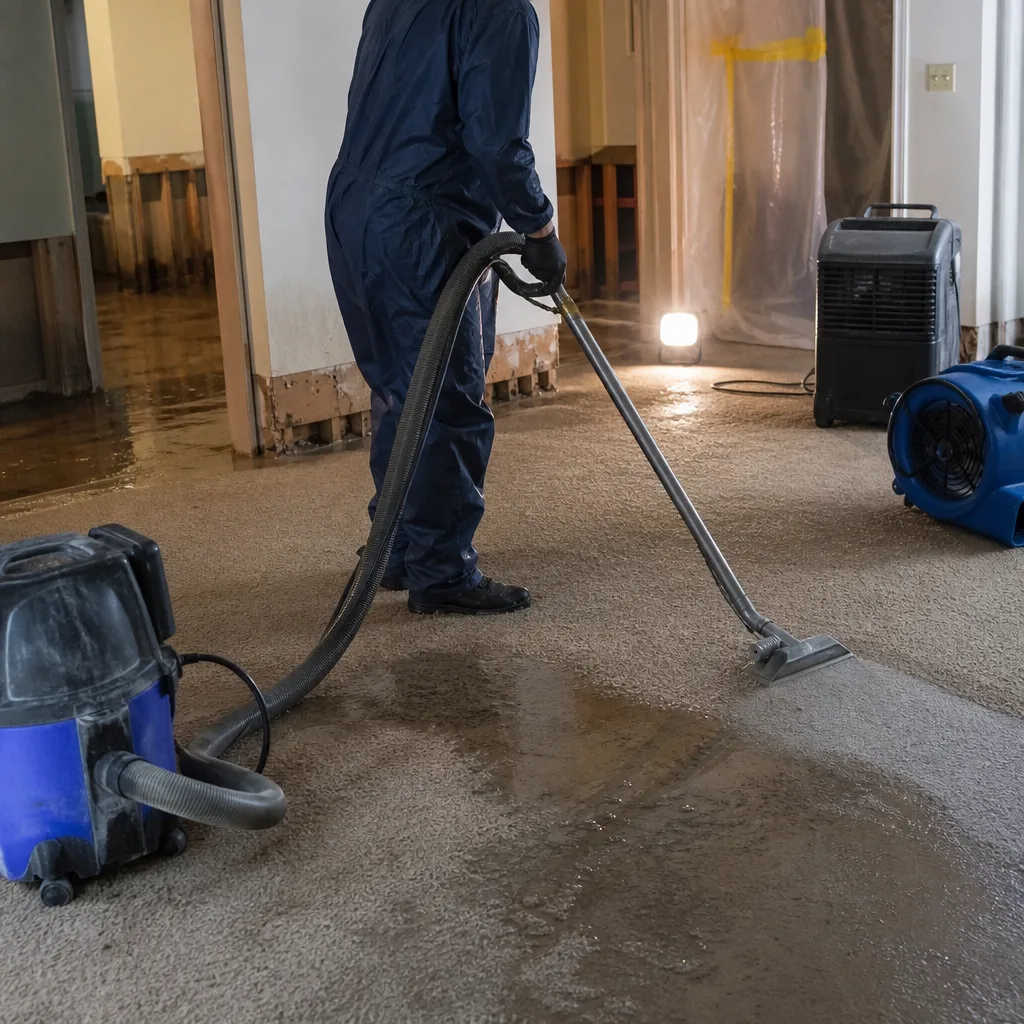
Stachybotrys chartarum gets the headlines, but in Pleasantville’s older homes, the real concern is hidden growth behind plaster and lath. Our protocol handles all toxigenic species with full containment, negative air, and clearance testing. We treat black mold calls as Level Two or Three jobs until proven otherwise.
Air Quality Restoration
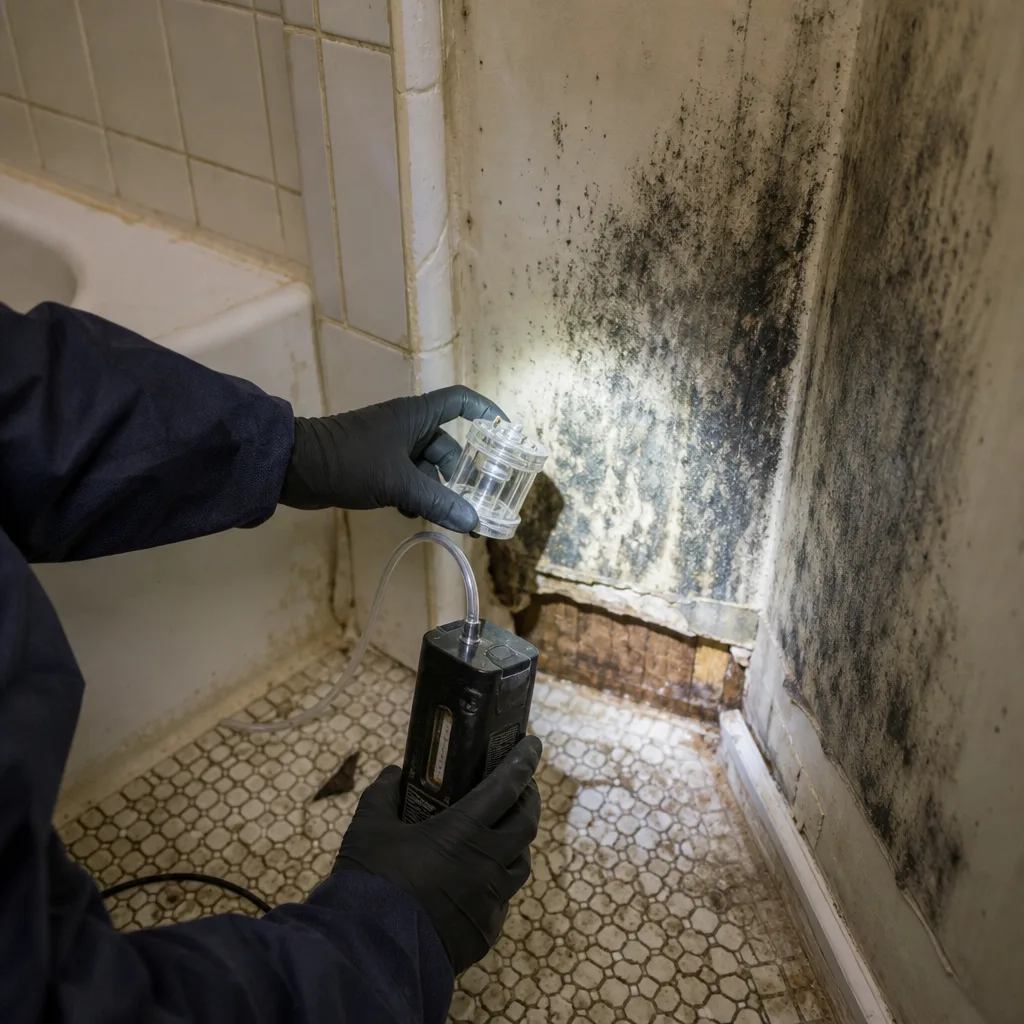
After the mold is removed, the air has to go back to normal. We run HEPA air scrubbers during the job and post-remediation air testing after it. If you have forced-air ducts, we check for spore migration and recommend duct cleaning when readings justify it.
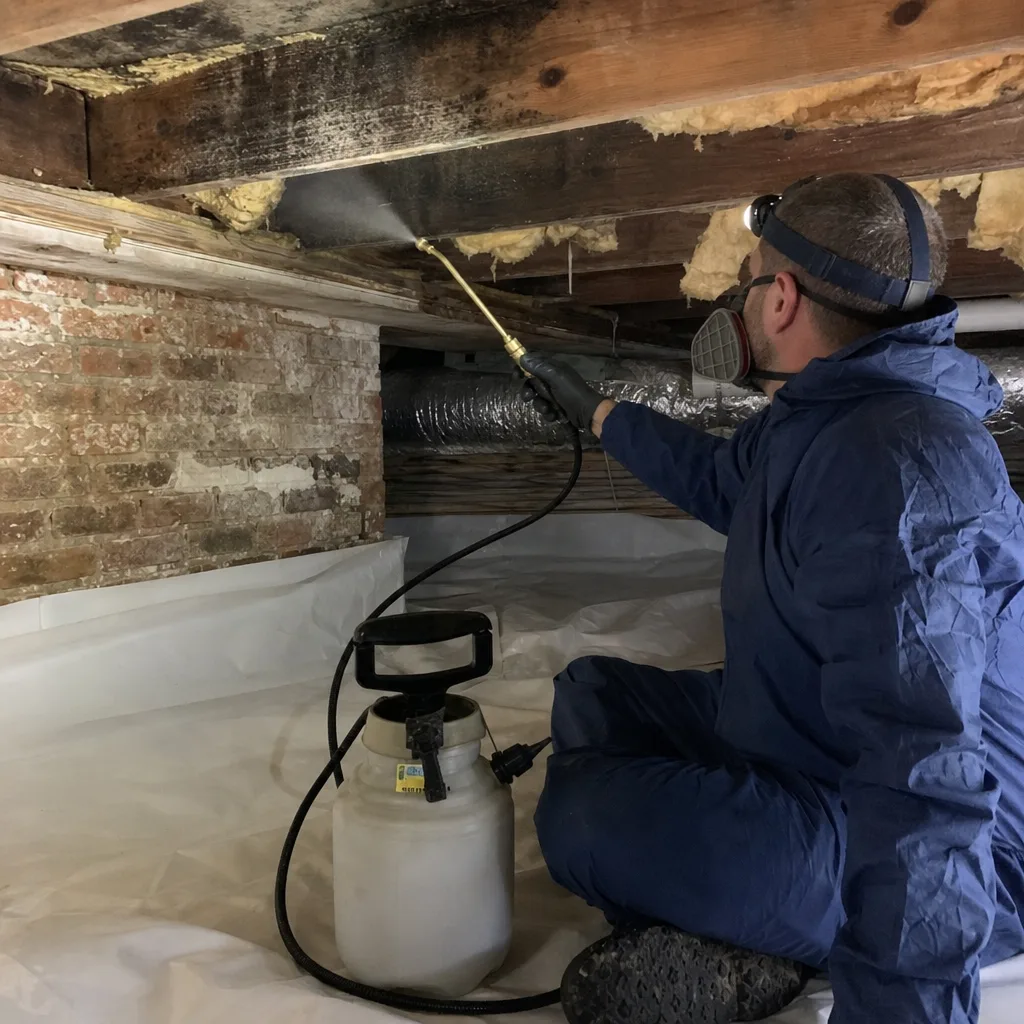
Crawl Space Treatment
Pleasantville’s rubble-stone foundations and fieldstone crawl spaces stay damp for months each year. We treat the surfaces with antimicrobial solutions, install vapor barriers where needed, and can add dehumidification to keep the relative humidity below 60%, which is where mold stops thriving.
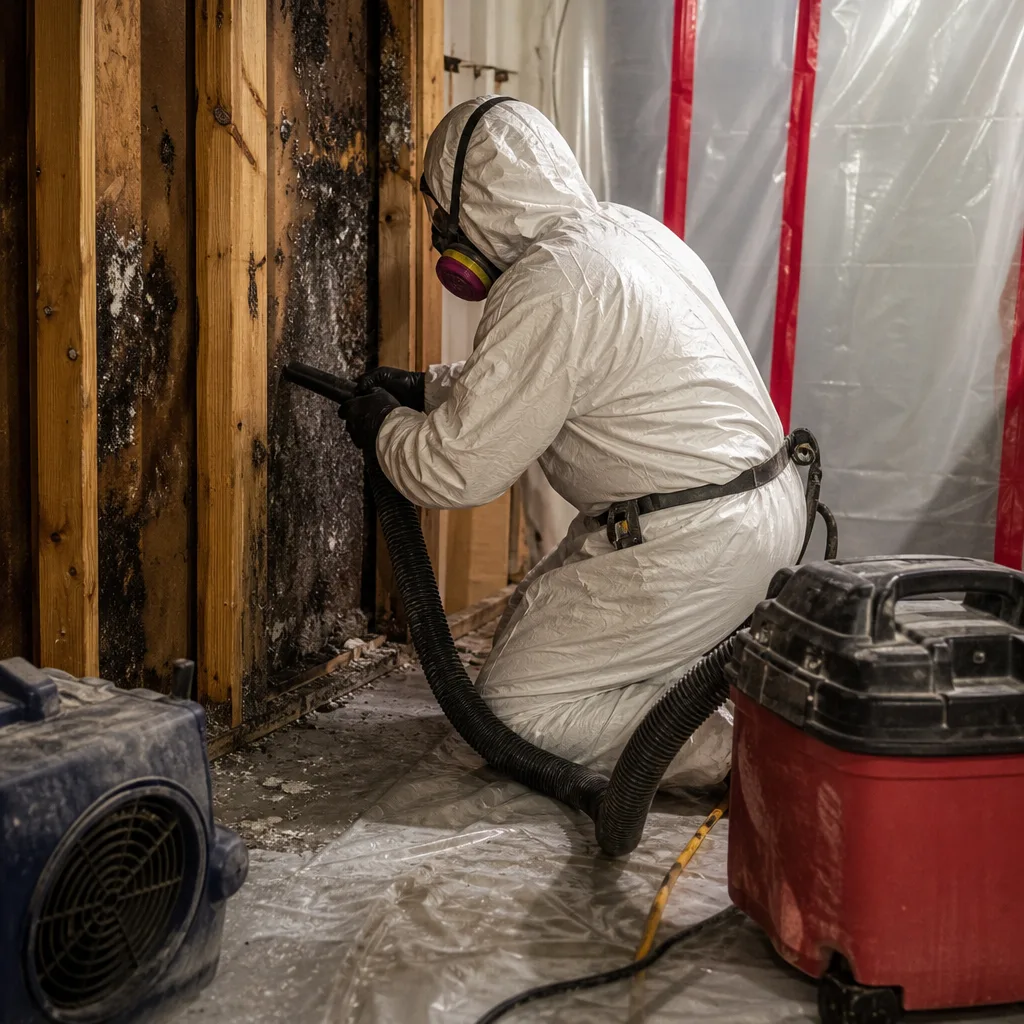
Moisture & Humidity Control
Mold is a moisture problem first. After remediation, we’ll show you the hygrometer readings and recommend a control plan, whether that’s a foundation drain, a dehumidifier, or simple grading fixes outside. The goal is to make sure you never call us for the same wall twice.
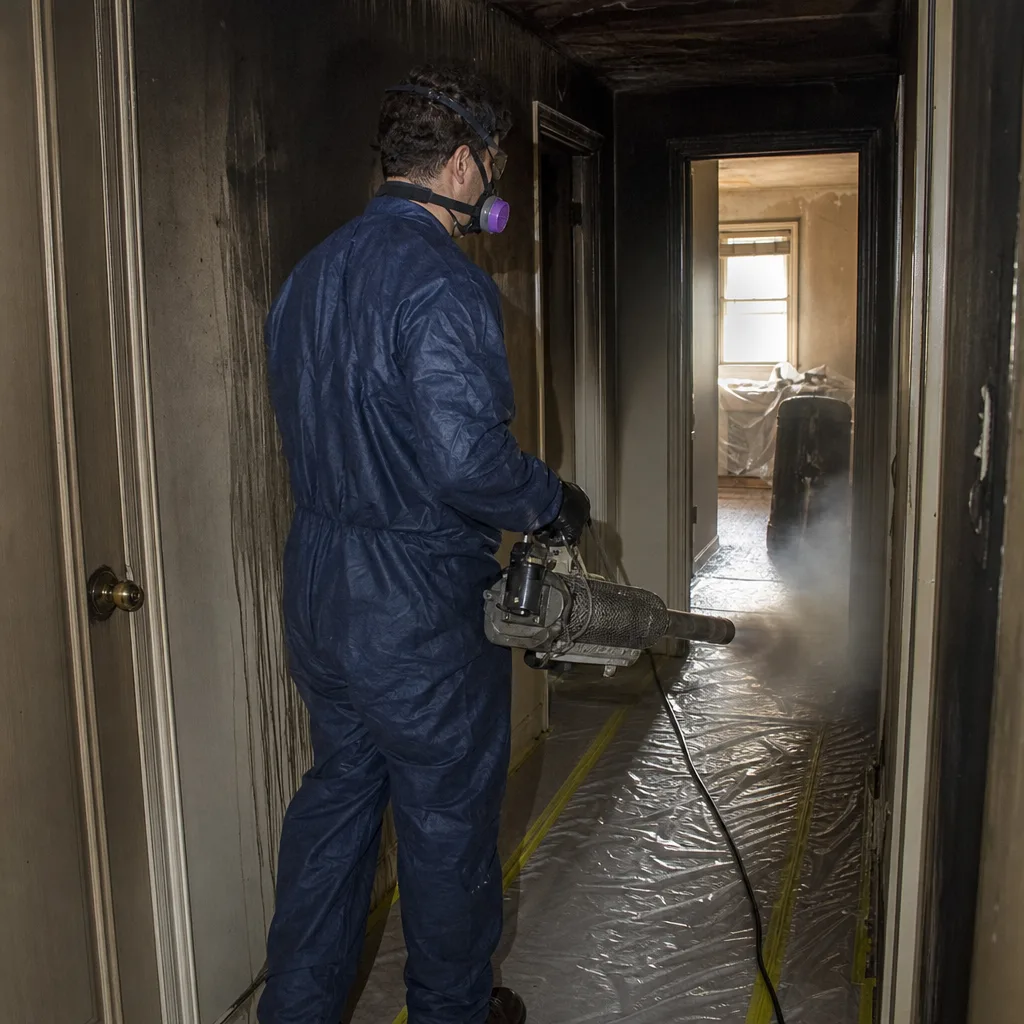
What happens when you call
- 1
A real person answersNo phone trees - you reach a local pro.
- 2
You get an upfront price rangeHonest numbers before anyone is dispatched.
- 3
A background-checked tech heads outLicensed & insured, dispatched right away.
- 4
You approve before work beginsNothing starts until you say go.
Mold Remediation Costs in Pleasantville, NY
For a typical bathroom or closet patch in a Pleasantville home, mold remediation runs $1,800-$3,200 including containment, removal, drying, and clearance testing. A full wall or basement job in one of the village’s pre-WWII colonials, with balloon-frame cavity mapping and plaster demolition, lands between $4,500 and $6,500. Larger jobs involving multiple rooms, HVAC ducting, or crawl space treatment can reach $8,000 or more. What moves the price most in Pleasantville is what’s behind the wall, not the visible stain. Horsehair-plaster walls and balloon-frame cavities take longer to dry, and rubble-stone basements often need both remediation and moisture control to prevent recurrence. Most importantly, we never charge for the visual inspection. You get a written scope of work with line-item pricing before anything starts. If the loss was sudden and covered, we bill your carrier directly. Our Mold Remediation team has seen every variation of these jobs, and we’ll tell you honestly if a small patch can wait or if it needs immediate containment.
We Also Serve Cities Near Pleasantville
Floodline Restoration Co. of Manhattan also handles mold remediation in Pleasantville and the surrounding communities of Thornwood, Hawthorne, Chappaqua, and Briarcliff Manor. The same certified crews, the same 90-Day Done Right Promise, and the same live answer at (917) 924-4221 apply wherever you are. If you’re in one of those towns and smell must or see staining, call before it spreads.
Serving Pleasantville, NY - Our Local Coverage Area
We’re based in the Pleasantville area and know this community well. Use the map below to see our service coverage - if you’re nearby, we can almost certainly help.
Pleasantville Mold Remediation Questions, Answered
Why does mold in Pleasantville’s 1920s-1940s colonials often require more demolition than a modern drywall home?
Because horsehair-plaster-on-lath walls and balloon-frame construction absorb and conceal moisture in ways drywall doesn’t. Water migrates through the lath, up the plaster keys, and into framing cavities that run open from basement to attic. By the time staining shows on the surface, the colony behind the wall is often far larger than the visible patch. Our crews map moisture through the cavities before cutting, which is why the initial scope in these homes often surprises homeowners. Call (917) 924-4221 for a free inspection and an honest assessment before you commit to anything.
What is the first thing your crew does when a mold call comes from a home near the Pleasantville train station?
We check the basement foundation first. The homes near the train station almost all have rubble-stone basement walls that wick groundwater slowly, so we map the moisture in the foundation before touching any finish surfaces. If you’re dealing with a backed-up sewer line or septic issue, we also offer Sewage Cleanup in Pleasantville to handle contaminated water safely. If the foundation is feeding the mold, treating the drywall alone would be a waste of money. The mold would return behind the new finish within months. Get the full picture before any demolition starts by calling (917) 924-4221.
How do you keep mold spores from spreading through the tight rooms and shared walls of a pre-WWII bungalow during remediation?
Containment goes up before any wall is opened. We seal the work area with 6-mil polyethylene, run negative air machines with HEPA filters, and shut down the forced-air system if it passes through the affected spaces. In a tight bungalow with shared wall cavities, that’s not optional. It’s the difference between a contained job and a whole-house spore spread that costs three times as much to fix. Call (917) 924-4221 and ask us to explain the containment plan before we start.
Will I lose my original plaster walls during mold remediation, or can you save them?
It depends on how long the moisture has been present. If the plaster keys are still intact and the lath is structurally sound, we can often cut a controlled access panel, treat the framing, and patch the plaster without losing the wall. If the plaster has turned crumbly or the lath is saturated, that section has to come out. In Pleasantville’s older homes, we do everything we can to preserve original plaster, but never at the cost of leaving mold in the wall. A free inspection at (917) 924-4221 will tell you which path yours takes.
How long before I can move back into my Pleasantville home after black mold removal on a basement wall?
For a contained basement job, most homeowners can stay in the home during remediation if the containment is properly sealed and negative air is running. If the colony is behind living-area walls or in the HVAC system, we’ll recommend staying elsewhere until clearance testing comes back clean. A typical Pleasantville basement job takes 3-5 working days from containment to clearance, including drying and documentation for your insurer. Call (917) 924-4221 to talk through the timeline for your specific situation.
How fast can a crew actually reach my home in Pleasantville?
We commit to a 45-minute response for Pleasantville calls, day or night. A live dispatcher answers at (917) 924-4221 and gets a certified crew moving immediately. The village is compact, and our technicians know the roads, the train crossings, and the side streets well enough to beat the GPS most days. If it’s after midnight, you still get a person on the line, not a recording.
Is mold remediation covered by my homeowners insurance in Pleasantville?
Mold remediation is usually covered when it results from a sudden, accidental water loss, like a burst pipe or storm damage, and when mitigation began promptly. Your policy likely won’t cover mold that grew from years of slow leakage or deferred maintenance. We document everything from the first hour, write the scope in industry-standard format, and communicate directly with your adjuster. You don’t have to figure out coverage alone. Call (917) 924-4221 and we’ll review your situation honestly.
What should I do in the first 30 minutes after I discover mold in my Pleasantville home?
Stop the water source if you can safely reach it, then call us at (917) 924-4221. Don’t disturb the mold or try to scrub it with bleach. Disturbing a colony releases spores into the air and can spread the problem through shared wall cavities and ducts. Close the door to the affected room, keep children and pets out, and don’t run the HVAC system if the mold is near a return vent. Our crews can usually reach your door within 45 minutes and start the assessment immediately.
We worked a mold remediation in a 1930s center-hall colonial near the Pleasantville train station where a failed cast-iron supply line had been weeping for weeks behind original horsehair-plaster walls. Our techs set up containment, ran Dri-Eaz dehumidifiers and XPOWER air movers, and used moisture mapping to trace the migration through the balloon-frame cavities before cutting open plaster lath. They found hidden mold colonies that a surface moisture reading alone would have missed. Because the home had rubble-stone basement walls wicking groundwater, we also treated the crawl space with an antimicrobial treatment and documented the full scope of work in drying logs to bring it back to pre-loss condition.
If you live in Pleasantville and you suspect mold, call (917) 924-4221 now. The free visual inspection tells you what’s actually behind the wall. The written scope tells you exactly what it costs. And the 90-Day Done Right Promise means you never have to think about the same wall twice. We’re Floodline Restoration Co. of Manhattan, led by Curt Bowman since 2010, and we stand behind the work in writing.
Written by Curt Bowman, Owner at Floodline Restoration Co. of Manhattan, serving Pleasantville and the surrounding communities.