
Free visual inspection and a written scope of work before any mitigation begins - photos, moisture readings, and drying logs go in your claim file
The scope we write is the scope we bill. Anything new gets shown to you, in writing, before we touch it.






 Before
 After
After Before
 After
After Before
 After
After24/7 Emergency Reconstruction & Cleanup in Greenwich Village
Reconstruction and cleanup in Greenwich Village after water, fire, or storm damage typically requires a coordinated crew that can handle both the structural repair and the paperwork - and it often needs to start within hours, not days. Whether a steam pipe let go inside an 1840s Greek Revival rowhouse on Bank Street or a roof drain overflow soaked a railroad apartment near Washington Square, the first call determines whether the damage stops at one unit or migrates through shared party walls into a neighbor’s co-op. Floodline Restoration Co. of Manhattan answers the phone live at (917) 924-4221 around the clock, every day, and crews reach Greenwich Village addresses fast - because in pre-war buildings with horsehair plaster and continuous wall cavities, water doesn’t wait. Our certified technicians handle the full sequence from first extraction to finished reconstruction, so you never face a mid-job handoff to a crew that wasn’t there on day one.
Understanding Reconstruction & Cleanup Severity in Greenwich Village Properties
In Greenwich Village, severity of a reconstruction project depends less on the initial event and more on how long moisture moved before it was stopped and how the building was constructed. Category 1 water from a clean supply line is straightforward when dried within 24 to 48 hours. But once that water has sat in a 160-year-old lath-and-plaster partition or wicked through pine floor boards, it often becomes Category 2, carrying contaminants from centuries of dust, old insulation, and prior water events. If a sewer backup or river water intrusion is involved, you’re looking at Category 3, and reconstruction means removing saturated plaster and flooring until moisture mapping confirms the structural frame is below the dry standard. Greenwich Village’s dense rowhouse stock makes lateral moisture migration across party walls a defining factor: a Category 1 leak in one unit that reaches a shared brick or stud wall will typically register elevated moisture in the adjacent apartment within 24 hours, which expands the reconstruction scope before most owners even know they have a problem. Proper drying here is not about air movers alone; it’s about understanding how four or five stacked floors and continuous wall cavities behave in Federal-era construction.
Why Greenwich Village Property Owners Choose Floodline Restoration Co. of Manhattan
- 45-minute response commitment - Our Greenwich Village dispatch radius keeps us close enough that a crew is mobilizing within 45 minutes of your call, with extraction equipment on the truck the first visit, not the second.
- 24/7 live answer - a real person, never an automated system - When you call at 2 a.m. on a Saturday in February, the person who picks up is a live dispatcher who can send a crew, not a recording that tells you to call back Monday.
- IICRC-certified crews - Our technicians hold IICRC certifications including WRT (Water Damage Restoration Technician), FSRT (Fire & Smoke Restoration Technician), and AMRT (Applied Microbial Remediation Technician), so the crew that extracts is the crew that rebuilds.
- Free visual inspection - We walk the property, document the damage, and give you a clear reading of scope before any work begins. No obligation, no pressure.
- Direct insurance billing - We deal with your carrier directly, from first estimate to final supplement. You don’t play messenger between us and your adjuster.
- One team from extraction to reconstruction - The same Floodline Restoration Co. of Manhattan crew that reads the moisture map on day one handles daily readings and rebuilds what needs rebuilding. No inherited crews, no lost context.
Our Reconstruction & Cleanup Process
Inspection & Assessment
We start by mapping the full extent of visible and hidden damage using thermal imaging, hygrometers, and moisture meters. In Greenwich Village rowhouses, that means checking adjacent units and party-wall cavities, not just the room where the water or damage first appeared.
Extraction / Stabilization
Standing water comes out first, using truck-mounted and portable extraction equipment. We stabilize the structure by identifying compromised plaster, flooring, and framing that needs to be secured before drying can work.
Drying & Dehumidification
We place Dri-Eaz and Phoenix air movers and dehumidifiers according to a written drying plan, and Injectidry drying mats where floor cavities and plaster walls need targeted low-pressure drying. Daily moisture readings are logged until the dry standard is met.
Cleaning & Sanitization
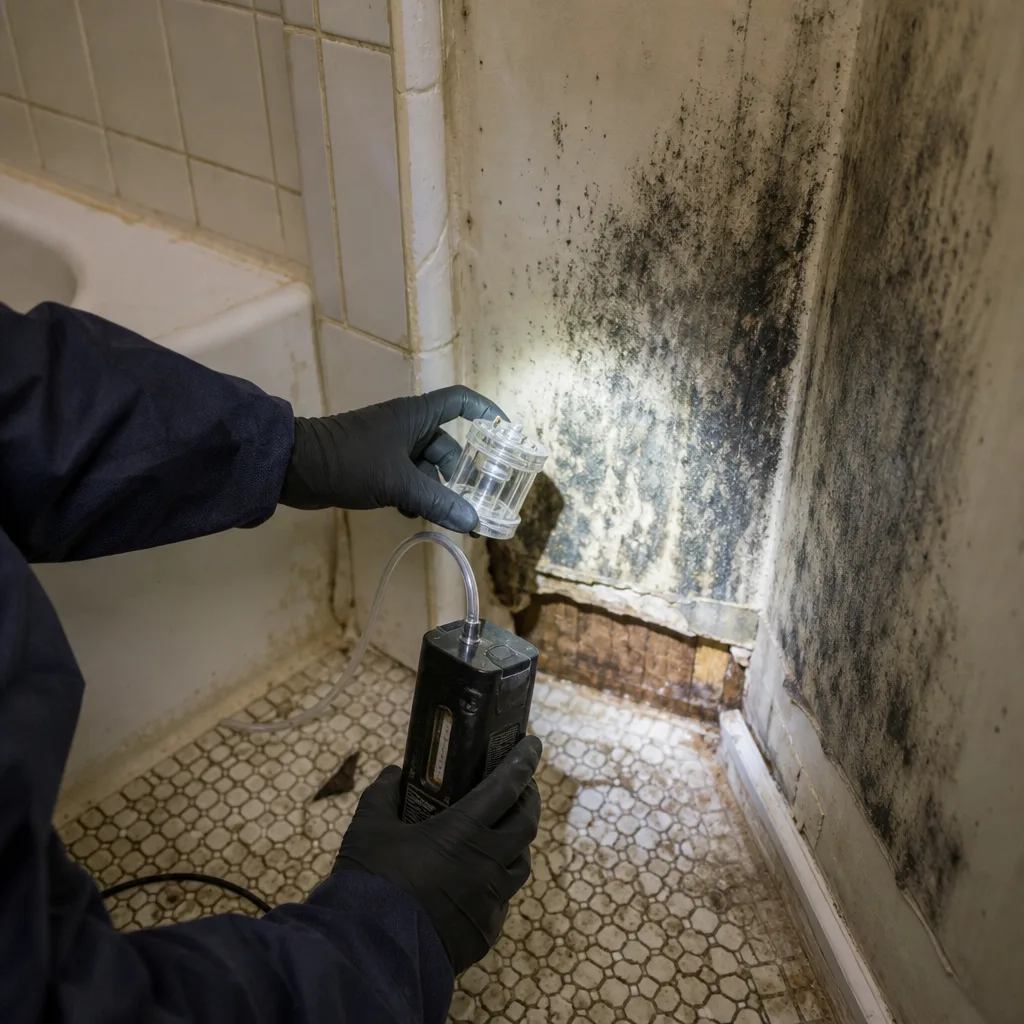
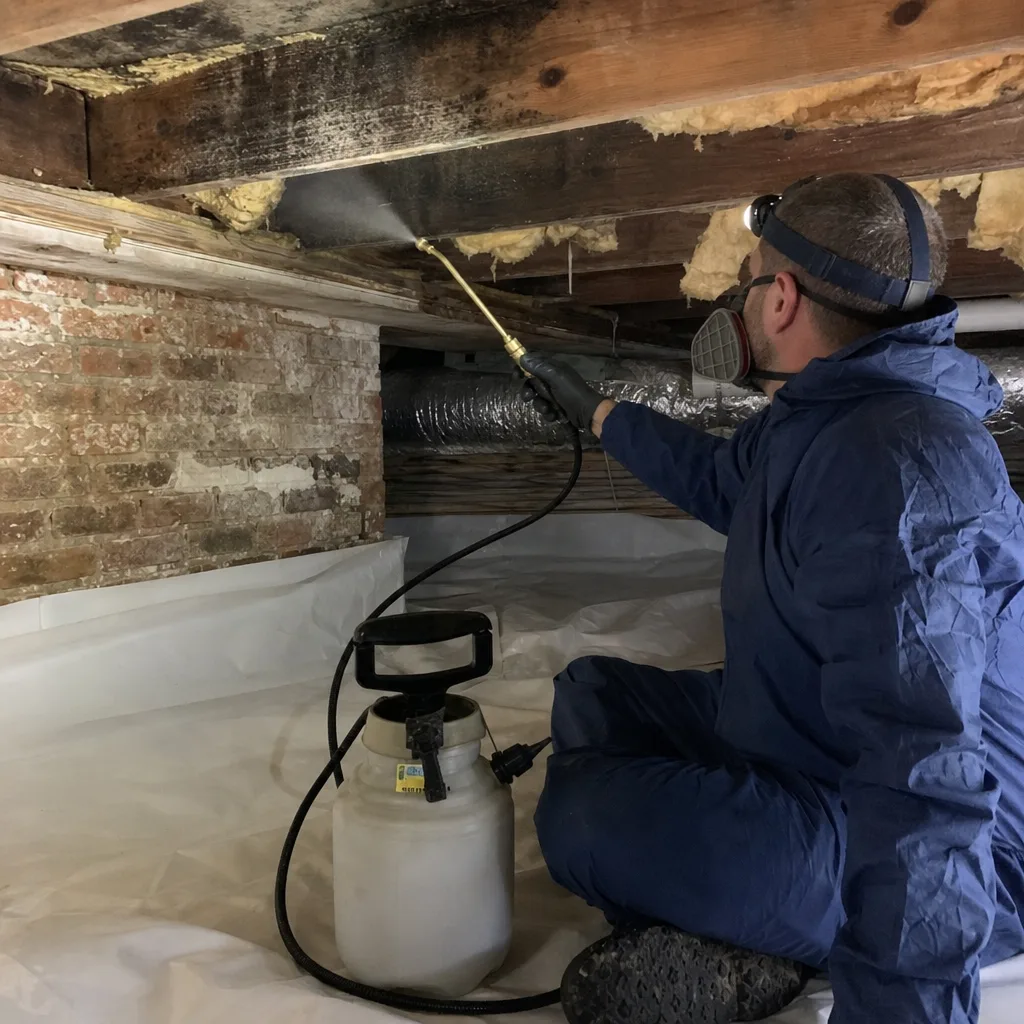
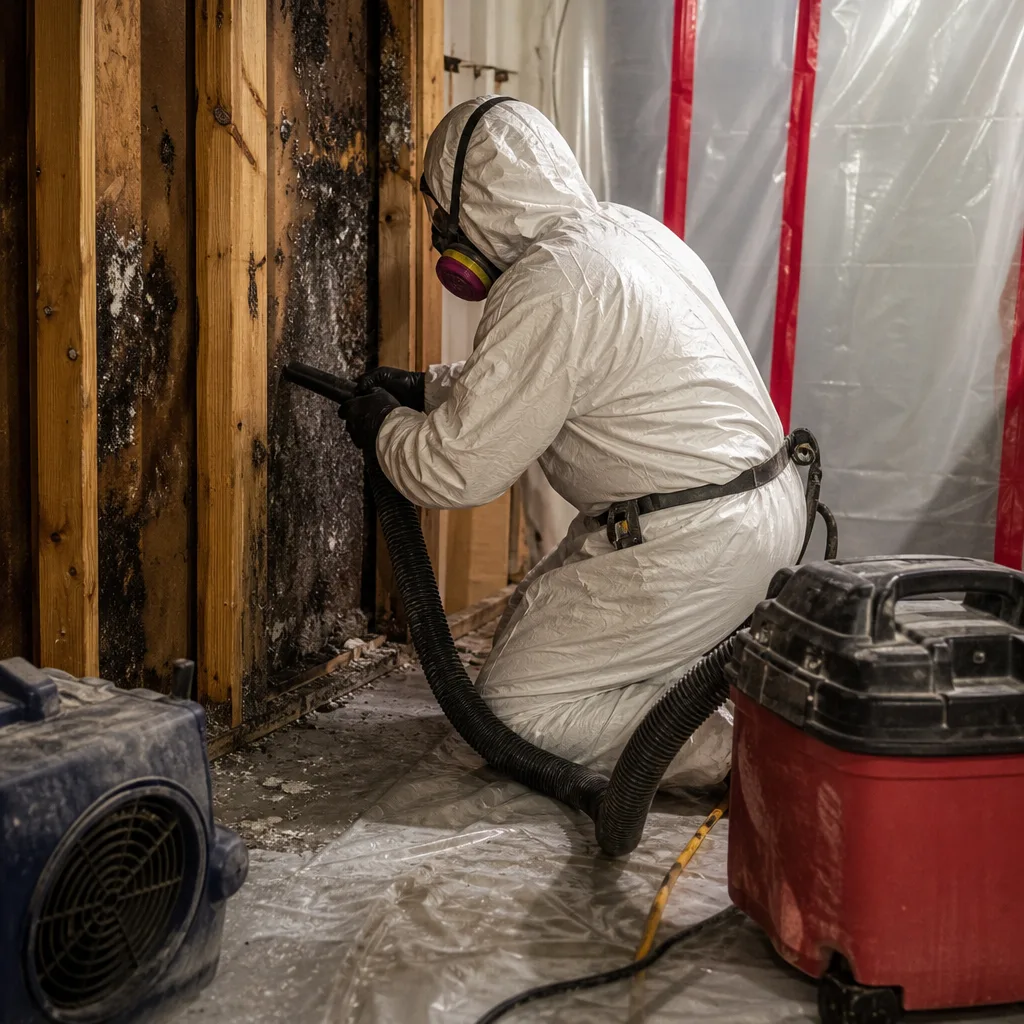
Affected surfaces are cleaned and sanitized, including structural wood, wall cavities, and salvageable contents. For fire and smoke losses, this phase includes soot residue removal and odor treatment. For microbial concerns, containment and HEPA air scrubbing protect unaffected rooms.
Historic Materials & LPC Compliance
In Greenwich Village, reconstruction often means matching original horsehair plaster profiles, lath, and millwork rather than swapping for modern drywall. We coordinate with Landmarks Preservation Commission requirements before exterior or historically visible repairs proceed, so you don’t face a stop-work order later.
Repairs & Restoration
We rebuild framing, hang and finish plaster or drywall to match existing profiles, lay new flooring, paint, and install replacement windows, doors, and hardware. Every job finishes with a walkthrough and documentation delivered to you and your insurer.
Need Emergency Reconstruction & Cleanup in Greenwich Village Now?
Crews minutes away, answering live 24 hours a day. The sooner we start, the less it costs.
Working With Your Insurance Company
We’ve handled enough Greenwich Village claims to know that documentation determines what a carrier approves. From the first hour after we arrive, we photograph everything, log moisture readings room by room, and write a line-item scope that reflects what actually needs to happen in a pre-war rowhouse - not the cheapest repair, the correct one. Our team communicates directly with your adjuster and provides the evidence they need to approve proper reconstruction, not just surface cleanup. That means photos of the party-wall cavities we opened, moisture logs showing why the plaster had to come out, and a written rationale for matching historic materials. When the scope expands because moisture crossed into a neighbor’s unit, we document that too, so your claim reflects the real extent of loss. This direct coordination is why homeowners who have worked with us once call back when the next loss happens - they never want to play messenger with a carrier again.
What We Provide Your Insurer
- Thorough documentation of the loss
- Photos of all damage, room by room
- Moisture readings and drying logs
- A detailed, line-item scope of work
- Direct coordination with your carrier
Built for Greenwich Village’s Loss Calendar
Greenwich Village sees reconstruction and cleanup needs across every season, but the pattern is predictable if you know these buildings. January deep freezes burst cast-iron radiator supply lines in pre-war tenements along Bleecker Street and west of Seventh Avenue South, sending Category 1 water through four floors of stacked apartments before anyone catches it. Spring thaw brings basement seepage to the far-western blocks, where historically filled land and a high water table mean cellar mechanicals sit near groundwater after heavy rain. Summer thunderstorms produce the flash flooding and roof drain overflows that saturate flat-roofed tenements quickly, with water pooling over masonry parapets and finding its way into top-floor units first. Nor’easters in late fall and winter drive wind-blown rain into aging windows, roof hatches, and parapet flashing - and on Morton Street, one such event compromised the roof parapet of an 1840s Greek Revival townhouse, sending water into the party wall shared with two adjacent co-ops. Our crew set containment and used XPOWER air movers with Injectidry drying mats to map moisture readings across all three properties, then reconstructed lath-and-plaster walls to match original profiles while replacing the wind-rating hardware on the rooftop hatch. None of these loss patterns surprise us anymore; we plan our Greenwich Village response around them.
Reconstruction & Cleanup Across Greenwich Village’s Neighborhoods
Greenwich Village is not one uniform building type, and reconstruction needs change block by block. The South Village around MacDougal and Sullivan Streets is dense with converted tenements and narrow rowhouses from the 1860s through 1890s, where stacked railroad layouts mean a single burst pipe in a third-floor kitchen channels water down through two floors of finished apartments in under an hour. West Village blocks near Hudson Street carry the oldest Federal and Greek Revival townhouses, many with continuous party walls that run uninterrupted from cellar to parapet - a roof leak at the top travels laterally through those walls and shows up as a sagging ceiling three doors down. The Washington Square area mixes 19th-century brick rowhouses with mid-century conversions, where later renovations often buried original plaster behind drywall, so moisture mapping has to account for concealed cavities that don’t respond to standard drying the way modern construction does. Along the far-western edge near the Hudson, below-grade units and garden apartments sit on filled land with a high water table, making groundwater intrusion a recurring reconstruction trigger after every sustained rain event. Our crews know these corridors well enough to anticipate where the water went before we’d need to open exploratory holes.
Specialized Reconstruction & Cleanup Services We Offer in Greenwich Village
Full-Service Reconstruction
From framing to finish, our Reconstruction & Cleanup team rebuilds what water, fire, or time has compromised. In Greenwich Village, this regularly means reconstructing lath-and-plaster walls to match original thickness and lime composition, which prevents the cracking and delamination you get when modern drywall is used as a shortcut in a 170-year-old rowhouse.
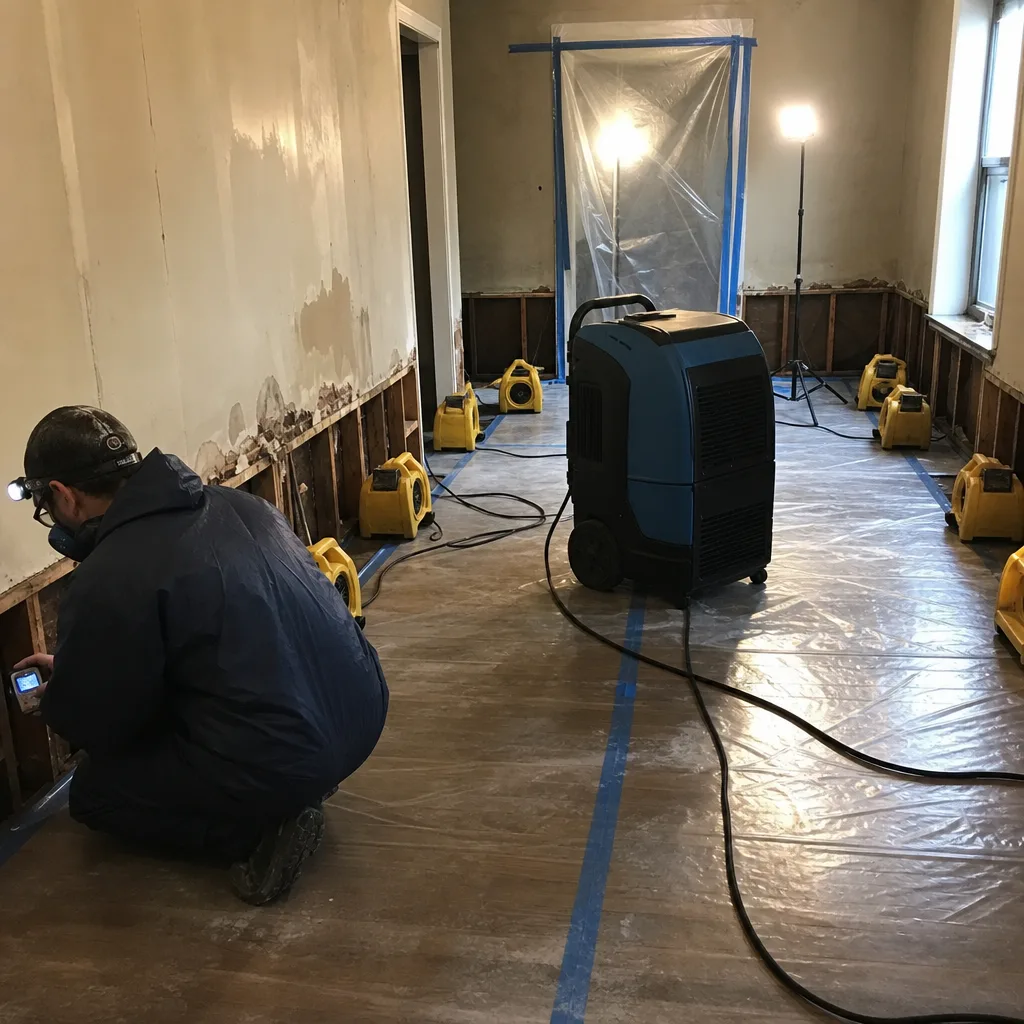
Drywall & Flooring Repair
Old-growth heart pine floors damaged by water can often be saved by a careful drying plan rather than full replacement, and our techs know when to push for salvage and when replacement is the honest call. Matching floor thickness and old-growth grain matters in landmarked properties, and we document every decision for your adjuster.
Contents Restoration & Pack-Out
When a Greenwich Village co-op apartment floods, the contents - books, artwork, furniture, rugs, family papers - often hold more dollar value than the plaster that got wet. We photograph, inventory, pack out, clean, and store contents in a climate-controlled facility until the building repair is complete, then bring everything back and reset the apartment.
Carpet & Upholstery Cleaning
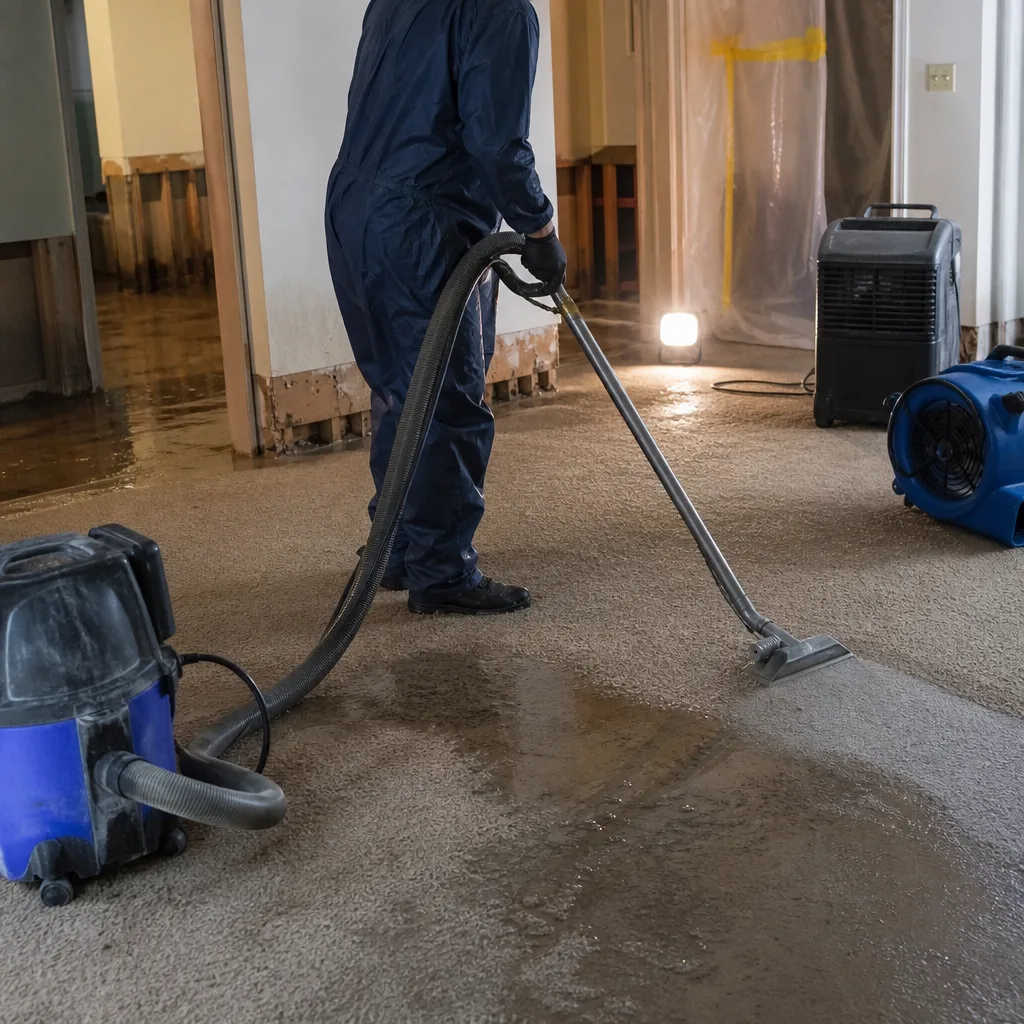
After a water or smoke event, salvageable carpets and upholstered furniture need deep cleaning, sanitizing, and deodorizing. We use professional-grade truck-mounted and portable extraction equipment and document before-and-after condition for the claim.
Post-Construction Cleanup
When our own crew finishes a reconstruction or when a general contractor finishes a renovation in a Village apartment, the fine dust left behind gets into everything from radiators to closet shelves. Our post-construction cleanup brings a HEPA-filtered finish to the work, leaving the apartment ready to move back into, not needing a second cleaning.
What happens when you call
- 1
A real person answersNo phone trees - you reach a local pro.
- 2
You get an upfront price rangeHonest numbers before anyone is dispatched.
- 3
A background-checked tech heads outLicensed & insured, dispatched right away.
- 4
You approve before work beginsNothing starts until you say go.
Reconstruction & Cleanup Costs in Greenwich Village, NY
Reconstruction and cleanup pricing in Greenwich Village runs higher than outer-borough rates for one structural reason: pre-war rowhouse construction and LPC oversight add scope to repairs that look simple on a repair estimate from an out-of-area firm. A typical water extraction and structural drying on a single Village apartment runs $2,800 to $6,500. Full reconstruction after a Category 2 or 3 loss - replacing horsehair plaster walls, restoring pine flooring, and repainting - commonly lands between $12,000 and $40,000 depending on square footage and how many floors were affected. Post-construction cleanup for a gut-renovated floor runs $1,200 to $3,800. Contents pack-out and restoration for a flooded apartment typically runs $3,000 to $9,000 including storage. Drywall and flooring repair confined to one room is usually $1,800 to $5,500. The price moves most when the loss involves historic materials that must be matched in kind, when LPC permits add review time, or when damage extends into adjacent units through party walls. Most reconstruction and cleanup work in Greenwich Village is covered by insurance, and we bill your carrier directly - your out-of-pocket is typically your deductible, not the total. The only way to get a firm number is a free visual inspection; that’s the path to a written scope you can hold us to. Call (917) 924-4221 and we’ll be there.
We Also Serve Cities Near Greenwich Village
Beyond the Village, Floodline Restoration Co. of Manhattan handles reconstruction and cleanup across the surrounding metro area, including Fairview, Harrison, East Bronx, and Hunts Point. If you’re just outside Greenwich Village and dealing with water, fire, or storm damage, call the same live dispatch line at (917) 924-4221.
Greenwich Village Reconstruction & Cleanup Questions, Answered
Does the Landmarks Preservation Commission require a special permit for wind-rated door replacement on a Greenwich Village rowhouse?
Yes - in the Greenwich Village Historic District, any exterior door replacement on a landmarked rowhouse, including wind-rated upgrade work, requires a permit from the NYC Landmarks Preservation Commission before work begins. The LPC reviews the door’s material, profile, and hardware for compatibility with the building’s historic character; installing a modern glass-front or steel-slab door without approval can trigger a stop-work order and forced restoration to the original style. We handle the LPC filing and documentation as part of our reconstruction scope, so the permit is in place before the old door comes out.
How do you dry out a shared party wall after a steam pipe burst in a Village railroad apartment?
We dry a shared party wall by creating targeted low-pressure airflow inside the wall cavity, using access holes at top and bottom and Injectidry drying mats applied directly to the plaster surface, while running dehumidifiers to pull moisture from the brick or stud core. In Greenwich Village railroad apartments, the wall cavity often runs the full length of the floor, so we take daily moisture readings at multiple points along the wall - and we coordinate with the neighboring unit’s owner or board because drying only one side leaves moisture trapped inside. The process usually takes three to six days to reach the dry standard, and we hand you and your carrier the moisture log.
What wind rating should a replacement roof hatch have on a converted tenement near the Hudson River?
A replacement roof hatch on a converted tenement in Greenwich Village should be rated for the wind-load zone of the building’s exposure - near the Hudson River, that typically means a hatch engineered for at least 110 mph uplift resistance, secured with through-bolted anchoring into the masonry parapet, not just caulked in place. The far-western blocks take direct wind off the river, and a poorly secured hatch is exactly what failed on the Morton Street Greek Revival job we reconstructed after a nor’easter compromised the parapet. We specify and install hatches with proper wind-rating hardware and LPC-appropriate materials.
Why does a single roof leak in a Village rowhouse often require opening walls in two or three adjacent apartments?
Because Greenwich Village rowhouses built before 1900 typically have continuous party walls and stacked floor joists that run between properties - water entering at the roof line travels down and laterally through those cavities instead of staying in one unit. A roof drain overflow at the top of a four-story Federal rowhouse can register elevated moisture in the party wall cavities of adjacent co-ops on both sides before it ever shows as a visible stain. We open and dry those wall sections only where moisture mapping shows elevated readings, and we document the readings so the reconstruction scope is accurate rather than guessed.
Can you restore original horsehair plaster after a Category 2 water loss, or does it always have to come out?
Horsehair plaster can often be restored after a Category 2 water loss if the drying plan starts quickly and the plaster is not delaminating from its lath. We use Injectidry mats to dry the plaster in place, then clean and sanitize the surface, and patch only the areas that failed with lime-based plaster matched to the original composition and thickness. If the plaster has separated from the lath across a large area or has absorbed contaminated water for days, full removal and replacement with matched lime plaster is the honest call - and we document the condition for your adjuster so the claim covers the correct repair.
How fast can you actually get to Greenwich Village for a reconstruction emergency?
Our crews are dispatched from the New York City office and typically reach Greenwich Village addresses within 45 minutes of your call, 24 hours a day, including weekends and holidays. The dispatch line at (917) 924-4221 is answered by a live person at any hour, and the crew arrives with extraction equipment on the first truck, not a follow-up visit.
Will my insurance company cover reconstruction and cleanup in a landmarked Greenwich Village building?
Most Greenwich Village homeowners and co-op policies cover reconstruction and cleanup costs, including the added expense of matching historic materials, if the loss is sudden and accidental - but the claim has to be documented to the carrier in the language of actual scope, not shortcuts. We photograph everything from the first hour, log moisture readings on a daily basis, and write line-item estimates that reflect LPC compliance, matched plaster, and party-wall access. We coordinate directly with your adjuster so the claim reflects what actually happened, not the cheapest possible repair.
What should I do in the first 30 minutes after discovering water damage in my Greenwich Village apartment?
In the first 30 minutes, shut the water at the source if you can do so safely, kill power to affected areas at the breaker panel, move what you can lift off wet floors, and call (917) 924-4221 for a live response. Don’t use a household vacuum on water, don’t turn on ceiling fixtures in wet rooms, and don’t wait until morning - in pre-war Village buildings with party walls, moisture starts migrating into adjacent units within hours, and early extraction is the difference between a two-room repair and a multi-unit reconstruction.
Serving Greenwich Village, NY - Our Local Coverage Area
We’re based in the Greenwich Village area and know this community well. Use the map below to see our service coverage - if you’re nearby, we can almost certainly help.
Reconstruction & Cleanup in Greenwich Village, Done Right and Backed in Writing
Greenwich Village has the highest concentration of pre-1900 rowhouses with shared party walls and horsehair plaster among Manhattan neighborhoods, making lateral moisture migration across property lines a leading cause of reconstruction scope expansion here - unlike Chelsea or SoHo where newer conversions predominate. That local reality means the correct reconstruction sequence in the Village is not extract, patch, paint. It is contain, map, dry across boundaries, file with LPC, match materials, rebuild, and document every step for the insurer. That’s the sequence our Reconstruction & Cleanup in Greenwich Village crews follow on every loss, and it’s why we can put the 90-Day Done Right Promise in your hands after the final coat dries. Curt Bowman founded Floodline Restoration Co. in 2010 with a simple rule: the line the water left is where we start, and the job isn’t done until the same certified crew has rebuilt what needed rebuilding. We stand behind that in writing. Call (917) 924-4221 for a free estimate and a straight answer.
Written by Curt Bowman, Owner at Floodline Restoration Co. of Manhattan, serving Greenwich Village and the surrounding metro area.