

Free visual inspection and a written scope of work before any mitigation begins - photos, moisture readings, and drying logs go in your claim file
The scope we write is the scope we bill. Anything new gets shown to you, in writing, before we touch it.






 Before
 After
After Before
 After
After Before
 After
After24/7 Emergency Mold Remediation in Greenwich Village
Mold remediation in Greenwich Village typically costs between $1,800 and $6,500 depending on the size of the affected area and whether LPC-protected plaster is involved, and our crews can be on site within 45 minutes of your call. If you’ve spotted black staining along a baseboard in a MacDougal Street basement or smelled that telltale musty odor inside a pre-war apartment on Waverly Place, call (917) 924-4221 right now and a live dispatcher will answer, day or night. The first hours matter because mold colonizes porous horsehair plaster and old-growth pine framing faster than modern drywall, which means a small patch can spread behind walls before the week is out.
We run 24-hour emergency response for mold calls across Greenwich Village, from the Hudson-facing blocks west of Bleecker to the co-ops around Washington Square Park. Every call starts with a free visual inspection and moisture mapping, not a sales pitch. We tell you what you’re dealing with, what it will take to fix it, and what it costs before any work begins.
Understanding Mold Remediation Severity in Greenwich Village Properties
Mold severity comes down to three things: how much water fed it, how long it sat, and what kind of material it’s growing on. In Greenwich Village, the materials are the wildcard. A modern drywall cavity dries out relatively predictably. A horsehair plaster wall over wood lath in an 1840s Greek Revival rowhouse holds moisture for weeks and wicks it laterally along the lath, carrying mold spores into rooms that never even got wet. The same applies to old-growth heart pine flooring, which is dense, slow to dry, and extremely unforgiving when moisture gets trapped beneath it.
We classify the water source before we touch anything. Category 1 is clean water, like a supply line leak. Category 2 carries contaminants, the usual suspect when steam condensate leaks inside a wall cavity. Category 3 is grossly contaminated, common in the low-lying basements near the Hudson after a sewer backup or groundwater event. The category determines the containment protocol, the drying strategy, and whether porous materials can be saved or must be removed. In Greenwich Village, LPC rules add another layer: when materials can be saved by controlled drying and antimicrobial treatment, we save them. That’s usually the regulated and least expensive path anyway.
Why Greenwich Village Property Owners Choose Floodline Restoration Co. of Manhattan
- 45-minute response commitment. We dispatch crews into Greenwich Village from our New York City office around the clock, and we’ll have a certified technician at your door with a moisture meter in hand, fast.
- 24/7 live answer, every call. A real dispatcher picks up at 2 a.m. on a Saturday. No automation, no “leave a message,” no call center script. You speak to someone who knows restoration.
- IICRC-certified crews. Our techs hold WRT, FSRT, and AMRT certifications and know how LPC rules affect remediation sequencing in Greenwich Village.
- Free visual inspection. We don’t charge to look. We charge to fix, and only after you’ve approved a written scope of work.
- Direct insurance billing. You never play messenger between us and your carrier. We document, we submit, we coordinate directly with the adjuster.
- One team, start to finish. Extraction, drying, remediation, and reconstruction. No mid-job handoff to a third party, ever.
Our Mold Remediation Process
Inspection & Assessment
We start with thermal imaging and moisture mapping, not just a visual once-over. In Greenwich Village rowhouses, hidden moisture behind party walls and under original flooring is where mold does its worst work unnoticed. We locate the full extent before opening anything.
Extraction/Stabilization
Standing water, if present, is extracted immediately using truck-mounted and portable units. We stabilize the area and stop the moisture source, whether that’s a failing steam supply line, a roof drain, or groundwater intrusion in a cellar near the Hudson side of the Village.
Drying & Dehumidification
We deploy Dri-Eaz and Phoenix dehumidifiers, XPOWER air movers, and, where necessary, Injectidry systems to wick moisture from plaster cavities and flooring systems. Daily readings are logged until the dry standard is met, and that log goes to you and your carrier.
Cleaning & Sanitization
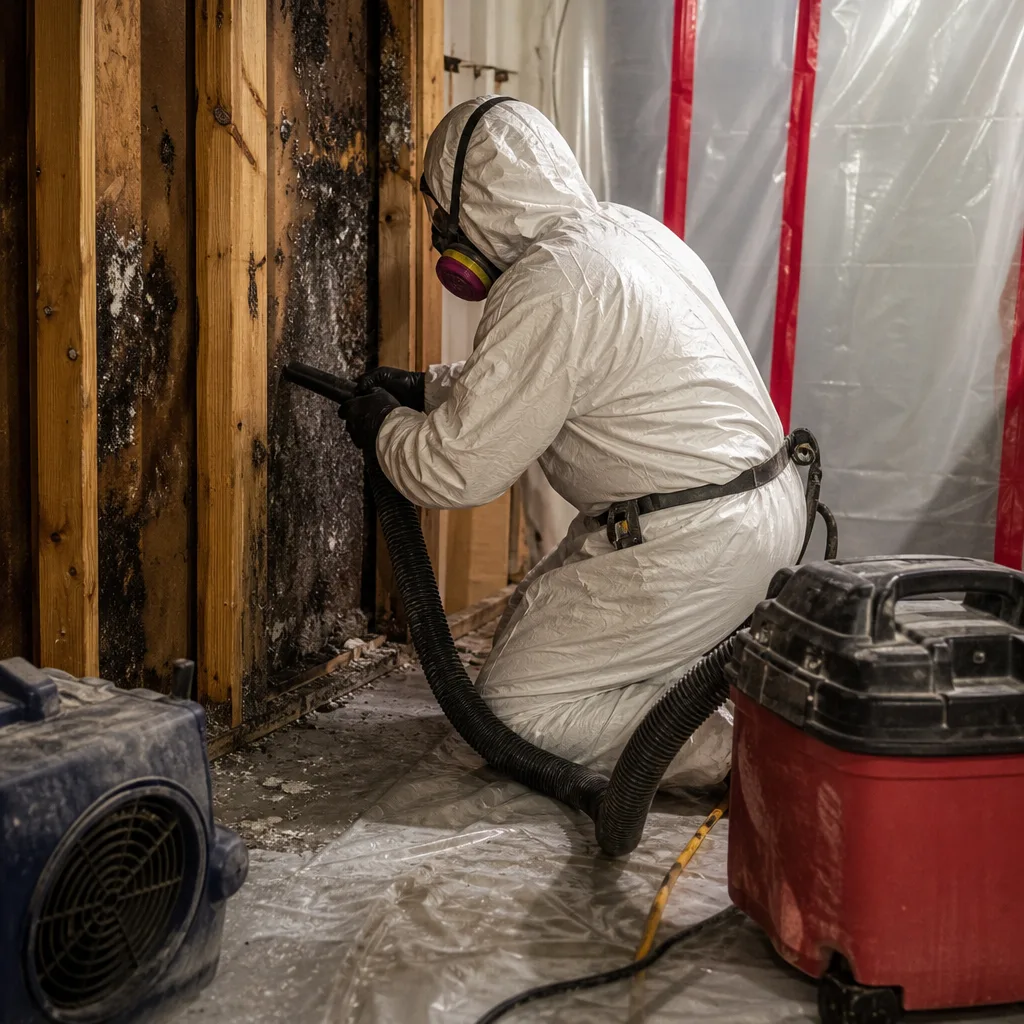
Affected surfaces are HEPA-vacuumed and treated with EPA-registered antimicrobials. For LPC-protected plaster, we clean in place rather than cutting, preserving original material wherever the moisture profile allows.
Containment & Air Scrubbing
We set up negative-air containment with HEPA air scrubbers to prevent spore migration into adjacent rooms and neighboring units. In shared party-wall buildings, this protects properties we may not even be able to access yet.
Repairs & Restoration
Once the structure is dry and cleared, we restore surfaces to match the building’s original character, including LPC-compliant plaster repair and in-kind millwork matching. The job isn’t done until the space looks like the loss never happened and the paperwork is in your hand.
Need Emergency Mold Remediation in Greenwich Village Now?
Crews minutes away, answering live 24 hours a day. The sooner we start, the less it costs.
Working With Your Insurance Company
Mold claims live and die on documentation. We start ours in the first hour: photos of the source, moisture readings from every affected room, and a written scope that matches insurance-industry estimating standards. When your carrier assigns an adjuster, we walk them through the loss on site, show them the moisture map, and explain why LPC-mandated plaster preservation affects the remediation plan and the line items. That direct adjuster conversation is the difference between a covered claim and a denied supplement.
We bill your carrier directly for covered work. You approve the scope in writing before anything starts, and you’ll never be asked to front money for a claim we’re already handling. Our 90-Day Done Right Promise applies to every job, mold included. If it’s not done right, we make it right. In writing, no arguing.
What We Provide Your Insurer
- Thorough documentation of the loss
- Photos of all damage, room by room
- Moisture readings and drying logs
- A detailed, line-item scope of work
- Direct coordination with your carrier
Built for Greenwich Village’s Loss Calendar
Greenwich Village has a loss calendar all its own, shaped by pre-war plumbing and a hundred years of cast-iron steam systems. Deep winter is the busiest stretch: January deep freezes burst supply lines in unheated basements and behind exterior walls, especially in Federal-era rowhouses on the west side where original piping still runs against the foundation. Every winter we see steam supply line failures in Village buildings where the radiators were installed before the First World War, and the condensate that leaks inside wall cavities feeds a mold colony nobody sees until spring.
Spring brings a different problem. The far-western blocks of Greenwich Village sit on historically filled Hudson River bottom land with a high water table, and below-grade units there get groundwater seepage after heavy spring rain. Hurricane Sandy left a lasting mark too: basements between West Street and Washington Street still carry residual moisture in old framing years after the storm, and every spring we’re called back to those blocks for mold that resurfaced. Summer thunderstorm flash flooding adds roof drain overflows to the list, and the nor’easter season from September through November closes out the year with wind-driven rain pushing through aging brick and parapet cracks into top-floor units. It’s a predictable calendar, and we schedule around it.
Mold Remediation Across Greenwich Village’s Neighborhoods
The West Village, especially the blocks west of Hudson Street down toward the Hudson, handles groundwater and post-Sandy moisture differently than anywhere else in the neighborhood. Cellars under those early merchant houses and converted warehouses are the most common source of our black mold calls, and the damp air down there travels upward through shared walls. Around Washington Square Park and the North Square blocks, it’s a different story: those grand Federal rowhouses hide steam condensate issues behind ornate plaster, and remediation means preserving that plaster, not cutting it out.
Over near Bleecker and MacDougal, the tenement-era walk-ups with railroad-style apartments give us our most complicated access problems. One mold-contaminated unit usually means two or three adjacent units affected through shared party walls, and coordinating entry across multiple owners and co-op boards adds time before drying even starts. Down by Sheridan Square and the narrow streets around Grove and Bedford, we see a mix of everything: one-family Federal houses, early-twentieth-century elevator buildings, and the occasional cellar apartment carved into what was once a coal bin. Each block has a fingerprint, and our crews know them by name, not just by zip code.
Specialized Mold Remediation Services We Offer in Greenwich Village
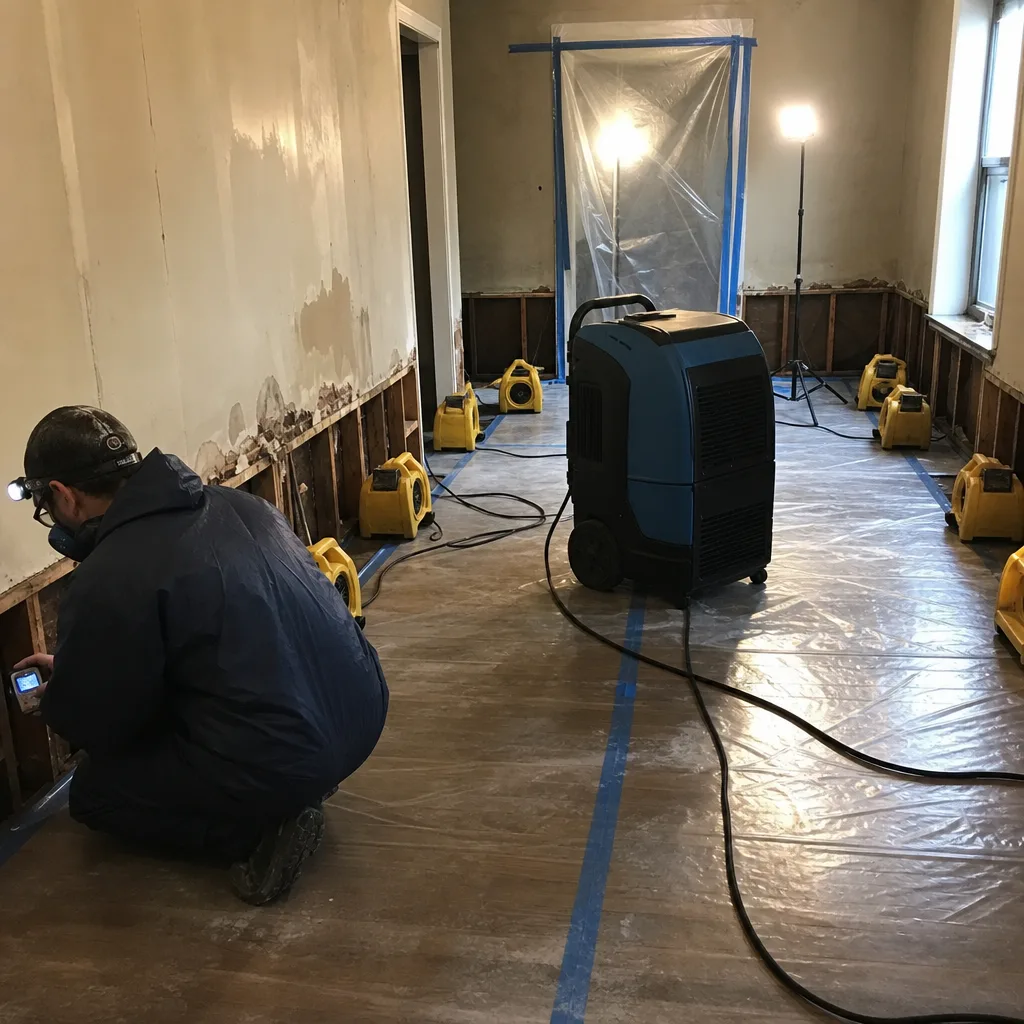
Mold Inspection & Testing
We start every mold job in Greenwich Village the same way: thermal imaging to find moisture you can’t see, air sampling when needed, and surface sampling to identify the species. In a Village rowhouse, the mold you see is rarely the whole story. Our moisture mapping is what tells us that a stain on a Waverly Place parlor wall actually traces back to a leak behind the neighbor’s stair stringer two floors up.
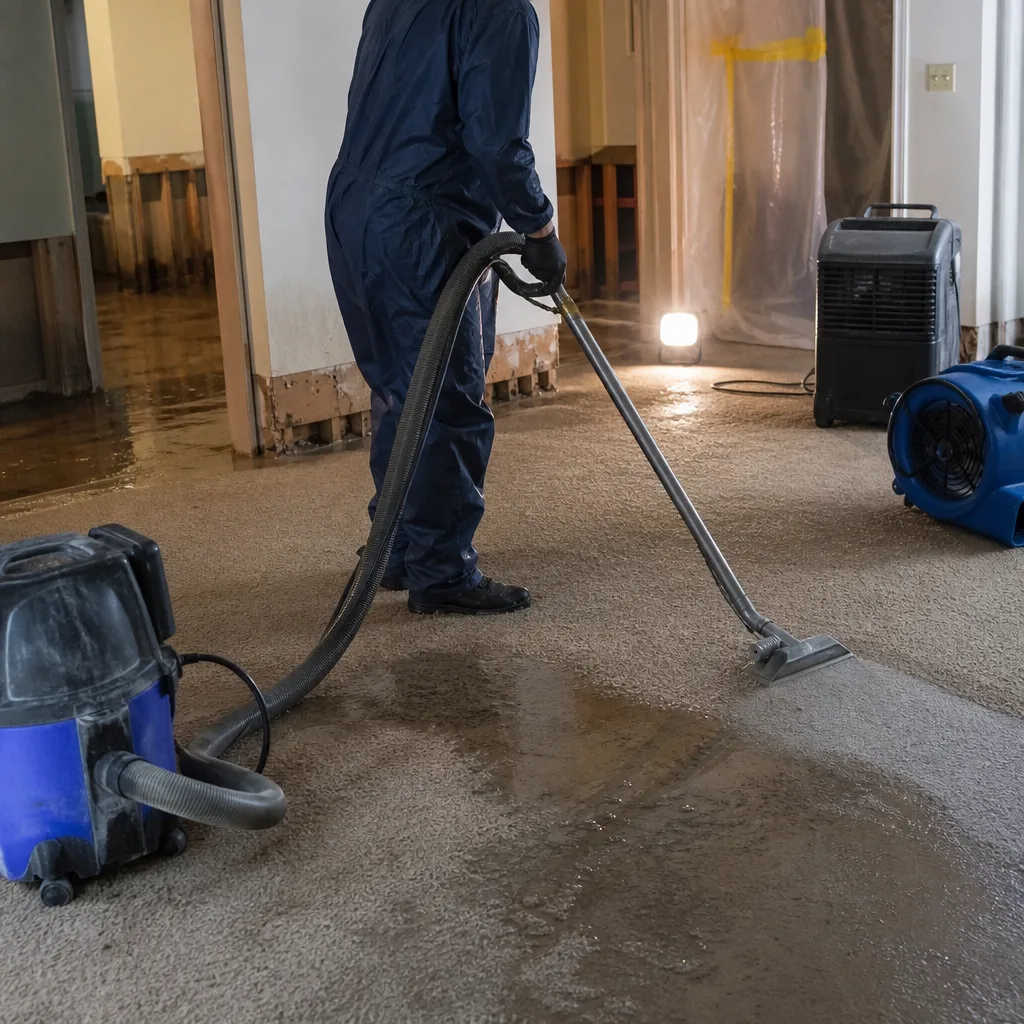
Mold Removal
Physical removal of contaminated material, done under containment. In LPC-protected Greenwich Village properties, we remove only what cannot be saved and clean the rest in place. Our crews are trained in the difference between a plaster surface that can be HEPA-vacuumed and treated versus one that has to come out, which matters when a piece of 1850s wall face is part of the building’s protected fabric.
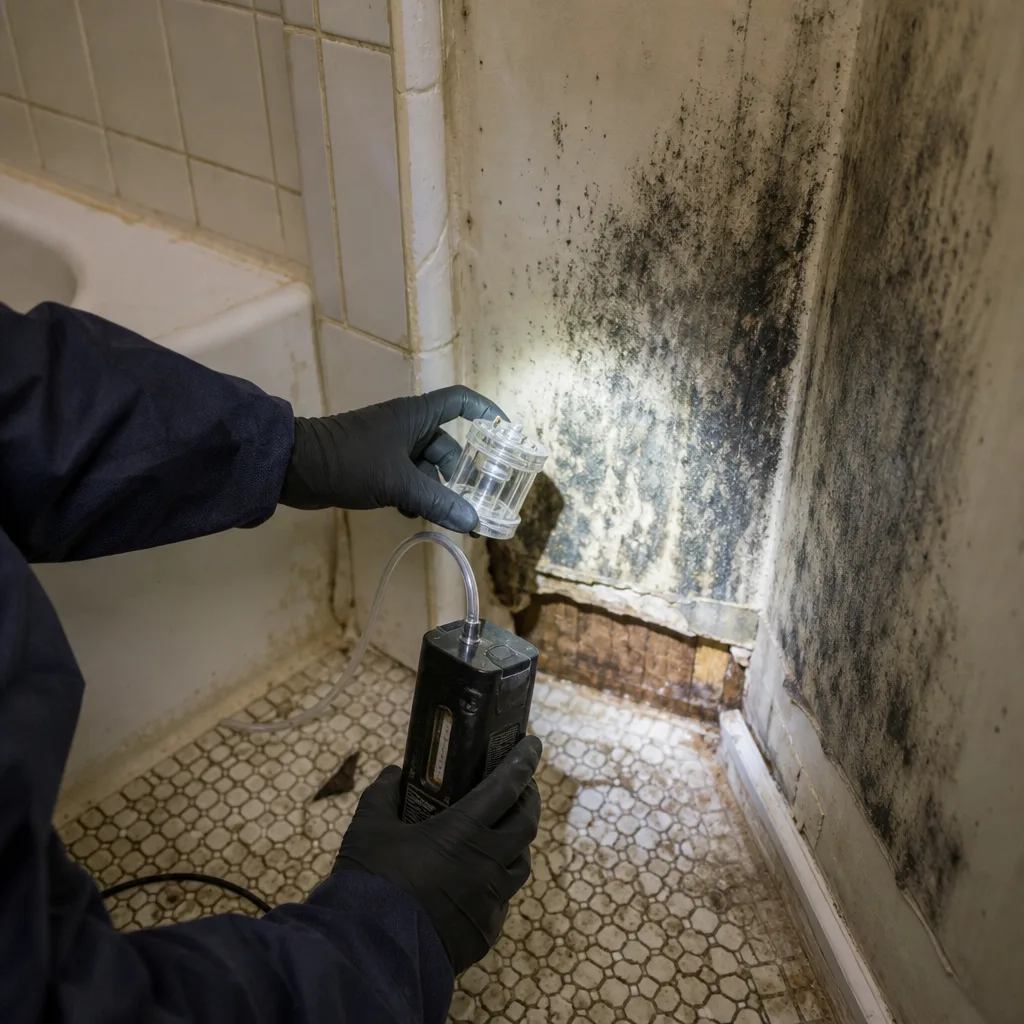
Black Mold Remediation
Black mold, usually Stachybotrys chartarum, calls for full containment, negative air, and aggressive treatment of every porous surface it’s touched. In Village basements near the river, where chronic dampness feeds it for years, we treat the source, not just the stain. That means solving the groundwater intrusion or the steam leak first, then removing and treating every affected surface.
Air Quality Restoration
After remediation, we run HEPA air scrubbers until particle counts and spore counts come down to acceptable levels, then retest. In stacked Village buildings with shared air paths through party walls and common stairwells, air scrubbing is what protects neighbors who never had visible mold at all. We provide the clearance data in writing.
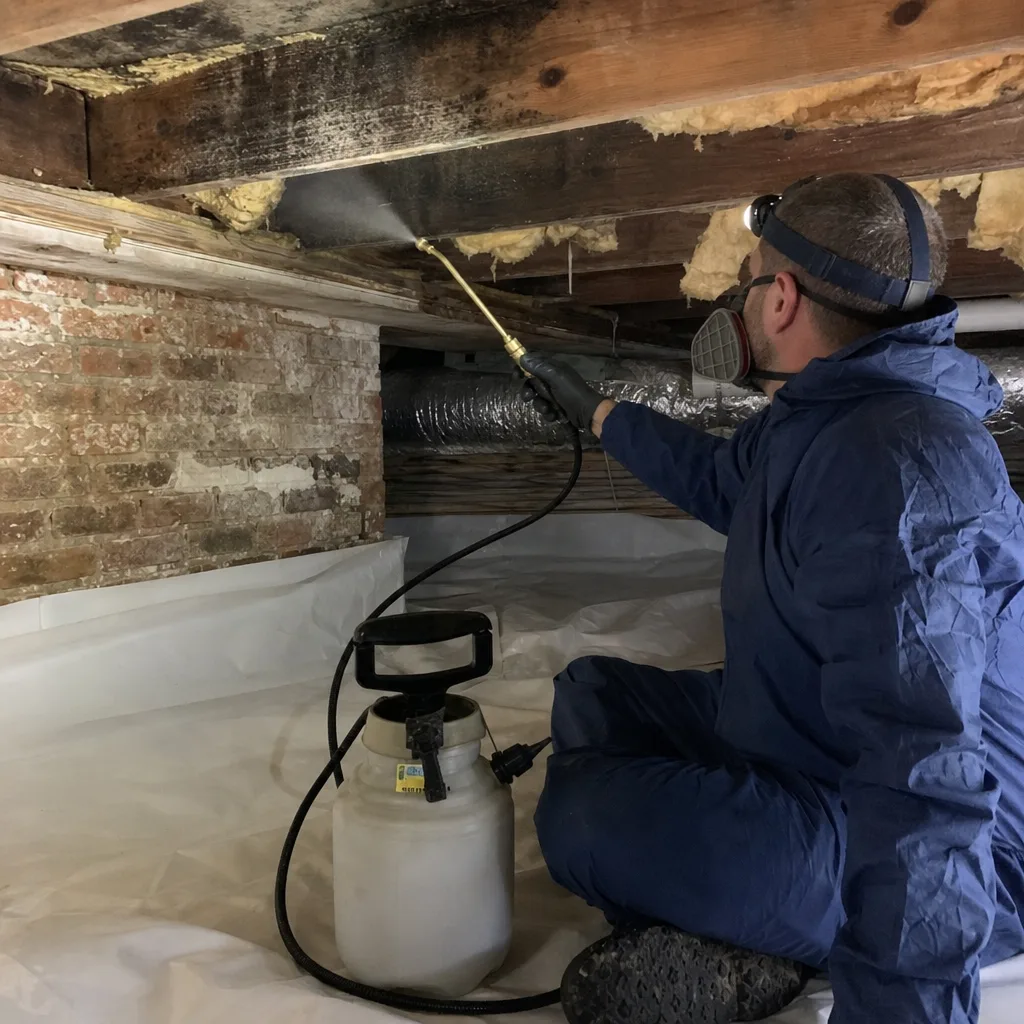
Crawl Space Treatment
Many Greenwich Village rowhouses have shallow crawl spaces under the first floor, often dirt-floored and vented badly or not at all. We treat those as defined moisture zones: seal what should be sealed, remove contaminated material, and install vapor barriers where the moisture source cannot be fully eliminated. Then we dry and log it.
Moisture & Humidity Control
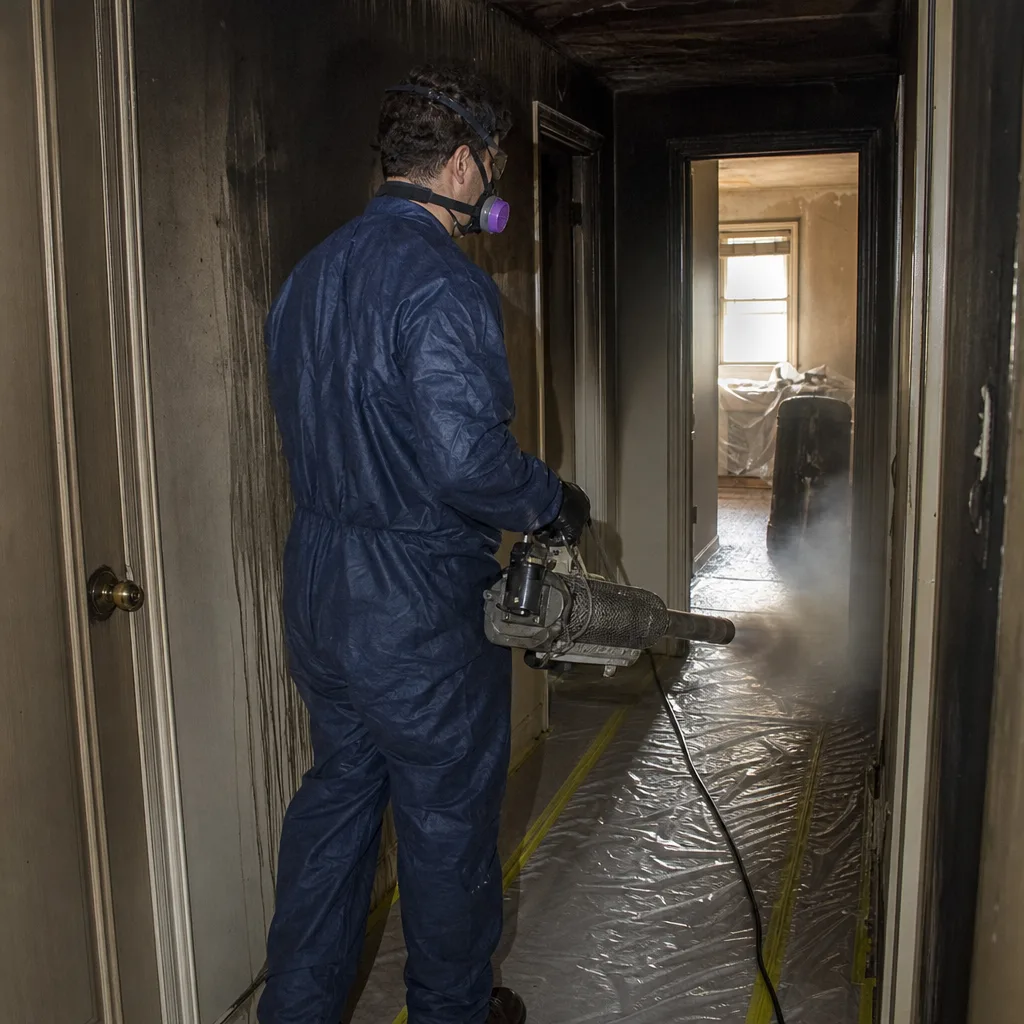
More than half the mold problems in the Village are chronic humidity problems that a one-time cleanup won’t solve. We address the ongoing condition: drainage corrections, dehumidification sizing, ventilation improvements, and recommendations specific to the building’s age and construction. The goal is simple: dry enough that mold can’t come back.
What happens when you call
- 1
A real person answersNo phone trees - you reach a local pro.
- 2
You get an upfront price rangeHonest numbers before anyone is dispatched.
- 3
A background-checked tech heads outLicensed & insured, dispatched right away.
- 4
You approve before work beginsNothing starts until you say go.
Mold Remediation Costs in Greenwich Village, NY
Costs in Greenwich Village run higher than in newer-built parts of Manhattan because the work is slower and the materials are protected. A small isolated patch, say behind a bathroom vanity in a tenement co-op on MacDougal, runs $1,800 to $3,200. A full basement remediation in a west-side rowhouse near the Hudson, with groundwater control, containment, and LPC-compliant plaster restoration, typically lands between $5,000 and $12,000. Black mold in a party-wall cavity that requires access through two or three units pushes toward the high end.
What moves the price: square footage of affected material, whether LPC-protected plaster must be treated in place versus replaced, the water category, and how many units are involved. Insurance covers most mold claims when the moisture source is sudden and accidental, like a burst pipe; long-term seepage is frequently excluded, which is why a free inspection and a straight answer from us beats discovering the exclusion after the fact. We offer $50 off any repair over $250, an $89 seasonal tune-up, and a 5% discount for seniors and veterans, always. Call (917) 924-4221 and we’ll build a written scope before any work begins.
We Also Serve Cities Near Greenwich Village
Our Mold Remediation crews cover the surrounding communities as well, including Fairview, Harrison, East Bronx, and Hunts Point. Each neighborhood has its own housing stock and its own moisture profile, and we bring the same LPC-aware, documentation-heavy approach to every job. If you own property nearby and need a mold assessment, the phone number is the same: (917) 924-4221.
Serving Greenwich Village, NY - Our Local Coverage Area
We’re based in the Greenwich Village area and know this community well. Use the map below to see our service coverage - if you’re nearby, we can almost certainly help.
Greenwich Village Mold Remediation Questions, Answered
How does LPC oversight change mold remediation in Greenwich Village?
It changes the sequence and the materials, not the outcome. When mold is found in a property inside the Greenwich Village Historic District, the Landmarks Preservation Commission requires that original fabric, especially horsehair plaster and old millwork, be preserved wherever possible rather than replaced with modern material. We build our remediation plan around that: controlled drying and antimicrobial treatment before any tear-out, and LPC-compliant restoration after. Call (917) 924-4221 if you’ve been told your plaster has to go, because sometimes that’s not actually true.
Why do mold issues in Greenwich Village rowhouses often spread across multiple properties?
Because the buildings share continuous party walls and floor-to-ceiling structural framing. When water infiltrates one unit, it wicks laterally through plaster, lath, and floor joists into the adjoining building, carrying mold spores with it. Access often requires coordinating across multiple owners or co-op boards, which is why our crews are trained to map moisture across property lines, not just within one apartment. The earlier you call, the fewer neighbors get involved.
What water category is typical for mold from a burst steam pipe in a Village building?
A burst steam supply line produces Category 2 water: contaminated with rust, sediment, and pipe scale, though it starts as clean water. That’s the most common water category we see behind mold in Village rowhouses with cast-iron steam heat. The contaminant load is moderate, but it changes the drying protocol and the treatment requirements.
How quickly can mold start growing on wet plaster in a Village rowhouse?
Within 24 to 48 hours, given the right temperature and moisture level, and Greenwich Village interiors heated by old steam systems provide exactly those conditions. Mold spores are everywhere; the plaster just needs warm, wet, and dark. That’s why we recommend calling the hour you see a stain or smell must, before a small spot becomes a wall cavity problem.
Will remediation disturb original architectural details in a historic Greenwich Village home?
Our default is preservation, not demolition. We clean, dry, and treat in place wherever the moisture profile allows, and we restore damaged plaster with matching material, not a drywall patch. If removal is unavoidable, we document the original fabric and match it in kind so the restoration respects the building’s protected character. LPC compliance is built into our process, not an afterthought.
How fast can a crew reach Greenwich Village?
We commit to 45 minutes for emergency mold calls anywhere in Greenwich Village. A live dispatcher takes your call 24/7, and a certified technician arrives with moisture meters and thermal imaging, ready to start the assessment immediately. No answering services, no callbacks.
Can we stay in the home during mold remediation?
It depends on the size of the affected area and the species involved. A small isolated patch under containment often allows you to stay in the rest of the home. Extensive black mold remediation in a basement or party-wall cavity may require us to recommend temporary relocation while air scrubbers run. We’ll tell you the truth from the first inspection, and we’ll document our recommendation in writing.
What should I do in the first 30 minutes after finding mold in Greenwich Village?
Stop the water source if you can safely do it, like closing a supply valve or shutting off the steam riser. Don’t disturb the mold, don’t spray bleach on it, and don’t start tearing out material yourself, especially in an LPC-protected building where improper removal creates bigger problems. Call (917) 924-4221 and we’ll have a technician on the phone and on the way, with free visual inspection and moisture mapping to start the claim the right way.
Written by Curt Bowman, Owner at Floodline Restoration Co. of Manhattan, serving Greenwich Village and the surrounding New York City area since 2010.