
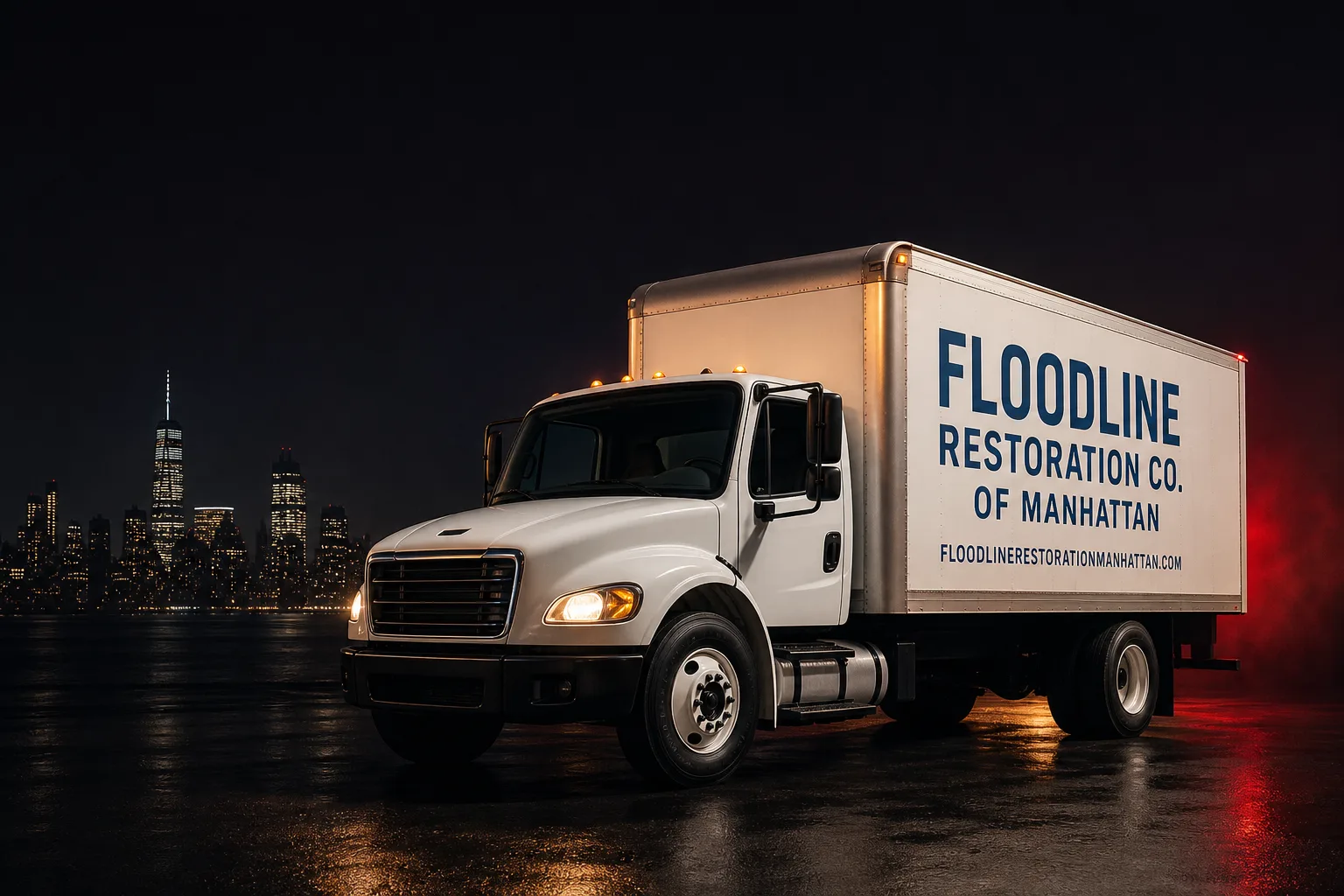
Free visual inspection and a written scope of work before any mitigation begins - photos, moisture readings, and drying logs go in your claim file
The scope we write is the scope we bill. Anything new gets shown to you, in writing, before we touch it.
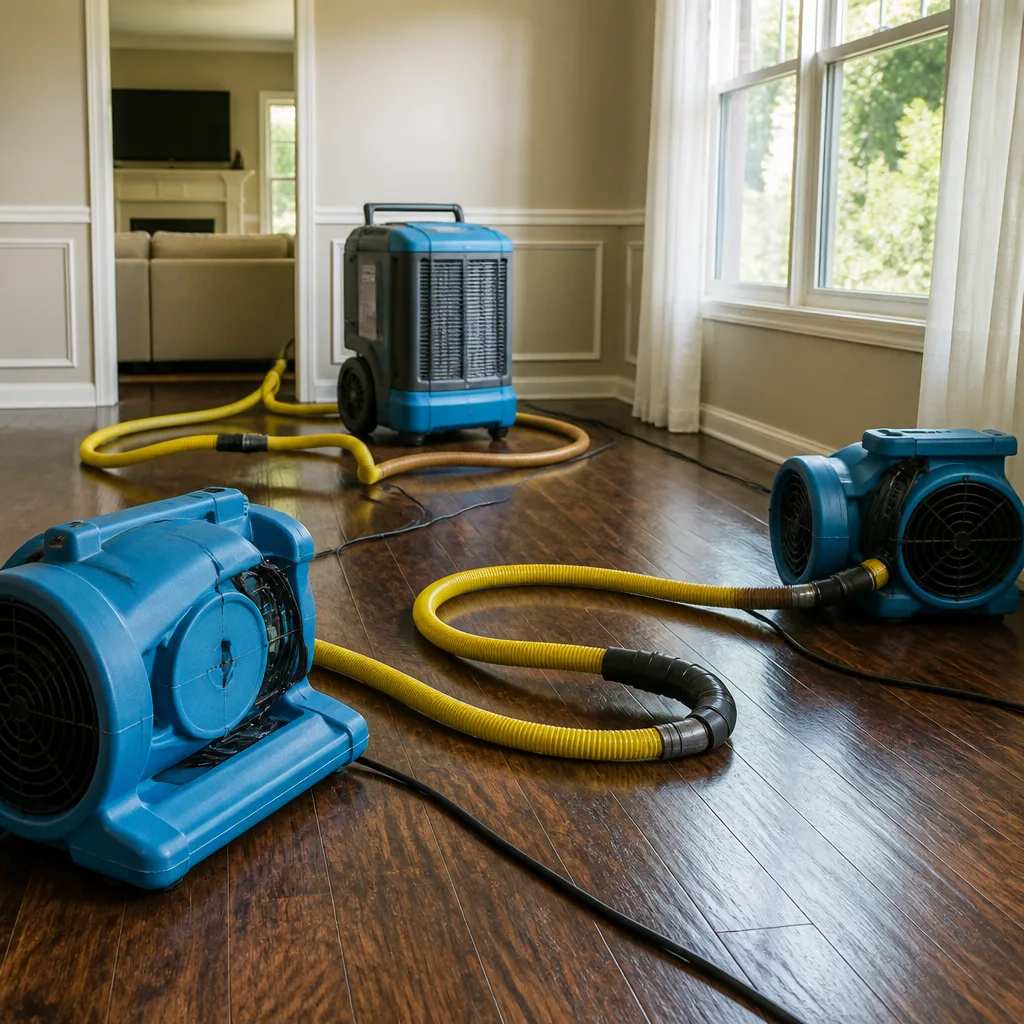
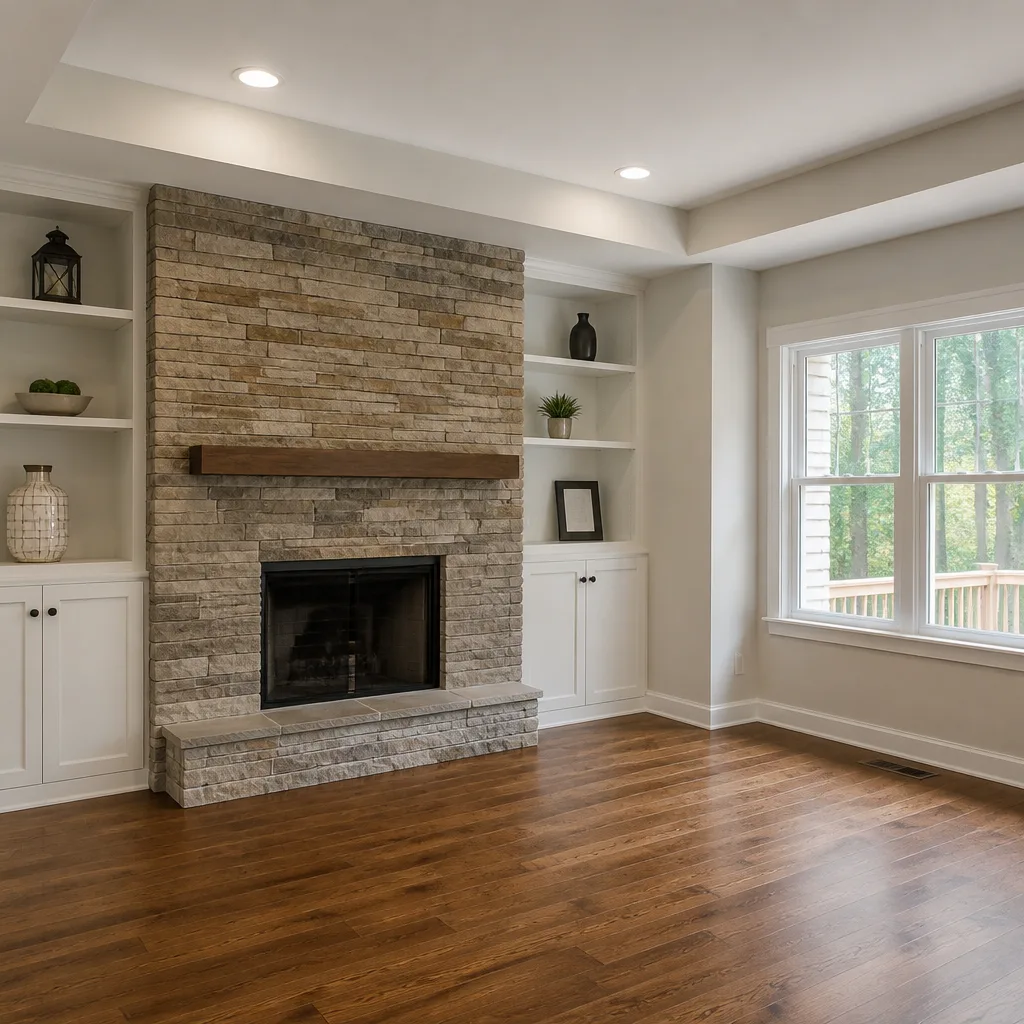
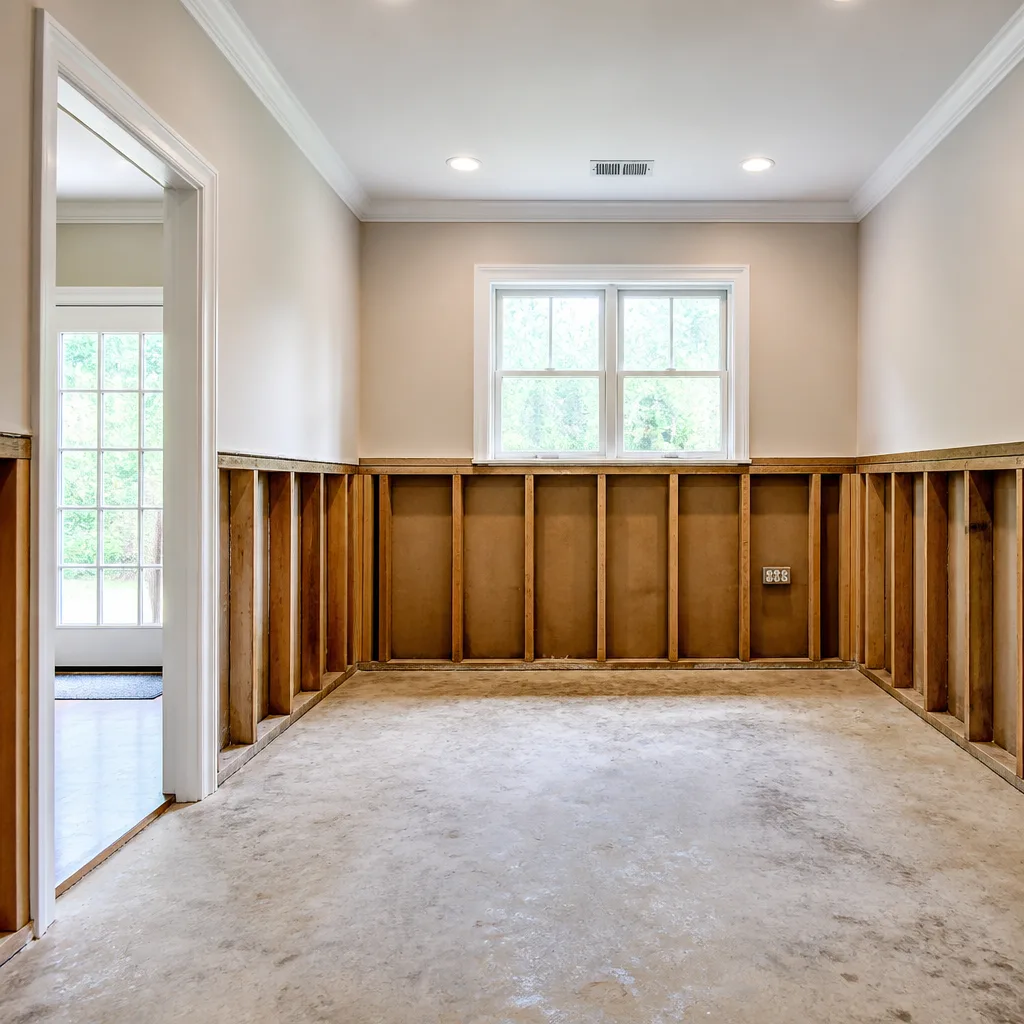
 Before
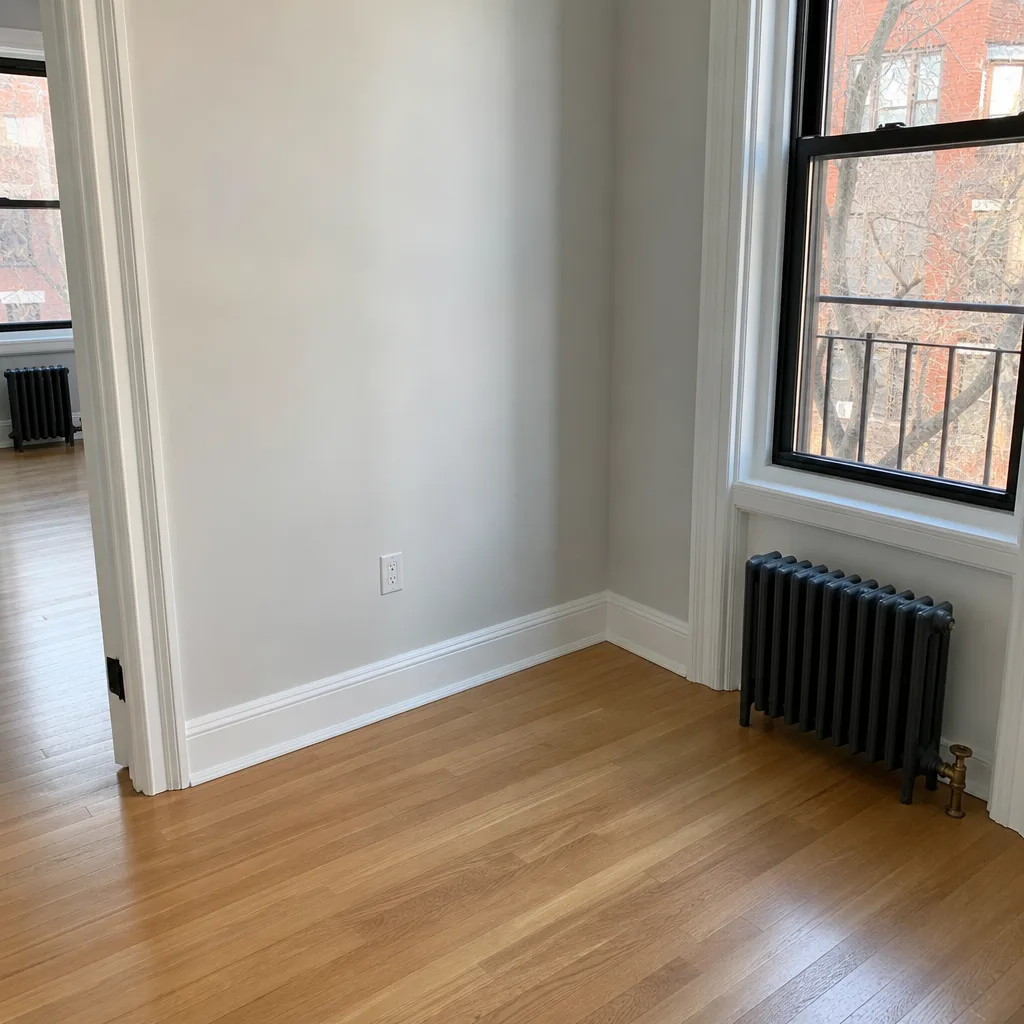 After
After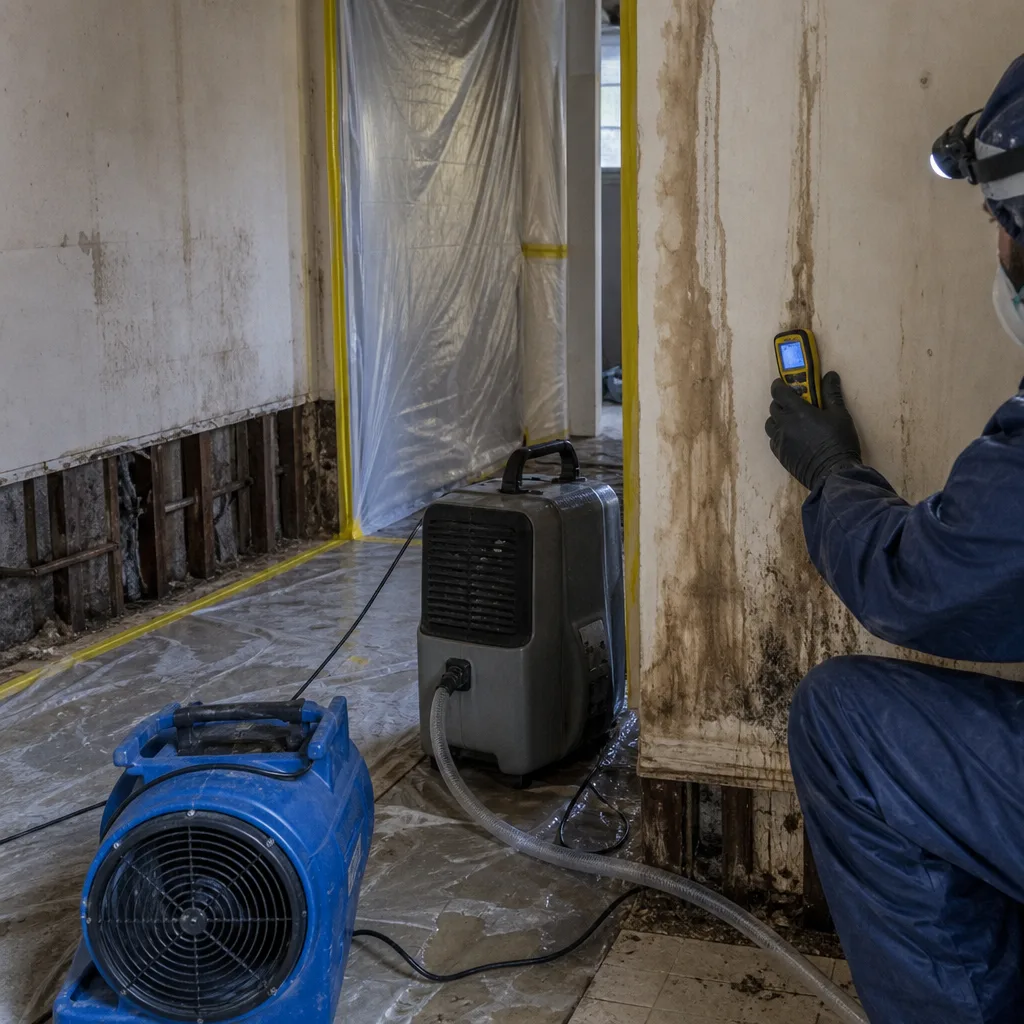 Before
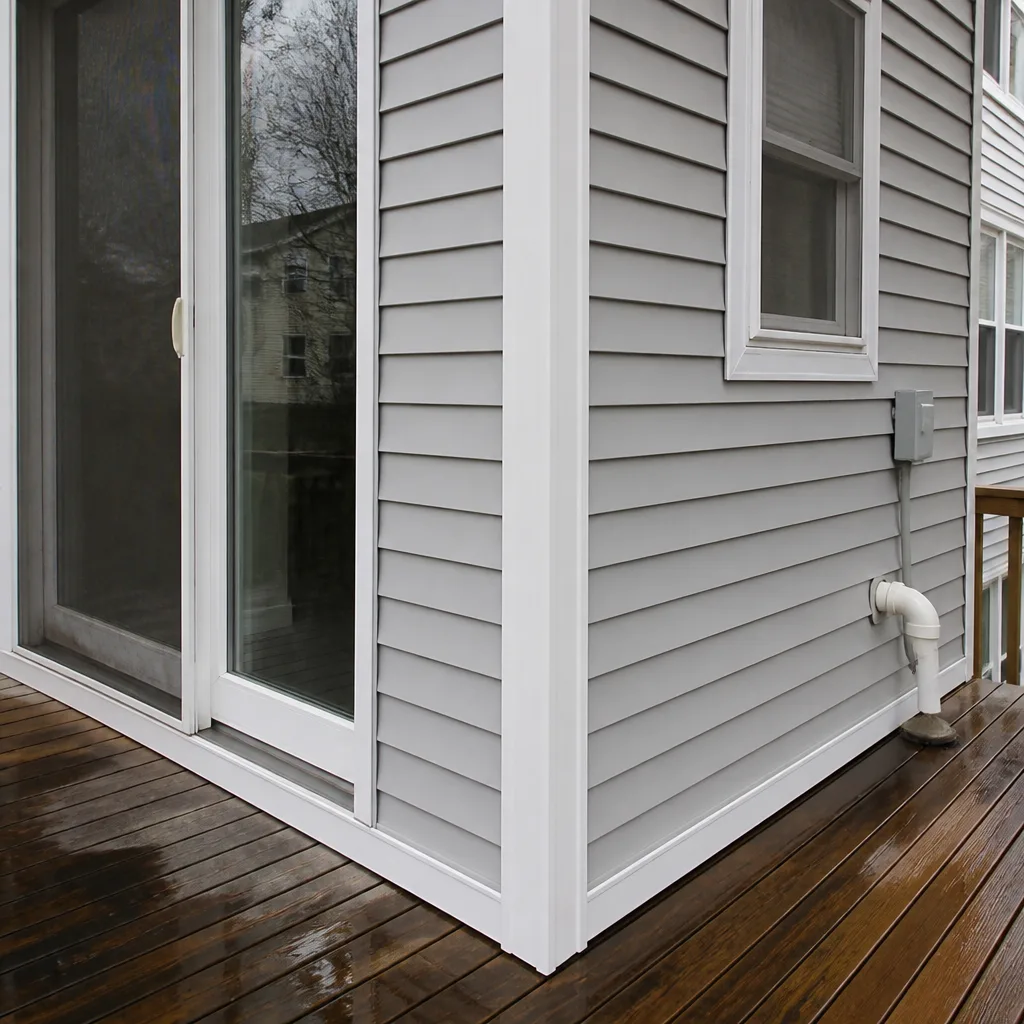 After
After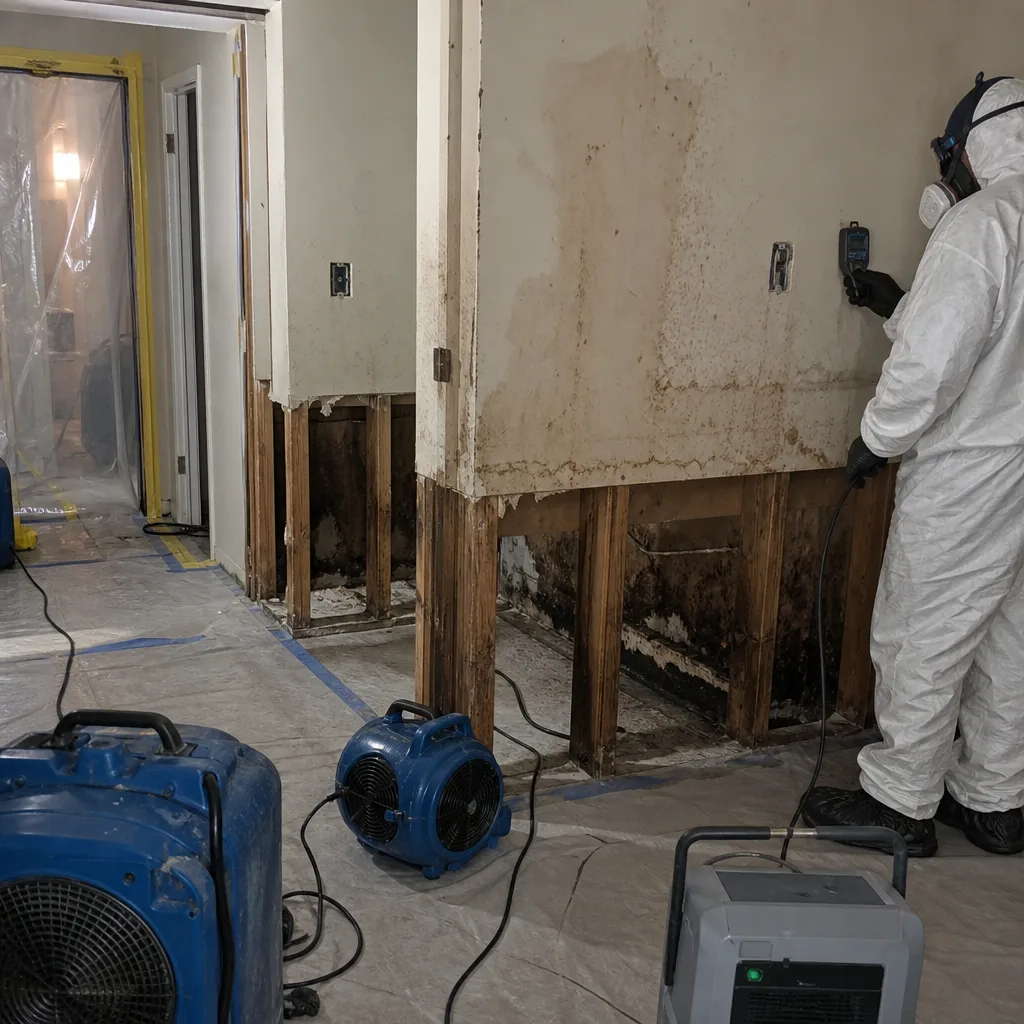 Before
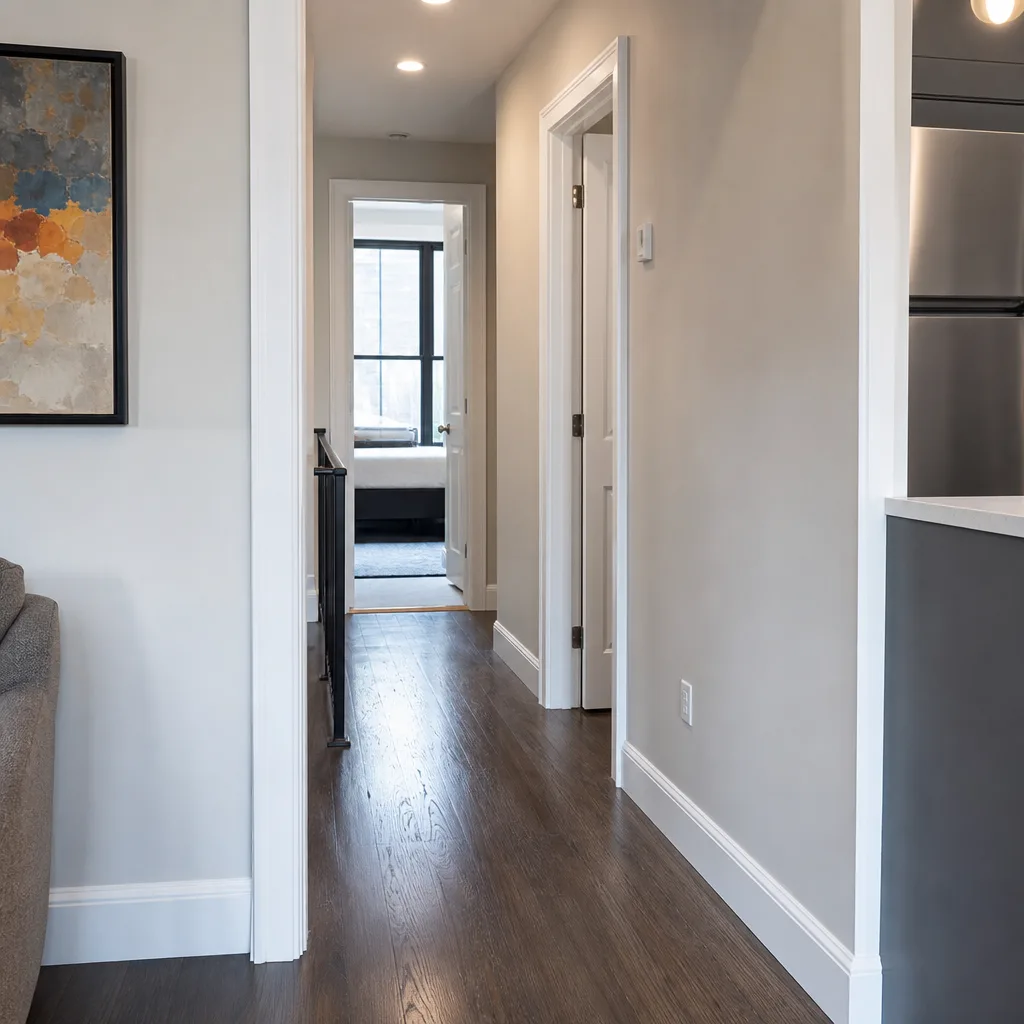 After
After24/7 Emergency Commercial Restoration in Greenwich Village
Commercial restoration in Greenwich Village means something different than it does almost anywhere else in New York. The building you operate out of likely predates modern plumbing, modern electrical, and the Landmarks Preservation Commission itself. When a cast-iron steam line lets go in a 1840s rowhouse on Bleecker Street, water doesn’t just pool on the floor. It wicks through horsehair plaster, travels along shared party walls, and finds its way into the co-op next door. We answer live 24 hours a day at (917) 924-4221, and our crews reach Greenwich Village addresses fast enough to stop that spread before it crosses another property line. The first hour decides whether you’re drying one room or coordinating access across three owners. We’ll get there. And we’ll bring the moisture meters, the Phoenix dehumidifiers, and the paperwork the LPC will eventually want to see.
Understanding Commercial Restoration Severity in Greenwich Village Properties
Severity in this neighborhood isn’t just about how much water or fire damage you can see. It’s about what’s behind the walls, under the floors, and on the other side of the party wall. Greenwich Village commercial spaces occupy Federal, Greek Revival, and Italianate rowhouses from the 1820s through the 1890s, plus early-20th-century tenements. The horsehair plaster in these buildings behaves differently than modern drywall. It holds moisture longer, wicks it laterally, and cannot simply be cut out and replaced without triggering Landmarks Preservation Commission review. A Category 2 water loss from a burst steam supply line, the kind we see repeatedly in these cast-iron heating systems, requires moisture mapping that extends through party walls into adjacent properties. We run daily readings with hygrometers and thermal imaging until the dry standard is met, not the visual standard. Fire damage carries its own complication: protein soot from old varnish, oil-based paints, and decades of beeswax floor finishes behaves differently than the synthetic residues from modern finishes. Mold in below-grade commercial units on the Hudson-facing blocks gets exacerbated by the high water table and residual moisture from Hurricane Sandy. Severity here is a function of age, shared walls, and LPC-regulated materials.
Why Greenwich Village Property Owners Choose Floodline Restoration Co. of Manhattan
- 45-minute response commitment for Greenwich Village addresses. We dispatch from the New York City office with crews who know the Village’s one-way streets, and we answer the phone with a person, not a recording.
- Live answer at 2 a.m. A dispatcher picks up at any hour, every day. You’ll never reach voicemail when a pipe bursts at midnight.
- IICRC-certified crews. Our technicians hold WRT, FSRT, and AMRT certifications. They’ve worked in horsehair plaster buildings before, which matters more than any credential alone.
- Free visual inspection. Before we touch anything, we walk the space and explain what we’re seeing. You’ll know what the job involves before we start it.
- Direct insurance billing. We document everything from the first hour, communicate directly with your adjuster, and bill the carrier when coverage applies. You’re not our courier.
- One team from extraction to finish. The same certified crew that sets up drying equipment on day one handles the daily readings and the final reconstruction. No mid-job handoff.
We’ve been doing this work under the Floodline Restoration Co. name since 2010, founded by Curt Bowman around a dispatch board, not a sales desk. Every job is backed by the 90-Day Done Right Promise, our Keystone Standard: if it’s not done right, we make it right. In writing. No arguing.
Our Commercial Restoration Process
Inspection & Assessment
We arrive, we walk the space with you, and we map every affected surface. In Greenwich Village commercial spaces this means checking party walls, floor cavities, and the basement. We photograph what we find before we move anything. You get a written scope, and if the building is LPC-regulated, we note which materials will require in-kind matching.
Extraction & Stabilization
We remove standing water using truck-mounted extraction and set up containment if we’re dealing with mold or sewage. In a storefront or office, we’ll also triage inventory and documents, separating what can be restored from what has to be replaced. Speed here prevents secondary damage.
Drying & Dehumidification
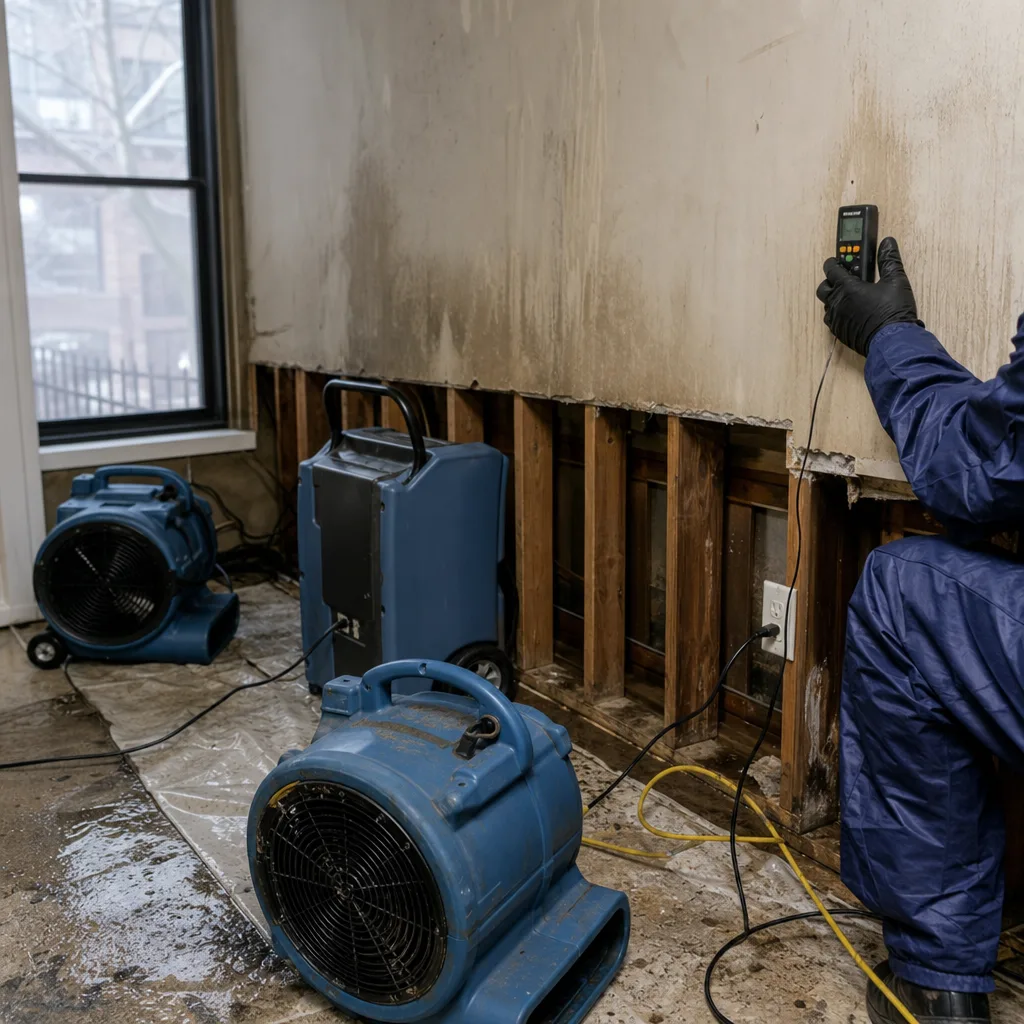
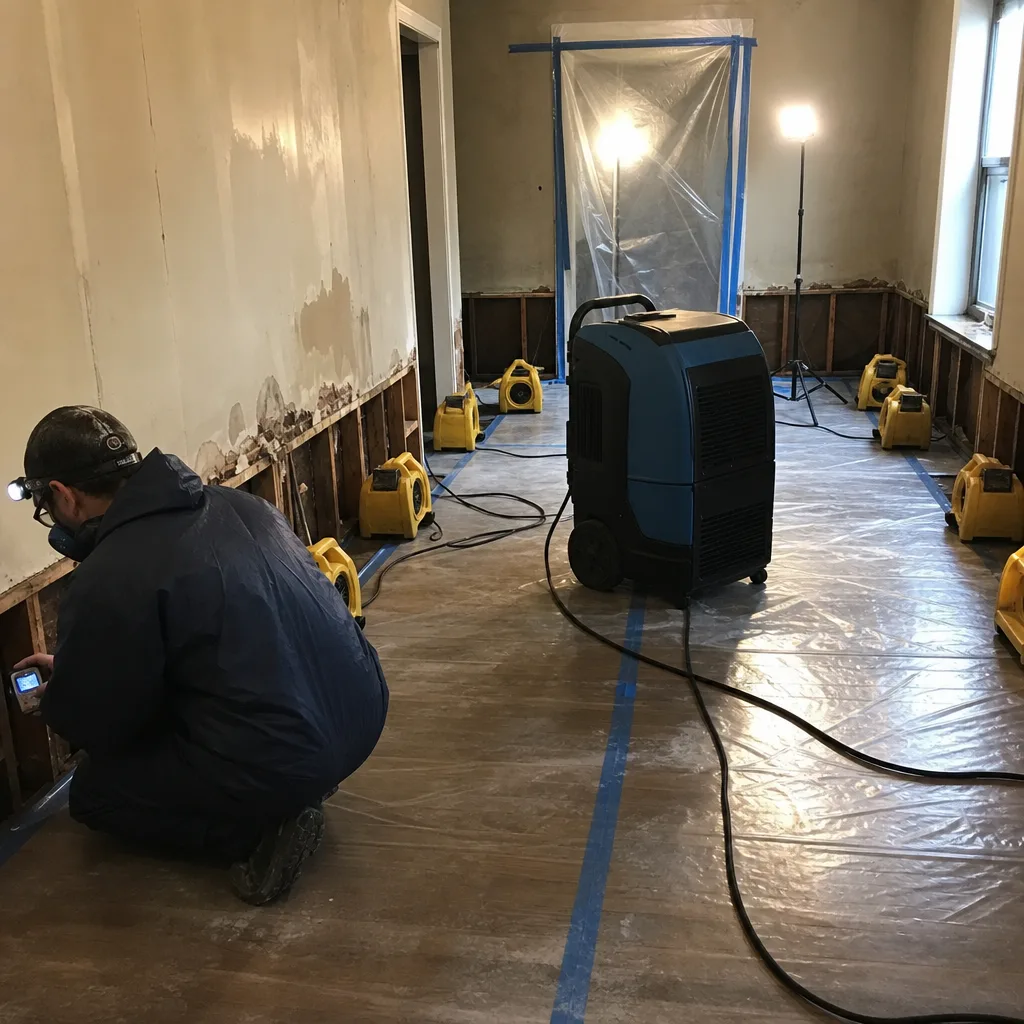
We place Phoenix dehumidifiers and Dri-Eaz air movers according to the moisture map, not by guesswork. Readings are taken daily and logged. In shared-wall buildings we extend monitoring into adjacent units when moisture has traveled across the property line. We don’t declare a space dry until the numbers say so.
Cleaning & Sanitization
We clean surfaces with HEPA filtration where needed and use appropriate antimicrobials for affected materials. For commercial spaces with document and inventory recovery needs, we coordinate freeze-drying and content cleaning without removing items from the building unless you approve it.
Specialty Treatment for Commercial Restoration
This includes lead-paint-safe work practices for pre-1978 buildings, cast-iron pipe repair or replacement when steam heating lines fail, and in-kind plaster and millwork restoration that satisfies LPC requirements. We do not swap original plaster for drywall in a Historic District without a variance, because that’s how stop-work orders happen.
Repairs & Restoration
We rebuild what needs rebuilding: plaster, millwork, flooring, mechanicals. The same crew has been on the job since day one, so the moisture log we hand you at the end tells one continuous story. Your carrier gets a copy, and the 90-Day Done Right Promise covers the result.
Need Emergency Commercial Restoration in Greenwich Village Now?
Crews minutes away, answering live 24 hours a day. The sooner we start, the less it costs.
Working With Your Insurance Company
We’ve handled enough commercial claims in Greenwich Village to know that adjusters respond to documentation, not phone calls. From the first hour, we photograph room by room. We log moisture readings daily. We write a line-item scope of work that your carrier can process without follow-up questions. When the LPC is involved because the building is in the Historic District, we document the in-kind materials requirement so your claim reflects the true cost of compliant restoration, not the cost of a drywall patch that would get you a stop-work order. Curt Bowman’s team coordinates directly with your adjuster. You focus on your business.
What We Provide Your Insurer
- Thorough documentation of the loss
- Photos of all damage, room by room
- Moisture readings and drying logs
- A detailed, line-item scope of work
- Direct coordination with your carrier
Built for Greenwich Village’s Loss Calendar
Commercial losses in Greenwich Village follow a rhythm if you know what to look for. January deep freezes push cast-iron radiator supply lines to failure, especially in pre-war buildings where insulation was never designed for sustained cold. March and April bring thaw and rain against the high water table along Hudson Street and Washington Street, flooding basement-level offices and cellar mechanical rooms. Summer thunderstorms overwhelm flat-roof drains on aging rowhouses, sending water down interior walls and into stacked railroad-style apartments. Nor’easters in the fall do the same, with wind-driven rain finding every loose mortar joint. The buildings don’t change, but the water keeps coming. Our crews know which blocks flood first, which basements hold residual moisture from Hurricane Sandy, and which party walls need monitoring when the unit next door goes wet. That local knowledge shortens every job.
Commercial Restoration Across Greenwich Village’s Neighborhoods
Greenwich Village is small geographically, but its commercial spaces differ block by block. Along Bleecker Street, the storefronts are narrow, deep, and stacked above basement-level prep areas that flood when the water table rises. On Hudson Street, the commercial buildings sit on historically filled land, and below-grade units we’ve restored have shown groundwater intrusion patterns that go back decades. Around Washington Square, the office conversions in former Federal rowhouses carry original millwork that the LPC will not let us replace with modern equivalents. Over in the West Village, the stretch near the Meatpacking District has early-20th-century loft buildings with open floor plates, where smoke migration travels fast through open spaces. And along the side streets off Seventh Avenue South, the tenement-era buildings have shared party walls so continuous that water from one storefront’s burst pipe will present in the office two doors down. We dispatch crews who know these distinctions.
Specialized Commercial Restoration Services We Offer in Greenwich Village
Office & Retail Restoration
When a shop on Bleecker Street takes water at 6 a.m. from a failed steam line, the owner is thinking about lost sales, not just lost drywall. We prioritize reopening speed without cutting corners on drying. That means setting up containment, running structural drying overnight, and sequencing repairs so the retail floor comes back first. We’ve reopened Greenwich Village storefronts in as few as nine days after a Category 2 loss.
Multi-Unit & HOA Restoration
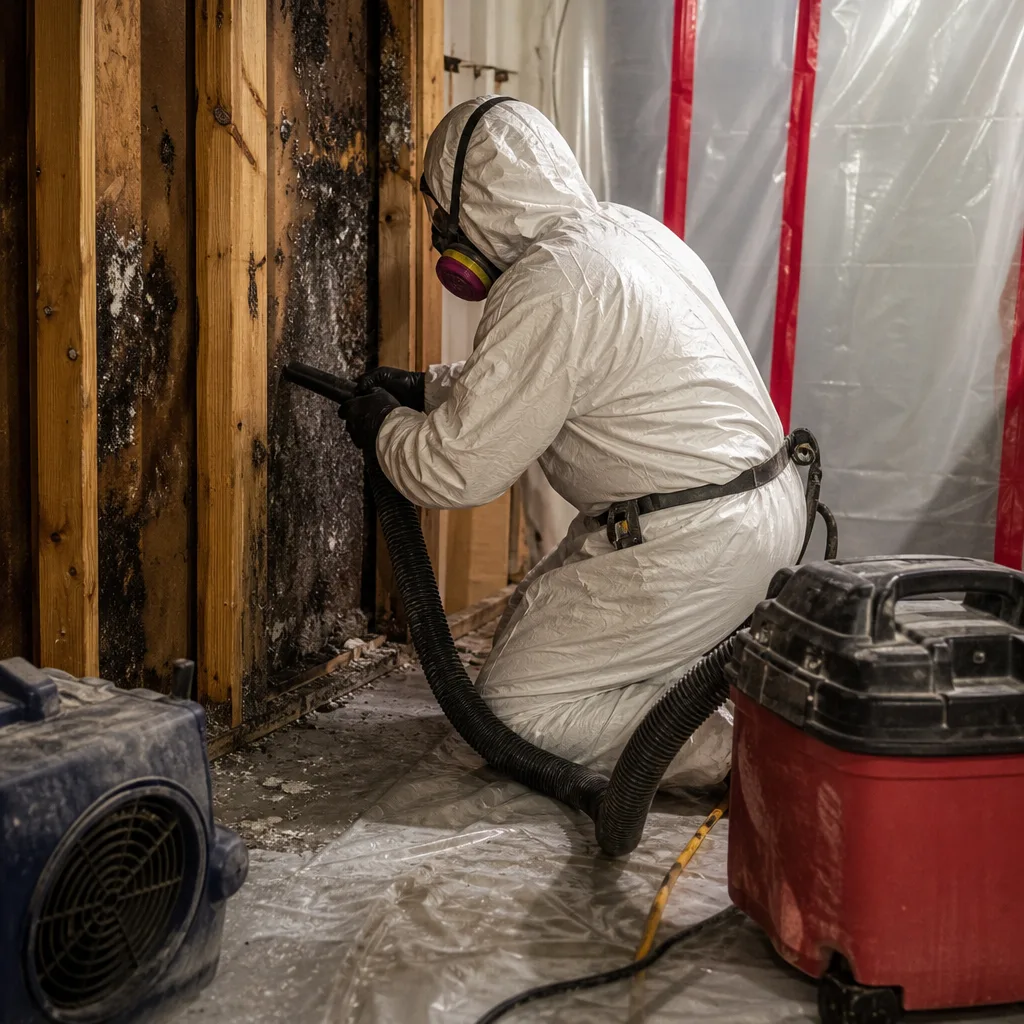
This is the most complicated work we do in the Village, and the most common. A single burst pipe in one co-op unit will wick through a party wall into two or three adjoining properties. Access requires coordination with multiple owners, managing agents, and sometimes a co-op board. We run moisture mapping across every affected unit, document what we find, and produce one integrated drying log. Boards appreciate the single point of contact.
Industrial Facility Cleanup
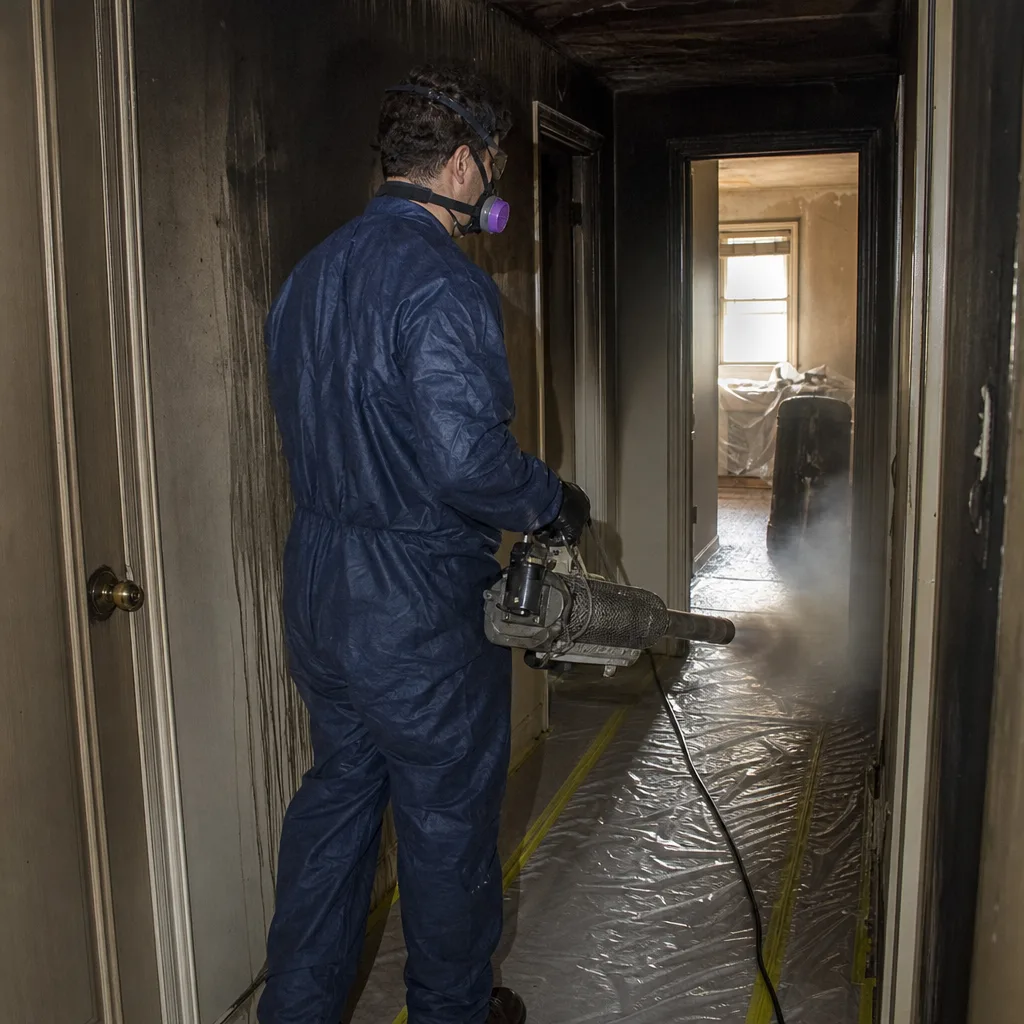
While Greenwich Village isn’t known for heavy industry, the few surviving loft buildings and service spaces along the Hudson require a different approach. We’ve handled bulk-water extraction in these large open spaces, where the challenge is square footage and air movement. XPOWER air movers and Phoenix dehumidifiers get positioned according to a moisture map, not scattered at random.
Large-Loss Response
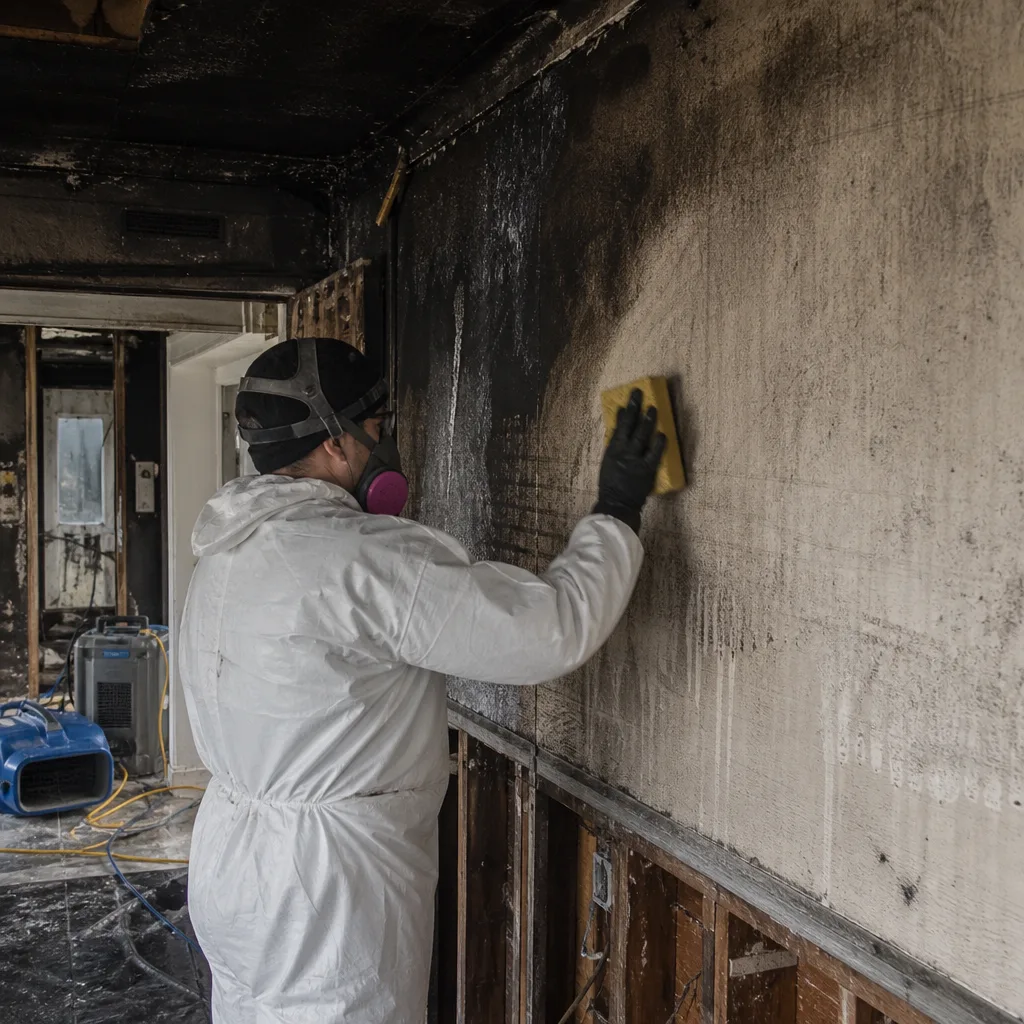
When a roof drain fails on a full rowhouse converted to commercial use, every floor gets involved. We bring additional crews, additional equipment, and a project manager who stays on site. The documented scope of work gets split by trade, and we handle the insurance carrier communication from day one.
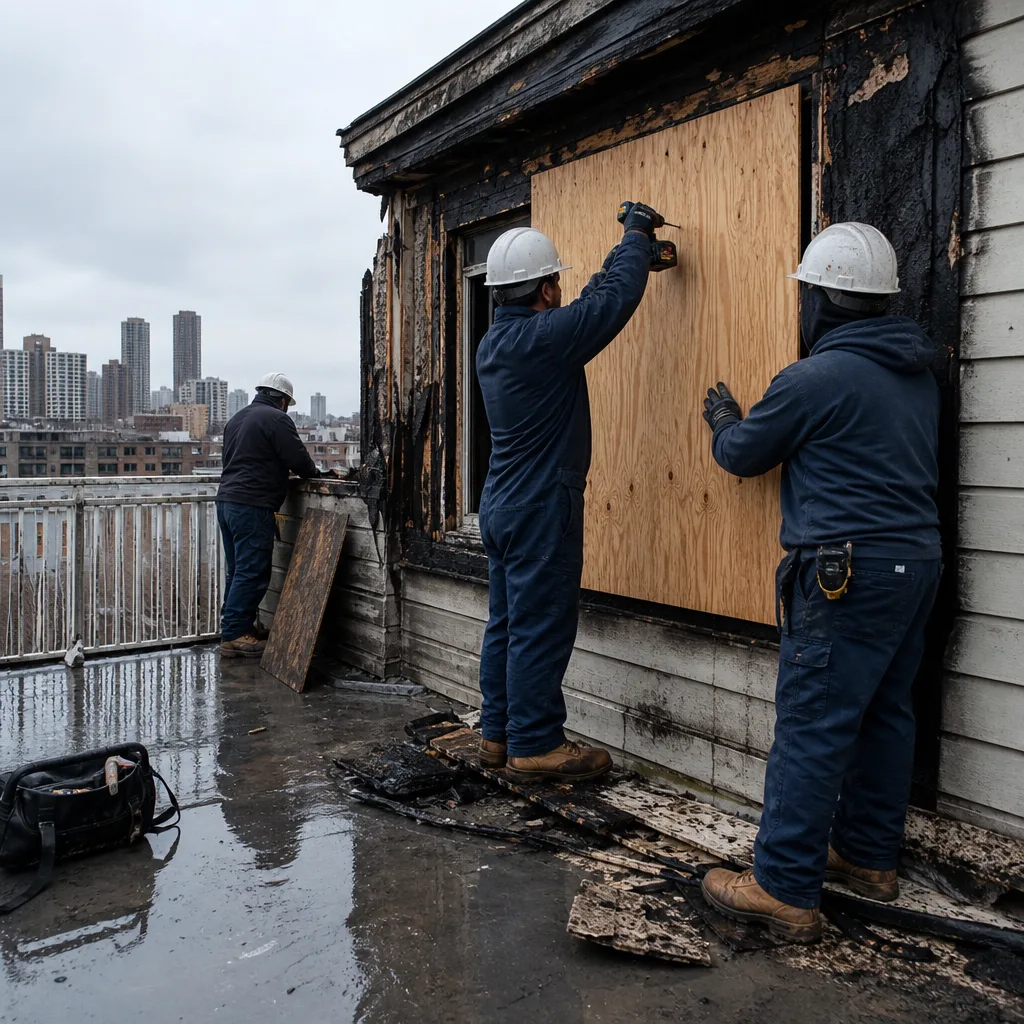
Business Interruption Minimization
The true cost of a Greenwich Village commercial loss is rarely the repair bill alone. It’s the weeks your shop or office is dark. Our Commercial Restoration team sequences work to reopen revenue-producing areas first while repairs continue in the back. We’ll give you a realistic timeline in writing before work starts, and we’ll hold to it under the 90-Day Done Right Promise.
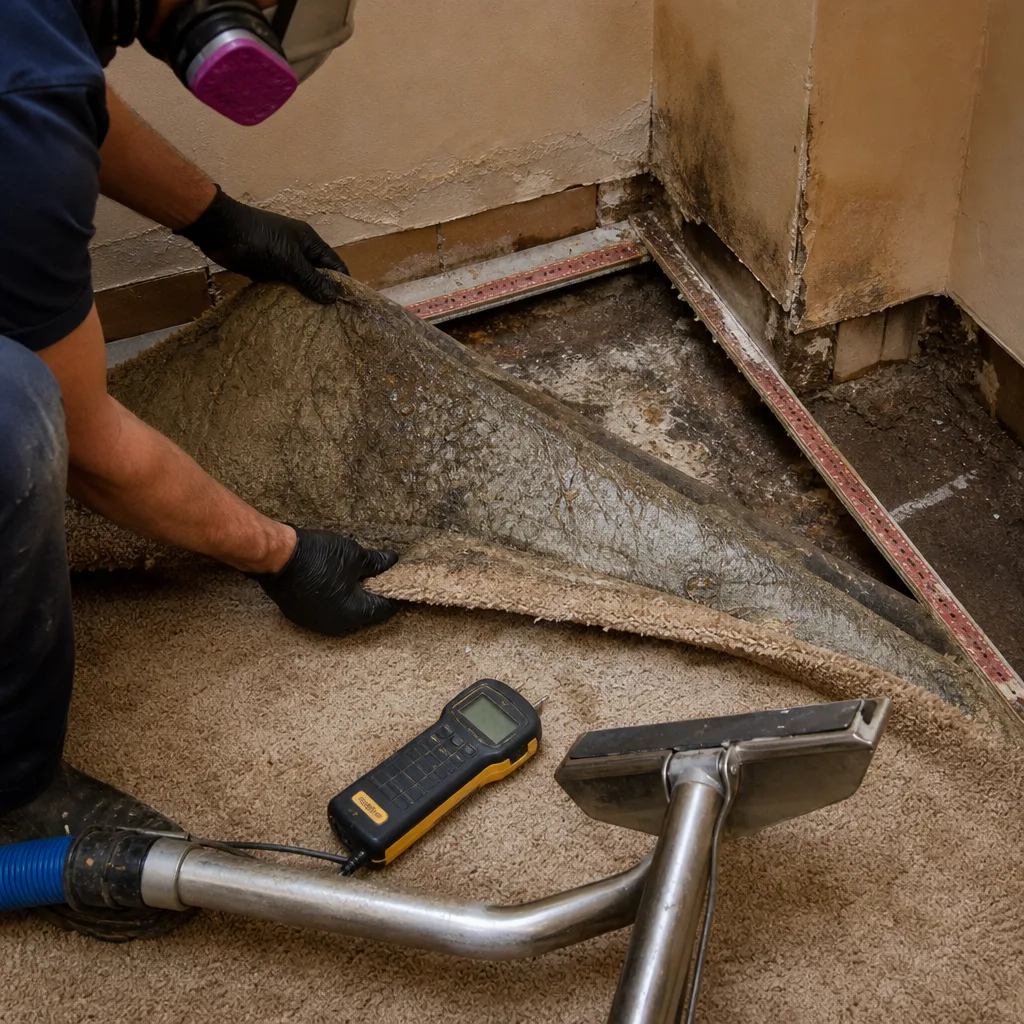
Document & Inventory Recovery
Printed inventory, paper files, original artwork, legal documents: all of it takes water damage in a flood. We coordinate content cleaning, freeze-drying, and restoration on site when possible. For a Greenwich Village bookstore we served, this meant triaging thousands of volumes, separating salvageable stock from the unsalvageable, and documenting everything for the claim. Nothing left the building without the owner’s approval.
What happens when you call
- 1
A real person answersNo phone trees - you reach a local pro.
- 2
You get an upfront price rangeHonest numbers before anyone is dispatched.
- 3
A background-checked tech heads outLicensed & insured, dispatched right away.
- 4
You approve before work beginsNothing starts until you say go.
Commercial Restoration Costs in Greenwich Village, NY
A typical commercial water restoration job in Greenwich Village runs $3,200 to $9,500 for a single-unit Category 2 loss with drying and minor content cleaning. When the loss crosses party walls into adjacent co-op units, the total commonly reaches $12,000 to $28,000. Fire damage restoration with smoke remediation and millwork restoration runs $8,000 to $45,000 depending on square footage and LPC-required materials. Mold remediation with full containment and clearance testing in a basement-level commercial unit runs $4,500 to $15,000, with the higher end reflecting repeated moisture issues on Hudson-facing blocks. What moves the price in Greenwich Village specifically: in-kind plaster and millwork materials, LPC review timelines, party-wall access coordination across multiple owners, and whether the loss predates any unresolved Hurricane Sandy moisture. The free visual inspection gives you a firm written scope before anything is spent. Coverage depends on your policy, but most commercial policies in New York respond to sudden and accidental water discharge, and we bill the carrier direct.
We Also Serve Cities Near Greenwich Village
Our crews dispatch throughout the surrounding area. We regularly handle commercial restoration in Fairview, Harrison, East Bronx, and Hunts Point, carrying the same live answer, still using the same equipment, and still standing behind the 90-Day Done Right Promise. If you own property in Greenwich Village and nearby, one phone call covers both.
Greenwich Village Commercial Restoration Questions, Answered
Does the Landmarks Preservation Commission really require in-kind plaster repair in Greenwich Village commercial spaces?
Yes. If your building is inside the Greenwich Village Historic District, the LPC requires damaged horsehair plaster to be repaired or replaced with plaster, not drywall, unless you secure a variance. Crews who patch with drywall without LPC review can trigger a stop-work order and a forced reversal. We document in-kind materials from the start so you never end up paying twice. Call (917) 924-4221 for an exact quote.
How do you handle water damage that spreads through shared party walls in a Village rowhouse with multiple co-op owners?
We map moisture beyond the walls, not just inside the unit where the loss happened. In a shared-party-wall rowhouse, water from one burst steam line will travel laterally into two or three adjacent units. We coordinate access with each owner and any co-op board, run moisture readings through every affected wall, and produce one integrated drying log for all parties and the insurance carrier. This is routine work for us, and it’s why we keep the same crew on from day one to final reading.
Can you clean and restore paper documents and inventory in a flooded Greenwich Village shop without removing them from the building?
In most cases, yes. We triage on site, separate salvageable documents and inventory from what’s lost, and run freeze-drying or content cleaning in place when the space allows it. Removing items from the building is always your call, never our default. We document everything for your claim as we go, so the insurance carrier sees exactly what was saved and what was not.
What is the difference between a repair and a retrofit for an old cast-iron steam heating pipe in a pre-war commercial space?
A repair patches or replaces the failed section of pipe. A retrofit is a broader job: replacing threaded cast-iron sections with modern materials, adding isolation valves, or upgrading the pitch and returns. In a Greenwich Village commercial space protected by the LPC, a retrofit may also require review if it changes the building’s mechanical configuration. We’ll tell you honestly which one your situation calls for, and we’ll price it in writing before work begins.
Why do basement-level commercial units on Hudson-facing blocks keep having mold issues even after Hurricane Sandy?
The far-western blocks of Greenwich Village sit on historically filled land with a high water table. When Sandy’s floodwater receded, it left residual moisture in those below-grade spaces that never fully dried. Every heavy rain or high tide pushes groundwater back into the same basements. Running dehumidification without proper containment pulls damp air into upper floors, and that’s exactly the mistake we’ve corrected for owners in this area. The fix is proper containment, structural drying to the dry standard, and ongoing moisture logs, not a one-time cleanup.
How fast can you actually get to a commercial space in Greenwich Village?
We commit to a 45-minute response time for Greenwich Village addresses. A live dispatcher answers at any hour, and crews are stationed near enough to the Village to meet that commitment. Call (917) 924-4221 and you’ll speak to a person, not a recording.
Will my commercial insurance cover the restoration work in a Historic District building?
Most New York commercial policies respond to sudden and accidental water discharge, fire, or storm damage. What coverage does not automatically account for is LPC-required in-kind materials: plaster instead of drywall, matched millwork, preservation-grade finishes. We document those requirements in our scope of work and communicate directly with your adjuster so the claim reflects the true cost of compliant restoration. Photo documentation and moisture logs go to the carrier from the first day.
What should I do in the first 30 minutes after a commercial water loss in Greenwich Village?
Call us at (917) 924-4221. Then, if it’s safe, kill the water supply and move small inventory off the floor. Don’t touch electrical panels in a wet basement. Don’t run fans without professional guidance; that can push moisture deeper into plaster and party walls. Take photos of the standing water before anything is moved, and note which walls are in contact with neighboring properties. We’ll handle the rest from the first hour on.
Serving Greenwich Village, NY - Our Local Coverage Area
We’re based in the Greenwich Village area and know this community well. Use the map below to see our service coverage - if you’re nearby, we can almost certainly help.
Commercial Restoration in Greenwich Village Meets LPC Compliance
Here’s the part national franchises won’t tell you, and it’s the difference between a smooth reopening and a stop-work order. Greenwich Village is one of New York City’s largest and most strictly enforced Historic Districts. When a commercial space takes water damage, the restoration isn’t just a repair job; it’s a compliance job. The Landmarks Preservation Commission requires damaged horsehair plaster to be repaired in kind, original millwork to be matched, and any exterior work to go through LPC review before it starts. A crew that strips out water-damaged plaster from an 1830s rowhouse and patches it with drywall will get a stop-work order. The owner then pays for the drywall removal, and the in-kind plaster restoration, and the legal clock keeps running. We’ve seen this exact sequence on a Bleecker Street job before Curt Bowman’s team was called in to correct it. Floodline Restoration Co. of Manhattan runs LPC-compliant restoration from the first assessment, with in-kind material matching documented for your insurance carrier. It costs no more to do it right the first time. It costs considerably more to do it twice.
On Bleecker Street, a cast-iron steam supply line burst in a 1840s Greek Revival rowhouse converted to a bookstore and two offices. We performed water extraction and set up structural drying with Phoenix dehumidifiers and air movers, but because the original horsehair plaster wicks laterally into the shared party wall, we first coordinated access with the adjacent co-op board to run moisture mapping and drying logs across both properties. We documented all millwork and matched the LPC-approved replacement plaster in kind, avoiding a stop-work order, and getting the shop back open in nine days.
That’s what we do for Commercial Restoration in Greenwich Village. Kurt Bowman’s crews handle the full cycle: extraction, drying, and rebuild, with one written scope agreed before work starts, direct insurance billing, and the 90-Day Done Right Promise behind the result. If you run a shop, office, restaurant, or multi-unit building in the Village and you’re looking at water, fire, or mold, call (917) 924-4221 now. A live person will answer. And if you’re a senior or veteran, ask about the standing 5% discount. There’s also $50 off any repair over $250 and the $89 Seasonal Tune-Up for the mechanical systems that keep failing in these old buildings.
Written by Curt Bowman, Owner at Floodline Restoration Co. of Manhattan, serving Greenwich Valley since our founding in 2010.