

Free visual inspection and a written scope of work before any mitigation begins - photos, moisture readings, and drying logs go in your claim file
The scope we write is the scope we bill. Anything new gets shown to you, in writing, before we touch it.






 Before
 After
After Before
 After
After Before
 After
After24/7 Emergency Reconstruction & Cleanup in Travis – Chelsea
Water rises fast in Travis – Chelsea. The same low terrain that puts so many homes here in FEMA Special Flood Hazard Areas also means Category 2 and Category 3 water doesn’t politely wait for business hours. Our crews answer live around the clock. When you call (917) 924-4221 at two in the morning, a real dispatcher picks up, and a certified crew is routed into Travis – Chelsea immediately. We offer a free visual inspection of the damage, and on most emergency water losses our first priority is stopping the spread: extraction, containment, and initial drying begin the same visit. The first hour matters because saturated fill soil under these slab foundations keeps pushing moisture upward long after surface water is gone. The longer wet drywall, plaster, and batt insulation sit, the deeper mold colonization goes. Done right, and backed in writing.
Understanding Reconstruction & Cleanup Severity in Travis – Chelsea Properties
Most homes in Travis – Chelsea were built between the 1950s and 1970s on former marshland fill. That matters more than most homeowners realize. Slab-on-grade foundations and shallow basements here sit at or near the seasonal water table, which means water intrusion in this neighborhood is rarely a simple Category 1 clean-water event. Tidal backflow from the Arthur Kill and the former Fresh Kills watershed routinely introduces Category 3 water, the most heavily contaminated classification, laden with sewage and storm debris. Original plaster walls and older batt insulation absorb that moisture like a sponge and hold it inside wall cavities where surface cleaning never reaches. We perform moisture mapping with hygrometers and thermal imaging before any demolition, so we know exactly which framing members are saturated, which studs can be saved, and which cavities require full removal rather than treatment. In Travis – Chelsea, guessing is expensive. Measurement is the standard.
Why Travis – Chelsea Property Owners Choose Floodline Restoration Co. of Manhattan
- 45-minute response commitment. Our local dispatch board routes the nearest available crew to Travis – Chelsea immediately, so extraction starts fast.
- A real person answers, 24/7. Never an automated system. You’ll speak to a live dispatcher who can make decisions and send help.
- IICRC-certified crews. Our technicians train to WRT, FSRT, and AMRT standards, and that certification is visible on every job.
- Free visual inspection. We assess what happened, what’s at risk, and what it will take to restore, before you commit to anything.
- Direct insurance billing. We deal with the carrier so you don’t have to play messenger between adjusters and contractors.
- One team from extraction to reconstruction. The same crew that reads the moisture map on day one rebuilds the walls and lays the new flooring.
Our Reconstruction & Cleanup Process
Inspection & Assessment
We start with a free visual inspection, then moisture-map the structure with thermal imaging and hygrometers. Every affected room gets documented before we touch anything, because that record becomes the foundation of your insurance claim.
Extraction & Stabilization
Standing water comes out first. We deploy truck-mounted and portable extraction units, then set containment barriers to prevent cross-contamination of unaffected rooms, roofs, and flooring.
Drying & Dehumidification
Dri-Eaz dehumidifiers and XPOWER air movers run continuously, with daily moisture readings logged until the dry standard is met. We don’t just dry the air; we dry the framing, the plaster, the subfloor.
Cleaning & Sanitization
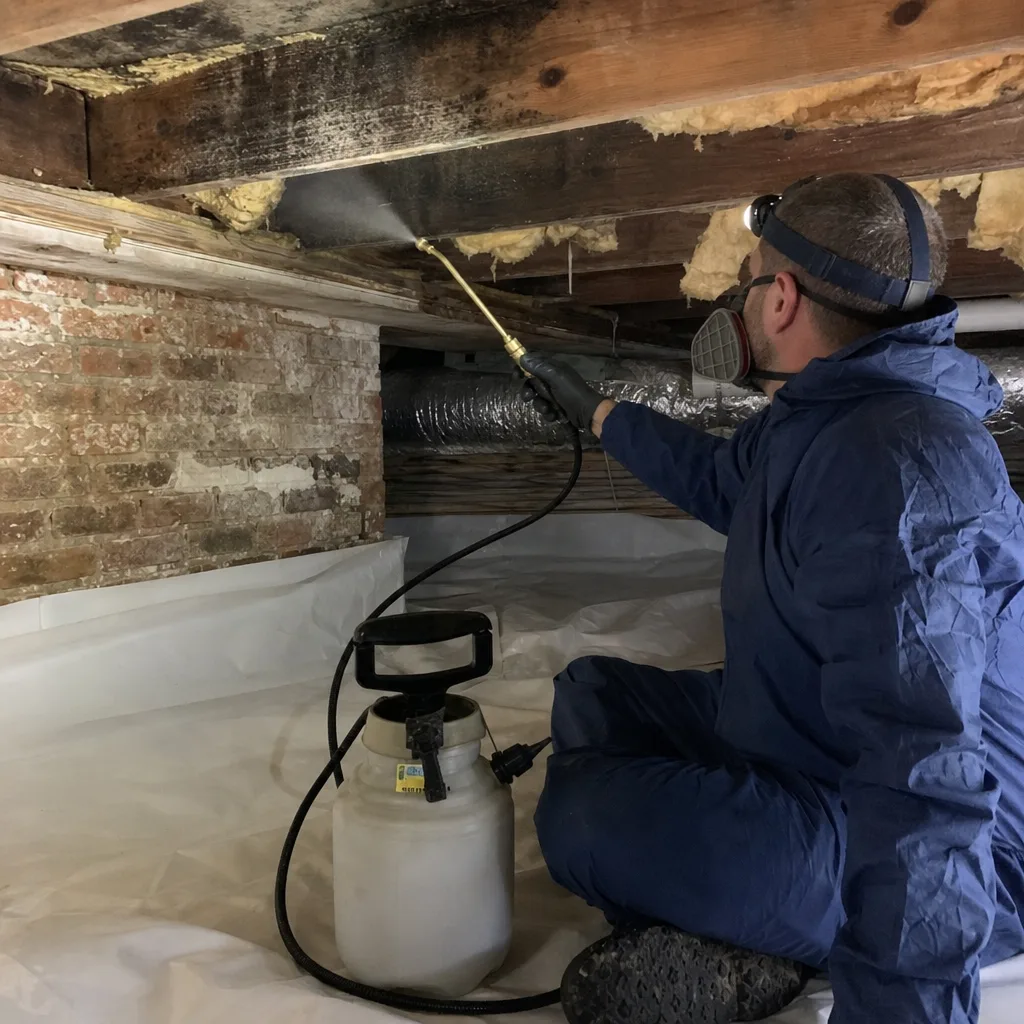
We clean and sanitize affected surfaces, treating what can be saved and removing what can’t. In Category 2 and 3 water losses, this step includes full antimicrobial application to remaining structural members.
Mold Prevention & Specialty Treatment
Saturated fill soil under Travis – Chelsea slabs means groundwater control often belongs in the scope. We assess hydrostatic pressure and, where needed, specify sump systems or exterior waterproofing before closure.
Repairs & Restoration
Drywall, flooring, trim, paint. We rebuild to pre-loss condition, and if exterior waterproofing or drainage was part of the fix, we coordinate that too. You get the 90-Day Done Right Promise in writing.
Need Emergency Reconstruction & Cleanup in Travis – Chelsea Now?
Crews minutes away, answering live 24 hours a day. The sooner we start, the less it costs.
Working With Your Insurance Company
Flood claims in a repetitive-flood neighborhood like Travis – Chelsea draw extra scrutiny from carriers. We get that, and we build your file accordingly. Our team documents everything from the first hour: the extent of water intrusion, the source, the category of water, the moisture readings that show how far saturation traveled. We generate industry-standard estimates in the same format adjusters expect, so the claim moves without back-and-forth. We speak directly with your carrier’s adjuster, we send photos room by room, and we make sure the scope of work is written to match what actually happened, not what’s cheapest to replace. You don’t play messenger between us and the carrier.
What We Provide Your Insurer
- Thorough documentation of the loss
- Photos of all damage, room by room
- Moisture readings and drying logs
- A detailed, line-item scope of work
- Direct coordination with your carrier
Built for Travis – Chelsea’s Loss Calendar
Travis – Chelsea’s damage seasons don’t wait for named storms. January deep freezes burst supply lines in unheated garages and crawlspaces, and that clean-water damage spreads through 1950s slab homes before anyone notices. Spring thaw raises the water table under already-saturated fill, and basement seepage shows up at the cove joint in ranch after ranch. Summer thunderstorms dump rain faster than the poorly graded streets near Victory Boulevard and Chelsea Road can carry it away, and storm drains back up into basements. Fall brings nor’easters off the Arthur Kill, and tidal surge pushes Category 3 water through low-lying blocks that the FEMA maps have flagged for decades. Every one of these losses lands differently when the sub-slab soil never truly dries.
Reconstruction & Cleanup Across Travis – Chelsea’s Neighborhoods
We work the full span of the neighborhood, from the residential blocks south of Victory Boulevard up to the commercial corridor along South Avenue. The ranch homes near Chelsea Road, many built on the lowest former marshland, hit us most often with basement hydrostatic flooding and full-cavity drywall removal. The cape-style homes east toward the newer developments see the same water intrusion, though the shallower foundations there tend to push moisture into the first-floor framing faster. Properties along the Arthur Kill side of Travis take the worst of the nor’easter surge, when brackish water from the kill backs up through storm drainage and into garages and crawlspaces. Even the light-industrial buildings mixed into the western blocks deal with post-construction cleanup after fire, smoke, and water damage. For homeowners across all of it, our Reconstruction & Cleanup in Travis – Chelsea crews know the response routes and the seasonal patterns that shape the work here.
Specialized Reconstruction & Cleanup Services We Offer in Travis – Chelsea
Full-Service Reconstruction
When drywall comes out, something has to go back. We handle the complete rebuild in Travis – Chelsea, from framing repair to finish paint. Because our crews know this housing stock, we match existing materials correctly: plaster repair on original 1950s walls, proper batt insulation replacement, and slab floor refinishing that stands up to the neighborhood’s moisture profile.
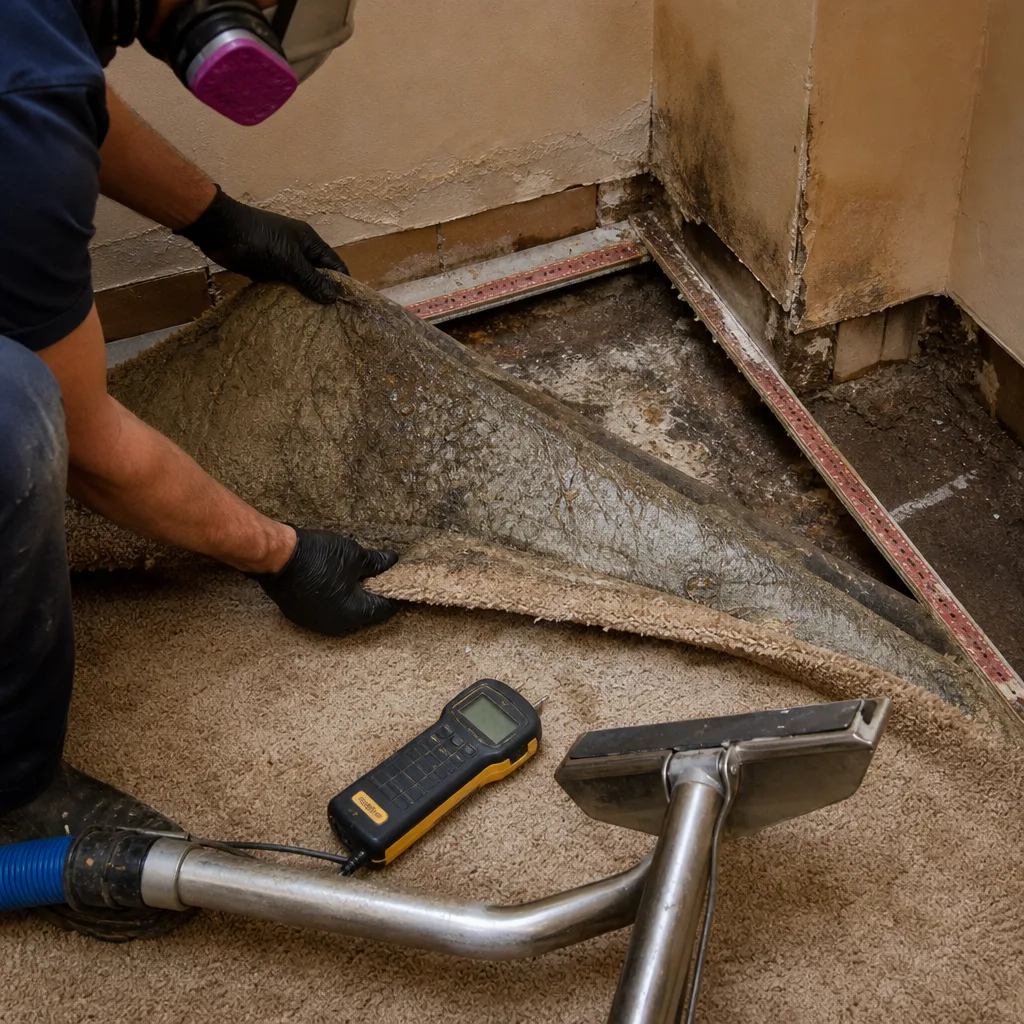
Drywall & Flooring Repair
Wet drywall in a slab-on-grade ranch traps moisture against the bottom plate and the studs. We cut at the moisture line, not the stain line, and we don’t close the wall until the framing tests dry. Flooring replacement here means more than swapping boards; subfloor moisture readings dictate whether the entire assembly comes out or just the finish layer.
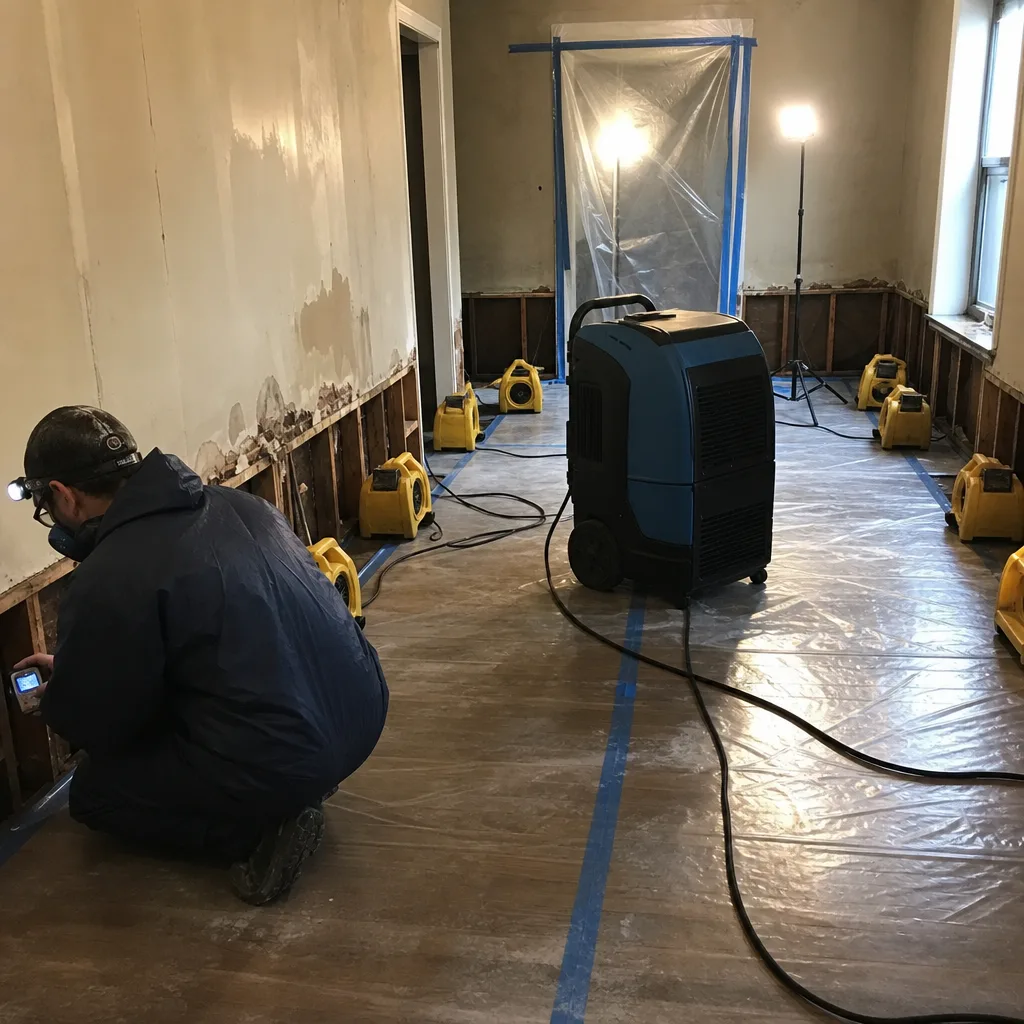
Contents Restoration & Pack-Out
Before demolition starts, we pack out and inventory your contents. Furniture, clothing, documents, and keepsakes get documented, cleaned, and stored until the rebuild is done. In a repetitive-flood neighborhood, having a standardized pack-out process means your belongings aren’t exposed to secondary damage while the structure dries.
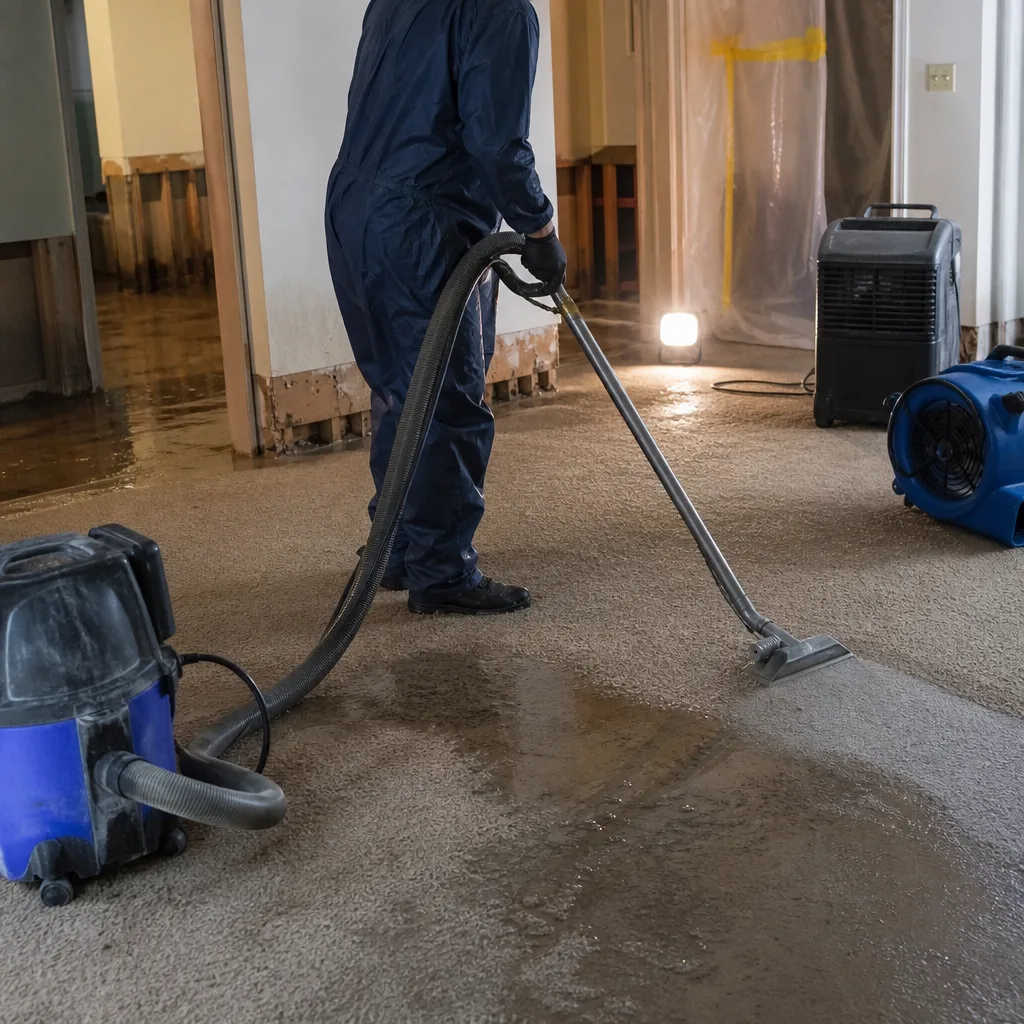
Carpet & Upholstery Cleaning
Category 1 water from a burst supply line sometimes spares the structure but soaks the carpet. We assess the pad, the backing, and the subfloor before recommending clean vs. replace. Upholstery in affected rooms gets the same treatment, with HEPA vacuums and low-moisture cleaning that doesn’t add to an already-humid interior.
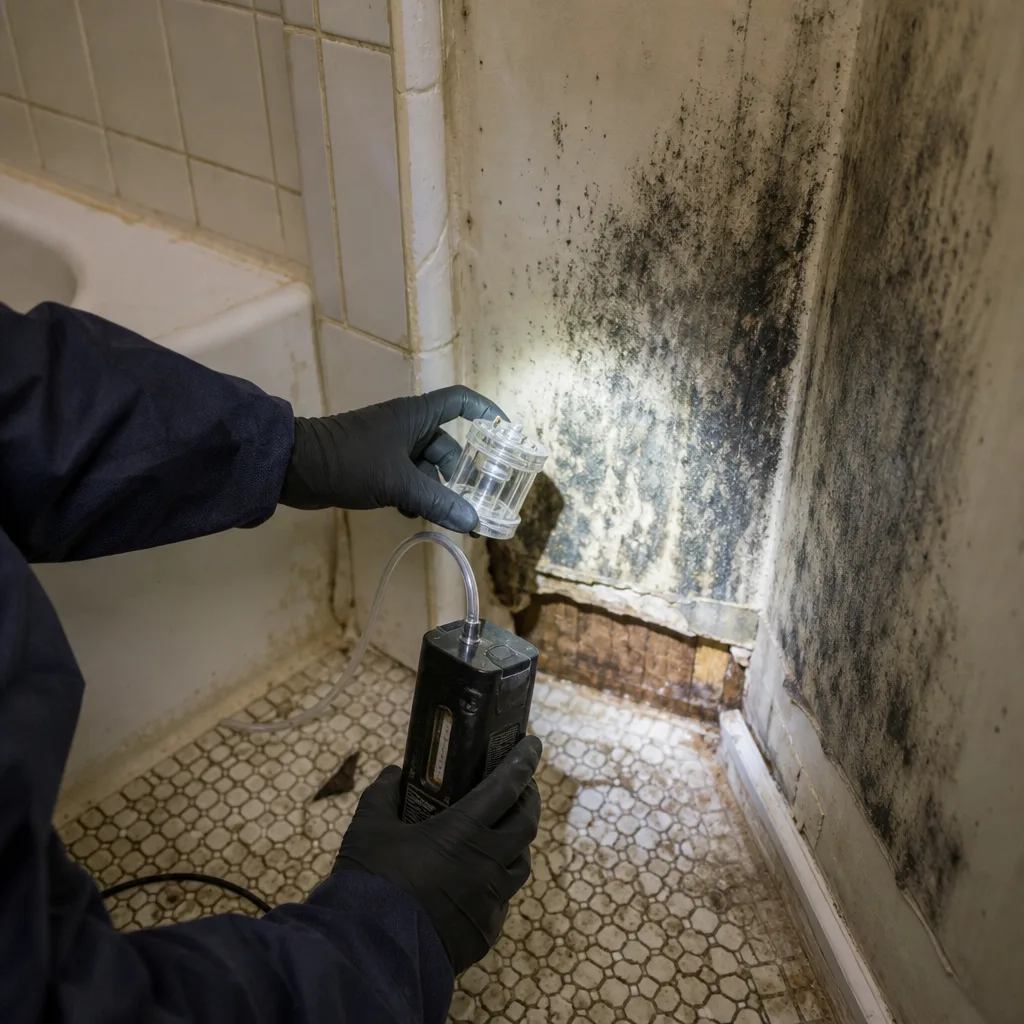
Post-Construction Cleanup
After the rebuild, dust settles everywhere: inside ductwork, on trim, in cabinets and closets. We run a full post-construction clean with HEPA-filtered air scrubbers, wiping every surface and vacuuming every cavity. In Travis – Chelsea, where many homeowners live on the property during reconstruction, that final clean is non-negotiable.
Insurance Claim Documentation
This is the part that saves Travis – Chelsea homeowners thousands on repetitive flood claims. We photograph everything before demolition, we log daily moisture readings, and we write the scope to match the actual damage. When the adjuster asks why the sub-slab soil triggered a sump system spec, our file already answers.
What happens when you call
- 1
A real person answersNo phone trees - you reach a local pro.
- 2
You get an upfront price rangeHonest numbers before anyone is dispatched.
- 3
A background-checked tech heads outLicensed & insured, dispatched right away.
- 4
You approve before work beginsNothing starts until you say go.
Reconstruction & Cleanup Costs in Travis – Chelsea, NY
Full reconstruction after a Category 3 water loss in a Travis – Chelsea ranch typically runs $8,000 to $25,000 depending on how many rooms lost drywall and flooring. Drywall and flooring repair alone, for a single-room Category 1 or 2 incident, usually lands between $2,500 and $6,500. Content pack-out and cleaning adds $1,000 to $3,500 for a typical three-bedroom home. Exterior waterproofing or a sump system, which we recommend on roughly half the flooded basements we see here, runs $3,000 to $9,000. These are honest ranges for this neighborhood, reflecting real material and labor costs in New York City, not national averages. Insurance often covers the water and mold remediation; we help you document every reading so the carrier sees the full picture. The free visual inspection is how we turn these ranges into a firm, written scope before any work begins. Call (917) 924-4221 and we’ll put it in writing.
We Also Serve Cities Near Travis – Chelsea
Our dispatch board covers the surrounding communities the same way we cover Travis – Chelsea, with the same live answer and the same 45-minute response commitment. Homeowners in Fairview, Harrison, East Bronx, and Hunts Point can reach us around the clock for reconstruction and cleanup work of any size.
Serving Travis – Chelsea, NY - Our Local Coverage Area
We’re based in the Travis – Chelsea area and know this community well. Use the map below to see our service coverage - if you’re nearby, we can almost certainly help.
Travis – Chelsea Reconstruction & Cleanup Questions, Answered
Why does my Travis – Chelsea basement keep flooding even after I dry it out?
In Travis – Chelsea, most basement flooding comes from hydrostatic pressure under the slab, not from surface water running downhill. Your home likely sits on saturated fill from the neighborhood’s marshland origins. When the water table rises, that pressure pushes water up through the slab and the cove joint. Drying the interior without addressing exterior waterproofing or a sump system means the water returns next rainy season, because the source was never stopped.
Does Reconstruction & Cleanup in Travis – Chelsea handle the repeated water and mold cycle from tidal backflow?
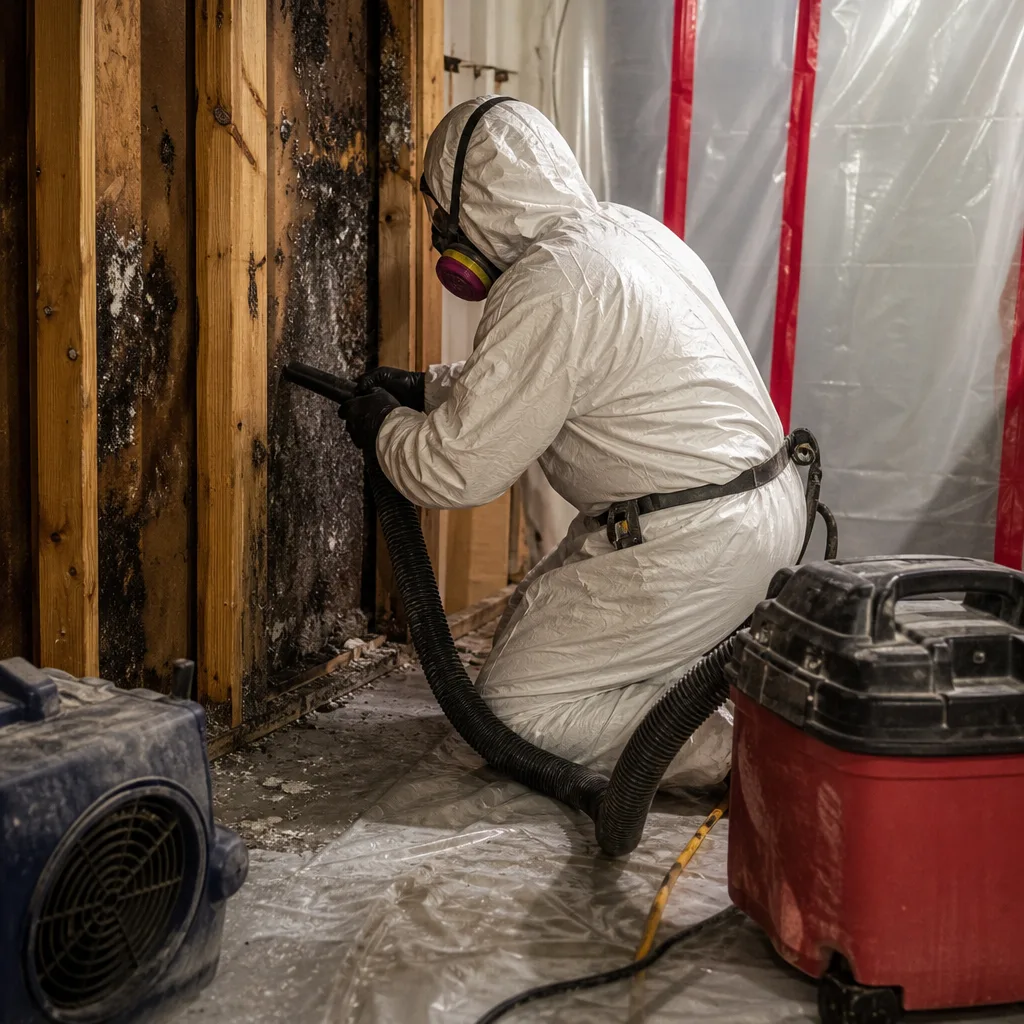
Yes, and that repeated cycle is exactly what this neighborhood demands. Tidal backflow from the Arthur Kill pushes Category 3 water through low-lying blocks during nor’easters, and if the fill soil under the slab stays saturated, mold conditions re-form inside wall cavities even after surface cleanup. Our team addresses the full cycle: extraction, structural drying, full-cavity mold remediation, and groundwater control so the cycle slows or stops.
Can you pack out contents before you tear out wet drywall in a slab-on-grade ranch?
Yes. We pack out, inventory, and store your contents before demolition begins. That keeps furniture, clothing, and personal items out of the dust and debris path. The inventory also becomes part of your insurance file, which matters in Travis – Chelsea where flood claims often include contents losses in addition to structural damage.
How fast do you start mold prevention after Category 2 water intrusion in Travis – Chelsea?
Within the same visit. Category 2 water carries significant contamination, and mold colonization begins within 24 to 48 hours in the presence of moisture. We are on site, in most cases, within 45 minutes of your call. Our crews set containment and begin antimicrobial application as part of the initial response, not as a later add-on.
Will your Reconstruction & Cleanup crew handle the insurance paperwork for a flood damage claim in Travis – Chelsea?
We will. We document the loss from the first hour, we generate estimates in insurance-industry format, and we communicate directly with your adjuster. In a neighborhood that floods repeatedly, carriers scrutinize these claims. Our moisture logs, photos, and line-item scopes are built to hold up under that scrutiny. You’ll get a copy of everything we send.
How long does full reconstruction take after a flood in Travis – Chelsea?
Most full reconstruction jobs here run five to ten business days for a single-floor ranch with two or three affected rooms. That includes drywall, flooring, trim, and paint. If we are also installing a sump system or exterior waterproofing, add two to three days. The drying phase happens before reconstruction starts and is usually three to five days with our Dri-Eaz and XPOWER equipment running continuously.
Can I stay in my Travis – Chelsea home during reconstruction?
Often yes, especially for single-room or single-floor work. We set containment barriers to isolate the work area and run HEPA air scrubbers to keep dust and spores out of the rest of the house. For Category 3 losses where the contamination is extensive, you may be more comfortable elsewhere for a few days, and your insurance typically covers that under loss-of-use coverage. We’ll give you an honest recommendation when we see the scope.
What should I do in the first 30 minutes after water enters my Travis – Chelsea home?
Call us at (917) 924-4221. Kill power to the affected area if water is near outlets. Don’t run a shop vac on Category 2 or 3 water. Don’t open walls. Don’t apply household bleach. Don’t wait for a handyman to take a look next week. The first hour shapes how much drywall, insulation, and flooring has to come out, and how much of your claim is considered preventable.
Written by Curt Bowman, Owner at Floodline Restoration Co. of Manhattan. Our Reconstruction & Cleanup crews have worked the tidal and floodplain properties of Travis – Chelsea long enough to know that water here has a memory; we build every job so the next nor’easter doesn’t undo it.