
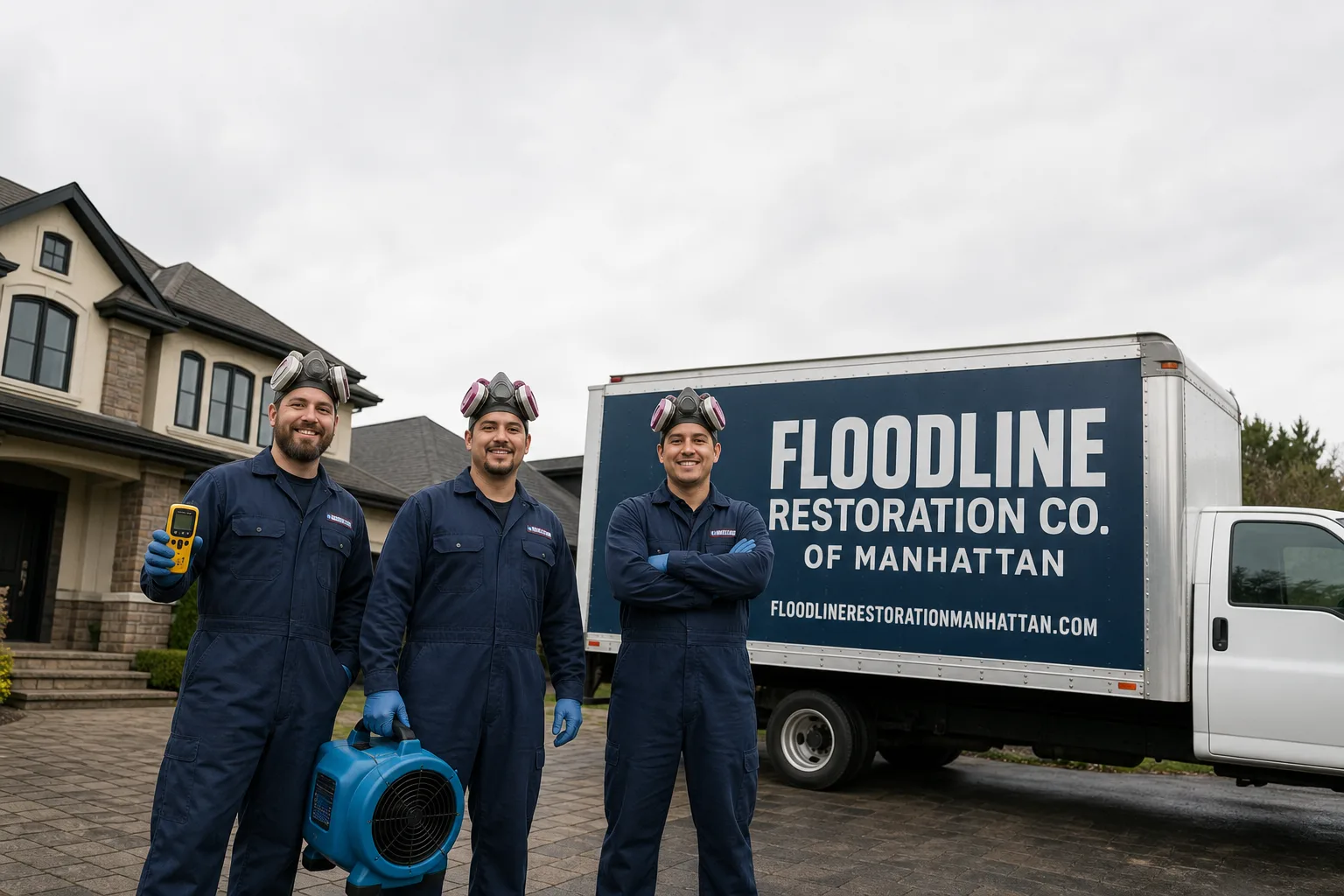
Free visual inspection and a written scope of work before any mitigation begins - photos, moisture readings, and drying logs go in your claim file
The scope we write is the scope we bill. Anything new gets shown to you, in writing, before we touch it.






 Before
 After
After Before
 After
After Before
 After
After24/7 Emergency Storm & Disaster Restoration in Bayside
Storm and disaster restoration in Bayside typically runs $2,800-$9,400 for a basement flood and $4,500-$15,000+ when a nor’easter drives Little Neck Bay water through a finished lower level. We answer the phone with a live person at 2 a.m., not a recording, and a certified crew can be on site in Bayside inside 45 minutes. Call (917) 924-4221 now. The first hour after a storm surge, roof blow-off, or supply-line split decides whether you’re looking at a dry-out or a full gut-and-rebuild. Our Storm & Disaster Restoration team starts with a free visual inspection, maps the moisture, and gets extraction running the same visit.
Understanding Storm & Disaster Restoration Severity in Bayside Properties
Most Bayside homes were built between the 1920s and 1950s. That matters when water moves through them. Plaster-and-lath walls hide migration behind intact surfaces, so a surface moisture reading can show dry while the cavity behind is saturated. We use thermal imaging and penetrating meters, not just pin meters, to find what the wall is holding. Storm surge from Little Neck Bay is Category 3 water every time: tidal contaminants, fuel residue, and sewage. It is never treated as clean. On older Colonials and Tudors, finished basements with 1950s floor tile and popcorn ceilings add a regulatory layer: before structural drying can begin, NYC DEP asbestos and lead-paint assessment protocols apply. A storm flood in a 1920s Bay Terrace home is a different job than the same flood in a newer inland build. Severity is not just water class; it is water category, building age, and material composition.
Why Bayside Property Owners Choose Floodline Restoration Co. of Manhattan
- 45-minute response commitment in Bayside. Our dispatcher routes the nearest certified crew the moment you call, and we’ll be there when we say.
- 24/7 live answer, every day. A real person picks up at any hour. No automated tree, no “leave a message.”
- IICRC-certified crews. Water damage techs hold WRT and ASD certifications; fire work is handled by FSRT-certified techs. Floodline has trained to IICRC, RIA, and IFA standards since Curt Bowman founded the company in 2010.
- Free visual inspection. We assess storm damage in Bayside at no charge and hand you a written scope before any work starts.
- Direct insurance billing. We bill your carrier directly and talk to your adjuster ourselves. You never play messenger.
- One team, start to finish. Extraction, drying, and rebuild are handled by the same certified crew. No mid-job handoff to a sub you never met.
Our Storm & Disaster Restoration Process
Inspection & Assessment
We arrive, walk the property with you, and run a full assessment: water category, building materials, structural exposure. In Bayside’s older homes, this includes checking for legacy materials that trigger DEP protocols before we touch a wall.
Extraction & Stabilization
Flood water comes out first. Truck-mounted extraction pulls standing water from finished basements, crawl spaces, and utility rooms. We also board up broken windows and tarp damaged roofs the same visit so the weather can’t keep adding to the loss.
Drying & Dehumidification
Low-grain refrigerant dehumidifiers from Dri-Eaz and Phoenix go in with XPOWER air movers placed against a moisture map, not scattered at random. We take daily readings and log them until the dry standard is met. The log goes to you and your carrier.
Cleaning & Sanitization
Category 3 water demands antimicrobial treatment and our Sanitization Services in Bayside for every affected surface. HEPA air scrubbers run during tear-out to control what demolition releases into the air.
Debris Removal & Abatement Coordination
Storm debris, waterlogged drywall, ruined carpet, and damaged framing come out. Where asbestos or lead paint is present, we coordinate the required NYC DEP assessment before any material is disturbed, then sequence abatement ahead of drying.
Repairs & Restoration
The same crew that read the moisture map on day one handles Reconstruction & Cleanup - Bayside homeowners need, rebuilding what needs rebuilding. Drywall, plaster repair, flooring, trim, paint. Done right, and backed in writing by the 90-Day Done Right Promise.
Need Emergency Storm & Disaster Restoration in Bayside Now?
Crews minutes away, answering live 24 hours a day. The sooner we start, the less it costs.
Working With Your Insurance Company
Storm claims in Bayside move faster when the documentation is right from the first hour. We photograph every affected room before anything is touched, take moisture readings that establish the loss date and extent, and log drying conditions daily. Our estimates use the same line-item format your carrier’s adjuster expects, so there is no back-and-forth over vague scope language. We send photos, logs, and the written scope directly to your adjuster and handle their questions ourselves. If the carrier needs a second walk-through, we are there for it. You get a square deal: no surprises on the bill, and no paperwork battles.
What We Provide Your Insurer
- Thorough documentation of the loss
- Photos of all damage, room by room
- Moisture readings and drying logs
- A detailed, line-item scope of work
- Direct coordination with your carrier
Built for Bayside’s Loss Calendar
Bayside’s exposure is two-sided. Little Neck Bay funnels nor’easter storm surge directly into the low streets around Bay Terrace and the waterfront blocks east of Bell Boulevard, so September through March brings repeat tidal flooding that other Queens neighborhoods never see. Then January and February hit the other way: freeze-thaw stress on uninsulated balloon-frame exterior walls in 1920s and 1930s Colonials splits galvanized supply lines behind plaster, and the first sign is water running across a finished basement floor. Spring brings thaw saturation and seepage through fieldstone and block foundations. Summer thunderstorms dump flash water into the same low-lying streets that the bay reaches backward. A Bayside homeowner can face coastal flood, pipe burst, and storm runoff in the same year, in the same basement. Our crews know the calendar because we answer the calls on it.
Storm & Disaster Restoration Across Bayside’s Neighborhoods
Bay Terrace sits at the water and takes the first hit from Little Neck Bay surge. Homes there, mostly 1930s and 1940s Tudors and Capes, carry the asbestos and lead-paint assessment burden on nearly every flood tear-out. West of Clearview Expressway, the blocks around Bell Boulevard run older Colonial and semi-detached stock through the 1950s, and basements finished in that era hold original 9×9 vinyl tile that turns a simple dry-out into an abatement-sequenced job. The Oakland Gardens pocket near 46th Avenue has a high concentration of post-war Capes with finished basements and original galvanized lines, so pipe-burst losses cluster there in deep freezes. Along Northern Boulevard, commercial and mixed-use storefronts face wind damage and roof membrane failures during nor’easters, and we board up storefronts the same night to keep looting and weather out. Response routes from the Clearview to Bell Boulevard put a crew on any of these blocks within 45 minutes.
Specialized Storm & Disaster Restoration Services We Offer in Bayside
Storm Damage Cleanup
Wind-driven rain, downed limbs, and blown-in debris all get cleaned and documented. We remove wet insulation, saturated drywall, and storm wreckage, then run containment where legacy materials are present.
Flood Damage Restoration
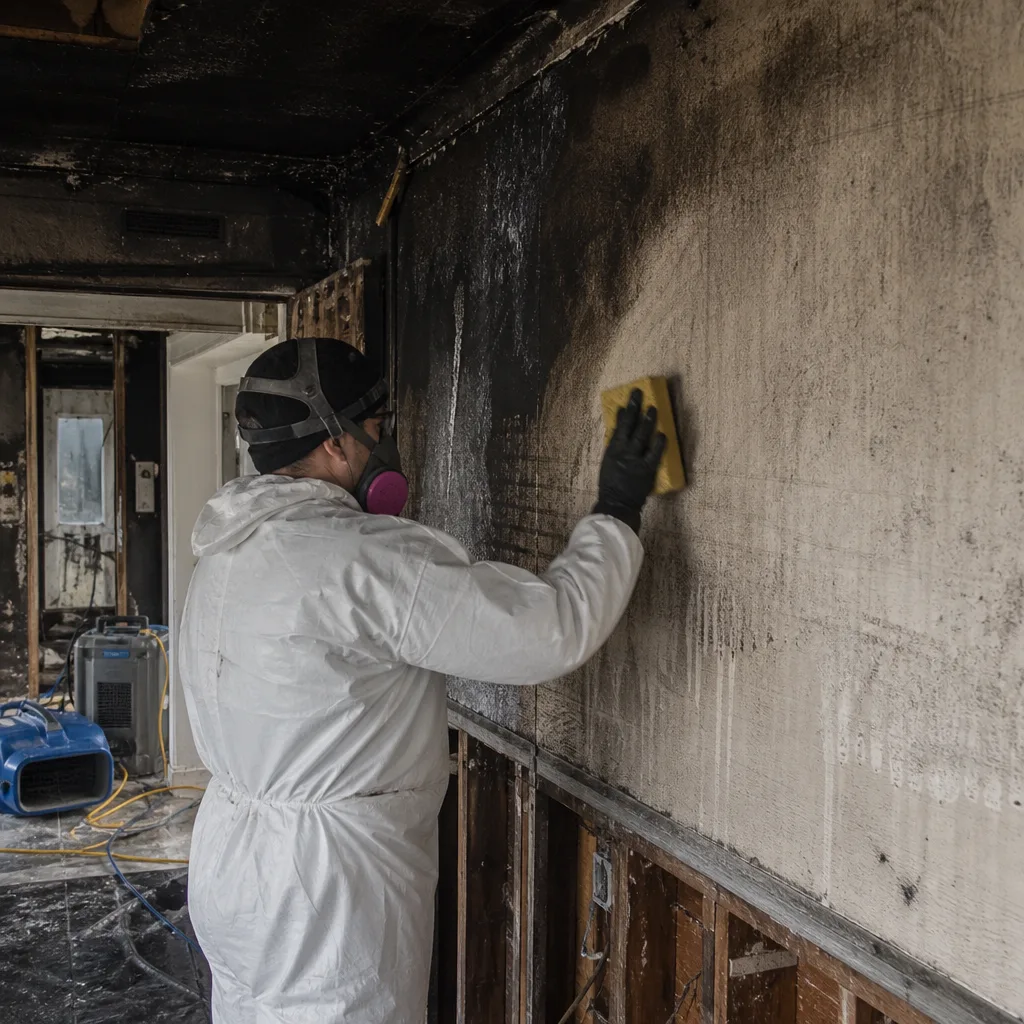
Bay surge and pipe-burst floods in Bayside basements get extracted, moisture-mapped, and dried by the same crew that rebuilds the room. Biohazard & Crime Scene Cleanup in Bayside means Category 3 water from Little Neck Bay gets full sanitization, never a simple pump-out.
Emergency Board-Up
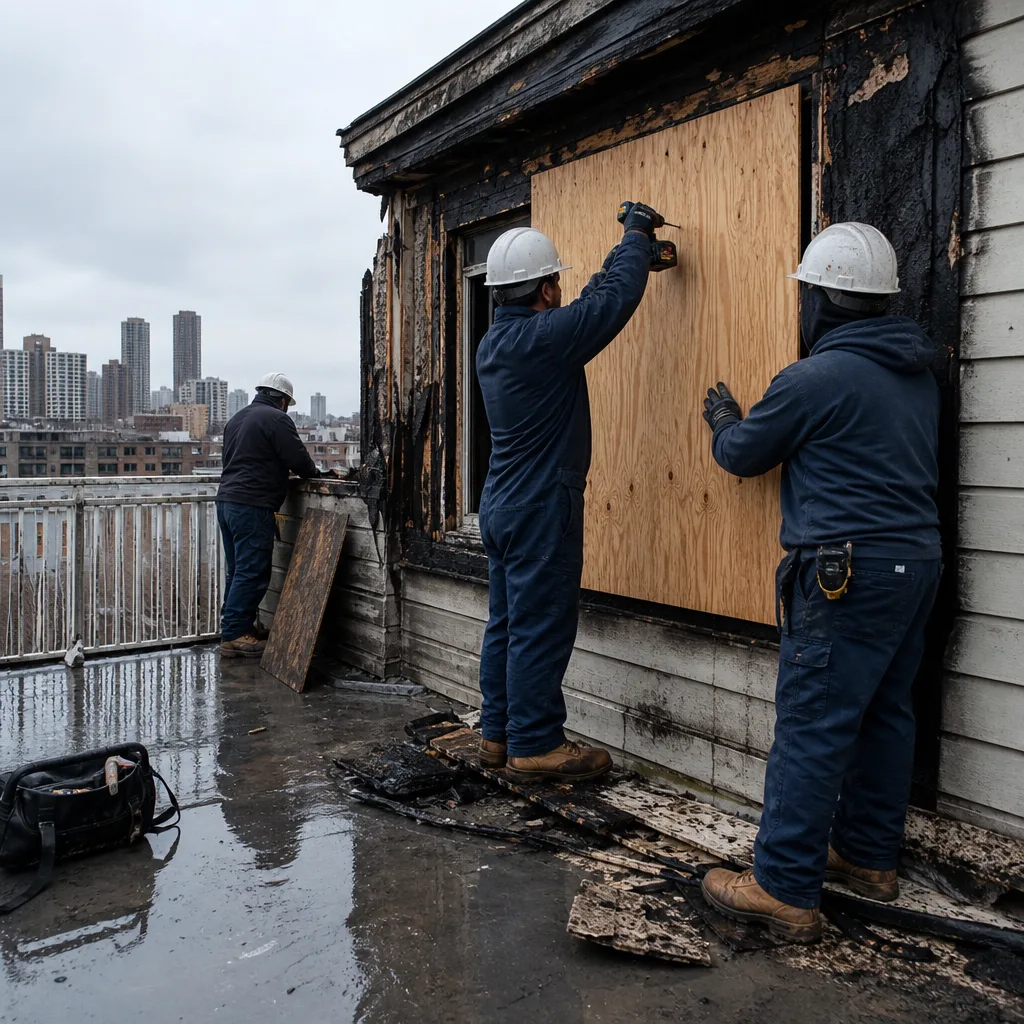
Broken windows and breached walls get plywood-sealed the same visit. We carry board-up materials on the truck so Bayside homes between Oakland Gardens and Bay Terrace are not left open overnight.

Roof Tarping
Nor’easter wind tears lift shingles and peel membrane on older Bayside roofs. We tarp the exposed area the same day, weighted and sealed against the next front, until permanent repair is scheduled.

Debris Removal
Storm debris, waterlogged furnishings, and demolition waste leave the property quickly. Where demolition exposes asbestos tile or lead-painted plaster, debris removal is sequenced with the required DEP assessment, not rushed ahead of it.

What happens when you call
- 1
A real person answersNo phone trees - you reach a local pro.
- 2
You get an upfront price rangeHonest numbers before anyone is dispatched.
- 3
A background-checked tech heads outLicensed & insured, dispatched right away.
- 4
You approve before work beginsNothing starts until you say go.
Storm & Disaster Restoration Costs in Bayside, NY
Here is what we see on Bayside jobs. A Category 2 clean-water basement flood in a post-war Cape runs $2,800-$5,200 for extraction, drying, and sanitization. A Category 3 Little Neck Bay surge into a finished Bay Terrace basement pushes $6,500-$12,000 because of the sanitary hazard and tear-out scope. When NYC DEP asbestos assessment is triggered, add $1,800-$4,500 for testing and, if abatement is required, a separate abatement line item negotiated with your carrier. Emergency board-up and roof tarping in Bayside runs $450-$1,200 depending on opening size and roof access. Debris removal adds $800-$2,500 on the average storm job. Most storm losses are insurance-covered; your out-of-pocket is typically the deductible. Call (917) 924-4221 for a free visual inspection and a written scope with firm numbers.
We Also Serve Cities Near Bayside
Floodline Restoration Co. of Manhattan serves homeowners across eastern Queens and the Queens-Nassau border: Storm & Disaster Restoration in Bayside, plus Whitestone, Flushing, Little Neck, and Great Neck. Same 45-minute response commitment, same certified crews, same written guarantee.
Serving Bayside, NY - Our Local Coverage Area
We’re based in the Bayside area and know this community well. Use the map below to see our service coverage - if you’re nearby, we can almost certainly help.
Bayside Storm & Disaster Restoration Questions, Answered
What makes a Bayside basement flood a NYC DEP asbestos project before any drying can start?
The 9×9 vinyl floor tiles and popcorn ceilings installed in 1930s-1950s Bayside basements commonly contain asbestos. When floodwater or tear-out disturbs them, NYC DEP assessment protocols apply before structural drying or demolition can legally proceed. We check for these materials during the initial inspection so the job is sequenced correctly from day one. Call us for a free inspection and we’ll tell you exactly what your basement holds.
How do you categorize storm-surge water from Little Neck Bay during a Bayside nor’easter?
Category 3, always. Little Neck Bay storm surge carries tidal contaminants, fuel residue, and sewage. It is never treated as clean water, and any basement it reaches gets full extraction, containment, sanitization, and antimicrobial treatment, not a simple pump-out. We document the water category for your carrier because it changes the restoration scope and the claim value.
Why do Bayside Colonials with plaster-and-lath walls need moisture mapping rather than surface readings after a flood?
Plaster-and-lath construction hides water migration behind intact surfaces. A pin meter on the surface can read dry while the cavity behind the lath is saturated. Moisture mapping with thermal imaging and penetrating meters shows where the water actually went. Without it, you get hidden mold growth inside walls that look fine. That is what we map before a single air mover goes in.
What is the typical pre-loss condition documentation needed when a Bay Terrace storm flood damages original hardwood floors in a 1930s home?
Your adjuster will ask for pre-loss condition evidence: photos of the floors before the storm, any prior inspection notes, or receipts for floor work. We photograph the floors as found during our first walk-through and document the water exposure, species, and damage pattern. That pre-loss record anchors your claim and prevents the carrier from writing the floors off as pre-existing wear. We send it to your adjuster directly.
Can a Bayside flood-damaged finished basement be dried in place after a storm-surge event, or does it need full tear-out?
It depends on the water category and the materials. Category 3 surge water means any porous finish, like carpet, pad, and most drywall, comes out. Non-porous surfaces such as concrete and some tile can sometimes be dried in place after sanitization. If asbestos tile or lead paint is present, tear-out and drying are sequenced around the DEP assessment. We give you an honest answer on site, with the moisture map in hand.
How fast can a crew actually reach Bayside after I call?
Inside 45 minutes. Our dispatch coordinates from our New York City office and routes the nearest certified crew to Bayside. A live person answers at 2 a.m., and the crew leaves the moment the call is done. Extraction is running the same visit. Call (917) 924-4221 and we start.
Will my insurance cover storm and flood restoration in Bayside, or is this out-of-pocket?
Most storm damage, wind-driven water, and pipe bursts are covered under standard homeowners policies. Tide and storm-surge flooding from Little Neck Bay may require a separate flood policy, depending on your coverage. We document everything from the first hour, bill your carrier directly, and coordinate with your adjuster so you know what is covered before work goes past the emergency phase.
What should I do in the first 30 minutes after water enters my Bayside basement?
Shut off power to the affected area if you can do so safely from a dry location. Do not step into standing water with active electricity. Move valuables and documents to a dry floor. Then call us at (917) 924-4221. Do not start the dry-out yourself. In Bayside’s older basements, moving the wrong wall can disturb asbestos or lead-painted plaster before assessment. Our crew will head to you immediately and handle it in the right sequence.
Written by Bayside restoration lead Curt Bowman, Owner at Floodline Restoration Co. of Manhattan, serving Bayside, Whitestone, Flushing, Little Neck, and Great Neck. Founded in 2010, built around a dispatch board, not a sales desk.