
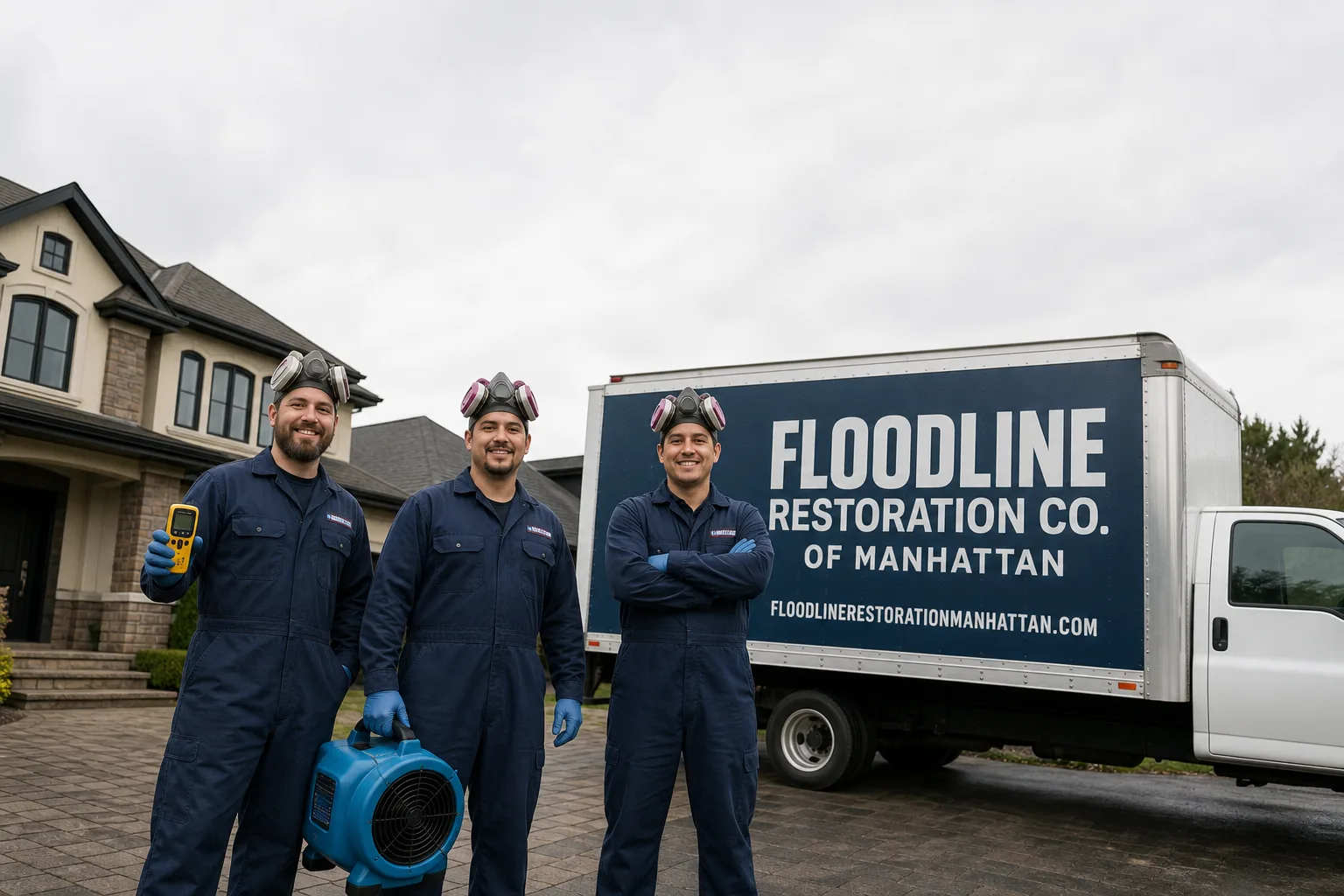
Free visual inspection and a written scope of work before any mitigation begins - photos, moisture readings, and drying logs go in your claim file
The scope we write is the scope we bill. Anything new gets shown to you, in writing, before we touch it.






 Before
 After
After Before
 After
After Before
 After
After24/7 Emergency Storm & Disaster Restoration in Bedford Hills
A tree through the roof or a flooded basement in Bedford Hills doesn’t wait for business hours, and neither do we. Our Storm & Disaster Restoration crews answer live at (917) 924-4221 around the clock, every day of the year, and can reach most Bedford Hills properties within 45 minutes of your call. We start with a free visual inspection, then put extraction and stabilization equipment to work the same visit. The first hour after storm damage matters because water keeps moving through horsehair plaster, fieldstone foundations, and timber framing the longer it sits. One call gets a certified crew rolling toward Bedford Hills immediately, not a recording that promises someone will call you back tomorrow.
Understanding Storm & Disaster Restoration Severity in Bedford Hills Properties
Storm damage in Bedford Hills lands differently than it does in newer Westchester subdivisions. The town’s housing stock tilts heavily toward pre-1900 colonials, Federal-style homes, and farmhouses built with plaster-and-lath walls over stone or fieldstone foundations. When a nor’easter drives water through a breached slate roof or a fallen limb opens an attic, that water travels through horsehair plaster and old-growth timber, not modern drywall and dimensional lumber. We classify water by contamination level: Category 1 is clean rainwater, Category 2 carries significant contaminants, and Category 3 is grossly unsanitary, which stormwater becomes after passing through insulation, animal droppings in an attic, or a flooded basement sump. Moisture mapping with thermal imaging and hygrometers tells us where water has wicked behind original plaster, into wall cavities, and down through flooring systems. Drying a 19th-century Bedford Hills house requires slower, more deliberate drying plans than a postwar split-level because old-growth timber releases moisture at a different rate than modern framing, and forcing it causes checking and cracking that no amount of sanding will hide.
Why Bedford Hills Property Owners Choose Floodline Restoration Co. of Manhattan
Storm restoration here demands a company that understands both the urgency of extraction and the patience of historic repair. Here’s what Bedford Hills homeowners get from us:
- 45-minute response commitment for emergency storm damage in Bedford Hills, Katonah, and Mount Kisco, backed by live dispatch that knows the back roads off Harris and Succabone.
- A live person answers 24/7. Call (917) 924-4221 at 2 a.m. after a tree strike and a dispatcher picks up, takes your address, and starts the crew. No automated menus, no call-back promises.
- IICRC-certified crews with WRT (Water Restoration Technician) and FSRT (Fire & Smoke Restoration Technician) credentials on every Bedford Hills job, trained to handle period materials without making things worse.
- Free visual inspection before any work begins, so you know what you’re facing and what it will cost before we open a wall or pull up flooring.
- Direct insurance billing, with photo documentation, moisture logs, and a line-item scope written for your adjuster, not against you.
- One crew from first extraction to finished rebuild. The technician who sets the Dri-Eaz dehumidifier on day one is part of the team that rebuilds your kitchen wall. No mid-job handoff to a subcontractor you’ve never met.
Our Storm & Disaster Restoration Process
Inspection & Assessment
We arrive in Bedford Hills and walk the full loss with you, photographing every affected room and taking initial moisture readings with thermal imaging and hygrometers. For storm damage, this includes mapping where water traveled after a roof breach or window failure, not just where it pooled.
Extraction & Stabilization
Standing water comes out first, using truck-mounted and portable extraction units suited to tight Bedford Hills driveways and estate grounds. We set Emergency Board-Up and Roof Tarping before drying begins so no more weather gets in.
Drying & Dehumidification
Dri-Eaz LGR dehumidifiers and XPOWER air movers run continuously, with daily moisture readings logged for you and your insurer. On plaster-and-lath walls and stone foundations, this stage runs slower than modern construction because forcing the moisture out damages the original material.
Cleaning & Sanitization
Once materials reach their dry standard, we clean and apply antimicrobial treatments where needed. Exterior storm cleanup in Bedford Hills follows NYC DEP watershed runoff rules, so every cleaning agent we use is selected with the Croton watershed in mind and applied so nothing harmful reaches groundwater.
Specialty Treatment for Storm Damage
Wind damage repair on Bedford Hills homes often means repairing or replacing period elements like slate roofing, old-growth timber framing, or horsehair plaster. We match materials and methods to what the house was built with, not what’s cheapest at the lumberyard.
Repairs & Restoration
The same crew that handled extraction handles the rebuild, whether that’s a new roof section, repaired plaster, refinished flooring, or a full wall reconstruction. We don’t hand your house off to a different company halfway through.
Need Emergency Storm & Disaster Restoration in Bedford Hills Now?
Crews minutes away, answering live 24 hours a day. The sooner we start, the less it costs.
Working With Your Insurance Company
Most Bedford Hills storm losses are covered by homeowners policies, but the claim goes better when the documentation starts the first hour. We photograph the loss before we move anything, write the scope in the same format your adjuster uses, and send moisture logs and daily drying records directly to your carrier. Curt Bowman and our team carry the direct insurance billing weight so you don’t have to learn claims vocabulary under pressure. If your adjuster has questions, we answer them directly, with the science and the photos to back up every line item.
What We Provide Your Insurer
- Thorough documentation of the loss
- Photos of all damage, room by room
- Moisture readings and drying logs
- A detailed, line-item scope of work
- Direct coordination with your carrier
Built for Bedford Hills’s Loss Calendar
Storm season in Bedford Hills doesn’t follow a single schedule; it swings through the year with the weather. Deep January freezes push ice into roof valleys and gutters, then the thaw sends water behind fascia boards and into attics. Spring snowmelt saturates the shaded, forested ground around fieldstone foundations, and basement seepage follows within days. Summer thunderstorms drop two inches of rain in an hour, overloading the hilly terrain’s drainage and flooding finished basements on Babbitt Road and along Harris Road. Late summer and fall bring remnant tropical systems, and nor’easter season from November through March is when we see full-tree strikes on Bedford Hills homes, the big oak and maple limbs that open roofs and let water run through three floors of a pre-Civil War house. Every one of these seasons demands a different response speed. The water is always the first emergency, but the repair plan changes with what the house is made of.
Storm & Disaster Restoration Across Bedford Hills’s Neighborhoods
The kind of storm loss we see shifts depending on which part of Bedford Hills the call comes from. Homes along Succabone Road and the winding lanes off it sit under the densest tree canopy in town, and they’re the ones that take full-tree strikes during nor’easters. After a 200-year-old oak went through the roof of an 1840s fieldstone farmhouse off Succabone Road, we set containment around the breached slate roof and began structural drying with Dri-Eaz LGR dehumidifiers and XPOWER air movers. We pulled Category 2 water from the plaster-and-lath walls, took moisture readings every four hours for drying logs, and coordinated with the owner’s insurer to match period-appropriate old-growth timber before any rebuild. Properties near the Bedford Hills train station and the commercial stretch on Adams Street are on smaller lots with less tree exposure, but they’re older too, with basements that flood fast when the storm drains back up. The residential streets off Babbitt Road tend to be the postwar exceptions in town, though even those back up to wooded town land. And the estate properties along Cherry Street and the larger parcels between Bedford Hills and Katonah carry both the highest tree risk and the highest expectation for historically sensitive repair, slate roofs and old-growth beams and plasterwork that has to match what was there on day one.
Specialized Storm & Disaster Restoration Services We Offer in Bedford Hills
Storm Damage Cleanup
After a tree strike or high-wind event, Bedford Hills properties are littered with debris, and the yard may still hold standing water. We clear the damaged material so we can begin building a drying plan, and we do every exterior cleanup step with an eye on the watershed rules that Bedford Hills sits inside.
Flood Damage Restoration
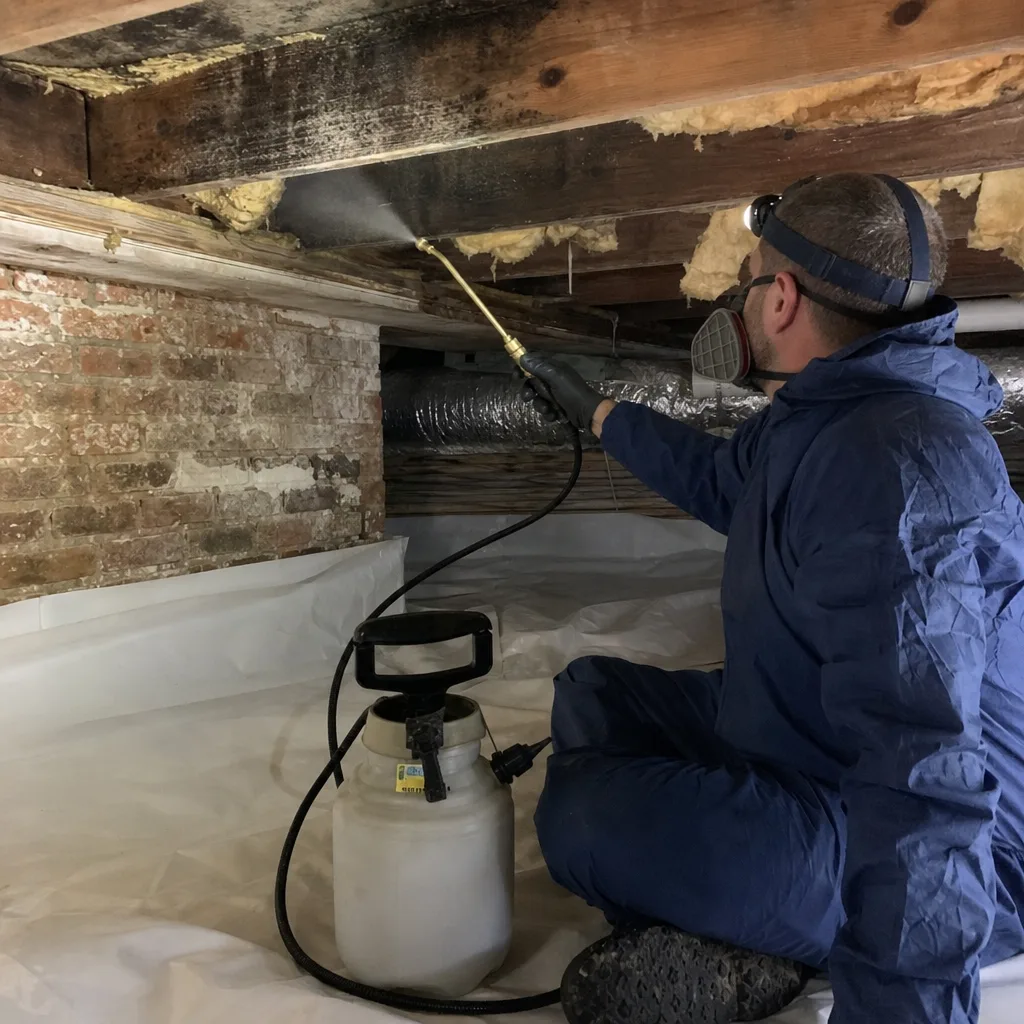
When a nor’easter or summer thunderstorm floods your Bedford Hills basement, the water category matters, and so does the floor system above it. We’re not just pulling water from concrete. We’re checking how far it wicked up the plaster walls and whether the finished space above is holding moisture it shouldn’t be.
Emergency Board-Up
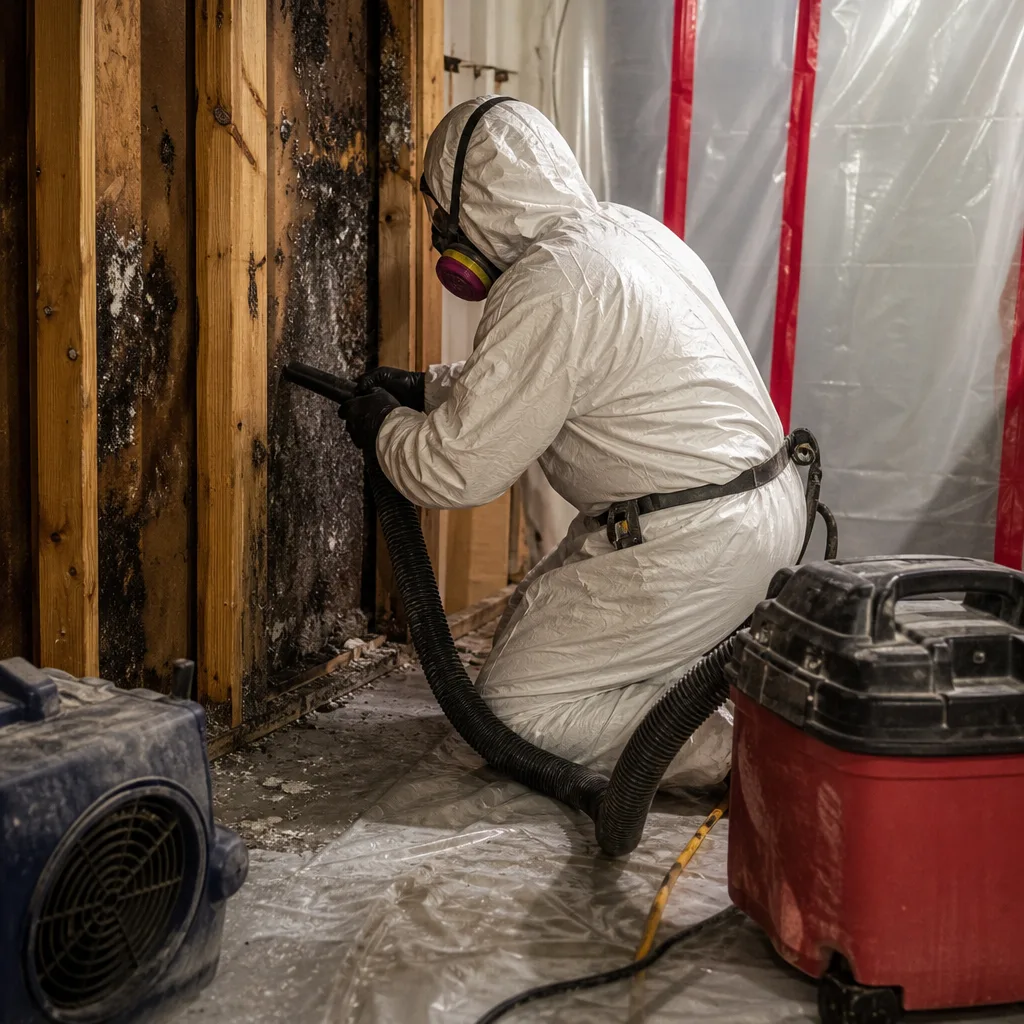
A breached window or a hole in a wall leaves a Bedford Hills home open to weather, animals, and the next storm passing through. We board up with plywood cut to fit, sealed enough to keep water out until roofing and structural repair begin. Board-up is not the repair. It’s what buys us time to do the repair right.
Roof Tarping
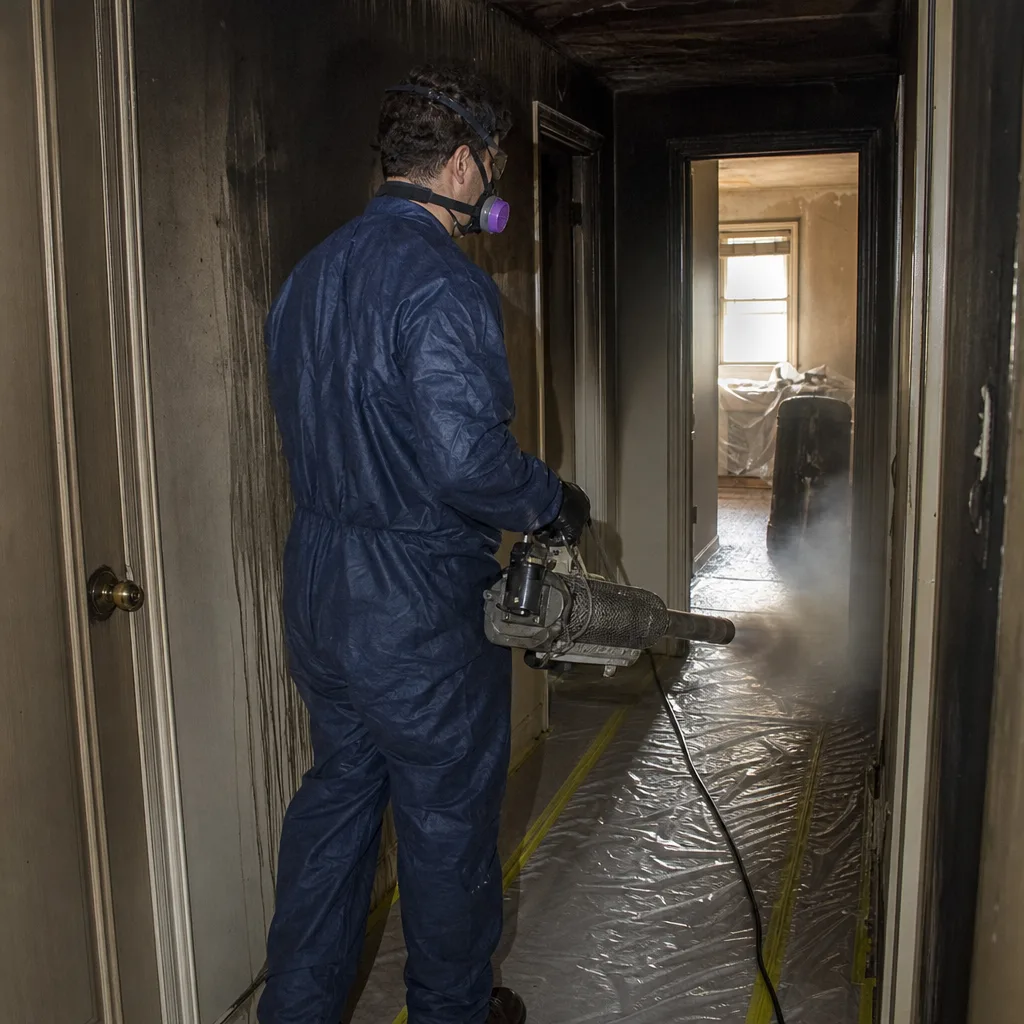
Bedford Hills roofs are often slate, aged cedar shake, or original materials that take weeks to repair properly. Tarping stops more water from getting in so structural drying inside can start. We tarp with heavy-duty material anchored to hold against the next nor’easter wind, not just the next sunny day.
Debris Removal
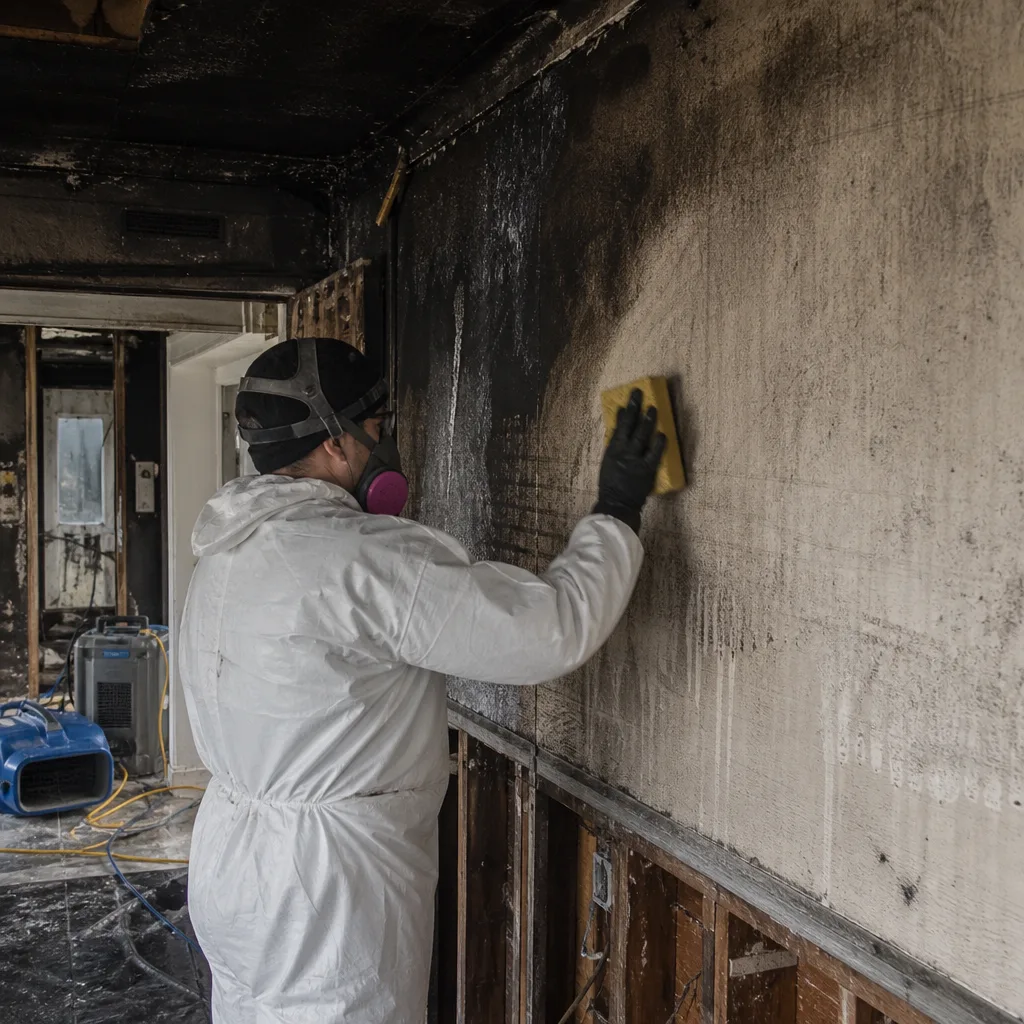
Fallen limbs, roof debris, and waterlogged belongings all need to leave the property before drying and repair can start. In Bedford Hills, exterior debris removal follows DEP runoff rules, because everything we carry off the site, or wash off the site, is part of the same Croton watershed that supplies New York City’s water.
Wind Damage Repair
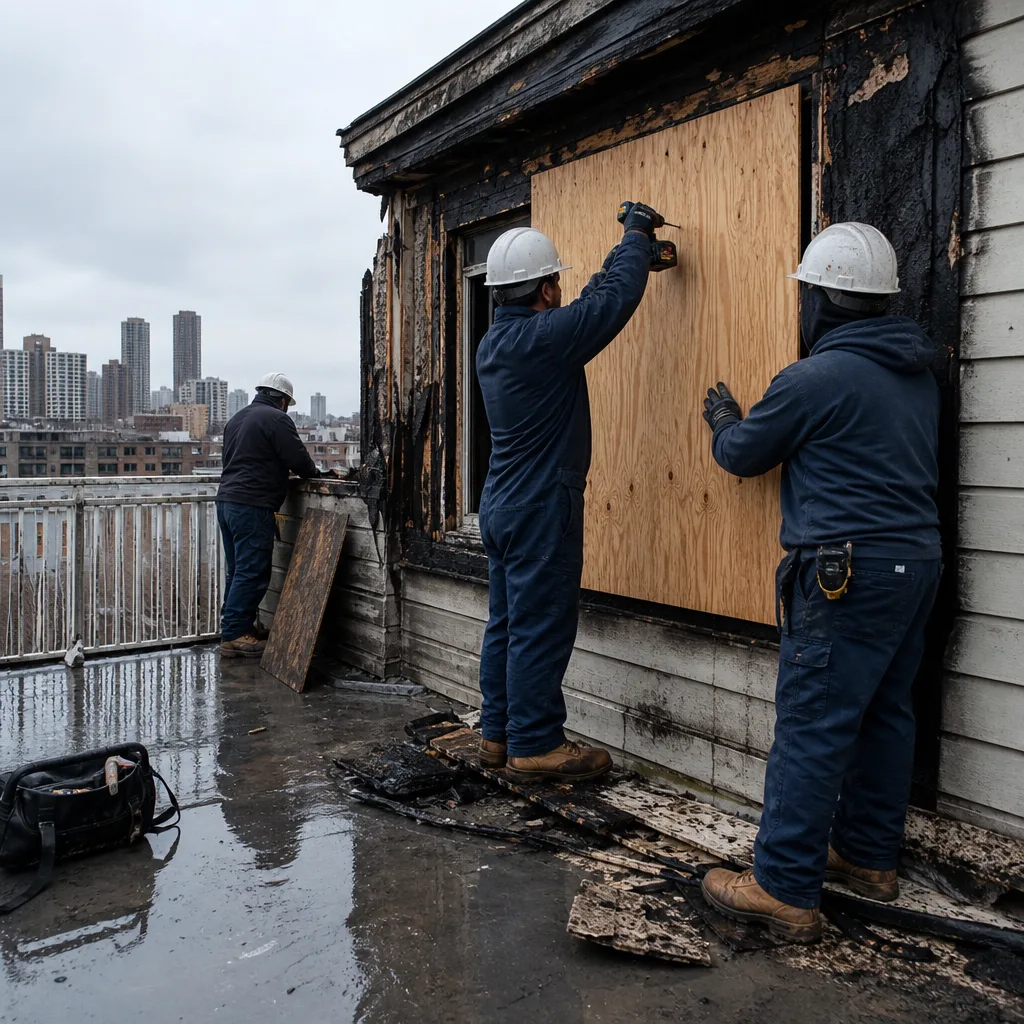
For Bedford Hills homes, wind repair often means matching original materials. A broken window sash in a 19th-century farmhouse deserves period-appropriate wood replacement, not a standard vinyl insert that will look like a Band-Aid on the house. We’ll match old-growth timber where framing is damaged, and we’ll keep the repair looking like it belongs to the house, not to a supply catalog.
What happens when you call
- 1
A real person answersNo phone trees - you reach a local pro.
- 2
You get an upfront price rangeHonest numbers before anyone is dispatched.
- 3
A background-checked tech heads outLicensed & insured, dispatched right away.
- 4
You approve before work beginsNothing starts until you say go.
Storm & Disaster Restoration Costs in Bedford Hills, NY
Storm restoration pricing in Bedford Hills runs on a different scale than nearby towns with postwar housing. A straightforward flood extraction and dry-out for a finished basement in a standard home typically runs $3,200 to $6,800, depending on how far water traveled through finished walls and flooring. A roof tarping after a tree strike lands between $500 and $1,200 for materials and anchoring labor. Emergency board-up usually runs $400 to $900 for a typical window or wall breach. Full storm restoration on a pre-1900 Bedford Hills house, where plaster repair, timber matching, and slate roofing are part of the scope, commonly runs $18,000 to $60,000 or more. What moves the number is the water category, the age of the materials affected, and whether the repair calls for period-appropriate materials rather than standard replacement. Insurance covers most storm losses, and we bill carriers directly. Call (917) 924-4221 for a free inspection, and you’ll get a written scope with real numbers before any work starts. No surprises on the bill, ever.
We Also Serve Cities Near Bedford Hills
Our Storm & Disaster Restoration crews work throughout northern Westchester. Beyond Bedford Hills, we respond daily to storm losses in Katonah, Mount Kisco, Bedford, and Millwood, with 45-minute emergency dispatch across the whole area. If your property sits near any of these towns, the same live-answer line at (917) 924-4221 gets you a crew.
Bedford Hills Storm & Disaster Restoration Questions, Answered
How soon after a tree falls on my Bedford Hills house should I call for storm restoration?
Call immediately, even if the water hasn’t started dripping yet. Tree strikes open roofs and walls, and water moves through original plaster and old-growth timber faster than you’d expect. The first 24 to 48 hours decide whether you’ll need full mold remediation or just drying. Call (917) 924-4221 and a live dispatcher starts the crew toward Bedford Hills right then.
Do I need a permit in the Town of Bedford for storm damage repairs to my historic home?
In many cases, yes, especially when the repair involves the structure, the roof, or any exterior alteration that changes the appearance of a period home. The Town of Bedford has strong historic preservation expectations, and materials matter. Our team deals with the paperwork side and keeps the repair plan inside what the town will approve. Call us for a free assessment and we’ll tell you honestly what the permit path looks like for your specific damage.
Will your wind damage repair on my Bedford Hills farmhouse use original materials like horsehair plaster and slate?
Yes. That’s the standard for this area, not the exception. We match horsehair plaster, old-growth timber, and slate or cedar shake to what your house was built with, and we coordinate with your insurer to cover the extra cost of period-appropriate materials. If your adjuster pushes back on matching costs, we document why a standard replacement would damage the home’s historic character and value.
How do NYC DEP watershed rules affect my storm cleanup in Bedford Hills?
Bedford Hills sits inside the Croton watershed protection zone, which means exterior storm work, pressure washing, antimicrobial application, and debris disposal all have to follow DEP runoff rules. We select cleaning agents that are watershed-safe and manage runoff so nothing harmful reaches groundwater. Contractors from outside the area often miss this layer entirely, and that’s how a simple storm cleanup turns into a compliance problem.
My finished basement flooded during the last Nor’easter - what water category is that, and can you dry it in place?
Basement flood water from a nor’easter is typically Category 2 or Category 3, depending on what it picked up on the way in. Category 3 water means sewage or heavy contamination, and those materials get torn out, not dried. For Category 2, we can often dry in place with Dri-Eaz dehumidifiers and XPOWER air movers, but only if the wall assembly behind the drywall isn’t holding water. We’ll know within the first hour of inspection by taking moisture readings through the finished surfaces.
How fast can your storm restoration crew actually reach Bedford Hills?
Most Bedford Hills calls get a crew on-site within 45 minutes of your call, day or night. Live dispatch at (917) 924-4221 covers the area constantly, and we know the local routes through Bedford, Katonah, and Mount Kisco well enough to move even during storm road closures and downed trees.
What should I do in the first 30 minutes after storm damage?
Stay safe, first. If a tree is on the house and power lines are down, don’t enter until the utility confirms the lines are dead. Call us at (917) 924-4221, and while we’re on the way, take photos from safe angles of every damaged area. Don’t move heavy debris, don’t plug in electrical equipment near water, and don’t start stripping walls yourself. We’ll handle containment and extraction properly, and your photos help us document the loss for insurance.
Can we stay in our Bedford Hills home during storm restoration?
Sometimes. If the damage is contained, like a single room or a section of the attic, you can usually stay while drying equipment runs. If water affected the main living spaces, the kitchen, or the only bathroom, or if severe mold has started, staying in the house is harder, especially for anyone with respiratory concerns. We’ll give you a straight answer after the walk-through, not a sales pitch for a hotel stay you don’t need.
Serving Bedford Hills, NY - Our Local Coverage Area
We’re based in the Bedford Hills area and know this community well. Use the map below to see our service coverage - if you’re nearby, we can almost certainly help.
The Bedford Hills Information You Won’t Find on a Franchise Website
Storm restoration in Bedford Hills is a different job than it is in Mount Kisco or Somers, and the reason no national template covers it is that the rules and the houses are older than the franchises. Bedford Hills sits inside the NYC Croton watershed protection zone, so exterior storm cleanup, pressure washing, and antimicrobial application all fall under DEP runoff regulations that don’t exist a few miles south or east outside the watershed boundary. That single compliance layer changes which cleaning agents we use, how we manage exterior rinse water, and how we dispose of flood debris. Add to that the pre-Civil War housing stock, and you have a restoration market where standard modern repairs frequently violate what the Town of Bedford and the homeowner’s policy both expect. Most contractors will not know that a horsehair plaster wall dries differently than drywall, or that a fieldstone foundation wicks groundwater into rim joists after a storm in ways that modern poured concrete doesn’t. If the estimate you got from another company says nothing about watershed rules, period materials, or moisture mapping behind plaster, that estimate is wrong for Bedford Hills. Call Curt Bowman and our team at (917) 924-4221. We’ll walk the loss with you, tell you what actually needs to happen, and put it in writing before we start. The 90-Day Done Right Promise covers every Bedford Hills job, and we stand behind it in writing, no arguing, no fine print.
Written by Curt Bowman, Owner at Floodline Restoration Co. of Manhattan, serving Bedford Hills with storm and disaster restoration since founding the company in 2010.