
Free visual inspection and a written scope of work before any mitigation begins - photos, moisture readings, and drying logs go in your claim file
The scope we write is the scope we bill. Anything new gets shown to you, in writing, before we touch it.






 Before
 After
After Before
 After
After Before
 After
After24/7 Emergency Mold Remediation in Great Kills
Mold remediation in Great Kills typically runs $1,800-$6,500 depending on the square footage, whether the growth is hidden in a post-Sandy crawl space or piling void, and whether salt-contaminated framing needs soda blasting. Most jobs we handle start with a free visual inspection, then move to containment and removal within 24-48 hours. If you’re seeing black spots on drywall, smelling a musty odor that won’t clear, or noticing warped baseboards near the harbor side of your home, call (917) 924-4221. A live person answers. We dispatch crews into Great Kills, not a call center across the country.
The first hour matters with mold because the moisture source is usually still active. A slow leak, a damp crawl space, a post-elevation void pulling Raritan Bay humidity upward: every day the source stays wet, the colony spreads. Our Mold Remediation team arrives, finds the source, stops it, and contains the growth before it moves into your living space. That’s the difference between a $2,000 remediation and a $12,000 gut-out.
Understanding Mold Remediation Severity in Great Kills Properties
Great Kills housing stock is overwhelmingly post-World War II construction: Cape Cods, ranches, and colonials built between the 1950s and 1970s. These homes have full or partial basements with original cast-iron drain lines, aging electrical panels, and fiberglass or cellulose insulation that absorbs moisture and refuses to dry in place. When mold sets in, it rarely sits on the surface. It moves behind drywall, into insulation batts, and along rim joists where the house meets the foundation.
Severity breaks into three levels in our work. Level one is surface growth on non-porous materials: concrete floors, tile, foundation walls. That’s containment, HEPA vacuuming, antimicrobial treatment, and done. Level two is growth on porous materials: drywall, insulation, carpet, framing. That means cutting out affected material, bagging it, and rebuilding. Level three is hidden growth, and this is where Great Kills is different from almost anywhere else in the city. Homes elevated after Sandy often have open piling voids and unencapsulated crawl spaces we can reach only from beneath. Mold there feeds on trapped humidity and salt deposits, spreads invisibly, and comes back weeks after a surface-only clean. Level three requires moisture mapping, subfloor readings, and often a full vapor barrier install before the mold stops.
Why Great Kills Property Owners Choose Floodline Restoration Co. of Manhattan
- 45-minute response commitment: We dispatch from the New York City office and route directly to Great Kills through Hylan Boulevard or Amboy Road, so a crew reaches your door fast when you need it.
- 24/7 live answer, never an automated system: A dispatcher picks up at two in the morning. Not a recording. You’ll speak with a person who can send a certified technician that day.
- IICRC-certified crews, trained to the AMRT standard: Applied Microbial Remediation Technician certification means our techs know the containment air pressure, HEPA scrubber placement, and clearance testing protocol for your specific Great Kills situation.
- Free visual inspection: We come out, assess the extent, check the crawl space or piling void if you have one, and give you a straight read on what needs doing. No charge, no pressure.
- Direct insurance billing: We’ve handled the claims. We create the documentation, send it to your insurer, and coordinate with your adjuster so you don’t become the messenger.
- One team from first cut to final rebuild: The same crew that contains the mold and pulls the contaminated drywall handles the reconstruction. No mid-job handoff, no inherited crew, no arguing about who did what.
Our Mold Remediation Process
Inspection & Assessment
We start with a visual walk-through of the affected area. In Great Kills, that includes checking post-Sandy elevations: the crawl space, the piling void, the sill plate. We use thermal imaging cameras and hygrometers to find moisture the eye can’t see.
Containment & Source Control
Before any removal, we seal off the work area with 6-mil poly sheeting and negative air pressure. We stop whatever moisture source is feeding the mold: a leaking pipe, a foundation crack, an unencapsulated crawl space pulling bay humidity.
Drying & Dehumidification
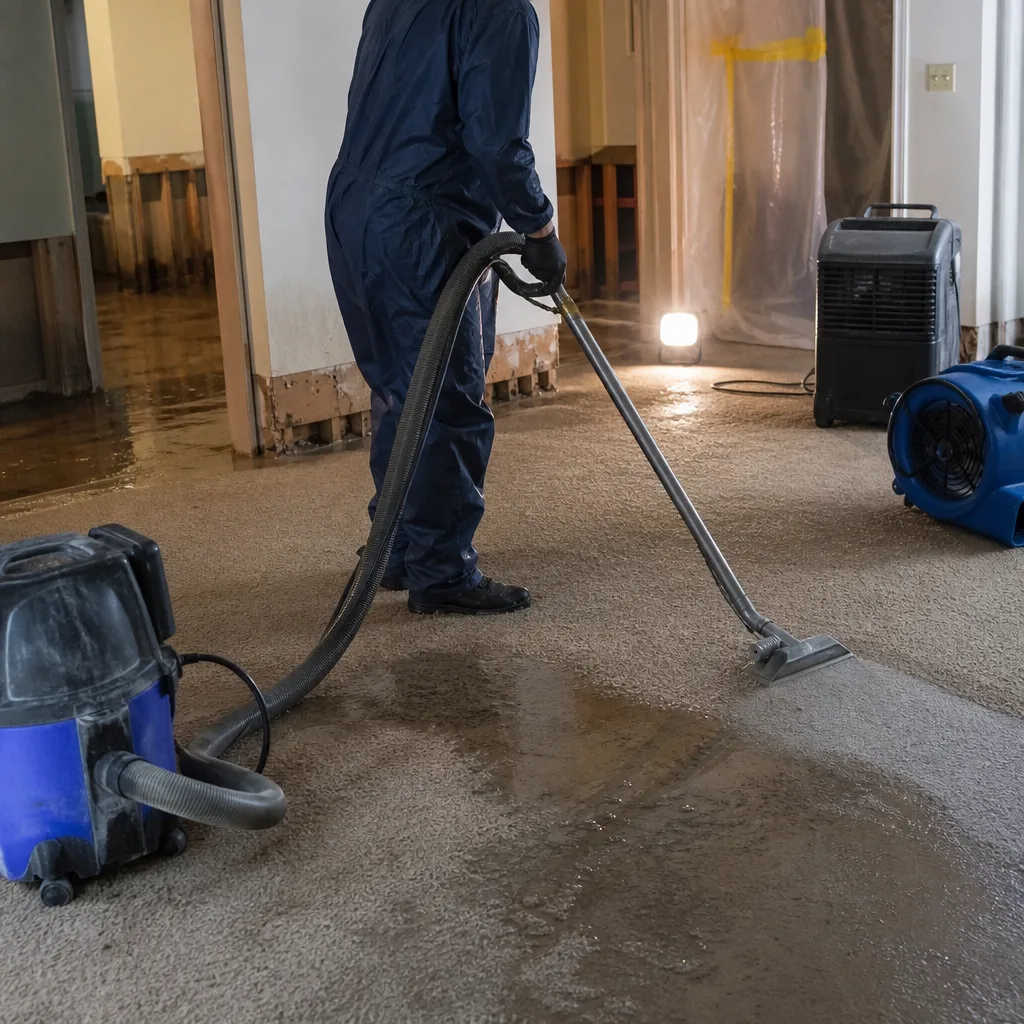
Dri-Eaz and Phoenix dehumidifiers plus XPOWER air movers run until the dry standard is met. On the south shore, with Raritan Bay salt air, this often takes longer than inland. We map moisture daily and log every reading.
Removal & Salt Treatment
We cut out affected drywall, insulation, and carpeting. If salt residue from Sandy storm surge remains in framing, soda blasting removes it chemically, not cosmetically. This is the step generic contractors skip.
Cleaning & Sanitization
HEPA air scrubbers run throughout the project. We clean all remaining surfaces with antimicrobial agents, and we run air quality testing before declaring the space ready.
Repairs & Restoration
We rebuild what we removed: new drywall, insulation, vapor barriers, and any structural work. You get a restored space and a written 90-Day Done Right Promise that says if anything isn’t right, we make it right.
Need Emergency Mold Remediation in Great Kills Now?
Crews minutes away, answering live 24 hours a day. The sooner we start, the less it costs.
Working With Your Insurance Company
Mold claims are where Great Kills homeowners most often get stuck. Insurance policies are full of exclusions and limits on mold, especially when the damage traces back to a flood event like Sandy rather than a covered water loss. We don’t argue with carriers; we build the file. From the first hour on site, we photograph everything, room by room, before anything gets moved. We log moisture readings, document the containment setup, and produce a line-item scope of work that speaks the insurer’s language.
Our team coordinates with your adjuster directly. We answer their questions, we provide their documentation, and we keep you out of the middle. This matters in neighborhoods like Great Kills, where the proximity to the harbor means a seemingly simple mold claim can trigger questions about pre-existing conditions, flood exclusions, and elevation certificates. We’ve worked through those conversations. We know what the carrier needs, and we get it to them cleanly.
What We Provide Your Insurer
- Thorough documentation of the loss
- Photos of all damage, room by room
- Moisture readings and drying logs
- A detailed, line-item scope of work
- Direct coordination with your carrier
Built for Great Kills’s Loss Calendar
Great Kills sees mold losses on a different rhythm than the rest of Staten Island. The south shore faces Raritan Bay with almost no geographic buffer. Nor’easters that would be a minor event inland push salt spray and storm-driven moisture straight into low-lying streets near the harbor. That means November through April is our busy season here, driven by wind-driven rain and coastal flooding that saturates foundations and crawl spaces.
But the deeper problem in Great Kills is the Sandy baseline. Homes elevated after 2012 now sit on open pilings or new foundation systems with crawl spaces that were never properly sealed. Every coastal storm, every humid July, every damp October, those voids collect moisture. By the time a homeowner notices the smell upstairs, the mold has been growing for months below. Add that to the typical spring thaw, when melting snow finds foundation cracks and aging basement drain lines, and Great Kills has a year-round mold calendar. Not a seasonal one.
Mold Remediation Across Great Kills’s Neighborhoods
Response routes shape how we work. Properties along Hylan Boulevard, running north-south through the heart of Great Kills, tend to be original 1950s ranches and Capes with full basements and cast-iron drains. We see a lot of foundation seepage and hidden wall growth there. Up around Nelson Avenue and the blocks off Giffords Lane, the homes are similar vintage but often closer to the water table, so basements run damp even in dry weeks.
Down near Great Kills Park and the harbor side of Nelson Avenue, the post-Sandy elevations are concentrated. Those homes usually have the open piling voids and unencapsulated crawl spaces that create the hidden mold problem we’ve described. The 10308 zip code territory, closer to the waterfront, accounts for a large share of our crawl space treatment calls. Up toward Giffords Glen and the blocks around Bamberger Lane, we see more traditional basement dampness, but often with salt residue left from 2012 that still hasn’t been fully addressed.
Each area takes a slightly different approach. The harbor-adjacent homes need moisture mapping below the subfloor. The inland Capes need drywall removal in basements and proper insulation replacement. The consistency is this: Great Kills homes are older, built at a time when vapor barriers and drainage boards weren’t standard, and the coastal environment punishes every shortcut.
Specialized Mold Remediation Services We Offer in Great Kills
Mold Inspection & Testing
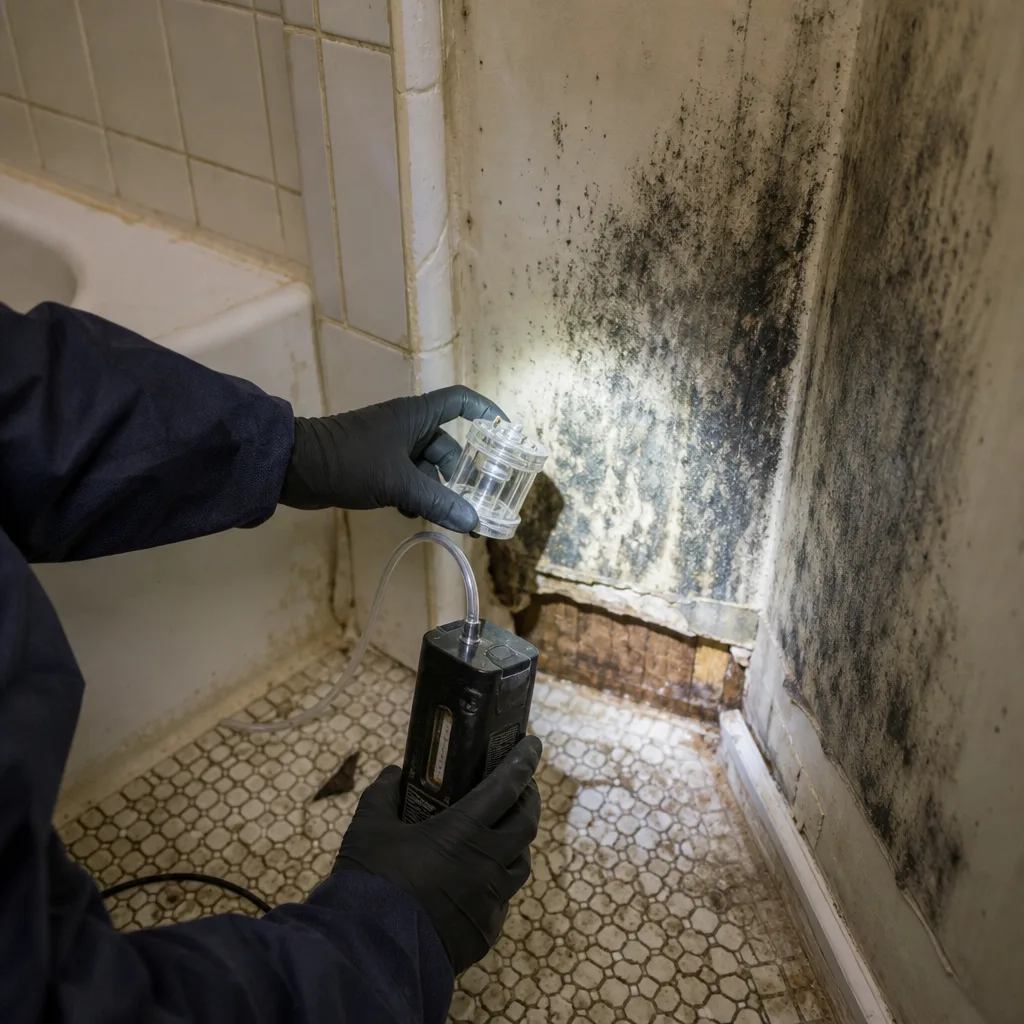
Before we touch anything, we find out what’s actually there. In Great Kills, that means air sampling, surface swabs, and thermal imaging of walls, ceilings, and especially below-grade spaces. We test for Aspergillus, Penicillium, and Stachybotrys, the species most common in salt-damaged materials. You get lab results, not guesses.
Mold Removal
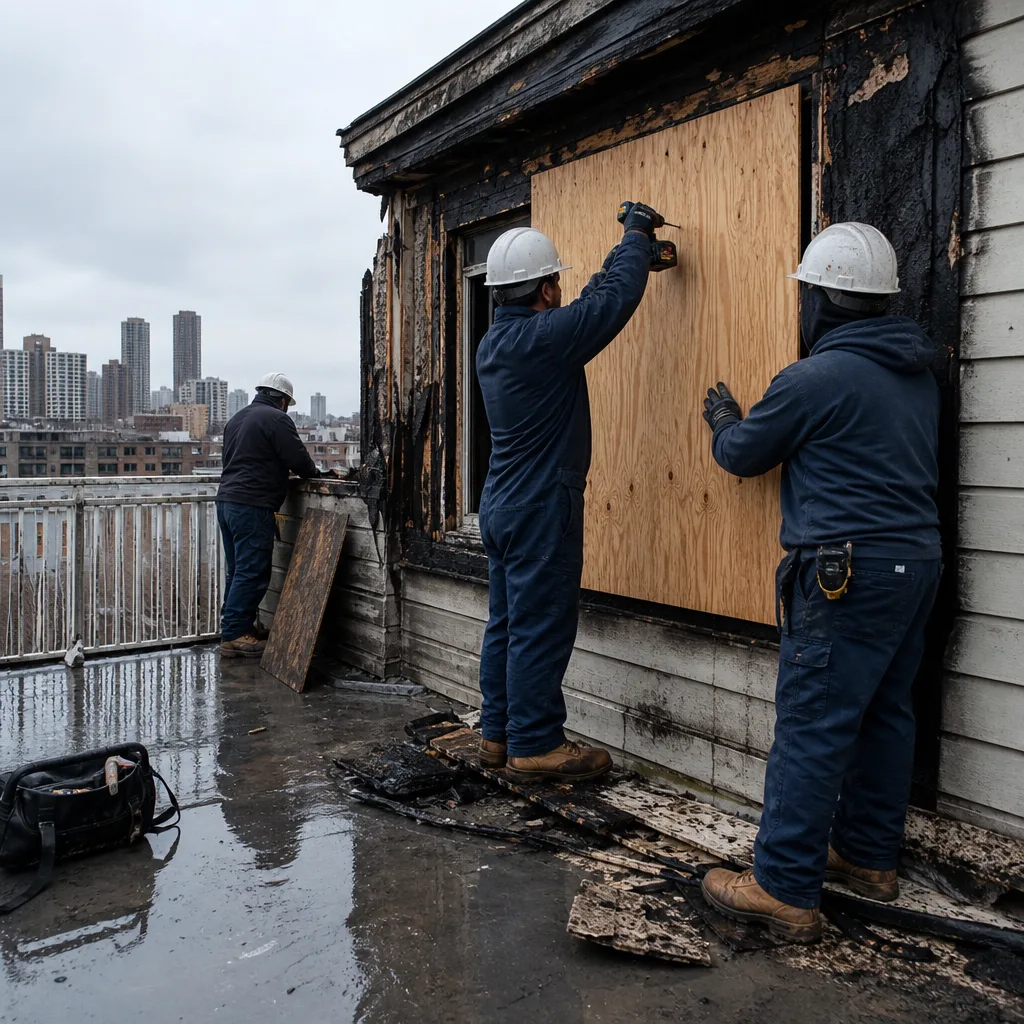
Removal means taking out the affected material, not killing the surface of it. Perforated drywall, soggy insulation, stained baseboards: we cut, bag, and dispose of it under containment. On porous materials, cleaning isn’t enough. Removal is the only fix.
Black Mold Remediation
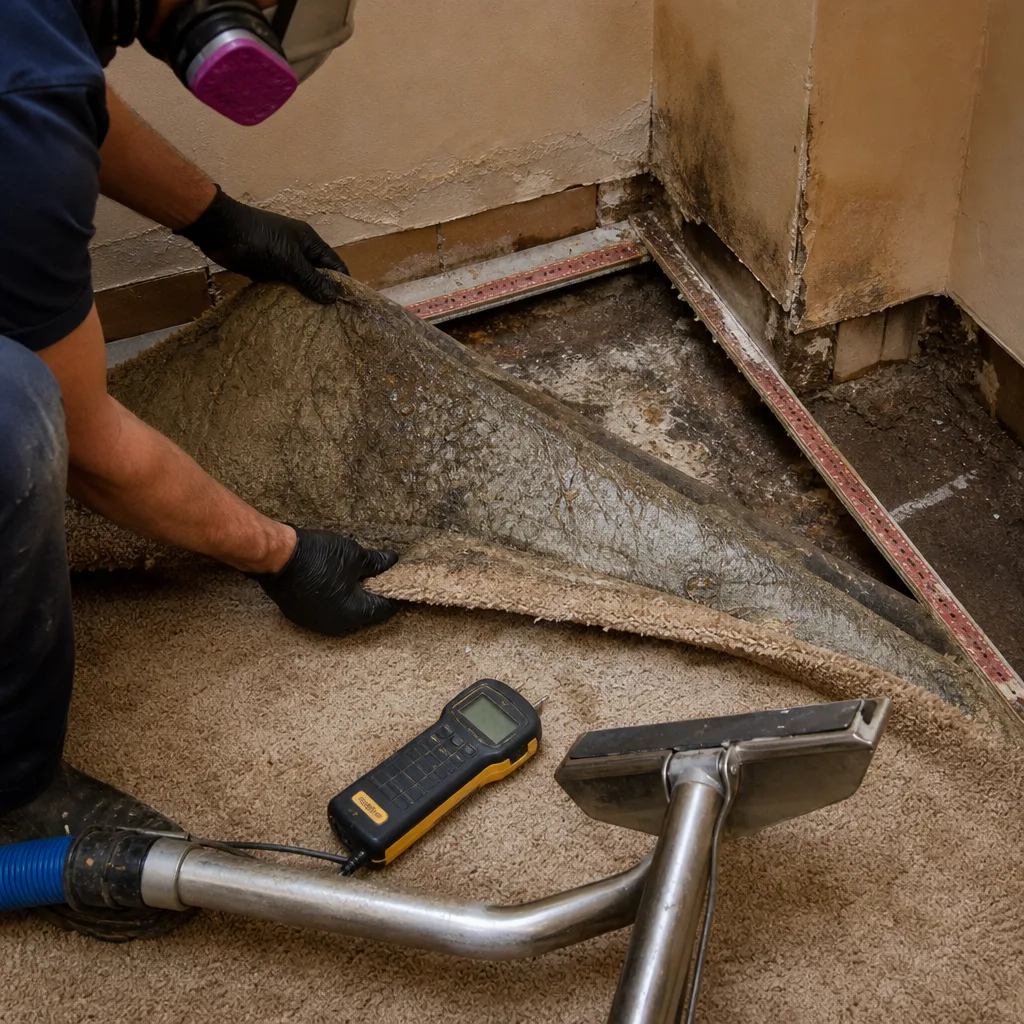
Stachybotrys chartarum, or black mold, shows up in chronic moisture conditions. Around Great Kills, that means the unencapsulated crawl space under an elevated home or the basement wall with a slow trickle behind the drywall. We contain it aggressively, run HEPA scrubbers throughout, and don’t declare the job done until clearance testing confirms spore counts are back to normal.
Air Quality Restoration
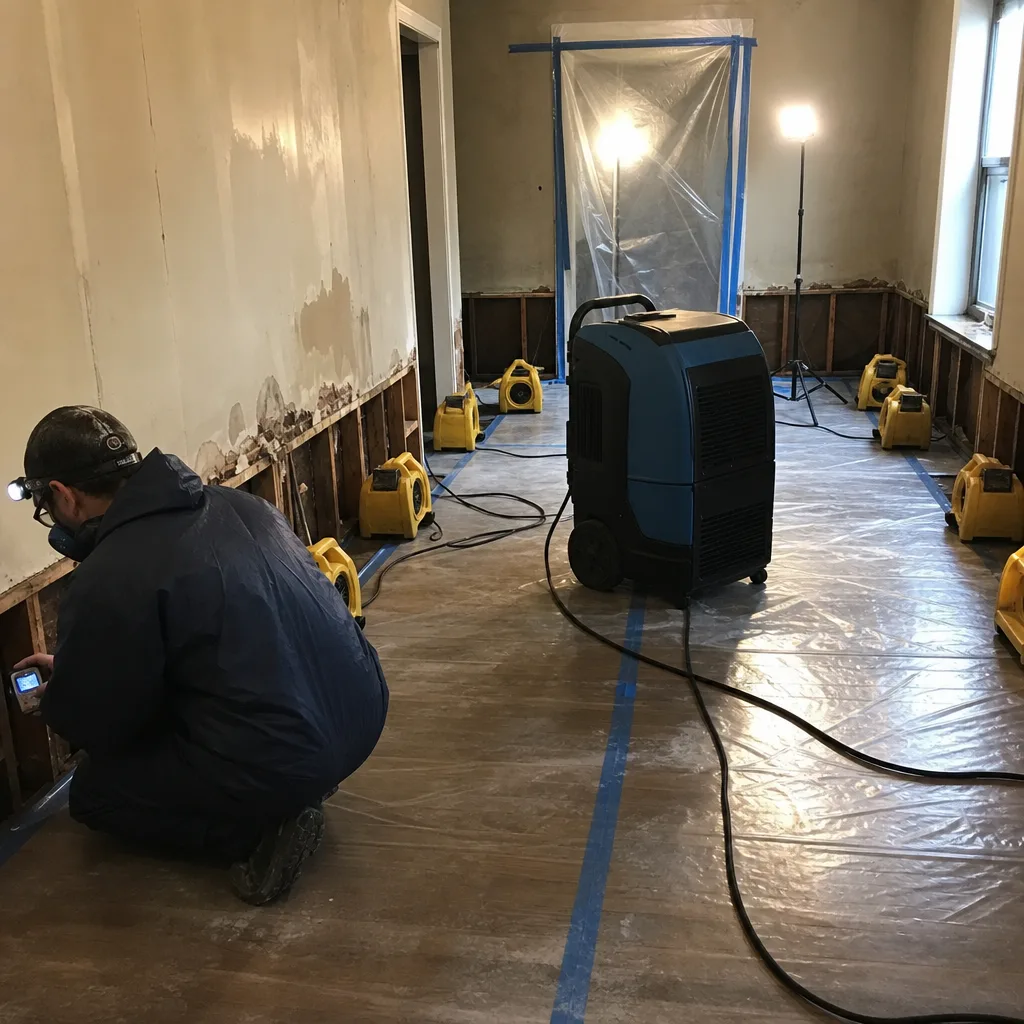
Mold doesn’t just sit on surfaces. Spores circulate through the HVAC system and settle in ductwork, furniture, and carpet. We run professional-grade air scrubbers, clean the ducting, and test the air before and after. You breathe what the spore counts say, not what we claim.
Crawl Space Treatment
This is the Great Kills specialty. Post-Sandy crawl spaces and piling voids trap Raritan Bay humidity, grow mold on original floor joists, and feed musty air into the living space. We encapsulate the ground with a 10-mil vapor barrier, seal the perimeter, treat the framing, and install dehumidification where needed. After that, the space stays below 50% relative humidity, even during nor’easters.
What happens when you call
- 1
A real person answersNo phone trees - you reach a local pro.
- 2
You get an upfront price rangeHonest numbers before anyone is dispatched.
- 3
A background-checked tech heads outLicensed & insured, dispatched right away.
- 4
You approve before work beginsNothing starts until you say go.
Mold Remediation Costs in Great Kills, NY
Straight numbers, because that’s what homeowners ask for. A contained surface mold job in a single room of a Great Kills home runs $1,200-$2,500. A full basement remediation with drywall removal, insulation replacement, and antimicrobial treatment typically lands between $3,500 and $7,500. If we’re dealing with a post-Sandy crawl space that needs vapor barrier installation, soda blasting of salt-contaminated framing, and subfloor moisture correction, you’re looking at $6,000-$15,000.
What moves the price: square footage of the affected area, whether the mold is in a finished living space or an unfinished utility area, whether the growth has reached structural framing, and whether salt residue from the 2012 surge is still present. Homes in the FEMA-remapped AE flood zone near the harbor often trigger elevation certificate requirements before reconstruction work can proceed, and that adds a step and a cost. We walk you through all of it before any work starts, and we put the scope in writing. Call (917) 924-4221 for a free inspection and a firm number.
We Also Serve Cities Near Great Kills
Floodline Restoration Co. handles Great Kills mold remediation and serves nearby communities across the south shore and beyond, including Fairview, Harrison, East Bronx, and Hunts Point. Same live answer, same certified crews, same written guarantee.
Serving Great Kills, NY - Our Local Coverage Area
We’re based in the Great Kills area and know this community well. Use the map below to see our service coverage - if you’re nearby, we can almost certainly help.
Great Kills Mold Remediation Questions, Answered
Why does mold keep coming back in my Great Kills basement after I clean it?
Because you’re cleaning the symptom, not the source. In Great Kills basements, especially in 1950s-70s homes with original insulation and cast-iron drains, the moisture source is usually hidden behind drywall or under the floor. Salt deposits from Sandy continue pulling moisture from the air. Call (917) 924-4221 and we’ll find the source before we clean anything.
My house was elevated after Sandy but now I smell mold - where is it coming from?
Almost certainly the piling void or crawl space under your elevated floor. Post-Sandy elevations left thousands of Great Kills homes sitting on open or poorly sealed undersides that trap bay humidity. The mold is growing on your original floor joists, invisible from upstairs. We map and treat that space directly.
Do I need a flood elevation certificate before mold remediation in Great Kills?
Often, yes. If your home sits in a FEMA-remapped AE or VE flood zone, reconstruction work, including structural changes required by mold remediation, may need an elevation certificate. We’ll tell you during the inspection whether that applies to your property, and we’ll coordinate the documentation with your insurer.
How does saltwater mold damage differ from freshwater mold in Great Kills?
Salt is hygroscopic. It draws and holds moisture from humid air. So framing, drywall, and insulation that absorbed saltwater during Sandy look dry but stay damp enough to support mold for years after the flood. That’s why proper Great Kills remediation includes soda blasting or deep cleaning of salt residue, not just surface treatment. Call (917) 924-4221 to have your post-Sandy materials tested.
Can moisture mapping find mold hidden in my unencapsulated crawl space?
Yes. Thermal imaging shows temperature differentials that indicate moisture. Hygrometer readings show relative humidity levels. When our techs ran these tools in a post-Sandy Cape Cod near Great Kills Harbor, the piling void was releasing 78% relative humidity into the subfloor, with visible Aspergillus on rim joists. A standard basement inspection never would have found it.
How fast can you get to Great Kills?
Typically within 45 minutes. We dispatch from our New York City office and route directly down Hylan Boulevard or Amboy Road. A live dispatcher takes your call, any hour, and a certified technician is on the way the same day.
Will my insurance cover mold remediation in Great Kills?
It depends on the cause, the policy, and often whether your home sits in a flood zone. We don’t guess and we don’t promise coverage that’s not there. We document everything, submit it properly, and coordinate directly with your adjuster to get the maximum your policy allows. Call (917) 924-4221 and we’ll walk through it honestly.
Should I leave my Great Kills home during mold remediation?
Usually, for the affected area, yes. Containment keeps the work zone sealed, but depending on the size and location of the growth, the air scrubbers run continuously and you may smell the antimicrobial process. We’ll tell you during the inspection whether staying is reasonable. We don’t have you leave a room while we work in it.
Written by Curt Bowman, Owner at Floodline Restoration Co. of Manhattan, serving Great Kills since 2010.