
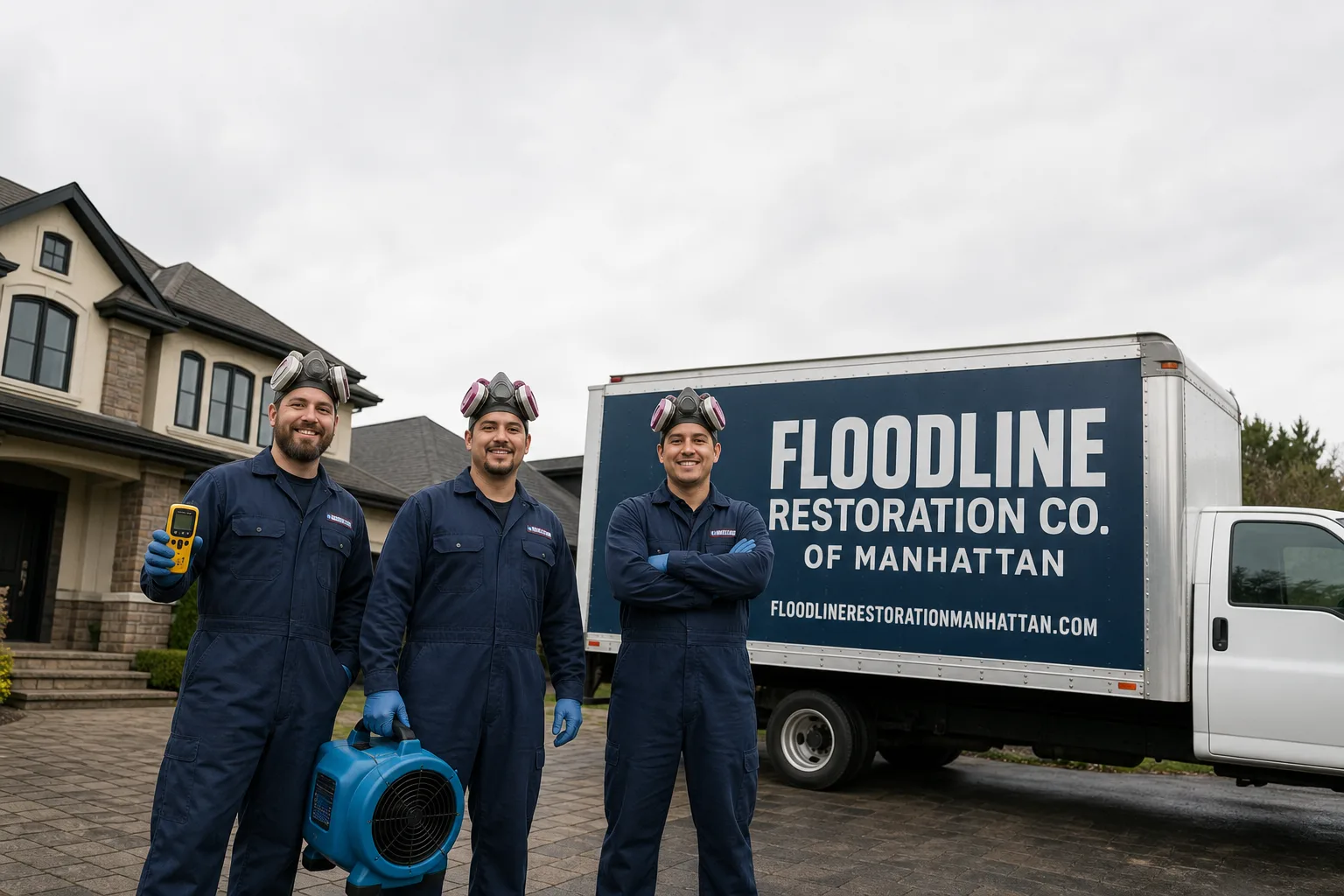
Free visual inspection and a written scope of work before any mitigation begins - photos, moisture readings, and drying logs go in your claim file
The scope we write is the scope we bill. Anything new gets shown to you, in writing, before we touch it.






 Before
 After
After Before
 After
After Before
 After
After24/7 Emergency Reconstruction & Cleanup in Chinatown
Water has moved through Chinatown’s buildings for over a century, and it doesn’t stop for business hours. When a supply line lets go on the fifth floor of a Mott Street tenement or a seafood market’s tank overflows into the shared masonry below, reconstruction and cleanup can’t wait until morning. Floodline Restoration Co. of Manhattan answers live at (917) 924-4221 around the clock, every day of the year. A real dispatcher picks up, not a recording, and crews reach most Chinatown addresses within 45 minutes. The first hour determines whether you’re drying a room or rebuilding a floor. Water wicks fast into unreinforced brick and lime mortar, and every hour of delay adds to the scope. Call now and we’ll start with a free visual inspection of the damage, then hand you a written scope before any work begins.
Understanding Reconstruction & Cleanup Severity in Chinatown Properties
Chinatown’s housing stock runs old. Late-19th and early-20th century tenement walk-ups, typically five to seven stories, built with unreinforced brick and lime mortar, stand on nearly every block. These buildings have minimal original vapor barriers. When water enters, it doesn’t pool on the surface. It wicks into structural masonry, climbs through lath and plaster, and saturates subflooring. Severity here runs in categories. Category 1 water is clean, from a supply line or faucet. Category 2 carries contaminants, often from a failed grease-trap or a dishwashing drain in a ground-floor restaurant. Category 3 is grossly contaminated, the kind that backs up from a broken cast-iron waste line. We’ve seen all three inside the same Chinatown building, sometimes moving between floors. Moisture mapping with IFA-standard thermal imaging tells us how far the water traveled before we tear anything open. That’s the difference between replacing drywall on one wall and uncovering structural drying that runs two floors down.
Why Chinatown Property Owners Choose Floodline Restoration Co. of Manhattan
- 45-minute response commitment. Once you call, a crew is dispatched to your Chinatown address. We don’t schedule you for a window. We give you a time and we meet it.
- Live answer, 24/7. A person picks up at two in the morning. Not a voicemail. Not a call-back service. You’ll speak with someone who knows what questions to ask.
- IICRC-certified crews. Our technicians hold WRT, FSRT, and AMRT certifications. Background-checked, uniformed, trained to the standard that matters for water, fire, and mold.
- Free visual inspection. Before you spend a dollar, we walk the space, map the moisture, and tell you honestly what we’d do and why. No obligation.
- Direct insurance billing. We work with your carrier directly. You don’t carry paperwork back and forth. We document, we submit, we follow through.
- One team, start to finish. The same crew that extracts and dries is the crew that hangs drywall, refinishes floors, and finishes the rebuild. No mid-job handoff to strangers.
Our Reconstruction & Cleanup Process
Inspection & Assessment
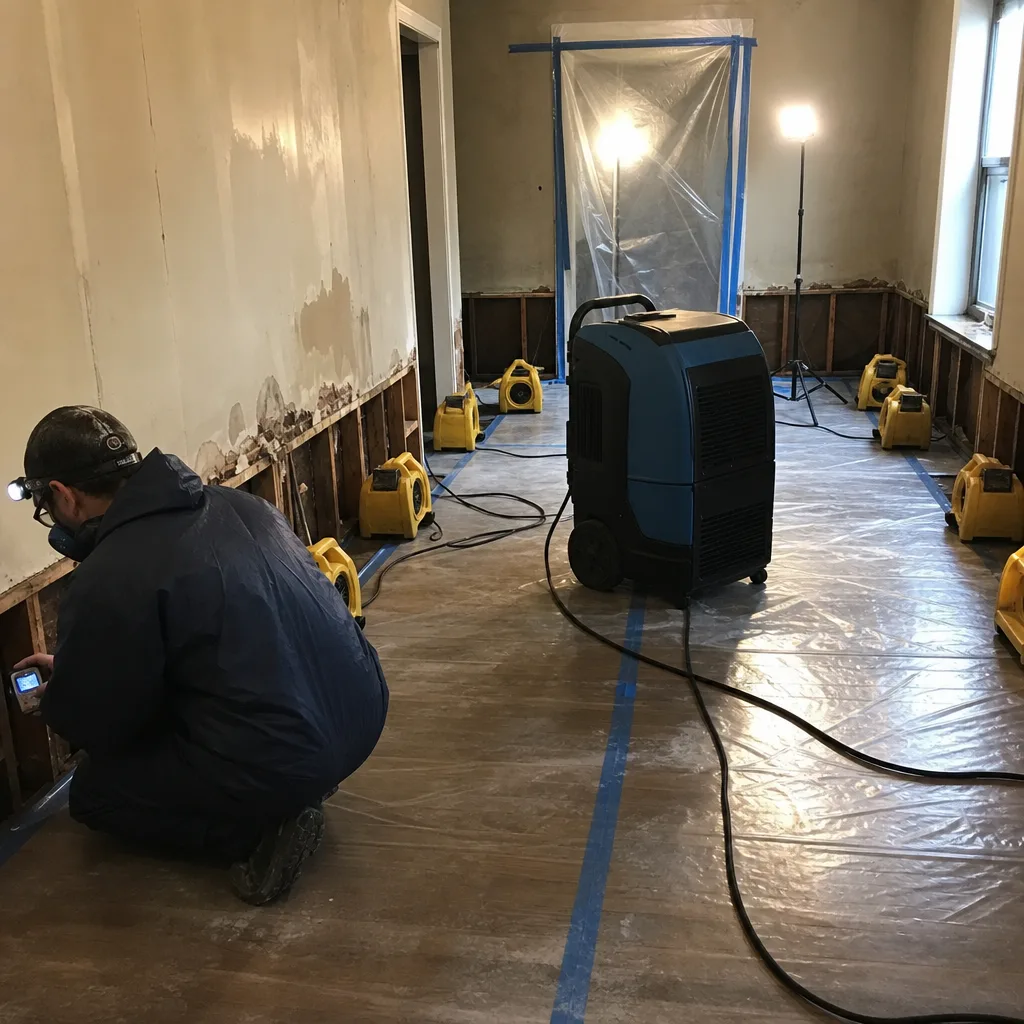
We arrive, we look, we measure. Thermal imaging cameras and hygrometers map the moisture path through walls, floors, and ceilings. If the source traces to a commercial space below, we coordinate access through our Chinatown Commercial Restoration team before touching anything.
Extraction / Stabilization
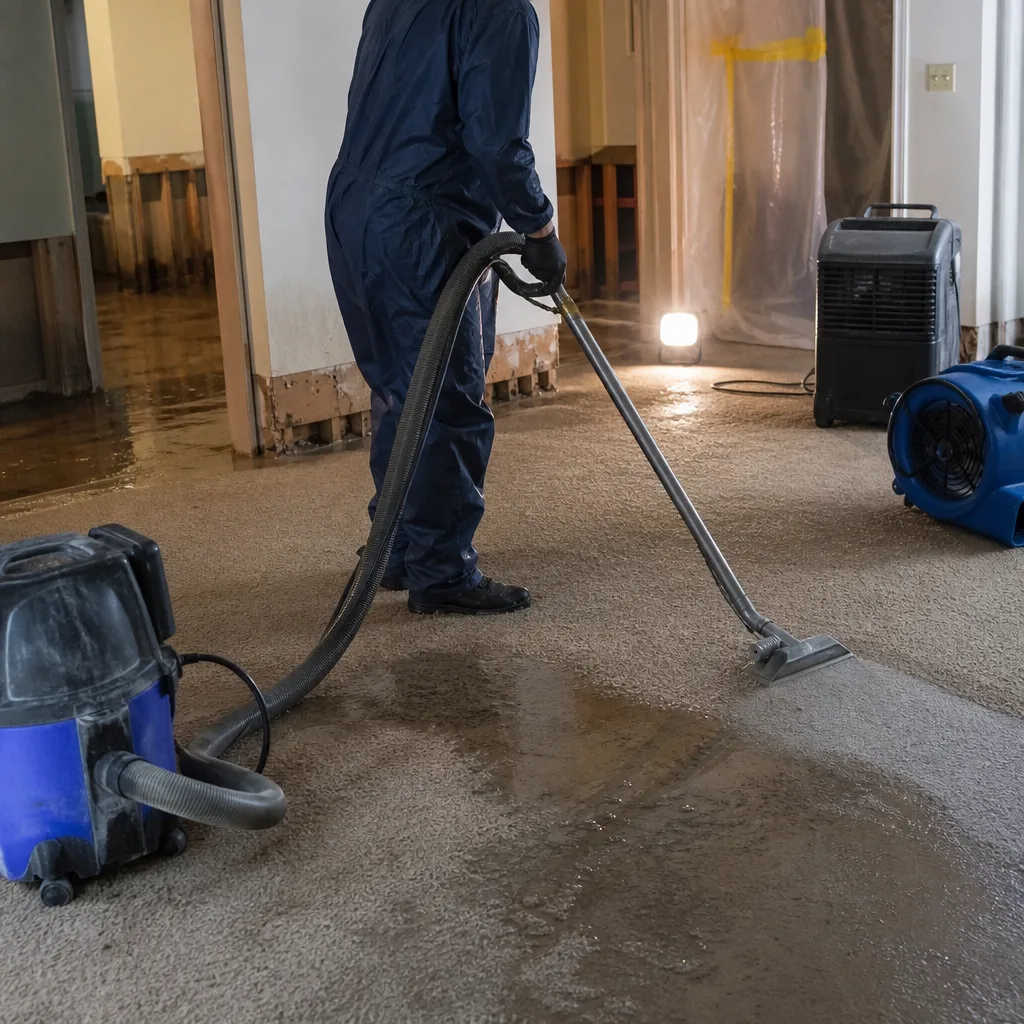
Standing water comes out first. Truck-mounted and portable extraction units pull water from floors and carpets. We stabilize the structure so nothing else fails while the drying plan runs.
Drying & Dehumidification
Dri-Eaz and Phoenix air movers paired with commercial dehumidifiers run continuously, cycling air through saturated cavities. Daily moisture readings get logged until the dry standard is met. In Chinatown’s old masonry, that can take days longer than in modern drywall construction.
Cleaning & Sanitization
Once the structure is dry, we clean and sanitize. HEPA air scrubbers run during the work to capture spores and particulates. For Category 2 or 3 water, we apply antimicrobial treatments rated for the specific contamination found.
Contents Restoration & Pack-Out
Salvageable belongings get inventoried, packed out, cleaned, and stored. We document every item with photos before anything leaves your unit. When reconstruction is done, we bring it all back.
Repairs & Restoration
Drywall, flooring, trim, paint. The same crew that did the drying performs the reconstruction. The final result meets the 90-Day Done Right Promise, in writing, before we hand you the keys.
Need Emergency Reconstruction & Cleanup in Chinatown Now?
Crews minutes away, answering live 24 hours a day. The sooner we start, the less it costs.
Working With Your Insurance Company
We’ve handled thousands of claims in New York City, and we know what adjusters need to see. From the first visit, we document. Photos of every affected area, moisture readings day by day, a line-item scope of work, and a written drying log that gets shared with your carrier. If your Chinatown claim involves a ground-floor commercial tenant and a residential unit above, the documentation gets more complicated. We’re used to that. We coordinate directly with your adjuster. You don’t play messenger between us and the insurance company. You get the repair done and we handle the paperwork. That’s how Reconstruction & Cleanup should work.
What We Provide Your Insurer
- Thorough documentation of the loss
- Photos of all damage, room by room
- Moisture readings and drying logs
- A detailed, line-item scope of work
- Direct coordination with your carrier
Built for Chinatown’s Loss Calendar
Chinatown doesn’t flood on a schedule, but we see patterns. January and February bring the deep freezes that burst uninsulated supply lines in exposed tenement walls. The pipes in these buildings are often original cast iron or early galvanized steel, corroded from decades of New York’s hard water. When they freeze, they split. Spring thaw sends groundwater into below-grade basement slabs, especially in the low-lying pockets near Canal Street, which traces an old drainage canal. Summer thunderstorms overwhelm the neighborhood’s combined sewer lines, backing water up through floor drains in ground-floor commercial spaces and creating the kind of situation our Water Damage Restoration - Chinatown crews handle most. And nor’easters push East River storm surge toward the lowest-elevation blocks, where many buildings still carry unresolved moisture from Hurricane Sandy. We plan our crews around this calendar. When a cold snap hits, we’re already staged.
Reconstruction & Cleanup Across Chinatown’s Neighborhoods
Chinatown isn’t one neighborhood. It’s a knot of blocks that each behave differently when water moves. Along Mott Street, the historic core, five-to-seven-story tenements sit directly above live-fish markets and roast-duck kitchens. Water damage there rarely starts on the residential floor. It climbs. Over on Bayard and Pell, narrow mid-block buildings share party walls with both commercial and residential occupancy, so a single leak can affect three addresses. East of Bowery, toward the Sara D. Roosevelt Park corridor, buildings are slightly newer but still pre-war, and old cast-iron waste lines are a common failure point. Around the Canal Street and Baxter Street area, the fill-and-culvert history under the pavement means basement slabs stay damp even in dry weather. We know these routes. Our crews respond to Fairview, Harrison, East Bronx, and Hunts Point too, but the Chinatown blocks are where we’ve learned to read moisture the way a doctor reads a chart.
Specialized Reconstruction & Cleanup Services We Offer in Chinatown
Full-Service Reconstruction
When drying ends, rebuilding begins. We replace structural framing, hang and finish drywall, lay flooring, run trim, and paint. In Chinatown’s older buildings, we often match lath-and-plaster profiles with veneer plaster systems that keep the original character without the old failure modes. Every reconstruction job is done by the same crew that performed the mitigation, and it’s covered by the 90-Day Done Right Promise in writing.
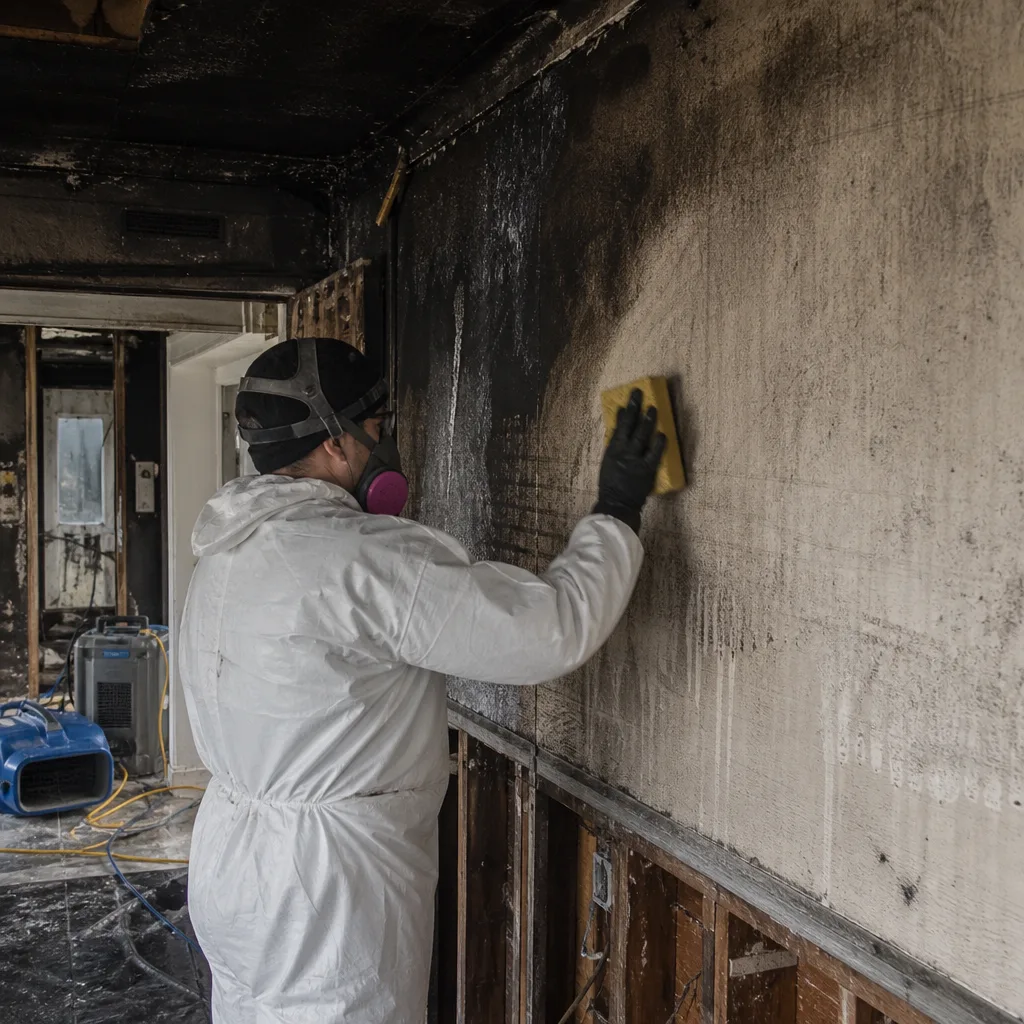
Drywall & Flooring Repair
Water-damaged drywall in a tenement is rarely isolated to one apartment. Moisture travels through shared walls and across joist cavities. We replace only what’s damaged, but we scope carefully to include everything the moisture actually touched. For flooring, we work with original hardwood where it can be saved and match replacement material where it can’t. Vinyl, tile, and carpet all have different drying and replacement thresholds. We’ll tell you which one yours is.
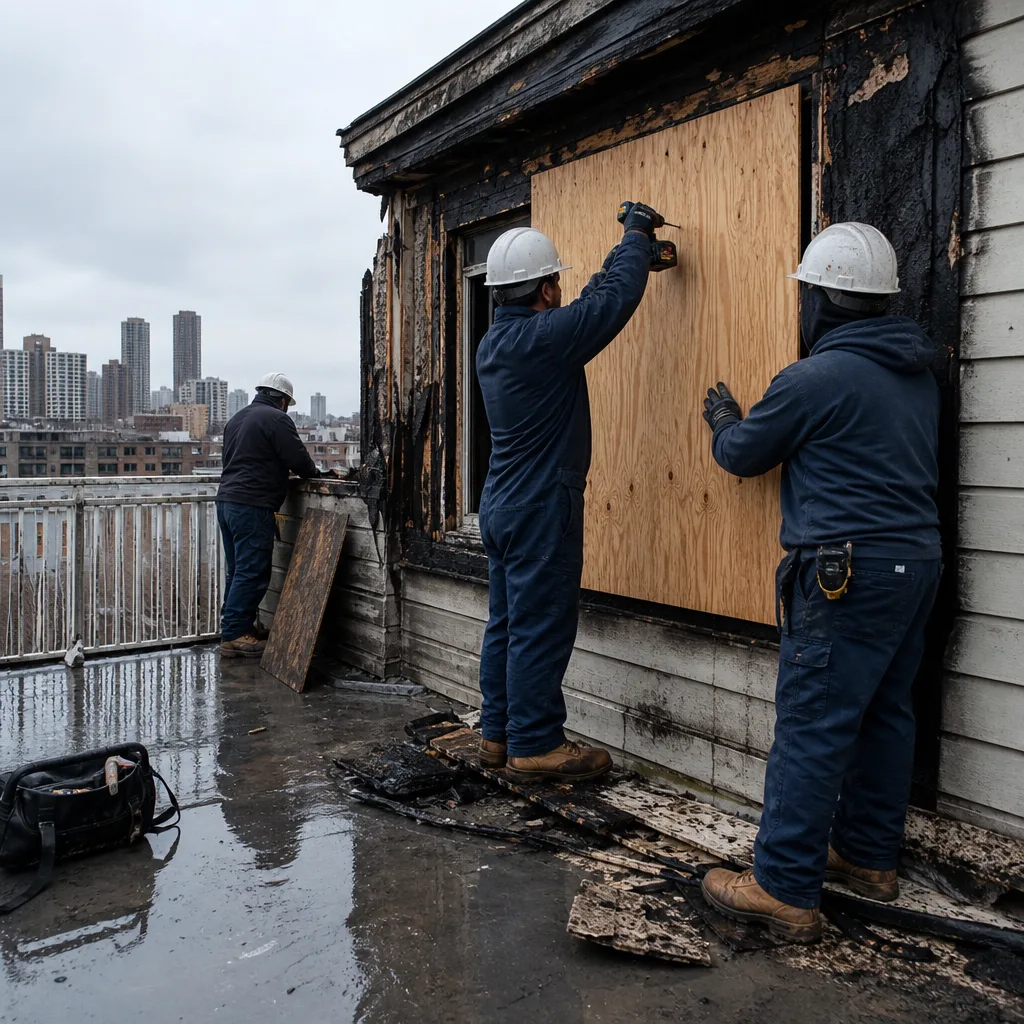
Contents Restoration & Pack-Out
Furniture, clothing, documents, photographs, kitchenware. When your Chinatown apartment needs reconstruction, we inventory and pack out your belongings, clean what can be cleaned, and store everything in a climate-controlled facility until the work is done. You get a written inventory with photos. Nothing disappears. When the rebuild is finished, we bring it all back and help you put it in place.
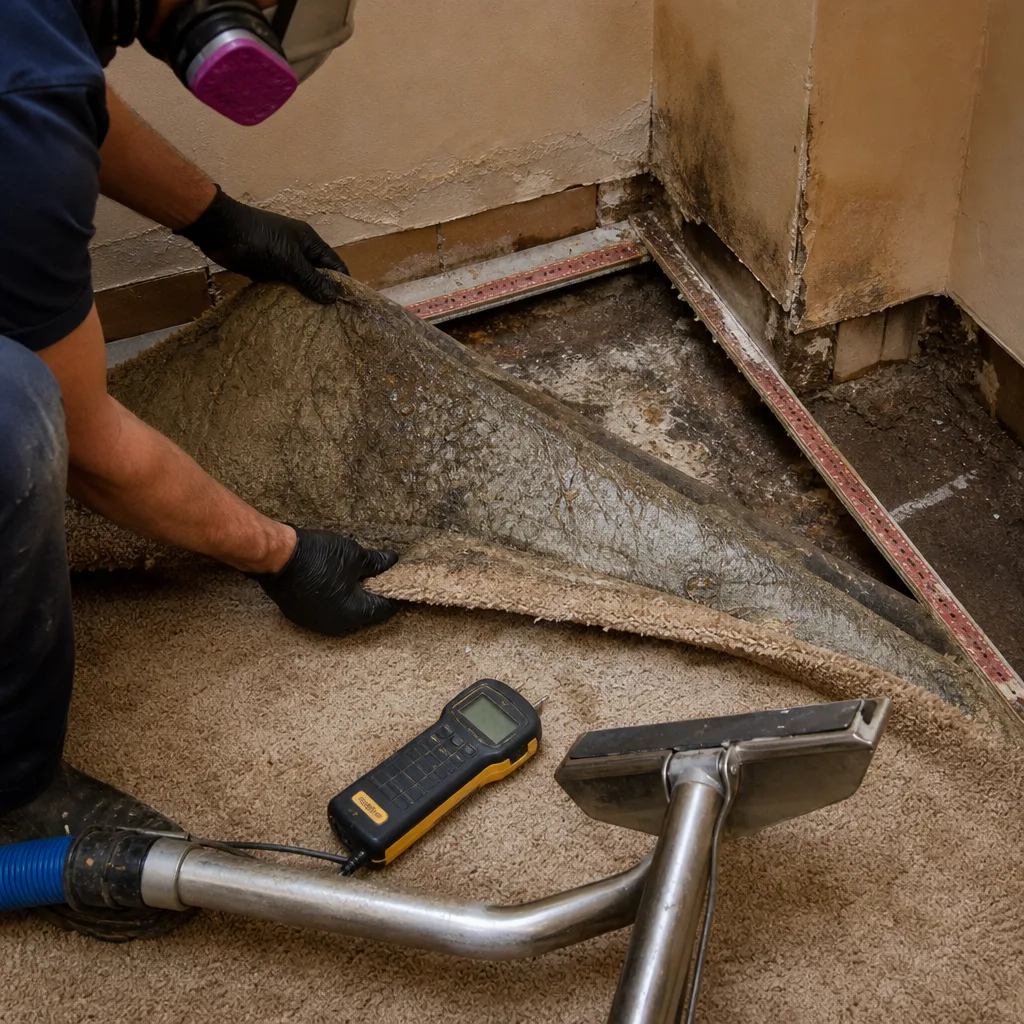
Carpet & Upholstery Cleaning
Not every water event floods the room. Sometimes a carpet needs professional extraction and cleaning, and upholstery absorbs moisture that can turn sour. We use truck-mounted extraction equipment and professional-grade cleaning agents rated for the material. If the carpet is saturated with Category 2 or 3 water, we’ll tell you honestly that replacement is the safer call. We won’t clean something that should be removed just to charge a cleaning fee.
Post-Construction Cleanup
Reconstruction leaves dust. Fine gypsum particulate, sawdust, and trace debris settle into every surface. We clean it all before we call the job done. HEPA-filtered vacuums, damp-wiping of all surfaces, and a final air-scrub session. Post-construction cleanup is the last step, and it’s the one that tells you the job was finished properly. If there’s dust in the air when we leave, we’re not done.
What happens when you call
- 1
A real person answersNo phone trees - you reach a local pro.
- 2
You get an upfront price rangeHonest numbers before anyone is dispatched.
- 3
A background-checked tech heads outLicensed & insured, dispatched right away.
- 4
You approve before work beginsNothing starts until you say go.
Reconstruction & Cleanup Costs in Chinatown, NY
Here’s what we see in Chinatown’s market. A small, localized drywall and paint repair after a supply-line leak runs $850 to $2,200, assuming the water was clean and the drying was fast. Mid-size reconstruction involving one room of flooring, drywall, and baseboard typically lands between $3,500 and $7,500. Full apartment rebuilds after a category 3 sewage backup or a multi-floor leak start around $12,000 and can reach $40,000 or more depending on the building’s age and the number of affected rooms. What moves the price in Chinatown specifically: the building’s masonry construction, access limitations in five-to-seven-story walk-ups, and the extra containment needed when a commercial tenant shares the affected wall. Insurance covers most of these scopes when the loss is sudden and accidental. Our free inspection gives you a firm written estimate, not a guess. Call (917) 924-4221 and we’ll walk you through it.
We Also Serve Cities Near Chinatown
Our crews work throughout the lower Manhattan and Bronx corridors. If you’re in Fairview, Harrison, East Bronx, or Hunts Point, we respond with the same 45-minute commitment and the same written guarantee. Reconstruction & Cleanup in Chinatown is our home ground, but the standards don’t change across the bridge.
Serving Chinatown, NY - Our Local Coverage Area
We’re based in the Chinatown area and know this community well. Use the map below to see our service coverage - if you’re nearby, we can almost certainly help.
Chinatown Reconstruction & Cleanup Questions, Answered
How do you handle reconstruction when the water source is a commercial seafood market two floors below my Chinatown apartment?
We start by tracing the moisture path with thermal imaging and hygrometers, which shows us exactly where the water originated and how far it traveled. Then we coordinate access with the commercial tenant below, often through a bilingual team member, to address the source before we begin any reconstruction in your unit. Without stopping the source, any repair is temporary. Call (917) 924-4221 and we’ll start the diagnostic work the same day.
Why does mold keep returning in my Chinatown tenement even after a previous cleanup?
Because the underlying moisture was never fully resolved. In Chinatown’s brick tenements, water can sit inside shared masonry walls for weeks while the surface looks dry. If a previous company sealed drywall over a wall that still held moisture, the mold simply returned, which is why our Mold Remediation in Chinatown process includes moisture mapping first. We use moisture mapping and daily drying logs to confirm the wall is dry to standard before we close anything up. The 90-Day Done Right Promise backs that work in writing.
Can you dry out original plaster walls in a 100-year-old Chinatown building, or do they always need to be torn out?
Often, yes, we can dry them. Original lime-plaster walls can be saved when we catch the water early and run continuous drying with Dri-Eaz or Phoenix equipment and proper airflow. If the plaster has delaminated from the lath or the wall has been saturated for more than 72 hours, removal may be the only sound option. We’ll show you the moisture readings before making that call, and we’ll give you an honest recommendation, not a demolition estimate.
What extra steps are needed for insurance documentation when the damage involves both a commercial market and my residential unit in Chinatown?
Your carrier will want proof of origin, not just proof of damage. We document the commercial space’s plumbing or tank failure, photograph the shared wall cavities, and log moisture readings from both the commercial and residential sides. This cross-unit documentation is what gets claims approved when two policies may be involved. We handle that communication directly with the adjuster, so you don’t carry paperwork between the market, your landlord, and the insurance company.
How do you handle pack-out of personal belongings when the moisture source is a grease-trap failure in the restaurant below my apartment?
Grease-trap failures produce Category 2 water, which means anything that touched it needs either professional cleaning or disposal. We inventory everything with photos, separate salvageable items from unsalvageable ones, pack out the salvageable contents, and clean them at our facility. You get a written inventory. When reconstruction is done, we return everything and help you put it back. The inventory list is shared with your insurer as part of the claim.
How fast can someone actually get to my Chinatown apartment?
Inside 45 minutes, typically. Our dispatchers know the Chinatown street grid and our crews are staged nearby. Call (917) 924-4221 and you’ll speak with a live person who dispatches immediately. We don’t route you through a call center in another state.
Will insurance cover this reconstruction?
Most sudden and accidental water losses are covered, including supply-line bursts, tank overflows from a commercial tenant, and backed-up waste lines depending on your policy’s endorsements. We document the loss from the first visit so your claim has everything it needs. We also bill the carrier directly, which means less money out of your pocket while the claim processes.
What should I do in the first 30 minutes after discovering water damage in Chinatown?
Call us at (917) 924-4221 first. Then, if you can do so safely, shut off the water supply to the affected fixture or unit. Don’t use a wet vacuum on Category 2 or 3 water. Don’t open walls yourself. Move small valuables out of the water path if it’s safe. The sooner we get moisture mapping and extraction started, the smaller the reconstruction scope will be. Every hour of delay adds to the cost.
We rebuilt a fourth-floor tenement on Mott Street after a ceiling collapse exposed soaked lath and plaster. Moisture mapping traced the source not to the apartment’s own pipes but to a seafood tank overflow two floors below in a live-fish market. That job required bilingual access coordination before we could even set containment. It’s the kind of work that defines Chinatown restoration. Call Floodline Restoration Co. of Manhattan at (917) 924-4221 for a free estimate. We answer live, day or night, and we stand behind the work in writing.
Written by Curt Bowman, Owner at Floodline Restoration Co. of Manhattan, serving Chinatown since 2010.