
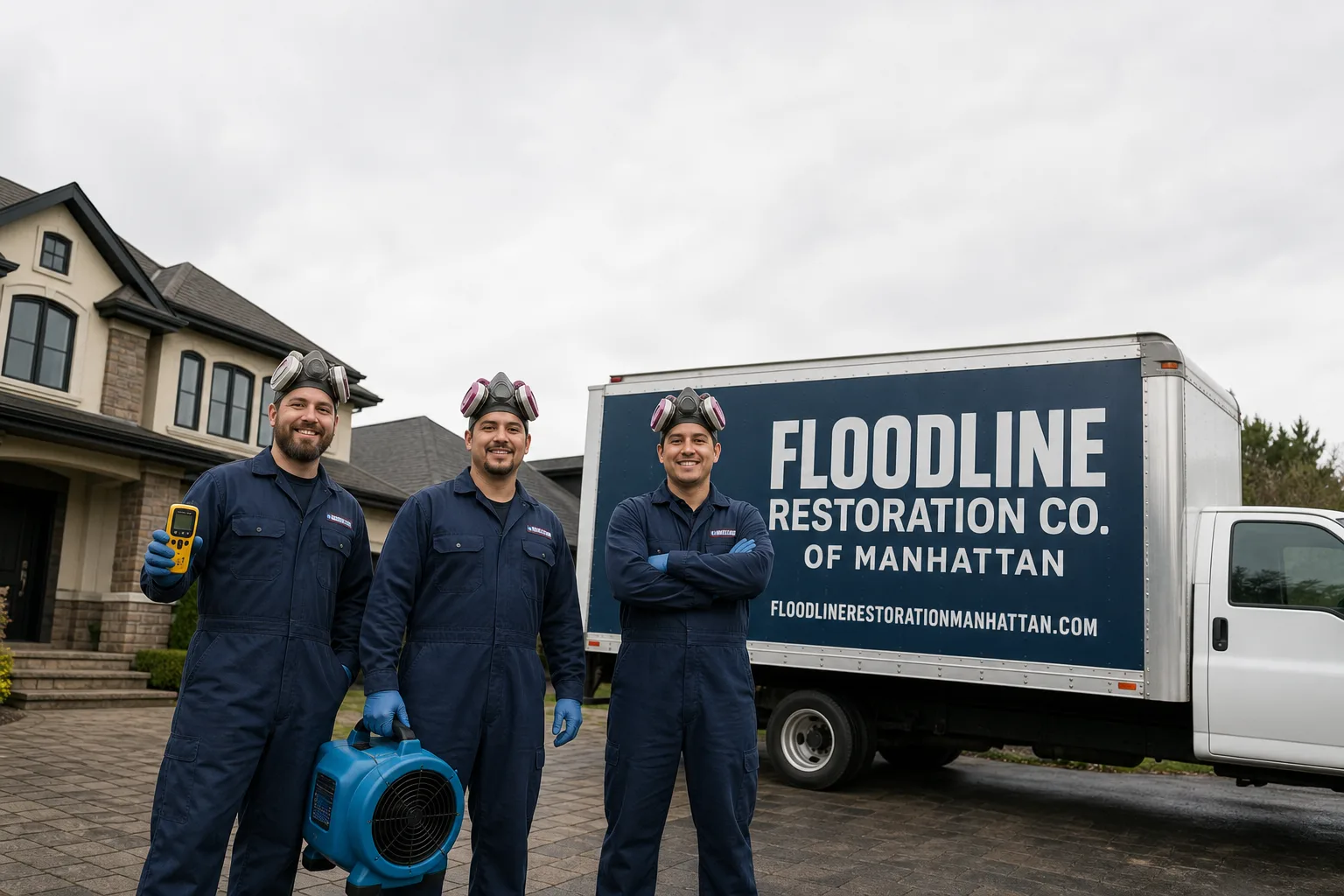
Free visual inspection and a written scope of work before any mitigation begins - photos, moisture readings, and drying logs go in your claim file
The scope we write is the scope we bill. Anything new gets shown to you, in writing, before we touch it.






 Before
 After
After Before
 After
After Before
 After
After24/7 Emergency Water Damage Restoration in Atlantic Beach
Water damage restoration in Atlantic Beach typically runs $2,800 to $8,500 for a standard ground-floor surge cleanup, and the work has to start within 24 to 48 hours before salt-laden drywall and cavity mold turn a two-day dry-out into a two-month rebuild. Floodline Restoration Co. of Manhattan answers live around the clock, every day of the year. Call (917) 924-4221 and a dispatcher picks up and gets a certified crew moving toward Atlantic Beach while you’re still on the phone.
The first hour after water enters a barrier-island home matters more here than anywhere else in Nassau County. Atlantic Beach sits between the Atlantic Ocean and Reynolds Channel, which means the water you’re dealing with is almost always saltwater, and saltwater keeps corroding and conducting long after the visible puddle is gone. We start emergency water extraction the same visit and set professional-grade Dri-Eaz and Phoenix equipment before we leave. The line the water left is where we start.
Understanding Water Damage Restoration Severity in Atlantic Beach Properties
Atlantic Beach homes break into two severity patterns, and they don’t respond to the same treatment. Pre-Sandy bungalows and beach cottages on slab foundations take water directly at grade, meaning Category 3 contaminated water saturates drywall wicking upward and finds every low spot in the slab. Post-Sandy elevated homes on pilings keep living space high, but their ground-floor enclosures hold HVAC compressors, panels, and sometimes water heaters: what looks like a minor wind-driven rain intrusion becomes a packed-out compressor and rewired panel once salt corrosion reaches the equipment.
We classify every job by water category before touching a wall. Category 1 is clean supply-line water. Category 2 carries contaminants. Category 3 includes ocean surge, Reynolds Channel overwash, and anything that has sat on the island’s sandy soil. Category 3 in Atlantic Beach means demolition of saturated materials nearly every time, because salt remains in gypsum and wood even after it dries, tripping elevated moisture readings for weeks and feeding mold behind the wall. Thermal imaging and in-wall probes tell us where the salt line actually stops, not where the stain stops.
Why Atlantic Beach Property Owners Choose Floodline Restoration Co. of Manhattan
- 45-minute response commitment in Atlantic Beach. Dispatch and scheduling are coordinated from our New York City office, and crews serving Atlantic Beach are staged minutes away. When you call, we commit to a time and hit it.
- A live person answers at 2 a.m., not a recording. Every call goes to a dispatcher who can send a crew immediately. No answering service, no callback list.
- IICRC-certified crews trained in WRT and ASD protocols. Background-checked, uniformed technicians certified to IICRC, RIA, and IFA standards handle your home, not subcontractors learning on the job.
- Free visual inspection with moisture mapping. We read the wall cavities with hygrometers and thermal imaging so you see what’s wet, where, and what has to come out. No charge for the assessment.
- Direct insurance billing. We bill the carrier directly and hand you the same moisture log and photo documentation we hand your adjuster. You never play messenger.
- One team from extraction to rebuild. We don’t hand your house to a reconstruction crew we’ve never met. The same certified team that sets the drying plan finishes the trim.
Every job is backed by the 90-Day Done Right Promise, given in writing. If it isn’t done right, we make it right, no paperwork battles and no arguing. That’s the Keystone Standard, and it’s been the rule since Curt Bowman founded this company in 2010.
Our Water Damage Restoration Process
Inspection & Assessment
We arrive, map the moisture in every affected room, identify the water category, and photograph everything before a single piece of equipment goes down. You get a plain-English explanation of what must come out and what can be saved.
Extraction & Stabilization
We run truck-mounted and portable extraction units to pull standing water fast, then cut open saturated lower wall sections and remove soaked carpet and pad. Saltwater gets treated as a compound problem, not just wet.
Drying & Dehumidification
Professional-grade Dri-Eaz, Phoenix, XPOWER, and B-Air air movers and dehumidifiers go in, with daily readings logged until the dry standard is met. The log is yours and your carrier’s.
Cleaning & Sanitization
All salvageable surfaces get cleaned, treated, and HEPA-scrubbed. Salt residue is neutralized, not just wiped. Antimicrobial treatment goes where the water went, including cavities.
Salt & Corrosion Treatment
In Atlantic Beach, we specifically inspect breakers, junction boxes, and any wiring below the salt line. Corroded components get documented and replaced to code, because salt keeps eating aluminum and copper for years.
Repairs & Restoration
We rebuild the walls, floors, and utility spaces to pre-loss condition or better. The scope is written before work starts, and the 90-Day Done Right Promise covers the whole job.
Need Emergency Water Damage Restoration in Atlantic Beach Now?
Crews minutes away, answering live 24 hours a day. The sooner we start, the less it costs.
Working With Your Insurance Company
Flood damage in Atlantic Beach nearly always involves a claim, and we handle it the way we handle the water: directly, with paperwork from the first hour. We photograph every affected room before demolition, log moisture readings daily through the dry-down, and write a line-item scope in the same format your adjuster reads. When your carrier asks questions, we answer them, not you. Direct insurance billing means the carrier pays the covered portion per your policy, and you see the same documentation we send them. This is the most important part of a flood claim: a written scope agreed before work starts. You’ll never find out about a surprise change order from us.
What We Provide Your Insurer
- Thorough documentation of the loss
- Photos of all damage, room by room
- Moisture readings and drying logs
- A detailed, line-item scope of work
- Direct coordination with your carrier
Built for Atlantic Beach’s Loss Calendar
Atlantic Beach has two flood seasons and no truly quiet one. August through October brings hurricane remnants and early nor’easters that push ocean-side surge over the dune line and bay-side overwash from Reynolds Channel into streets like Ocean Boulevard and Beech Street. January and February bring deep freezes that burst supply lines in beach cottages that were never built for full winter occupancy, many still on original 1950s plumbing. Spring thaw brings groundwater seepage through slab cracks and the first sign of salt-air corrosion damage from the previous storm season.
What sets Atlantic Beach apart is what happens between storms. The year-round salt air works on building cavities, metal fasteners, and HVAC components constantly, so even a calm summer produces restoration calls: a corroded ice-maker line let go above a kitchen, or a pinhole leak in a 60-year-old copper supply line finally dripped through a ceiling. We keep crews staged for the island specifically because the next call is never more than a few weeks away.
Water Damage Restoration Across Atlantic Beach’s Neighborhoods
Atlantic Beach is small, just over 400 homes on a narrow barrier island, but the loss patterns change block by block. The ocean-side streets, Ocean Boulevard and Bay Boulevard among them, take the full force of Atlantic storm surge and repeatedly see ground-floor saltwater intrusion in low-slab bungalows. Homes near the Reynolds Channel side, around Putnam Boulevard and the village’s north edge, get bay-side overwash that pushes Category 3 water through garage slabs and utility rooms before ocean surge even arrives.
The mid-island blocks between Park Street and Albany Boulevard hold many of the original 1950s beach cottages that were seasonal from the start, and their shallow foundations and outdated supply lines create a steady rhythm of burst-pipe and seepage work every winter. Homes that were elevated after Sandy cluster on the higher lots, and their ground-floor voids are the most common source of post-storm calls we get: wind-driven rain finds the louvered enclosure, and the compressor and panel inside take a salt bath. Knowing which block you’re on tells us what we’re likely to find before we open the first wall.
Specialized Water Damage Restoration Services We Offer in Atlantic Beach
Emergency Water Extraction
Standing water in a slab bungalow on Ocean Boulevard keeps rising through the drywall until it’s extracted. We arrive with truck-mounted extraction rigs, pull water from floors and wall cavities, and start airflow the same visit so the salt doesn’t have time to wick further.
Structural Drying & Dehumidification
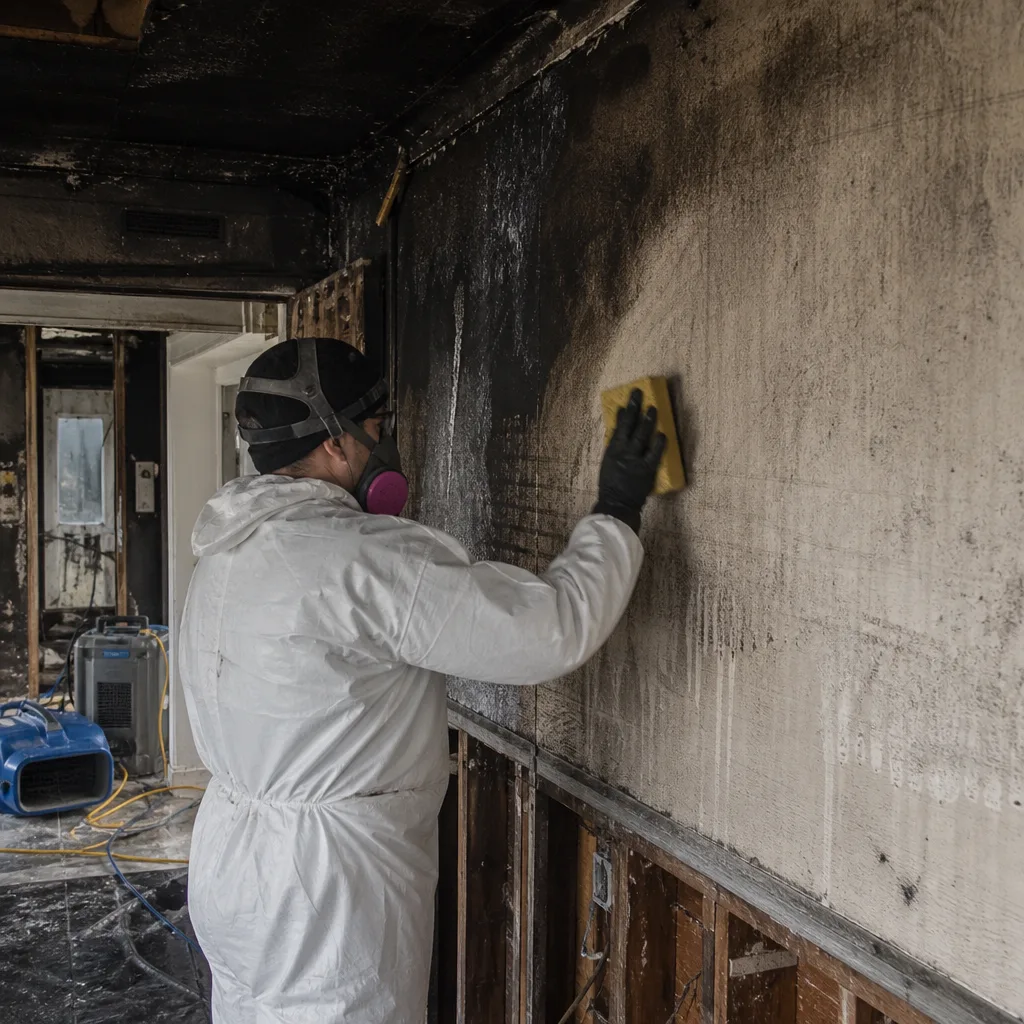
After extraction, the hidden moisture is the danger. We set high-grain dehumidifiers and air movers tuned to the room’s cubic footage, then take daily readings with in-wall probes until the dry standard is met. That dry log is what the 90-Day Done Right Promise stands on.
Flood Cleanup
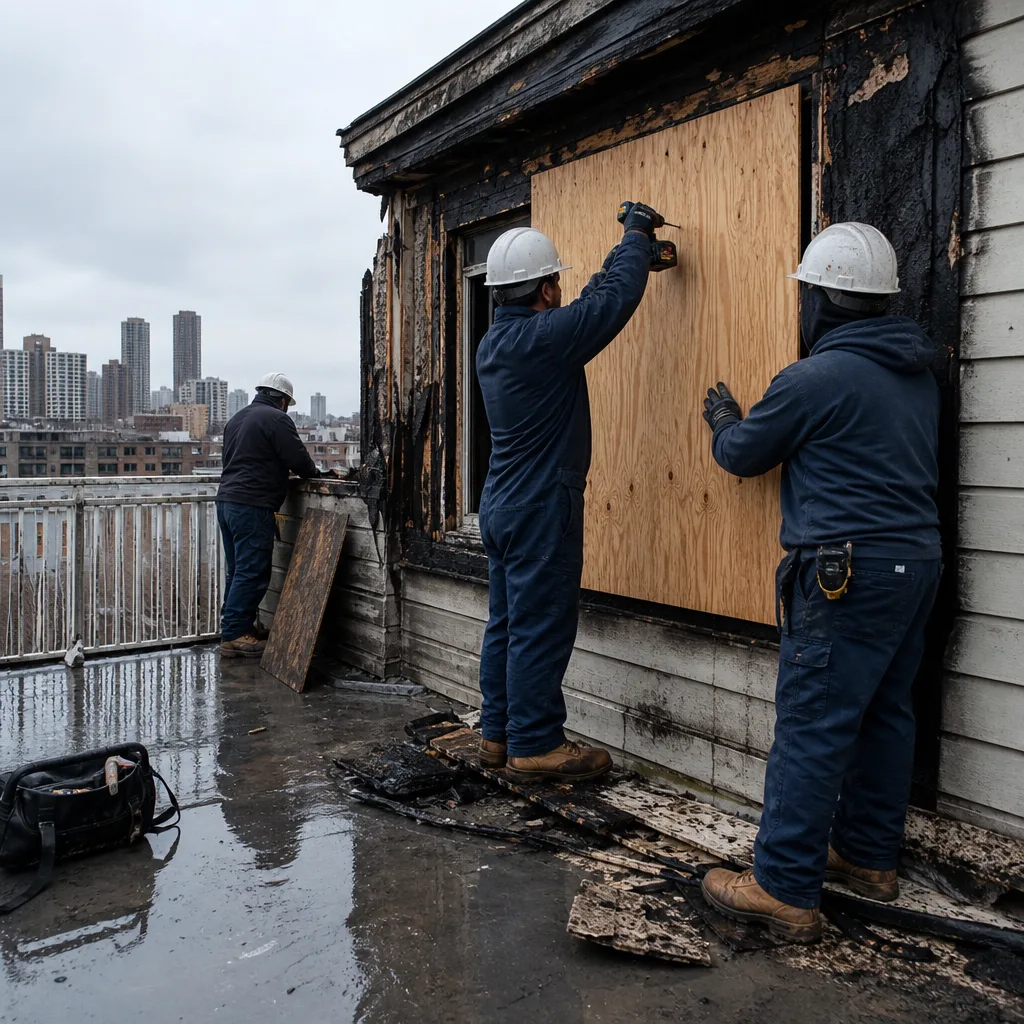
Flood cleanup in Atlantic Beach is salt damage remediation as much as water removal. Salt saturates drywall, and it has to be cut out to the actual salt line, not the stain line, or the wall will re-bloom with mold weeks after the room feels dry. We treat every flood cleanup as a Category 3 job unless testing proves otherwise.

Burst Pipe Restoration
A burst supply line on the second floor of an elevated post-Sandy home sends water down through ceiling joists and into the ground-floor enclosure, where it finds the panel before anyone notices. We dry the ceiling, salvage what framing is sound, and replace what salt or saturation destroyed.

Basement Water Removal
Most Atlantic Beach homes don’t have basements in the inland sense, but slab-on-grade ground floors flood the same way. Our basement water removal work here is ground-floor water removal: extraction, sump placement where needed, and full dry-down of the slab and lower wall cavities.

What happens when you call
- 1
A real person answersNo phone trees - you reach a local pro.
- 2
You get an upfront price rangeHonest numbers before anyone is dispatched.
- 3
A background-checked tech heads outLicensed & insured, dispatched right away.
- 4
You approve before work beginsNothing starts until you say go.
Water Damage Restoration Costs in Atlantic Beach, NY
Water damage restoration in Atlantic Beach runs higher than mainland Nassau County because the saltwater factor, VE-zone permit review, and demolition scope are all bigger. A typical ground-floor surge cleanup with extraction, removal of lower drywall, drying, and antimicrobial treatment runs $2,800 to $8,500. A burst pipe repair with ceiling and floor drying runs $1,200 to $4,500 depending on how far the water traveled. If a pre-Sandy home crosses the NFIP 50% threshold, the number can climb to $60,000 or more because the village may require elevation before reconstruction permits are issued.
What moves the price most in Atlantic Beach is the salt line. The deeper the salt went, the higher the demolition goes, and the more wiring and mechanicals get flagged for replacement. Insurance-covered claims cover the dry-out, and most Atlantic Beach flood policies cover saltwater damage once the adjuster sees our documentation. Call (917) 924-4221 for a free visual inspection and a written scope, no obligation.
We Also Serve Cities Near Atlantic Beach
Floodline Restoration Co. of Manhattan serves Atlantic Beach and the surrounding barrier-island and Five Towns communities: Atlantic Beach, Lawrence, Far Rockaway, Cedarhurst, and Inwood. If your home is within a few minutes of the Atlantic Beach Bridge, we’re already staged to reach you.
Serving Atlantic Beach, NY - Our Local Coverage Area
We’re based in the Atlantic Beach area and know this community well. Use the map below to see our service coverage - if you’re nearby, we can almost certainly help.
Atlantic Beach Water Damage Restoration Questions, Answered
How does the NFIP 50% rule affect a water damage repair on my pre-Sandy bungalow in Atlantic Beach?
The NFIP 50% rule applies when repair costs exceed 50% of the pre-damage market value of the structure, and in Atlantic Beach that triggers a rebuild-or-elevate decision even if the water only damaged the ground floor. We can produce the documentation and scope review you need to determine where you stand, and we can coordinate with the village and your carrier.
Why does saltwater from a Reynolds Channel overwash demand a different restoration protocol than a freshwater leak in mainland Long Beach?
Saltwater carries chloride that stays in wood and gypsum after the surface dries, keeps drawing moisture from the air, and corrodes wiring and fasteners for years. Freshwater dries and stops. Saltwater has to be cut out to the actual salt line, usually higher than the stain, and all electrical below that line must be inspected and replaced where corrosion has started. Call (917) 924-4221 for an inspection, free.
What should I do in the first hour after ocean-side surge enters my ground-floor utility room in Atlantic Beach?
Cut power to the affected area at the panel if you can do so without standing in water, then call us at (917) 924-4221. Do not touch outlets, switches, or plugged-in appliances until the circuits have been inspected. Start documenting what you see, but get extraction running first and call us before you begin cutting walls yourself.
Can I dry out my elevated home’s ground-floor enclosure after a storm, or does the exposed piling design change the restoration?
You can dry it, but the salt and the exposed electrical mean you shouldn’t do it with box fans from the hardware store. The enclosure below an elevated Atlantic Beach home holds compressors, panels, and structural framing that all have to be dried to a standard and checked for salt corrosion. We set up containment and dry the space while we inspect the equipment, and a small wind-driven rain intrusion often becomes a compressor or panel replacement.
How do you handle a burst pipe on the second floor of a post-Sandy elevated house without tearing out the whole ceiling?
We cut access only where moisture mapping shows the water actually traveled. A second-floor supply line failure wets joist bays and the ceiling below, but thermal imaging shows us exactly where to open, and we leave undamaged ceiling intact. The ground-floor enclosure below almost always needs an inspection too, because that water runs downhill.
Will my insurance cover saltwater damage from a nor’easter in Atlantic Beach?
Most Atlantic Beach homeowners carry flood insurance through NFIP or a private carrier, and storm surge and channel overwash are covered flood events under both. What changes the claim is documentation: we photograph every affected area before demolition, log daily moisture readings, and send your adjuster the same scope we give you. Direct billing means we work with the carrier while you stay out of the middle.
How long does structural drying take in Atlantic Beach compared to mainland homes?
Plan for three to six days for a typical ground-floor saltwater intrusion. Salt slows the process because it holds moisture in drywall and wood longer than freshwater, and we run the dry standard until in-wall probes confirm the cavity is stable, not just the surface. The daily log is yours, and we don’t call it done until the numbers say done.
Are your technicians certified for flood and water damage work?
Yes. Every crew member is background-checked, uniformed, and certified to IICRC, RIA, and IFA standards. Our lead technicians hold Water Damage Restoration Technician and Applied Structural Drying certifications, which is what the 90-Day Done Right Promise and the Keystone Standard are built on.
Written by Curt Bowman, Owner at Floodline Restoration Co. of Manhattan, serving Atlantic Beach.