
Free visual inspection and a written scope of work before any mitigation begins - photos, moisture readings, and drying logs go in your claim file
The scope we write is the scope we bill. Anything new gets shown to you, in writing, before we touch it.






 Before
 After
After Before
 After
After Before
 After
After24/7 Emergency Water Damage Restoration in West New York
Water damage restoration in West New York typically runs $1,800-$6,500 depending on how many units are affected and how far the water traveled through the building’s stacked plumbing. A fourth-floor supply line failure can cascade through three to five apartments in under an hour, which is why we answer live at (917) 924-4221 around the clock and dispatch crews into West New York within 45 minutes. The first hour decides whether you’re drying plaster or replacing it. Our Water Damage Restoration team arrives with moisture meters and containment materials on the first visit, not after a sales walkthrough. The free visual inspection gives you a straight answer about what’s wet, what’s salvageable, and what the board will need to approve before any wall comes open.
Understanding Water Damage Restoration Severity in West New York Properties
In West New York’s pre-war brick walk-ups, we classify water by source before we touch anything. Category 1 water comes from a clean supply line, Category 2 carries contaminants from appliances or wash water, and Category 3 is sewage or river water requiring full containment and antimicrobial protocols. The town’s housing stock makes these classifications more urgent than the labels suggest: a Category 1 leak in a 1940s plaster-and-lath wall hides for days, wicking into ceiling joists and floor framing before any stain appears on the ceiling below. Moisture mapping with thermal imaging and Protimeter meters shows us where water traveled, not just where it pooled. The cast-iron drain stacks in these 1920s to 1950s buildings have decades of scale and corrosion, and galvanized supply lines corrode from the inside where you can’t see it until the pinhole becomes a burst. Structural drying in these buildings means daily readings until the dry standard is met, and that standard is tougher with plaster walls that hold moisture like a sponge.
Why West New York Property Owners Choose Floodline Restoration Co. of Manhattan
- 45-minute response commitment: Our West New York crews stage from nearby Hudson County routes and reach most buildings within 45 minutes of your call, day or night.
- 24/7 live answer, always a person: Call (917) 924-4221 at 2 a.m. and a live dispatcher picks up. No recording, no call-back in the morning.
- IICRC-certified technicians: Our crews hold WRT and ASD certifications and train to RIA and IFA standards, so the drying plan is built by people who document their readings.
- Free visual inspection: We assess the loss, map the moisture, and give you a straight scope before any work begins. No pressure, no scare tactics.
- Direct insurance billing: We document everything and coordinate with your carrier so you never play messenger between adjuster and contractor.
- One team from extraction to reconstruction: The same crew that sets the drying equipment is the crew that rebuilds the wall. No mid-job handoff to strangers.
Our Water Damage Restoration Process
Inspection & Assessment
We walk the affected units, run thermal imaging and Protimeter moisture meters, and map every wet surface. This tells us the water’s category, how far it migrated, and what the board needs to approve before we open anything.
Extraction & Stabilization
Standing water comes out with truck-mounted extraction units and portable extractors for upper-floor walk-ups. We set containment on every affected floor immediately to stop Category 2 or 3 water from cross-contaminating dry units.
Drying & Dehumidification
Professional-grade Dri-Eaz and Phoenix dehumidifiers and air movers run on a moisture-mapped schedule. Daily readings are logged and shared with you and your carrier until the dry standard is met, not until the equipment timer runs out.
Cleaning & Sanitization
Affected surfaces get antimicrobial treatment appropriate to the water category. HEPA air scrubbers run during and after demolition to keep the building’s shared air clean for every unit, not just the one that flooded.
Structural Drying Verification
Before any wall is closed, we verify moisture content in framing, plaster, and flooring. Closing a wall too early is how mold takes hold six months later, and we don’t sign off until the numbers say dry.
Repairs & Restoration
Plaster, lath, trim, doors, and flooring are matched to the building’s original character. If the board requires ARB-approved door styles or specific trim profiles, we handle that approval so you don’t get a violation notice after we leave.
Need Emergency Water Damage Restoration in West New York Now?
Crews minutes away, answering live 24 hours a day. The sooner we start, the less it costs.
Working With Your Insurance Company
Water damage claims in West New York multi-unit buildings get complicated fast. You have your policy, your upstairs neighbor’s carrier, the building’s master policy, and an HOA board that wants documentation before it approves anything. We remove you from that loop. From the first hour, we photograph every affected area room by room, log moisture readings daily, and prepare industry-standard estimates your adjuster recognizes. Our crew communicates directly with your carrier and the building’s board, so the claim moves while you handle your life. When the carrier has questions about line items, we answer them. That’s the job.
What We Provide Your Insurer
- Thorough documentation of the loss
- Photos of all damage, room by room
- Moisture readings and drying logs
- A detailed, line-item scope of work
- Direct coordination with your carrier
Built for West New York’s Loss Calendar
West New York’s water damage season doesn’t follow one calendar. January and February bring deep freezes that burst galvanized supply lines in uninsulated exterior walls, and when a fourth-floor line lets go, gravity takes it through every unit below. March and April thaw turns the Palisades cliffs into a slow groundwater release, and the lower-elevation streets near the Hudson River see basement seepage that has nothing to do with rain. Summer thunderstorms overwhelm the town’s combined sewer system, backing water up through floor drains in cellar-level units. Nor’easters in fall and winter push wind-driven rain through aging mortar joints and flat roof flashing on these pre-war buildings. The pattern is always the same: the building is old, the pipes are older, and the board needs a written scope before anything opens. We know that rhythm.
Water Damage Restoration Across West New York’s Neighborhoods
The Boulevard East corridor runs along the Palisades with some of the town’s most valuable pre-war co-ops, buildings where period plaster and original trim make water damage restoration a preservation project as much as a drying job. Down toward Bergenline Avenue, the four- and five-story walk-ups sit tight against each other, and a burst pipe in one building sends water into the shared party wall of the next. The lower blocks near the Hudson River, around the western edges of town, are where we see the most persistent basement moisture intrusion, groundwater working through traprock foundations that were never waterproofed by modern standards. Up on the higher streets near 60th Street and beyond, cold-weather freeze bursts in uninsulated supply lines are the repeating pattern. Each area of West New York has its own loss signature, and we route crews who know those streets.
Specialized Water Damage Restoration Services We Offer in West New York
Emergency Water Extraction
Standing water in a West New York walk-up doesn’t wait for a board meeting. We bring truck-mounted and portable extraction equipment up narrow stairwells and start pulling water immediately. Every minute water sits in a plaster wall, it climbs further into the framing.
Structural Drying & Dehumidification
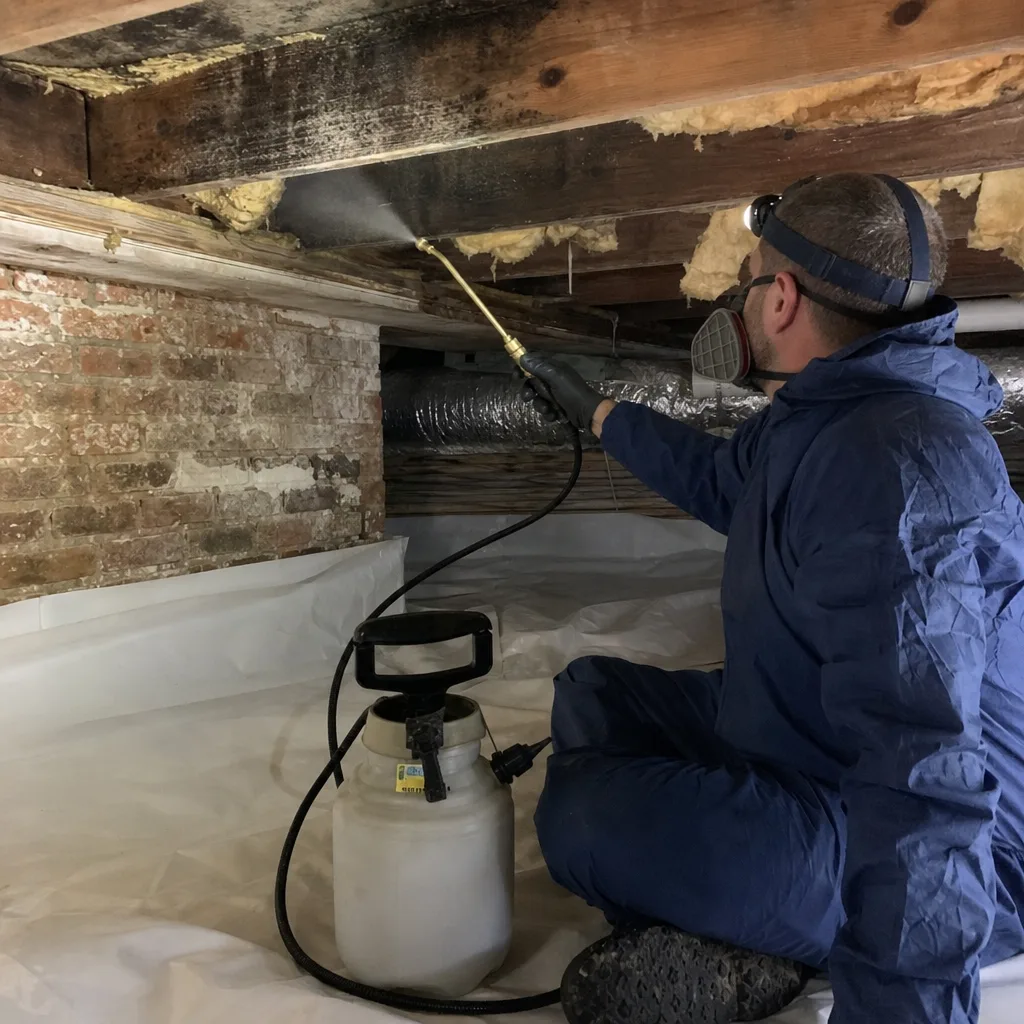
Pre-war plaster and lath dry slowly, and drying them too fast causes cracking that looks worse than the water damage did. Our Dri-Eaz and Phoenix dehumidifiers run at rates calibrated to the building’s materials, with daily moisture readings logged until the dry standard is met.
Flood Cleanup
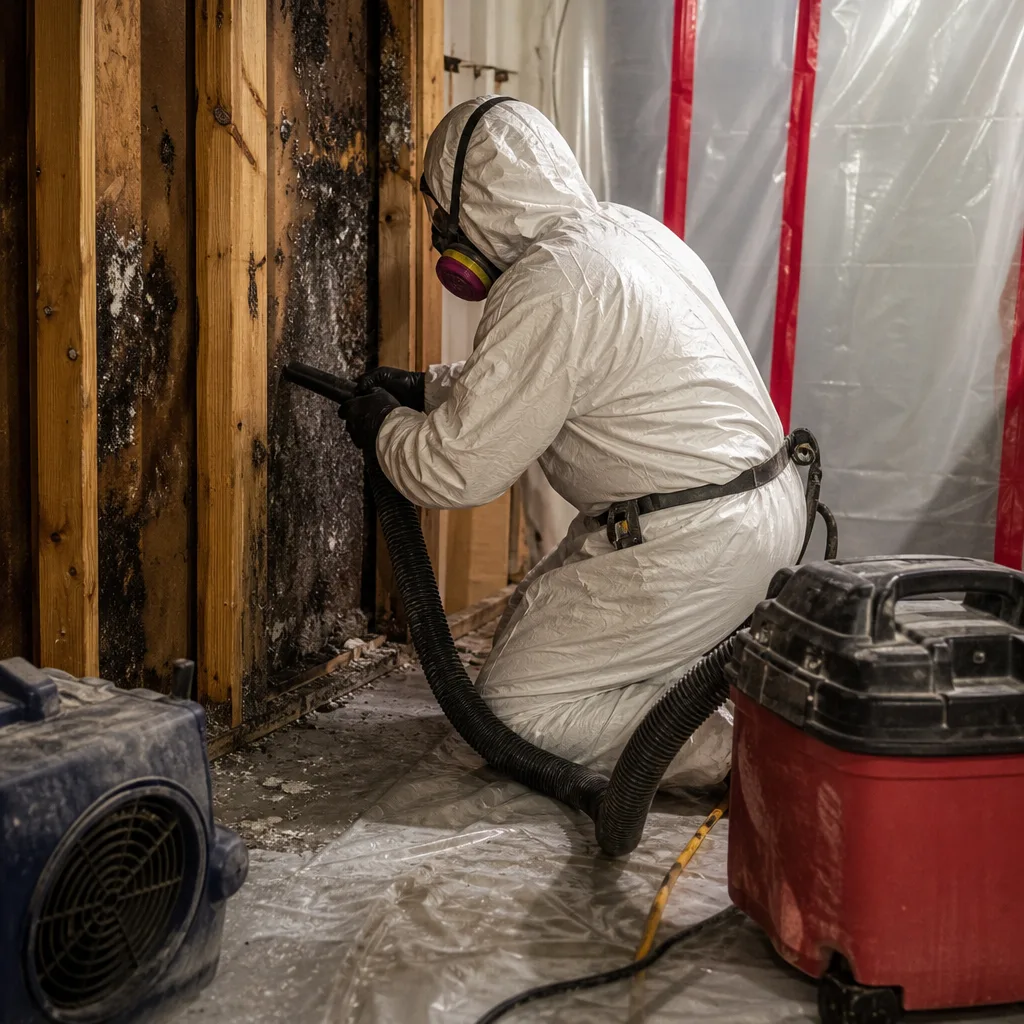
When a summer storm sends water through floor drains or a burst pipe floods a cellar unit, we extract, sanitize, and dry. We also coordinate with the board where shared areas like hallways and boiler rooms are affected, because those are common elements with their own approval path.
Burst Pipe Restoration
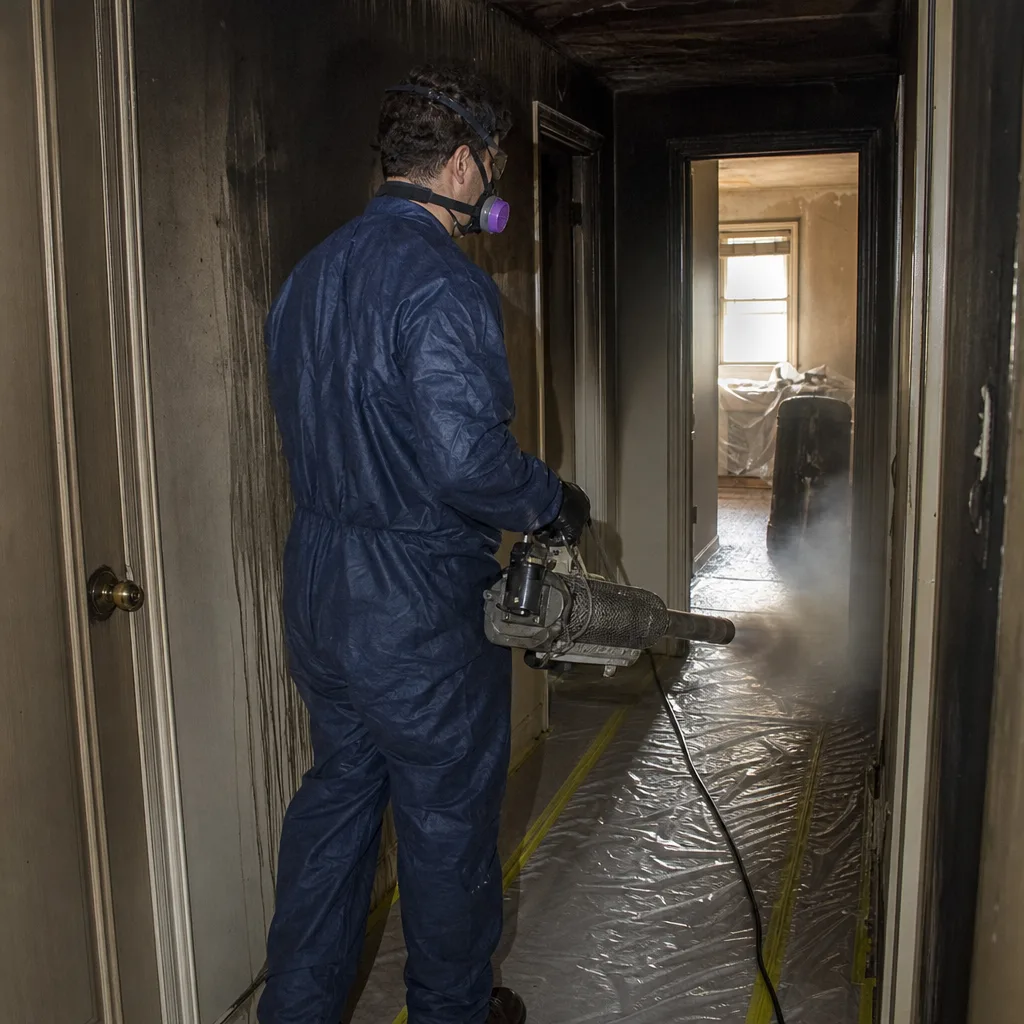
Galvanized supply lines in 1920s to 1950s buildings fail from the inside. When a line bursts on an upper floor, we contain the affected units, extract, dry, and rebuild. The plumbing repair itself we coordinate with your plumber, so the restoration scope stays clean.
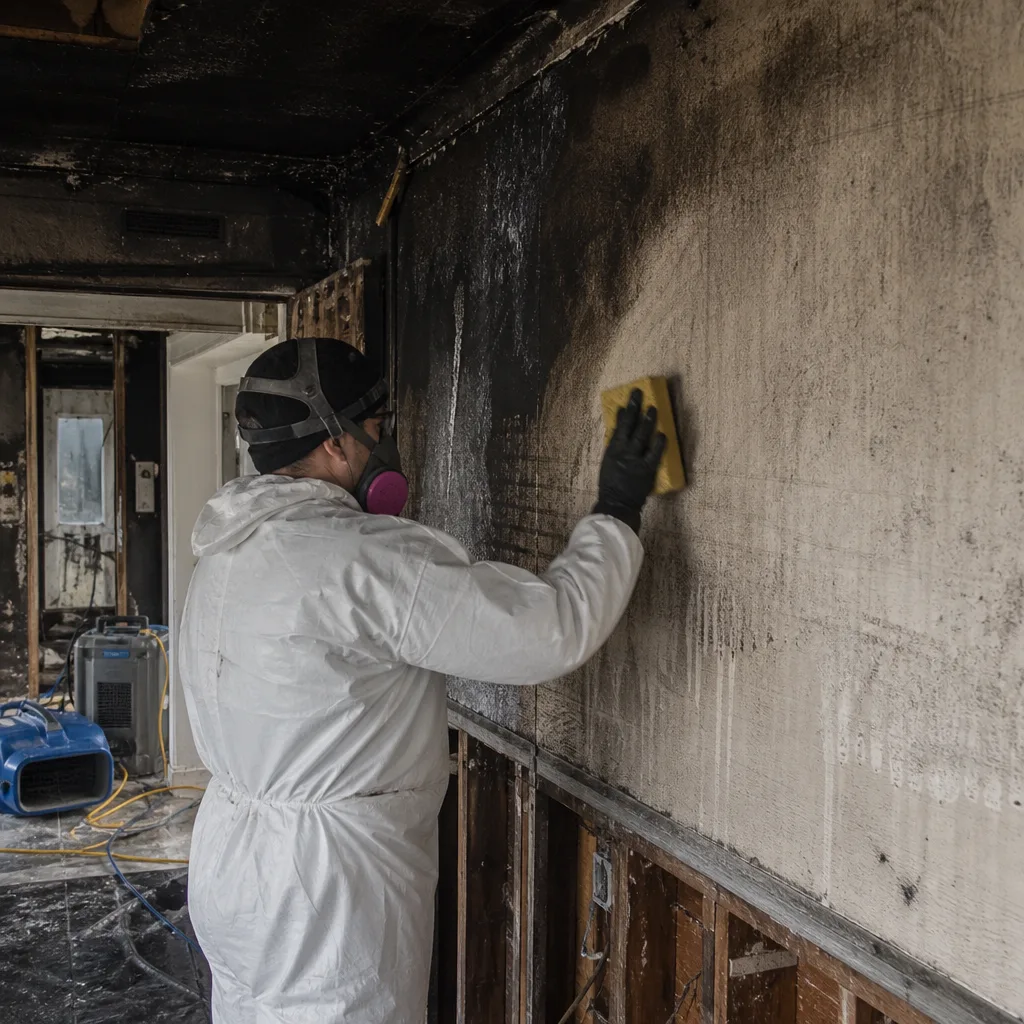
Basement Water Removal
Lower-elevation blocks near the Hudson River see groundwater seepage that never gets fully solved by exterior grading alone. We remove the water, dry the space, and document the intrusion pattern so you have a realistic answer about what’s fixable and what needs ongoing management.
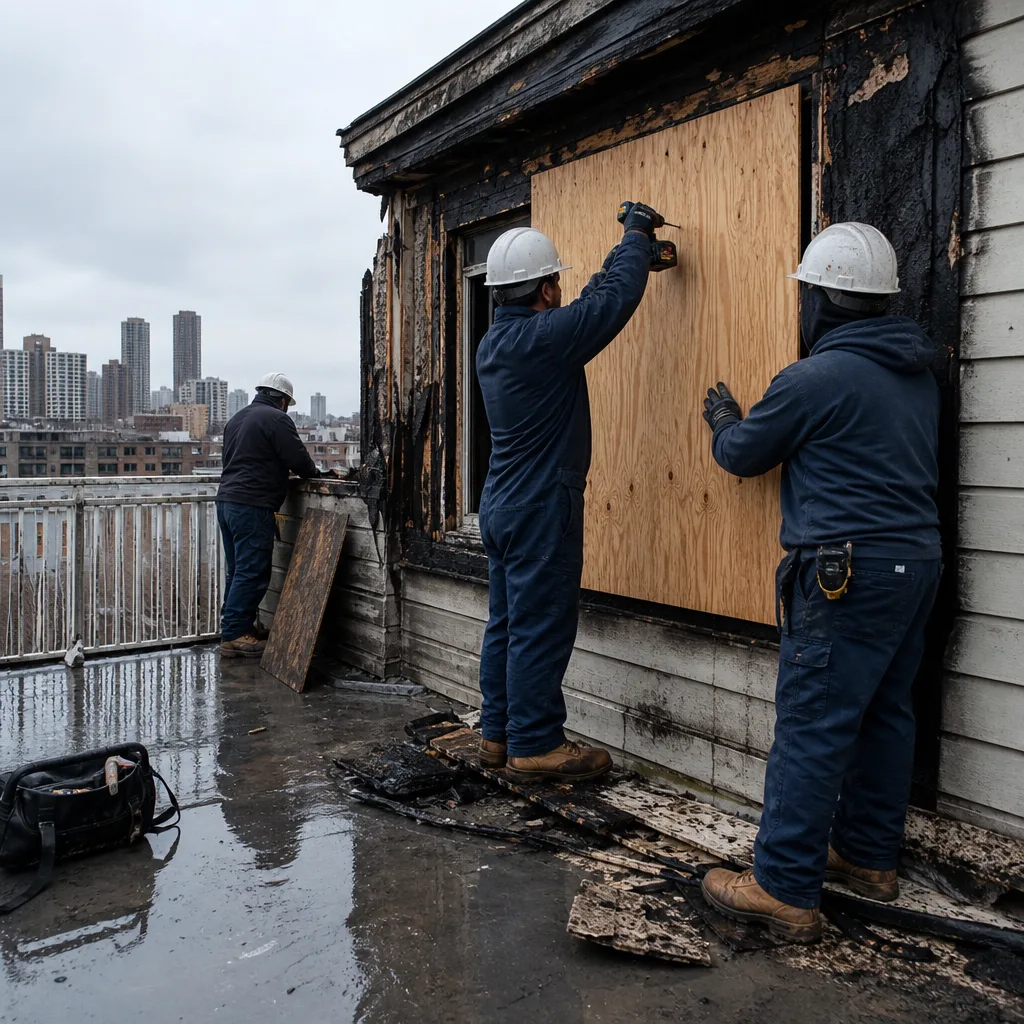
Ceiling & Roof Leak Water Damage
Wind-driven rain finds its way through aging roof flashing and mortar joints on these pre-war buildings, staining top-floor ceilings and running down interior walls. We dry what’s wet, treat what’s at risk, and rebuild to match the original plaster and trim.
What happens when you call
- 1
A real person answersNo phone trees - you reach a local pro.
- 2
You get an upfront price rangeHonest numbers before anyone is dispatched.
- 3
A background-checked tech heads outLicensed & insured, dispatched right away.
- 4
You approve before work beginsNothing starts until you say go.
Water Damage Restoration Costs in West New York, NJ
A single-unit water extraction in West New York typically runs $800-$2,200 when the water is confined to one apartment and we get there within the first few hours. Structural drying for a plaster-and-lath unit runs $1,500-$3,800 depending on how many rooms are affected and how long the water sat. A multi-unit vertical cascade from an upper-floor pipe burst is the expensive one: $4,500-$12,000 across three to five units is common, and that’s before any reconstruction of walls, ceilings, or flooring. Ceiling and roof leak damage runs $900-$2,800 per affected room when the leak is recent. What moves the price is the water category, the number of units, whether containment is required, and how much of the building’s original plaster and trim has to be saved. Insurance covers most Category 1 and 2 losses from sudden pipe bursts; the negotiation is always over what gets rebuilt to match. Call (917) 924-4221 and we’ll give you a free visual inspection and a written scope before any work starts, so the number never surprises you.
We Also Serve Cities Near West New York
Our crews handle water damage restoration throughout Hudson and Bergen County. If you’re in Alpine, Bergenfield, Bogota, or Carlstadt, the same 45-minute response commitment applies. North Bergen, Union City, and Guttenberg are also within our regular dispatch area, and our team knows those buildings as well as we know West New York’s.
West New York Water Damage Restoration Questions, Answered
Does water damage restoration in West New York require HOA or architectural review board approval before opening walls or removing damaged doors?
Yes, in most West New York buildings you need board or ARB approval before opening walls, removing doors, or altering any common or visible element. We prepare the written scope the board needs, walk them through the moisture readings, and handle that approval so restoration starts without you getting a violation notice.
How do you manage water extraction in a West New York walk-up with no service elevator and narrow stairwells?
We use portable extraction units and compact dehumidifiers that our crews carry up stairwells in sections. Equipment staging happens on the sidewalk in coordinated windows, because street parking restrictions on these tight blocks mean we plan access before the truck arrives. It adds labor time, and we price that honestly rather than pretending it doesn’t exist.
What happens if a pipe bursts on an upper floor and water affects multiple units-are all units dried at once?
Yes. A vertical cascade through stacked units means every affected apartment gets containment, extraction, and drying on the same schedule. We coordinate with each owner, their carriers, and the board so no unit is left wet while another dries, and moisture mapping shows us exactly where the water went between floors.
Can you match the original pre-war plaster and trim after water damage in a 1920s brick walk-up?
We can. Our team has restored plaster-over-lath walls, crown molding, and period trim in buildings throughout West New York’s Boulevard East corridor and Bergenline Avenue. Matching old profiles means sourcing from specialty mills and casting on site when needed. It costs more than drywall, and we’ll tell you that before we start.
My basement in the lower-elevation blocks near the Hudson River gets water even without rain-is that groundwater seepage?
Almost certainly yes. Those lower blocks sit below the Palisades and the water table pushes through traprock foundations on a schedule that has nothing to do with weather. We can extract and dry the space, but long-term mitigation usually requires interior drainage or a sump system, and we’ll document the pattern so you aren’t chasing a leak that isn’t there.
How fast can a crew actually get to West New York?
Our commitment is 45 minutes from your call to arrival at most West New York buildings. We answer live 24/7 at (917) 924-4221, and dispatch is already moving while you’re still on the phone describing what happened. The sooner we start extraction, the less plaster and framing you lose.
Will my insurance cover water damage restoration in a multi-unit building?
Most policies cover sudden and accidental water damage from a burst pipe or appliance failure. The complexity in West New York is that a multi-unit cascade involves your policy, your neighbor’s policy, and the building’s master policy. We document everything from the first hour and communicate directly with all carriers involved, so you aren’t carrying paperwork between parties.
What should I do in the first 30 minutes after I notice water damage?
Shut off the water source if it’s safe and you can reach it. Move small valuables and electronics out of the water path. Call (917) 924-4221. Don’t turn on ceiling fans or use a household vacuum to remove water, and don’t open walls yourself; a professional moisture map is what saves the plaster. Then call your building’s management so the board knows a claim is coming.
Serving West New York, NJ - Our Local Coverage Area
We’re based in the West New York area and know this community well. Use the map below to see our service coverage - if you’re nearby, we can almost certainly help.
Why This Page Exists
This page exists because water damage restoration in West New York is not the same job as it is in a single-family house in Bergen County. Here, a pipe bursts on the fourth floor and three landlords, two insurance carriers, and one HOA board are all in the room before the water stops running. Our crews know the buildings, the boards, the stairwells, and the quiet hours. That’s not a pitch. It’s forty-two years of doing this work in towns like this one, and it’s the reason we answer the phone when you call at two in the morning.
Written by Curt Bowman, Owner at Floodline Restoration Co. of Manhattan, serving West New York since 2010.