
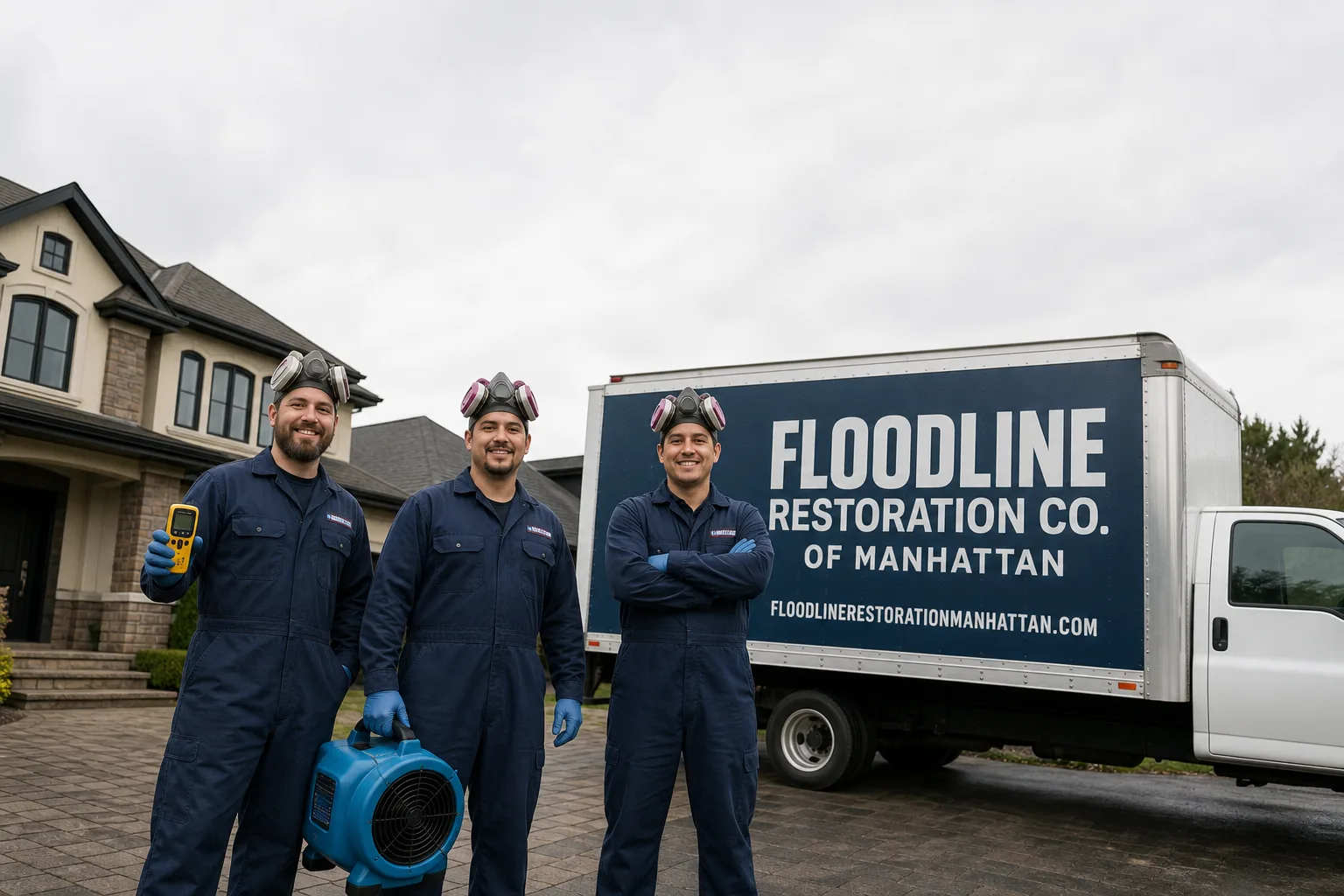
Free visual inspection and a written scope of work before any mitigation begins - photos, moisture readings, and drying logs go in your claim file
The scope we write is the scope we bill. Anything new gets shown to you, in writing, before we touch it.






 Before
 After
After Before
 After
After Before
 After
After24/7 Emergency Sewage Cleanup in Rego Park
Sewage cleanup in Rego Park typically runs $2,800 to $7,500 for a standard category 3 blackwater loss, and the first call we make on site is usually to a co-op board or managing agent, not to a pump truck. That’s the reality of restoration work here, where mid-century brick co-ops dominate the blocks along Queens Boulevard and the surrounding streets. If you’ve got sewage backing up into a bathroom on Saunders Street or a corroded stack leaking through ceilings near Alderton Street, call (917) 924-4221 right now. A live dispatcher answers at any hour. We’ll have a crew dispatched toward Rego Park within 45 minutes, and the first thing they’ll do is contain the damage so it stops spreading while you figure out the board approval side of things.
Understanding Sewage Cleanup Severity in Rego Park Properties
Sewage is category 3 water, the most dangerous classification in the restoration trade. It carries bacteria, viruses, and parasites that you don’t want on your skin, let alone soaking into drywall and underlayment. In Rego Park, the severity picture is shaped by the building stock itself. Most of the six-to-ten-story co-ops here were built in the 1950s and 1960s with original cast iron drain stacks. Cast iron corrodes from the inside out, and when a stack finally fails, it doesn’t leak clean water. It sends blackwater through multiple floors at once, following the shared mechanical chases that run vertically through the building. We don’t open a single wall until we know what we’re dealing with, because cutting into a category 3 loss without containment turns a bathroom problem into a building problem. Moisture mapping tells us how far the contamination has traveled laterally through wall cavities and under tile. From there, we set containment barriers, run HEPA air scrubbers to keep contaminated air from migrating, and begin extraction with truck-mounted units rated for blackwater.
Why Rego Park Property Owners Choose Floodline Restoration Co. of Manhattan
- 45-minute response commitment: When sewage is spreading through a co-op unit, every hour matters. We’ll have a certified crew rolling toward Rego Park within 45 minutes of your call, day or night.
- A live person answers, always: You won’t get a recording when you call (917) 924-4221 at 2 a.m. A dispatcher picks up, takes your address, and starts the response. That’s been true since Curt Bowman founded this company in 2010.
- IICRC-certified crews: Our technicians hold IICRC certifications including WRT and AMRT, and they’re trained to RIA and IFA standards. Background-checked, uniformed, and carrying professional-grade Dri-Eaz and Phoenix equipment on every truck.
- Free visual inspection: Before any work begins, we walk the affected area with you and give you a straight read on what we’re seeing. No charge for the assessment, no obligation.
- Direct insurance billing: We bill your carrier directly, whether that’s an HO-6 policy for a shareholder or a master policy held by the co-op corporation. You’re not playing messenger between us and an adjuster.
- One team from extraction to rebuild: We don’t hand your job off after the water is gone. The same crew that extracts and dries also handles the reconstruction, so there’s no inherited crew and no gap in accountability.
Our Sewage Cleanup Process
Inspection & Assessment
We start with a visual walkthrough and moisture mapping using thermal imaging and hygrometers. In a Rego Park co-op, this is also where we identify who needs to sign off before we can open anything: the board, the managing agent, or both. We’ll tell you up front if we’re looking at a 24-to-72-hour authorization window.
Extraction & Stabilization
Truck-mounted extraction units pull standing blackwater out fast. We set containment barriers and run HEPA air scrubbers so contaminated air doesn’t move into neighboring units through shared chases or hallway door gaps.
Drying & Dehumidification
Dri-Eaz and Phoenix dehumidifiers paired with XPOWER air movers create the airflow needed to dry wall cavities and subflooring. Daily moisture readings are logged and handed to you and your carrier, so everyone sees the dry standard being met.
Cleaning & Sanitization
All affected surfaces receive antimicrobial treatment after the contaminated materials are removed. We’re not spraying a quick coat of bleach and calling it done; the goal is to leave the space safe, not just dry.
Specialty Treatment
Sewage backups in cast iron stack buildings often mean contamination inside shared chases and wall cavities. We treat what we can access, and we document everything we can’t reach so the board and carriers understand the full scope.
Repairs & Restoration
Once drying is complete and the area passes clearance, we rebuild. Drywall, flooring, trim, paint, whatever was removed goes back in. Same crew, same standards, backed by our 90-Day Done Right Promise in writing.
Need Emergency Sewage Cleanup in Rego Park Now?
Crews minutes away, answering live 24 hours a day. The sooner we start, the less it costs.
Working With Your Insurance Company
Sewage cleanup in a Rego Park co-op often involves two policies: the corporation’s master policy and the affected shareholder’s HO-6. Which one covers what depends on where the stack failed and what the building’s bylaws say. We deal with this every week. From the first hour, we document everything: photos of the loss room by room, moisture readings, drying logs, and a line-item scope of work written in the format adjusters expect. We talk to adjusters directly, so you’re not translating technical details over the phone. If the board’s insurance is involved, we coordinate with the managing agent too. The goal is simple: you get the coverage you paid for, and the work gets done. Done right, and backed in writing.
What We Provide Your Insurer
- Thorough documentation of the loss
- Photos of all damage, room by room
- Moisture readings and drying logs
- A detailed, line-item scope of work
- Direct coordination with your carrier
Built for Rego Park’s Loss Calendar
Rego Park sits inland from the coastal flood zones, so we’re not bracing for the storm-surge sewage problems you’d see in the Rockaways or Broad Channel. What we do see here, year after year, is the same cycle. January and February freeze-thaw swings stress the flat roofs and parapet walls on those 1950s and 1960s co-ops, and when a roof drain line freezes, sewage and storm water back up into lower units. Spring thaw brings the same pressure to original cast iron drain stacks that have been expanding and contracting all winter. Summer thunderstorms overload the aging combined sewer lines that run under Queens Boulevard, and sudden downpours send category 3 water up through floor drains in garden-level and basement apartments. The common thread in Rego Park is age: the pipes, the stacks, the roof drains. We know when the calls are coming, and we staff accordingly, because a sewage backup at 3 a.m. on a February night doesn’t wait for business hours.
Sewage Cleanup Across Rego Park’s Neighborhoods
The streets around Queens Boulevard and 63rd Drive are dense with six-to-eight-story co-ops, and response routes there are straightforward but tight. Parking for our truck-mounted extraction units is often the first hurdle, especially along Saunders Street where the buildings press right up against the curb. South of the LIE, toward Yellowstone Boulevard, the buildings shift to smaller courtyard co-ops with shared stacks, and those jobs usually involve multiple units affected at once. Over near the Rego Park Jewish Center on 64th Road, we’ve handled sewage backups in buildings where the original cast iron stacks are still carrying everything from the top floor down. The garden apartments and smaller co-ops near Alderton Street and Woodhaven Boulevard tend to be newer, but they share the same sewer infrastructure. Every neighborhood in Rego Park has the same underlying condition: a building stock that’s sixty to seventy years old, running on plumbing that was never meant to last this long.
Specialized Sewage Cleanup Services We Offer in Rego Park
Sewage Backup Cleanup
When a floor drain backs up with blackwater in a Rego Park co-op, the contamination usually spreads faster than anyone expects. We extract, contain, and sanitize before mold gets a foothold, and we handle the board authorization issue in parallel so we’re not waiting on paperwork while the damage grows.
Black Water Extraction
Category 3 water from a failed cast iron stack carries human waste, and it doesn’t just sit on the surface. It wicks into drywall, under tile, and through subflooring. Our truck-mounted extraction units pull hundreds of gallons per hour, and moisture mapping shows us exactly where the contamination went so nothing gets missed.
Sanitization & Disinfection
After blackwater is extracted and contaminated materials are removed, every remaining surface gets antimicrobial treatment rated for category 3 exposure. We treat wall cavities, studs, and subflooring, not just visible surfaces, because what you can’t see is what causes problems months later.
Toilet Overflow Cleanup
A toilet overflow in a Rego Park apartment is usually either a clog in the unit’s own line or a sign that the building’s stack is failing. We figure out which one it is fast, because if it’s the stack, your neighbors have the same problem waiting to happen.
Septic Failure Cleanup
Most of Rego Park is on the municipal sewer system, but a few older properties near the edges of the neighborhood still run on aging septic systems. When a septic field fails and sewage surfaces, it’s a category 3 event that needs extraction, soil treatment, and often replacement planning.
Crawl Space Sewage Removal
Garden-level units and basement apartments in Rego Park co-ops often sit over crawl spaces that catch sewage from failed lines above. We access those spaces, extract the blackwater, treat the soil, and install vapor barriers where needed. It’s unpleasant work, but leaving it untreated means the smell and the health risk never go away.
What happens when you call
- 1
A real person answersNo phone trees - you reach a local pro.
- 2
You get an upfront price rangeHonest numbers before anyone is dispatched.
- 3
A background-checked tech heads outLicensed & insured, dispatched right away.
- 4
You approve before work beginsNothing starts until you say go.
Sewage Cleanup Costs in Rego Park, NY
A standard sewage backup into a single bathroom in a Rego Park co-op runs $2,800 to $4,500, including extraction, containment, antimicrobial treatment, and drying. When the loss crosses into multiple units or requires opening walls and ceilings to access a failed stack, the price moves to $5,000 to $7,500. If the damage reaches common areas or shared chases, you’re looking at $8,000 and up, and those numbers usually involve the co-op corporation’s master policy as well as the shareholder’s HO-6. The biggest cost driver in Rego Park isn’t the extraction itself. It’s the demolition and rebuild that follows, especially in older buildings where drywall, plaster, and flooring all have to come out and go back in. The free visual inspection is the fastest way to get a firm number. We’ll walk the loss with you, explain what we’re seeing, and give you a written scope before any work starts. That’s the square deal we’ve run on for years. Call (917) 924-4221 and we’ll be there.
We Also Serve Cities Near Rego Park
Floodline Restoration Co. handles Sewage Cleanup throughout the surrounding area, including Forest Hills, where the housing stock shifts to owner-occupied center-hall colonials, Elmhurst, where rental-heavy buildings face different approval processes, Corona, and Middle Village. Wherever the job is, our crews bring the same professional-grade equipment and the same written guarantee.
Rego Park Sewage Cleanup Questions, Answered
Why do I need co-op board approval before sewage cleanup in Rego Park?
Because in a co-op, the walls, floors, and mechanical systems are the corporation’s property, not the shareholder’s. Opening a wall to access a failed cast iron stack means modifying common elements, and most proprietary leases and house rules require written authorization from the board or managing agent before that work begins. That approval typically takes 24 to 72 hours in Rego Park, which is why we start the containment and extraction work we can do without opening walls immediately, then push the paperwork in parallel. Speed matters, but doing it wrong gets you a lawsuit from the corporation. Call (917) 924-4221 and we’ll walk you through exactly what your building’s rules require.
How do you handle sewage that has traveled from an upstairs unit through my ceiling?
We treat it as a cross-unit category 3 loss. First, we contain your unit so the contamination doesn’t spread. Then we document everything, because the source is in someone else’s apartment but the damage is in yours. The responsible party depends on where the stack failed, and that’s usually an insurance question involving both HO-6 policies and possibly the master policy. We coordinate with all carriers involved while we extract, dry, and sanitize your space. The restoration happens regardless of who ultimately pays.
Does my HO-6 policy cover sewage cleanup from a building stack failure in Rego Park?
In most cases, yes. A standard HO-6 policy covers water and sewage damage to your unit’s interior, including walls, floors, and personal property, as long as the loss is sudden and accidental. The exception is when the stack failure was caused by long-term neglect, and the insurer argues it was a maintenance issue rather than a covered event. That’s where our documentation helps. We photograph the failed pipe, the moisture readings, and the scope of loss, so your adjuster has what they need to approve the claim. We bill your carrier directly and deal with the adjuster ourselves.
How quickly can you start drying after sewage is extracted in a Rego Park co-op?
Immediately, if we can access the affected materials. Extraction and containment happen the same visit, and drying equipment goes in the same day. The catch in Rego Park co-ops is that if the sewage is inside a wall cavity or ceiling that we can’t legally open without board approval, we can only dry what we can access. That’s why the authorization delay is so costly: category 3 water sitting inside a wall cavity for 48 or 72 hours is doing damage we can’t stop. We push the managing agent hard, and we document the delay so it’s on the record if mold becomes an issue.
What makes sewage cleanup in Rego Park different from nearby Forest Hills?
The housing stock, mostly. Forest Hills has a lot more single-family homes and small apartment buildings where the same owner controls the whole property. In Rego Park, the multi-unit co-ops run on shared cast iron stacks and shared mechanical chases, so a sewage backup rarely stays in one unit. And the co-op board approval requirement adds a layer of coordination that doesn’t exist in a homeowner situation. We know that process here, we’ve done it hundreds of times, and we know which managing agents move fast and which ones don’t.
How long does full sewage cleanup and restoration take in a Rego Park apartment?
For a contained single-unit loss with no board delay, extraction and drying usually take three to five days. Full rebuild, including drywall, flooring, and paint, typically runs another one to two weeks depending on material availability and building rules about work hours. When board authorization adds 24 to 72 hours up front, the timeline stretches accordingly. We give you a written timeline at the start, and we stick to it. Done right, and backed in writing.
Can we stay in the apartment during sewage cleanup?
For a category 3 loss, the safest answer is no. Sewage carries pathogens that become airborne during extraction and demolition, even with containment barriers and HEPA air scrubbers running. If the affected area is a bathroom and we can seal it off completely, staying in the apartment is sometimes possible, but it depends on the layout and the extent of the contamination. We’ll give you a straight answer at the inspection, and if you need to relocate temporarily, we’ll document everything for your loss-of-use claim.
What should I do in the first 30 minutes after discovering a sewage backup in Rego Park?
First, stop using water. Every flush or drain makes the backup worse. Second, shut off the water supply to the affected fixture if you can access the shutoff valve. Third, keep everyone out of the affected area, including pets. Fourth, call (917) 924-4221. Our dispatcher will tell you exactly what to do while the crew is on the way, and our technicians will handle the rest. Don’t try to clean it yourself. Category 3 water is a health hazard, not a mess.
Serving Rego Park, NY - Our Local Coverage Area
We’re based in the Rego Park area and know this community well. Use the map below to see our service coverage - if you’re nearby, we can almost certainly help.
Why the Co-op Authorization Bottleneck Defines Sewage Cleanup in Rego Park
We responded to a sewage backup at a six-story co-op on Saunders Street near Queens Boulevard after a corroded original cast iron stack failed, sending category 3 blackwater through four bathrooms and a hallway. Our crew used moisture mapping and containment to isolate the affected floors, then coordinated with the board and each shareholder’s HO-6 carrier before starting structural drying and antimicrobial treatment. That process took three days from first call to written authorization from the managing agent. This is the reality of restoration work in Rego Park, and it’s the reason we’ve built our entire approach around it. While we waited for that authorization, we ran containment and air scrubbing in the accessible areas, documented every moisture reading, and communicated with all five parties involved. When the authorization finally came through, we were ready to open walls the same day and start the demolition that should have started 72 hours earlier. If you’re facing a sewage backup in a Rego Park co-op, you deserve a restoration company that knows this process cold. Floodline Restoration Co. of Manhattan has been handling these jobs since 2010, and we’ve never walked away from a co-op board fight. We push the paperwork while we do the work, and we stand behind the result with our 90-Day Done Right Promise, in writing, no arguments. Call (917) 924-4221 for a free estimate. We answer live, any hour of the day or night.
Written by Curt Bowman, Owner at Floodline Restoration Co. of Manhattan, serving Rego Park since 2010.